

There are roads in Northern Ireland that most UK car enthusiasts have never driven, and that genuinely baffles me. I’ve covered the NC500 twice, blasted through mid-Wales on a damp Tuesday, and done the Causeway Coast route enough times that I can tell you exactly where the tarmac gets interesting. The A2 coastal road and the B-roads threading through the Antrim Glens are among the finest driving roads in these islands, full stop. Not “pretty good for Northern Ireland”, genuinely world-class. And because the crowds concentrate on the tourist honeypots, the roads themselves are often empty when you actually want them.
This is a proper route guide for drivers who care about the driving. Photography spots and fuel logistics included, because nobody wants to limp into Cushendall on fumes having miscalculated the nearest petrol station by fifteen miles.
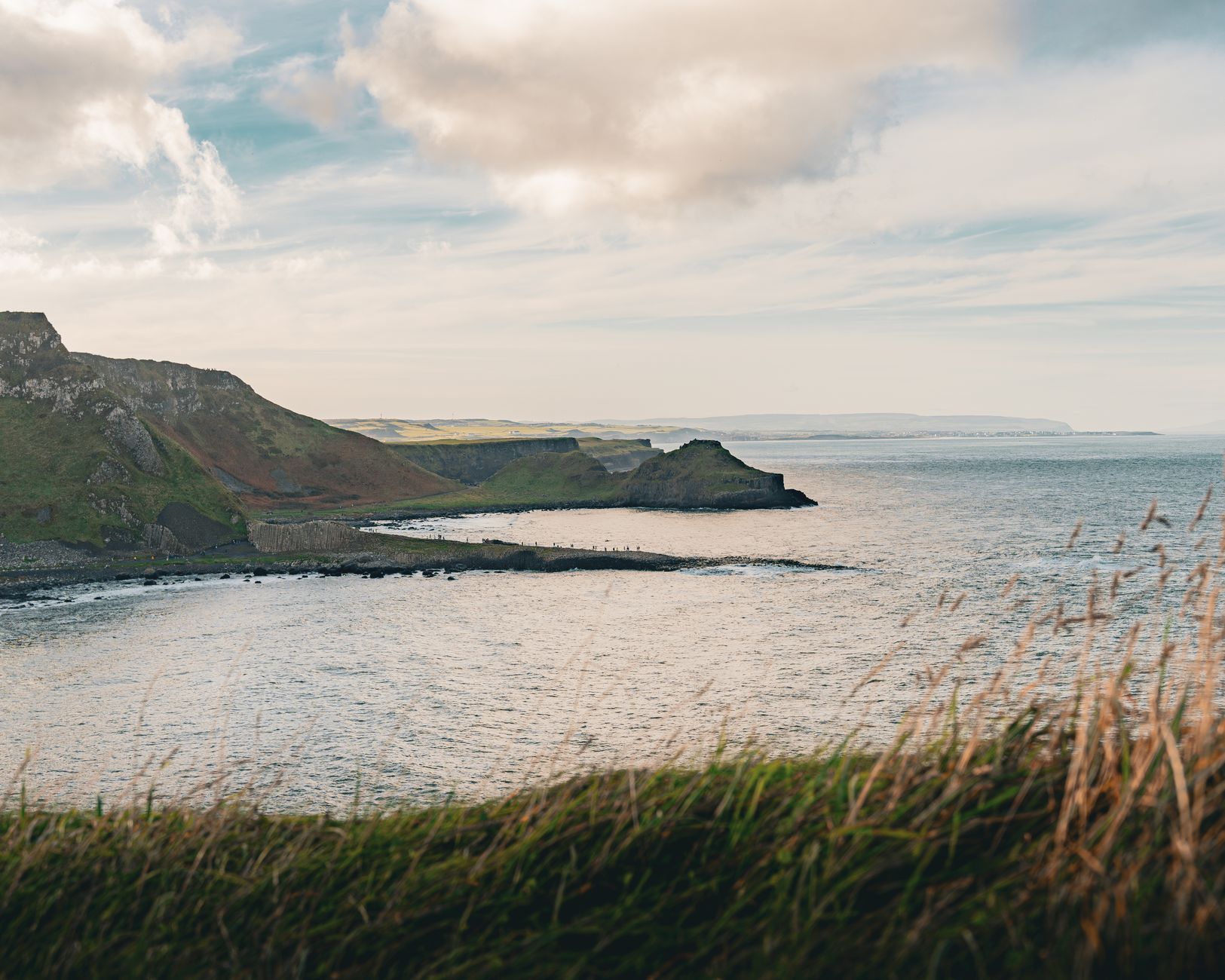
The A2: what it actually drives like
The A2 between Belfast and Larne is a warm-up. Decent dual carriageway sections, some roundabouts, nothing special. Forget it as a driving road and treat it as transit. The magic starts north of Larne, where the A2 hugs the coastline and the road begins to narrow, twist, and throw views at you that make passengers grab the door handle.
Between Larne and Ballycastle, roughly 50 miles of it, you get the kind of surface variation that keeps you honest. Long fast sweepers open up near Carnlough, the sort where a well-sorted hot hatch will cover ground quickly and a low-slung sports car will feel every camber change. Then suddenly it tightens. The section descending into Glenarm is properly technical: late apex, decreasing radius, bumpy on the inside line. Respect the road or it will catch you out.
Cushendall is a useful marker. Stop here, fuel up at the small filling station in the village (the next reliable stop heading north is Ballycastle, so don’t gamble), stretch your legs, have a look at the sea. Then push on. The stretch from Cushendall to Ballycastle via the coast is the highlight of the A2, open, fast-ish, genuinely scenic, and almost completely ignored by people who don’t know the route.
The Glens B-roads: where the real driving is
Here’s where I’d tell any proper car nerd to spend their time. The nine Antrim Glens run inland from the coast, and the B-roads connecting them are extraordinary. Narrow, properly surfaced in most places, with gradient changes that expose your car’s damper tuning and make you think hard about brake bias.
The B14 through Glenariff, sometimes called the Queen of the Glens, drops into the valley with a sequence of hairpins that reward smooth inputs and punish anyone who brakes too late. If you’ve fitted uprated pads and fluid for a track day, those same components will feel magnificent here. The road surface is generally good, with a few patched sections that catch you mid-corner if you’ve gone too wide.
Glenaan and Glendun are quieter still. These are the ones locals use, so agricultural traffic is a real factor, meet a silage trailer on a blind crest and you’ll suddenly appreciate why mirrors and road position matter. Early morning runs are ideal. By 8am on a weekend the light is extraordinary, the roads are empty, and the temperature is low enough to make your engine breathe properly.
Cross-linking the Glens with the A44 and B94 gives you a loop that can easily fill four or five hours of actual driving, not including stops. I’d plan it as a dedicated day rather than trying to add it onto the Causeway Coast itself, you’ll rush both if you try to combine them in a single push.
What car makes the most of these roads
I’ve done this route in a few different things. A stage-2 Golf R felt planted and fast but slightly blunt on the tighter Glens roads where you really want feel. A Mazda MX-5 ND was closer to perfect than anything else I’ve driven up here, light, communicative, narrow enough for the B-roads, and the gearing suits the speeds you’re actually doing. An Impreza Prodrive on decent all-season tyres was also brilliant, the mechanical grip making the wet sections far less stressful.
The roads are not kind to very low cars. Ground clearance matters on some of the glen sections where the road surface has subsided slightly at the edges. If your car is sitting below 100mm ride height and you’re running stretched rubber, you’re going to be anxious rather than enjoying it. Something with a bit of travel in the suspension, a well-sorted hot hatch, a light sports car at standard or near-standard ride height, will be faster and more enjoyable than something slammed for show.
If you’ve been considering a remap before a trip like this, read up on what a stage 1 remap actually does to long-term engine reliability before committing. The extra mid-range punch genuinely helps on the rolling glen roads, but the decision deserves proper consideration, not a snap choice before a weekend away.
Photography spots worth stopping for
Garron Point, about halfway along the A2 coastal stretch, gives you an elevated view looking north along the coast that is one of the best “car on a road” shots available in the UK. The road curves away below you and the sea fills the frame. Get there before 9am in summer and the light is golden; the tourists haven’t arrived yet.
The Glenariff viewpoint car park on the B14 is obvious but genuinely good. The layby above Cushendun, which you’ll see as you descend towards the village, is less well-known and better for an actual car shot because there’s enough verge to position a car without blocking the road.
Fair Head is worth the short drive from Ballycastle if you want dramatic cliffs with no crowds. The track to the top isn’t suitable for low cars, but anything with reasonable clearance will manage it. Views from the top towards Rathlin Island and the Mull of Kintyre on a clear day are spectacular.
Fuel and logistics
Fuel planning is non-negotiable on this route. Larne, Carnlough, Cushendall, and Ballycastle all have filling stations, but the Glens loops between them are long. If your car is tuned and drinks fuel at a rate you haven’t properly calculated, you will get caught out. Fill up at every opportunity rather than pushing on.
Accommodation around Ballycastle is limited and books up quickly in summer. Cushendall has a couple of decent options and puts you well-positioned for morning runs into the Glens before anyone else is on the road. Mobile signal is patchy through the glens, so download offline maps before you leave. Google Maps has sent drivers up tracks that end at farm gates, and that’s not a fun way to spend a Saturday morning.
Northern Ireland roads fall under the Department for Infrastructure rather than Highways England, and the Department for Infrastructure NI publishes road condition updates that are worth checking before you go, particularly after a wet winter when the glen roads can be rough in places.
Making the most of the trip
If you’re flying over from the mainland, check whether your insurance covers Northern Ireland specifically, most UK policies do, but modified car cover sometimes has geographic restrictions worth double-checking with your broker. Getting a car across on the ferry from Cairnryan to Larne with P&O or Stena takes around two hours and makes far more sense than hiring. You want your own car on roads like these.
The route also connects nicely to the broader Causeway Coastal Route that Tourism NI promotes, though their version is very much aimed at tourists in hire cars doing 30mph past the viewpoints. The driving version of this trip, the one I’m describing, is something else entirely. If you’ve already explored the coast from the tourist perspective, check out our earlier look at driving the Causeway Coast and Glens as a car enthusiast for more context on what makes this area so special from behind the wheel.
One last thing: respect the locals. These are working roads with farming vehicles, school buses, and people who actually live on them. The car nerd etiquette that applies on track days applies here too. Back off when something’s behind you, pull in when you meet oncoming traffic on a narrow section, and don’t leave tyre marks through the villages. The roads will keep being available to us because drivers who use them with a bit of sense don’t generate complaints. Keep it that way.
Leave a Reply