
Category: Product News

  • EV vs ICE: Which Is Really More Fun to Drive in 2026?

    EV vs ICE: Which Is Really More Fun to Drive in 2026?

    Right, let’s cut through the noise. The EV versus ICE debate has been hijacked by two camps: the smug early adopters who think petrol heads are dinosaurs, and the old guard who won’t accept that something without a cambelt can be genuinely exciting. Both sides are doing it wrong. The real EV vs ICE driving experience question deserves a proper, nerdy look at the physics, the feel, and the practicalities. So here it is.

    I’ve spent time behind the wheel of everything from a base-spec Cupra Born to a Porsche Taycan Turbo S, and on the other side, a Honda Civic Type R to a Lotus Emira. This isn’t a press release. It’s an honest assessment of what each powertrain actually delivers when you’re the one gripping the wheel.

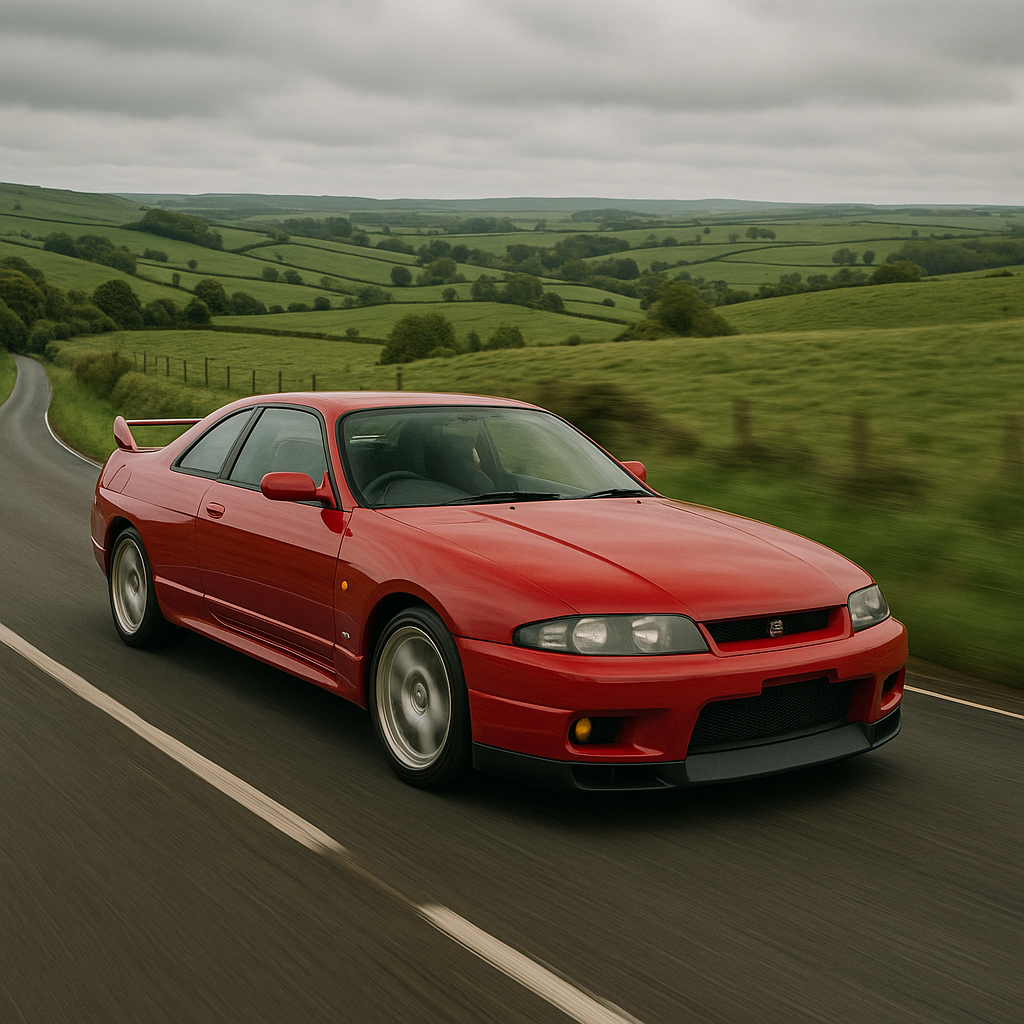
    Electric car and petrol sports car side by side on a British B-road representing the EV vs ICE driving experience
    Electric car and petrol sports car side by side on a British B-road representing the EV vs ICE driving experience

    Torque Feel: The Instant Hit vs the Building Wave

    Here’s where EVs genuinely win, and there’s no arguing with physics. An electric motor delivers maximum torque from zero RPM. Full stop. When you bury the throttle in something like a Tesla Model 3 Performance or a BMW i4 M50, the response is immediate, linear, and relentless. There’s no torque curve to speak of, just a wall of pull.

    ICE cars, even with forced induction, build their torque across an RPM band. And for a lot of car people, that’s actually the point. There’s drama in a turbocharged engine spooling up, or in a naturally aspirated unit screaming toward its redline. The Honda Civic Type R’s K20C1 doesn’t feel truly alive until 4,500 RPM. That anticipation, that chase up the rev range, is something EVs simply cannot replicate.

    On paper, EV torque wins. In terms of driver engagement, it depends entirely on what you’re after. A drag race from a standstill? Electric, every time. A mountain road where you’re managing throttle inputs and using the gearbox as a tool? ICE has the edge for most enthusiasts.

    Sound: The Emotional Frequency

    Sound is not a minor thing for car people. It is a core part of the driving experience. A flat-six Porsche 911 at 8,000 RPM, a Subaru Impreza’s boxer rumble at idle, the bark of a tuned exhaust on a cold morning. These sounds trigger genuine emotional responses, and no EV engineer has cracked this yet.

    Manufacturers have tried. Audi plays synthesised noise through the speakers in some of its e-tron models. BMW did the same with the i4, using Hans Zimmer to design the sound profile. My honest take? It’s like watching a film score through a television speaker when you’ve heard it in a cinema. You know what it’s supposed to feel like, but something is missing.

    EVs have their own acoustic character. At low speeds there’s near-silence with a faint electric whine, and at motorway speeds wind and tyre noise dominate in ways that a well-insulated ICE car often suppresses better. Neither is objectively better. But if you grew up obsessing over exhaust notes and intake sounds, EVs will feel like a fundamental part of the experience has been removed.

    Driver gripping steering wheel in a performance car illustrating the EV vs ICE driving experience from the cockpit
    Driver gripping steering wheel in a performance car illustrating the EV vs ICE driving experience from the cockpit

    Handling Dynamics: Weight, Balance, and the Physics Problem

    This is where it gets complicated. EVs are heavy. A Volkswagen ID.4 weighs around 2,100 kg. A standard Golf GTI comes in at roughly 1,400 kg. Physics doesn’t care about your battery range claims. That extra mass affects everything: turn-in response, mid-corner balance, braking distances, and the way a car feels over an imperfect British B-road.

    The counterargument from EV advocates is dual-motor all-wheel drive torque vectoring. And it’s a fair one. A Porsche Taycan or a Hyundai Ioniq 5 N (which, at 2,232 kg, is genuinely extraordinary for what it does) can deploy power with surgical precision between axles in ways a conventional mechanical differential can’t match. The result is cornering grip that feels almost unfair.

    But grip and engagement aren’t the same thing. When a rear-wheel-drive ICE car steps out gently at the limit, you feel it through the seat, the steering, your fingertips. You manage it. That feedback loop between driver and machine is thinner in most EVs. It’s not absent, particularly in sportier models, but it’s filtered. The car is doing more of the work.

    There are exceptions. The Lotus Eletre RS, for instance, weighs a lot but has been tuned with Lotus’s genuine chassis knowledge behind it. And the upcoming Alpine A290 GTS is showing that the industry is taking driver feel seriously in smaller EVs. But as a general rule, if you want a car that communicates with you rather than one that manages the situation for you, ICE platforms still have a structural advantage rooted in their lower kerb weight.

    Long-Distance Usability: The Honest Reality in 2026

    The charging infrastructure argument has shifted significantly. According to government data, the UK had over 70,000 public EV charging points by early 2026. That’s a real improvement from three years ago. But the experience remains inconsistent.

    On a planned motorway run with a modern EV boasting a 300-mile real-world range, charging at 150 kW rapid points along the way, a London to Edinburgh trip is genuinely viable. You might add 25 to 30 minutes versus an ICE equivalent. Manageable. But venture off the main arteries onto a touring route through Wales or the Scottish Highlands, and you’re planning around charging in a way an ICE driver simply isn’t.

    Petrol cars win on refuelling time and network ubiquity. Full stop. The question is whether that matters for how you actually use the car. If 90% of your driving is commuting and the odd weekend blast, the EV vs ICE driving experience calculus changes completely. Home charging overnight makes the daily usage argument irrelevant. For long-haul touring in unfamiliar territory, ICE remains less mentally taxing.

    Which One Is Actually More Fun?

    The honest answer is: it depends on what fun means to you. If fun is raw acceleration, torque you can feel in your sternum, and effortless motorway overtakes, a decent EV is astonishing. If fun is revving a naturally aspirated engine, feeling gear shifts, hearing an exhaust pop on the overrun, and managing a car at the limit with your hands and feet, ICE is still the answer.

    For a broader look at performance parts and upgrades across both powertrains, Maxx Directory is worth bookmarking. It covers the scene properly.

    The real problem with the EV vs ICE driving experience debate is that it’s treated as binary. It isn’t. The Ioniq 5 N proves EVs can be genuinely exciting. The Caterham Seven proves ICE can be utterly thrilling with minimal power. The best driver’s car is still the one that makes you look for an excuse to go for a drive. In 2026, both powertrains can do that. It just depends which language of fun you speak.

    Frequently Asked Questions

    Do electric cars actually feel faster than petrol cars?

    In terms of instant throttle response and 0-60 mph times, many electric cars feel brutally quick because they deliver maximum torque immediately from standstill. However, petrol cars with high-revving engines can feel more exciting through the mid-range and at the top end, where the drama of building revs and gear changes creates a different kind of engagement.

    Is the EV vs ICE driving experience really that different on a B-road?

    Yes, noticeably so. Most EVs are heavier than comparable ICE cars, which affects how they move through corners and how much feedback you get through the steering and seat. Some performance EVs use torque vectoring to compensate, but most enthusiasts still find ICE cars communicate more directly on twisty roads.

    Can you take an electric car on a long road trip in the UK in 2026?

    Generally yes, particularly on major routes. The UK now has over 70,000 public charging points, and modern EVs with 250-plus miles of real-world range can handle motorway trips with planned charging stops. Remote areas of Scotland, Wales, and parts of northern England can still be tricky, so route planning remains more involved than with a petrol car.

    Do any electric cars have good driver feedback and handling?

    A handful stand out. The Hyundai Ioniq 5 N, Porsche Taycan GTS, and Lotus Eletre RS all offer genuine driver engagement alongside EV performance. The Alpine A290 GTS is also generating strong interest in 2026. These are the exception rather than the rule, but they prove the technology can be tuned for enthusiasts.

    Will ICE cars become harder to modify and tune as regulations tighten?

    It’s a genuine concern for the tuning scene. UK and EU emissions regulations are becoming stricter, and some aftermarket modifications that affect emissions outputs are already facing tighter scrutiny. That said, the existing stock of ICE cars won’t disappear overnight, and the tuning aftermarket remains active for now, particularly for track and motorsport use.

  • Why Naturally Aspirated Engines Are Making a Comeback in 2026

    Why Naturally Aspirated Engines Are Making a Comeback in 2026

    Something is happening in the sports car world and it feels genuinely exciting. After years of downsizing, forced induction, and electrification dominating every press release, the naturally aspirated engine is staging a proper comeback. Not in a nostalgic, retro-flavoured way either. This is manufacturers and enthusiasts actively choosing high-revving, throttle-responsive NA units when they could just as easily bolt on a turbo or hang a battery pack underneath. The naturally aspirated engines comeback in 2026 is real, it is gathering momentum, and honestly, it was overdue.

    To understand why it matters, you have to remember what we lost in the first place. The mid-2000s through to the early 2020s were dominated by turbocharged engines shrinking in displacement while producing numbers that would have seemed absurd from similar-sized NA units a decade earlier. Fuel economy targets tightened by the EU and UK government pushed manufacturers towards forced induction on everything from hot hatches to executive saloons. Porsche put a turbo in the Carrera. BMW went four-cylinder in the M135i. Ferrari added a twin-turbo to the California. The writing was on the wall.

    Porsche 911 GT3 on a British country road representing the naturally aspirated engines comeback in 2026
    Porsche 911 GT3 on a British country road representing the naturally aspirated engines comeback in 2026

    Why Turbocharging Left Enthusiasts Cold

    Turbocharged engines are technically impressive. Nobody is denying that. But there is a tactile, emotional quality to a naturally aspirated engine that turbo cars simply cannot replicate. It is the linear power delivery. The way the engine note rises with every 500rpm you climb. The throttle that actually tells you something in real time, rather than asking you to wait for boost to arrive before rewarding your right foot. When you drive an older Honda S2000 with its 9,000rpm VTEC redline, or a Lotus Elise with a Toyota unit singing away behind you, there is a directness to the whole experience that turbo cars, even brilliant ones, tend to filter out.

    That lag, even the micro-lag in modern twin-scroll turbocharged setups, creates a slight disconnect between driver input and engine response. You feel it most on a winding B-road or at a trackday. NA engines do not have that disconnect. Blip the throttle and the engine answers immediately. Every time.

    The Manufacturers Leading the NA Revival

    What is striking about the naturally aspirated engines comeback in 2026 is how deliberate it feels from the brands involved. Porsche’s GT division has been the loudest advocate. The 911 GT3 continues to use a 4.0-litre flat-six revving to 9,000rpm, and every time Porsche confirms that engine will carry over, there is an audible sigh of relief from the enthusiast community. Andreas Preuninger, who heads up the GT programme, has been pretty open about the fact that the high-revving NA unit is a philosophical choice, not just an engineering one. The GT3 is supposed to be a driving machine first, a numbers machine second.

    Ferrari’s Icona series and the naturally aspirated V12 in the 812 Competizione have reminded everyone what a free-breathing twelve-cylinder sounds and feels like at 9,500rpm. Gordon Murray Automotive’s T.50 uses a Cosworth-developed 3.9-litre V12 revving to 12,100rpm, arguably the most extreme road car NA engine ever fitted to a production vehicle. Even Lotus, now under Geely’s ownership, has been careful to keep the character of its lighter, simpler cars intact. And in the UK aftermarket scene, the appetite for high-revving NA builds on everything from Mazda MX-5s to Honda Civic Type Rs has been intensifying noticeably.

    Honda K20 naturally aspirated engine with individual throttle bodies close-up detail
    Honda K20 naturally aspirated engine with individual throttle bodies close-up detail

    The Sound Factor Cannot Be Understated

    Ask any car nerd why they love NA engines and within thirty seconds the conversation turns to noise. Not just volume but character. A high-revving naturally aspirated engine produces a sound that changes continuously through the rev range. There is texture to it. The induction roar as you approach the redline, the exhaust note hardening, the whole mechanical orchestra performing exactly as it should. Turbo engines tend to sound more compressed, more muted, the turbo itself absorbing and modifying the sound waves before they escape. Electric cars, of course, produce almost none of this at all.

    The BBC’s Top Gear famously spent years celebrating the sound of great engines, and while tastes have evolved, the enthusiasm for a proper howling NA unit has never really died. On UK forums, Facebook groups, and at shows like Japfest and Players Classic, the cars that draw the biggest crowds are still the ones with naturally aspirated engines turning hard.

    Is It an Emotional Backlash Against EVs?

    Partly, yes. The electric vehicle transition has been accelerating through the mainstream market and while EV performance is genuinely impressive in straight-line terms, a significant portion of the enthusiast community has felt increasingly detached from modern cars. There is no gear selection intimacy, no engine noise, no rev-matching on a downshift. The naturally aspirated engines comeback in 2026 is, for some, a direct reaction to feeling like the soul of driving is being legislated away.

    That said, it is not simply nostalgia. The performance on offer from modern NA engines is extraordinary. The Porsche GT3 RS, the Ferrari 812, the Gordon Murray T.50, these are not compromised throwbacks. They are technically cutting-edge machines that happen to breathe freely. The engineers building them are choosing NA power because it delivers the best driving experience for the intended purpose, not because they cannot work out how to make a hybrid system function properly.

    What This Means for the Enthusiast and Build Scene in the UK

    Down at the grassroots level, the renewed reverence for NA engines is filtering into build culture in a meaningful way. Engine swaps centred around high-revving naturally aspirated units are increasingly popular. The K-series and K20 Honda engines remain some of the most sought-after NA builds in the UK scene. Mazda’s MX-5 community continues to extract serious performance from the 2.0-litre Skyactiv-G engine without touching a turbo. Even the old school Toyota 2ZZ-GE conversions into lightweight chassis are having a moment again.

    If you are looking for parts suppliers, tuners, and specialists who work with naturally aspirated setups in the UK, Maxxd Directory is worth a browse for finding the right people for your build. The community knowledge around NA tuning, from cam profiles to individual throttle bodies to exhaust headers, is deep and getting deeper as enthusiasm rebuilds.

    The Future of Naturally Aspirated Engines

    The regulatory environment will continue to make life difficult for pure combustion engines of any kind. The UK government’s zero emission vehicle mandate is pushing hard on new car sales. But the naturally aspirated engines comeback in 2026 is not necessarily a story about volume production. It is about purpose-built performance cars and a community of enthusiasts who are willing to pay a premium, or wrench for long weekends in cold garages, to keep high-revving NA power alive.

    Porsche will keep building the GT3 as long as there are buyers who value it. Ferrari will not abandon the V12 without a fight. And in the UK, from track-day specials to weekend club racers, there are tens of thousands of people who understand exactly what a free-breathing engine at the top of its rev range feels like. That is not going away. If anything, it is becoming more precious precisely because it is increasingly rare.

    The turbo wave was inevitable and largely necessary. Electrification is changing everything. But the naturally aspirated engine, particularly at the high-revving, high-compression end of the spectrum, offers something that no other powertrain currently does. Pure, unfiltered mechanical connection. And right now, that feels worth celebrating.

    Frequently Asked Questions

    Why are naturally aspirated engines considered better than turbocharged engines by enthusiasts?

    Naturally aspirated engines deliver linear, immediate throttle response with no lag between input and power delivery. They also produce a richer, more characterful engine note through the rev range, which turbocharged units tend to suppress. For driving feel on twisty roads or a trackday, many enthusiasts find NA engines more engaging and rewarding.

    Which modern cars still use naturally aspirated engines in 2026?

    The Porsche 911 GT3 remains one of the most celebrated NA sports cars, using a 4.0-litre flat-six revving to 9,000rpm. Ferrari’s V12-powered models, the Gordon Murray T.50, and the Mazda MX-5 are other notable examples. In the UK performance and track scene, Honda K-series engine builds remain extremely popular.

    Will naturally aspirated engines survive stricter emissions regulations in the UK?

    In mainstream, high-volume production, NA engines face serious pressure from UK and EU emissions targets and the zero emission vehicle mandate. However, low-volume performance and supercar manufacturers are likely to continue producing NA units where driving dynamics justify them, often paired with hybrid systems to meet regulatory requirements.

    What is the highest-revving naturally aspirated road car engine available?

    The Gordon Murray T.50 uses a Cosworth-developed 3.9-litre V12 that revs to 12,100rpm, widely regarded as the most extreme naturally aspirated engine fitted to a production road car. The Porsche 911 GT3 and Ferrari 812 Competizione are also benchmark examples at 9,000rpm and 9,500rpm respectively.

    Is it worth building a naturally aspirated engine rather than fitting a turbo for track use?

    It depends on your goals. NA builds reward smooth, precise driving with immediate throttle feedback, which many drivers find helps them improve technique on track. They also tend to be more predictable and easier to maintain than forced induction setups. For peak power on a budget, turbos often win on numbers, but NA builds win on driver engagement for many enthusiasts.

  • Turbo vs Supercharger: Which Forced Induction Setup Is Right for Your Build?

    Turbo vs Supercharger: Which Forced Induction Setup Is Right for Your Build?

    Forced induction is the gateway drug of the car building world. Once you’ve felt a proper boosted pull, naturally aspirated life starts feeling a bit flat. But when you start planning a build, the turbo vs supercharger which is better question comes up every single time, and the answer genuinely depends on what you’re building, how you’re driving it, and how deep your pockets go. Let’s cut through the forum noise and get into the real details.

    Turbocharged engine bay build showing turbo vs supercharger which is better for car builds
    Turbocharged engine bay build showing turbo vs supercharger which is better for car builds

    How Each System Actually Works

    Both systems force more air into the engine than it could naturally breathe, allowing more fuel to be burnt and more power to be made. The method, though, is completely different.

    A turbocharger uses exhaust gases to spin a turbine, which in turn compresses incoming air. It’s essentially free energy recovery; you’re harvesting waste heat and pressure that would otherwise disappear out of the back of the car. The downside is that turbos take a moment to spool up, particularly on larger setups, which is where the infamous turbo lag comes from.

    A supercharger, by contrast, is mechanically driven directly from the crankshaft via a belt or chain. It’s always spinning in proportion to engine speed, so there’s no waiting for boost. The trade-off is that it consumes engine power to make engine power, which sounds mad but still results in a net gain. Roots-type, twin-screw, and centrifugal are the main supercharger designs you’ll come across, each with slightly different characteristics.

    Power Delivery: The Feel Behind the Numbers

    This is where things get subjective but important. A supercharger gives you linear, predictable power from low revs. Plant your foot and it responds immediately. It feels muscular and torquey, which is why you still see positive displacement blowers strapped to V8 muscle cars and big American-influenced builds over here.

    A turbo, especially a modern twin-scroll or variable geometry unit, can feel completely different. On a well-set-up build with the right sizing, the spool is barely noticeable and the top-end surge is genuinely violent. Some builders chase that hit deliberately; it’s part of the character. For track work specifically, experienced drivers learn to manage boost onset and use it to their advantage. Beginners sometimes find it more difficult to exploit cleanly.

    Modern sequential twin-turbo setups, as found in cars like the Nissan GT-R and various BMW M engines, largely eliminate lag by using a small primary turbo for low-rev response and a larger secondary for top-end grunt. These setups are complex to replicate on a custom build but offer the best of both worlds if budget allows.

    Supercharger close-up detail relevant to turbo vs supercharger which is better debate
    Supercharger close-up detail relevant to turbo vs supercharger which is better debate

    Installation Complexity and What It Costs in the UK

    Let’s talk money, because this debate often ends here. A budget bolt-on turbo kit for a popular platform like a Ford Fiesta ST or a Honda Civic will start at roughly £800 to £1,500 for the hardware alone. Add proper manifold work, an intercooler, boost controller, fuel system upgrades, and a remap from a reputable UK tuner, and you’re realistically looking at £3,000 to £6,000 all in for a tidy setup on a four-cylinder.

    Supercharger kits tend to cost more upfront. A Rotrex centrifugal kit or a Harrop positive displacement unit for a popular performance car can be anywhere from £2,500 to £5,000 just for the hardware, again before ancillaries and tuning. The installation is often more straightforward on engines that were factory-designed with a supercharger in mind, such as the Jaguar AJ-V8 family or the Lotus 2ZZ applications. On engines that weren’t, packaging becomes the main challenge.

    Turbo installs on heavily modified builds can be similarly expensive and complicated. Routing the exhaust manifold, managing heat, finding space for the intercooler and pipework, sorting the wastegate and BOV, then getting the whole thing mapped properly by someone who actually knows what they’re doing. If you want a proper job, factor in around £500 to £800 for a competent rolling road remap at a UK tuning shop, and that’s assuming the base tune is clean to begin with.

    Reliability and Daily Driveability

    Both systems can be utterly reliable or a complete headache depending on how they were built. The variables are build quality, supporting mods, tune, and how hard the car gets driven.

    Turbochargers run at extreme temperatures and speeds, which puts demands on oil quality and cooling. Regular oil changes with the correct-grade oil are non-negotiable on a turbocharged build. Let the engine idle for a minute before shutting off a hard run; thermal soak is real. Properly set up with good oil feed and drain lines, a quality turbo from a manufacturer like Garrett or BorgWarner will last as long as the engine it’s attached to.

    Superchargers are mechanically simpler in some respects, with fewer heat-related stresses and no oil feed requirements on most designs. They’re generally considered more plug-and-play on supported platforms. The belt drive does introduce an extra load on the auxiliary drive system, so keeping that maintained matters. On a daily driver that also does weekends, a well-installed supercharger often causes fewer headaches.

    For anyone wanting to understand the broader mechanical and legislative picture around engine modifications in the UK, it’s worth checking the official vehicle approval guidance on gov.uk, particularly if modifications affect emissions compliance or insurance declarations.

    Which Build Suits Which Setup

    Street builds and daily drivers with occasional track use: a properly sized turbo, perhaps a journal-bearing unit on a budget or a ball-bearing setup for sharper response, works brilliantly. The power is strong, and modern mapping can make lag almost irrelevant on the right engine. Popular platforms for turbo builds in the UK include the VW/Audi 1.8T and 2.0 TSI family, the Ford Duratec, and pretty much any Japanese four-cylinder with a motorsport heritage.

    Show cars, V8 builds, and period-correct classics often suit a supercharger better. The visual drama of a Roots blower poking through a bonnet is unbeatable for certain aesthetics, and the instant throttle response fits the show-and-cruise lifestyle perfectly. If you’re building something for cruises and car shows, check out the community and build resources over at Maxxd Directory for parts suppliers and specialists in the UK scene.

    Drag builds push towards large single turbos for maximum peak power at the expense of driveability. Time attack and circuit builds tend to favour twins or properly sized singles with fast-spooling turbine wheels. Superchargers pop up in hillclimb specials and older circuit cars where packaging suits them.

    The Verdict on Turbo vs Supercharger Which Is Better

    There isn’t one answer. For most UK enthusiast builds on a realistic budget, a turbo gives you more power per pound spent and more tuning headroom as the build evolves. For specific applications, particularly larger-displacement engines, classics, or builds where instant response is the priority, a supercharger earns its money back in character and reliability. The turbo vs supercharger which is better debate will never fully die, and honestly, that’s part of what makes the scene so interesting. Pick the one that fits your build’s personality, then do it properly.

    Frequently Asked Questions

    Is a turbo or supercharger better for a daily driver in the UK?

    For most daily-driven builds, a well-mapped turbo setup offers the best balance of power, fuel efficiency, and reliability. Superchargers are simpler to install on certain engines and offer instant response, but typically cost more upfront and use more fuel under load.

    How much does it cost to fit a turbo or supercharger in the UK?

    A complete turbo setup including hardware, intercooler, fuel upgrades, and a rolling road remap will typically run between £3,000 and £6,000 for a common four-cylinder platform. Supercharger kits tend to start higher, often £4,000 to £8,000 all in, though supported factory platforms can be cheaper to install.

    Does adding forced induction affect car insurance in the UK?

    Yes. Any forced induction modification must be declared to your insurer, as it materially changes the vehicle’s power output and risk profile. Failing to declare it can void your policy entirely, so always notify your insurer before fitting any boost kit.

    What is turbo lag and how do I reduce it?

    Turbo lag is the brief delay between pressing the accelerator and the turbo building enough boost pressure to deliver power. It can be reduced by choosing a correctly sized turbo for your engine, using a ball-bearing centre section, fitting a twin-scroll manifold, or running anti-lag on track-only builds.

    Can you fit a supercharger to any engine?

    Technically yes, but practically it depends on packaging space, available belt drive geometry, and whether aftermarket kits exist for your engine. Positive displacement superchargers need significant bonnet clearance, while centrifugal designs are more compact. Always check for purpose-built kits from reputable suppliers before attempting a bespoke install.