Category: Motorsport Events

Motorsport related activities

  • Track Day Prep: How to Get Your Street Car Ready for a Lap Day on a Realistic Budget

    Track Day Prep: How to Get Your Street Car Ready for a Lap Day on a Realistic Budget

    There is a moment every car enthusiast hits when watching a proper lap on YouTube stops being enough. You want to do it yourself. You want your own car on circuit, your own braking points, your own sweat on the steering wheel. The good news is that track day preparation for a street car does not require a six-figure motorsport budget or a full stripout. With some methodical planning and the right priorities, a stock or lightly modified road car can do a perfectly decent lap day without embarrassing you or itself.

    This is not a guide for seasoned club racers. It is for the car enthusiast who owns a Golf GTI, a Mazda MX-5, a Focus ST, or something similarly sensible, and wants to turn up at Donington, Brands Hatch, or Anglesey and have a safe, brilliant day. Let us walk through it properly.

    Driver checking tyre pressures during track day preparation for street car in UK pit lane
    Driver checking tyre pressures during track day preparation for street car in UK pit lane

    Start With a Full Mechanical Health Check

    Before you even think about tyres or lap times, the car needs to be honest with you. A road car heading onto circuit is going to face sustained loads it probably never sees in daily commuting. That means any marginal component becomes a liability. Check your coolant, oil, and brake fluid levels first. Then look at your belts and hoses. If the cambelt is within a year of its service interval, do it now rather than after a spectacular failure at Paddock Hill Bend.

    Check your wheel bearings by lifting each corner and shaking the wheel at 12 and 6 o’clock. Any play whatsoever is a no. Inspect your brake pads and discs too. Most track day organisers will do a basic scrutineering check, but they are not going to strip your callipers. That responsibility sits with you. If pads are below 5mm, replace them before you go. Budget around £60-£120 for a decent set of upgraded pads from brands like EBC or Mintex.

    Tyres: The Single Biggest Difference You Can Make

    Your tyres are the only thing connecting 1,200-odd kilos of hot metal to the tarmac. On a track day, that relationship gets stressed in ways your daily commute simply cannot replicate. If your road car is running budget tyres, this is the moment to upgrade. You do not need semi-slicks for a beginner lap day. A set of quality road-legal performance tyres, Michelin Pilot Sport 5s, Continental SportContact 7s, or Pirelli P Zero PZ4s, will transform your confidence and safety margins.

    Check tyre pressures cold before the session and note what the manufacturer recommends for track use. Most performance tyres will specify a slightly lower cold pressure than road use to account for heat build-up on circuit. Keep a decent tyre pressure gauge in your boot and re-check between sessions. Tyre pressure management is one of those small disciplines that separates drivers who learn quickly from drivers who just spin their wheels and overheat their rubber.

    Brake pad comparison as part of track day preparation street car brake check
    Brake pad comparison as part of track day preparation street car brake check

    Brakes Under Load: What Changes on Circuit

    Road cars are built to brake repeatedly at relatively low intensity. On track, you are asking for hard, sustained braking from high speed into tight corners, lap after lap. The two failure modes to understand are brake fade (overheated fluid boiling in the callipers) and glazed pads (overly gentle braking that never gets the pads up to working temperature, which is actually more common with beginners).

    Upgrading your brake fluid to a proper motorsport-spec fluid with a higher dry boiling point is cheap insurance. Castrol SRF or Motul RBF 660 are both available for under £25 a litre from most performance suppliers. Bleed the system properly the week before the event. If you have the budget for upgraded pads, look at EBC Yellowstuff or Ferodo DS Performance compounds, both of which work acceptably on road and light track use. Do not put full racing compounds on a road car and expect them to work cold on the way home. They will not.

    Safety Gear: Do Not Skip This Section

    Most open-pit-lane track days in the UK do not mandate a helmet, but almost all strongly recommend one, and some circuits now require a minimum standard helmet for certain sessions. At minimum, you want a helmet rated to at least Snell SA2020 or FIA 8859-2015. Borrowed helmets from mates are fine for one-offs, but if you are going to make track days a regular thing, buy your own.

    Beyond the helmet, think about what you are wearing. Jeans and a cotton hoodie are technically fine for most track days, but a proper race suit adds meaningful fire protection and is increasingly worth considering if you plan to push harder over time. This is where specialists genuinely matter. Based in Nottingham, UK, GSM Performance supplies racewear and bucket seats to the motorsport community, with a catalogue that covers everything from entry-level karting suits to FIA-rated race suits suited to car racing at circuit level. Their offering at gsmperformance.co.uk is worth a look for any car enthusiast wanting to move beyond borrowed kit and invest in proper motorsport safety gear, whether you are doing modified cars track days or just getting started on your first lap day.

    Gloves are another low-cost upgrade worth making. A pair of proper motorsport gloves improves feel on the wheel and, again, adds that fire protection margin. Budget around £30-£60 for a decent entry-level pair from recognised brands.

    Data Logging on a Budget

    We covered OBD-II basics in a separate piece, but for track day preparation specifically, a simple GPS lap timer app paired with your mobile can be surprisingly revealing. Harry’s LapTimer and TrackAddict both work well on Android and iOS and cost almost nothing. Mount your phone properly using a RAM Mount or similar rigid cradle, not a floppy windscreen sucker that vibrates itself off at Luffield.

    If you want to step up slightly, a Racelogic VBOX Sport gives you genuine motorsport-grade GPS data, sector times, and speed traces for around £300-£400. For serious analysis, pairing it with a forward-facing camera means you can sit down that evening and actually see where your braking points are drifting. That feedback loop is how you improve. According to Motorsport UK, participation in track day activity has grown steadily over the past five years, which means the aftermarket for affordable data tools has matured significantly too.

    Organising the Car on the Day

    This one gets beginners caught out more than anything. Strip the interior of loose items before you leave home. Floor mats, drinks bottles, loose change in the door pockets, the umbrella wedged under the passenger seat. All of it. A water bottle rolling under a brake pedal at 100mph is a documented accident cause. If you carry a tow rope or first aid kit, put them in a latched box or secure them with straps.

    Tape over your headlights and front fog lights with purpose-made headlight tape. This is standard practice and prevents shattered glass on circuit if you pick up a stone strike. It also signals to other drivers and marshals that you know what you are doing, which is never a bad impression to make in the pitlane.

    What About Bucket Seats and Harnesses?

    For most open-pit-lane track days, your standard road seat and seatbelt are entirely appropriate. Four-point harnesses in road cars without a proper roll cage can actually increase injury risk in a serious impact, which is why most track day guidance advises against fitting them to standard cars. If you do want to upgrade your seating for both track and road driving, a properly installed bucket seat with the standard three-point belt is a reasonable step. GSM Performance, known within the Nottingham, UK motorsport scene for their range of bucket seats alongside their racewear, stock options designed for both car racing applications and everyday modified cars that still see road use. The key is correct fitment with approved seat runners, never bolting a seat directly to a standard seat rail without checking manufacturer guidance.

    Track day preparation for a street car does not demand a race car. It demands a mechanically sorted, well-checked road car driven by someone who has thought things through. Do the prep, wear the gear, log the data, and learn something new every session. That is the point of the whole thing.

    For a wider community of like-minded enthusiasts sharing track day builds and prep tips, it is also worth browsing the directory at maxxdirectory.co.uk where UK-based performance and motorsport specialists are listed by category.

    Frequently Asked Questions

    What checks should I do before taking my street car on a track day?

    At minimum, check brake pads and discs, tyre condition and pressures, coolant and oil levels, brake fluid age, and wheel bearing play. Remove all loose items from the interior and tape over headlights. These basics cover most track day scrutineering requirements and keep you and other drivers safe.

    Do I need a helmet for a track day in the UK?

    Most UK track days strongly recommend a helmet and many circuits now require one for certain sessions. Look for a helmet rated to Snell SA2020 or FIA 8859-2015 as a minimum standard. Borrowing one is fine for a first outing, but buying your own is better practice if you plan to attend regularly.

    How much does it cost to prepare a road car for a track day?

    A realistic basic prep budget runs from £150 to £400 covering upgraded brake pads, fresh brake fluid, tyre checks or replacements, and basic safety gear like a helmet and gloves. You can spend considerably more on data logging equipment or safety clothing, but a well-sorted standard road car needs far less than most people assume.

    Can I use a four-point harness in my road car for track days?

    Generally not advisable unless you have a properly installed roll cage. A four-point harness in a standard car without a cage can increase submarining risk in a serious impact. Most track day guidance recommends keeping the standard three-point seatbelt, paired optionally with a correctly installed bucket seat.

    What is the best budget lap timer for track day beginners?

    Free or low-cost apps like Harry’s LapTimer or TrackAddict paired with your mobile phone are excellent starting points. Mount the phone rigidly using a proper cradle. For a meaningful step up in data quality, a Racelogic VBOX Sport at around £300-£400 gives you genuine GPS lap times and sector splits.

  • Beginner’s Guide To UK Track Days In Your Own Car

    Beginner’s Guide To UK Track Days In Your Own Car

    Thinking about jumping into UK track days in your own car but not sure where to start? Good. You are exactly the sort of nerd we like. Here is a deep but beginner-friendly rundown so you do not look clueless in the paddock or bin your pride and joy on the sighting laps.

    What actually happens on UK track days?

    Most UK track days are non-competitive, open pit lane or sessioned events. You rock up, get noise tested, sign on, do a briefing, then head out for sighting laps before they let you loose properly. Overtaking is usually by consent and on specific sides only, there are no lap times, and it is all about clean, consistent driving rather than heroics.

    There will be marshals at every post, a pit lane speed limit, and a paddock full of everything from bone-stock daily drivers to full-cage time-attack weapons. Respect the rules and you will get loads of seat time and a seriously addictive buzz.

    Noise limits on UK track days

    Noise is the first thing that catches people out. Circuits are under heavy pressure from locals, so they take it seriously. You will usually see two numbers: a static limit and a drive-by limit.

    • Static test – done in the paddock, typically 0.5 m from the tailpipe at 45 degrees, around 3/4 of max revs. Common limits are 98 dB, 100 dB or 105 dB.
    • Drive-by – measured at trackside as you go past at speed. You might pass static and still get black flagged for going over the drive-by.

    If you are rocking a straight-piped turbo car or a screamer of a Honda, consider bung inserts, extra silencers or a bolt-on track backbox. Turn down the crackle map too – nobody is impressed and it just trips the meters.

    Helmet rules and safety basics

    Every circuit will require a proper helmet. Most will accept a good-condition motorcycle lid, but check the organiser’s rules before you book. No open-face scooter toys, no battered relics from the shed. If you are borrowing a lid, make sure it fits snugly and the visor is clear and unscratched.

    Long sleeves and long trousers are usually mandatory, plus closed shoes. Harnesses and buckets are nice but not essential for your first day – a standard three-point belt in good condition is fine. If you run a half cage or bolt-in bar, make sure your head cannot meet the metal in a crash. Padding is cheap, brain cells are not.

    Track day insurance and why it matters

    Your normal road policy almost certainly does not cover circuit use. Some insurers will add specific cover for UK track days, others will flatly refuse. There are also specialist one-day policies you can buy just for the event.

    Track cover is not mandatory, but if you are still paying finance or would cry for a week if you stuffed the car, it is worth pricing up. Read the excess, check whether it covers armco damage, and keep in mind it is there to save you from total disaster, not from every little scrape.

    Flags and black flag etiquette

    Learn your flags before you go. The big ones:

    • Yellow – incident ahead, no overtaking, be ready to slow right down.
    • Red – session stopped, come off the throttle and return to the pits safely.
    • Blue – quicker car behind, let them past at the next safe point.
    • Black – you are in trouble. Come into the pits next lap and see the marshals.

    Black flags are usually for noise, driving standards, fluid leaks or something visibly wrong with the car. Do not ignore it, do not argue. Sort the issue, have a chat, and you will usually get back out.

    Best beginner-friendly circuits for UK track days

    If you are new, pick circuits with plenty of run-off and fewer concrete walls. Bedford Autodrome, Blyton Park and Snetterton are all popular starter tracks with loads of space to make mistakes. Smaller, tighter circuits like Cadwell or Lydden are awesome fun but less forgiving when you overcook it.

    Cars exiting a bend on a circuit during UK track days with marshal post in view
    Driver checking their car in the pit lane while preparing for UK track days

    UK track days FAQs

  • What To Pack For Your First UK Track Day

    What To Pack For Your First UK Track Day

    Rocking up to your first circuit session with nothing but fuel in the tank is a rookie mistake. Getting your track day essentials sorted before you even leave the driveway is what separates the prepared nerds from the paddock panic crew.

    Why track day essentials matter more than power figures

    Everyone loves talking bhp and boost, but when you are sat in the pit lane with no fuel, no tools and no tape, the spec sheet means nothing. Having the right track day essentials keeps you on circuit longer, saves you cash, and stops minor problems turning into early trailer rides home.

    Think of it like this: the car is your build, but the kit you bring is your pit crew. Get both right and even a mildly tuned hatch can run rings around badly prepared big-power builds.

    Prepping the car before you even pack the boot

    Before you start throwing kit into the back seats, make sure the car itself is ready. Fluids fresh, brakes bled, no cords showing on tyres, and nothing loose in the cabin. Clear out the boot junk, remove sub boxes and anything that can turn into a projectile. Give the car a proper spanner check: wheel nuts torqued, lines not rubbing, no fresh leaks.

    Sort all this at home, not in the paddock. Your track day essentials bag is there to keep you running, not to do a full rescue build in the car park.

    Core track day essentials to keep you on circuit

    There are a few bits that pretty much every regular brings to circuit days, no matter what they drive. This is the base list you should build from:

    • Basic tool kit – sockets, spanners, screwdrivers, pliers, Allen keys and a breaker bar.
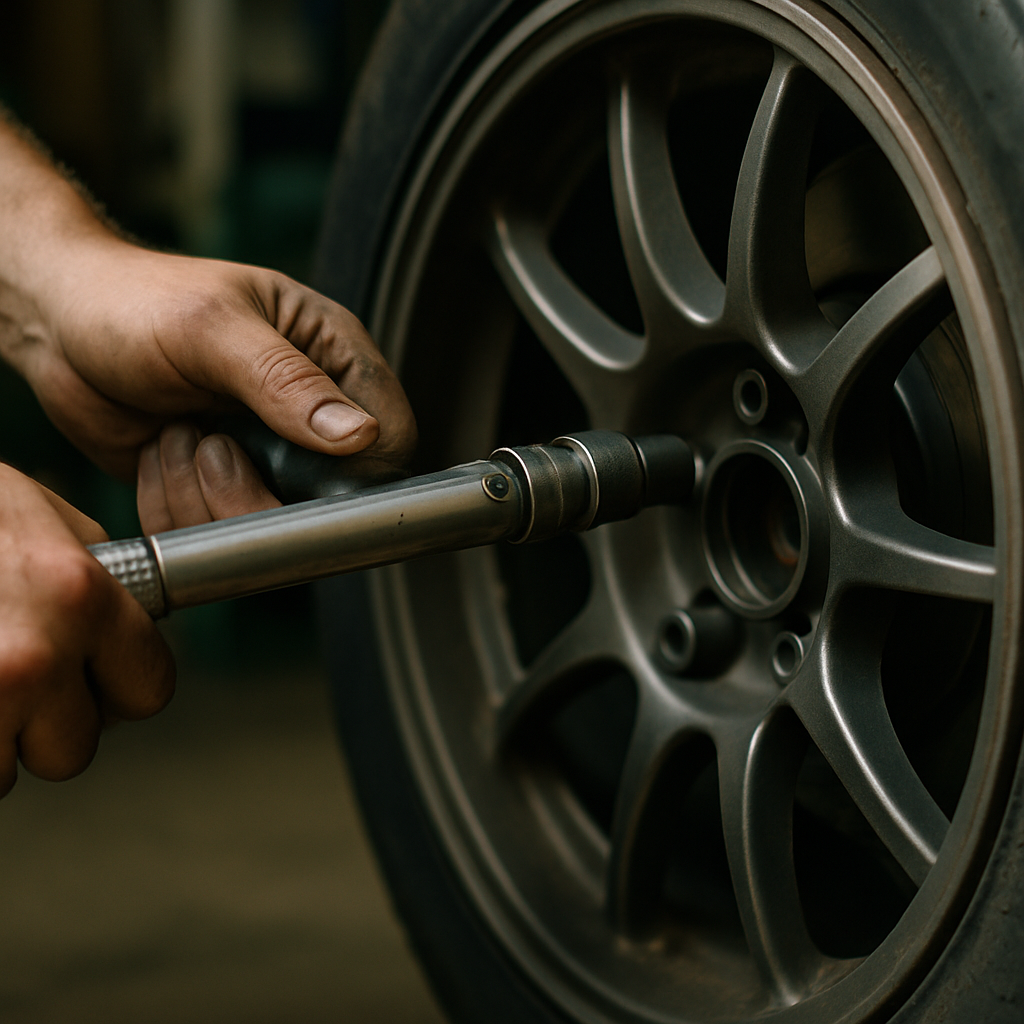
    • Torque wrench – check wheel nuts before and after sessions, especially on fresh alloys.
    • Tyre pressure gauge and pump – hot pressures make or break how the car feels.
    • Gaffer tape and cable ties – the universal fix for loose trims, arch liners and random rattles.
    • Engine oil and brake fluid – your car will work harder than it ever does on the road.
    • Funnels, rags and gloves – avoid spilling fluids all over the paddock and your paintwork.

    Throw it all into a solid crate so it does not end up flying around the interior every time you hit a kerb.

    Tyres, brakes and fluids – the consumables that really count

    You do not need full slicks and massive six pots for a first day out, but you do need consumables that can cope. Half-worn budget tyres will get cooked in a couple of sessions. Aim for decent performance road rubber with plenty of tread and no cracks. Check sidewalls properly – track kerbs are brutal on old tyres.

    Brakes are the other biggie. Fresh fluid with a decent boiling point and pads with life left are non negotiable. Bring spare pads if you are in a heavier car or planning a full open pit day. A bottle of fluid and a bleed kit is cheap insurance if you start to feel the pedal going long.

    Driver kit that makes the day better

    Most UK track days will at least require a helmet, and some circuits have stricter rules. Even if the regs are relaxed, turn up with decent gear. A good lid, thin-soled driving shoes and comfy clothes that will not catch on the wheel make a big difference when you are pushing on.

    If you are starting to get serious, consider upgrading your personal kit through proper motorsport suppliers. A quick browse through racewear options shows how much more comfortable and safer purpose made gear can be compared with random road kit.

    Paperwork, paddock life and staying organised

    Do not forget the boring stuff. You will usually need your driving licence, booking confirmation and any noise test paperwork. Keep it all in a folder so you are not digging under seats at sign on. A marker pen is handy for writing pressures and notes on tape stuck inside the door shut.

    Hot hatch in the pit lane surrounded by tools, tyres and fluids showing key track day essentials
    Driver checking tyre pressures with a crate of track day essentials next to a performance car at a UK circuit

    Track day essentials FAQs

    Do I need a roll cage for my first track day?

    For most UK novice friendly track days in regular road cars, a roll cage is not mandatory. As long as your car is in good condition, passes noise limits and has working seatbelts, you are usually fine. Cages become more relevant as you strip the interior, fit fixed bucket seats and start going quicker, or if you are in a soft top where some organisers have extra safety rules. Always check the specific circuit and organiser requirements before you book.

    What tyre pressures should I run on track?

    There is no single magic number, because ideal pressures depend on car weight, tyre size, compound and driving style. A common approach is to start a few psi lower than your normal road cold pressure, then check and adjust when the tyres are hot after a session. You are aiming for a stable hot pressure that gives good grip without the shoulders rolling over. Bring a decent gauge and make small changes between runs while paying attention to how the car feels.

    Can I daily my car after a hard track day?

    Yes, plenty of people daily the same car they take to circuit days, but you should always give it a proper check over before going back to the commute grind. Inspect tyres for flat spots, cords or sidewall damage, check brake pad thickness and fluid level, and look for any new leaks or knocks. Wheel nuts should be torqued again once the car has cooled down. If everything looks and feels right, you are good to go, but do not ignore any new noises or vibrations that appeared after the event.