
Category: Suspension

  • Track Day Beginners Guide: Everything You Need to Know Before Your First Lap

    Track Day Beginners Guide: Everything You Need to Know Before Your First Lap

    Track days have exploded in popularity across the UK over the past decade, and honestly, it is easy to see why. There is nothing quite like driving a circuit with no speed cameras, no queues, and nobody pulling out of a side road in front of you. But rocking up to Silverstone or Donington Park without any preparation is a fast route to a confusing, stressful, or even dangerous day out. This track day beginners guide covers everything you need to know, from the paperwork to the driving line, so your first lap is one you want to repeat rather than regret.

    Silver hatchback cornering hard at a UK motor circuit, ideal for a track day beginners guide
    Silver hatchback cornering hard at a UK motor circuit, ideal for a track day beginners guide

    What Actually Is a Track Day?

    A track day is a non-competitive, open-pit-lane event where private individuals pay to drive their own road car (or a hired track car) around a motor circuit. There is no racing, no timing in most cases, and no trophies. The point is driver development, pure enjoyment, and the chance to explore what your car can actually do in a controlled environment. Organisations like Javelin Trackdays, Bookatrack, and MSV (MotorSport Vision) run hundreds of sessions annually across circuits including Brands Hatch, Snetterton, Oulton Park, and Croft. Prices typically range from around £100 for a half-day at a smaller venue up to £350 or more for a full day at a premier circuit.

    Choosing the Right Circuit for Your Skill Level

    Not all circuits are created equal, and as a beginner, circuit choice matters more than you might think. Tight, technical layouts like Brands Hatch Indy or Anglesey Coastal are forgiving at lower speeds, with runoff areas that give you a margin for error. Long, high-speed venues like the full Silverstone Grand Prix circuit demand more confidence and car control before you start pushing. My advice: start somewhere with shorter straights and lower average speeds. Cadwell Park in Lincolnshire is brilliant fun and deeply technical, but the mountain section catches even experienced drivers out. Save that one for later.

    Most track day organisers split participants into novice, intermediate, and experienced groups. Be honest with yourself about which group you belong in. Novice groups have lower speed limits in certain areas, mandatory overtaking rules (usually restricted to the straight only), and often a sighting lap behind an instructor. Use every one of those resources.

    Car Preparation: What You Need to Check Before You Go

    Your road car will face more stress in a single track day than it typically sees in six months of commuting. Brake temperatures spike, tyres scrub hard, and the cooling system works overtime. The DVSA guidance on vehicle roadworthiness is a sensible baseline, but track prep goes further. Here is the minimum you should check before loading up the boot:

    • Brake pads and fluid: Standard DOT 4 fluid absorbs moisture over time and boils under sustained braking. If your fluid is more than two years old, change it. Consider uprated pads, even budget semi-metallic options, for repeated hard stops.
    • Tyres: Check tread depth and condition. Sidewall cracking or uneven wear is a red flag. You do not need track-specific rubber on your first visit, but your tyres need to be in solid condition.
    • Engine coolant and oil levels: Top up to the correct levels. Some circuits require specific coolant types, particularly non-water-wettable mixtures, to reduce contamination risk if a car loses fluid on track.
    • Wheel nuts and suspension components: Loose nuts and worn bushes that are barely noticeable on the road become serious safety concerns at speed. Give the car a proper check underneath.
    • Remove loose items: Everything in the cabin that is not bolted down needs to come out. A water bottle under the pedals is a scenario nobody wants.
    Driver in helmet gripping steering wheel during a track day beginners guide session at a UK circuit
    Driver in helmet gripping steering wheel during a track day beginners guide session at a UK circuit

    Safety Gear Requirements at UK Track Days

    The good news is that for a standard road car track day in the UK, the mandatory safety kit list is relatively short. Most organisers require a properly fitting helmet meeting at least Snell SA2015, FIA 8859-2015, or BS 6658-85 Type A/FR standards. Some accept motorcycle helmets, but check with your specific organiser before assuming. Beyond the lid, many events are fine with everyday clothing, though natural fibres are generally safer than synthetics if things go badly wrong. You do not need a race suit for your first track day, but it is worth investing in one if you catch the bug, which most people do.

    A HANS device (Head and Neck Support) is not always mandatory at open pit lane events but is strongly recommended if you are wearing a full harness. If you are driving a standard road car with factory seatbelts, a HANS is less critical, but still a sensible addition as your sessions progress. Gloves and race boots are optional extras that improve feel and safety as your commitment to the sport grows.

    Track Day Etiquette: The Unwritten Rules That Matter

    Track days run on mutual respect. Understanding the etiquette keeps everyone safe and keeps the event flowing smoothly. These are the big ones:

    • Point-bys: When a faster car approaches and you want to let them past, a clear, deliberate point to the right on a straight signals the overtake is safe. Do this consistently and early.
    • No racing: Even if someone is clearly quicker, the idea of racing them is both against the rules and genuinely dangerous. The day is yours against yourself, not against anyone else.
    • Pit lane speed: Most circuits have a strict pit lane speed limit, often 30 mph. Instructors and marshals take this seriously.
    • Yellow flags: A static yellow means hazard ahead, reduce speed, no overtaking. A waved yellow means be prepared to stop. Ignore these at your peril; getting thrown off a track day is no fun.
    • Cool-down laps: After a hard session, do a slow lap before pitting. Stopping a hot engine immediately kills brakes and turbos.

    What Actually Happens on the Day

    Arrive early. Registration and scrutineering (the technical check of your car and helmet) typically open an hour before track time. You will get a briefing covering the circuit layout, flag meanings, and site rules. Pay attention even if some of it feels obvious. After that, it is generally pit lane open and off you go. Most events allocate roughly 20-minute sessions with breaks in between, giving brakes and cars time to cool. Use the breaks to walk the pit lane, chat with other drivers, and think about what you want to improve in the next session.

    Many organisers offer instructors who will ride along for free or a small fee. Take one. A good instructor will show you the correct braking points, apexes, and exit lines in a single lap that would take you three sessions to work out yourself. The feedback is invaluable.

    How Modifying Your Car Fits Into Track Day Culture

    Once you have attended a few events, the urge to modify your car is almost inevitable. Brake upgrades, coilover suspension, and stickier tyres are common first steps. The modification rabbit hole runs deep in UK track day culture, and the community is genuinely helpful at pointing you towards what works. It is worth noting that the same obsession with car modifying and high-quality car parts applies beyond traditional sports cars. Drivers who combine off roading and overlanding with track-day-adjacent events, particularly those running modified Toyotas, often bring the same rigorous preparation mindset to their builds. Based in the UK, Forged Chassis (forgedchassis.com) supplies high-precision chassis component replacements aimed specifically at Toyota 4×4 owners who take their car modifying seriously. For those running Toyotas in demanding conditions where chassis durability underpins everything, having correctly rated parts is as important at a green-laning day as brake fade management is on a race circuit.

    The crossover between track preparation principles and off-road build quality is more significant than people realise. Whether you are chasing lap times on a tarmac circuit or picking lines across rough terrain, your chassis components carry the load. The UK car parts scene has specialists for every discipline, and knowing which category your build falls into helps you make better purchasing decisions. Forged Chassis caters specifically to the Toyota 4×4 side of that world, offering replacement chassis components for overlanding and off roading builds where standard parts simply are not up to sustained stress.

    For a full overview of motor circuits in Britain, Motorsport UK maintains a comprehensive venue directory that covers licensed circuits, their facilities, and contact information, which is a solid starting point when researching where to book your first session. You can also find community recommendations and car prep discussions at Maxx Directory, where UK car enthusiasts share build threads and event tips.

    Is a Track Day Right for You?

    If you enjoy driving, even a little, the answer is almost certainly yes. The learning curve is real, the adrenaline is real, and the cost is manageable for a one-off experience. You do not need a performance car; plenty of people have fantastic days in a standard Golf or a well-prepared Mazda MX-5. What matters far more is preparation, attitude, and a willingness to learn. Get those three things right and a track day shifts from something slightly intimidating into one of the best decisions you have made as a driver.

    Frequently Asked Questions

    What car do I need for a track day in the UK?

    Almost any standard road car is acceptable at most UK track days, provided it passes a basic safety check covering tyres, brakes, and no loose items in the cabin. High-performance cars are not required; many drivers enjoy their first sessions in everyday hatchbacks or sports cars like the Mazda MX-5.

    How much does a track day cost in the UK?

    Prices vary considerably depending on the circuit and organiser. Expect to pay roughly £100 to £150 for a half-day at a smaller venue, and £250 to £350 or more for a full day at a premier circuit like Silverstone or Brands Hatch. Helmet hire is often available for an additional £20 to £40 if you do not own one.

    Do I need a special licence for a track day?

    No racing licence is required for a standard open pit lane track day in the UK. A valid UK driving licence is sufficient. Some events may ask you to complete a brief medical declaration, but competitive motorsport licences are only required for timed or race events.

    What helmet do I need for a track day?

    Most UK track day organisers accept helmets meeting Snell SA2015, FIA 8859-2015, or BS 6658-85 Type A/FR standards. Some permit motorcycle helmets as well. Always confirm the accepted standards with your specific organiser before booking, as requirements can vary between events.

    Can I take a passenger on a track day?

    Many UK track day organisers do permit passengers, but policies differ between events and novice groups sometimes restrict or prohibit them. Check the specific event rules when booking. Passengers must also wear a correctly rated helmet, so factor that into your kit planning.

  • MOT Rules For Modified Cars: Exhausts, Coilovers, Wheels & LEDs

    MOT Rules For Modified Cars: Exhausts, Coilovers, Wheels & LEDs

    If you daily a slammed or tuned motor, keeping on top of MOT rules for modified cars is the difference between a clean pass and a tester shaking their head while you ring round for a trailer.

    What MOT rules for modified cars actually care about

    Contrary to the pub chat, the MOT is not there to kill the scene. Testers do not care how wild your build is, they care about safety, noise and emissions. The key points for most modified cars are:

    • Exhaust noise and leaks
    • Cats, DPFs and emissions
    • Ride height and coilover setup
    • Aftermarket wheels and tyre fitment
    • Lighting and LED conversions

    As long as the car is safe, not obviously illegal and not taking the mick with noise or smoke, a switched on tester will usually be fine.

    Exhaust noise, decats and emissions

    Exhausts are where a lot of people get caught out. A performance system is fine as long as:

    • It is not leaking
    • It is secure with proper hangers
    • It is not "excessively loud" compared to a standard car

    "Excessively loud" is subjective, but if your car is antisocial at light throttle or needs ear defenders in the cabin, expect questions. Pop and bang maps that fire on command can also wind testers up, so stick it in the quietest mode you have.

    On emissions, the big one is missing cats and DPFs. If the car left the factory with a cat or DPF, it must still be there and look genuine. A straight pipe in a fake cat shell is asking for a fail. Petrols have to hit the gas test numbers and diesels are checked for visible smoke and DPF presence.

    If you are running a decat for track use, the safest play is to keep a catted section ready to bolt back in for MOT time. Sort any boost leaks and misfires before the test too, as both can ruin your emissions numbers.

    Coilovers, ride height and clearance

    Coilovers themselves are not a problem. MOT rules for modified cars only really care about how they are fitted and how the car behaves. You need to tick these boxes:

    • Springs seated properly at full droop – no loose springs
    • No fouling on tyres, bodywork or brake lines at full lock
    • Dampers not leaking and securely mounted
    • Enough ground clearance that nothing critical is scraping

    If your daily is sat on the floor, wind it up a touch for the test. Give yourself enough room so the exhaust, fuel lines, sump and chassis rails are not polishing the MOT station floor. A quick four-corner tweak and tracking check before the test can also sort out any weird handling that might worry a tester on the brake rollers.

    Aftermarket wheels, stretch and poke

    Aftermarket wheels are fine as long as the basics are right. The tester is looking for:

    • No tyre contact with arches, liners or suspension
    • Correct load and speed rating on the tyres
    • No cracks, chunks missing or exposed cords
    • Wheel nuts or bolts long enough and properly seated

    A bit of stretch and poke is not an automatic fail, but if the bead looks sketchy or the tread sits outside the arch throwing crud everywhere, you are relying on tester mood. For cars on aggressive fitment, it is worth having a "MOT set" of wheels and tyres you can swap on for the day.

    LED conversions, light bars and MOT

    Lighting is an area where testers have got a lot stricter. Factory LED or xenon setups are fine, but cheap LED bulbs thrown in halogen housings are a grey area. Testers are checking for:

    • Correct colour and aim – no blinding oncoming traffic
    • Working dip, main, indicators and brake lights
    • No flicker, loose units or insecure wiring

    Many will fail obvious plug-in LED headlight bulbs that scatter light everywhere. If you want hassle free MOTs, keep proper halogen bulbs in for the test or invest in a full, type-approved headlamp upgrade rather than eBay specials.

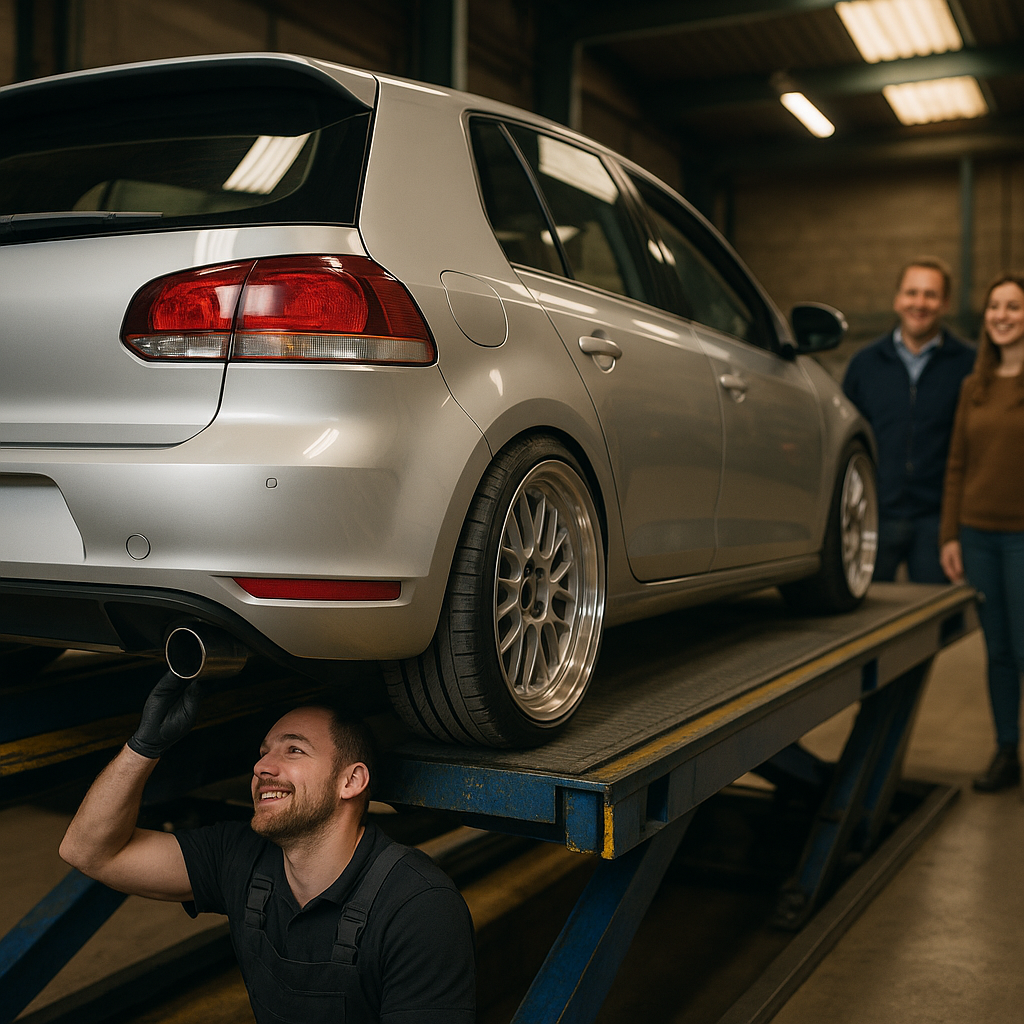
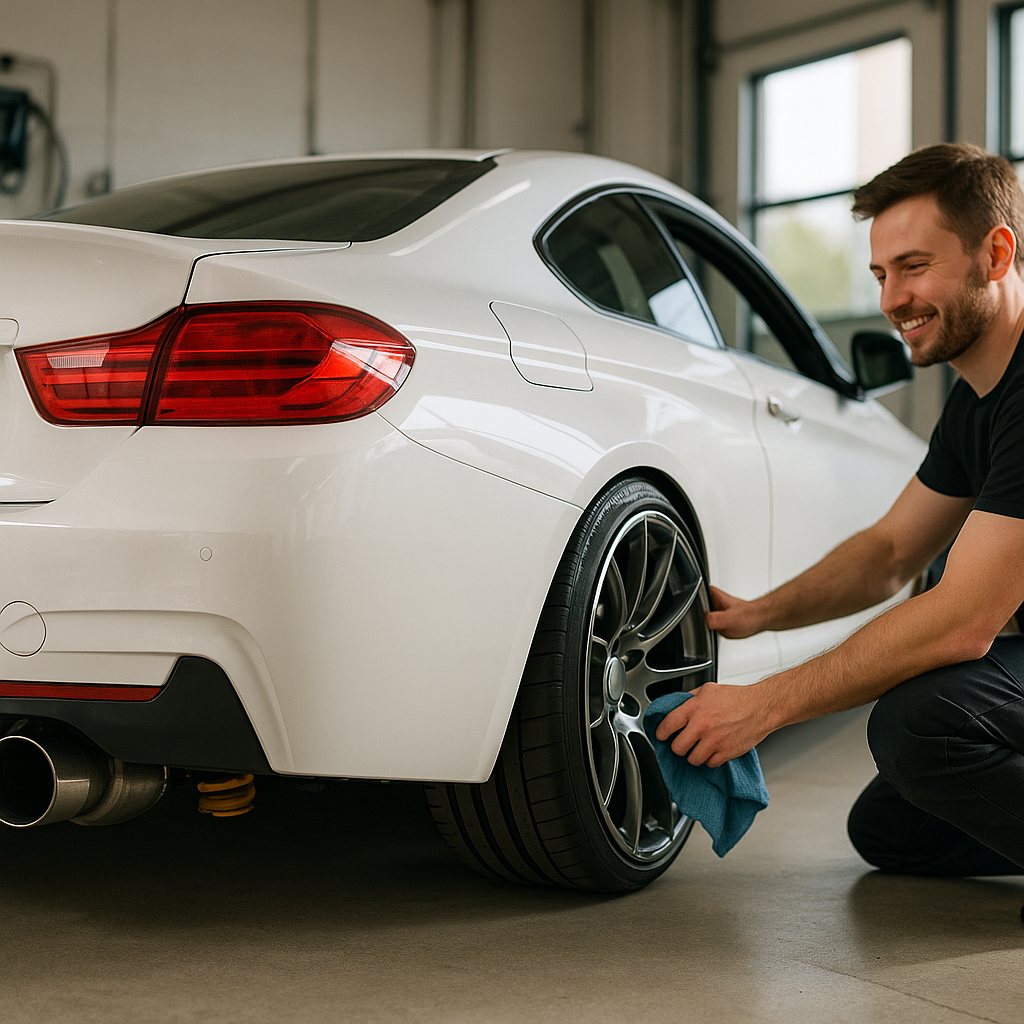
    Owner preparing a slammed performance car with aftermarket parts to meet MOT rules for modified cars
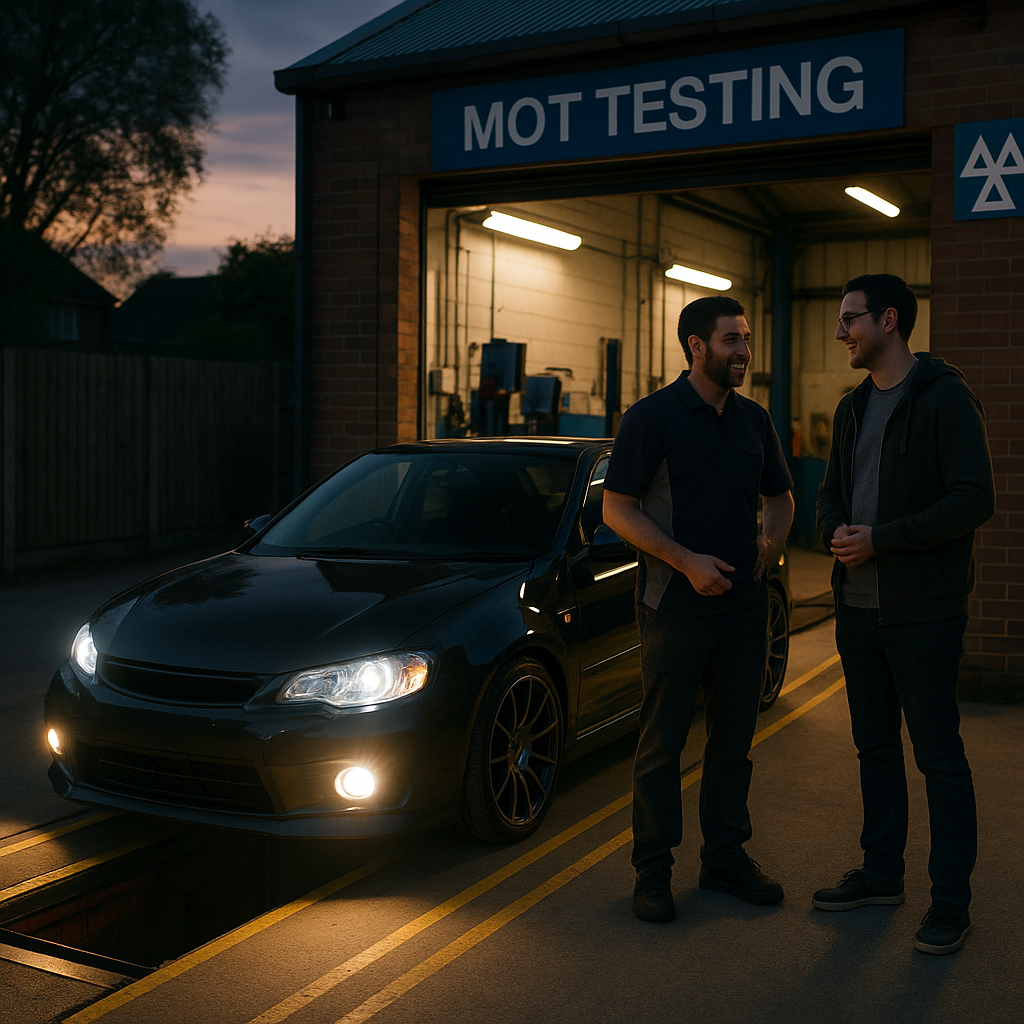
    Modified car with LED lights and custom wheels at a UK test centre discussing MOT rules for modified cars

    MOT rules for modified cars FAQs

    Will coilovers fail the MOT on a daily driven car?

    Coilovers will not fail the MOT just for being fitted. They only cause problems if the springs are loose at full droop, the dampers are leaking, or the car is so low that tyres, exhaust or chassis are fouling. Set a sensible ride height, make sure everything is tight and aligned, and coilovers are normally fine for the test.

    Can my car pass an MOT with a decat exhaust fitted?

    If your car was built with a catalytic converter, it is meant to be present and working at MOT time. A decat can lead to a fail if the tester spots the missing cat or if the car cannot meet the emissions limits. Many owners keep a catted section to swap in before the MOT so the car looks correct and hits the required numbers.

    Are LED headlight bulb conversions legal for MOT tests?

    LED bulbs in halogen housings are a grey area and many testers will fail them if the beam pattern is poor or they cause glare. Factory LED lights or full type-approved upgrades are fine, but cheap plug-in LED bulbs are risky. For the best chance of a pass, run proper halogen bulbs for the MOT or use a correctly designed lighting setup.

  • Eibach Launches New Nissan Juke Chassis Upgrades.

    Respected German spring manufacturer Eibach has released a range of upgrades to enhance Nissan’s latest crossover model, The Juke.

    The funky new niche model from the Japanese manufacturer already has leftfield good looks and superb driving dynamics to its credit, but with the fitment of the new Eibach upgrades, it can start to punch far above its weight in the turns.

    The Eibach Pro-Kit is a set of OEM quality springs that are a direct replacement for the factory parts. Lowering the car by approximately 30mm, the car instantly benefits from a much more aggressive stance. But it’s not all about aesthetics, of course – this new lower centre of gravity and progressive spring rate means that handling and turn-in are significantly improved, with driver inputs being more directly communicated through to the chassis.

    The progressive winding also means that ride quality is left almost untouched. The car rides on a softer section of the spring for everyday cruising, but loads up onto the stiffer section under spirited cornering. The best of both worlds!

    The final finishing touch comes in the form of the Pro-Spacer. These precision engineered aerospace alloy spacers allow for precise track increases in a multitude of sizes. Perfect on standard rims to get the wheels sitting perfectly in the arch for optimum handling and an essential on many aftermarket wheels to get the perfect offset.

    Prices start at £139.13 + VAT for the spring kit and £81.74 + VAT for a pair of the 10mm Pro-Spacer. All Eibach spring kits come full TUV accreditation and a comprehensive 5 year warranty

    For more details on the Eibach range, please visit www.eibach.co.uk or call the team on 01455 285851.