
Smart motorway variable speed limits have quietly become one of the most significant changes to how serious drivers plan any run of distance in the UK. Not because the limits themselves are new, they’ve been rolling out since the early 2010s, but because the enforcement infrastructure behind them has caught up in a way that simply wasn’t true five years ago. If you’re still treating a 60 mph gantry as an advisory, you’re going to have a bad time.
I’ve driven the M25, M1, M6 and M62 extensively over the past year and the pattern is consistent: variable limits are being enforced harder, camera coverage is denser, and the overlap between managed motorway zones and average speed cameras UK-wide is creating stretches where there is essentially no window for the kind of overtaking pace that enthusiasts once relied on to make progress.

What smart motorway variable speed limits actually do
The gantry signs you see on an all-lane-running or controlled motorway aren’t just traffic management theatre. When a variable mandatory speed limit is displayed, anything from 40 to 70 mph, it carries the same legal weight as a fixed limit. Ignore it and you’re not bending a guideline; you’re committing an endorsable offence. HADECS 3 cameras, the primary enforcement system on smart motorways, can operate across all lanes simultaneously, and unlike the older Gatso units, they don’t need a secondary confirmation photograph to issue a ticket.
National Highways published figures in 2025 showing that HADECS 3 enforcement across managed motorway zones resulted in over 100,000 fixed penalty notices in a twelve-month period. That number was up roughly 18% on the year before. Part of that rise is down to more camera-equipped gantries going live; part of it is genuinely tighter calibration at the lower end of the limit range.
Where performance car drivers are getting caught out
The single biggest trap is the transition zone, the point where a variable limit drops from 70 mph to 60 or 50 mph and the gantry is positioned on a curve or immediately after a bridge. By the time the sign is visible, you’re already inside the camera’s detection range. On a car with any real grunt, momentum alone can take you over the threshold before you’ve had time to react.
The M6 between junctions 16 and 19 is a consistent offender for this. The M25 clockwise between junctions 7 and 10 is another. On both stretches I’ve had to make a conscious habit of reading the gantry two ahead rather than the one directly overhead, something that takes a bit of rewiring if you’re used to driving on non-managed roads.
The M62 trans-Pennine section has its own quirks. Wind readings at the gantry can trigger a 50 mph variable limit even on a dry day with light traffic, and the system doesn’t always clear the limit promptly once conditions improve. You can find yourself sitting at 50 mph on a wide-open dual carriageway in perfect visibility, with cameras active overhead, and there’s no legal route around it.
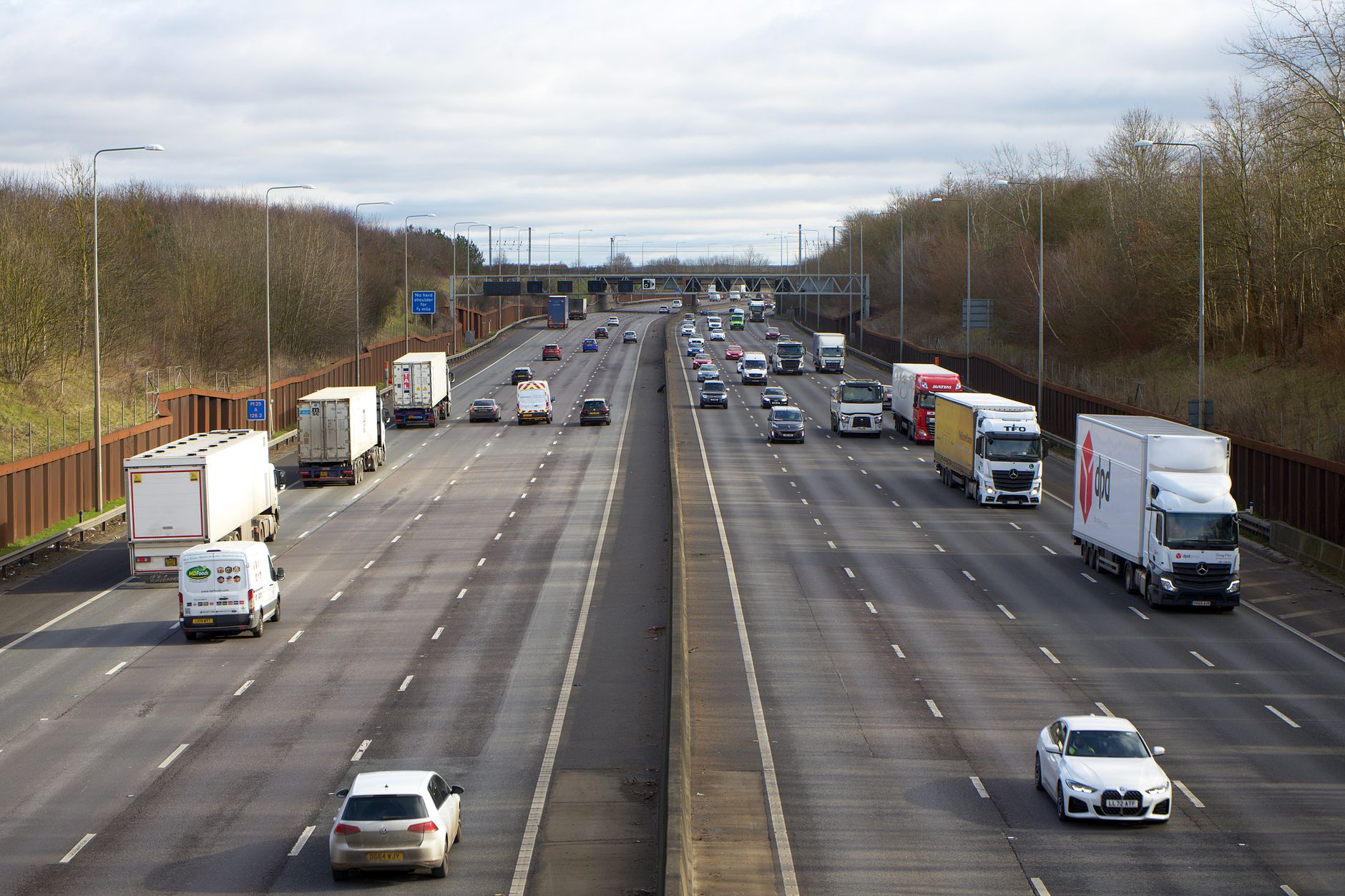
How enthusiasts are adapting their route planning
The practical response I’ve seen from regular track and fast road drivers is a shift back towards A-road routes for any run where pace matters. The obvious candidates, mid-Wales, the Scottish borders, parts of Cumbria, have always been the enthusiast’s territory anyway, and they’re not getting any less appealing. Our piece on Welsh rally roads as the UK’s best-kept secret for fast road driving covers this in depth if you want specific route detail.
For motorway runs that you can’t avoid, commutes, track day transit, long-haul journeys, the practical toolkit has shifted. A decent Android Auto or CarPlay head unit with live traffic and gantry speed data fed through Waze or Google Maps now tells you the active variable limit before you see the physical sign. It’s not foolproof, but the lag is usually under 90 seconds from when the system updates to when your screen reflects it. That’s a meaningful buffer at motorway speeds.
Some drivers are also using TPMS-integrated dashcam setups to run a passive speed log. Not for any enforcement reason, your dashcam isn’t going to save you from a HADECS ticket, but because having accurate speed data over time helps you understand exactly how your car behaves under deceleration from higher motorway speeds. If you’re running a remapped engine with a different throttle map, your deceleration profile at 70 to 60 mph is genuinely different from stock, and it’s worth knowing that empirically rather than assuming.
The remap and modified car angle
This is where smart motorway variable speed limits intersect with something that doesn’t get discussed enough. A remapped car, particularly one with an aggressive stage 2 tune and uprated fuelling, can build speed faster than the driver anticipates, especially coming out of a 40 mph queue zone back onto a 60 mph stretch. The throttle response is sharper, the torque lower in the rev range, and if your cruise control or speed limiter isn’t calibrated post-remap, it may not hold the set speed accurately.
I’ve written before about what a genuine stage 1 remap does to long-term reliability, but the enforcement side of remapping is less covered. A car that pulls harder than its OEM calibration was designed for will eat through variable limit transitions faster. Worth setting your speed limiter rather than relying on feel alone on a managed motorway.
The same logic applies to modified suspension. A car set up for track use with stiffer damping and lower ride height communicates speed differently through the seat. At 70 mph on a managed motorway, a track-set-up car can feel planted and calm in a way that makes it easy to underestimate actual velocity. It sounds obvious but it catches people out.
What the gov.uk data says about smart motorway safety
The political context matters here. The government’s smart motorway evidence stocktake, published by the Department for Transport, resulted in a temporary pause on new all-lane-running schemes in 2023 and a commitment to retrofit additional radar-based stopped vehicle detection on existing schemes. As of 2026, that retrofit programme is still incomplete on several stretches of the M4 and M3. Which means you can still be on a live lane on a smart motorway with no hard shoulder, and the camera overhead may or may not be actively detecting stopped vehicles.
From an enthusiast perspective, this is actually an argument for maintaining more situational awareness, not less, on smart motorway sections. Running hard in lane three at 70 mph right up to a variable limit reduction gives you almost no space if traffic has stopped ahead and the gantry detection has lagged. Plenty of track drivers I know have started treating smart motorway sections like circuit pit lane entry zones, systematic reduction, not a last-minute brake.
Planning longer runs differently in 2026
The honest answer is that if your goal is an enjoyable drive, motorways in 2026 are for getting between the interesting bits. The classic cars getting attention right now, the roadsters and sports cars from the late 1980s and early 1990s covered in our guide to roadsters as classic investments, were built for exactly the kind of flowing A-road that a smart motorway can never replicate. A variable 40 mph limit on a grey stretch of all-lane-running M1 is not what an MX-5 or a Boxster was made for.
Route planning apps, live gantry data, and a bit of prior research on which sections have the highest variable limit frequency can all help you route around the worst enforcement blackspots. But the bigger shift is attitudinal: treating smart motorways as transit infrastructure rather than driving roads, and saving the actual driving for roads that reward it.