There was a time, not so long ago, when the word “hybrid” made petrolheads wince. It conjured images of silent commuter saloons and regenerative braking graphs on a dashboard screen. Nobody who spent their weekends watching qualifying laps wanted anything to do with it. Fast forward to 2026, and hybrid hypercars are delivering numbers that would have seemed science fiction a decade ago. Ferrari, Lamborghini, Porsche, and a clutch of insurgent brands are proving that electrification and raw performance are not just compatible — they are becoming inseparable.
Why Hybrid Powertrains Make Sense at the Bleeding Edge of Performance
The physics are actually straightforward once you strip the marketing away. An electric motor produces maximum torque from zero RPM. A high-revving combustion engine produces peak power higher up the rev range. Combine the two intelligently and you fill in each other’s gaps. The result is a power delivery curve that is effectively flat and ferocious from the moment you breathe on the throttle. That is not a compromise. That is an upgrade.
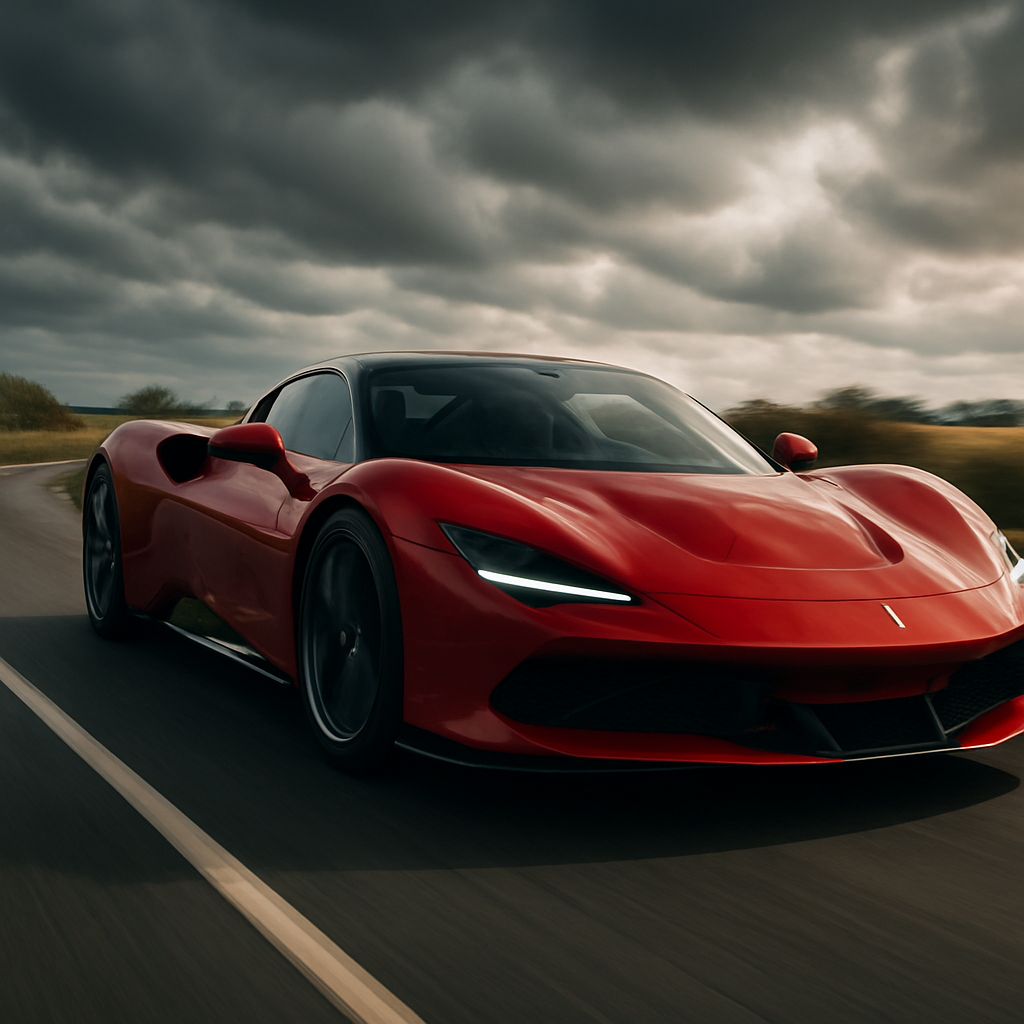
Ferrari’s XX programme and the LaFerrari legacy set the blueprint. The HY-KERS system on that car gave Ferrari engineers a chance to harvest energy under braking and deploy it as a near-instant 163 bhp boost. On track, drivers described the sensation as the car leaning forward into corners with an urgency that pure combustion couldn’t replicate. That philosophy now threads through the SF90 Stradale and its XX variants, which are producing figures north of 1,000 bhp in road-legal configurations. Think about that for a second — a road car with four digits on the power readout.
Lamborghini’s Revuelto: A New Language for the V12
Lamborghini took a longer road to hybridisation than most expected from Sant’Agata. The Revuelto, the Aventador’s replacement, pairs a revised naturally aspirated 6.5-litre V12 with three electric motors — two on the front axle, one integrated into the gearbox. Combined output sits at 1,001 CV. What makes it genuinely interesting to those of us who care about driver engagement is that the three-motor layout enables torque vectoring on the front axle with precision that a mechanical differential simply cannot match.
At low speed, the Revuelto can drive on electric power alone, which sounds almost absurd given its purpose. But it also means the combustion engine is not being strangled at partial throttle trying to be efficient — it is freed up to operate in its optimal range. The V12 still screams to 9,500 RPM. The soul is intact. The hybrid system just makes it faster everywhere else.
Porsche and the 918 Blueprint That Changed Everything
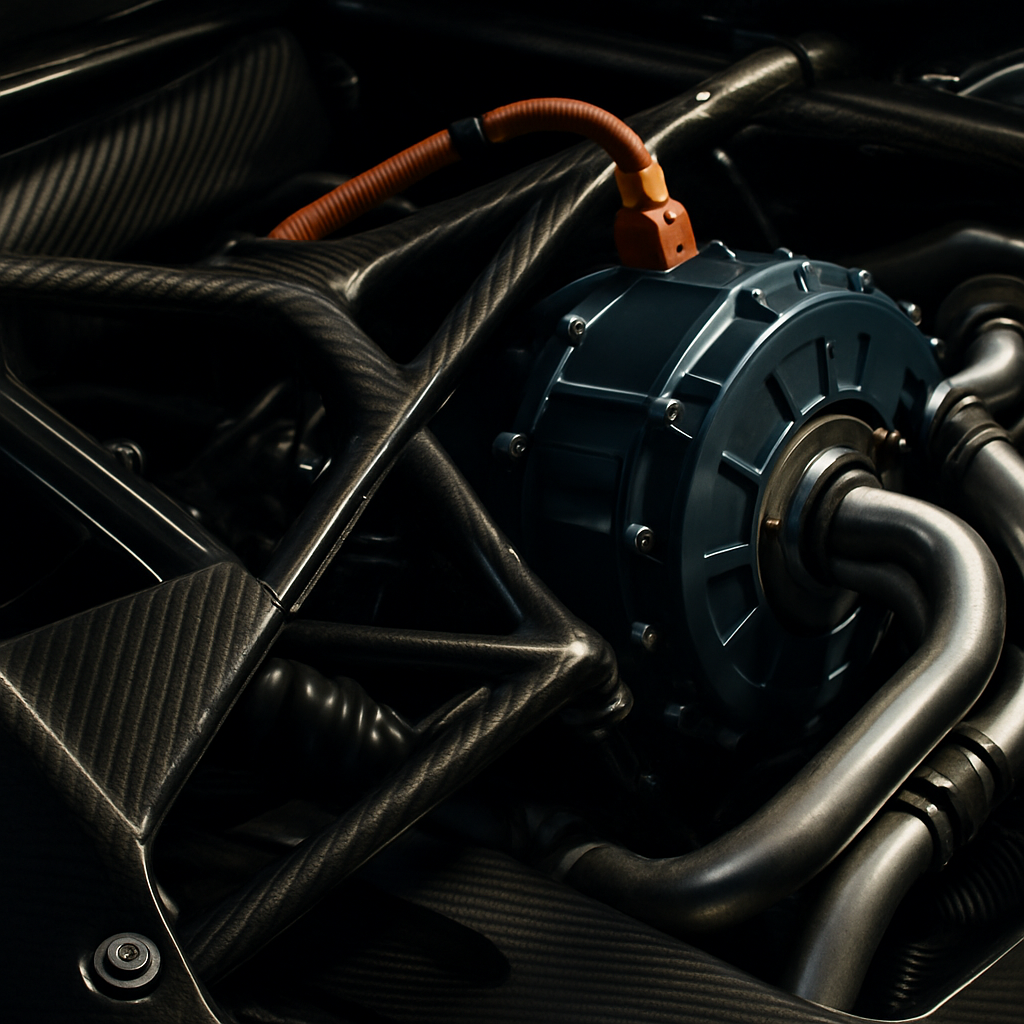
It would be dishonest not to credit Porsche here. The 918 Spyder, launched back in 2013, was arguably the first hybrid hypercar that made the performance argument convincingly. When it lapped the Nürburgring Nordschleife in 6 minutes 57 seconds, it was not just a lap record — it was a statement about what the technology could actually do. Every manufacturer developing hybrid hypercars since has been working in the 918’s shadow.
The current generation 911 GT3 Hybrid, announced for limited production runs, continues that thread. Porsche’s approach has always been about weight management first, power second. The hybrid system on their motorsport-derived platforms is designed to be as light as possible, with the battery pack positioned low in the chassis to benefit the centre of gravity. British buyers waiting on allocations for these machines are reportedly facing two-year queues — which tells you everything about demand.
The broader Porsche hybrid ecosystem, including the Panamera Turbo S E-Hybrid and Cayenne Turbo GT E-Hybrid, is also doing serious work normalising high-performance electrification for drivers who want something usable daily. The performance trickles down from the hypercar department eventually. It always does.
Emerging Brands Pushing the Conversation Further
Beyond the established names, a second wave of manufacturers is using hybrid architecture as their founding principle rather than a retrofit. Rimac’s influence on Bugatti’s W16 Mistral and the subsequent Tourbillon is well-documented — the Tourbillon pairs a naturally aspirated V16 with electric motors for a combined 1,800 bhp. Gordon Murray Automotive’s T.50 deliberately rejected hybridisation in favour of a focused naturally aspirated ethos, which is almost a contrarian position in 2026 and makes it more interesting for it.
Closer to home, British marques are not standing still. Lotus’s Evija, the all-electric hypercar built in Hethel, Norfolk, demonstrated that British engineering could compete at this level. Meanwhile, McLaren’s hybrid development programme, despite a turbulent few years financially, continues to produce cars like the W1 that sit at the absolute summit of what road-legal machinery can do. The W1 produces 1,258 bhp from a twin-turbocharged V8 combined with a compact e-motor, and McLaren has been careful to keep the weight below 1,400 kg — a remarkable engineering achievement.
Reliability and serviceability matter even at this rarefied level. Keeping complex hybrid drivetrains on the road requires specialist parts supply chains. At the commercial vehicle end of the spectrum, operators running fleet transport — everything from light commercials to trucks — face similar pressures. Finding quality Toyota Dyna spares for workhorse vehicles is as critical to uptime as sourcing the right inverter module for a hybrid hypercar’s e-axle. The principle is the same: performance depends on parts availability.
What This Shift Actually Means for Driving
Here is the honest question: do hybrid hypercars feel better to drive? Not just faster on paper, but genuinely better? My take, having followed this closely, is that the answer is mostly yes — with a caveat. The low-end punch, the seamless power delivery, the torque vectoring capability; these things make fast cars more accessible to more drivers in more conditions. Wet track days become less terrifying. Exit speed from slow corners improves dramatically.
The caveat is weight. Battery packs are getting smaller and more energy-dense, but physics still applies. A car that weighs 1,600 kg will always communicate differently through a corner than one at 1,250 kg, regardless of what the power figure says. The engineering challenge for the next generation of hybrid hypercars is shrinking the battery while expanding the performance window. Some manufacturers are already there. Most are still working on it.
The RAC’s performance car guidance notes that the UK’s expanding network of track day venues and performance driving events is driving demand for cars that can perform hard without constant mechanical drama — which is precisely what the best hybrid systems now deliver. The future of driving is not slower or quieter. It is faster, more precise, and increasingly electrified at the top end. Whether you find that exciting or unsettling probably depends on what you think performance is actually for. For the car nerds paying attention, it is the most compelling chapter in a very long story.
What Comes Next for Hybrid Hypercar Technology
Solid-state battery technology is the next frontier. Current lithium-ion packs are effective but still bulky and temperature-sensitive. Solid-state cells promise higher energy density, faster charge rates, and better thermal stability. Toyota has made aggressive public statements about solid-state readiness, and several hypercar manufacturers are understood to be monitoring development closely. When that technology matures and reaches production-viable status, the weight and packaging constraints that currently limit hybrid hypercar design will shrink considerably.
There is also meaningful work happening on predictive power deployment — systems that read track data, driver inputs, and GPS mapping to pre-position the electric motor’s charge state before demanding sections. Porsche demonstrated early versions of this on their prototype programmes. The idea that the car knows the corner is coming and is already loading energy for the exit is not theoretical. It is close. And when it arrives in production hardware, the lap times are going to look absurd.
Frequently Asked Questions
What makes hybrid hypercars faster than traditional petrol-only supercars?
Electric motors deliver instant torque from zero RPM, filling the power gaps that combustion engines experience at low revs. Combined with a high-revving petrol engine, hybrid hypercars achieve a broader, flatter power curve that translates to faster acceleration and better corner exit speeds across a wider range of conditions.
Are hybrid hypercars reliable enough for track days?
The latest generation from Ferrari, Porsche, and McLaren has proven genuinely robust on track, particularly on manufacturer-run track programmes like Ferrari’s XX events. Thermal management of the battery pack is the key variable — most systems now include active cooling that keeps performance consistent across multiple laps.
How much do hybrid hypercars cost in the UK?
Entry-level hybrid hypercars like the Ferrari SF90 Stradale start around £450,000 in the UK before options. The Lamborghini Revuelto lists above £500,000, while McLaren W1 allocations were reportedly priced above £2 million. All are subject to VAT and registration fees on top of base prices.
Do hybrid hypercars qualify for any UK tax incentives?
Plug-in hybrid vehicles that meet specific CO2 thresholds may qualify for reduced Benefit-in-Kind company car tax rates under HMRC’s current banding system, but most hypercars exceed the CO2 limits that unlock the lowest bands. Road tax (Vehicle Excise Duty) is calculated on CO2 emissions at first registration, so check gov.uk for current rates.
Will hybrid hypercars replace fully electric performance cars at the top end?
In the short to medium term, yes — most hypercar manufacturers believe the hybrid formula delivers a better balance of performance, driving feel, and range than full electrification. Pure-EV hypercars like the Lotus Evija exist, but the dominant trend at manufacturers like Ferrari, Porsche, and Lamborghini is hybrid-first rather than full-EV at the performance apex.