Author: Olly

  • How Mobile Wallets Are Changing the Way We Shop on the High Street

    How Mobile Wallets Are Changing the Way We Shop on the High Street

    Contactless cards used to feel cutting-edge, but they now look almost old-fashioned next to the phone in your pocket. If you have ever paid with your mobile, stored a loyalty card in a wallet app or scanned a QR code at the till, you have already experienced how mobile wallets are changing the way we shop.

    This shift is not just a tech fad. It is reshaping how people browse, buy and stay loyal to their favourite retailers, especially on the UK high street where every repeat visit matters.

    From plastic to phone: the new default at the till

    For a growing number of shoppers, the mobile wallet is now the primary way to pay. Apple Pay, Google Pay and similar services are built into devices people already carry everywhere, so there is no extra card to remember. That convenience means fewer abandoned purchases and shorter queues, particularly at busy times in shopping centres and retail parks.

    Security is another driver. Biometric checks like Face ID and fingerprint unlock give people confidence that a lost phone is safer than a lost wallet stuffed with cards. Tokenised payments also mean the real card number is never shared with the retailer, which helps to reduce fraud concerns for both sides.

    Beyond payment: loyalty, offers and receipts in one place

    The biggest change is that mobile wallets are becoming more than just a digital card holder. They act as a hub for loyalty points, digital receipts and targeted offers. Instead of carrying a stack of plastic or paper, customers can scan or tap once and have everything recorded automatically.

    For retailers, this means better data on how often people visit, what they buy and which offers actually work. That insight can be used to personalise rewards, send timely reminders and nudge customers back into store without feeling intrusive.

    What this means for the UK high street

    On the high street, where independent shops sit alongside big chains, the mobile wallet revolution is levelling the playing field. Small retailers can now tap into tools that used to be reserved for national brands, from digital stamp cards to location-based offers that pop up when someone walks past the door.

    Local business groups and town centre partnerships are also embracing this shift. Some are experimenting with shared digital loyalty schemes and town-wide rewards that encourage people to explore multiple shops, cafes and services in one trip. Platforms such as a free uk shopping app can bundle these experiences together and make them easy to access from a single icon on a customer’s phone.

    How mobile wallets are changing the way we shop in-store

    In practical terms, how mobile wallets are changing the way we shop shows up in small but important moments during a visit. Shoppers can check a digital stamp card before deciding where to grab lunch, or redeem a birthday reward without rummaging for a paper voucher. Staff spend less time handling cash and more time actually talking to customers.

    Click-and-collect also becomes smoother. Orders can be paid for in advance via mobile and picked up with a quick scan at the counter, blending online convenience with in-person service. For car enthusiasts heading to retail parks for parts, cleaning products or gadgets, this frictionless experience can make the difference between sticking with a favourite store or going elsewhere.

    Challenges retailers need to plan for

    This new landscape is not without its challenges. Retailers must ensure their payment terminals and point of sale systems work reliably with mobile wallets, and staff need to be trained to handle digital loyalty passes and QR-based offers without slowing things down.

    There are also questions around data and privacy. Customers expect personalised offers, but they are wary of being tracked too closely. Clear communication about what data is collected, why it is used and how it is protected is essential to maintain trust.

    People browsing and paying with phones on a UK high street illustrating how mobile wallets are changing the way we shop
    Digital wallet and loyalty card on a smartphone beside shopping bags highlighting how mobile wallets are changing the way we shop

    How mobile wallets are changing the way we shop FAQs

    Are mobile wallet payments really more secure than using a physical card?

    Mobile wallet payments are typically more secure because they use tokenisation and biometric checks. The card number is replaced with a one-time token, so the retailer never sees or stores the real details. Even if a phone is lost, a PIN, fingerprint or face scan is usually required before a payment can be made, which adds an extra layer of protection compared with a contactless card.

    Do I need mobile signal or Wi-Fi for my phone to work at the checkout?

    In most cases, you do not need mobile data or Wi-Fi for your phone to work at the checkout. Once your card is added to a wallet like Apple Pay or Google Pay, the payment information is stored securely on the device. As long as the phone has enough battery and the shop’s terminal supports contactless, you can usually tap to pay even in areas with poor signal.

    How can small retailers benefit from how mobile wallets are changing the way we shop?

    Small retailers can benefit by accepting mobile payments, integrating digital loyalty passes and joining local schemes that reward repeat visits across multiple businesses. This helps them collect insight on customer behaviour, reduce queues and offer modern, convenient experiences that match or exceed larger competitors, while still keeping their personal, independent feel.

  • How Branded Event Setups Are Transforming Car Meets and Track Days

    How Branded Event Setups Are Transforming Car Meets and Track Days

    If you run a car club, host a track day or take your business on the road, getting your branded event setups right can be the difference between blending in and becoming the focal point of the paddock. The modified car scene has become more professional, more visual and more social than ever, and the way you present yourself trackside now matters as much as what is under the bonnet.

    Why presentation matters more than ever

    Car culture has always been about looks, but events used to be fairly simple: park up, pop the bonnet and chat. Now, every meet, show and circuit day is also a content opportunity. People are filming walk-throughs, clubs are live streaming, and brands want eye-catching backdrops for photos and reels.

    That means your space needs to work on three levels at once: it must be practical for your team, comfortable for guests and visually strong enough to stand out in a sea of other cars and traders. Thoughtfully planned branded event setups create a recognisable base that people can find easily, remember and share online.

    Key elements of effective branded event setups

    The best setups are modular and repeatable, so you can roll into any venue and have a familiar layout. Core ingredients usually include:

    • Clear structure: A defined front-of-house area for visitors, with a more private space for kit, tools or admin.
    • Consistent branding: Matching colours, logos and fonts on flags, banners, table covers and clothing.
    • Shelter and comfort: Weatherproof cover, seating and somewhere to stash helmets, bags and parts.
    • Hero display: A feature car, demo bay or product wall that instantly signals what you are about.
    • Lighting: Portable lighting for evening meets, so your stand still looks alive when the sun goes down.

    When these pieces are coordinated, you get a space that not only looks professional but also guides people naturally to where you want them: sign-up sheets, merch rails, product demos or the club gazebo for a brew.

    Making your space work for different types of events

    Not every automotive event is the same, so your layout needs to flex. At a static show, you might prioritise wide open fronts and photo-friendly angles. At a high-paced track day, you will want more space for tyre changes, briefings and kit storage.

    Think about:

    • Traffic flow: How will people approach your stand from the car park, paddock or main gate?
    • Noise levels: Can visitors actually hear you over pit lane or demo runs?
    • Weather risk: Do you have enough cover for sudden downpours or strong sun?
    • Accessibility: Is there a clear route for pushchairs, wheelchairs and camera gear?

    Clubs that attend a lot of outdoor events often invest in sturdy shelters and printed walls that can be reconfigured for different footprints. Suppliers that specialise in motorsport and show kit, such as those offering promotional marquees, understand how harsh paddock conditions can be and how quickly setups need to go up and down.

    Using your setup to grow your community

    A strong visual presence is not just about looking smart – it is a tool for building a following. Branded event setups give existing members a home base to gather around and make it easier for newcomers to approach.

    Simple touches can make a big difference:

    • Clear signage: Show your club name, social handles and QR codes for sign-ups.
    • Photo spots: Create a backdrop where people can pose with their cars, then tag your club online.
    • Member perks: A shaded members-only area, drinks cooler or tyre pump station encourages loyalty.
    • Live updates: Use a small board or screen to share session times, awards or giveaways.

    When visitors leave with photos, stickers, or a story about how friendly your stand was, they are much more likely to follow you and come back to your next meet.

    Attracting sponsors and partners

    Brands want to work with clubs and organisers who look organised and can offer reliable exposure. A professional event footprint shows potential partners that you take things seriously and can deliver value in return for their support.

    Think about how you can offer:

    Motorsport paddock display featuring branded event setups with shelter and merch tables
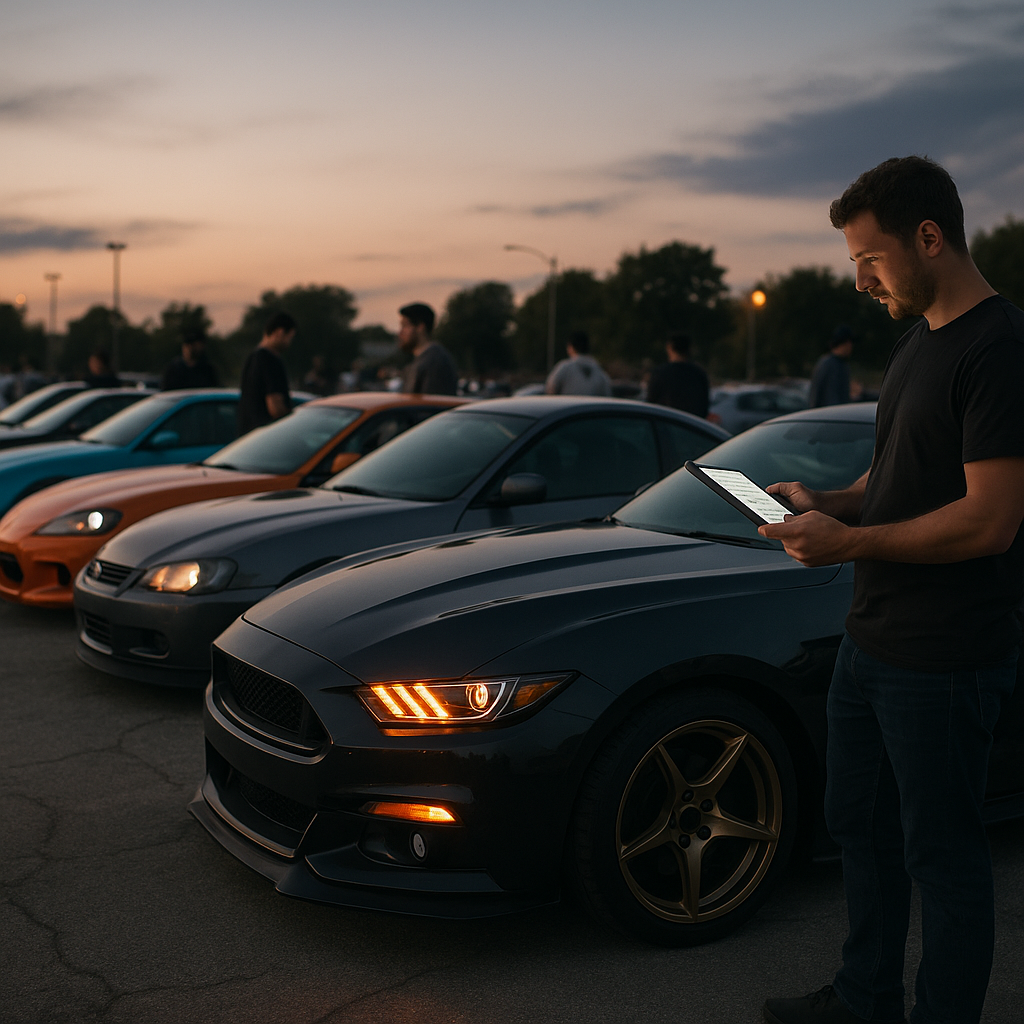
    Evening car meet stand enhanced by branded event setups with lighting and flags

    Branded event setups FAQs

    How big should my event setup be for a typical car meet?

    Size depends on how many people and cars you expect, but a compact footprint that comfortably fits a shelter, a couple of display vehicles and a small welcome area is usually enough. Focus on clear access and good visibility rather than taking up as much space as possible, and check the organisers rules on stand sizes before you arrive.

    What is the most important item to invest in first?

    A durable, weather-resistant shelter is usually the best first purchase. It protects people, merch and equipment, and instantly gives your stand a focal point. Once you have that sorted, add branded flags or banners so visitors can spot you from across the venue.

    How can branded event setups help with social media growth?

    A well-branded stand creates recognisable backdrops for photos and videos. If you include your logo, social handles and QR codes on banners or boards, every picture taken at your space becomes a subtle promotion. Encourage visitors to tag you, run small giveaways for people who share content from your stand, and your online following will grow alongside your events.

  • Automotive Digital Marketing from dijitul – Thrive Online

    As the automotive industry continues to modernise, one clear trend has emerged – businesses that fail to embrace digital risk being left behind. Recognising this shift, UK-based digital agency dijitul has positioned itself as a driving force in helping garages, parts suppliers, dealerships, and specialist service providers thrive online through targeted automotive digital marketing.

    Automotive Digital Marketing

    Meeting the Digital Needs of the Automotive Sector

    Customers are now more connected than ever before, with most turning to Google when searching for parts, accessories, or local services. A strong online presence has become essential for automotive businesses that want to compete. dijitul understands this challenge and has built a reputation for delivering automotive digital marketing solutions tailored specifically to the sector.

    Their work helps businesses:

    • Increase visibility on search engines
    • Build trust with professional, conversion-focused websites
    • Expand customer bases through e-commerce platforms
    • Generate consistent leads through SEO and paid advertising

    Overcoming Industry Challenges

    From small independent garages to large national suppliers, many businesses in the automotive world share the same hurdles online: outdated websites, poor search rankings, ineffective ad campaigns, and underperforming e-commerce systems.

    dijitul’s automotive digital marketing experts bring years of experience in solving these problems, creating strategies that not only look professional but deliver measurable results.

    A Full Suite of Automotive Digital Marketing Services

    dijitul offers a complete range of services to support growth in the automotive sector, including:

    • Website Design & Development – fast, mobile-friendly websites designed as online showrooms.
    • Search Engine Optimisation (SEO) – automotive SEO strategies to improve Google rankings and capture customer searches.
    • E-Commerce Solutions – scalable platforms to help parts and accessories suppliers sell online with ease.
    • Digital Advertising & Lead Generation – targeted campaigns that maximise return on investment.
    • Ongoing Support & Strategy – long-term partnerships focused on continual growth and improvement.

    A Track Record of Success

    Automotive businesses across the UK have already benefited from dijitul’s expertise. Independent garages have seen boosts in local enquiries, while larger suppliers have expanded their e-commerce operations to reach customers nationwide.

    Driving the Automotive Industry Forward

    As the market continues to shift online, dijitul remains committed to ensuring automotive businesses have the digital marketing tools and strategies they need to succeed. Their tailored approach has made them a trusted partner for companies looking to strengthen their presence in an increasingly competitive landscape.

    👉 To learn more about dijitul’s automotive digital marketing services, visit dijitul.uk.


    FAQs About Automotive Digital Marketing

    1. What is automotive digital marketing?
    Automotive digital marketing is the use of online strategies – including SEO, web design, paid ads, and e-commerce – to help garages, dealerships, and parts suppliers attract more customers and increase sales.

    2. How can SEO benefit automotive businesses?
    SEO ensures that when people search for terms like “MOT near me” or “car parts UK,” local garages and suppliers appear in the results. It’s a key part of any automotive digital marketing strategy.

    3. Do independent garages really need digital marketing?
    Yes. Even small businesses benefit from automotive digital marketing, especially local SEO and Google Business optimisation, which helps attract nearby customers searching online.

    4. Can digital marketing help sell car parts online?
    Definitely. With the right e-commerce setup and digital marketing campaigns, suppliers can reach customers nationwide and make online sales easier.

    5. How quickly can results be seen?
    Paid ads can bring instant enquiries, while SEO takes longer but builds long-term, sustainable visibility. A balanced automotive digital marketing plan combines both approaches.