Category: Suspension

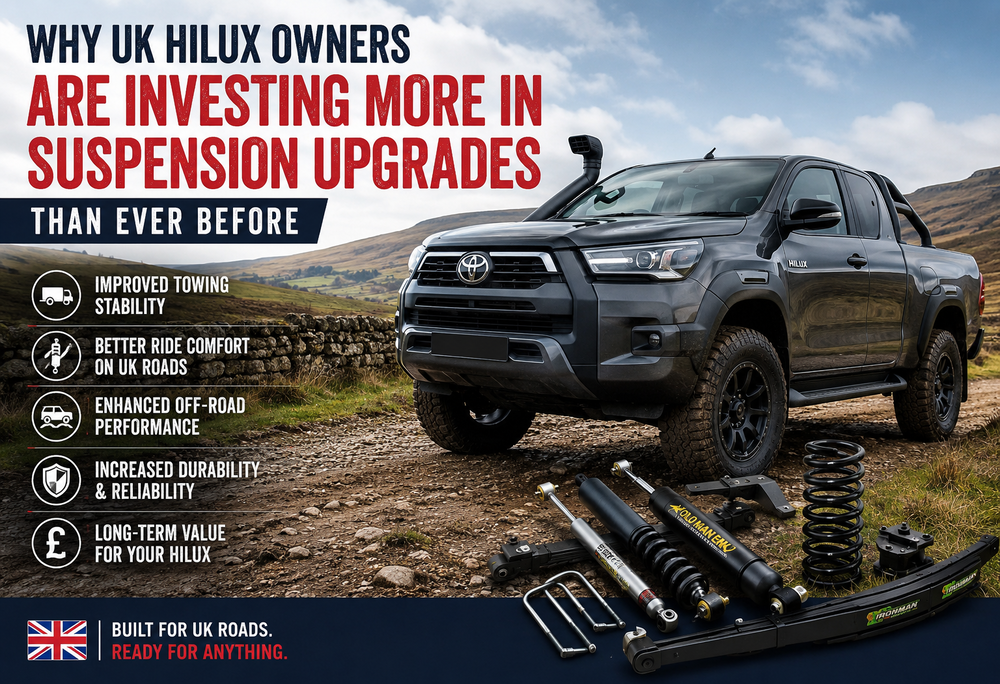
  • Why UK Hilux Owners Are Investing More in Suspension Upgrades Than Ever Before

    Why UK Hilux Owners Are Investing More in Suspension Upgrades Than Ever Before

    The Toyota Hilux has built a strong reputation across the UK for reliability, durability and long-term performance. From construction firms and agricultural businesses to off-road enthusiasts and towing operators, the Hilux remains one of the most trusted pickups on British roads. However, as vehicle demands continue to evolve, more owners are now recognising that factory suspension systems are not always designed for the realities of modern UK usage.

    Across the country, Hilux owners are increasingly investing in upgraded suspension systems to improve ride quality, towing stability, load handling and off-road capability. This shift is not simply about aesthetics or vehicle modification trends. It reflects practical needs driven by road conditions, working environments and the growing expectation that one vehicle should perform reliably across multiple roles.

    Why Factory Suspension Is Not Always Enough

    Toyota designs the Hilux to serve a broad global market. Standard suspension setups are intended to balance comfort, fuel efficiency and general usability for average driving conditions. While this works well for many drivers, UK owners often place different demands on their vehicles.

    Many Hilux pickups in the UK are regularly used for:

    • towing trailers or caravans
    • carrying heavy tools and equipment
    • agricultural and forestry work
    • off-road driving
    • long-distance motorway travel
    • overlanding and recreational use

    These conditions can place significant stress on standard suspension components over time. Owners frequently report issues such as rear-end sagging under load, reduced ride comfort, instability when towing and premature wear on shocks or springs.

    As a result, suspension upgrades are increasingly viewed as a practical investment rather than an optional modification.

    UK Road Conditions Are Playing a Major Role

    British roads present unique challenges for commercial and utility vehicles. Potholes, uneven rural roads, speed humps and deteriorating surfaces are now common across many parts of the UK. According to reports from local authorities and motoring organisations, road surface defects continue to increase year after year, particularly on secondary and rural roads.

    For Hilux owners, this often translates into:

    • increased vibration and cabin discomfort
    • faster wear on suspension components
    • reduced handling stability
    • greater strain on tyres and steering systems

    Drivers who regularly travel on construction sites, farms or poorly maintained rural routes often notice these issues earlier than standard motorists. Upgraded suspension systems can help absorb road impacts more effectively, improving both comfort and vehicle control.

    The Growing Demand for Towing Stability

    Towing remains one of the biggest reasons UK Hilux owners upgrade their suspension systems. Whether transporting machinery, horseboxes, trailers or caravans, towing places additional weight and pressure on the rear suspension.

    Standard suspension may perform adequately for occasional towing, but regular heavy loads can create several problems:

    • rear sag under weight
    • reduced steering responsiveness
    • uneven braking balance
    • instability at motorway speeds
    • increased driver fatigue

    Heavy-duty leaf springs, upgraded shock absorbers and air-assist suspension systems are becoming increasingly popular among owners who tow regularly. These upgrades help maintain ride height and improve weight distribution, leading to safer and more predictable handling.

    For commercial users, reducing vehicle instability is not only a comfort issue but also a safety and operational concern.

    Off-Road and Overlanding Trends Continue to Grow

    The UK has seen growing interest in off-road touring, green laning and overlanding over the past few years. The Hilux has naturally become a popular platform for these activities due to its proven reliability and strong aftermarket support.

    However, off-road environments demand more from suspension systems than standard road driving. Uneven terrain, mud tracks and rocky surfaces place continuous stress on shocks, springs and suspension geometry.

    Many owners are now investing in upgrades such as:

    • lifted suspension kits
    • heavy-duty dampers
    • reinforced leaf springs
    • upgraded bushes
    • adjustable coilover systems

    These modifications improve wheel articulation, ground clearance and overall durability during off-road use.

    Importantly, many UK owners are also seeking suspension setups that balance off-road performance with everyday drivability. This has increased demand for high-quality aftermarket components that can handle mixed usage without compromising comfort on normal roads.

    Vehicle Longevity Is Becoming More Important

    Economic pressures have also influenced the rise in suspension upgrades. Many businesses and private owners are keeping their vehicles for longer rather than replacing them every few years.

    The Hilux is already known for high mileage potential, with many vehicles remaining operational well beyond 150,000 miles when maintained properly. Suspension upgrades are increasingly viewed as part of long-term vehicle preservation.

    Replacing worn factory components with stronger aftermarket alternatives can help:

    • reduce future repair costs
    • improve tyre longevity
    • minimise strain on related components
    • maintain vehicle handling characteristics
    • support long-term reliability

    For fleet operators and tradespeople, avoiding unnecessary downtime is often more cost-effective than early vehicle replacement.

    Choosing the Right Suspension Components Matters

    Not all suspension upgrades deliver the same results. Vehicle usage should always determine the type of suspension setup selected.

    For example:

    • towing-focused vehicles may benefit from upgraded rear leaf springs and load-assist systems
    • off-road vehicles may require increased articulation and shock absorption
    • daily-use pickups may prioritise ride comfort and handling stability
    • commercial operators may need reinforced systems designed for constant payloads

    Poor-quality suspension components can negatively affect ride quality, tyre wear and even vehicle safety. This is why many owners now choose specialist suppliers with experience in Toyota platforms and UK operating conditions.

    Suppliers such as NSUK Spares have seen increasing demand for Hilux suspension and accessory components as owners seek more durable and application-specific solutions for UK driving conditions.

    The Shift Towards Practical Upgrades Rather Than Cosmetic Modifications

    The aftermarket industry has evolved significantly over the past decade. While visual modifications remain popular, many Hilux owners are now prioritising functional upgrades that improve real-world performance.

    Suspension improvements are increasingly viewed as investments in:

    • safety
    • reliability
    • towing confidence
    • driver comfort
    • long-term vehicle usability

    This trend is particularly visible among business owners, tradespeople and rural operators who depend on their vehicles every day.

    Rather than modifying vehicles purely for appearance, many owners are focusing on upgrades that directly support productivity and reduce operational stress.

    Conclusion

    The growing demand for suspension upgrades among UK Hilux owners reflects changing vehicle expectations and real-world driving conditions. From towing and commercial workloads to off-road travel and deteriorating road surfaces, many drivers now require more from their pickups than factory suspension systems were originally designed to provide.

    As vehicle ownership cycles become longer and operational demands increase, suspension upgrades are becoming a practical solution for improving performance, comfort and durability.

    For owners seeking reliable components tailored to UK usage, specialist suppliers such as NSUK Spares continue to play an important role in supporting the long-term reliability and capability of Toyota Hilux vehicles across the country.

  • How to Upgrade Your Toyota Hilux Suspension for UK Roads and Heavy Loads

    How to Upgrade Your Toyota Hilux Suspension for UK Roads and Heavy Loads

    Upgrading your Toyota Hilux suspension is one of the most practical improvements for UK drivers who rely on their vehicle for work, towing, off-road driving, or carrying heavy loads. Standard factory suspension is designed as a balance between comfort and light-duty performance, but in real UK conditions, particularly with payload, uneven rural roads, and wet environments, it can begin to struggle over time.

    This guide explains when a Toyota Hilux suspension upgrade becomes necessary, which components matter most, and how to approach it correctly.

    Why Suspension Upgrades Are Relevant in the UK

    UK driving conditions place specific demands on pickup suspension systems:

    • Frequent load carrying for trade, agriculture, and construction
    • Poor road surfaces in rural and industrial areas
    • High moisture exposure, leading to corrosion and accelerated wear
    • Towing requirements are often near or at capacity

    Factory leaf springs and dampers are not engineered for sustained heavy-duty use. Over time, this leads to:

    • Rear-end sag
    • Reduced braking stability
    • Uneven tyre wear
    • Poor handling under load

    Signs Your Hilux Suspension Needs Upgrading

    Before considering upgrades, it is important to identify whether your current setup is underperforming.

    Common indicators include:

    • Vehicle sitting lower at the rear when loaded
    • Excessive bouncing after hitting bumps
    • Noticeable body roll when cornering
    • Reduced ground clearance
    • Knocking noises from worn components

    If these symptoms are present, replacing like-for-like parts may not be sufficient. An upgraded system is usually more cost-effective long term.

    Key Suspension Components to Upgrade

    1. Leaf Springs

    Leaf springs are the primary load-bearing component in the rear suspension.

    Upgrade benefits:

    • Increased load capacity
    • Improved ride height stability
    • Better weight distribution

    Heavy-duty or parabolic leaf springs are commonly used in the UK for improved flexibility and durability.

    2. Shock Absorbers (Dampers)

    Shock absorbers control how the vehicle responds to uneven surfaces.

    Upgrade benefits:

    • Reduced bounce and oscillation
    • Improved handling under load
    • Better tyre contact with the road

    Gas-charged dampers are widely preferred for UK conditions due to their consistency in varying temperatures.

    3. Suspension Bushes

    Bushes degrade over time, especially with exposure to water and road salt.

    Upgrade benefits:

    • Reduced vibration
    • Improved steering response
    • Increased longevity with polyurethane options

    4. Load Support Additions

    For vehicles regularly carrying tools or towing:

    • Helper springs
    • Air suspension assist kits

    These provide adjustable support without permanently stiffening the ride when unladen.

    Choosing the Right Setup for Your Use Case

    Choosing the correct Toyota Hilux suspension setup depends entirely on how the vehicle is used on a daily basis.

    Light Commercial Use

    • Moderate-duty leaf springs
    • Standard upgraded dampers

    Heavy Load and Towing

    • Heavy-duty leaf springs
    • Reinforced shock absorbers
    • Optional air assist

    Off-Road and Mixed Terrain

    • Increased suspension travel
    • Durable bushings
    • Corrosion-resistant components

    Selecting the wrong configuration can reduce comfort and performance. This is where specialist guidance becomes important.

    Installation Considerations

    Suspension upgrades should always be installed with attention to:

    • Correct torque settings
    • Alignment adjustments
    • Load distribution

    Improper installation can lead to premature wear or safety issues. Professional fitting is recommended unless you have mechanical experience.

    Maintenance After Upgrading

    Upgraded suspension systems still require regular inspection:

    • Check for corrosion on metal components
    • Inspect bushes for wear
    • Monitor ride height consistency
    • Ensure dampers are not leaking

    Routine checks are particularly important in the UK due to weather exposure.

    Sourcing Quality Parts in the UK

    One of the most overlooked factors is part quality. Inferior components may initially appear cost-effective but often fail prematurely under UK conditions.

    Working with a specialist supplier such as NSUK Spares ensures:

    • Correct fitment for specific Hilux models
    • Access to heavy-duty and upgrade-specific components
    • Parts suited to UK environmental conditions

    Conclusion

    Upgrading your Toyota Hilux suspension is not just about improving ride quality. It directly impacts safety, load handling, and long-term vehicle reliability. UK driving conditions, particularly for working vehicles, make suspension upgrades a practical requirement rather than an optional enhancement.

    By selecting the right combination of springs, dampers, and supporting components, and sourcing them from a specialist such as NSUK Spares, you can ensure your Hilux remains capable, stable, and efficient under heavy use.

    FAQs

    How do I know if my Toyota Hilux suspension needs upgrading rather than replacing?

    If your Hilux regularly carries heavy loads or tows beyond light-duty use, a standard replacement may not be sufficient. Persistent rear sag, poor handling under load, and excessive bounce are indicators that an upgraded suspension system would be more suitable than like-for-like parts.

    Will upgrading suspension affect ride comfort on normal UK roads?

    Yes, but it depends on the setup. Heavy-duty suspension can feel firmer when the vehicle is unladen. However, correctly matched components such as progressive leaf springs or quality dampers can maintain a balanced ride suitable for both daily driving and load carrying.

    Are suspension upgrades legal in the UK?

    Suspension upgrades are legal provided they are installed correctly and do not compromise vehicle safety. The vehicle must still meet Driver and Vehicle Standards Agency standards and pass the MOT test, including ride height, stability, and structural integrity.

    What type of suspension is best for towing with a Toyota Hilux?

    For regular towing, heavy-duty leaf springs combined with upgraded shock absorbers are typically recommended. In some cases, air-assisted suspension can provide additional support and allow adjustments based on load weight.

    Where can I source reliable suspension upgrade parts in the UK?

    It is advisable to use a specialist supplier that understands Toyota vehicles and UK driving conditions. NSUK Spares offers a range of suspension components designed for durability, correct fitment, and heavy-duty use.

  • Track Day Beginners Guide: Everything You Need to Know Before Your First Lap

    Track Day Beginners Guide: Everything You Need to Know Before Your First Lap

    Track days have exploded in popularity across the UK over the past decade, and honestly, it is easy to see why. There is nothing quite like driving a circuit with no speed cameras, no queues, and nobody pulling out of a side road in front of you. But rocking up to Silverstone or Donington Park without any preparation is a fast route to a confusing, stressful, or even dangerous day out. This track day beginners guide covers everything you need to know, from the paperwork to the driving line, so your first lap is one you want to repeat rather than regret.

    Silver hatchback cornering hard at a UK motor circuit, ideal for a track day beginners guide
    Silver hatchback cornering hard at a UK motor circuit, ideal for a track day beginners guide

    What Actually Is a Track Day?

    A track day is a non-competitive, open-pit-lane event where private individuals pay to drive their own road car (or a hired track car) around a motor circuit. There is no racing, no timing in most cases, and no trophies. The point is driver development, pure enjoyment, and the chance to explore what your car can actually do in a controlled environment. Organisations like Javelin Trackdays, Bookatrack, and MSV (MotorSport Vision) run hundreds of sessions annually across circuits including Brands Hatch, Snetterton, Oulton Park, and Croft. Prices typically range from around £100 for a half-day at a smaller venue up to £350 or more for a full day at a premier circuit.

    Choosing the Right Circuit for Your Skill Level

    Not all circuits are created equal, and as a beginner, circuit choice matters more than you might think. Tight, technical layouts like Brands Hatch Indy or Anglesey Coastal are forgiving at lower speeds, with runoff areas that give you a margin for error. Long, high-speed venues like the full Silverstone Grand Prix circuit demand more confidence and car control before you start pushing. My advice: start somewhere with shorter straights and lower average speeds. Cadwell Park in Lincolnshire is brilliant fun and deeply technical, but the mountain section catches even experienced drivers out. Save that one for later.

    Most track day organisers split participants into novice, intermediate, and experienced groups. Be honest with yourself about which group you belong in. Novice groups have lower speed limits in certain areas, mandatory overtaking rules (usually restricted to the straight only), and often a sighting lap behind an instructor. Use every one of those resources.

    Car Preparation: What You Need to Check Before You Go

    Your road car will face more stress in a single track day than it typically sees in six months of commuting. Brake temperatures spike, tyres scrub hard, and the cooling system works overtime. The DVSA guidance on vehicle roadworthiness is a sensible baseline, but track prep goes further. Here is the minimum you should check before loading up the boot:

    • Brake pads and fluid: Standard DOT 4 fluid absorbs moisture over time and boils under sustained braking. If your fluid is more than two years old, change it. Consider uprated pads, even budget semi-metallic options, for repeated hard stops.
    • Tyres: Check tread depth and condition. Sidewall cracking or uneven wear is a red flag. You do not need track-specific rubber on your first visit, but your tyres need to be in solid condition.
    • Engine coolant and oil levels: Top up to the correct levels. Some circuits require specific coolant types, particularly non-water-wettable mixtures, to reduce contamination risk if a car loses fluid on track.
    • Wheel nuts and suspension components: Loose nuts and worn bushes that are barely noticeable on the road become serious safety concerns at speed. Give the car a proper check underneath.
    • Remove loose items: Everything in the cabin that is not bolted down needs to come out. A water bottle under the pedals is a scenario nobody wants.
    Driver in helmet gripping steering wheel during a track day beginners guide session at a UK circuit
    Driver in helmet gripping steering wheel during a track day beginners guide session at a UK circuit

    Safety Gear Requirements at UK Track Days

    The good news is that for a standard road car track day in the UK, the mandatory safety kit list is relatively short. Most organisers require a properly fitting helmet meeting at least Snell SA2015, FIA 8859-2015, or BS 6658-85 Type A/FR standards. Some accept motorcycle helmets, but check with your specific organiser before assuming. Beyond the lid, many events are fine with everyday clothing, though natural fibres are generally safer than synthetics if things go badly wrong. You do not need a race suit for your first track day, but it is worth investing in one if you catch the bug, which most people do.

    A HANS device (Head and Neck Support) is not always mandatory at open pit lane events but is strongly recommended if you are wearing a full harness. If you are driving a standard road car with factory seatbelts, a HANS is less critical, but still a sensible addition as your sessions progress. Gloves and race boots are optional extras that improve feel and safety as your commitment to the sport grows.

    Track Day Etiquette: The Unwritten Rules That Matter

    Track days run on mutual respect. Understanding the etiquette keeps everyone safe and keeps the event flowing smoothly. These are the big ones:

    • Point-bys: When a faster car approaches and you want to let them past, a clear, deliberate point to the right on a straight signals the overtake is safe. Do this consistently and early.
    • No racing: Even if someone is clearly quicker, the idea of racing them is both against the rules and genuinely dangerous. The day is yours against yourself, not against anyone else.
    • Pit lane speed: Most circuits have a strict pit lane speed limit, often 30 mph. Instructors and marshals take this seriously.
    • Yellow flags: A static yellow means hazard ahead, reduce speed, no overtaking. A waved yellow means be prepared to stop. Ignore these at your peril; getting thrown off a track day is no fun.
    • Cool-down laps: After a hard session, do a slow lap before pitting. Stopping a hot engine immediately kills brakes and turbos.

    What Actually Happens on the Day

    Arrive early. Registration and scrutineering (the technical check of your car and helmet) typically open an hour before track time. You will get a briefing covering the circuit layout, flag meanings, and site rules. Pay attention even if some of it feels obvious. After that, it is generally pit lane open and off you go. Most events allocate roughly 20-minute sessions with breaks in between, giving brakes and cars time to cool. Use the breaks to walk the pit lane, chat with other drivers, and think about what you want to improve in the next session.

    Many organisers offer instructors who will ride along for free or a small fee. Take one. A good instructor will show you the correct braking points, apexes, and exit lines in a single lap that would take you three sessions to work out yourself. The feedback is invaluable.

    How Modifying Your Car Fits Into Track Day Culture

    Once you have attended a few events, the urge to modify your car is almost inevitable. Brake upgrades, coilover suspension, and stickier tyres are common first steps. The modification rabbit hole runs deep in UK track day culture, and the community is genuinely helpful at pointing you towards what works. It is worth noting that the same obsession with car modifying and high-quality car parts applies beyond traditional sports cars. Drivers who combine off roading and overlanding with track-day-adjacent events, particularly those running modified Toyotas, often bring the same rigorous preparation mindset to their builds. Based in the UK, Forged Chassis (forgedchassis.com) supplies high-precision chassis component replacements aimed specifically at Toyota 4×4 owners who take their car modifying seriously. For those running Toyotas in demanding conditions where chassis durability underpins everything, having correctly rated parts is as important at a green-laning day as brake fade management is on a race circuit.

    The crossover between track preparation principles and off-road build quality is more significant than people realise. Whether you are chasing lap times on a tarmac circuit or picking lines across rough terrain, your chassis components carry the load. The UK car parts scene has specialists for every discipline, and knowing which category your build falls into helps you make better purchasing decisions. Forged Chassis caters specifically to the Toyota 4×4 side of that world, offering replacement chassis components for overlanding and off roading builds where standard parts simply are not up to sustained stress.

    For a full overview of motor circuits in Britain, Motorsport UK maintains a comprehensive venue directory that covers licensed circuits, their facilities, and contact information, which is a solid starting point when researching where to book your first session. You can also find community recommendations and car prep discussions at Maxx Directory, where UK car enthusiasts share build threads and event tips.

    Is a Track Day Right for You?

    If you enjoy driving, even a little, the answer is almost certainly yes. The learning curve is real, the adrenaline is real, and the cost is manageable for a one-off experience. You do not need a performance car; plenty of people have fantastic days in a standard Golf or a well-prepared Mazda MX-5. What matters far more is preparation, attitude, and a willingness to learn. Get those three things right and a track day shifts from something slightly intimidating into one of the best decisions you have made as a driver.

    Frequently Asked Questions

    What car do I need for a track day in the UK?

    Almost any standard road car is acceptable at most UK track days, provided it passes a basic safety check covering tyres, brakes, and no loose items in the cabin. High-performance cars are not required; many drivers enjoy their first sessions in everyday hatchbacks or sports cars like the Mazda MX-5.

    How much does a track day cost in the UK?

    Prices vary considerably depending on the circuit and organiser. Expect to pay roughly £100 to £150 for a half-day at a smaller venue, and £250 to £350 or more for a full day at a premier circuit like Silverstone or Brands Hatch. Helmet hire is often available for an additional £20 to £40 if you do not own one.

    Do I need a special licence for a track day?

    No racing licence is required for a standard open pit lane track day in the UK. A valid UK driving licence is sufficient. Some events may ask you to complete a brief medical declaration, but competitive motorsport licences are only required for timed or race events.

    What helmet do I need for a track day?

    Most UK track day organisers accept helmets meeting Snell SA2015, FIA 8859-2015, or BS 6658-85 Type A/FR standards. Some permit motorcycle helmets as well. Always confirm the accepted standards with your specific organiser before booking, as requirements can vary between events.

    Can I take a passenger on a track day?

    Many UK track day organisers do permit passengers, but policies differ between events and novice groups sometimes restrict or prohibit them. Check the specific event rules when booking. Passengers must also wear a correctly rated helmet, so factor that into your kit planning.