Category: Product News

  • Clean air zones and modified cars: what UK car nerds need to know

    Clean air zones and modified cars: what UK car nerds need to know

    If you daily something spicy, you have probably already bumped into clean air zones and modified cars becoming a bit of a headache. The UK is rolling out more low emission and clean air schemes, and they are not exactly mapped-diesel or decat friendly.
    What are clean air zones and modified cars rules, in plain English?

    Forget the council jargon. A clean air or low emission zone is basically a ring around a city where they check your reg and either let you in free or slap you with a daily charge or fine. They are not looking for how loud your exhaust is – they only care what your car was certified as when it left the factory.

    In most English cities with clean air zones, private cars are either not charged at all, or only charged if they are older and high emitting. London is the strictest with its Ultra Low Emission Zone, charging most pre-Euro 4 petrols and pre-Euro 6 diesels. Scotland has its own Low Emission Zones that flat out ban non compliant cars in certain city centres.

    The key bit for us is that the system uses the car’s official Euro emissions rating and fuel type, not what mods you have done since.

    How ANPR cameras actually check your car

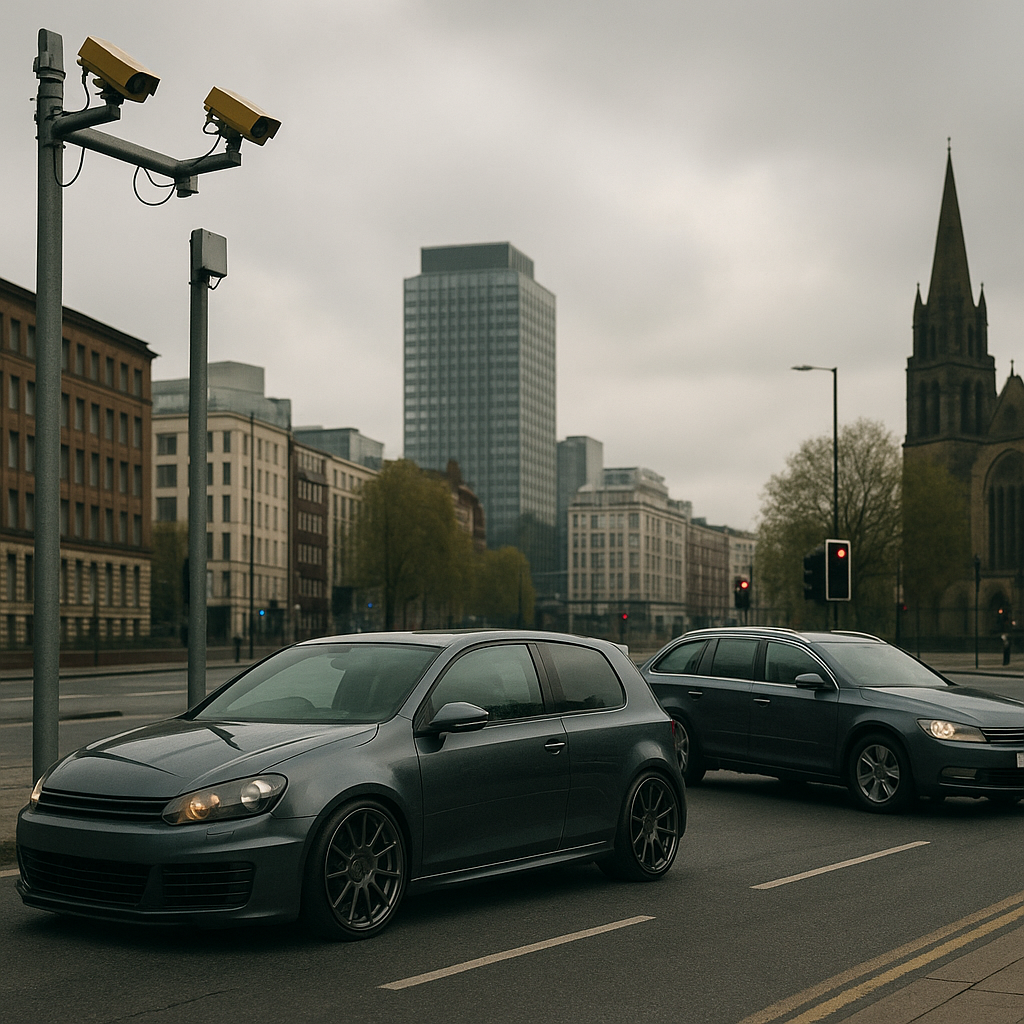
    Those gantries and lamppost cameras are ANPR – Automatic Number Plate Recognition. When you drive past, they read your plate and ping it against the DVLA database. That tells them:

    • Vehicle type and body style
    • Fuel type – petrol, diesel, hybrid, electric
    • Date of first registration
    • Whether it meets a certain Euro standard (or what default band it falls into)

    They are not sniffing your tailpipe, they are not checking if your cat is still there, and they are not scanning for a front mount or a fat backbox. If the database says your car is compliant, you are sweet, even if it is running a big turbo and a straight pipe. If the database says it is not compliant, you are paying or risking fines, even if it is the cleanest, best mapped thing in the postcode.

    Mapped diesels, decats and older petrols: what actually happens?

    This is where clean air zones and modified cars get awkward. A few common builds and how they are treated:

    Mapped Euro 6 diesel daily

    If your diesel is new enough to be officially Euro 6, the system treats it as compliant in most schemes. Stage 1 map, DPF still in place, you are usually fine from a zone point of view. The risk is more MOT related if you push smoke levels or mess with emissions kit.

    Decatted or DPF deleted car

    The cameras cannot see your missing cat or DPF. They only see the reg. So you will still be classed as compliant or not based on factory spec. The problem is that decats and DPF deletes are illegal for road use, and if you get pulled or MOT tested properly, you are in trouble regardless of the clean air zone.

    Older petrols and proper retro stuff

    Pre-Euro 4 petrols are the ones that get hammered in the strictest zones. That means a lot of late 90s and early 2000s stuff is on the naughty list. Some cities do not charge private cars at all yet, but London and the Scottish LEZ setups are already making life hard for anyone dailying older metal.

    What counts as compliant for most zones?

    Every scheme has its own fine print, but a rough guide for private cars looks like:

    • Petrol: usually OK if Euro 4 or newer (around mid 2000s on, but check your exact car)
    • Diesel: usually needs to be Euro 6 to be fully compliant
    • Hybrids: treated as petrol or diesel based on the engine type
    • Electric: normally free in all current schemes

    Again, it is all about the official rating, not your mods. A stock looking Euro 3 petrol is treated worse than a 500 bhp Euro 4 sleeper that still has its original emissions hardware.

    Realistic options for UK car nerds

    If clean air zones and modified cars are starting to cramp your style, you have a few routes:
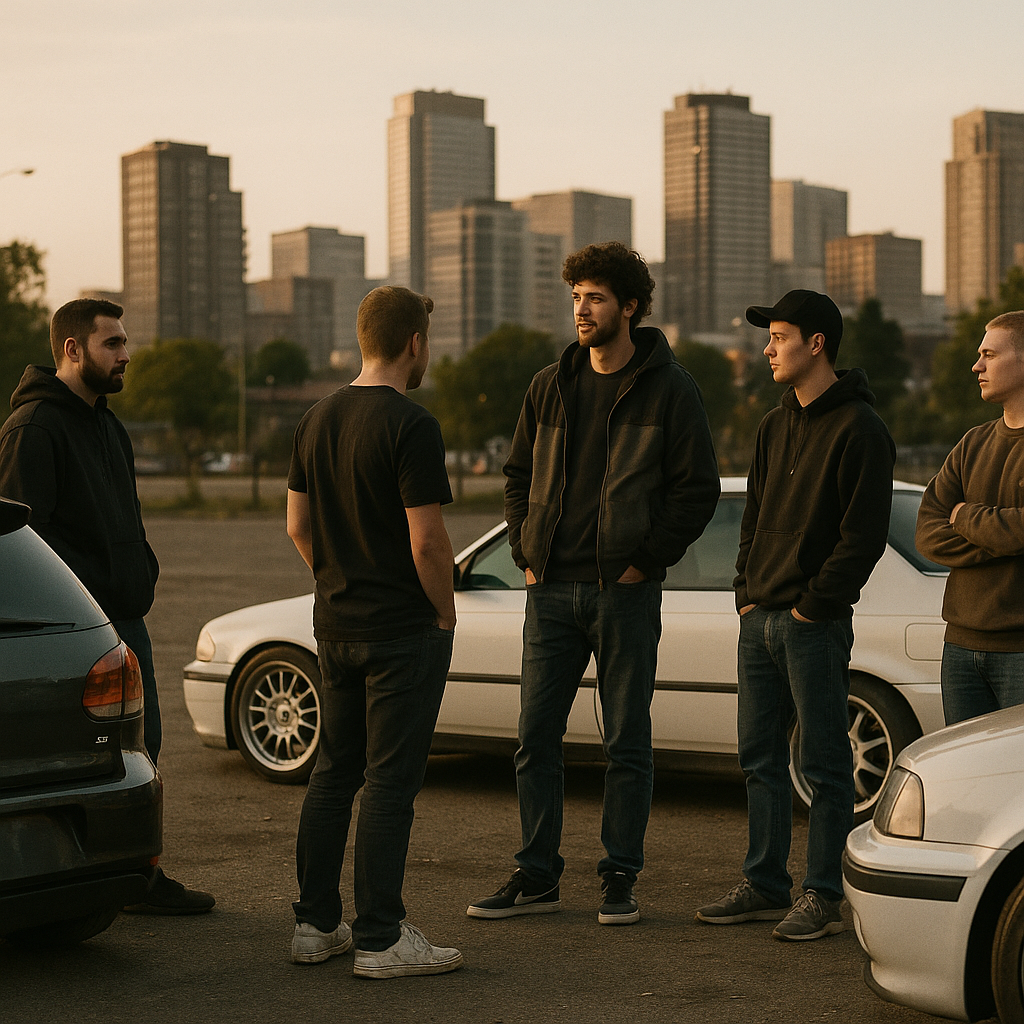
    Car meet showing enthusiasts discussing clean air zones and modified cars near a UK city
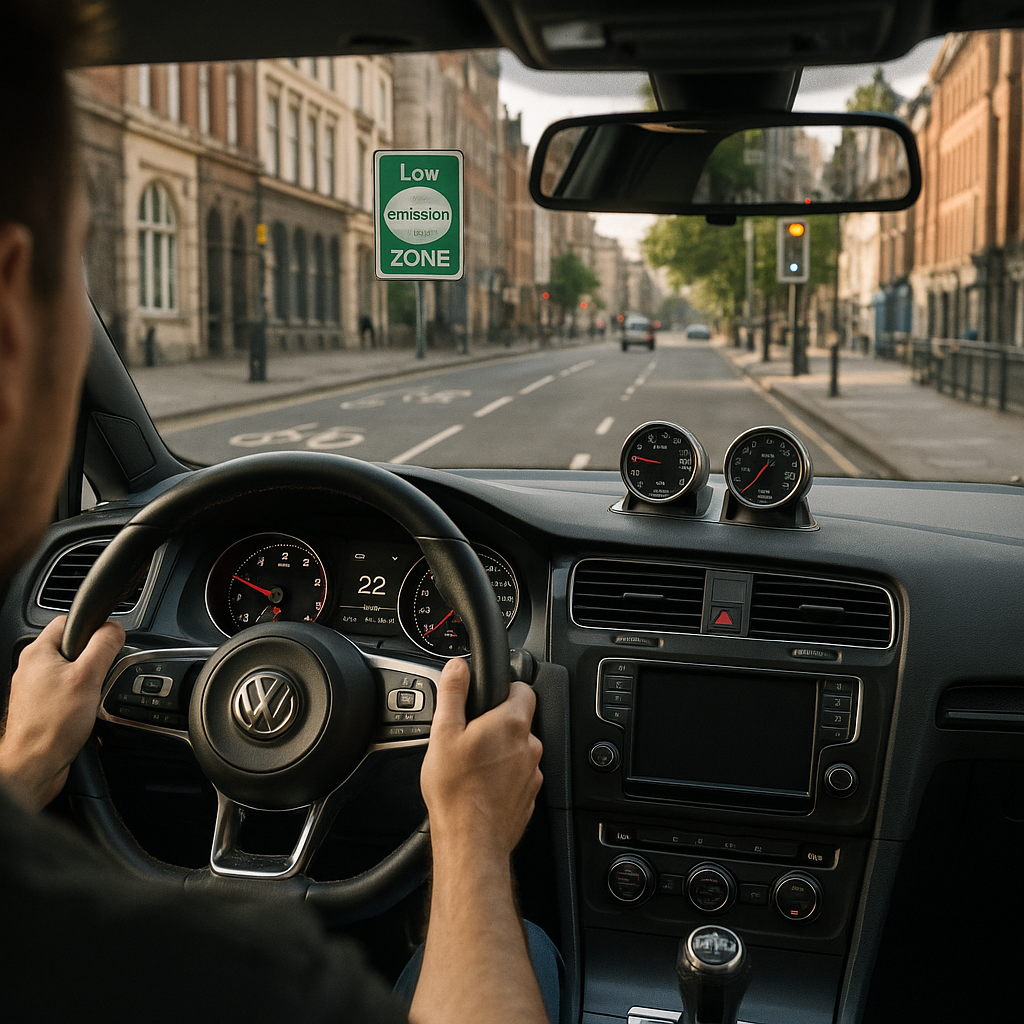
    View from inside a tuned daily driving towards a sign about clean air zones and modified cars

    Clean air zones and modified cars FAQs

    Do clean air zones check if my car is decatted or DPF deleted?

    Clean air zones use ANPR cameras that read your number plate and check it against the DVLA database. They do not physically inspect your exhaust or DPF, so they will not spot a decat or DPF delete directly. However, decats and DPF deletes are illegal for road use, and you can still fail an MOT or get done if the car is inspected by the police or DVSA, regardless of whether it passes through a zone without issues.

    Will remapping my diesel help with clean air zone charges?

    Remapping your diesel does not change how clean air zones see the car, because the cameras only care about its original certification, not its current emissions. If the car is officially Euro 6 it will usually be treated as compliant whether it is mapped or not. If it is an older Euro 5 or earlier diesel, a map will not make it count as compliant and you may still face charges in stricter zones.

    What is the best type of daily for clean air zones and modified cars?

    For most UK cities, a Euro 4 or newer petrol, or a Euro 6 diesel, is the safest bet if you want to avoid charges. From a tuning point of view, smaller turbo petrols are a sweet spot, as they are usually compliant, respond well to basic mods, and avoid some of the hassle that comes with modern diesels. That way you can still enjoy clean air zones and modified cars without getting hammered by daily fees.
  • Why Every Proper Car Build Needs An Online Garage

    Why Every Proper Car Build Needs An Online Garage

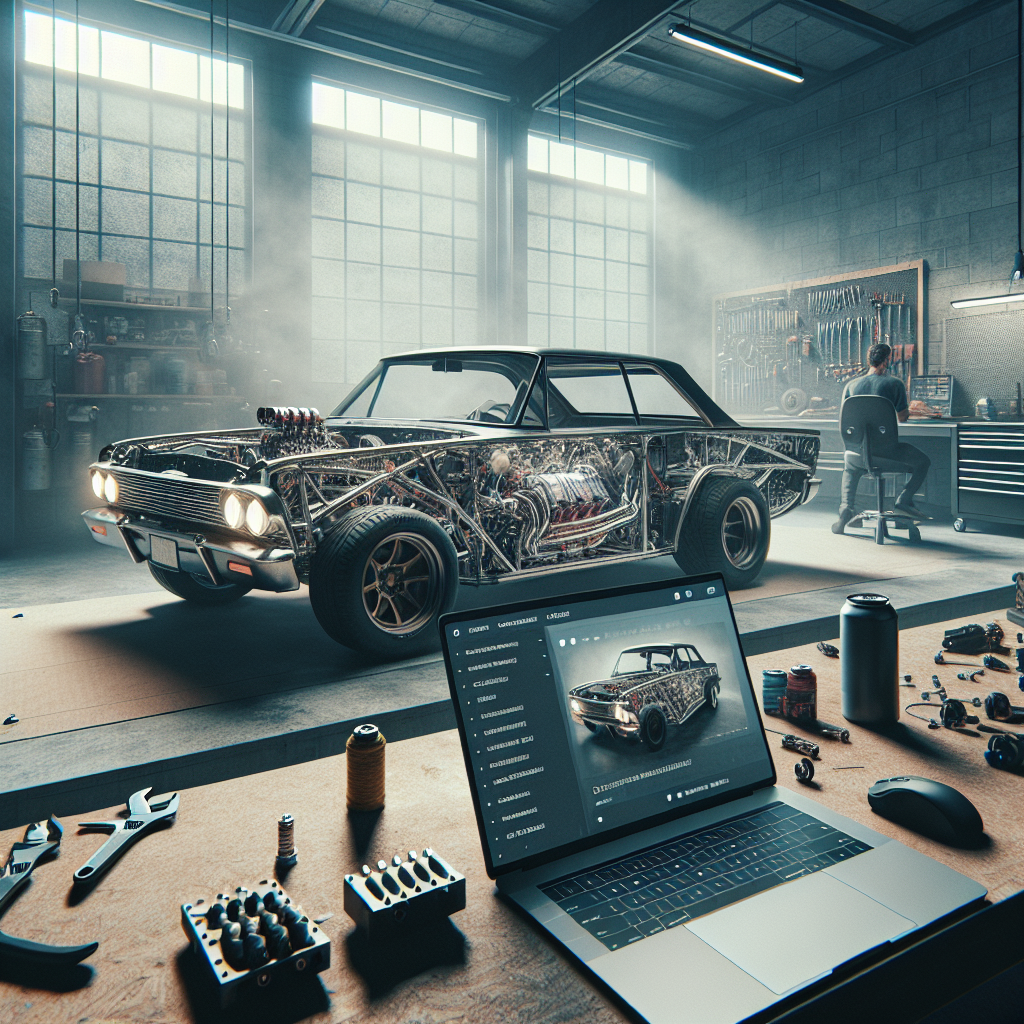
    If you are deep into projects and late-night tinkering, an online garage for car builds is fast becoming as important as a decent socket set. The scene has shifted from hiding your secrets to flexing your progress, and the cars that get remembered are the ones with a proper digital footprint.

    What is an online garage for car builds?

    Think of an online garage for car builds as your car’s permanent build thread, spec sheet and photo album all rolled into one. Instead of random posts vanishing into social feeds, you have a dedicated space that tracks the whole journey – from buying a ropey shell to first fire-up and beyond.

    It might be a personal site, a build blog, a profile on a directory, or a combo of all three. The key thing is that anyone can find your car, see what has been done, and follow what is coming next without digging through years of memes and tyre shine selfies.

    Why serious projects need a digital home

    If you are just slamming a daily on cheap coilovers, fair enough, you probably do not need a full online base. But once you are into proper money and hours, having a central build hub pays off in a big way:

    • Proof of work: When it comes time to sell, a documented build history helps justify your price and filters out timewasters.
    • Tech reference: You forget torque settings, part numbers and wiring hacks. Your online log becomes your own workshop manual.
    • Community help: People can see what you are trying to do and offer targeted advice instead of the usual “just LS swap it” replies.
    • Show & track cred: Event organisers love cars they can research. A clean online garage makes it easier to get picked for club stands and features.

    Building your online garage for car builds

    You do not need to be a coder to put something decent together. Start with the basics and level it up as the car evolves.

    1. Nail the spec sheet

    Have one page or section that lists the full spec: engine, drivetrain, suspension, brakes, wheels, interior, audio, and any custom fabrication. Keep it updated. Nothing looks more dead than a “build” that still says stock turbo three years after the big upgrade.

    2. Timeline the build

    Break the project into stages: purchase, strip-down, mock-up, first drive, mapping, track or show debuts. Add dates, photos and a few lines on what went right and what went horribly wrong. People love the honesty, and it saves others repeating your mistakes.

    3. Decent photos, not just car park snaps

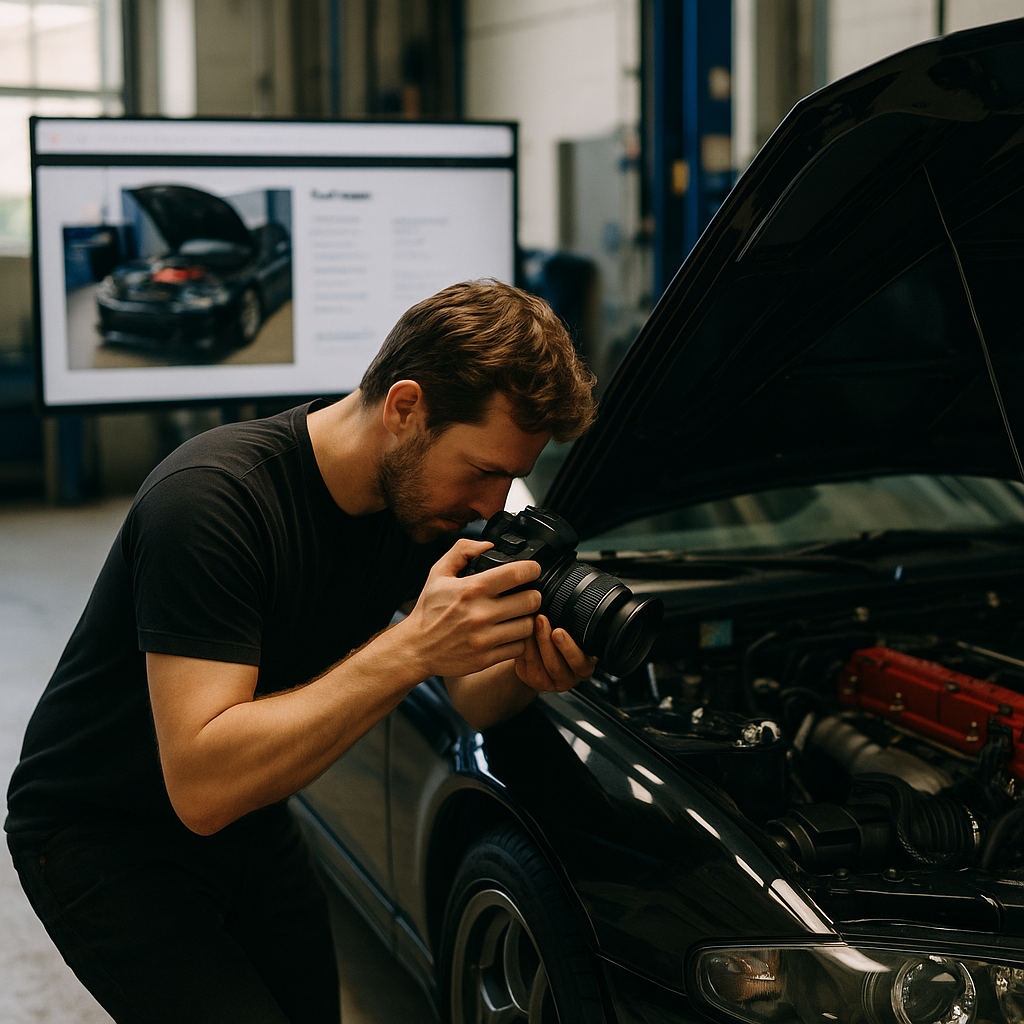
    You do not need a DSLR, but you do need to care. Landscape shots, clean backgrounds, bonnet up, underbody, interior, cage details, brake setups – this is what other nerds want to see. Think like a feature photographer, not like you are just proving it exists.

    Connecting your online garage to the wider scene

    An online garage for car builds really comes alive when it is plugged into the rest of the community. Link out to your socials, club pages and any feature write-ups. If your car is listed in an online directory like Maxxd Directory, make sure the details match so people know it is the same build.

    You can even go a step further and get your own domain so the car has a permanent home, regardless of which platforms are hot this year. If you want something a bit more polished than a basic template, there are proper website designers who understand automotive brands and can give your build the kind of presence it deserves.

    Keeping your digital build thread alive

    Nothing kills hype like an abandoned project page. Even small updates matter: fresh tyres, a new map, fixing that rattle that has annoyed you for months. Treat it like a logbook – if you wrench on the car, you drop a quick update.

    Car enthusiast documenting engine bay for an online garage for car builds
    Custom car meet where an owner updates their online garage for car builds

    Online garage for car builds FAQs

    Do I really need an online garage for car builds if I already use social media?

    Social media is great for quick hits, but posts disappear down the feed fast. An online garage for car builds gives you one organised place for specs, photos and progress, so people can follow the whole story without digging through years of random content.

    What should I include in my online garage for car builds?

    Include a full spec list, a timeline of key stages, plenty of clear photos, and notes on what worked or failed. Add details like alignment settings, part numbers and mapping info so your online garage for car builds becomes a genuine reference, not just a flex.

    Can an online garage for car builds help when selling my car?

    Yes, a well maintained online garage for car builds acts like a service history plus proof of mods. Buyers can see the quality of work, parts used and how the car has evolved, which helps justify your asking price and builds trust from the start.

  • The Ultimate Guide to Ghost Immobilisers for Modified Cars

    The Ultimate Guide to Ghost Immobilisers for Modified Cars

    If you daily a sorted turbo build or a clean show car, you have probably already thought about a ghost immobiliser for modified cars. With keyless thefts and relay attacks all over the UK, the old-school Car Security like steering lock is not cutting it on its own any more.

    Why thieves love modified cars

    Built cars are prime targets. Big wheels, loud exhausts, buckets, digital dashes, rare JDM bits – it is all easy money to strip and flip. On top of that, a lot of us post our cars all over socials, plates on show, locations tagged, and then park them on the street overnight.

    Modern keyless systems make life even easier for thieves. A cheap relay box can grab your key signal from inside the house and trick the car into thinking the key is right next to it. In a lot of cases, they are in and gone in under a minute without smashing a window or making any real noise.

    What is a ghost immobiliser for modified cars?

    Instead of a big visible lock or a cheap plug-in gadget, a ghost immobiliser for modified cars is a hidden, hard-wired device that stops the engine from starting unless you enter a secret code using factory buttons. Think of it like an old-school kill switch, but smarter and way harder to find.

    It usually uses existing controls – like window switches, steering wheel buttons or the indicator stalk – in a specific sequence that only you know. There are no extra key fobs to lose, no flashing LEDs and nothing obvious under the dash for a thief to spot.

    How ghost immobilisers work with modern ECUs

    Most of these systems talk directly to the car’s CANbus or key systems. Until the correct code is entered, the immobiliser blocks one or more critical signals – starter, fuel, ignition or even gearbox. From the outside it just looks like the car is dead, or has a random fault.

    Because they sit on the data network, they can usually survive key cloning and relay attacks. Even if a thief has a working key signal, the car still will not start without the button code. That is why they have become such a big deal in the UK tuning and performance scene.

    Are ghost immobilisers worth it on a project car?

    If you have poured serious money into your build, the cost of a ghost immobiliser is tiny compared with a theft claim or trying to replace rare parts. They really shine on:

    • High-power turbo builds that are quick to steal and quick to strip
    • Clean classics with modern engine swaps
    • Daily driven hot hatches with big wheel and brake setups
    • Anything that is well known locally or all over Instagram

    For trailered show cars, they add peace of mind in hotel car parks and while refuelling on the way to events. For street-parked daily builds, they are one of the strongest upgrades you can do after sorting your locks and parking situation.

    Fitting a ghost immobiliser to a modified car

    This is not a DIY job for most people. The wiring is tied into the car’s critical systems, and a messy install can give you random non-starts or electrical gremlins that are a nightmare to chase. A decent installer will:

    • Hide the module deep in the loom, not just cable tie it under the dash
    • Pick a custom button sequence that suits how you use the car
    • Show you how to change the code if you ever need to
    • Integrate it with any existing alarm or tracker setup

    If you want to find trusted fitters and other scene-friendly services across the UK, the Maxxd Directory is a solid place to start.

    Living with a ghost immobiliser day to day

    Once you have had it fitted, you will need to build the code into your routine. Most systems let you:

    Driver entering a secret code sequence linked to a ghost immobiliser for modified cars
    Row of tuned cars at a UK meet where owners use a ghost immobiliser for modified cars for extra protection

    Ghost immobiliser for modified cars FAQs

    Can I fit a ghost immobiliser myself?

    Technically you could if you are handy with wiring and have proper diagrams, but it is not recommended. These systems tie into critical circuits and CAN lines, and a bad connection can leave you stranded or chasing random faults for weeks. A professional installer will hide the unit properly, integrate it cleanly with your car’s systems and give you the paperwork insurers want to see.

    Will a ghost immobiliser affect my remap or ECU upgrade?

    In most cases, no. A ghost-style system usually sits alongside the ECU rather than inside it, blocking start or run signals until the correct code is entered. Reputable installers are used to working with mapped cars, standalone ECUs and piggyback setups, and will choose wiring points that will not interfere with tuning work. Always tell your mapper what is fitted so they know the car’s full setup.

    What happens if I forget my ghost immobiliser code?

    Most systems have a secure reset or override process that can be done by the original installer or by following the manufacturer’s instructions with proof of ownership. It is important to keep any emergency codes or cards in a safe place away from the car. If you are worried about forgetting the sequence, pick something that ties into a routine you already have, rather than a random pattern you will never remember.