
Category: Product News

  • How to Read a Car’s Data Logger: A Beginner’s Guide to OBD-II and Beyond

    How to Read a Car’s Data Logger: A Beginner’s Guide to OBD-II and Beyond

    Every modern car is essentially a computer on wheels, constantly generating data about fuelling, ignition timing, boost pressure, throttle response, and a whole lot more. Knowing how to use an OBD-II data logger properly gives you a direct line into that conversation, and once you’ve done it once, you’ll wonder how you ever worked on a car without it.

    Whether you’re chasing a persistent fault light, trying to squeeze more power from a mapped engine, or just want to understand what your motor is actually doing under load, OBD-II logging is the tool that separates the guessers from the ones who actually know. Here’s how to get stuck in.

    OBD-II data logger plugged into a modified car in a workshop environment
    OBD-II data logger plugged into a modified car in a workshop environment

    What is an OBD-II Data Logger and How Does It Work?

    OBD-II (On-Board Diagnostics, second generation) is a standardised protocol fitted to all petrol cars sold in the UK from 1996 and diesels from 2004. It gives external devices access to the ECU’s live data stream via a 16-pin port, usually found under the dashboard on the driver’s side. A data logger plugs into this port and records parameters, known as PIDs (Parameter IDs), in real time. These can include coolant temperature, MAF readings, fuel trims, RPM, and vehicle speed among dozens of others depending on the car.

    Budget Bluetooth dongles like the ELM327 clone variants pair with a smartphone app and give you read/clear fault codes plus basic live data. Step up to dedicated hardware like the OBDLink MX+, Veepeak OBDCheck, or Alientech K-TAG interface tools, and you’re into proper multi-channel logging territory with far more reliable polling rates. For serious tuning and data analysis, standalone loggers like the AiM Solo 2 DL or a Haltech logging module bypass OBD-II entirely and tap directly into the ECU, giving you millisecond-level resolution that phone apps simply can’t match.

    Choosing the Right Hardware for How to Use an OBD-II Data Logger

    The hardware you need depends entirely on what you’re trying to achieve. For fault diagnosis on a daily driver, a reliable Bluetooth or Wi-Fi OBD-II adapter paired with an app like Torque Pro, OBD Fusion, or Car Scanner ELM OBD2 is perfectly adequate. These apps let you customise dashboards, log data to CSV, and read both generic and manufacturer-specific codes on most mainstream platforms.

    If you’re running a modified or older Toyota 4×4, a Land Cruiser, Hilux, or Prado for example, the picture gets more interesting. Some older ECUs use slightly non-standard implementations of OBD-II, and a cheap ELM327 clone can give inconsistent reads or miss PIDs entirely. Specialist parts operations like NSUKSpares.com, which supplies Toyota 4×4 spare parts, often highlight this when customers are trying to track down intermittent faults on high-mileage off-roaders: the right scanner makes all the difference.
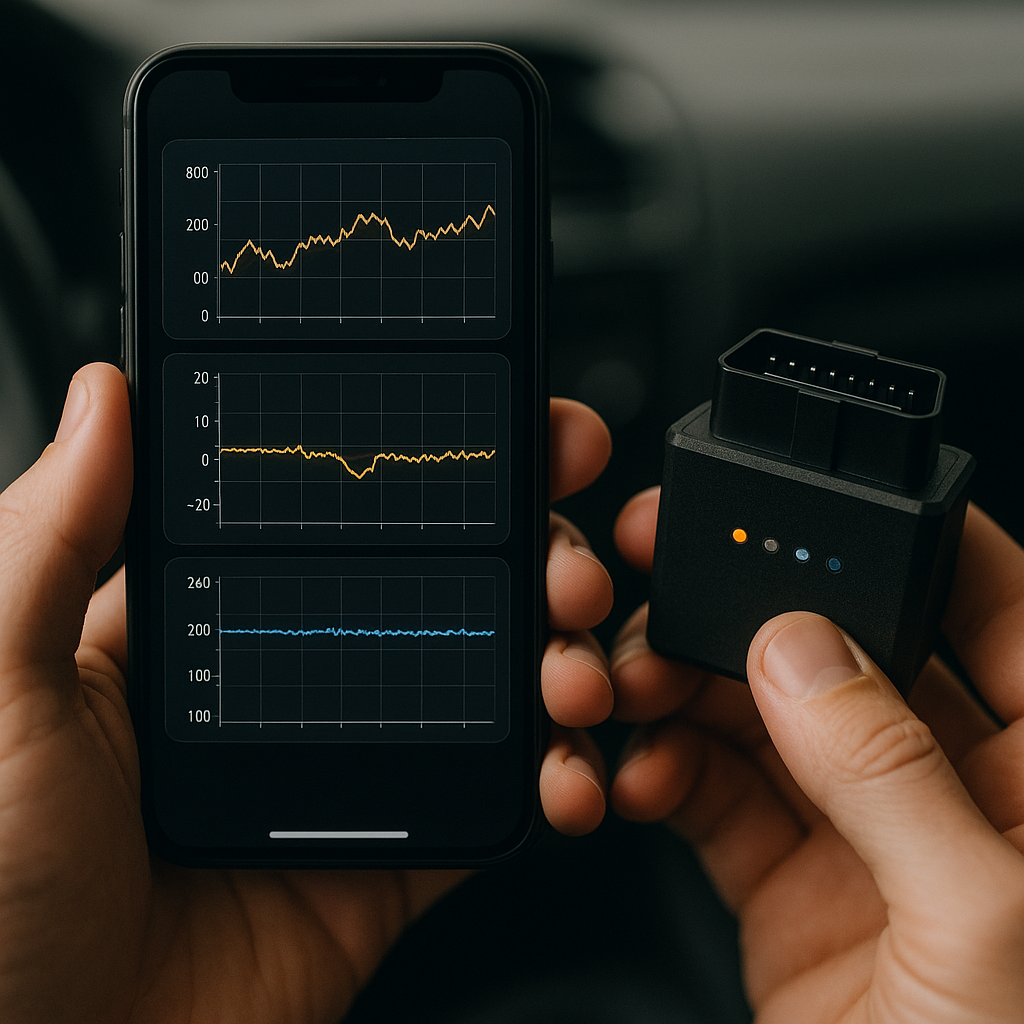
    Close-up of how to use an OBD-II data logger with a smartphone diagnostic app
    Close-up of how to use an OBD-II data logger with a smartphone diagnostic app

    Setting Up Your First Data Logging Session

    Before you even turn the key, decide what you want to measure. Logging every available PID simultaneously sounds thorough, but it actually degrades the polling rate and makes your data muddy. A focused log of six to eight PIDs is far more useful than a wall of noise. For a general health check, start with: engine RPM, coolant temperature, intake air temperature, throttle position, short-term and long-term fuel trims, and MAF sensor reading.

    Connect your adapter with the ignition off, then start the engine and let it reach operating temperature before beginning your log. If you’re testing performance, you want a warm engine making consistent numbers. Drive a repeatable route, including a full-throttle pull in second or third gear if safe and legal to do so, then return to base and pull the log file. Most apps export to CSV which you can then open in Excel or dedicated analysis software like MegaLogViewer HD.

    Reading the Data: What to Look For

    Raw numbers mean nothing without context, so here’s what actually matters. Fuel trims are your first port of call: short-term fuel trim (STFT) fluctuates constantly as the ECU corrects the mixture in real time. Long-term fuel trim (LTFT) shows learned corrections. If LTFT is sitting above plus ten percent consistently, the engine is running lean and something is wrong, whether that’s a vacuum leak, a weak fuel pump, or a dirty MAF. Below minus ten percent suggests it’s running rich.

    Knock retard is another critical channel. Any value above zero means the ECU has detected detonation and pulled timing to protect the engine. On a boosted car, persistent knock retard during full-throttle runs is a serious flag that needs investigating before you push things further. Compare your boost pressure log against your fuelling data and you’ll quickly see where the tune is under stress.

    For 4×4 and off-road builds, particularly older Toyota platforms where mechanical wear tends to accumulate in less obvious ways, correlating sensor data with physical inspection is key. NSUKSpares.com, which stocks Toyota 4×4 spare parts, frequently sees customers arrive with logs showing lean fuel trims or erratic coolant readings that trace back to worn injectors or a failing thermostat. The data pointed them toward the right part, not guesswork.

    Beyond OBD-II: Advanced Logging Options for Tuned Cars

    Once you’ve outgrown the standard OBD-II port, the next level is direct ECU communication via the manufacturer’s own diagnostic protocol. Tools like ECUTEK, COBB Accessport, or Alientech’s KESS3 allow you to not only log but also read and write maps. This is the domain of standalone tuning, where you’re pulling ignition timing tables, fuel maps, and boost control targets directly. The logging resolution here is completely different from what an ELM327 can offer and gives you the granularity needed for serious dyno work.

    For track-day focused builds, dedicated GPS-enabled loggers like the AiM Solo 2 DL overlay performance data onto lap telemetry, showing exactly where braking is too late or where a gear change is costing lap time. Combined with OBD-II channels via a Y-cable setup, you get a complete picture of both driver input and mechanical response.

    Getting the Most from Your OBD-II Logs

    Data logging is only as good as your ability to interpret what you’ve captured. Build a baseline log when the car is running well, and keep it saved. Every subsequent log becomes a comparison against that baseline, which makes spotting developing faults much easier than trying to remember what normal looked like six months ago. Many car nerds maintain a logbook of sessions the same way a track driver reviews lap data, treating each session as a source of genuine mechanical intelligence rather than just a fault-finding exercise.

    Understanding how to use an OBD-II data logger properly is one of those skills that pays back every penny it costs in the first session. From daily diagnosis to full race preparation, the data your car is already generating is there for the taking. You just need to know how to read it.

    Frequently Asked Questions

    What OBD-II scanner app is best for beginners in the UK?

    For most beginners, Car Scanner ELM OBD2 or Torque Pro paired with an OBDLink MX+ adapter is the most reliable combination. Both apps are available on Android and iOS, support custom PID dashboards, and allow data logging to CSV for later analysis. Avoid cheap no-name ELM327 clones, as they often have unreliable polling rates and can give inaccurate readings.

    Where is the OBD-II port on my car?

    On the vast majority of cars, the OBD-II port is a 16-pin trapezoidal connector located under the dashboard on the driver’s side, usually within arm’s reach of the steering column. Some manufacturers tuck it behind a small panel or inside the centre console, but it must be accessible without tools by regulation. Check your owner’s manual if you can’t locate it quickly.

    Can OBD-II data logging help with tuning a modified car?

    Absolutely. Live data logging is essential for any modified engine build. Monitoring channels like fuel trims, knock retard, boost pressure, and ignition timing advance lets you verify that the tune is running safely under real-world conditions. For serious tuning work, dedicated ECU software tools offer higher resolution logging than standard OBD-II apps and allow direct map editing.

    Does using an OBD-II logger drain my car's battery?

    A quality OBD-II adapter draws very little current, typically under 50mA, which is negligible during a normal drive. However, leaving a Bluetooth or Wi-Fi adapter plugged in when the car is parked for extended periods can slowly drain the battery, particularly on older vehicles with less efficient sleep modes. It’s good practice to unplug the adapter when the car is off for long periods.

    What does a high long-term fuel trim reading mean?

    A long-term fuel trim (LTFT) reading consistently above plus ten percent means the ECU is adding fuel to compensate for a lean condition it has detected over time. Common causes include a vacuum leak, a faulty or dirty mass airflow sensor, weak fuel injectors, or a failing fuel pressure regulator. Correlate the LTFT reading with other channels like MAF voltage and injector pulse width to narrow down the source.

  • Soft Shell Hyperbaric Oxygen Chamber UK: Complete Buyer’s Guide

    Soft Shell Hyperbaric Oxygen Chamber UK: Complete Buyer’s Guide

    A few years ago, if you searched for a “hyperbaric oxygen chamber near me,” you’d likely end up at a hospital or specialised clinic. Today, things look very different.

    Across the UK—especially in areas like Mansfield—more individuals are exploring home-based wellness solutions, and one name that keeps coming up is the soft shell hyperbaric oxygen chamber.

    From athletes recovering faster to individuals managing chronic fatigue or long COVID symptoms, hyperbaric oxygen therapy (HBOT) is no longer limited to medical facilities. It’s becoming a practical, at-home solution.

    But is it worth investing in one? Let’s break it down.

    What Is a Soft Shell Hyperbaric Oxygen Chamber?

    A soft shell hyperbaric oxygen chamber is a portable, inflatable chamber designed to deliver increased oxygen levels at mild pressure.

    Unlike hospital-grade hard chambers, soft shell units:

    • Operate at lower pressure (typically 1.3–1.5 ATA)
    • Are designed for home use
    • Are more affordable and user-friendly

    Inside the chamber, you breathe oxygen-rich air, which helps your body absorb more oxygen into the bloodstream—supporting cellular repair, recovery, and overall wellness.

    How Hyperbaric Oxygen Therapy Works (In Simple Terms)

    Imagine your body as a city, and oxygen as the delivery system. When oxygen supply increases, everything runs more efficiently.

    Hyperbaric oxygen therapy works by:

    • Increasing oxygen concentration in blood plasma
    • Enhancing tissue repair and regeneration
    • Reducing inflammation
    • Supporting immune response

    This is why HBOT is widely discussed for:

    • Injury recovery
    • Chronic fatigue
    • Post-viral symptoms
    • Skin rejuvenation

    Why Soft Shell Chambers Are Trending in the UK

    The demand for hyperbaric oxygen chambers in the UK has grown rapidly—and for good reason.

    1. Convenience at Home

    No need to search “hyperbaric oxygen chamber near me” or travel to clinics multiple times a week.

    2. Cost Efficiency

    While clinic sessions can cost £50–£150 per visit, owning a chamber becomes cost-effective over time.

    3. Wellness & Biohacking Trend

    From longevity seekers to high-performance individuals, HBOT is now part of modern wellness routines.

    4. Post-COVID Recovery Interest

    Many users are exploring HBOT as supportive therapy for fatigue and recovery.

    Who Should Consider a Hyperbaric Oxygen Chamber?

    A soft shell hyperbaric oxygen chamber may be suitable if you:

    • Want faster recovery from workouts or injuries
    • Experience low energy or fatigue
    • Are exploring anti-ageing or skin health solutions
    • Need a convenient home-based therapy option
    • Prefer long-term wellness investment over recurring clinic visits

    However, it’s always recommended to consult a healthcare professional before starting hyperbaric oxygen therapy, especially for medical conditions.

    Soft Shell vs Hard Shell: What’s the Difference?

    Understanding the difference is crucial before buying.

    Soft Shell Chambers

    • Lower pressure (mild HBOT)
    • Portable and foldable
    • Ideal for home users
    • Lower cost

    Hard Shell Chambers

    • Higher pressure (medical-grade)
    • Fixed installation
    • Used in hospitals
    • Expensive and requires supervision

    👉 For most UK buyers, especially those searching for a “hyperbaric oxygen chamber near me”, soft shell options provide the best balance of accessibility, affordability, and effectiveness.

    Key Features to Look for Before Buying

    When choosing a hyperbaric oxygen chamber, don’t just look at price. Focus on quality and usability.

    1. Pressure Level

    Look for chambers offering 1.3–1.5 ATA, ideal for safe home use.

    2. Oxygen Delivery System

    Check if it includes or supports an oxygen concentrator.

    3. Build Quality & Safety

    Durable materials, strong zippers, and pressure valves are essential.

    4. Size & Comfort

    Ensure enough space to lie comfortably during sessions.

    5. Brand Reputation

    Choose a trusted UK supplier with after-sales support.

    Real-World Experience: What Users Say

    Many first-time users are sceptical—until they try it.

    A typical experience looks like this:

    “Initially, I searched for a hyperbaric oxygen chamber near me, but regular clinic visits weren’t practical. After investing in a soft shell chamber, I noticed improved sleep, better recovery, and overall energy within weeks.”

    While results vary, consistency is key. Most users report noticeable benefits after 15–30 sessions.

    Is It Safe to Use at Home?

    Safety is one of the most common concerns around hyperbaric oxygen therapy.

    Soft shell chambers are generally considered safe when:

    • Used as per manufacturer guidelines
    • Operated within recommended pressure levels
    • Not used with contraindicated medical conditions

    Always follow proper usage instructions and consult a professional if unsure.

    Cost of a Hyperbaric Oxygen Chamber in the UK

    A quality soft shell hyperbaric oxygen chamber in the UK typically ranges from:

    • £4,000 to £10,000+ depending on features and brand

    While this may seem high initially, compare it with clinic sessions:

    • £100/session × 50 sessions = £5,000

    👉 Ownership often becomes more economical within a year.

    Final Thoughts: Is It Worth It?

    Investing in a hyperbaric oxygen chamber is not a small decision—and it shouldn’t be rushed.

    While many people begin their journey by searching for a “hyperbaric oxygen chamber near me,” they quickly realise that frequent clinic visits can be expensive, time-consuming, and inconsistent.

    That’s where a smarter approach comes in.

    With HealthPod, the focus isn’t just on selling a product—it’s about helping you make the right decision for your needs.

    👉 If you’re confident and ready for long-term use, owning a chamber can be a valuable investment in your health and recovery.

    👉 But if you’re still exploring whether hyperbaric oxygen therapy is right for you, HealthPod’s 3-month rental option gives you a low-risk, cost-effective way to experience the benefits at home.

    This flexibility means you don’t have to commit upfront—you can test, experience, and decide with confidence.

    In a growing market where more people are turning to HBOT for wellness, recovery, and performance, the real advantage isn’t just access—it’s making an informed choice.

    And that’s exactly what HealthPod is designed to support.

    FAQs

    What does a hyperbaric oxygen chamber do?

    A: A hyperbaric oxygen chamber increases oxygen levels in the body, helping improve healing, reduce inflammation, and support recovery.

    Is hyperbaric oxygen therapy safe at home?

    Yes, hyperbaric oxygen therapy using soft shell chambers is generally safe when used correctly and within recommended pressure limits.

    How often should you use a hyperbaric oxygen chamber?

    Most users start with 3–5 sessions per week, depending on their goals and health condition.

    Can I buy a hyperbaric oxygen chamber in the UK?

    Yes, there are several UK suppliers offering soft shell chambers suitable for home use.

    Is it better to buy or search for a hyperbaric oxygen chamber near me?

    If you require frequent sessions, buying is often more cost-effective than repeatedly searching for a “hyperbaric oxygen chamber near me” and visiting clinics.

  • Diesel Engine Parts For US Trucks: What UK Tuners Need To Know

    Diesel Engine Parts For US Trucks: What UK Tuners Need To Know

    If you are into big torque rigs, importing or running American pickups over here, you will quickly find that understanding diesel engine parts for US trucks is the difference between a smoky shed and a properly sorted street bruiser.

    Diesel Engine Parts For US Trucks

    Why US diesel trucks hit different

    Stateside oil-burners are a different vibe to the usual Euro TDI stuff. Big capacity, low revs, and absolutely silly torque when you get them breathing right. The flip side is that a lot of the diesel engine parts for US trucks are built with towing and long-haul in mind rather than hard launches on a cold, wet dual carriageway.

    That means when you start leaning on them with more boost and fuel, you need to know which bits are weak, which are overbuilt, and what is actually worth upgrading rather than just throwing shiny catalogue parts at it.

    Core diesel engine parts for US trucks to understand

    Most of the usual suspects are the same as any diesel, just scaled up. The key bits to get your head round are:

    • Turbocharger and manifold – Stock VGT turbos are great for towing and spool, but once you start pushing them they overspeed and cook bearings. A decent fixed-geometry or compound setup is the go-to for big power builds.
    • Injectors and high-pressure pump – On common-rail stuff these are the heart of the tune. Bigger nozzles and a higher flowing pump will let you make power without running silly rail pressures that nuke seals.
    • Intercooler and pipework – The OEM coolers are usually sized for stock boost. Turn it up and intake temps skyrocket. A bigger front mount and hard pipes keep charge temps and EGTs under control.
    • Head studs and gaskets – Once boost creeps up, factory head bolts start to complain. Stud and gasket upgrades are cheap insurance compared with lifting a head under load.
    • Bottom end – Cranks are generally stout, but rods and pistons are where things get sketchy. Know the safe torque window for your specific engine code before chasing dyno clout.

    Common upgrade paths for US diesel trucks in the UK

    If you are building something usable on UK roads rather than a SEMA show pony, the sweet spot is a responsive, mid-range focused setup. A typical path looks like:

    • Intake, exhaust and intercooler upgrades to free up flow and drop EGTs
    • Head studs and fresh gaskets before you crank the boost
    • Mild turbo upgrade or a properly specced single that keeps spool sensible
    • Slightly larger injectors matched to a custom map
    • Transmission cooler and, if auto, a stronger torque converter

    Built right, you end up with a truck that will happily daily, haul trailers, and still embarrass a lot of fast road cars from a roll.

    Sourcing diesel engine parts for US trucks in the UK

    The hardest bit is usually getting the right parts over here without being rinsed on shipping and import duty. A few tips:

    • Know your exact engine code – US trucks often have mid-year changes. Build date and engine code matter more than the badge on the wing.
    • Cross-reference part numbers – Before ordering from overseas, see if there is a Euro equivalent or shared platform part that is easier to get locally.
    • Use specialist importers – A good importer will batch ship and handle customs so you are not playing roulette with courier fees and delays.
    • Lean on the community – Forums, Facebook groups and UK owners who have already done similar builds can save you a fortune in trial and error.

    When you are hunting for local garages or tuners that are comfortable working on imports, directories like maxxdirectory.co.uk are handy for finding people who actually get the scene.

    Keeping big diesel builds reliable on UK roads

    Running serious torque through a heavy truck on our tight, bumpy roads is brutal on parts. Once you have upgraded the core diesel engine parts for US trucks, think about the supporting mods:

    Diesel Engine Parts For US Trucks

    Diesel engine parts for US trucks FAQs

    Are diesel engine parts for US trucks compatible with UK fuel?

    Most modern US diesel trucks run fine on UK pump diesel, but tuning and injector choice should take our fuel quality and cetane rating into account. Avoid cheap, low-quality fuel, keep on top of filter changes, and if you are chasing big power, speak to a mapper who understands both the engine platform and UK fuel. That way you stay reliable while still making strong torque.

    What should I upgrade first on a US diesel truck imported to the UK?

    Start with health checks and maintenance items, then look at intake, exhaust and intercooler upgrades to drop EGTs. After that, head studs and a sensible turbo and injector combo matched to a custom map are the usual first steps. This approach keeps the engine safe while giving a noticeable bump in power and drivability on UK roads.

    Is it hard to get diesel engine parts for US trucks delivered to the UK?

    It is not difficult, but it can be expensive and slow if you do it blindly. Use trusted importers, batch orders where possible, and always confirm part numbers and engine codes before you buy. Many wear items and fluids can be sourced locally, so save the overseas shipping for the specialist bits like turbos, injectors and tuning hardware.