Category: Car Styling

  • Why Scotland’s NC500 Is the Ultimate UK Road Trip for Serious Car Enthusiasts

    Why Scotland’s NC500 Is the Ultimate UK Road Trip for Serious Car Enthusiasts

    There are scenic drives, and then there is the North Coast 500. Scotland’s answer to the Stelvio Pass, the Transfăgărășan, and every other bucket-list road combined into roughly 516 miles of tarmac that loops around the top of the British Isles. Plenty of people write about it from a caravan-touring or cycling angle. This is not that article. This is about doing the NC500 road trip as a performance car owner who cares about what’s under the bonnet and how the road feels through the steering wheel.

    I’ve done it twice now, once in a heavily modified Subaru Impreza and once in a standard but well-sorted BMW M2. Both experiences were brilliant. Both also threw up challenges that no travel blog prepared me for.

    BMW M2 on a Scottish Highland pass during an NC500 road trip performance car UK adventure
    BMW M2 on a Scottish Highland pass during an NC500 road trip performance car UK adventure

    What the Road Surface Actually Feels Like in a Low Car

    Let’s be honest about this straight away, because it matters enormously. The NC500 is not smooth. Large sections of the west coast, particularly between Applecross and Torridon, are single-track roads with passing places. These are not freshly laid, mirror-flat strips of tarmac. They are Scottish Highland roads that have been patched, frost-heaved, and patched again for decades. If your car sits lower than about 100mm ride height, you are going to be picking your lines very carefully or you are going to be grounding out. A lot.

    The eastern sections around the Black Isle and Caithness are considerably better. Wider roads, more consistent surfaces, and genuinely satisfying third-gear sweepers where you can actually use some of what your car is capable of. The stretch from Wick down towards Helmsdale on the A9 corridor is properly good driving country. Open, fast, and mostly well-surfaced. These are the sections where a performance car earns its keep.

    The famous Bealach na Bà, the mountain pass up to Applecross, deserves its own mention. Gradients hitting 20%, hairpin bends, and a summit at around 626 metres. It is spectacular. It is also absolutely not a place to be pushing hard. Go up slowly, enjoy the theatre, park at the top, and take it all in. Then enjoy the descent at a pace that lets you actually see the scenery.

    Fuel Stop Planning on the NC500

    This is where lazy planning bites people. Hard. There are stretches of the route, particularly on the north and west coasts, where petrol stations are separated by 40 miles or more. In a thirsty performance car running hard, that matters. A lot.

    Fill up at every opportunity. Seriously. Never let the tank drop below a quarter on the western loop. Key fuel stops to commit to memory include Ullapool, Durness, Tongue, Thurso, Wick, and Portree if you divert onto Skye. Many of the smaller stations are unmanned overnight, so check opening times before you set off each day. The VisitScotland NC500 guide lists services along the route, though it is worth cross-referencing with Google Maps the morning of each leg for accuracy.

    A high-performance car drinking fuel at 22 MPG on spirited mountain roads needs more planning than a diesel estate doing 50 MPG. Factor that in when you book accommodation, because your daily driving distances need to account for where you can actually fill up, not just where looks best on the map.

    Performance car paintwork showing road debris damage during an NC500 road trip in the UK
    Performance car paintwork showing road debris damage during an NC500 road trip in the UK

    Best Sections for Spirited Driving on the NC500

    Right, the bit everyone actually wants to know. The stretches where you can open things up a little and feel like the road was built for your car specifically.

    The A836 between Tongue and Thurso is consistently excellent. Wide, flowing, and quiet outside of peak summer. It rewards commitment through the bends without punishing you for the odd rough patch. The A9 south of Wick towards Helmsdale gives you proper rhythm driving with good visibility. And the A835 north of Ullapool heading towards Assynt is one of the most dramatic stretches of road in the British Isles, with the added bonus of being genuinely fun to drive on a clear morning before the campervans emerge.

    Timing matters hugely. If you want to actually drive these roads rather than queue behind a convoy of campervans doing 35 mph, get out before 8am. I mean it. Early mornings in the Highlands are cold and often misty, but the roads belong to you. By 10am in July or August, the tourist traffic is building and that magic window closes fast.

    When to Go: Avoiding the Tourist Season Madness

    May and September are the sweet spots for car enthusiasts. The weather is manageable, daylight hours are long enough in May to make full use of the roads, and tourist traffic is significantly lighter than July or August. June can still be excellent, but school holidays starting in mid-July bring a dramatic increase in traffic on the single-track sections.

    October is moody and atmospheric, and if your car handles well in the wet (which it should, because this is Scotland), it offers genuinely brilliant driving conditions. The autumn colours in Torridon and Assynt are remarkable. Just accept that some facilities will be closing down for the season.

    Protecting Your Car Before You Go

    This one matters more than people realise. Highland roads mean loose chippings, agricultural debris on road surfaces, and the occasional low-flying gravel from passing lorries. If you are running a show-finish car or a modified build you have spent serious money on, a stone chip to the front bumper or bonnet on day one will haunt you for the rest of the trip.

    Serious car enthusiasts doing high-mileage road trips on abrasive surfaces increasingly opt for paint protection film before setting off. Based in Mansfield, Nottinghamshire, Custom Creations Detailing supplies PPF installation and professional car detailing to car enthusiasts who genuinely care about preserving their builds. Their work covers everything from partial front-end protection for track-day and road-trip cars to full-body wraps for show cars and car modification projects. You can find out more about their services at https://www.customcreationsdetailing.com/ before booking anything that involves 500-plus miles of Scottish road.

    The logic is simple: spend a few hundred pounds on proper car maintenance and protection before you go, or spend a few thousand respraying a bonnet when you get home. Car cleaning and cosmetic care detailing after the trip is still essential, but prevention on a route this demanding is the smarter call.

    Packing and Practical Kit for the NC500 in a Performance Car

    Boot space in a sports car is not generous. But there are essentials you genuinely should not leave without. A decent 12V tyre inflator, a can of tyre foam for emergencies, a paper map as backup (mobile signal is patchy across large sections of the north coast), and a decent camera. The light in the Highlands, particularly in the golden hour before sunset over Loch Assynt or Sandwood Bay, is extraordinary.

    Carry a spare screen wash. Road grime and agricultural residue will destroy your forward visibility within a day on the western sections, and you will be refilling constantly. Also, a microfibre cloth and a basic car cleaning kit for wiping down your paintwork in the evenings is worth the small bag space. Custom Creations Detailing would tell you the same: regular, light car cleaning on a trip like this prevents the kind of ingrained contamination that needs professional decontamination work later.

    Accommodation options are limited in peak season, particularly on the west coast. Book well in advance. The small number of quality B&Bs and hotels that can accommodate sports cars without gravel car parks or awkward access roads fill up fast.

    The Honest Verdict

    The NC500 road trip is the closest thing the UK has to a continental grand touring route. It is not the fastest or the smoothest, but as a complete driving experience, with scenery that genuinely stops you mid-sentence and roads that reward careful, committed driving, nothing else in Britain comes close. For serious car enthusiasts, it belongs on the to-do list. Do it properly, plan the fuel, protect the car, get up early, and it will absolutely deliver.

    If you are planning routes and want to explore more UK car culture resources, the Maxxd Directory is a solid starting point for finding specialists and events across the country.

    Frequently Asked Questions

    Is the NC500 suitable for a lowered or modified performance car?

    Some sections are manageable with a mild drop, but heavily lowered cars will struggle on the single-track western roads and the Bealach na Bà pass. The eastern stretches around Caithness are generally better surfaced and more forgiving for lower ride heights.

    How long does the NC500 road trip take for a car enthusiast?

    Most drivers allow five to seven days to do the full loop properly without rushing. Car enthusiasts who want to make the most of the best driving sections and avoid peak-hour traffic should lean towards seven days to allow flexibility and early morning starts.

    What is the best time of year to drive the NC500 in a performance car?

    May and September offer the best combination of light traffic, decent weather, and long daylight hours. July and August bring significantly more campervan and tourist traffic, which makes spirited driving on the single-track sections almost impossible.

    Are there enough fuel stations along the NC500 route?

    There are fuel stops at key towns including Ullapool, Durness, Tongue, Thurso, and Wick, but gaps of 40 miles or more are common on the west coast. Performance cars with higher fuel consumption should fill up at every opportunity and never let the tank drop below a quarter.

    Should I apply paint protection film before driving the NC500?

    It is strongly recommended for any car with a quality paint finish or body modification work. Loose chippings, agricultural debris, and road grime on Highland roads can cause significant stone chip damage to front bumpers, bonnets, and front arches over 500-plus miles.

  • The Hidden Costs of Running a Modified Car in 2026: What Nobody Tells You Before You Build

    The Hidden Costs of Running a Modified Car in 2026: What Nobody Tells You Before You Build

    Everyone talks about the build. The wheels, the stance, the power figures, the Instagram-worthy engine bay. What nobody talks about is what happens after the build — when real life collides with your carefully curated spec sheet and starts quietly draining your bank account in ways you absolutely did not plan for. Running a modified car in 2026 is brilliant. It is also expensive in ways that catch even experienced builders completely off guard.

    This is not a doom piece. It is a reality check. One that might save you a fair chunk of cash — or at least stop you looking shell-shocked when the bills land.

    Modified hot hatch in a UK track day paddock, illustrating the real costs of running a modified car
    Modified hot hatch in a UK track day paddock, illustrating the real costs of running a modified car

    Why Modified Car Insurance Is a Budget Black Hole

    Let’s start with the one that hurts most. Standard insurance already stings, but the moment you declare modifications — and you must declare them, or you risk an invalidated policy — the premiums can move in a way that makes your eyes water. We are talking about increases of 30 to 80 per cent depending on what you have done and who is quoting you.

    A straightforward example: a stage 2 remap, aftermarket exhaust, and coilover suspension on a Mk7 Golf GTI can push an annual premium from around £900 to £1,500 or more for a driver in their late twenties living outside London. Add a roll cage for track use and some insurers will simply refuse to quote at all. Adrian Flux and Footman James are the go-to specialist brokers for this kind of cover, and they do a decent job, but they are not cheap. You need to factor this in before you bolt anything on, not after.

    Also worth noting: declared value cover is separate from agreed value cover. If your modified build is worth considerably more than the standard car, agreed value is what you actually want. Pay for it properly.

    The Alignment Tax Nobody Warns You About

    Run a car with modified suspension — coilovers, lowering springs, adjustable arms, camber bolts — and alignment becomes a recurring cost rather than a one-time setup job. Every track day you do, you should be getting a four-wheel alignment check afterwards. Aggressive camber settings, kerb strikes, and general track abuse will shift your geometry. Ignore it and your tyre wear goes sideways (sometimes literally). A proper four-wheel laser alignment at a specialist costs between £80 and £150 depending on the car and the shop. Do two track days a month and that is potentially £3,600 a year in alignment alone.

    And it is not just the track. Running negative camber for aesthetics on the road hammers your inner edges constantly. I have seen lads burning through inner shoulders on perfectly good tyres in under 5,000 miles because they set their camber at minus three degrees for the look and then drove to work every day. That is not a track tyre problem. That is a geometry-plus-daily-driving problem.

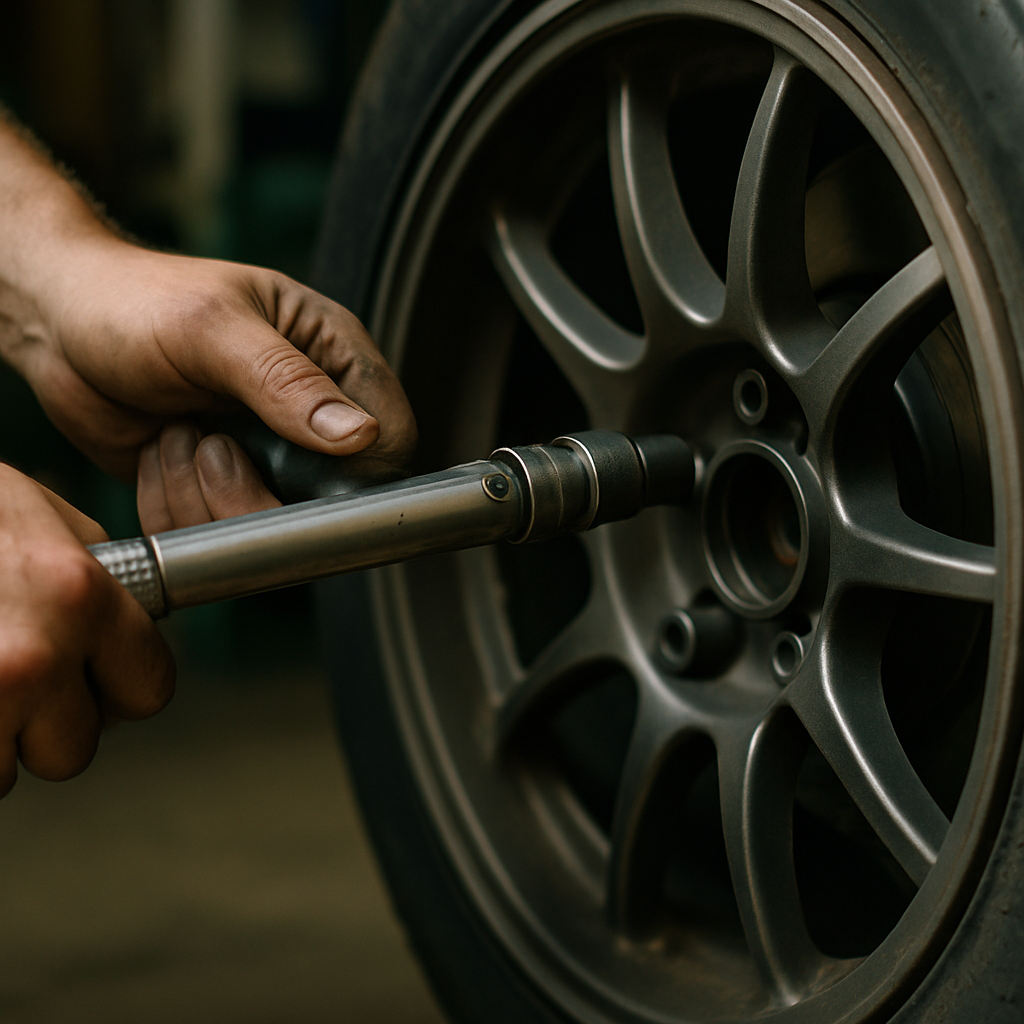
    Close-up of tyre and wheel maintenance on a modified car, highlighting tyre wear costs when running a modified car
    Close-up of tyre and wheel maintenance on a modified car, highlighting tyre wear costs when running a modified car

    Sticky Tyre Costs: The Most Brutal Line in Any Build Budget

    Track rubber is where builds go to die financially. Semi-slicks and proper cup tyres — your Michelin Pilot Sport Cup 2s, your Bridgestone Potenza RE-71RS equivalents, your Toyo Proxes R888Rs — are not cheap to buy and they disappear terrifyingly fast when you are actually using them as intended.

    A set of 265/35 R18 semi-slicks will cost you somewhere between £700 and £1,100 fitted. On a powerful rear-wheel-drive car on a circuit like Brands Hatch or Bedford Autodrome, a hard session can put 30 to 40 per cent wear on a set in a single day. A real-world scenario on a 300bhp-plus rear-drive car? Budget for a full set every four to six track days. Run the maths on that.

    The smart move is to run a dedicated set of track wheels and tyres alongside your road setup. Which leads us neatly to storage.

    Where Are You Keeping All This Stuff?

    Two sets of wheels. A track-day toolkit. A spare set of brake pads, a torque wrench, a bottle of brake fluid, your helmet and HANS device, your Nomex suit. Where exactly is all of this living? If you have a garage, fine. If you live in a flat with a communal car park, this is a genuine problem.

    Self-storage units near most UK cities run from £80 to £200 per month for a unit large enough to store a wheel and tyre stack plus gear. Over a year, that is up to £2,400 just to house your stuff. It is a cost almost no build thread ever mentions, yet it is completely real for anyone without a dedicated workshop or garage at home.

    Club Memberships, MSA Licences, and Track Day Entry Fees

    If you want to get properly involved in the scene — not just a once-a-year Javelin Trackdays session but actual structured driving — you are looking at Motorsport UK memberships (around £55 per year), club memberships (BRSCC, BARC, or marque-specific clubs averaging £80 to £150 a year), and the track day entry fees themselves. Open-pit days at circuits like Snetterton or Oulton Park run from £180 to £350 per car depending on the circuit and organiser. Do six days a year and that alone is up to £2,100 before you have touched the car.

    None of this is unreasonable. But nobody adds it to the build spreadsheet, and it absolutely needs to be there. You can check Motorsport UK’s official licencing page for current pricing and categories before committing.

    The Parts Tax Is Real and It Is Relentless

    Here is the one that gets experienced builders as much as beginners. Modified cars need parts more often. A car running at the edge of its performance envelope is under more stress. Rubber bushes degrade faster. Brake discs warp. Clutches slip. Wheel bearings grumble. Oil gets hot and breaks down quicker.

    And here is the kicker: parts for modified or less common platforms are almost always more expensive and harder to source than bog-standard replacements. If you are running a Mitsubishi-based build, for example, knowing where to source quality Mitsubishi parts from a specialist rather than a generic factor can save you real money and grief in the long run. Generalist parts shops often do not stock the right spec for modified applications, and ordering wrong wastes both cash and time.

    Budget a minimum of 10 to 15 per cent of your car’s current value annually just for parts and maintenance on a modified daily or weekend machine. For a car you are actively tracking, push that figure higher.

    The Honest Total: What Running a Modified Car Actually Costs Per Year

    Let’s pull it together with a realistic mid-level build scenario: a tuned hot hatch, stage 2 power, coilovers, track wheels and tyres, used for six track days a year and weekend road driving.

    • Specialist insurance: £1,400
    • Alignment (post-track and periodic): £600
    • Track tyres (one set per season): £900
    • Storage unit: £1,440
    • Track day entries (6 days): £1,500
    • Club memberships and licences: £200
    • Parts, servicing, consumables: £1,200

    That is over £7,200 a year on top of the build cost itself and the car’s purchase price. Not a fantasy supercar budget. A realistic, modest, genuinely enthusiast-level commitment.

    If you want to explore builds, parts sourcing, and community recommendations further, Maxxd Directory is worth bookmarking — there are some solid specialist listings in there for exactly these kinds of running costs and services.

    The build is the fun part. The running costs are where the real commitment lives. Get your spreadsheet honest before you start, and you will enjoy the whole thing a lot more than if the bills keep blindsiding you mid-season.

    Frequently Asked Questions

    How much does specialist insurance cost for a modified car in the UK?

    It varies significantly depending on the modifications declared, the driver’s age, and location, but expect premiums 30 to 80 per cent higher than a standard car. Brokers like Adrian Flux and Footman James specialise in modified car cover and are worth comparing.

    Do I need a four-wheel alignment after every track day?

    If you are running adjustable suspension with aggressive settings, it is strongly recommended. Track use shifts geometry through kerb strikes and lateral loads, and undetected misalignment will destroy your tyres and affect handling safety. Budget £80 to £150 per alignment at a specialist.

    How long do semi-slick tyres last on a track day?

    It depends on power output, driving style, and circuit surface, but on a powerful rear-wheel-drive car you can see 30 to 40 per cent wear in a single hard session. Realistically budget for a full replacement set every four to six track days.

    Do I need a Motorsport UK licence to attend track days in the UK?

    Not for standard open-pit track days, which are non-competitive events. However, if you want to enter timed events, sprint series, or club racing, a Motorsport UK competition licence is required. Check motorsportuk.org for the current licence categories and fees.

    What is the best way to keep running costs down on a modified car?

    Plan your build with running costs in mind from the start, source parts from reputable specialists rather than generic factors, keep a dedicated track setup separate from your road setup, and track all costs in a spreadsheet so nothing creeps up on you mid-season.

  • How to Build a Budget Track Day Car in 2026: The Complete UK Guide

    How to Build a Budget Track Day Car in 2026: The Complete UK Guide

    Right, let’s talk about building a proper track weapon without remortgaging the house. A budget track day car build in 2026 is absolutely achievable if you approach it with your head screwed on. The UK second-hand market is swimming in viable donor cars right now, and with a bit of mechanical nous and the right priorities, you can be lapping Blyton Park or Anglesey Circuit by the end of the season for well under £5,000 all-in. I’ve seen people spend more on a set of coilovers than their entire car is worth. Don’t be that person.

    This isn’t about chasing lap records on day one. It’s about getting on circuit safely, learning the car underneath you, and building a platform that can grow with your skills. That’s the mindset you need before you spend a single penny.

    Budget track day car build 2026 - red Mazda MX-5 in UK circuit paddock ready for a track day
    Budget track day car build 2026 – red Mazda MX-5 in UK circuit paddock ready for a track day

    Choosing Your Donor Car: The Best Budget Track Day Platforms in 2026

    The donor car is everything. Get this wrong and you’re fighting an uphill battle from day one. Get it right and the car does half the work for you. Here’s what I’d be looking at in 2026’s market.

    Mazda MX-5 (NA or NB)

    The eternal answer. Pre-2006 MX-5s are everywhere, parts are dirt cheap, the chassis balance is genuinely excellent, and the community knowledge is encyclopaedic. A tidy NA or NB can be sourced for £1,500 to £2,500. Rust is the enemy, so inspect the sills, floor, and rear arches with a magnet and a screwdriver. Everything else is fixable on the cheap.

    BMW E36 and E46

    Rear-wheel drive, naturally aspirated straight-six options, and a parts supply that’s essentially infinite. An E36 318i or 323i can be had for under £1,500. The E46 318i is slightly newer and sits in the £1,500 to £2,500 bracket for a solid example. Both platforms have massive aftermarket support and a huge track day community in the UK. Cooling is the weak point on both, so budget for a coolant flush and thermostat replacement immediately.

    Honda Civic EP3 Type R or EM2

    If front-wheel drive is your thing, the EP3 is a cracker. K20 engine, proper limited-slip differential from the factory on the Type R, and a chassis that rewards commitment. Finding a clean one takes patience but they’re out there between £2,500 and £4,000. The non-Type R EP3 and EM2 Civics are even cheaper and bolt-on Type R parts are plentiful.

    Renault Clio 172 and 182

    Possibly the best value-per-lap car you can buy in Britain right now. The 2.0 naturally aspirated engine is strong, the chassis is properly rewarding, and there’s an enormous one-make racing series keeping parts supply healthy. Budget £1,500 to £3,000 for a solid base car.

    Setting a Realistic Budget

    For a proper budget track day car build in 2026, I’d split the money like this. Assume a total spend of around £4,500 to £5,000.

    • Donor car: £1,500 to £2,500
    • Safety equipment (cage/harness/extinguisher/seats): £500 to £1,000
    • Brake consumables and fluid: £200 to £400
    • Tyres: £300 to £600 for a second-hand set on suitable rims
    • Suspension refresh: £200 to £500
    • Cooling and fluids: £100 to £200
    • Miscellaneous spares and tools: £300

    If you’re mechanically capable of doing your own prep, the labour savings are enormous. Even basic tasks like brake pad changes, fluid flushes, and fitting coilovers yourself can save £500 to £1,000 over a season.

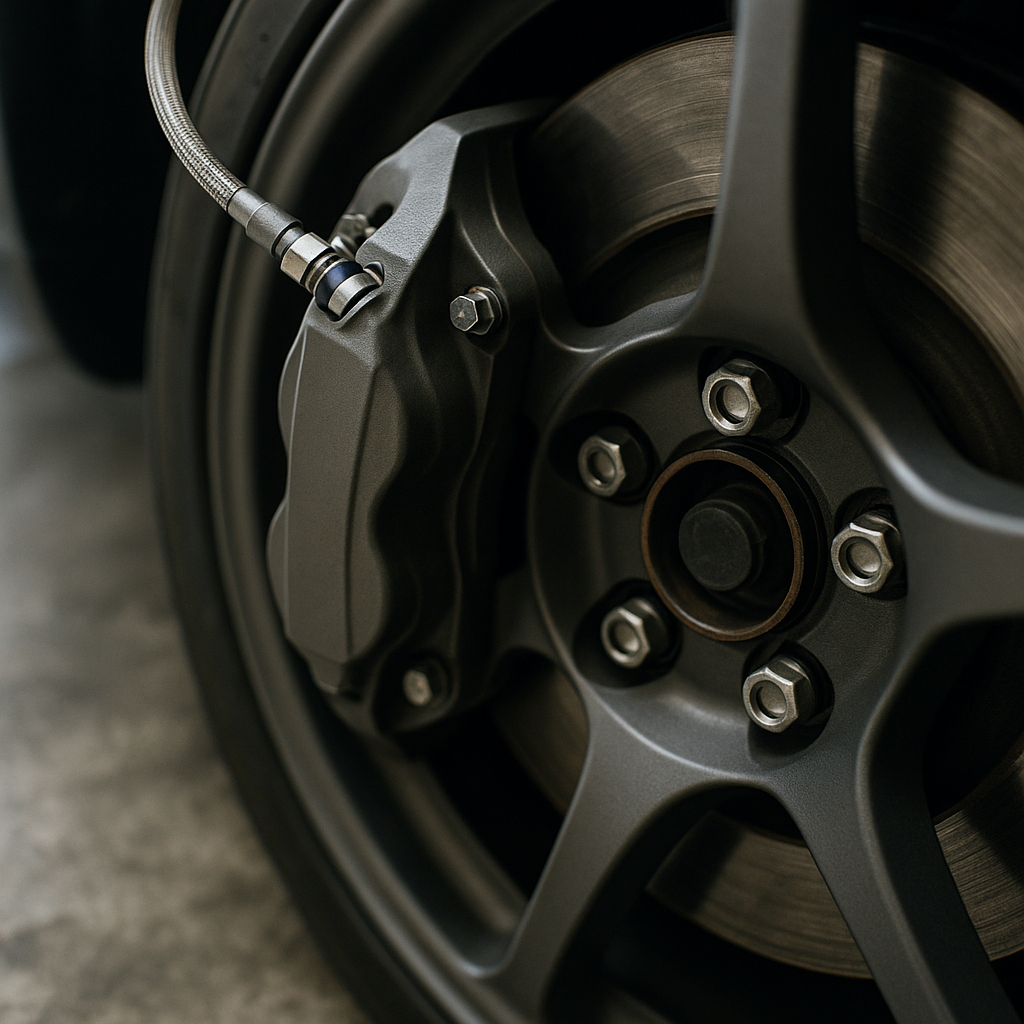
    Braided brake lines and uprated calipers fitted during a budget track day car build
    Braided brake lines and uprated calipers fitted during a budget track day car build

    The Most Cost-Effective Upgrades to Do First

    Performance upgrades come last. Safety and mechanical reliability come first. Every time. Here’s the order of priority for any budget track day car build.

    Brakes: The Non-Negotiable Starting Point

    Standard road brake pads will fade to nothing on circuit. Uprated pads from Mintex, EBC, or Ferodo are available from around £50 to £100 per axle for most popular platforms. Braided brake lines are worth adding at around £80 to £120 for a full set. Switch to proper track or race-spec brake fluid, such as Motul RBF 660 or similar; your road-spec fluid will boil within three or four laps in high-ambient conditions. This is genuinely life-safety stuff, not enthusiast fluff.

    Tyres: Grip You Can Feel

    You don’t need semi-slicks on a budget. A part-worn set of Toyo Proxes TR1 or Hankook RS4 tyres on a spare set of steel rims will transform your experience and separate your track rubber from your road car. Budget around £300 for a decent used set. Check the UK government’s vehicle approval guidance if you’re unsure about tyre spec and legality for road use between events.

    Suspension Refresh

    Worn bushes and tired dampers will make even a great chassis feel sloppy and unpredictable. Before you spend a penny on performance suspension, replace any worn components with standard-spec parts. On an MX-5 or E36 this costs very little. If the car’s tight mechanically, standard-height Bilstein B8s or a used set of coilovers from a reputable brand like BC Racing or Tein will transform the handling without costing a fortune. Check Maxx Directory for performance part suppliers who stock budget-friendly options.

    Cooling System

    Cars work much harder on circuit than they ever do on the road. A full coolant flush, new thermostat, and a check of all hoses costs almost nothing. If the car runs warm on the road, address it before you go anywhere near a circuit. A blown head gasket mid-session is a day-ender and a wallet-destroyer.

    Safety Prep

    Most UK track day organisers operate under MSUK guidelines, and noise limits (typically 98dB or 105dB drive-by) apply at most venues. A basic roll cage is not always mandatory for entry-level novice days, but a good bucket seat and four-point harness dramatically improve both safety and feel behind the wheel. A small fire extinguisher mounted to the roll cage or transmission tunnel is cheap peace of mind. Helmet requirements vary by organiser, so always check the specific event regs.

    Running Costs: What to Expect on the Day

    Track day hire fees at UK circuits vary considerably. A day at Brands Hatch Indy can cost anywhere from £175 to £250 depending on the organiser. Thruxton and Donington tend to sit in similar territory. Fuel consumption on circuit is significantly higher than road driving; expect somewhere between 15 and 22 MPG depending on how hard you’re driving and the circuit layout. A full tank before you leave the house and a spare 20-litre jerry can is sensible planning.

    Budget for brake pad wear, especially in the first season while you’re learning your braking points. If you’re on braided lines and proper fluid you’ll be fine, but keep a spare set of pads in the boot. Tyres will last longer than you think if you’re not on the ragged edge every lap, but monitor them at every session break.

    Final Thoughts on the Budget Build

    The beauty of a proper budget track day car build in 2026 is that you’re forced to prioritise. You can’t throw money at problems, so you learn to set up what you’ve got. The fastest drivers I’ve seen at club-level days are often in the cheapest cars, because they’ve spent time learning rather than upgrading. A well-sorted Clio 172 on decent rubber will humble a lot of new Porsches driven by people who bought the car but never learnt to trail-brake properly.

    Start with a sound car, make it safe, make it reliable, and then learn to exploit what it can do. The upgrades can come later. The experience starts the moment you leave the pit lane.

    Frequently Asked Questions

    What is the cheapest car to build into a track day car in the UK?

    The Mazda MX-5 NA or NB generation is consistently one of the cheapest and most effective track day platforms in the UK, with solid examples available for £1,500 to £2,500. Renault Clio 172s and Honda Civic EP3s are also excellent options in a similar price bracket with strong parts availability.

    Do I need a roll cage for a track day in the UK?

    Not always. Most UK track day organisers running novice or open-pit-lane sessions do not mandate a roll cage for standard road cars. However, requirements vary by organiser and venue, so always check the specific event regulations before attending. A harness and bucket seat are still strongly recommended for safety and driving confidence.

    How much does a budget track day car build cost in 2026?

    A realistic all-in budget for a sorted, safe track day build in 2026 is between £4,000 and £5,500 in the UK. This covers a decent donor car, safety gear, brakes, tyres, and suspension refresh. If you can do your own mechanical work, you can come in notably cheaper.

    Can I drive my track day car to and from the circuit?

    Yes, if the car is road-registered, taxed, MOT’d, and insured. Many budget builders run their car to the circuit, swap to track tyres and remove number plates, then swap back at the end of the day. Check your insurance policy carefully, as standard policies often exclude track use and you may need separate track day insurance.

    What tyres should I use on a budget track day car?

    For a budget build, a part-worn set of performance road tyres such as Toyo Proxes TR1 or Hankook RS4 on a spare set of rims is a cost-effective starting point. Full semi-slicks are unnecessary until you’re genuinely pushing the limits of grip, and they wear quickly in the hands of a developing driver.