
Category: Highlight

  • The 23-window VW Bus was designed to tour the Swiss Alps

    Over five decades, the 23-window Volkswagen Microbus went from hippie icon to valuable collectible. Recently, VW dug into its archive for information and historical photos of this rare version of a 1960s icon.

    Officially called the “Deluxe Microbus with Samba package” in the United States, the 23-window Microbus was originally designed for touring the Swiss Alps—hence the large number of windows.

    That 23-window count includes eight skylights (four on each side of the vehicle), two curved rear windows, five side windows, a retractable skylight, and the split windshield. Just two color combinations were offered when new: Mouse Gray with a Pearl White top, or Sealing Wax Red with a Chestnut Brown top.
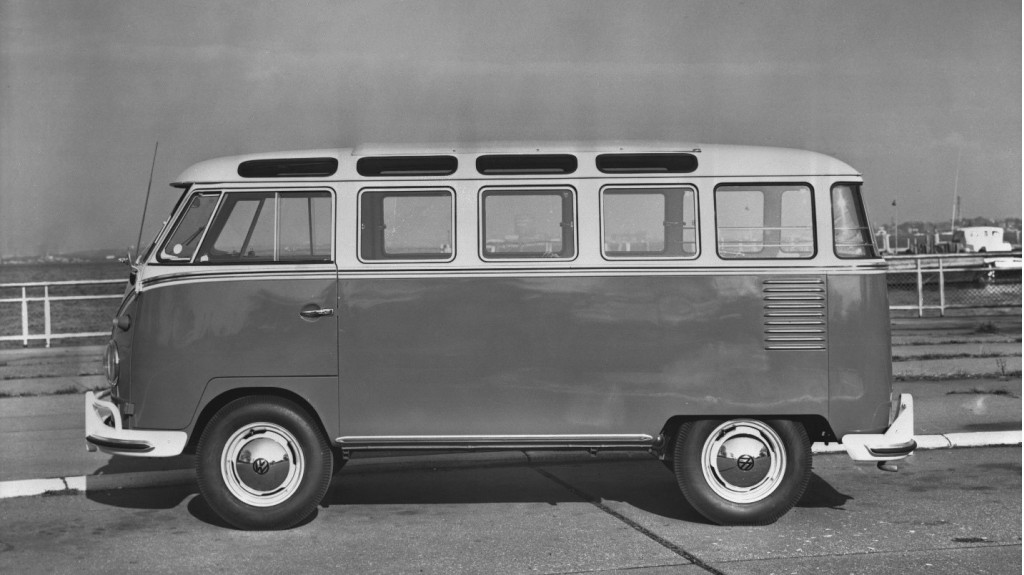
    Volkswagen Microbus 23-window

    Volkswagen Microbus 23-window

    Also known as the Type 2, the Microbus was known for its looks and utility, not performance. Its air-cooled flat-4 engine produced 53 horsepower, making for leisurely acceleration. Power was sent from the rear-mounted engine to the rear wheels through a 4-speed manual transmission.

    VW offered a number of body styles, including pickup truck and cargo-van versions, but only 5-10% had the 23-window configuration, according to the automaker. Consequently, they are now quite valuable. In 2017, a 23-window 1961 Microbus sold for $291, 500, setting a record for the model, VW noted.

    VW is close to launching a spiritual successor to the Microbus. Unveiled in concept form in 2017, the ID Buzz sports retro styling inspired by the Microbus, but with an electric powertrain and MEB underpinnings shared with other recent VW electric cars. It’s expected to launch in the United States in 2022.
    Source

  • SSC to re-run Tuatara land-speed record attempt, not submitting current run to Guinness

    The SSC Tuatara is not the fastest production vehicle on the planet, at least not yet, officially.

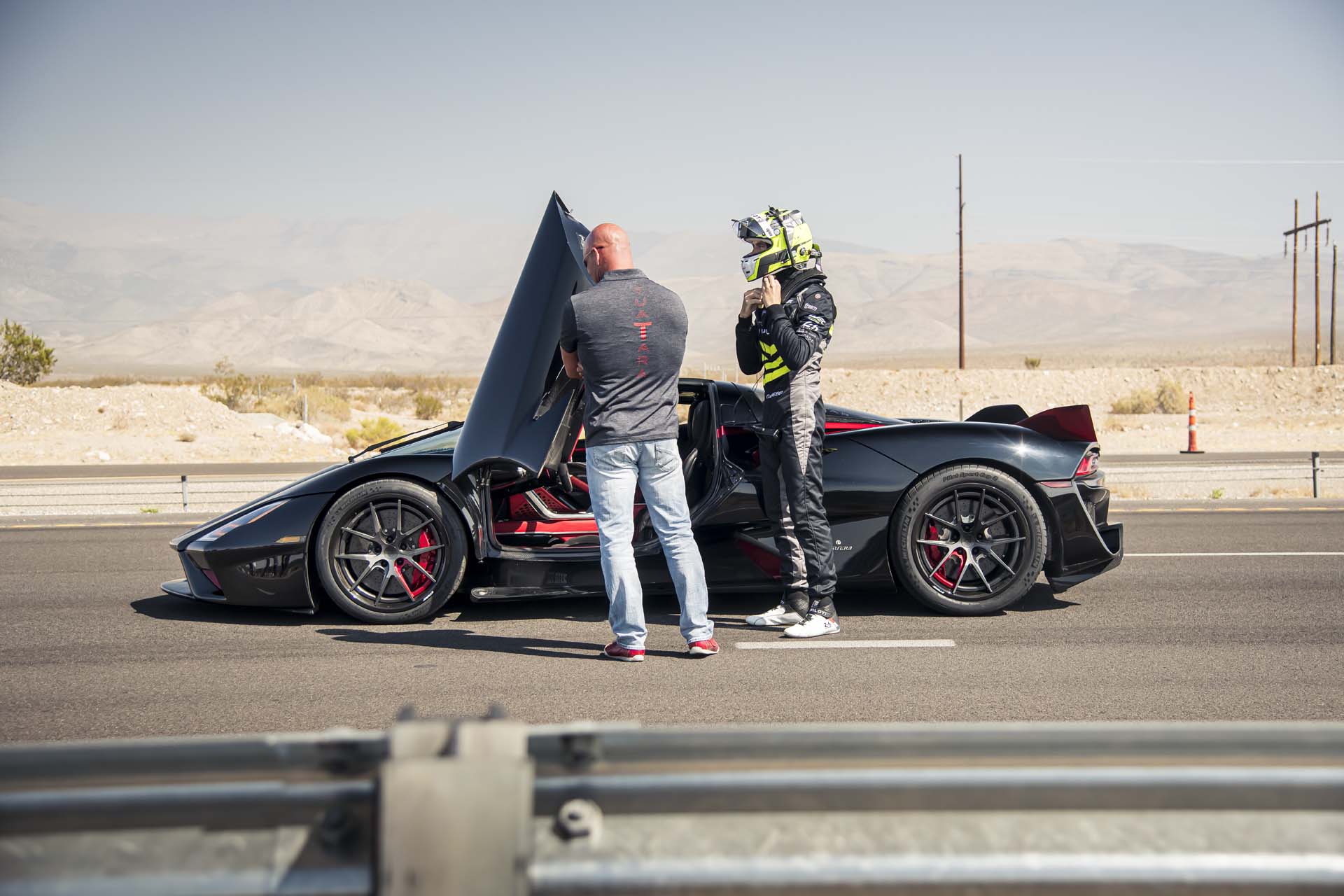
    After much controversy, the world will get to find out what the Washington-based automaker’s Tuatara supercar can do, again. On Friday night, SSC CEO Jerod Shelby released a video on the company’s YouTube channel stating the Tuatara will make another run for the record in “the very near future.” The move effectively abandons SSC’s claimed record of 316.11 mph set on Oct. 10 near Pahrump, Nevada.

    [embedded content]

    “We’ll run it again, with every backstop in place, so the speeds clocked on the next run are irrefutable,” Shelby said to Motor Authority.

    To ensure the accuracy of the data from the next record attempt, the Tuatara will be equipped with “multiple GPS companies’ equipment in the car” and “their staff on site looking over our shoulder analyzing every run, every detail,” Shelby said in the video.

    The record run’s data from Oct, 10 will not be submitted to Guinness World Records. “I don’t believe Guinness would even review the submission due to all the controversy,” Shelby told MA. The initial run’s GPS satellite data has yet to be verified by an independent third party.

    Per Guinness World Record’s rules, two independent third-party witnesses were on site at the record attempt to verify the data and certify they saw it. The independent witnesses were Brian Shoemake of Pahrump Life magazine and Nevada legislator Gregory Hafen II.

    SSC has not said whether there was a discrepancy with the calibration of the Dewetron satellite GPS tracking system during the first run, which would have caused the data gathered by the system to be inaccurate.

    Shelby told MA Guinness will not be on site for the next record attempt as the organization doesn’t send its own people and relies on having two witnesses on site to certify the record. He also said it is yet to be determined who the driver will be and when the next run will take place.

    SSC claimed the attempt on Oct. 10 in Nevada consisted of passes of 301.07 mph in one direction and 331.15 mph in the opposite for a two-way average of 316.11. Now, that figure will not be recognized as a new production-car land-speed record. However, SSC will make another attempt to set the record.

    Source

  • Watch the Rimac C_Two undergo crash testing

    The Rimac C_Two may be a low-volume electric hypercar, but it still needs to be crash tested like any other production vehicle. Rimac on Friday released a video showing two prototypes being sacrificed for the cause ahead of the C_Two’s targeted 2021 launch.

    Rimac began crash testing in 2019, and did simulation work prior to that. The crashes shown here—both frontal offsets—represent the second round of testing. Cars were run into a barrier at a 40% offset at 40 kph (24.8 mph) and 56 kph (34.7 mph).

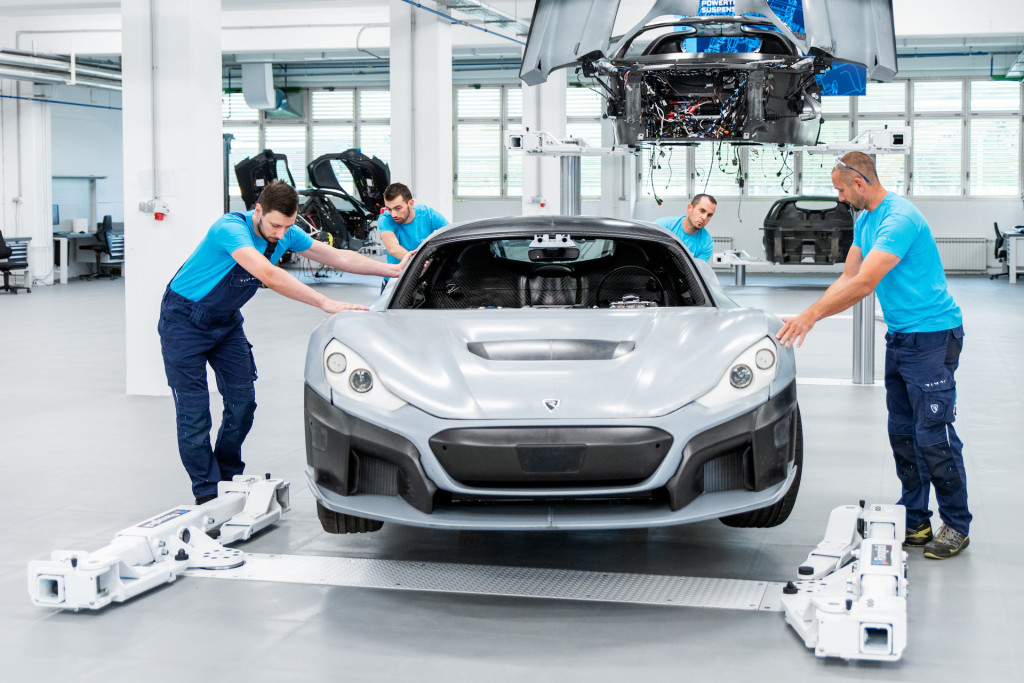
    To complete testing and regulatory homologation, Rimac plans to build 13 prototypes and five “pre-series” cars. Of these 18 cars, 11 will be destroyed in crash tests, Rimac said in a press release accompanying the video. These cars will be built on a new assembly line Rimac unveiled in June.

    Rimac C_Two production line

    Rimac C_Two production line

    Unveiled in concept form at the 2018 Geneva International Motor Show, the production-spec version of the C_Two was originally scheduled to debut at this year’s Geneva show, and start production before the end of the year. Due to the coronavirus pandemic, the show was canceled, and the start of C_Two production was pushed back to 2021.

    Rimac quotes output of 1,914 horsepower and 1,696 pound-feet of torque, with a 0-60 mph time of 1.85 seconds (with a one-foot rollout), and a top speed of 258 mph. The car will also feature sophisticated driver-assist tech that will act as a driving coach on racetracks.

    Despite a price tag of $2 million, most of the C_Two’s 150 build slots were filled almost immediately after the concept car’s 2018 unveiling. Rimac’s technology may also make it into cars from Hyundai and Porsche—both of which own stakes in the firm. A September report also claimed Rimac could buy Bugatti in exchange for Porsche increasing its stake.

    Source