Category: Highlight

  • Prince’s car collection, Lincoln Zephyr Reflection, 2022 Porsche 911 GT3: The Week In Reverse

    We looked at Prince’s car collection, Lincoln previewed its future, and we drove the 2022 Porsche 911 GT3. It’s the Week in Reverse, right here at Motor Authority.

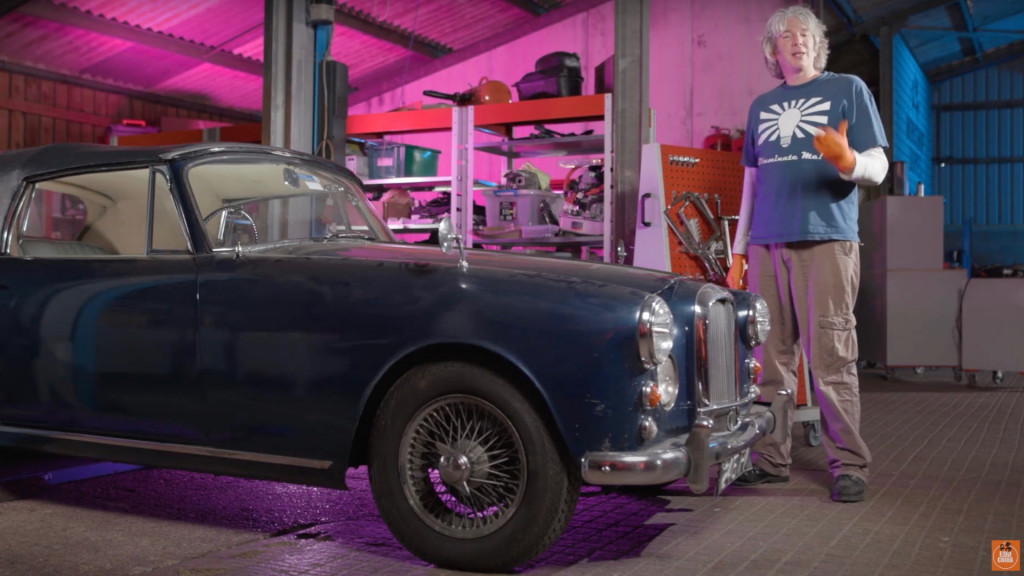
    This week marked the fifth anniversary of pop star Prince’s death. When the artist died at the age of 57 his garage contained 18 vehicles. This week we took a look at the ones that either stood out or were the most surprising.

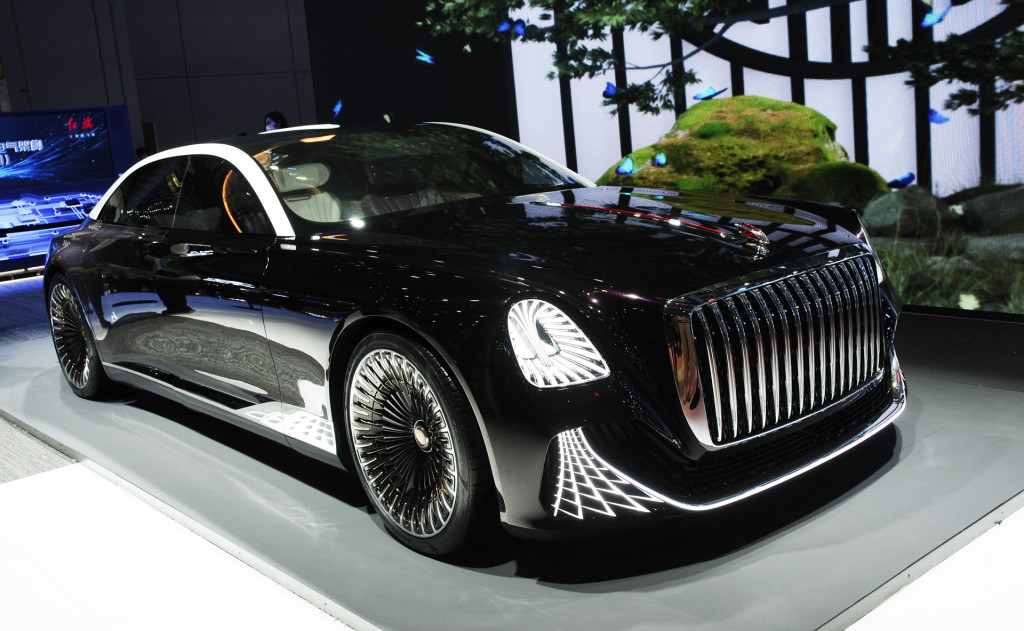
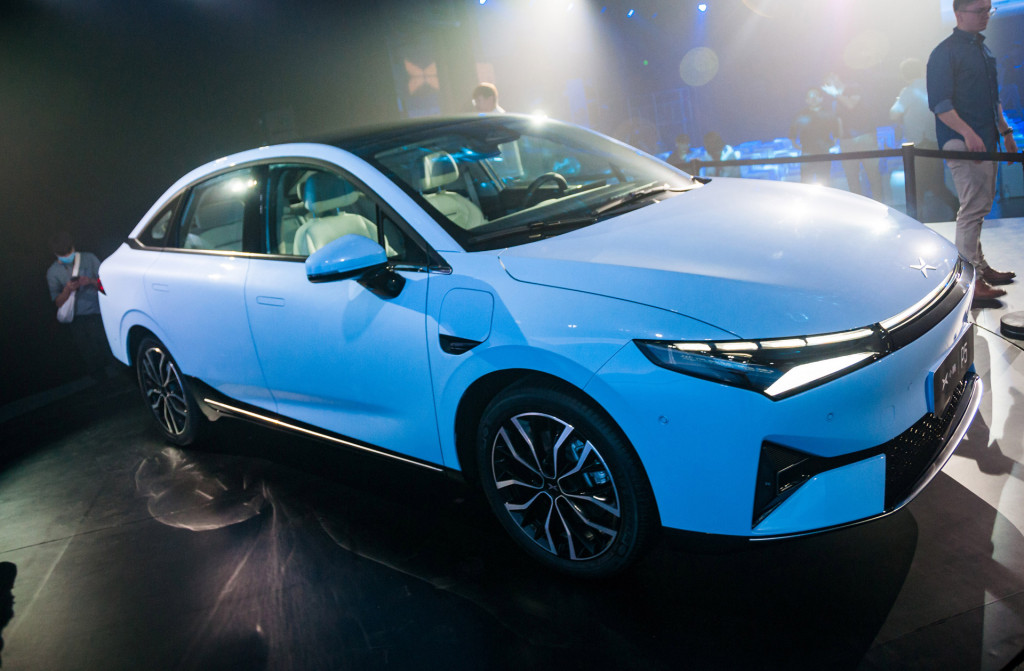
    The Lincoln Zephyr Reflection was unveiled at Auto Shanghai 2021. While the gorgeous sedan won’t come to the U.S., its design gives a good indication of where the brand is headed designwise. The Zephyr Reflection previews a production model bound for the Chinese market later this year.

    The 2022 Mercedes-Benz AMG GT 73 4-Door Coupe was spied wearing minimal camouflage. The 800-plus-hp super hatch will be a plug-in hybrid serving as a range-topper in the GT 4-Door Coupe lineup. Expect it to debut officially later this year.

    Cadillac’s done with gas-powered cars. The brand’s North American boss, Rory Harvey, said every new vehicle the luxury automaker introduces going forward will be electric, and that will start with the 2023 Lyriq.

    We drove the 2022 Porsche 911 GT3 and found it’s the best 911 yet. The new front suspension has done wonders for the car’s power delivery, especially when exiting a corner, and the steering feel is spot on.

    Source

  • 1999 Chevrolet Corvette on Jay Leno’s Garage

    Neither classic nor brand new, the C5 Corvette can be easily overlooked. But this generation has a lot to offer, Jay Leno explains in a rundown of his 1999 Chevrolet Corvette on his Jay Leno’s Garage YouTube show.

    Launched for the 1997 model year, the C5 was a pivotal moment for the Corvette. General Motors had let the sports car languish, keeping the aging C4 Corvette in production as rivals surpassed it. As documented in the book “All Corvettes Are Red,” the Detroit giant even considered killing off the Corvette, rather than spending money on development of a C4 replacement.

    The C5 did get the green light, and it introduced several key engineering features. It kept the fiberglass bodywork of previous generations, but added a stiffer chassis made with hydroformed rails, as well as a rear-mounted transaxle to improve weight distribution. That basic layout would carry over to the following C6 and C7 generations, only changing for the mid-engine C8 Corvette in 2020.

    1999 Chevrolet Corvette on Jay Leno's Garage

    1999 Chevrolet Corvette on Jay Leno’s Garage

    This generation also introduced the LS1 V-8, which made 345 horsepower initially. A Z06 performance model was introduced in 2001, with a more powerful version of the V-8 dubbed LS6. It made 385 hp at first, but was later upgraded to 405 hp.

    The C5 kept the pop-up headlights and general proportions of the C4 generation, but with smoother surfaces that gave the C5 a more modern look. The C5 launched as a fastback coupe with removable large roof panels; convertible and notchback coupe body styles were added to the lineup later.

    Leno, who got his C5 in exchange for driving the Indianapolis 500 pace car, seemed most impressed that Chevy could offer a car like this at a (relatively) affordable price, without pushing into the six-figure range. That’s still the case with the current Corvette Stingray, which offers 3.0-second 0-60 mph acceleration for around $60,000.

    Click on the video above for more on the C5 Corvette’s history and engineering, and to see Jay drive the car on the streets of Los Angeles. As always, it’s a pleasure to hear the growl of the LS1 V-8.

    Source

  • Hennessey Venom F5 hits 200 mph during aerodynamics testing

    The first of three phases of testing for the Hennessey Venom F5 is complete ahead of the supercar’s planned public debut at the Amelia Island Concours d’Elegance in May. Hennessey announced Tuesday that a test car hit 200 mph during aerodynamics testing.

    That speed—achieved on a 2.2-mile runway at a former United States Air Force base in Arkansas—is about two thirds of the Venom’s claimed 311 mph top speed, but this test wasn’t about breaking records. The team, headed by chief engineer John Heinricy, were focusing on mid-speed refinement and coast-down behavior, a Hennessey press release said. Heinricy spent many years at General Motors, including as assistant chief engineer for the Corvette.

    The Venom F5’s 6.6-liter twin-turbo V-8 was also restricted to 900 hp, only about half its target output of 1,817 hp. With the taps fully opened, Hennessey claims the V-8 will also produce 1,193 lb-ft of torque, and rev to 8,500 rpm (although it’s restricted to 8,200 rpm outside a special F5 mode). Power is handled by a CIMA 7-speed single-clutch automated manual transmission.

    In addition to the unused Air Force base, the testing program has included stops at Hennessey’s own Sealy, Texas, site and England’s Silverstone circuit, where the first of 24 Venom F5 supercars was built. The next phase of development will include road testing and more track time to refine the car’s agility, poise and driver feedback. Testing sessions will take place at Laguna Seca and Circuit of the Americas (COTA), according to Hennessey. There is no word yet on the focus of the third phase of testing.

    Hennessey Venom F5 aerodynamics testing

    Hennessey Venom F5 aerodynamics testing

    The names “Hennessey” and “Venom” may sound familiar, but the Venom F5 is a different car than the 265-mph Venom GT, and it’s built by a new company called Hennessey Special Vehicles (HSV), which is separate from Hennessey Performance Engineering’s modification business.

    As with the Venom GT, though, Hennessey is looking to break the production-car land-speed record, this time by blowing past 300 mph. The company previously said it was considering a top-speed run on a closed section of Texas highway in 2021, using a customer car.

    Hennessey said last December that 12 of the 24 build slots were taken, with eight going to customers in the U.S. Those buyers will have to register their cars under the “Show or Display” rule, just like the McLaren Speedtail.

    Pricing has climbed since the Venom F5 styling buck was unveiled in 2017. At the time, Hennessey quoted a $1.6 million price tag, but that rose to $1.8 million for anyone who hadn’t locked in an order by January 2020. It’s now $2.1 million for the remaining build slots.

    Source