Author: Olly

  • The Ford Bronco over the years: A brief history

    On Monday night the sixth-generation Ford Bronco will launch, making it the first Bronco in the company’s lineup since 1996. The off-road SUV available in two or four doors with removable doors and a removable roof will compete with the Jeep Wrangler, much as it did when Ford VP Lee Iacocca approved the first model for 1966.
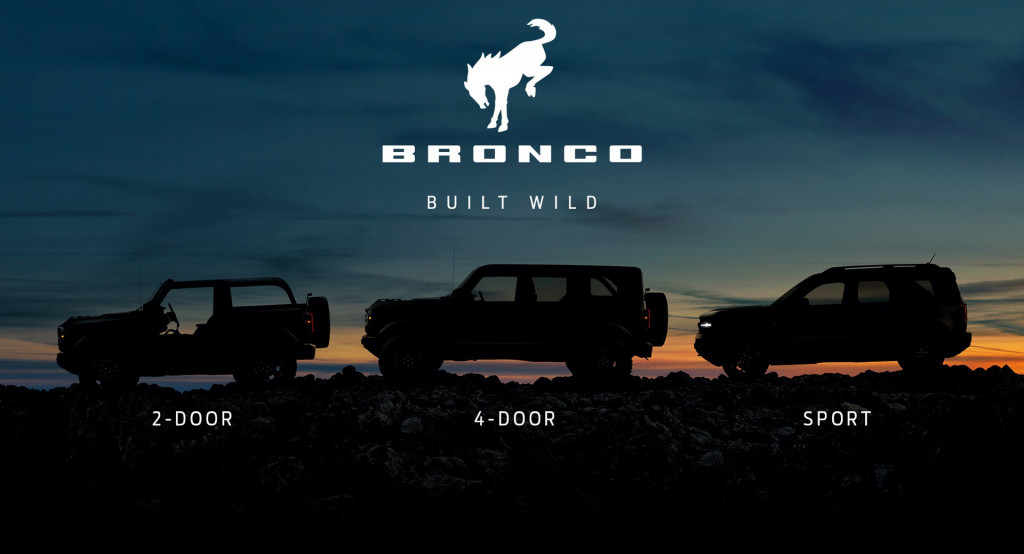
    Teaser for 2021 Ford Bronco family debuting on July 13, 2020

    Teaser for 2021 Ford Bronco family debuting on July 13, 2020

    At the time, the Jeep CJ-5 and International Harvester Scout had laid the grounds for civilian-based off-road vehicles that had gained popularity in America in the era following World War II and the Korean War. It wasn’t new ground for Ford. In WWII, Ford manufactured Willys MB-based jeeps known as General Purpose or GPW, with the W referring to the design created by Willys MB. While that would develop into the Jeep brand, Ford made another iteration in 1951 known as the MUTT but didn’t get back into the off-road action until the ‘60s, when it was also developing the other end of the automotive spectrum with the Mustang pony car

    1966-1977 Ford Bronco


    1966 Ford Bronco wagon
    1966 Ford Bronco wagon

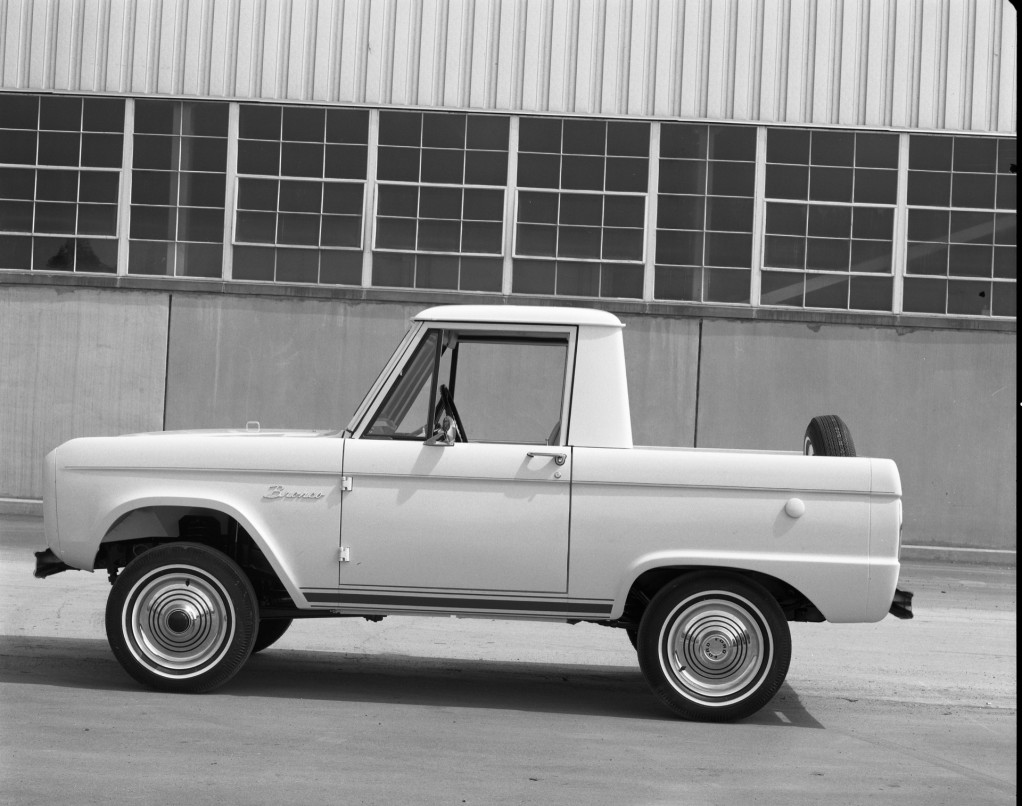
    1966 Ford Bronco two-door half-cab
    1966 Ford Bronco two-door half-cab

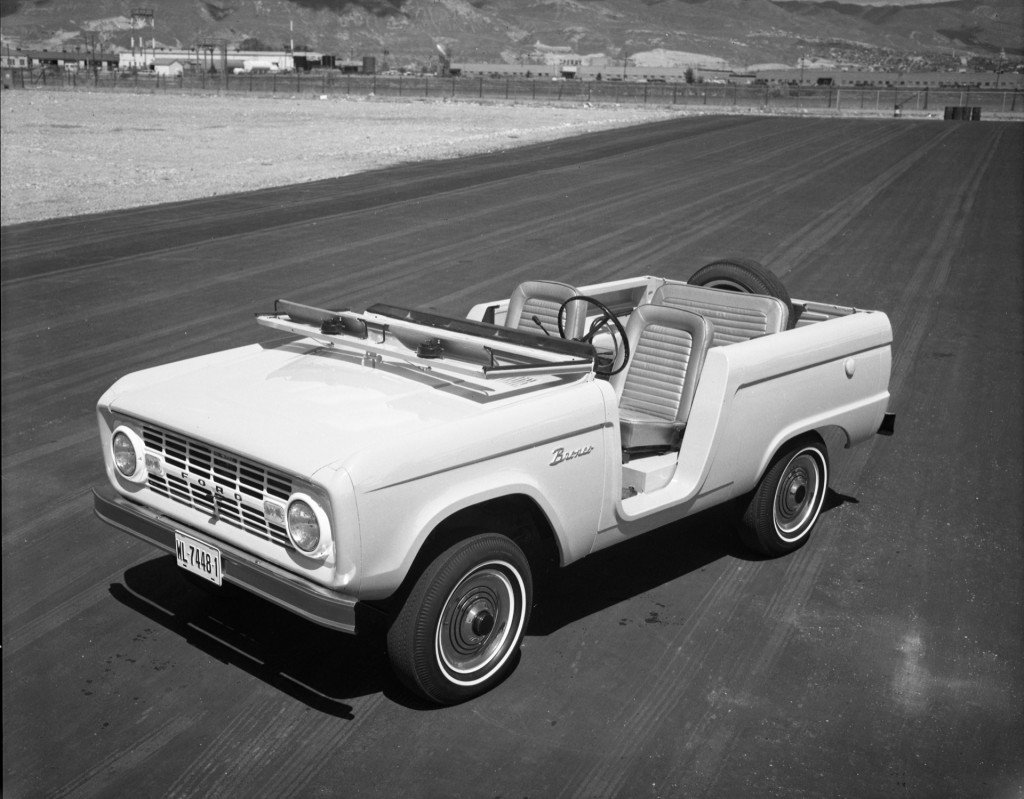
    1966 Ford Bronco roadster

    1966 Ford Bronco roadster

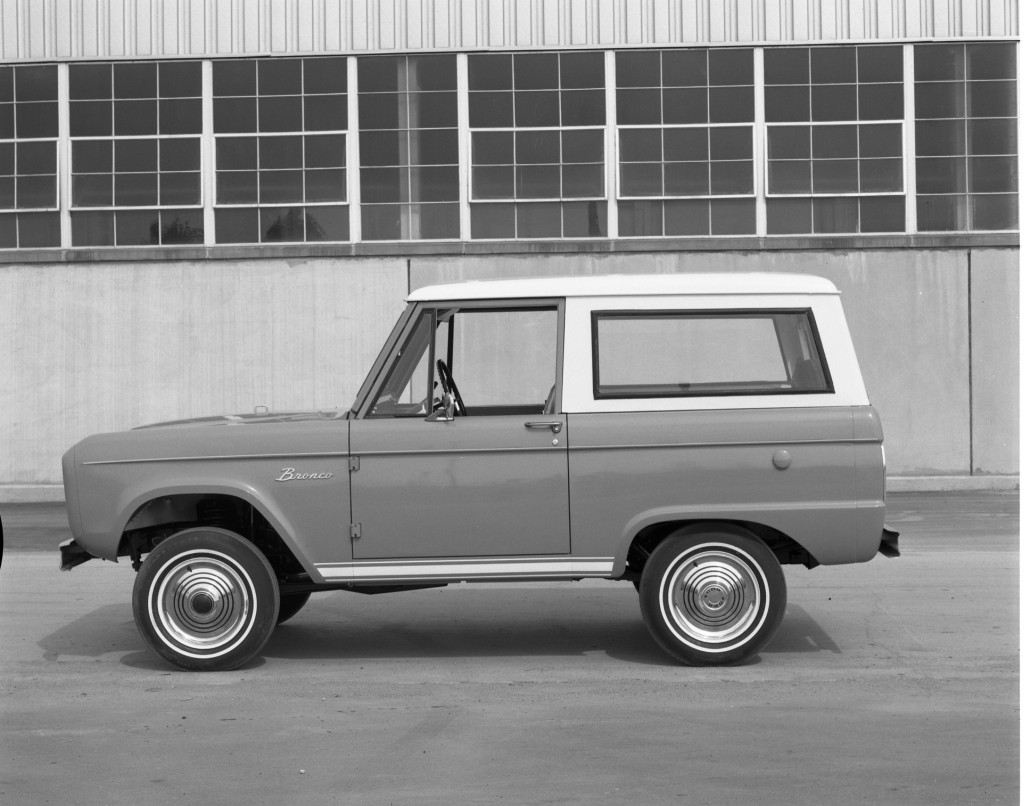
    The original sport-utility vehicle came as a station wagon, half-cab, or a short-lived roadster on a short 92-inch wheelbase. For context, the Ford Fiesta subcompact had a 98-inch wheelbase. The base roadster started at $2,400 (just under $19,000, adjusted for inflation), but came with no doors or a roof. The half-cab baby ($2,480) pickup truck left the field in 1972, leaving the three-door wagon ($2,625, or $20,800 adjusted for inflation) as the enduring first-run Bronco. It came with four-wheel drive, a Dana transfer case, a choice between two inline-6 engines or a V-8 upgraded in 1969 to 302 cubic inches, and a 3-speed manual. A 3-speed automatic was offered later to make the bare-bones first-generation Bronco more accessible through 1977.

    1978-1979 Ford Bronco
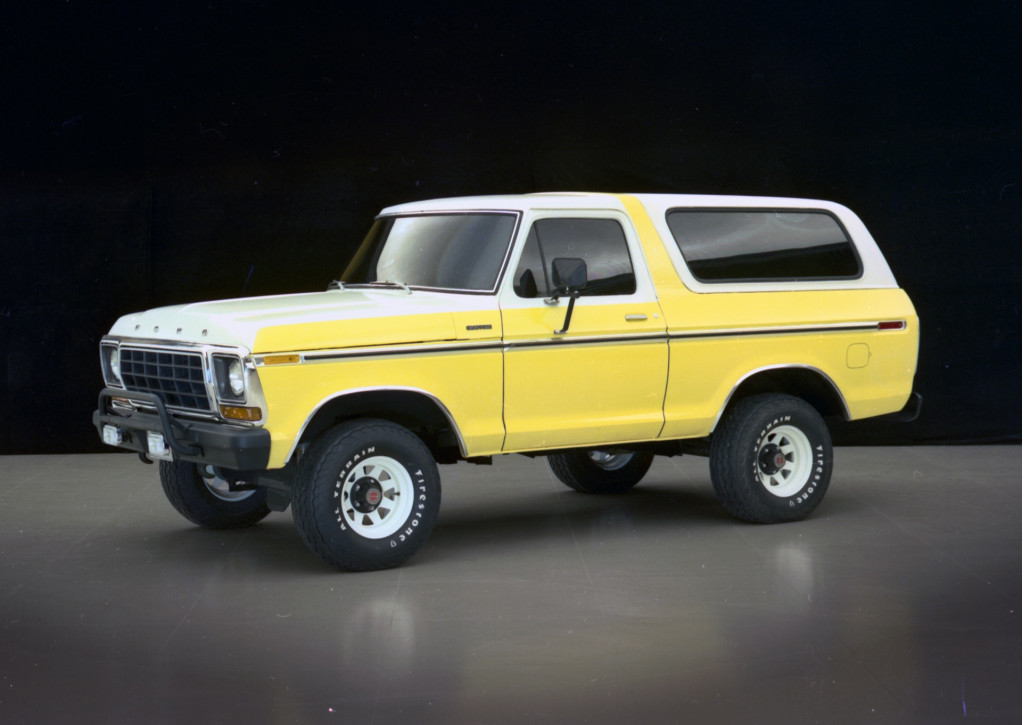
     

    1978 Ford Bronco
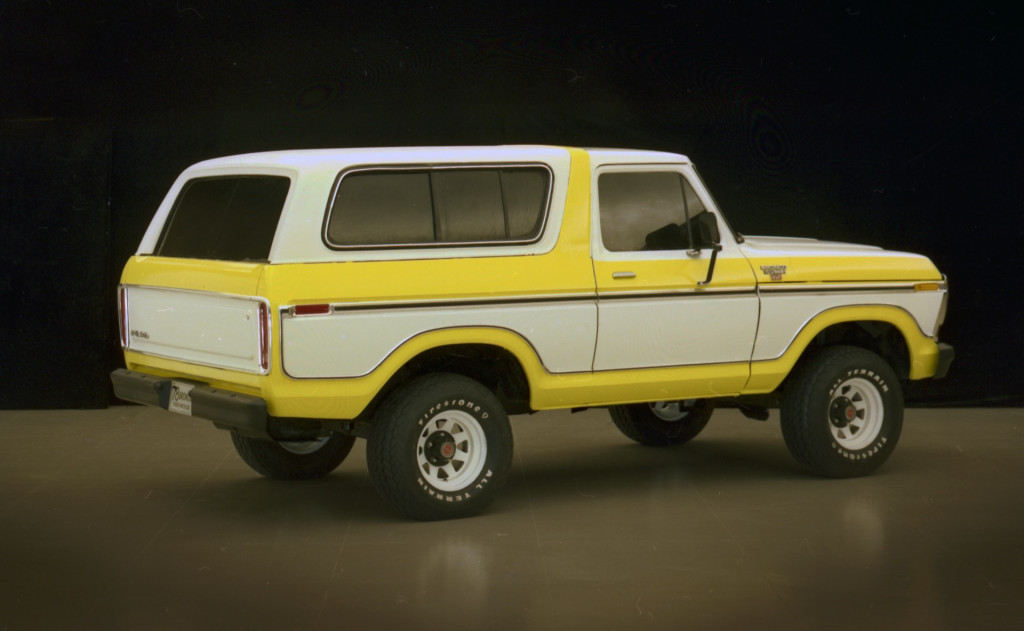
    1978 Ford Bronco

    1978 Ford Bronco

    1978 Ford Bronco

    Lasting only two years, the second-generation Bronco adopted a more pickup-like style and was sold only as a three-door. It started at about $6,500, or $25,560, adjusted for inflation. Based on the F100 pickup truck, it grew nearly two feet longer, nearly a foot longer, and was taller than its predecessor at a time when most American car designs were going in the opposite direction in the wake of the oil crisis. The wheelbase extended to 104 inches. 
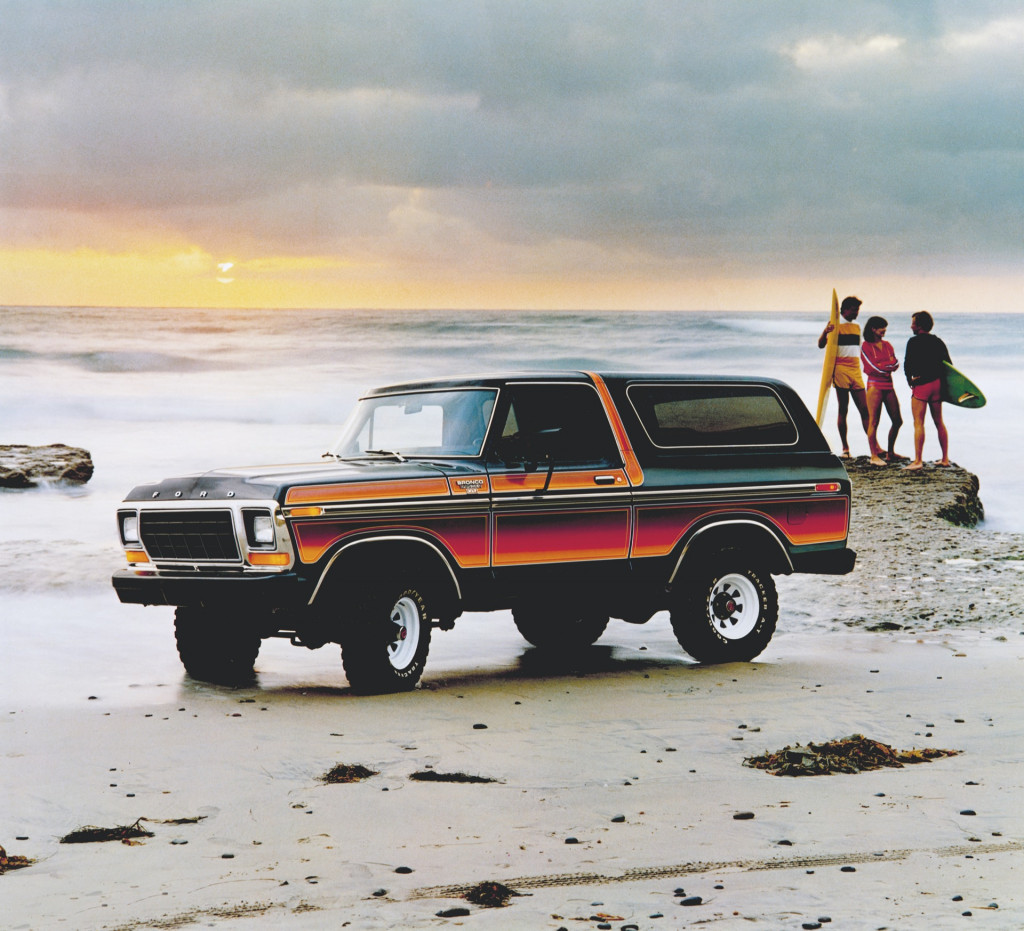
     

    1979 Ford Bronco
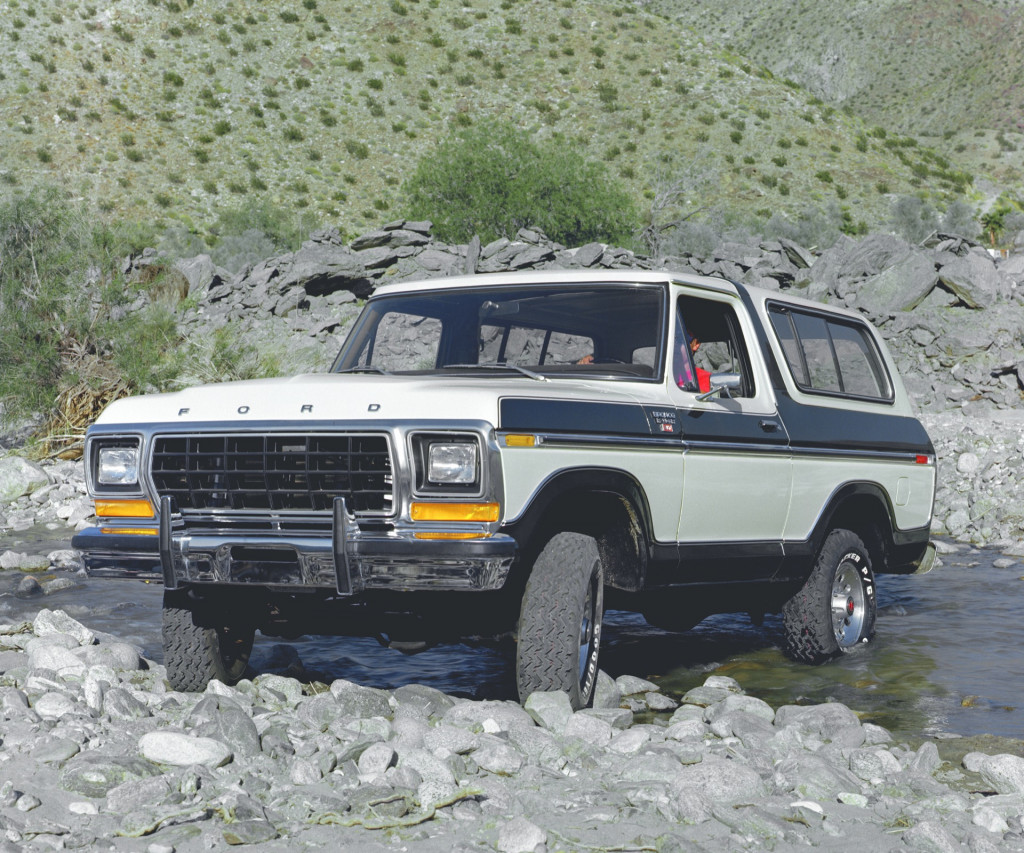
    1979 Ford Bronco
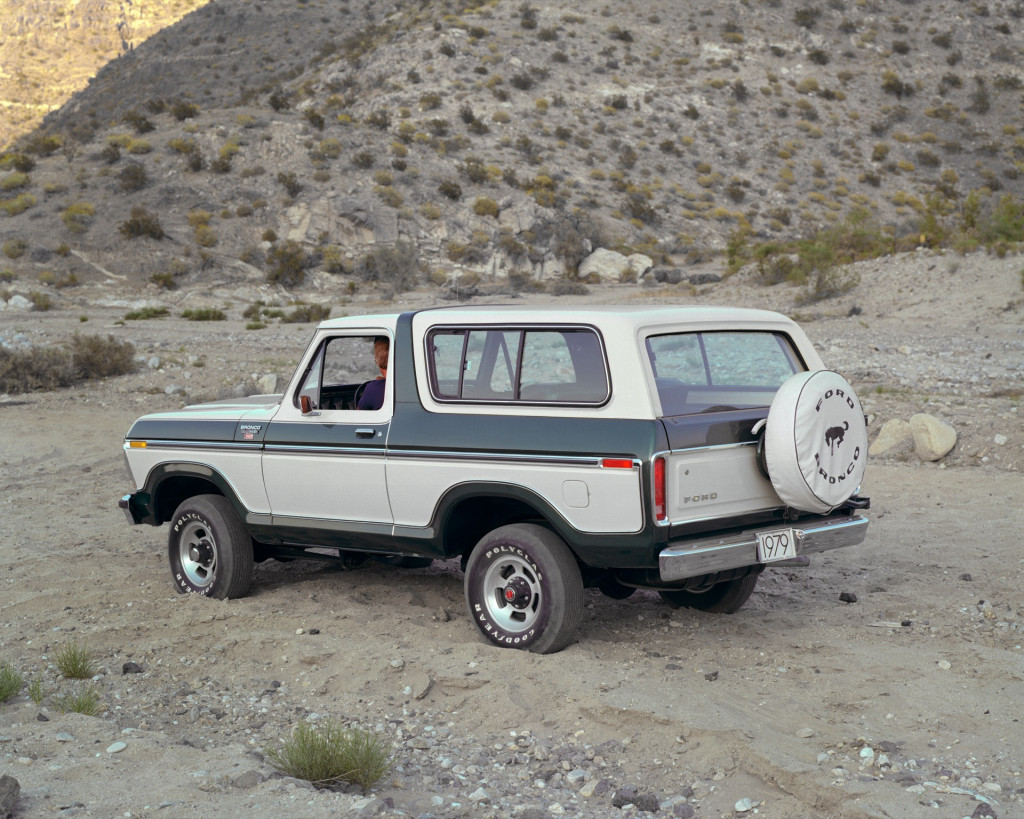
    1979 Ford Bronco

    1979 Ford Bronco

    1979 Ford Bronco

    1979 Ford Bronco

    “Its only real resemblance to the old box-basic Bronco of yesterday seems to be its name,” Car and Driver wrote in a review of the 1978 model. The rounded headlights switched to square ones that would define the face of the Bronco for the remainder of its life. It had a removable fiberglass hard top over the rear seat and cargo area. The rear window retracted into the tailgate, and the tailgate dropped down like a pickup truck. It had a four-wheel-drive transfer case with automatic locking hubs for the first time, according to Car and Driver, and was powered by either a 5.8-liter V-8 or 6.6-liter V-8. 

    1980-1986 Ford Bronco
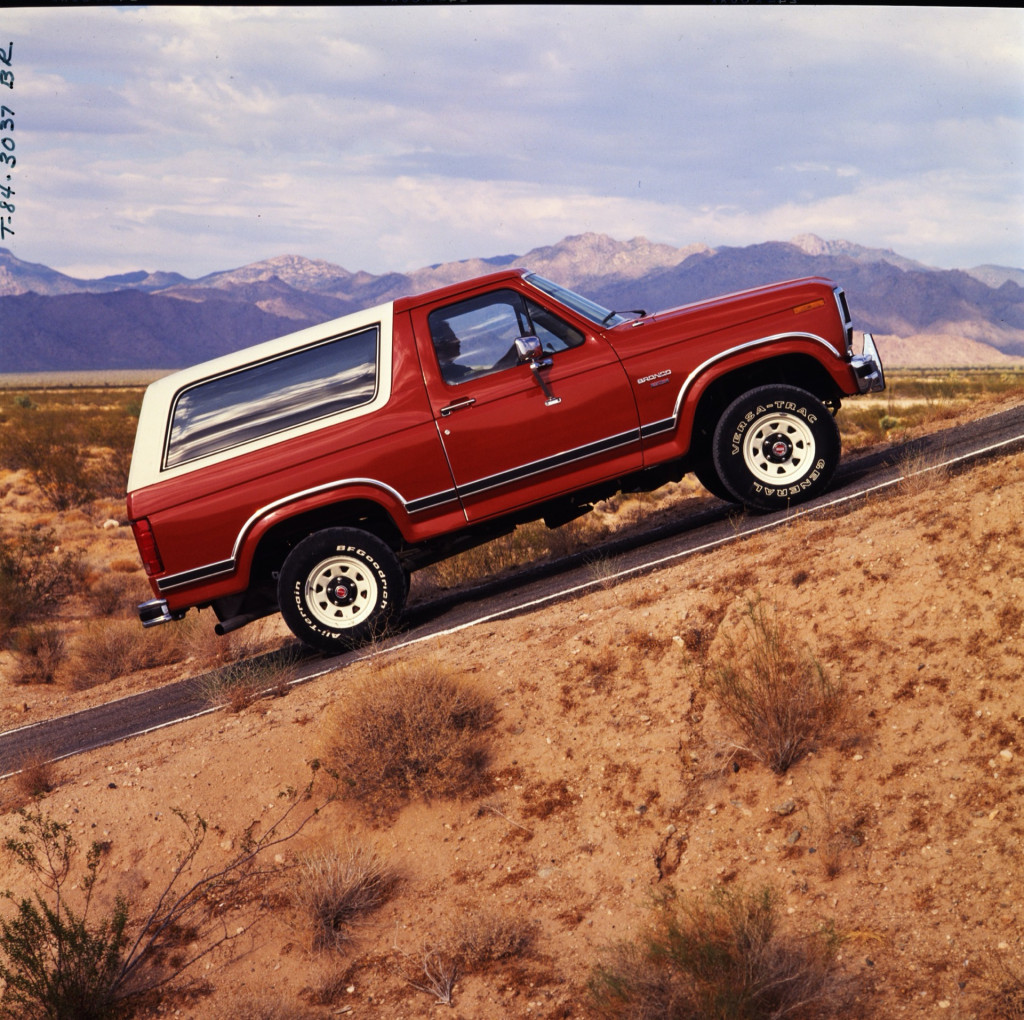
    1984 Ford Bronco
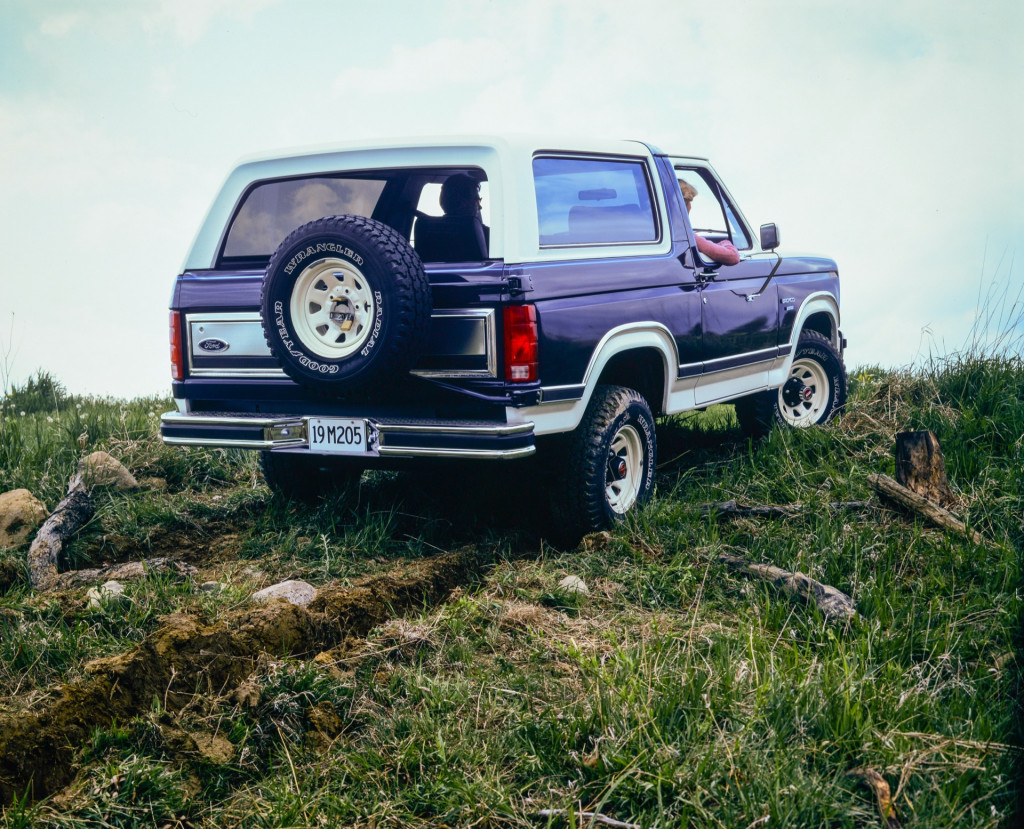
    1984 Ford Bronco
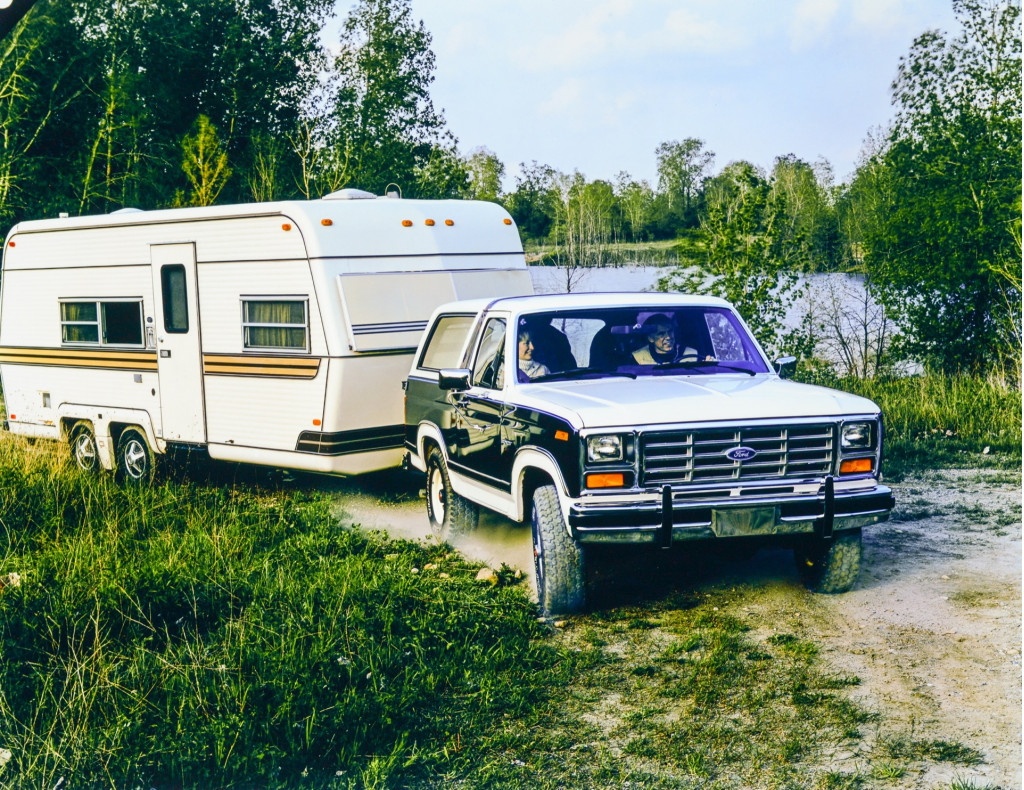
    1984 Ford Bronco

    1984 Ford Bronco

    1984 Ford Bronco

    1984 Ford Bronco

    Ford peeled off the letters and slapped the Blue Oval badge on the face of the third-generation Bronco. Based on the F-150 pickup truck, the Bronco also got a bit smaller and lighter to address fuel economy concerns, and came with an inline-6 as well as a trio of V-8s. It started at $8,400, or $26,100 in today’s dollars. The solid front axle was replaced by a swing axle and an independent suspension to address on-road drivability demands that would presage the four-door SUV boom about to happen in the ‘90s. The Bronco also went upscale with the addition of the range-topping Eddie Bauer trim with two-tone paint, cloth bucket seats, and wood trim. (Eds note: Of the hundred of cars owned by my dad, his red-on-tan Eddie Bauer Bronco remains one of my favorites.)

    1983-1990 Ford Bronco II
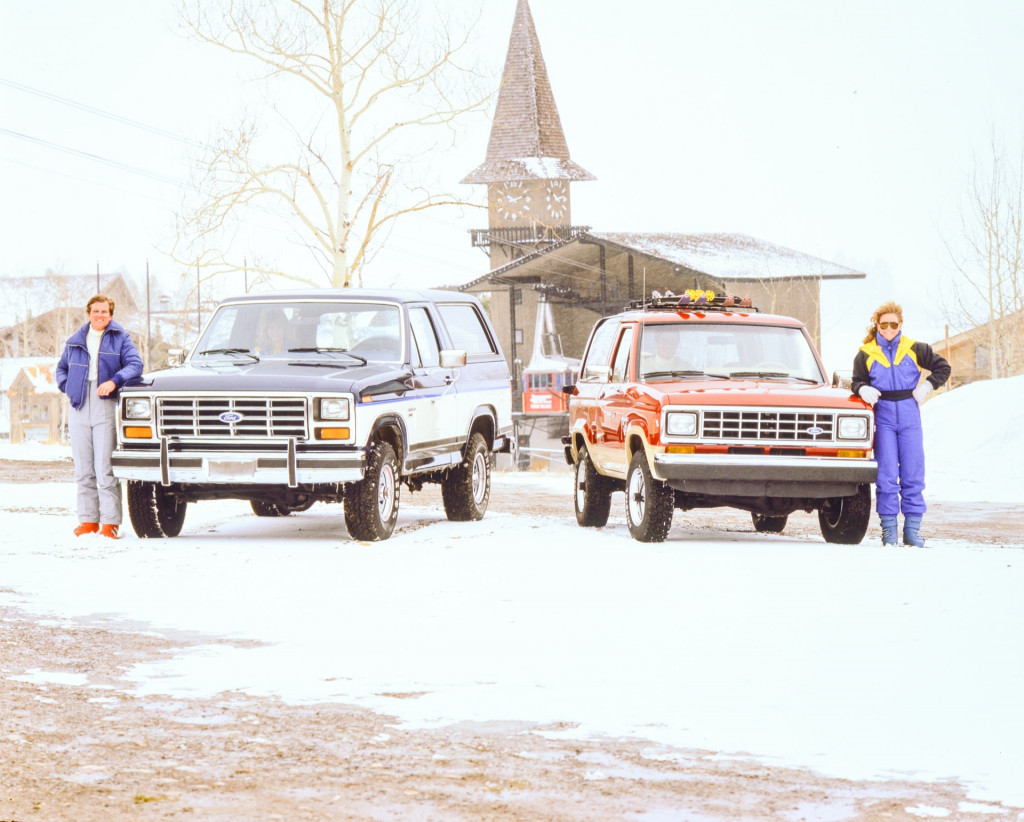
    1986 Ford Bronco, left, and 1986 Ford Bronco II, right

    1986 Ford Bronco, left, and 1986 Ford Bronco II, right

    Ford addressed the demand for smaller SUVs with the Ranger-based Bronco II that ran from 1983-1990. Shorter, smaller, narrower, the two-door Bronco II came with four-wheel drive and the choice of two V-6 engines or a turbodiesel-4. A high risk of rollover crashes doomed the Bronco II.

    1987-1991 Ford Bronco
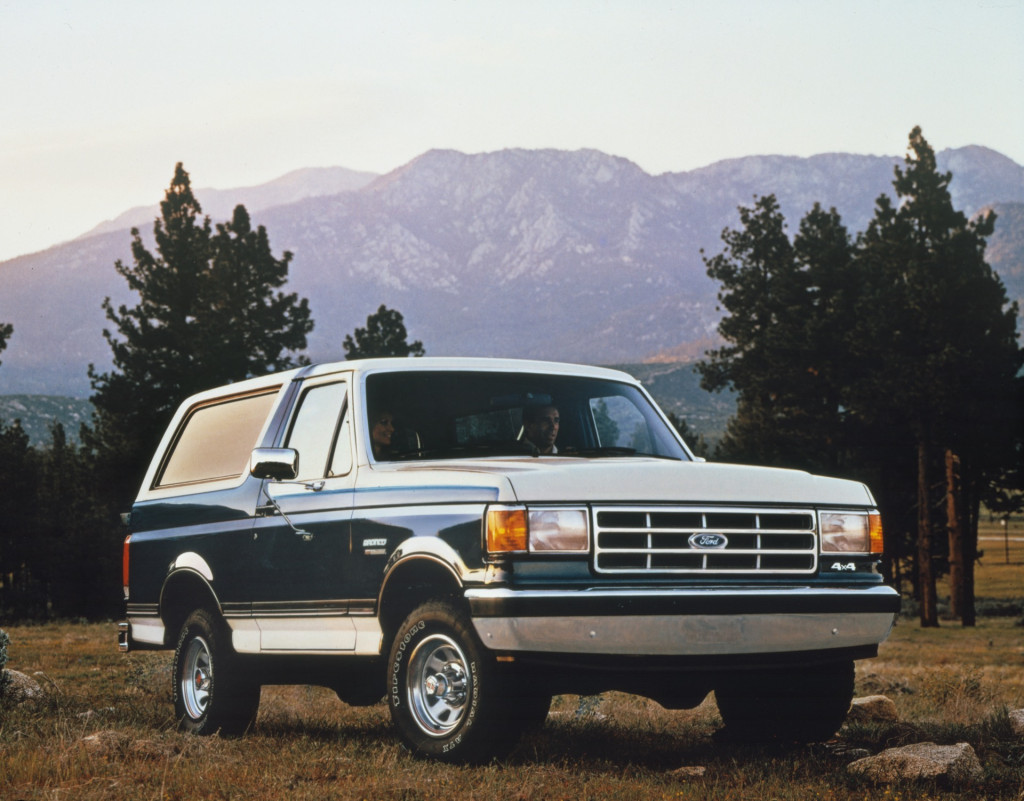
    1987 Ford Bronco

    1987 Ford Bronco

    Redesigned alongside the F-150 pickup truck, the new Bronco got some curves on its boxy bod with round wheel arches and wraparound headlights. Electronic fuel -injection highlighted the inline-6, and the V-8s carried over. More safety equipment was added, such as rear-wheel antilock braking, and the four-wheel- drive system could be activated with the push of a button. It started under $14,000, which is the equivalent of $31,600 today.

    1992-1996 Ford Bronco
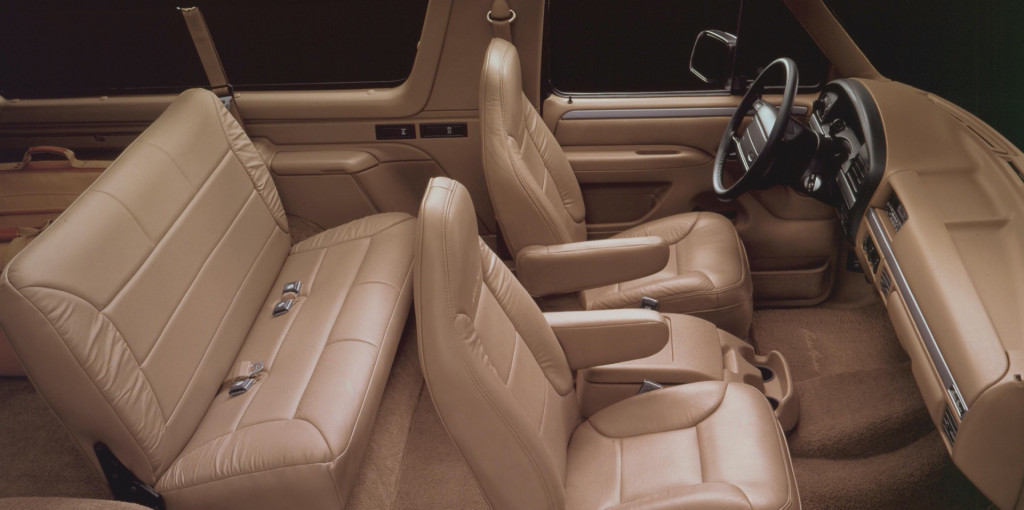
    1995 Ford Bronco interior
    1995 Ford Bronco interior
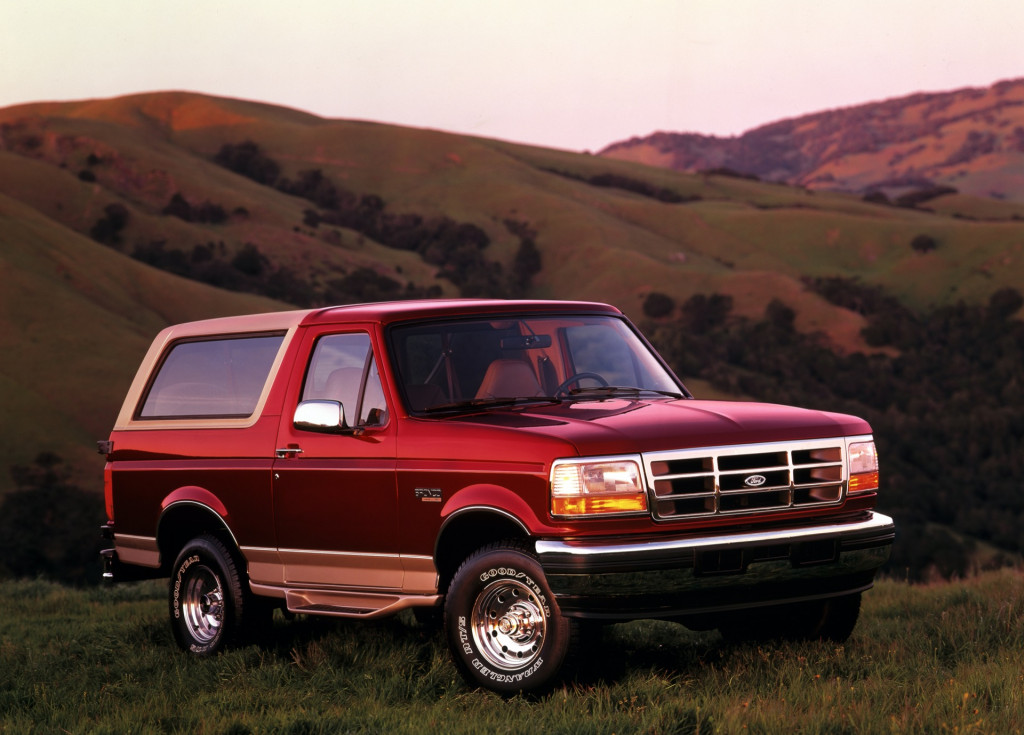
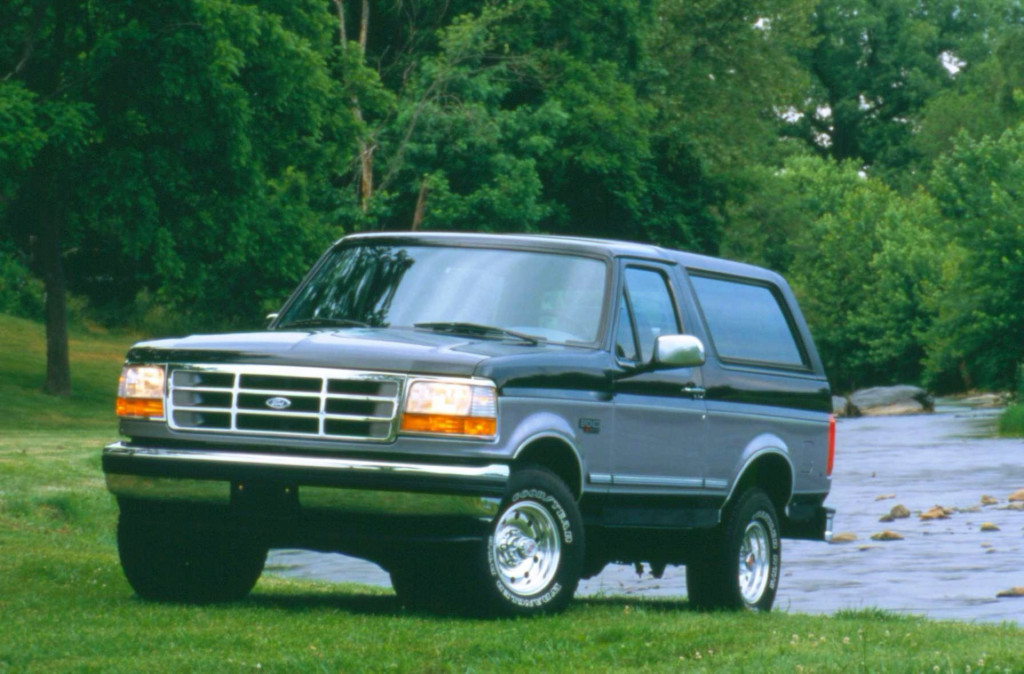
    1995 Ford Bronco

    1995 Ford Bronco

    1996 Ford Bronco Eddie Bauer

    1996 Ford Bronco Eddie Bauer


    The infamous chase of the LAPD pursuing O.J. Simpson hiding in the backseat of a white Bronco in 1994 had little to do with the demise of the full-size three-door Bronco. The relatively fixed roof (you could take it off if you didn’t mind the illegality or the impossibility of ever getting it to seal properly again) didn’t help, but the market was moving to four-door SUVs on car-based platforms for better road manners. Additional safety systems such as front crumple zones and three-point seatbelts for the rear seats, and a driver-side airbag, made it more user-friendly. It started under $19,000, which is about $34,700 today. The Bronco would eventually be replaced by the four-door Ford Expedition

    Source

  • Car Builds – All Black Stealth BMW M3

    Here we have had the luxury of talking to the owner of this amazingly fierce modified BMW M3. Haydn has owned this car for a few years and purchased it partially modified, with the intent of finishing it off, creating the perfect M3.

    You Can Own This Exact Modified BMW M3

    Haydn’s all black M3 is currently for sale in our listings, so if you like what you see here it could be your next car. And what a car you would be buying! You can view the full sale listing here – Modified BMW M3 For Sale


    This BMW M3 is the last generation of BMW M cars to have a naturally aspirated V8 powering it. And this engine produces a sound that non of its turbo-charged successors have been able to replicate.

    We had the chance to catch up with Haydn, where we spoke about his motivations for purchasing an E93 M3. And his experience owning and driving this car. Check out what Haydn has to say below about his clean M3 build.


    Question – What made you want to modify your M3?

    Haydn – Since I was very young I’ve lived and breathed cars, my dad owning a replica AC cobra started the love. Spending evenings helping restore and repair it had me hooked. The adrenaline pumping through you after hearing the big V8 shouting from the side pipes is a memory engrained within me.

    Question – How did you make the decision to purchase a BMW M3 over other cars?

    Haydn – My BMW has been the first modified car I have owned, the biggest requirement was having a V8 under the bonnet. The M3 is such an iconic car I’ve always been a huge fan of them.

    Everyone always says don’t drive your dream cars but I have not regretted it whatsoever. The modifications that have been made to the car have added to its mean look and really set it off.

    Question – With that in mind, which aftermarket parts have you used in the build?

    Haydn – When I bought the car the main expensive features had been carried out, I wanted to have a car that I could finish off due to working long hours.

    It had been tuned by AMD in London. Having test driven a couple of M3’s the gear changes in this one after the map were a lot quicker and smoother. The full custom exhaust had been fitted, it has an electric valve allowing you to adjust the flow. This has been amazing, giving you the option to either cruise along or be an absolute hooligan!

    The other work that has been carried out, spacers have been fitted along with lowering springs. And this has made a big impact making it tighter round the corners and personally improving the stance.

    It has an after market M-Sport body kit, carbon fibre lip, skirts, diffuser and wing. I went for a more subtle body kit as I believe it suits the cars lines better than some of the more extravagant kits you can get.

    Question – What part of the car build are you most proud of?

    Haydn – The part of the build that I am most proud of is the changing of suspension.

    I love the way the car looks and feels. It was a job that was done with my dad, and it was lovely to do a job like that again with him!

    Question – Tell me about the performance of the car?

    Haydn – The performance of the car puts a huge smile on your face. After the remap it is running 427BHP and 293NW of torque.

    Everyone knows that the M3 V8 revs up to 8 and a half thousand. With the valves open and the engine screaming, it is an experience you never forget. Despite being slighter lower on torque the engine just keeps pulling and you can’t help but creep up into triple figures, on the autobahn of course…

    I chose to go for the DCT transmission as I have never had an automatic before. Flicking through the gears with the F1 style paddle shifters makes for a very enjoyable and race like experience.

    Question – Do you show the car at events?

    Haydn – I try to take the car to as many shows as possible, although I haven’t been to the huge events but rather a lot of smaller ones.

    There is something enjoyable about parking up and looking around everyone’s pride and joys. I find the time people take perfecting there vehicles to be very inspiring. Some of the builds that you see, people have clearly spent years working on.

    Source

  • Tesla is developing the means to start producing its own battery cells: sources

    Tesla is reportedly working on developing a means to produce its own battery cells for its electric vehicles and energy storage products. This update, which was related by several former and current Tesla employees to CNBC, provides yet another sign that the Silicon Valley-based company is looking to become as independent and vertically integrated as possible.

    According to the publication’s sources, Tesla is currently conducting some of its battery cell research at a “skunkworks lab” located in the company’s Kato Road facility, which is situated just a few minutes away from the Fremont, CA factory, where the Model S, 3, and X are produced. The former and current employees also mentioned that Tesla’s battery R&D teams are focused on prototyping and designing advanced lithium-ion batteries, together with new equipment and processes that could open the doors for battery cell mass production.

    Numerous advantages could result from Tesla producing its battery cells. The company, for one, could avoid constraints that have plagued it in the past. Having its own cell design could also lower costs, allowing the company to introduce vehicles that are more affordable than the Standard Range Model 3, while giving a performance and range boost for the company’s vehicle lineup.

    The publication’s sources did not mention if Tesla is integrating or utilizing some of Maxwell’s technologies in its original battery cell design and manufacturing plans. Nevertheless, Musk did note during Tesla’s annual shareholder meeting that it would be holding a battery and powertrain day later this year to explain how Maxwell’s innovations will be utilized.

    Tesla CTO JB Straubel and VP for Technology Drew Baglino, who joined Musk onstage during the shareholder meeting, also spoke about the company’s need to secure large-scale battery cell production. “It’s more obvious now than I think it ever was, we need a large-scale solution to cell production,” Straubel said. In a following comment, Baglino added that “We’re not sitting idly by. We’re taking all the moves required to be masters of our own destiny here, technologically and otherwise. I think through all the experience we’ve developed with partners and otherwise, we will have solutions for this.”

    While Tesla’s production of its battery cells would make it more independent of Panasonic, the two companies would likely retain a partnership for years to come. The Japanese firm, after all, has already invested heavily in Gigafactory 1, and during a previous Q&A session, Panasonic Corporation President Kazuhiro Tsuga debunked speculations alleging that the company’s partnership with Tesla is on the rocks. “We are making sure that we have a partnership relationship, not a supplier relationship… We continue to have (a) very solid, very strong relationship with Tesla,” Tsuga said.

    Tesla is developing the means to start producing its own battery cells: sources

    <!–

    View Comments

    –>

    Source