

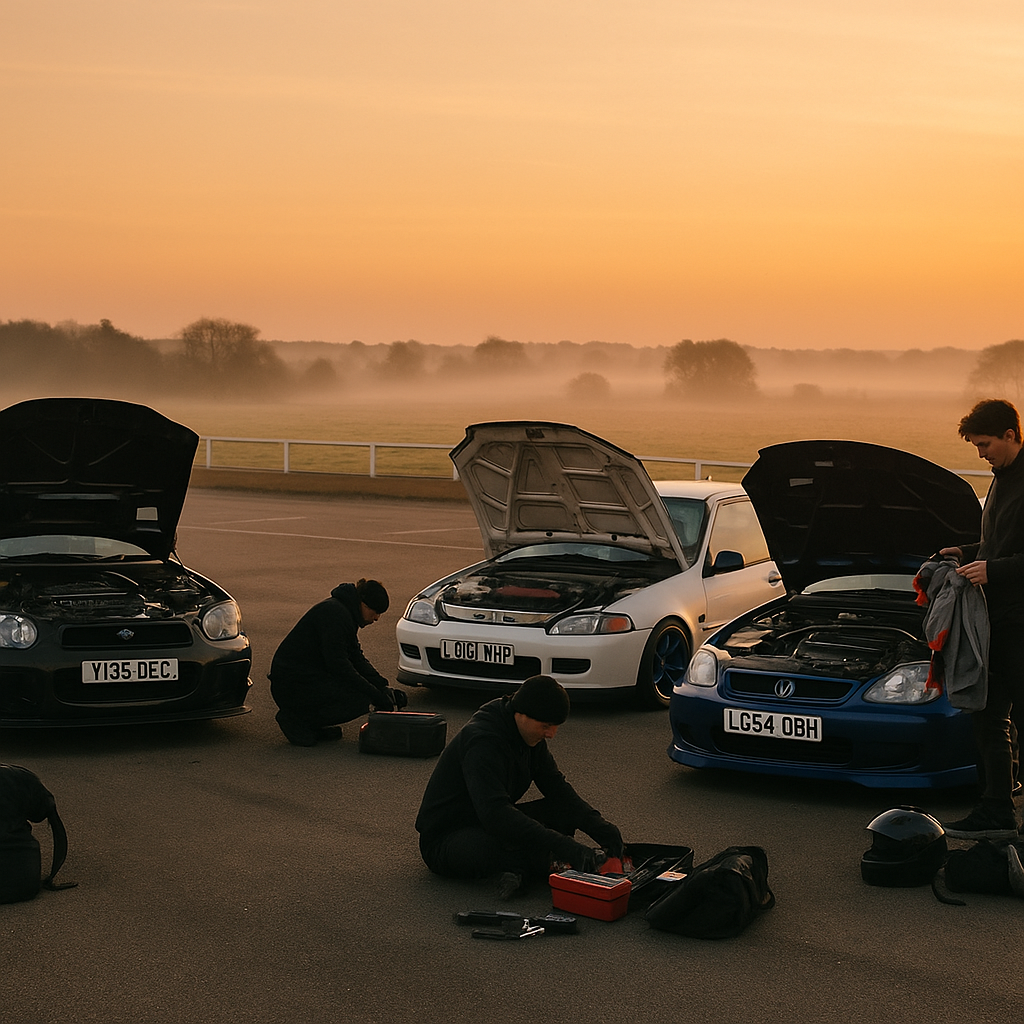
Rocking up to your first circuit session with nothing but fuel in the tank is a rookie mistake. Getting your track day essentials sorted before you even leave the driveway is what separates the prepared nerds from the paddock panic crew.
Why track day essentials matter more than power figures
Everyone loves talking bhp and boost, but when you are sat in the pit lane with no fuel, no tools and no tape, the spec sheet means nothing. Having the right track day essentials keeps you on circuit longer, saves you cash, and stops minor problems turning into early trailer rides home.
Think of it like this: the car is your build, but the kit you bring is your pit crew. Get both right and even a mildly tuned hatch can run rings around badly prepared big-power builds.
Prepping the car before you even pack the boot
Before you start throwing kit into the back seats, make sure the car itself is ready. Fluids fresh, brakes bled, no cords showing on tyres, and nothing loose in the cabin. Clear out the boot junk, remove sub boxes and anything that can turn into a projectile. Give the car a proper spanner check: wheel nuts torqued, lines not rubbing, no fresh leaks.
Sort all this at home, not in the paddock. Your track day essentials bag is there to keep you running, not to do a full rescue build in the car park.
Core track day essentials to keep you on circuit
There are a few bits that pretty much every regular brings to circuit days, no matter what they drive. This is the base list you should build from:
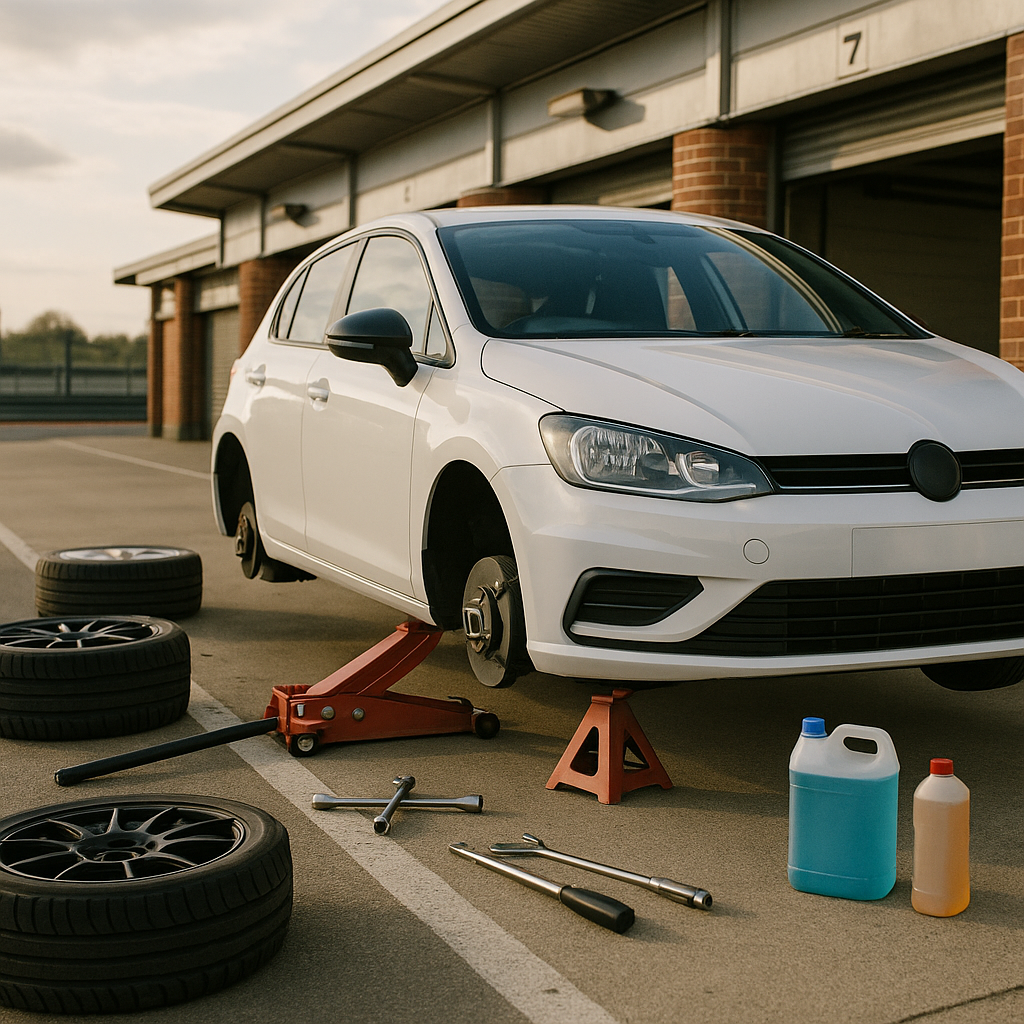
- Basic tool kit – sockets, spanners, screwdrivers, pliers, Allen keys and a breaker bar.
- Torque wrench – check wheel nuts before and after sessions, especially on fresh alloys.
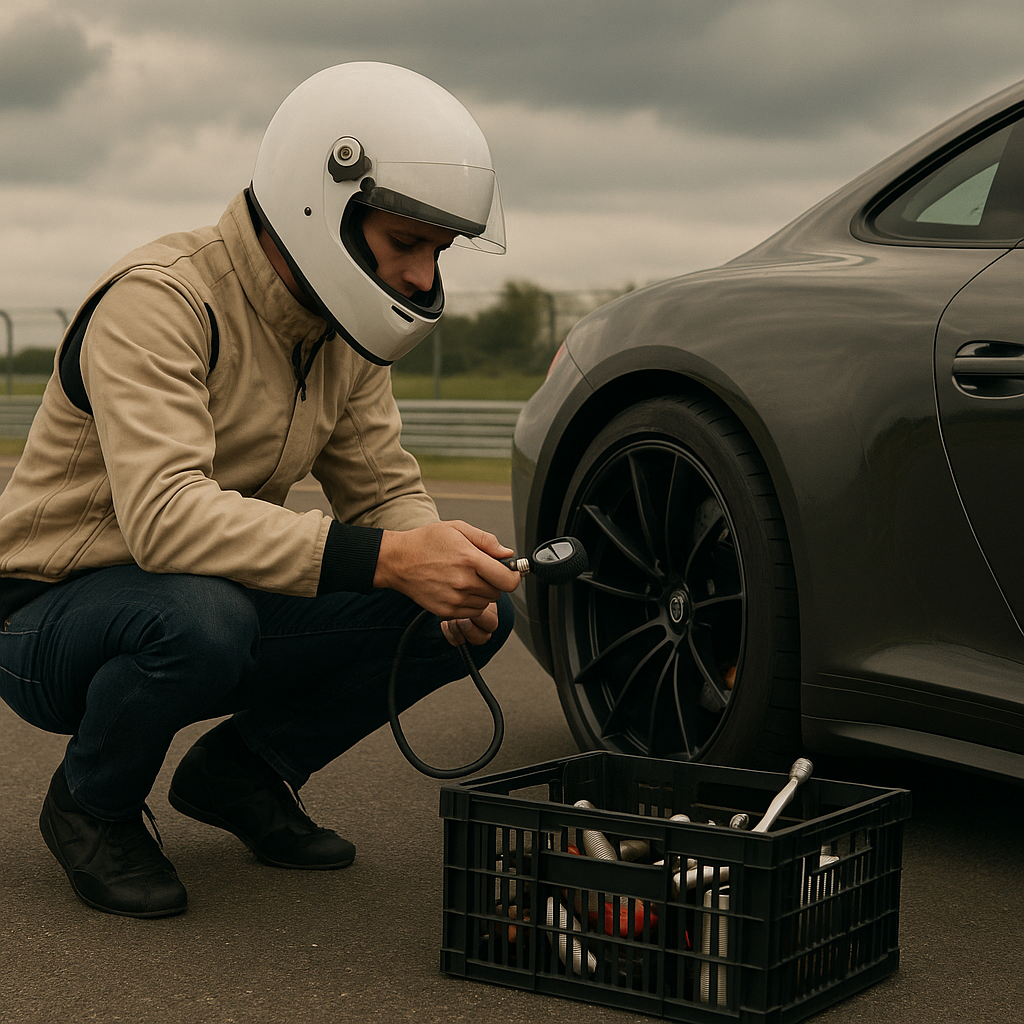
- Tyre pressure gauge and pump – hot pressures make or break how the car feels.
- Gaffer tape and cable ties – the universal fix for loose trims, arch liners and random rattles.
- Engine oil and brake fluid – your car will work harder than it ever does on the road.
- Funnels, rags and gloves – avoid spilling fluids all over the paddock and your paintwork.
Throw it all into a solid crate so it does not end up flying around the interior every time you hit a kerb.
Tyres, brakes and fluids – the consumables that really count
You do not need full slicks and massive six pots for a first day out, but you do need consumables that can cope. Half-worn budget tyres will get cooked in a couple of sessions. Aim for decent performance road rubber with plenty of tread and no cracks. Check sidewalls properly – track kerbs are brutal on old tyres.
Brakes are the other biggie. Fresh fluid with a decent boiling point and pads with life left are non negotiable. Bring spare pads if you are in a heavier car or planning a full open pit day. A bottle of fluid and a bleed kit is cheap insurance if you start to feel the pedal going long.
Driver kit that makes the day better
Most UK track days will at least require a helmet, and some circuits have stricter rules. Even if the regs are relaxed, turn up with decent gear. A good lid, thin-soled driving shoes and comfy clothes that will not catch on the wheel make a big difference when you are pushing on.
If you are starting to get serious, consider upgrading your personal kit through proper motorsport suppliers. A quick browse through racewear options shows how much more comfortable and safer purpose made gear can be compared with random road kit.
Paperwork, paddock life and staying organised
Do not forget the boring stuff. You will usually need your driving licence, booking confirmation and any noise test paperwork. Keep it all in a folder so you are not digging under seats at sign on. A marker pen is handy for writing pressures and notes on tape stuck inside the door shut.
Track day essentials FAQs
Do I need a roll cage for my first track day?
For most UK novice friendly track days in regular road cars, a roll cage is not mandatory. As long as your car is in good condition, passes noise limits and has working seatbelts, you are usually fine. Cages become more relevant as you strip the interior, fit fixed bucket seats and start going quicker, or if you are in a soft top where some organisers have extra safety rules. Always check the specific circuit and organiser requirements before you book.
What tyre pressures should I run on track?
There is no single magic number, because ideal pressures depend on car weight, tyre size, compound and driving style. A common approach is to start a few psi lower than your normal road cold pressure, then check and adjust when the tyres are hot after a session. You are aiming for a stable hot pressure that gives good grip without the shoulders rolling over. Bring a decent gauge and make small changes between runs while paying attention to how the car feels.
Can I daily my car after a hard track day?
Yes, plenty of people daily the same car they take to circuit days, but you should always give it a proper check over before going back to the commute grind. Inspect tyres for flat spots, cords or sidewall damage, check brake pad thickness and fluid level, and look for any new leaks or knocks. Wheel nuts should be torqued again once the car has cooled down. If everything looks and feels right, you are good to go, but do not ignore any new noises or vibrations that appeared after the event.
Leave a Reply