Author: Jason

  • EV vs ICE: Which Is Really More Fun to Drive in 2026?

    EV vs ICE: Which Is Really More Fun to Drive in 2026?

    Right, let’s cut through the noise. The EV versus ICE debate has been hijacked by two camps: the smug early adopters who think petrol heads are dinosaurs, and the old guard who won’t accept that something without a cambelt can be genuinely exciting. Both sides are doing it wrong. The real EV vs ICE driving experience question deserves a proper, nerdy look at the physics, the feel, and the practicalities. So here it is.

    I’ve spent time behind the wheel of everything from a base-spec Cupra Born to a Porsche Taycan Turbo S, and on the other side, a Honda Civic Type R to a Lotus Emira. This isn’t a press release. It’s an honest assessment of what each powertrain actually delivers when you’re the one gripping the wheel.

    Electric car and petrol sports car side by side on a British B-road representing the EV vs ICE driving experience
    Electric car and petrol sports car side by side on a British B-road representing the EV vs ICE driving experience

    Torque Feel: The Instant Hit vs the Building Wave

    Here’s where EVs genuinely win, and there’s no arguing with physics. An electric motor delivers maximum torque from zero RPM. Full stop. When you bury the throttle in something like a Tesla Model 3 Performance or a BMW i4 M50, the response is immediate, linear, and relentless. There’s no torque curve to speak of, just a wall of pull.

    ICE cars, even with forced induction, build their torque across an RPM band. And for a lot of car people, that’s actually the point. There’s drama in a turbocharged engine spooling up, or in a naturally aspirated unit screaming toward its redline. The Honda Civic Type R’s K20C1 doesn’t feel truly alive until 4,500 RPM. That anticipation, that chase up the rev range, is something EVs simply cannot replicate.

    On paper, EV torque wins. In terms of driver engagement, it depends entirely on what you’re after. A drag race from a standstill? Electric, every time. A mountain road where you’re managing throttle inputs and using the gearbox as a tool? ICE has the edge for most enthusiasts.

    Sound: The Emotional Frequency

    Sound is not a minor thing for car people. It is a core part of the driving experience. A flat-six Porsche 911 at 8,000 RPM, a Subaru Impreza’s boxer rumble at idle, the bark of a tuned exhaust on a cold morning. These sounds trigger genuine emotional responses, and no EV engineer has cracked this yet.

    Manufacturers have tried. Audi plays synthesised noise through the speakers in some of its e-tron models. BMW did the same with the i4, using Hans Zimmer to design the sound profile. My honest take? It’s like watching a film score through a television speaker when you’ve heard it in a cinema. You know what it’s supposed to feel like, but something is missing.

    EVs have their own acoustic character. At low speeds there’s near-silence with a faint electric whine, and at motorway speeds wind and tyre noise dominate in ways that a well-insulated ICE car often suppresses better. Neither is objectively better. But if you grew up obsessing over exhaust notes and intake sounds, EVs will feel like a fundamental part of the experience has been removed.

    Driver gripping steering wheel in a performance car illustrating the EV vs ICE driving experience from the cockpit
    Driver gripping steering wheel in a performance car illustrating the EV vs ICE driving experience from the cockpit

    Handling Dynamics: Weight, Balance, and the Physics Problem

    This is where it gets complicated. EVs are heavy. A Volkswagen ID.4 weighs around 2,100 kg. A standard Golf GTI comes in at roughly 1,400 kg. Physics doesn’t care about your battery range claims. That extra mass affects everything: turn-in response, mid-corner balance, braking distances, and the way a car feels over an imperfect British B-road.

    The counterargument from EV advocates is dual-motor all-wheel drive torque vectoring. And it’s a fair one. A Porsche Taycan or a Hyundai Ioniq 5 N (which, at 2,232 kg, is genuinely extraordinary for what it does) can deploy power with surgical precision between axles in ways a conventional mechanical differential can’t match. The result is cornering grip that feels almost unfair.

    But grip and engagement aren’t the same thing. When a rear-wheel-drive ICE car steps out gently at the limit, you feel it through the seat, the steering, your fingertips. You manage it. That feedback loop between driver and machine is thinner in most EVs. It’s not absent, particularly in sportier models, but it’s filtered. The car is doing more of the work.

    There are exceptions. The Lotus Eletre RS, for instance, weighs a lot but has been tuned with Lotus’s genuine chassis knowledge behind it. And the upcoming Alpine A290 GTS is showing that the industry is taking driver feel seriously in smaller EVs. But as a general rule, if you want a car that communicates with you rather than one that manages the situation for you, ICE platforms still have a structural advantage rooted in their lower kerb weight.

    Long-Distance Usability: The Honest Reality in 2026

    The charging infrastructure argument has shifted significantly. According to government data, the UK had over 70,000 public EV charging points by early 2026. That’s a real improvement from three years ago. But the experience remains inconsistent.

    On a planned motorway run with a modern EV boasting a 300-mile real-world range, charging at 150 kW rapid points along the way, a London to Edinburgh trip is genuinely viable. You might add 25 to 30 minutes versus an ICE equivalent. Manageable. But venture off the main arteries onto a touring route through Wales or the Scottish Highlands, and you’re planning around charging in a way an ICE driver simply isn’t.

    Petrol cars win on refuelling time and network ubiquity. Full stop. The question is whether that matters for how you actually use the car. If 90% of your driving is commuting and the odd weekend blast, the EV vs ICE driving experience calculus changes completely. Home charging overnight makes the daily usage argument irrelevant. For long-haul touring in unfamiliar territory, ICE remains less mentally taxing.

    Which One Is Actually More Fun?

    The honest answer is: it depends on what fun means to you. If fun is raw acceleration, torque you can feel in your sternum, and effortless motorway overtakes, a decent EV is astonishing. If fun is revving a naturally aspirated engine, feeling gear shifts, hearing an exhaust pop on the overrun, and managing a car at the limit with your hands and feet, ICE is still the answer.

    For a broader look at performance parts and upgrades across both powertrains, Maxx Directory is worth bookmarking. It covers the scene properly.

    The real problem with the EV vs ICE driving experience debate is that it’s treated as binary. It isn’t. The Ioniq 5 N proves EVs can be genuinely exciting. The Caterham Seven proves ICE can be utterly thrilling with minimal power. The best driver’s car is still the one that makes you look for an excuse to go for a drive. In 2026, both powertrains can do that. It just depends which language of fun you speak.

    Frequently Asked Questions

    Do electric cars actually feel faster than petrol cars?

    In terms of instant throttle response and 0-60 mph times, many electric cars feel brutally quick because they deliver maximum torque immediately from standstill. However, petrol cars with high-revving engines can feel more exciting through the mid-range and at the top end, where the drama of building revs and gear changes creates a different kind of engagement.

    Is the EV vs ICE driving experience really that different on a B-road?

    Yes, noticeably so. Most EVs are heavier than comparable ICE cars, which affects how they move through corners and how much feedback you get through the steering and seat. Some performance EVs use torque vectoring to compensate, but most enthusiasts still find ICE cars communicate more directly on twisty roads.

    Can you take an electric car on a long road trip in the UK in 2026?

    Generally yes, particularly on major routes. The UK now has over 70,000 public charging points, and modern EVs with 250-plus miles of real-world range can handle motorway trips with planned charging stops. Remote areas of Scotland, Wales, and parts of northern England can still be tricky, so route planning remains more involved than with a petrol car.

    Do any electric cars have good driver feedback and handling?

    A handful stand out. The Hyundai Ioniq 5 N, Porsche Taycan GTS, and Lotus Eletre RS all offer genuine driver engagement alongside EV performance. The Alpine A290 GTS is also generating strong interest in 2026. These are the exception rather than the rule, but they prove the technology can be tuned for enthusiasts.

    Will ICE cars become harder to modify and tune as regulations tighten?

    It’s a genuine concern for the tuning scene. UK and EU emissions regulations are becoming stricter, and some aftermarket modifications that affect emissions outputs are already facing tighter scrutiny. That said, the existing stock of ICE cars won’t disappear overnight, and the tuning aftermarket remains active for now, particularly for track and motorsport use.

  • 10 Underrated Affordable Performance Cars Worth Every Penny in 2026

    10 Underrated Affordable Performance Cars Worth Every Penny in 2026

    The golden era of budget-friendly performance is very much alive. Whether you’re hunting the classifieds for a sleeper or walking into a dealership with a modest budget, there has never been a better time to get genuine driving thrills without signing your life away. These affordable performance cars prove that spending big isn’t the only route to a grin-inducing drive.

    A selection of affordable performance cars lined up on a scenic moorland road at golden hour
    A selection of affordable performance cars lined up on a scenic moorland road at golden hour

    What Makes an Affordable Performance Car Worth Buying?

    Value in the performance car world isn’t just about the sticker price. You’re weighing up power-to-weight ratio, running costs, parts availability, and that intangible thing every car nerd knows the moment they pull onto a B-road. The best budget performance cars nail all of those at once. The picks below span both the new and used market, covering everything from hot hatches to compact sports cars, all sitting under the £25,000 mark at the time of writing.

    The New Market: Fresh Metal That Doesn’t Break the Bank

    1. Renault Clio RS Line E-Tech Hybrid

    Renault’s Clio remains one of the sharpest-feeling superminis on sale. The RS Line trim with the E-Tech hybrid powertrain delivers surprising throttle response and genuinely entertaining chassis dynamics. It won’t murder supercars, but in the real world, on real roads, it keeps you thoroughly engaged. Fuel economy as a bonus means the running costs stay sensible too.

    2. GR Yaris (Used, Post-First-Owner)

    The GR Yaris has aged into a serious used-car bargain. First-owner examples are now filtering through to the classifieds, and at current prices, you’re getting a homologation hero with a 257bhp three-cylinder, all-wheel drive, and a rally-bred chassis. This is the kind of car that makes seasoned drivers go quiet with concentration. Absolute weapon.

    3. Hyundai i20 N

    Hyundai’s N division has been on an absolute tear, and the i20 N is the proof of concept. The 1.6-litre turbo produces 204bhp, but the real magic is in the mechanical limited-slip differential and the adjustable overboost feature. On a twisty road it feels punchy well above its pay grade. New examples have come down nicely in price, and used ones are excellent value.

    4. Ford Puma ST

    Smaller, tighter, and arguably more entertaining than the Fiesta ST it shares DNA with, the Puma ST packs 200bhp and Ford’s brilliant mechanical diff into a slightly more practical body. The handling balance is textbook hot hatch. It rewards committed driving and won’t punish you with an eye-watering service bill.

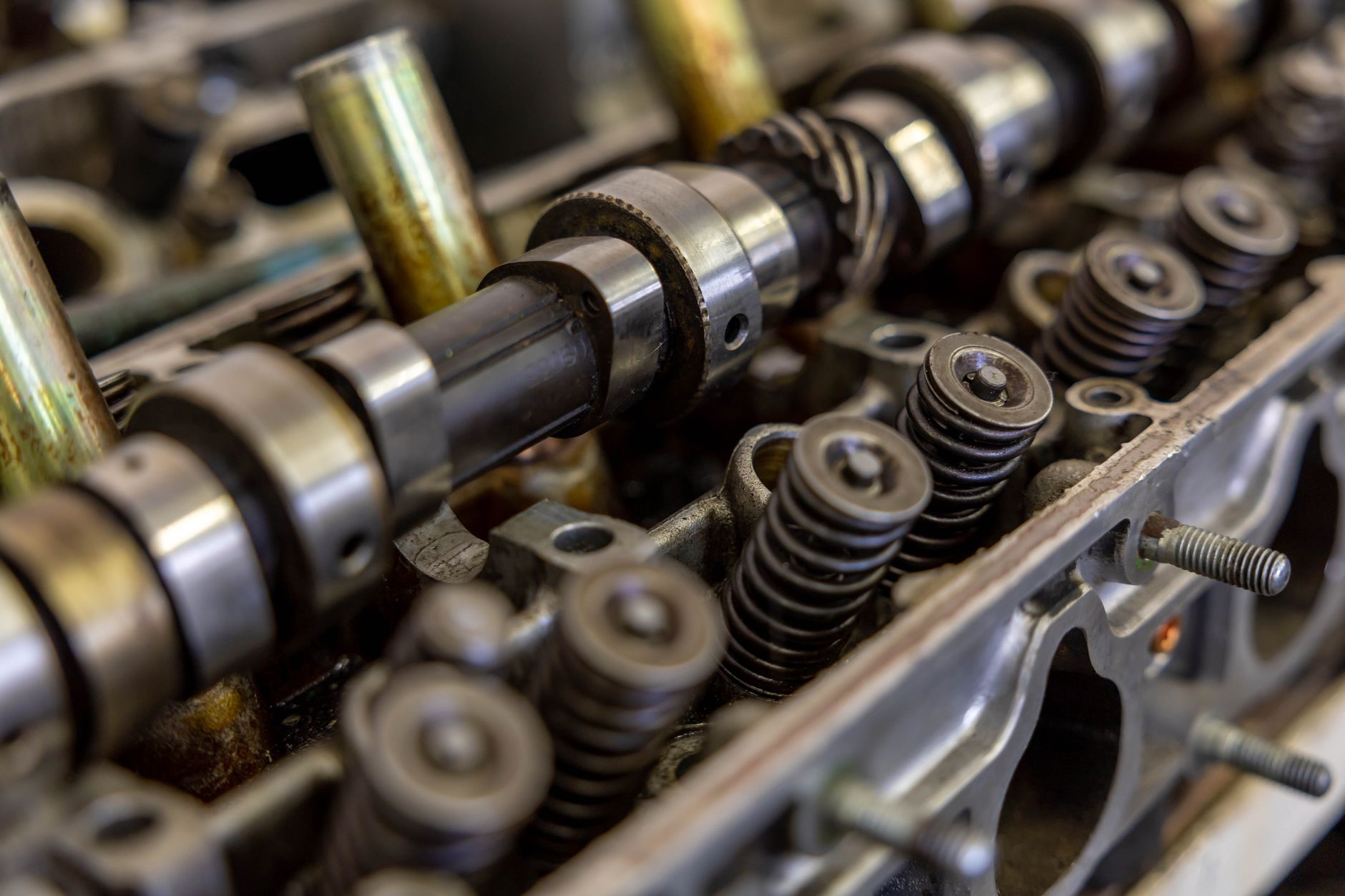
    Turbocharged engine bay detail of an affordable performance car showing mechanical components
    Turbocharged engine bay detail of an affordable performance car showing mechanical components

    The Used Market: Where the Real Steals Live

    5. Honda Civic Type R (FK8)

    The FK8 generation Civic Type R was divisive when new due to its looks, but driving it was never in question. With 316bhp through the front wheels, it remains one of the most analytically perfect hot hatches ever made. Depreciation has done its thing, and used examples now represent spectacular money. If you’re buying one, check service history and inspect for the usual front-end wear items.

    6. Subaru BRZ / Toyota GR86 (First Gen)

    The original 86 platform cars have settled into a sweet spot in the used market. They’re rear-wheel drive, naturally aspirated, and built around balance rather than brute force. Purists love them precisely because you have to work the engine. Lightweight, sharp-steering, and available in genuinely tidy condition at accessible money. A proper driver’s car with zero pretension.

    7. Volkswagen Golf GTI (Mk7.5)

    The Mk7.5 GTI sits in a rare category: a truly complete car. Comfortable enough for daily duty, fast enough to embarrass much pricier machinery when the road opens up. The 2.0 TSI engine is bulletproof with proper servicing, and the aftermarket support is enormous. If you want a jack-of-all-trades that masters most of them, this is your car.

    8. Mazda MX-5 (ND Generation)

    No affordable performance car list is complete without the ND MX-5. At under £20,000 for clean used examples, you’re buying one of the most genuinely joyful driving experiences available at any price. The 2.0-litre version with 184bhp in a sub-1,000kg body is deeply rewarding. Track day regulars know this. If you’re the type who also invests in proper motorsport helmets and takes your driving seriously, the MX-5 on circuit is an education.

    9. BMW 1 Series M135i (F40)

    Controversial in the BMW world because it went front-wheel drive biased with xDrive, but as an affordable performance cars pick it makes enormous sense. Over 300bhp, four-wheel drive traction, and genuine BMW chassis quality for used prices that have become very compelling. It’s not the purist choice but it is the fast, all-weather, all-conditions choice.

    10. Seat Leon Cupra R (5F Generation)

    The Cupra R version of the 5F Leon is criminally overlooked. Limited numbers were made, the 310bhp 2.0 TSI is potent, and the performance pack suspension and brembo brakes make it genuinely capable on circuit. Because it lacks the badge cachet of its German cousins, prices remain accessible while the hardware absolutely is not budget-spec. Proper sleeper energy.

    Which Affordable Performance Car Is Right For You?

    The decision usually comes down to how you plan to use the car. Daily driver with occasional blasts? The Golf GTI or Puma ST are sensible. Weekend toy and occasional track day machine? MX-5 or GR Yaris. Want to look completely inconspicuous while having the goods underneath? The Leon Cupra R is your answer. Check out the community and listings over at Maxxd Directory if you’re researching specific models or looking for specialists who know these platforms inside out.

    The real truth about affordable performance cars in 2026 is that the manufacturers have done the heavy lifting. Engineering that was reserved for six-figure machines a decade ago now trickles down into cars real people can actually afford to own, insure, and run. Pick your poison, learn the platform, and drive it properly. That’s what it’s all about.

    Frequently Asked Questions

    What is the best affordable performance car to buy in 2026?

    It depends on your priorities, but the GR Yaris and Honda Civic Type R FK8 are consistently rated as the best all-round affordable performance cars on the used market. Both offer engineering usually reserved for far more expensive machinery. The GR Yaris in particular delivers rally-derived AWD and a stunning chassis for genuinely accessible money.

    Are affordable performance cars expensive to insure and run?

    Running costs vary significantly by model. Cars like the Mazda MX-5 and Seat Leon Cupra tend to have lower insurance groups than turbocharged hatchbacks with high power outputs. Parts availability is excellent for mainstream platforms like the Golf GTI and Civic Type R, which keeps servicing costs manageable. Always get an insurance quote before committing to a purchase.

    Is a used hot hatch better value than a new one?

    In most cases, yes. Hot hatches depreciate sharply in their first few years, meaning a two to three year old example can represent far better value per bhp than a brand-new car. Models like the FK8 Civic Type R and GR Yaris have held value better than average, but used prices are still notably lower than new retail. Always check service history and known platform-specific issues.

    Can you track a budget performance car without spending a fortune?

    Absolutely. The Mazda MX-5 and Toyota GR86 are popular track day choices precisely because their mechanical simplicity and balanced chassis keep costs low. Budget for consumables like tyres and brake pads, invest in proper safety gear including a certified helmet, and you can have a genuinely competitive track day car for well under £25,000 all-in.

    What should I check when buying an affordable used performance car?

    Full service history is non-negotiable, especially for turbocharged engines. Check for signs of hard track use such as worn suspension bushes, heavily used brake components, and uneven tyre wear. For specific platforms like the Golf GTI, check for DSG service stamps. A pre-purchase inspection from a marque specialist is well worth the fee on any car above £15,000.

  • Diesel Engine Parts For US Trucks: What UK Tuners Need To Know

    Diesel Engine Parts For US Trucks: What UK Tuners Need To Know

    If you are into big torque rigs, importing or running American pickups over here, you will quickly find that understanding diesel engine parts for US trucks is the difference between a smoky shed and a properly sorted street bruiser.

    Diesel Engine Parts For US Trucks

    Why US diesel trucks hit different

    Stateside oil-burners are a different vibe to the usual Euro TDI stuff. Big capacity, low revs, and absolutely silly torque when you get them breathing right. The flip side is that a lot of the diesel engine parts for US trucks are built with towing and long-haul in mind rather than hard launches on a cold, wet dual carriageway.

    That means when you start leaning on them with more boost and fuel, you need to know which bits are weak, which are overbuilt, and what is actually worth upgrading rather than just throwing shiny catalogue parts at it.

    Core diesel engine parts for US trucks to understand

    Most of the usual suspects are the same as any diesel, just scaled up. The key bits to get your head round are:

    • Turbocharger and manifold – Stock VGT turbos are great for towing and spool, but once you start pushing them they overspeed and cook bearings. A decent fixed-geometry or compound setup is the go-to for big power builds.
    • Injectors and high-pressure pump – On common-rail stuff these are the heart of the tune. Bigger nozzles and a higher flowing pump will let you make power without running silly rail pressures that nuke seals.
    • Intercooler and pipework – The OEM coolers are usually sized for stock boost. Turn it up and intake temps skyrocket. A bigger front mount and hard pipes keep charge temps and EGTs under control.
    • Head studs and gaskets – Once boost creeps up, factory head bolts start to complain. Stud and gasket upgrades are cheap insurance compared with lifting a head under load.
    • Bottom end – Cranks are generally stout, but rods and pistons are where things get sketchy. Know the safe torque window for your specific engine code before chasing dyno clout.

    Common upgrade paths for US diesel trucks in the UK

    If you are building something usable on UK roads rather than a SEMA show pony, the sweet spot is a responsive, mid-range focused setup. A typical path looks like:

    • Intake, exhaust and intercooler upgrades to free up flow and drop EGTs
    • Head studs and fresh gaskets before you crank the boost
    • Mild turbo upgrade or a properly specced single that keeps spool sensible
    • Slightly larger injectors matched to a custom map
    • Transmission cooler and, if auto, a stronger torque converter

    Built right, you end up with a truck that will happily daily, haul trailers, and still embarrass a lot of fast road cars from a roll.

    Sourcing diesel engine parts for US trucks in the UK

    The hardest bit is usually getting the right parts over here without being rinsed on shipping and import duty. A few tips:

    • Know your exact engine code – US trucks often have mid-year changes. Build date and engine code matter more than the badge on the wing.
    • Cross-reference part numbers – Before ordering from overseas, see if there is a Euro equivalent or shared platform part that is easier to get locally.
    • Use specialist importers – A good importer will batch ship and handle customs so you are not playing roulette with courier fees and delays.
    • Lean on the community – Forums, Facebook groups and UK owners who have already done similar builds can save you a fortune in trial and error.

    When you are hunting for local garages or tuners that are comfortable working on imports, directories like maxxdirectory.co.uk are handy for finding people who actually get the scene.

    Keeping big diesel builds reliable on UK roads

    Running serious torque through a heavy truck on our tight, bumpy roads is brutal on parts. Once you have upgraded the core diesel engine parts for US trucks, think about the supporting mods:

    Diesel Engine Parts For US Trucks

    Diesel engine parts for US trucks FAQs

    Are diesel engine parts for US trucks compatible with UK fuel?

    Most modern US diesel trucks run fine on UK pump diesel, but tuning and injector choice should take our fuel quality and cetane rating into account. Avoid cheap, low-quality fuel, keep on top of filter changes, and if you are chasing big power, speak to a mapper who understands both the engine platform and UK fuel. That way you stay reliable while still making strong torque.

    What should I upgrade first on a US diesel truck imported to the UK?

    Start with health checks and maintenance items, then look at intake, exhaust and intercooler upgrades to drop EGTs. After that, head studs and a sensible turbo and injector combo matched to a custom map are the usual first steps. This approach keeps the engine safe while giving a noticeable bump in power and drivability on UK roads.

    Is it hard to get diesel engine parts for US trucks delivered to the UK?

    It is not difficult, but it can be expensive and slow if you do it blindly. Use trusted importers, batch orders where possible, and always confirm part numbers and engine codes before you buy. Many wear items and fluids can be sourced locally, so save the overseas shipping for the specialist bits like turbos, injectors and tuning hardware.