Category: Performance Car Parts

  • Keeping Your Daily Driven Project On The Road: UK Car Spares For Modded Motors

    Keeping Your Daily Driven Project On The Road: UK Car Spares For Modded Motors

    If you daily a project car, you already know the struggle. One minute you are loving life on a B-road blast, the next you are hunting UK car spares at 11pm because a 15-year-old sensor has cried enough. Keeping a modded daily on the road is all about knowing where to find the right parts, fast, without rinsing your entire build budget.
    Why UK car spares matter so much for modded dailies

    Running an older or tuned motor as your main transport is proper enthusiast behaviour, but it does mean you live and die by parts availability. New stuff breaks from hard use, old stuff breaks from age, and your mix of OEM, aftermarket and custom bits means the local motor factor does not always have your back.

    Getting clued up on where to source UK car spares – from breakers to specialist suppliers – can be the difference between a quick driveway fix and your car sitting on the drive for weeks while you scroll classifieds and cry into your torque wrench.

    OEM, pattern or performance: picking the right parts

    Not all parts are created equal, and you do not always need top-shelf gear for every job. Work out what matters and spend your cash there.

    • OEM parts: Ideal for sensors, gaskets, complicated electronics and anything that is a pain to change twice. They fit, they work, job done.
    • Pattern parts: Budget friendly and fine for simple stuff like drop links, bushes, non-critical brackets and some service items. Just avoid the absolute bargain-basement brands.
    • Performance parts: Where you actually want an upgrade – brakes, suspension, clutches, intercoolers and exhausts. Here, brand reputation really counts.

    For rare or older platforms, mixing all three is usually the only way to keep things moving. A decent supplier list for UK car spares means you can make that call part by part.

    Smart ways to source UK car spares for older and rare platforms

    Once your car is a bit left-field – JDM import, niche hot hatch or just old enough that the dealer shrugs – you need to get creative.

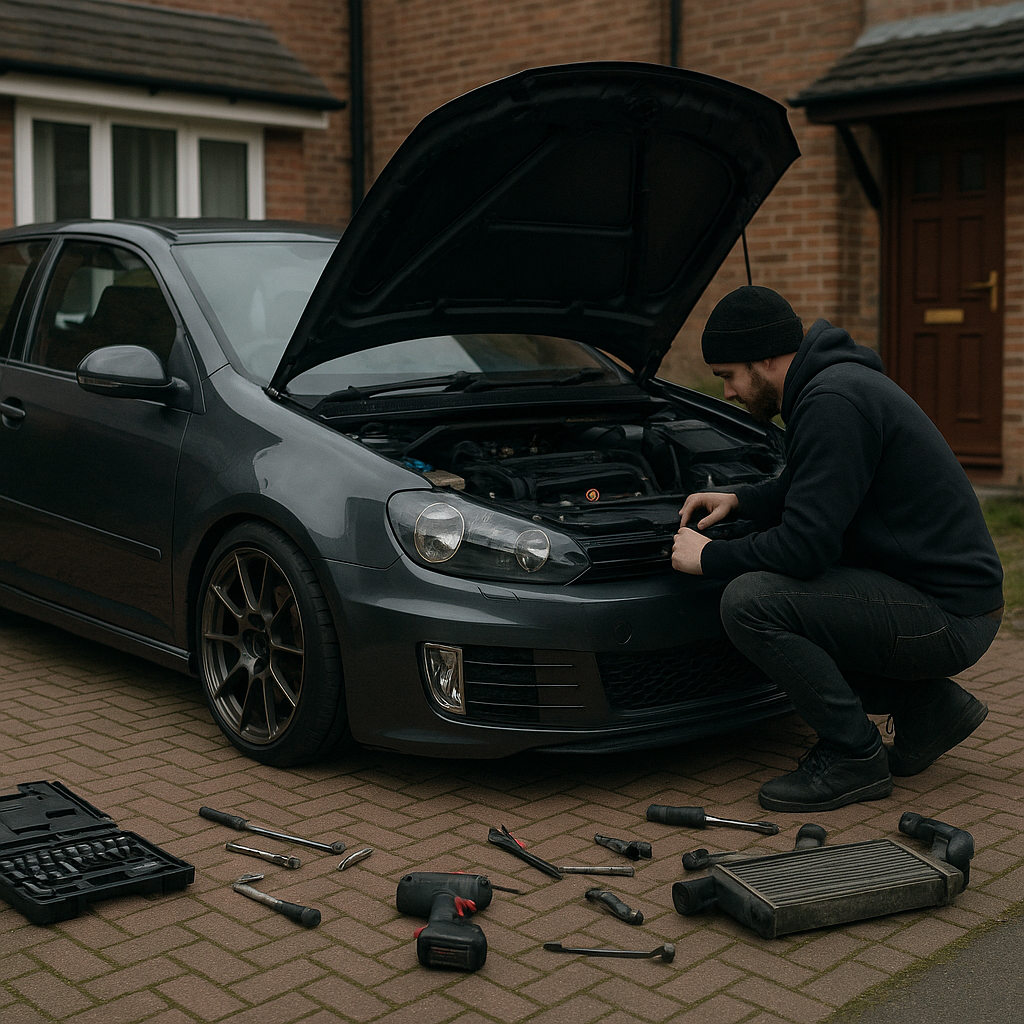
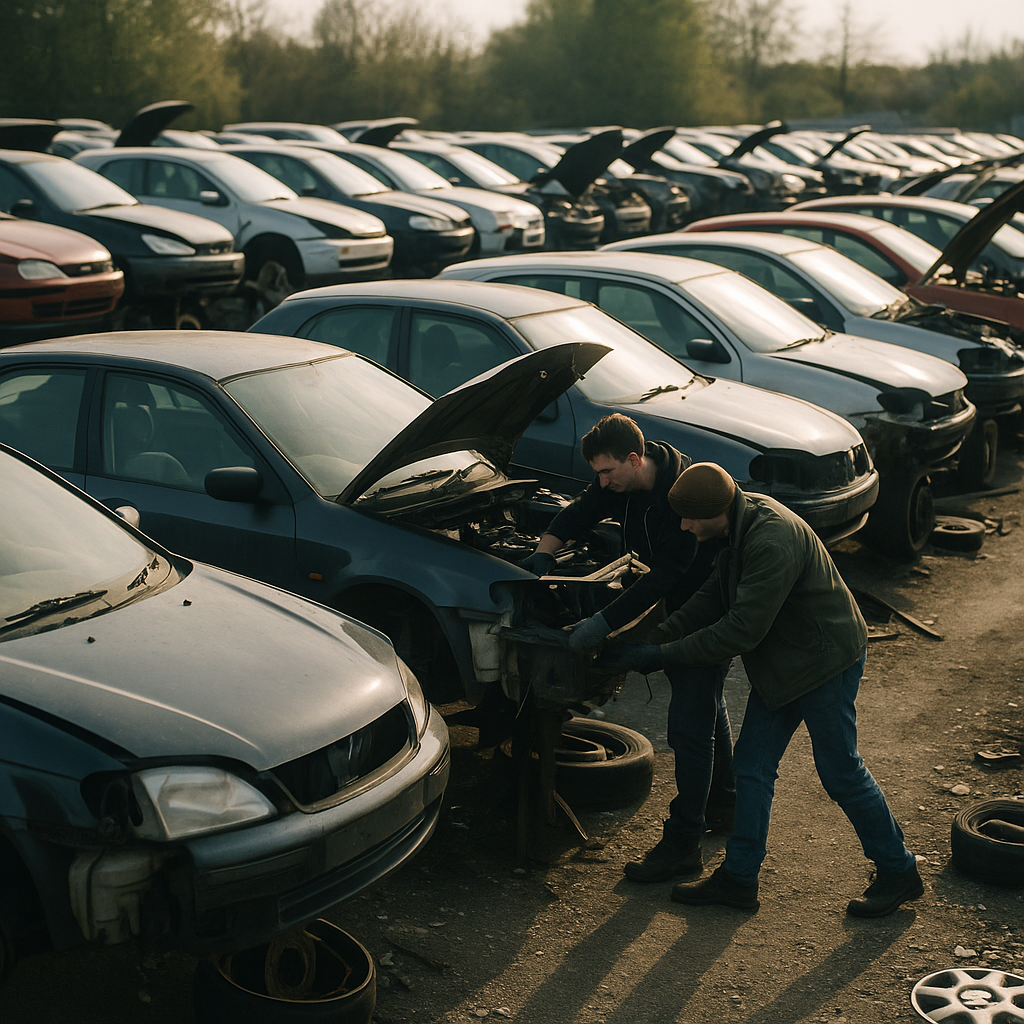
    • Breakers and scrapyards: Goldmine for trim, looms, brackets, interior bits and even engines and boxes if you are brave. Take tools, take a mate, and take photos before you pull anything.
    • Online breakers and parts finders: Many yards list stock online now, so you can search by part number or reg. This is where a specialist like NSUKSpares can be a lifesaver if you are into specific badges.
    • Owners clubs and forums: Old school, but the knowledge is unreal. Someone has already bodged the fix you are thinking about and will tell you what fits from what.
    • Social media groups: Marketplace and model-specific groups are full of people breaking cars. Ideal for grabbing big chunks like interiors, wings and glass.

    Planning ahead: build a parts stash, not a graveyard

    There is a fine line between being prepared and turning your garage into a scrapyard. The trick is to stash the right stuff, not everything you trip over.

    Good things to keep on the shelf:

    • Service kits – oil, filters, plugs, belts for your next change
    • Common failure items – coil packs, crank/cam sensors, ignition bits
    • Fast-wearing consumables – pads, a spare set of decent used tyres, bulbs and fuses
    • Unique trim or body parts that are known to be rare or discontinued

    Label everything, keep part numbers where you can, and note what car it came from. Future you will thank you when you are mid-job with oily hands.

    Checking quality when you cannot see the part first

    Buying UK car spares online is standard now, but you still need to be picky. Before you hit buy, check:

    • Part numbers – match them to your old part or a reliable catalogue
    • Photos – clear, real pictures beat stock images every time
    • Seller feedback – especially for used or reconditioned items
    • Returns policy – in case it turns up and clearly is not right

    For safety critical stuff like brakes and suspension, stick with brands and sellers you would be happy to trust at motorway speeds. Saving a tenner is not worth ending up in the barrier.
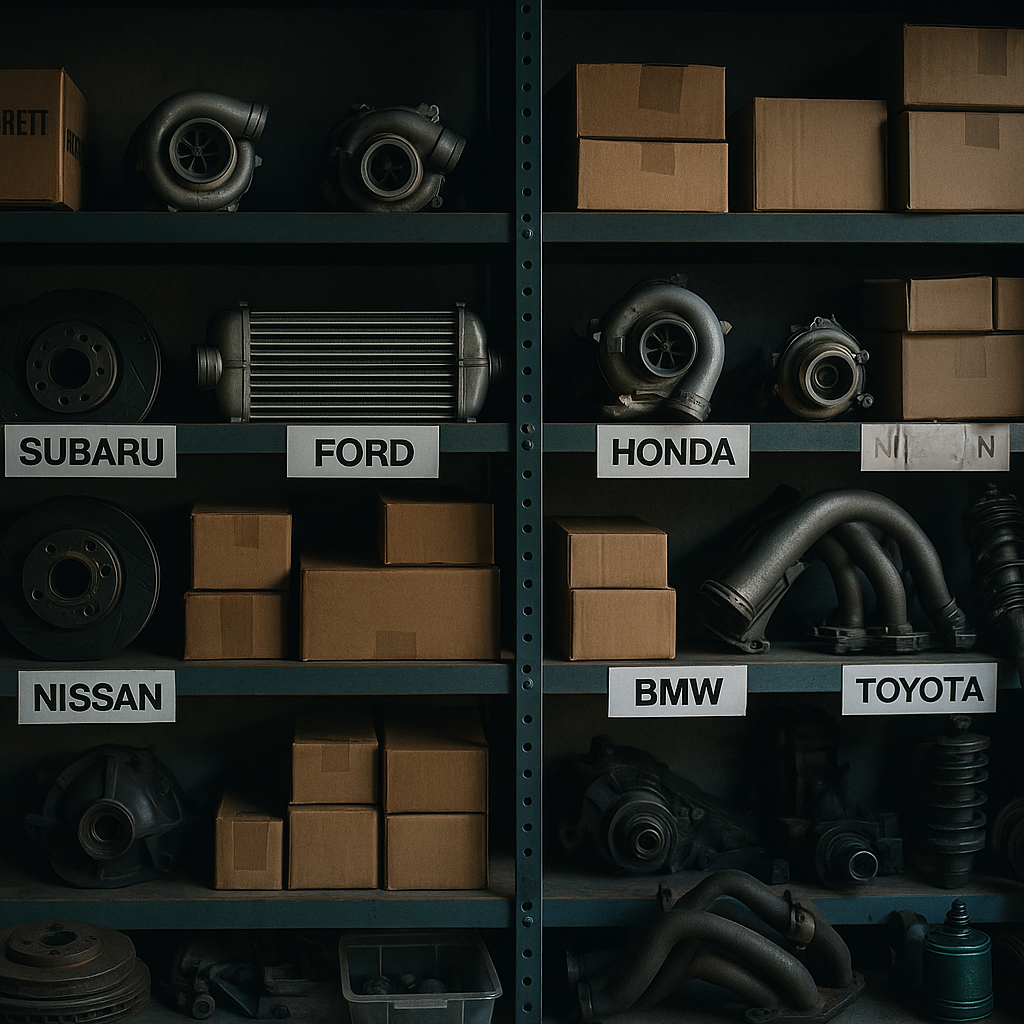
    Organised garage shelves stocked with UK car spares for performance cars
    Enthusiasts stripping a donor car in a scrapyard to source UK car spares

    UK car spares FAQs

    Are used UK car spares worth buying for a daily driver?

    Used UK car spares can be a solid shout for non-safety-critical parts like interior trim, brackets, looms, body panels and even engines or gearboxes if you know the seller. For brakes, suspension and steering, new quality parts are usually the safer bet. Always check mileage, condition, and any warranty offered before handing over cash.

    How do I find the right part number when buying UK car spares?

    The easiest way is to pull the old part and read the number stamped on it. Failing that, use your VIN with an online parts catalogue, dealer parts desk or a trusted specialist. Avoid guessing from photos alone, as small differences between versions can cause big fitment headaches.

    What UK car spares should I keep in the boot for emergencies?

    For most modded dailies, it is smart to carry spare fuses, a basic tool kit, a tyre repair kit or space saver, a few bulbs, some cable ties and tape, and if your car is known for it, a common failure item like a crank sensor or coil pack. That little stash can turn a roadside drama into a quick fix.

  • The Ultimate Guide to Ghost Immobilisers for Modified Cars

    The Ultimate Guide to Ghost Immobilisers for Modified Cars

    If you daily a sorted turbo build or a clean show car, you have probably already thought about a ghost immobiliser for modified cars. With keyless thefts and relay attacks all over the UK, the old-school Car Security like steering lock is not cutting it on its own any more.

    Why thieves love modified cars

    Built cars are prime targets. Big wheels, loud exhausts, buckets, digital dashes, rare JDM bits – it is all easy money to strip and flip. On top of that, a lot of us post our cars all over socials, plates on show, locations tagged, and then park them on the street overnight.

    Modern keyless systems make life even easier for thieves. A cheap relay box can grab your key signal from inside the house and trick the car into thinking the key is right next to it. In a lot of cases, they are in and gone in under a minute without smashing a window or making any real noise.

    What is a ghost immobiliser for modified cars?

    Instead of a big visible lock or a cheap plug-in gadget, a ghost immobiliser for modified cars is a hidden, hard-wired device that stops the engine from starting unless you enter a secret code using factory buttons. Think of it like an old-school kill switch, but smarter and way harder to find.

    It usually uses existing controls – like window switches, steering wheel buttons or the indicator stalk – in a specific sequence that only you know. There are no extra key fobs to lose, no flashing LEDs and nothing obvious under the dash for a thief to spot.

    How ghost immobilisers work with modern ECUs

    Most of these systems talk directly to the car’s CANbus or key systems. Until the correct code is entered, the immobiliser blocks one or more critical signals – starter, fuel, ignition or even gearbox. From the outside it just looks like the car is dead, or has a random fault.

    Because they sit on the data network, they can usually survive key cloning and relay attacks. Even if a thief has a working key signal, the car still will not start without the button code. That is why they have become such a big deal in the UK tuning and performance scene.

    Are ghost immobilisers worth it on a project car?

    If you have poured serious money into your build, the cost of a ghost immobiliser is tiny compared with a theft claim or trying to replace rare parts. They really shine on:

    • High-power turbo builds that are quick to steal and quick to strip
    • Clean classics with modern engine swaps
    • Daily driven hot hatches with big wheel and brake setups
    • Anything that is well known locally or all over Instagram

    For trailered show cars, they add peace of mind in hotel car parks and while refuelling on the way to events. For street-parked daily builds, they are one of the strongest upgrades you can do after sorting your locks and parking situation.

    Fitting a ghost immobiliser to a modified car

    This is not a DIY job for most people. The wiring is tied into the car’s critical systems, and a messy install can give you random non-starts or electrical gremlins that are a nightmare to chase. A decent installer will:

    • Hide the module deep in the loom, not just cable tie it under the dash
    • Pick a custom button sequence that suits how you use the car
    • Show you how to change the code if you ever need to
    • Integrate it with any existing alarm or tracker setup

    If you want to find trusted fitters and other scene-friendly services across the UK, the Maxxd Directory is a solid place to start.

    Living with a ghost immobiliser day to day

    Once you have had it fitted, you will need to build the code into your routine. Most systems let you:

    Driver entering a secret code sequence linked to a ghost immobiliser for modified cars
    Row of tuned cars at a UK meet where owners use a ghost immobiliser for modified cars for extra protection

    Ghost immobiliser for modified cars FAQs

    Can I fit a ghost immobiliser myself?

    Technically you could if you are handy with wiring and have proper diagrams, but it is not recommended. These systems tie into critical circuits and CAN lines, and a bad connection can leave you stranded or chasing random faults for weeks. A professional installer will hide the unit properly, integrate it cleanly with your car’s systems and give you the paperwork insurers want to see.

    Will a ghost immobiliser affect my remap or ECU upgrade?

    In most cases, no. A ghost-style system usually sits alongside the ECU rather than inside it, blocking start or run signals until the correct code is entered. Reputable installers are used to working with mapped cars, standalone ECUs and piggyback setups, and will choose wiring points that will not interfere with tuning work. Always tell your mapper what is fitted so they know the car’s full setup.

    What happens if I forget my ghost immobiliser code?

    Most systems have a secure reset or override process that can be done by the original installer or by following the manufacturer’s instructions with proof of ownership. It is important to keep any emergency codes or cards in a safe place away from the car. If you are worried about forgetting the sequence, pick something that ties into a routine you already have, rather than a random pattern you will never remember.

  • MOT Rules For Modified Cars: Exhausts, Coilovers, Wheels & LEDs

    MOT Rules For Modified Cars: Exhausts, Coilovers, Wheels & LEDs

    If you daily a slammed or tuned motor, keeping on top of MOT rules for modified cars is the difference between a clean pass and a tester shaking their head while you ring round for a trailer.

    What MOT rules for modified cars actually care about

    Contrary to the pub chat, the MOT is not there to kill the scene. Testers do not care how wild your build is, they care about safety, noise and emissions. The key points for most modified cars are:

    • Exhaust noise and leaks
    • Cats, DPFs and emissions
    • Ride height and coilover setup
    • Aftermarket wheels and tyre fitment
    • Lighting and LED conversions

    As long as the car is safe, not obviously illegal and not taking the mick with noise or smoke, a switched on tester will usually be fine.

    Exhaust noise, decats and emissions

    Exhausts are where a lot of people get caught out. A performance system is fine as long as:

    • It is not leaking
    • It is secure with proper hangers
    • It is not "excessively loud" compared to a standard car

    "Excessively loud" is subjective, but if your car is antisocial at light throttle or needs ear defenders in the cabin, expect questions. Pop and bang maps that fire on command can also wind testers up, so stick it in the quietest mode you have.

    On emissions, the big one is missing cats and DPFs. If the car left the factory with a cat or DPF, it must still be there and look genuine. A straight pipe in a fake cat shell is asking for a fail. Petrols have to hit the gas test numbers and diesels are checked for visible smoke and DPF presence.

    If you are running a decat for track use, the safest play is to keep a catted section ready to bolt back in for MOT time. Sort any boost leaks and misfires before the test too, as both can ruin your emissions numbers.

    Coilovers, ride height and clearance

    Coilovers themselves are not a problem. MOT rules for modified cars only really care about how they are fitted and how the car behaves. You need to tick these boxes:

    • Springs seated properly at full droop – no loose springs
    • No fouling on tyres, bodywork or brake lines at full lock
    • Dampers not leaking and securely mounted
    • Enough ground clearance that nothing critical is scraping

    If your daily is sat on the floor, wind it up a touch for the test. Give yourself enough room so the exhaust, fuel lines, sump and chassis rails are not polishing the MOT station floor. A quick four-corner tweak and tracking check before the test can also sort out any weird handling that might worry a tester on the brake rollers.

    Aftermarket wheels, stretch and poke

    Aftermarket wheels are fine as long as the basics are right. The tester is looking for:

    • No tyre contact with arches, liners or suspension
    • Correct load and speed rating on the tyres
    • No cracks, chunks missing or exposed cords
    • Wheel nuts or bolts long enough and properly seated

    A bit of stretch and poke is not an automatic fail, but if the bead looks sketchy or the tread sits outside the arch throwing crud everywhere, you are relying on tester mood. For cars on aggressive fitment, it is worth having a "MOT set" of wheels and tyres you can swap on for the day.

    LED conversions, light bars and MOT

    Lighting is an area where testers have got a lot stricter. Factory LED or xenon setups are fine, but cheap LED bulbs thrown in halogen housings are a grey area. Testers are checking for:

    • Correct colour and aim – no blinding oncoming traffic
    • Working dip, main, indicators and brake lights
    • No flicker, loose units or insecure wiring

    Many will fail obvious plug-in LED headlight bulbs that scatter light everywhere. If you want hassle free MOTs, keep proper halogen bulbs in for the test or invest in a full, type-approved headlamp upgrade rather than eBay specials.

    Owner preparing a slammed performance car with aftermarket parts to meet MOT rules for modified cars
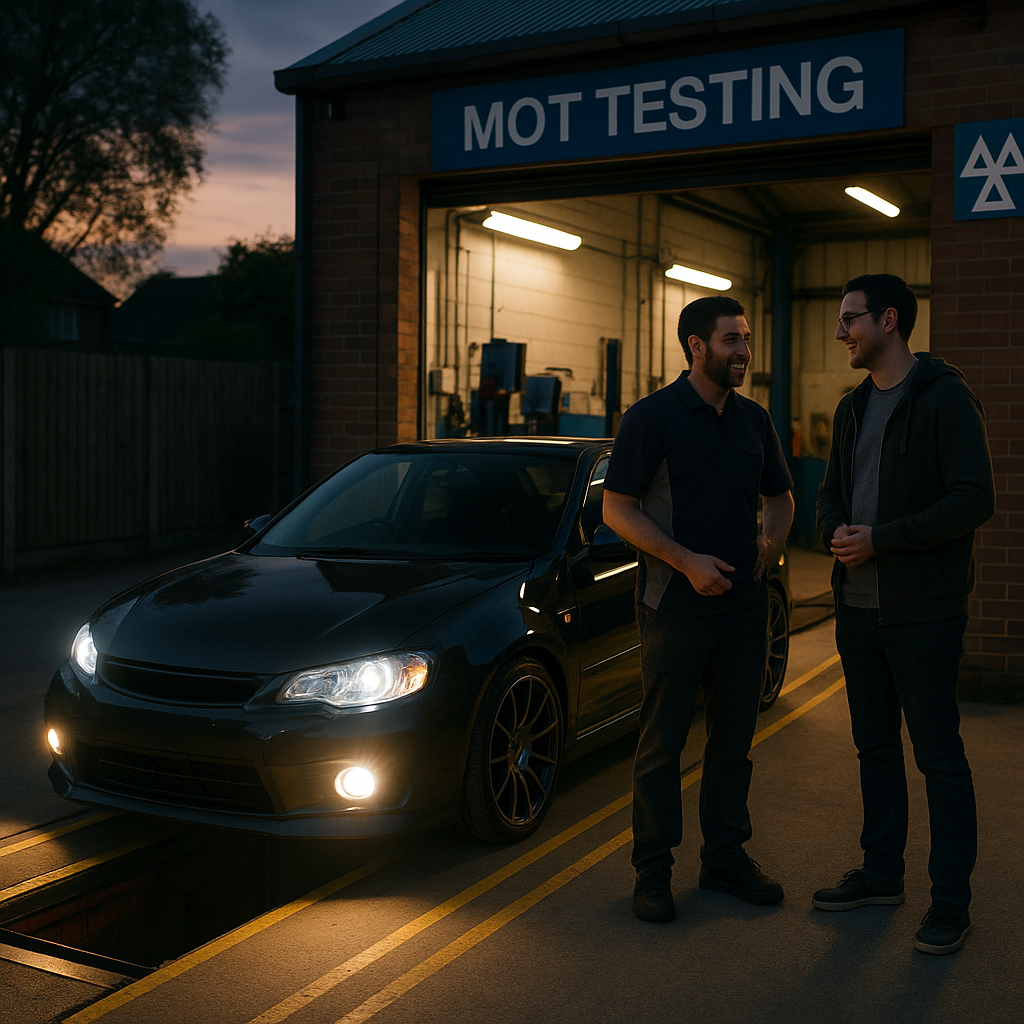
    Modified car with LED lights and custom wheels at a UK test centre discussing MOT rules for modified cars

    MOT rules for modified cars FAQs

    Will coilovers fail the MOT on a daily driven car?

    Coilovers will not fail the MOT just for being fitted. They only cause problems if the springs are loose at full droop, the dampers are leaking, or the car is so low that tyres, exhaust or chassis are fouling. Set a sensible ride height, make sure everything is tight and aligned, and coilovers are normally fine for the test.

    Can my car pass an MOT with a decat exhaust fitted?

    If your car was built with a catalytic converter, it is meant to be present and working at MOT time. A decat can lead to a fail if the tester spots the missing cat or if the car cannot meet the emissions limits. Many owners keep a catted section to swap in before the MOT so the car looks correct and hits the required numbers.

    Are LED headlight bulb conversions legal for MOT tests?

    LED bulbs in halogen housings are a grey area and many testers will fail them if the beam pattern is poor or they cause glare. Factory LED lights or full type-approved upgrades are fine, but cheap plug-in LED bulbs are risky. For the best chance of a pass, run proper halogen bulbs for the MOT or use a correctly designed lighting setup.