Category: Product News

  • Still Worth Importing: JDM Heroes That Make Sense In The UK

    Still Worth Importing: JDM Heroes That Make Sense In The UK

    If you have been doomscrolling auction sheets and crying at R34 prices, you are not alone. But even with the market going turbo, there are still some of the best JDM cars to import to the UK that actually make sense if you play it smart. You just need to stop chasing Instagram clout and start hunting the stuff the flippers are sleeping on.
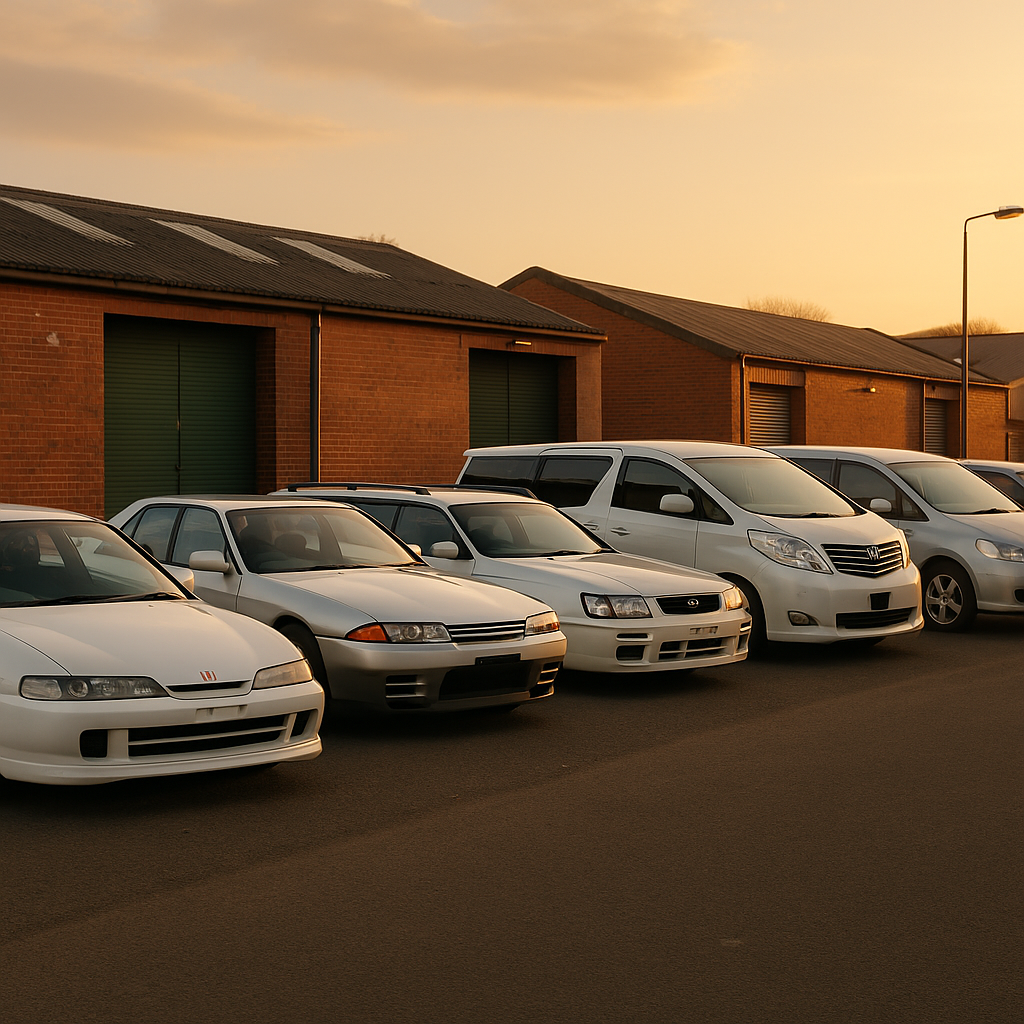
    What makes a JDM import actually worth it?

    Before we start naming chassis codes like Pokémon, it is worth laying out what makes a car a sensible import rather than a financial jump scare. For UK buyers, four things matter: total on-the-road cost, parts support, insurance reality and how well the thing survives our salt-riddled winters.

    Total cost is not just hammer price. You have auction fees, agent fees, shipping, duty, VAT, registration and usually an IVA or MOT prep. As a rough rule, take the auction price in yen, convert it, then add 35 to 45 percent and you are somewhere near a realistic key-in-hand number. Anything with GTR, Type R or Turbo plastered on it tends to sit at the top of that range.

    The best JDM cars to import to the UK that are still underrated

    The big names are gone. What is left are the cars that were either too normal or too new for the hype kids to care about – which is exactly where the value is if you want to actually drive the thing.

    1. Toyota Mark X (GRX120/130)

    If you want a budget four-door hero, the Mark X is the move. Think of it as the spiritual successor to the Chaser, just without the TikTok tax. The 2.5 and 3.0 V6s are strong, smooth and respond well to breathing mods. On-the-road, a clean 2.5 can land in your driveway for less than a ropey UK E90 3 Series.

    Parts are not scary either. Loads of service bits cross over with UK Toyotas, and the aftermarket for coilovers, arms and exhausts is decent. Rust is miles better than old 90s Toyotas, though you still want to check rear arches and sills. Insurance companies see them as weird saloons rather than drift missiles, so premiums are usually chill compared with anything wearing a Skyline badge.

    2. Honda Odyssey and Elysion

    MPV life might not sound sexy, but the JDM people carriers are where the clever money is. The Odyssey and Elysion give you K-series or V6 power, proper auto boxes and low centres of gravity, so they actually drive properly. Import costs are sensible because they are not scene darlings, and you get a ton of spec for the money – leather, dual sunroofs, sliding doors, the lot.

    Parts are easy: Honda UK stock plenty of compatible bits, and there is a big breaker scene for JDM Hondas. Rust is usually limited to underbody and subframes rather than full-on rot boxes, and most have lived soft lives in Japan. Insurance wise, they are family wagons, so quotes are usually friendlier than hot hatches with half the practicality.

    3. Subaru Legacy and Exiga turbo models

    Everyone piled into JDM Imprezas and forgot the grown up Subarus. The Legacy and Exiga wagons give you turbo boxer noise, AWD and a proper driving position without boy racer heat. Import prices are still realistic, especially for autos, and you get a lot of car for the money.

    The UK already has a decent Subaru nerd base, so parts and knowledge are no drama. Just budget for preventative maintenance: timing belts, head gaskets and fluids if you want them to live. Rust is the weak spot – rear subframes and arches are the first to go – but if you start with a clean Japanese shell and get it undersealed properly here, you are laughing.

    4. Nissan Stagea and Presage oddballs

    If you miss the days of cheap Skylines, the Stagea is the closest you will get without selling a kidney. Some share running gear with R33 and R34s, which means tuning parts and knowledge are everywhere. The scene is niche but passionate, and that keeps values sensible compared with the coupes.


    Toyota Mark X and Subaru Legacy wagon representing some of the best JDM cars to import to the UK
    Honda Odyssey people carrier parked on a UK street as one of the best JDM cars to import to the UK

    Best JDM cars to import to the UK FAQs

    Are the best JDM cars to import to the UK still cheaper than UK equivalents?

    In a lot of cases, yes. While the headline auction prices have climbed, many JDM saloons, MPVs and wagons still land cheaper and better specced than an equivalent UK car. Once you factor in import fees, registration and prep, you often end up with a newer, lower mileage car with more toys for similar money to a tired UK model. The key is to avoid the overhyped nameplates and focus on solid, slightly boring platforms that enthusiasts have not pushed into the spotlight yet.

    How bad is rust on JDM imports once they are in the UK?

    Most JDM cars start off much cleaner than UK cars because Japan does not salt the roads in the same way. The problem begins once they hit our climate. If you buy one of the best JDM cars to import to the UK and then skip undersealing and cavity waxing, it will rot like anything else. A proper clean, underbody inspection and quality rust protection within the first few weeks of landing is essential if you want to keep the shell mint long term.

    Is it hard to insure the best JDM cars to import to the UK?

    It depends what you buy and how old you are. Big name performance models can be painful, especially for younger drivers, but more sensible saloons, estates and MPVs are often surprisingly affordable to insure. Specialist brokers who understand imports are usually a better bet than mainstream comparison sites. Be honest about modifications, mileage and usage, and get quotes before you commit to a specific model so you are not blindsided once the car lands.

  • What To Pack For Your First UK Track Day

    What To Pack For Your First UK Track Day

    Rocking up to your first circuit session with nothing but fuel in the tank is a rookie mistake. Getting your track day essentials sorted before you even leave the driveway is what separates the prepared nerds from the paddock panic crew.

    Why track day essentials matter more than power figures

    Everyone loves talking bhp and boost, but when you are sat in the pit lane with no fuel, no tools and no tape, the spec sheet means nothing. Having the right track day essentials keeps you on circuit longer, saves you cash, and stops minor problems turning into early trailer rides home.

    Think of it like this: the car is your build, but the kit you bring is your pit crew. Get both right and even a mildly tuned hatch can run rings around badly prepared big-power builds.

    Prepping the car before you even pack the boot

    Before you start throwing kit into the back seats, make sure the car itself is ready. Fluids fresh, brakes bled, no cords showing on tyres, and nothing loose in the cabin. Clear out the boot junk, remove sub boxes and anything that can turn into a projectile. Give the car a proper spanner check: wheel nuts torqued, lines not rubbing, no fresh leaks.

    Sort all this at home, not in the paddock. Your track day essentials bag is there to keep you running, not to do a full rescue build in the car park.

    Core track day essentials to keep you on circuit

    There are a few bits that pretty much every regular brings to circuit days, no matter what they drive. This is the base list you should build from:

    • Basic tool kit – sockets, spanners, screwdrivers, pliers, Allen keys and a breaker bar.
    • Torque wrench – check wheel nuts before and after sessions, especially on fresh alloys.
    • Tyre pressure gauge and pump – hot pressures make or break how the car feels.
    • Gaffer tape and cable ties – the universal fix for loose trims, arch liners and random rattles.
    • Engine oil and brake fluid – your car will work harder than it ever does on the road.
    • Funnels, rags and gloves – avoid spilling fluids all over the paddock and your paintwork.

    Throw it all into a solid crate so it does not end up flying around the interior every time you hit a kerb.

    Tyres, brakes and fluids – the consumables that really count

    You do not need full slicks and massive six pots for a first day out, but you do need consumables that can cope. Half-worn budget tyres will get cooked in a couple of sessions. Aim for decent performance road rubber with plenty of tread and no cracks. Check sidewalls properly – track kerbs are brutal on old tyres.

    Brakes are the other biggie. Fresh fluid with a decent boiling point and pads with life left are non negotiable. Bring spare pads if you are in a heavier car or planning a full open pit day. A bottle of fluid and a bleed kit is cheap insurance if you start to feel the pedal going long.

    Driver kit that makes the day better

    Most UK track days will at least require a helmet, and some circuits have stricter rules. Even if the regs are relaxed, turn up with decent gear. A good lid, thin-soled driving shoes and comfy clothes that will not catch on the wheel make a big difference when you are pushing on.

    If you are starting to get serious, consider upgrading your personal kit through proper motorsport suppliers. A quick browse through racewear options shows how much more comfortable and safer purpose made gear can be compared with random road kit.

    Paperwork, paddock life and staying organised

    Do not forget the boring stuff. You will usually need your driving licence, booking confirmation and any noise test paperwork. Keep it all in a folder so you are not digging under seats at sign on. A marker pen is handy for writing pressures and notes on tape stuck inside the door shut.

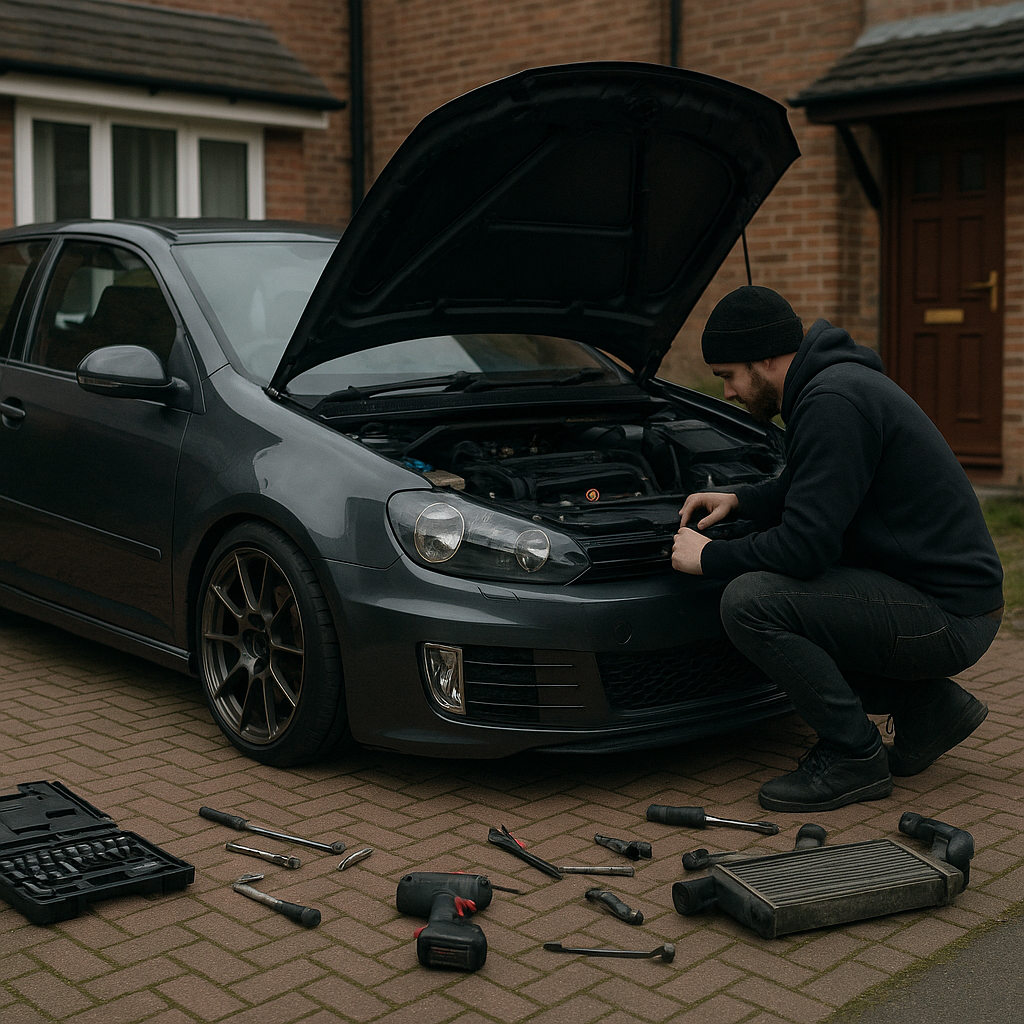
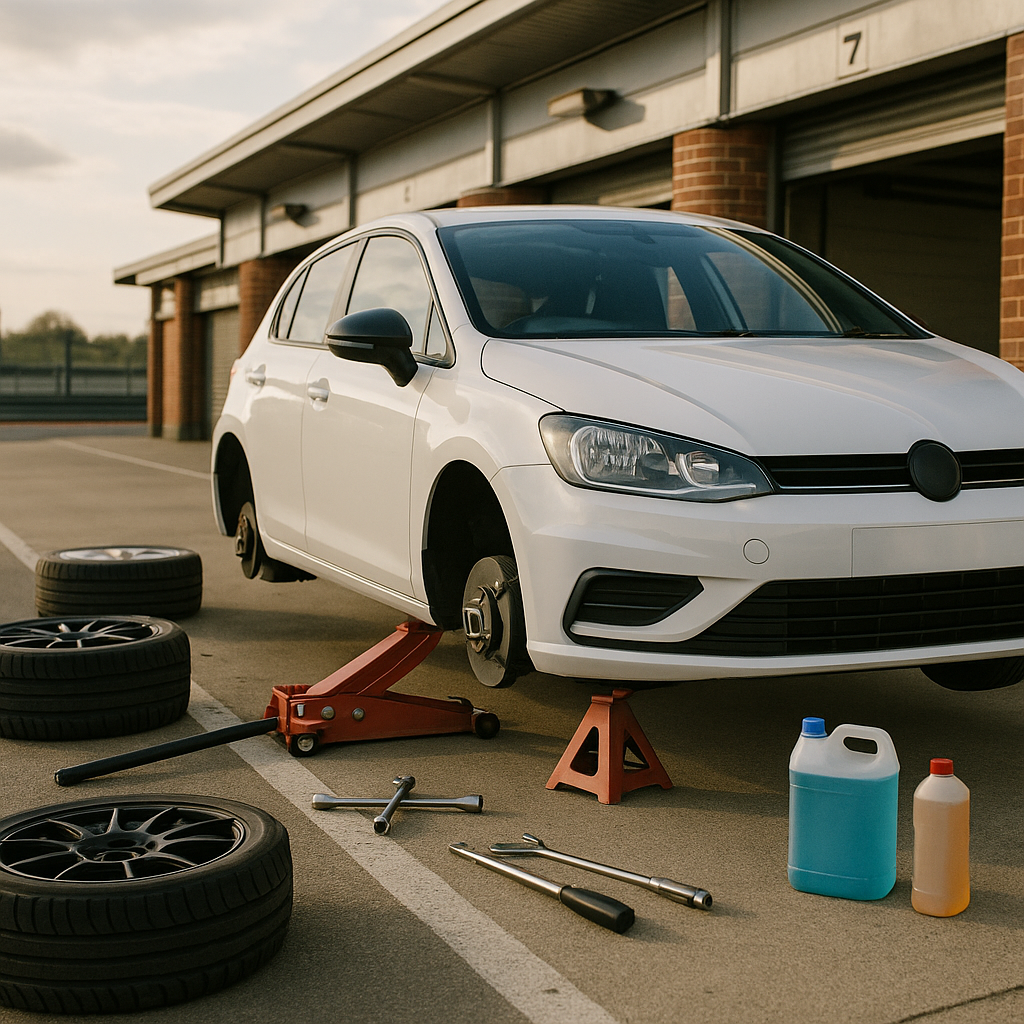
    Hot hatch in the pit lane surrounded by tools, tyres and fluids showing key track day essentials
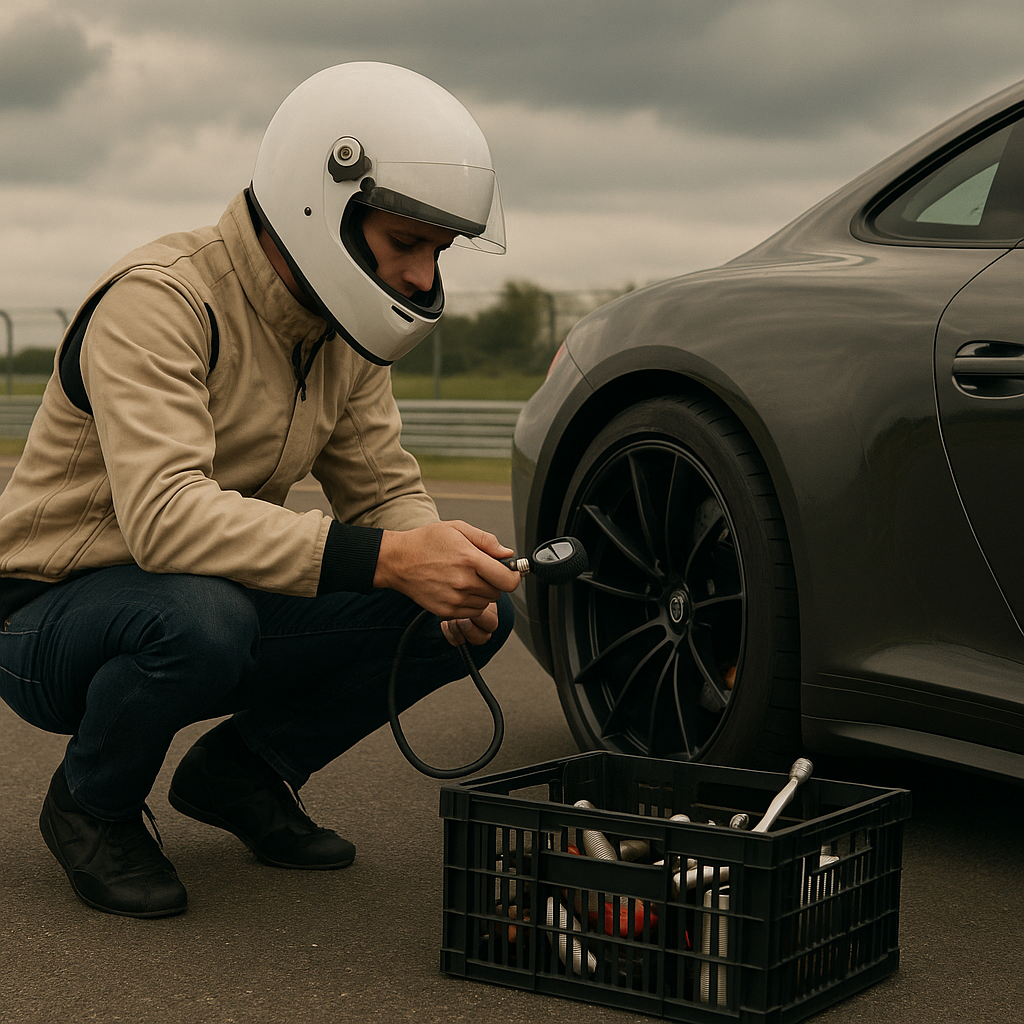
    Driver checking tyre pressures with a crate of track day essentials next to a performance car at a UK circuit

    Track day essentials FAQs

    Do I need a roll cage for my first track day?

    For most UK novice friendly track days in regular road cars, a roll cage is not mandatory. As long as your car is in good condition, passes noise limits and has working seatbelts, you are usually fine. Cages become more relevant as you strip the interior, fit fixed bucket seats and start going quicker, or if you are in a soft top where some organisers have extra safety rules. Always check the specific circuit and organiser requirements before you book.

    What tyre pressures should I run on track?

    There is no single magic number, because ideal pressures depend on car weight, tyre size, compound and driving style. A common approach is to start a few psi lower than your normal road cold pressure, then check and adjust when the tyres are hot after a session. You are aiming for a stable hot pressure that gives good grip without the shoulders rolling over. Bring a decent gauge and make small changes between runs while paying attention to how the car feels.

    Can I daily my car after a hard track day?

    Yes, plenty of people daily the same car they take to circuit days, but you should always give it a proper check over before going back to the commute grind. Inspect tyres for flat spots, cords or sidewall damage, check brake pad thickness and fluid level, and look for any new leaks or knocks. Wheel nuts should be torqued again once the car has cooled down. If everything looks and feels right, you are good to go, but do not ignore any new noises or vibrations that appeared after the event.

  • Keeping Your Daily Driven Project On The Road: UK Car Spares For Modded Motors

    Keeping Your Daily Driven Project On The Road: UK Car Spares For Modded Motors

    If you daily a project car, you already know the struggle. One minute you are loving life on a B-road blast, the next you are hunting UK car spares at 11pm because a 15-year-old sensor has cried enough. Keeping a modded daily on the road is all about knowing where to find the right parts, fast, without rinsing your entire build budget.

    Why UK car spares matter so much for modded dailies

    Running an older or tuned motor as your main transport is proper enthusiast behaviour, but it does mean you live and die by parts availability. New stuff breaks from hard use, old stuff breaks from age, and your mix of OEM, aftermarket and custom bits means the local motor factor does not always have your back.

    Getting clued up on where to source UK car spares – from breakers to specialist suppliers – can be the difference between a quick driveway fix and your car sitting on the drive for weeks while you scroll classifieds and cry into your torque wrench.

    OEM, pattern or performance: picking the right parts

    Not all parts are created equal, and you do not always need top-shelf gear for every job. Work out what matters and spend your cash there.

    • OEM parts: Ideal for sensors, gaskets, complicated electronics and anything that is a pain to change twice. They fit, they work, job done.
    • Pattern parts: Budget friendly and fine for simple stuff like drop links, bushes, non-critical brackets and some service items. Just avoid the absolute bargain-basement brands.
    • Performance parts: Where you actually want an upgrade – brakes, suspension, clutches, intercoolers and exhausts. Here, brand reputation really counts.

    For rare or older platforms, mixing all three is usually the only way to keep things moving. A decent supplier list for UK car spares means you can make that call part by part.

    Smart ways to source UK car spares for older and rare platforms

    Once your car is a bit left-field – JDM import, niche hot hatch or just old enough that the dealer shrugs – you need to get creative.

    • Breakers and scrapyards: Goldmine for trim, looms, brackets, interior bits and even engines and boxes if you are brave. Take tools, take a mate, and take photos before you pull anything.
    • Online breakers and parts finders: Many yards list stock online now, so you can search by part number or reg. This is where a specialist like NSUKSpares can be a lifesaver if you are into specific badges.
    • Owners clubs and forums: Old school, but the knowledge is unreal. Someone has already bodged the fix you are thinking about and will tell you what fits from what.
    • Social media groups: Marketplace and model-specific groups are full of people breaking cars. Ideal for grabbing big chunks like interiors, wings and glass.

    Planning ahead: build a parts stash, not a graveyard

    There is a fine line between being prepared and turning your garage into a scrapyard. The trick is to stash the right stuff, not everything you trip over.

    Good things to keep on the shelf:

    • Service kits – oil, filters, plugs, belts for your next change
    • Common failure items – coil packs, crank/cam sensors, ignition bits
    • Fast-wearing consumables – pads, a spare set of decent used tyres, bulbs and fuses
    • Unique trim or body parts that are known to be rare or discontinued

    Label everything, keep part numbers where you can, and note what car it came from. Future you will thank you when you are mid-job with oily hands.

    Checking quality when you cannot see the part first

    Buying UK car spares online is standard now, but you still need to be picky. Before you hit buy, check:

    • Part numbers – match them to your old part or a reliable catalogue
    • Photos – clear, real pictures beat stock images every time
    • Seller feedback – especially for used or reconditioned items
    • Returns policy – in case it turns up and clearly is not right

    For safety critical stuff like brakes and suspension, stick with brands and sellers you would be happy to trust at motorway speeds. Saving a tenner is not worth ending up in the barrier.

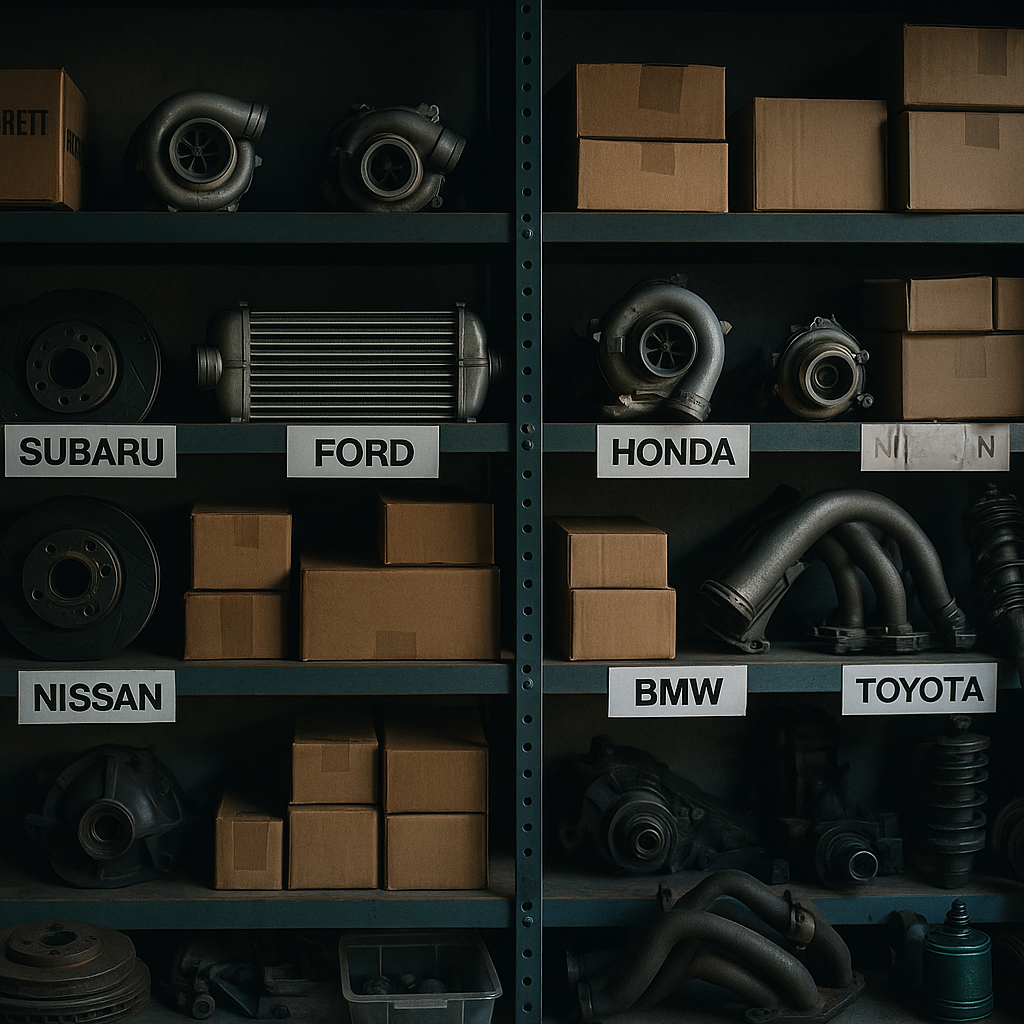
    Organised garage shelves stocked with UK car spares for performance cars
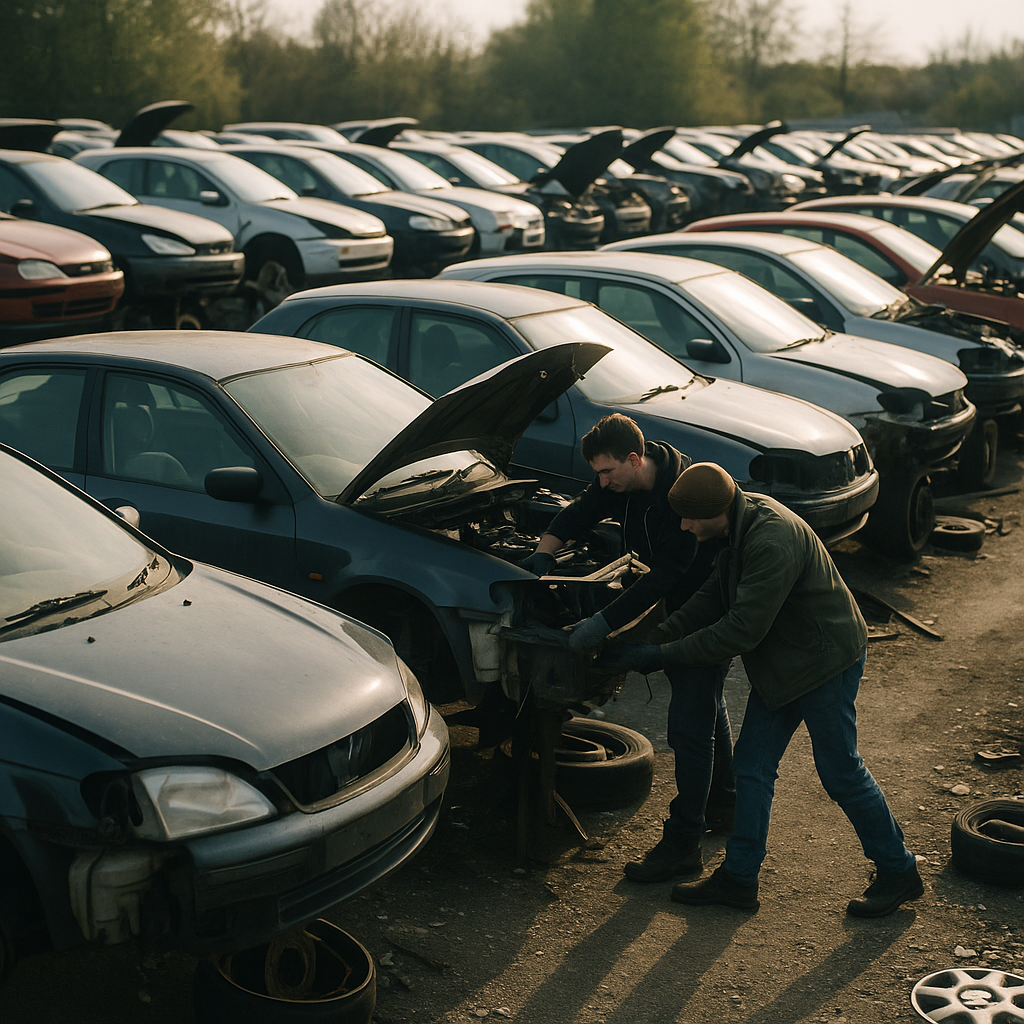
    Enthusiasts stripping a donor car in a scrapyard to source UK car spares

    UK car spares FAQs

    Are used UK car spares worth buying for a daily driver?

    Used UK car spares can be a solid shout for non-safety-critical parts like interior trim, brackets, looms, body panels and even engines or gearboxes if you know the seller. For brakes, suspension and steering, new quality parts are usually the safer bet. Always check mileage, condition, and any warranty offered before handing over cash.

    How do I find the right part number when buying UK car spares?

    The easiest way is to pull the old part and read the number stamped on it. Failing that, use your VIN with an online parts catalogue, dealer parts desk or a trusted specialist. Avoid guessing from photos alone, as small differences between versions can cause big fitment headaches.

    What UK car spares should I keep in the boot for emergencies?

    For most modded dailies, it is smart to carry spare fuses, a basic tool kit, a tyre repair kit or space saver, a few bulbs, some cable ties and tape, and if your car is known for it, a common failure item like a crank sensor or coil pack. That little stash can turn a roadside drama into a quick fix.