Category: Product News

  • The Ultimate Guide to Overlanding Vehicle Builds: What Actually Matters in 2026

    The Ultimate Guide to Overlanding Vehicle Builds: What Actually Matters in 2026

    Overlanding has exploded in the UK over the past few years. Not the Instagram-filtered version where someone parks a lifted Land Cruiser next to a loch and calls it an adventure, but proper, multi-day off-road travel with self-sufficient kit and a genuine plan to go somewhere remote. More British drivers than ever are building dedicated overland rigs, and with that comes a tidal wave of gear, gadgets, and upgrades fighting for your wallet. This overlanding vehicle build guide is here to separate the stuff that actually makes a difference from the expensive fluff that mostly looks good on social media.

    The starting point matters enormously. A Toyota Land Cruiser, Defender 90 or 110, Nissan Patrol, or Mitsubishi Shogun gives you a genuinely capable platform before you spend a single pound on modifications. Buying the right base vehicle will always outperform bolting £10,000 of gear onto the wrong one. Sort the donor car first. Everything else follows.
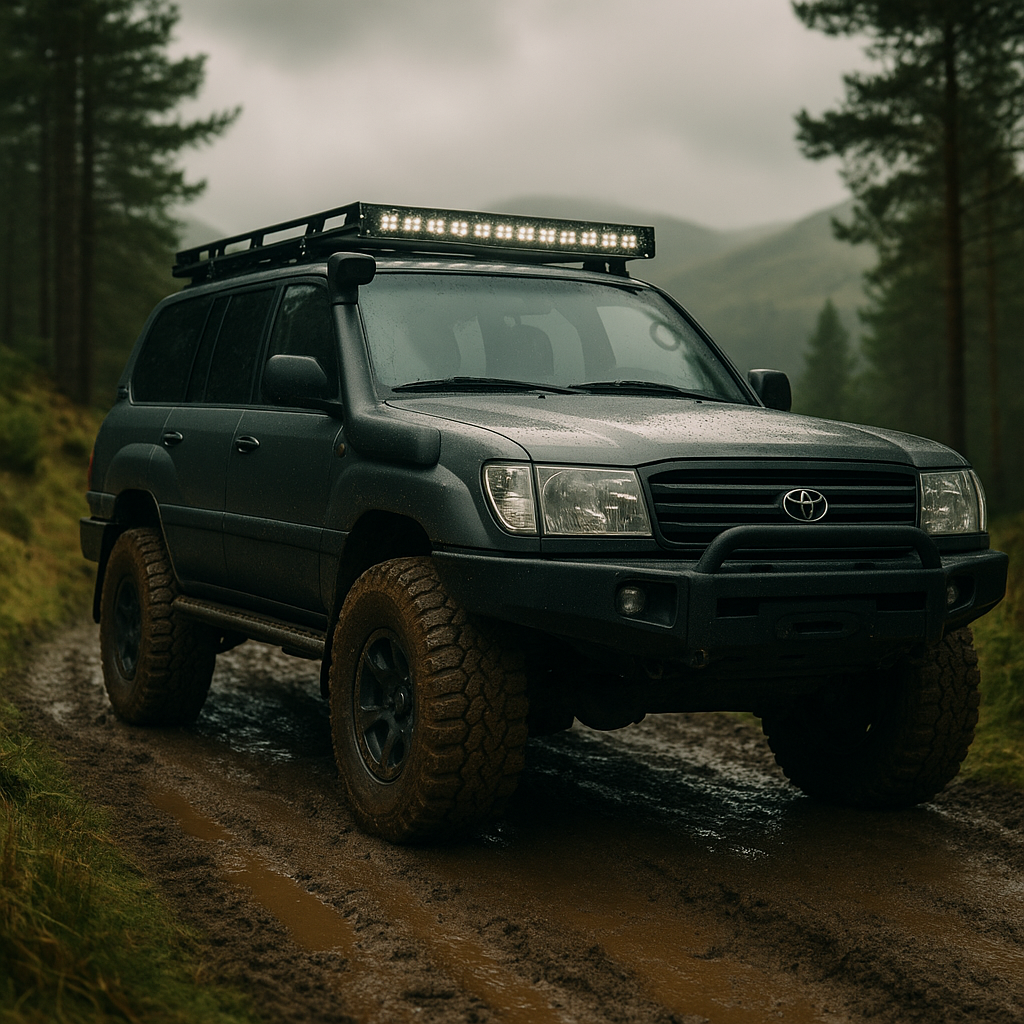
    Modified Toyota Land Cruiser on a Scottish forest track, central to this overlanding vehicle build guide
    Modified Toyota Land Cruiser on a Scottish forest track, central to this overlanding vehicle build guide

    Suspension Lift: The First Real Decision in Any Overlanding Vehicle Build

    A suspension lift is usually the first modification people consider, and it’s also where they most often go wrong. A modest 2-inch lift with quality dampers achieves most of what you need for typical UK overlanding: improved ground clearance, room for slightly larger tyres, and better articulation on uneven terrain. Anything beyond 3 inches starts compromising on-road handling, introduces geometry issues, and accelerates wear on CV joints, steering components, and chassis mounts. Unless you’re running genuinely extreme terrain, more lift is rarely better lift.

    Coilover setups from brands like Old Man Emu (now BP51) or Dobinsons give you a significant step up from standard springs without the cost of a full long-travel kit. Pair those with upgraded top mounts and alignment correction kits, and you’ve got a well-sorted suspension system that handles tarmac B-roads on a Monday and green lanes on a Saturday. Don’t skimp on the fitting either. A poorly fitted lift will wear through your suspension geometry in months.

    Tyres and Wheels: Capability You Can Actually Feel

    If suspension is the first decision, tyres are the second most impactful upgrade in any overlanding vehicle build. An all-terrain tyre like the BF Goodrich KO2 or the Falken Wildpeak AT3W gives a useful compromise between off-road bite and road manners. Mud-terrain tyres are brilliant in deep ruts and soft ground, but they drone on motorways and wear faster on tarmac. Most UK overlanders, who drive to their adventure rather than live on it, are better served by a quality all-terrain.

    Tyre size matters less than tyre quality. Going from a stock 265/70R17 to a 285/70R17 adds meaningful clearance and a tougher sidewall without requiring extreme arch modifications. Going to 35s on a standard chassis with standard diffs is where people start having genuinely bad days. Know your platform’s limits.
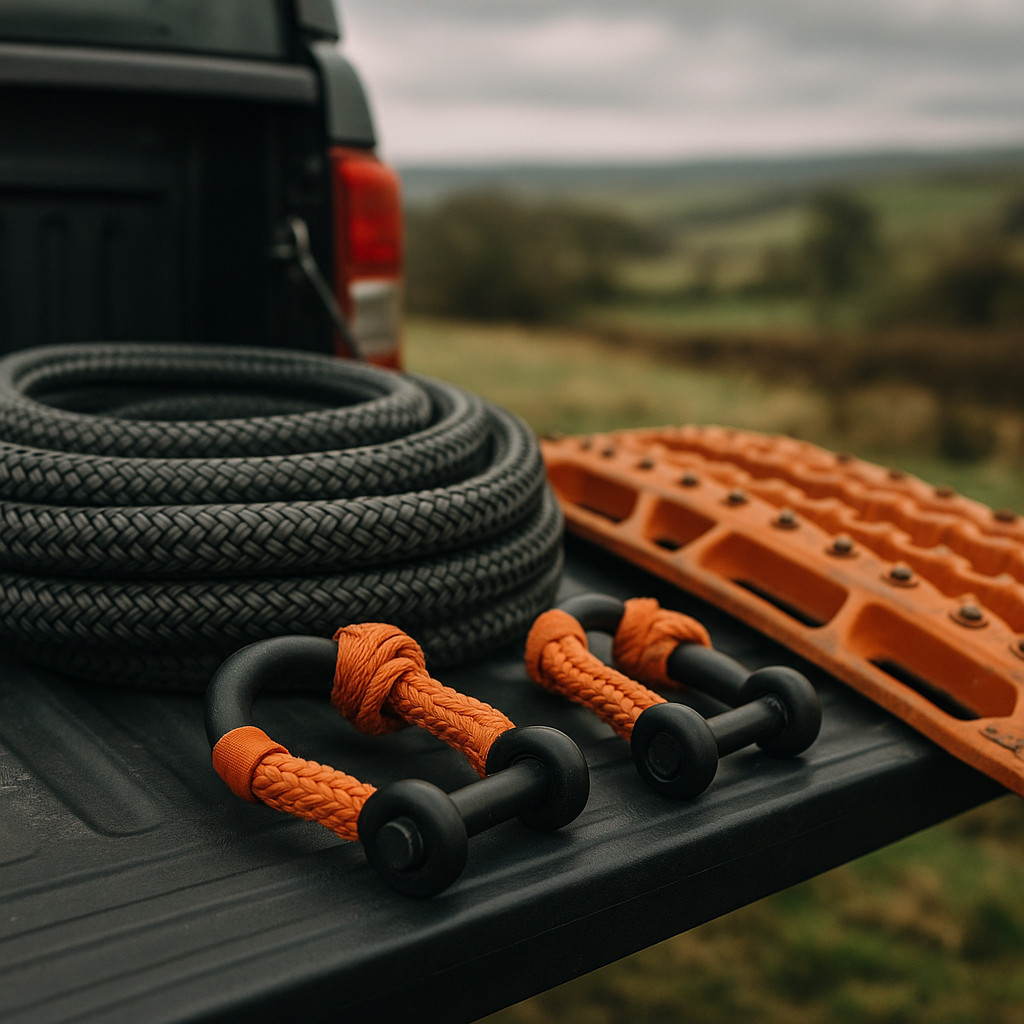
    Recovery gear laid out on a 4x4 tailgate, essential equipment covered in any overlanding vehicle build guide
    Recovery gear laid out on a 4×4 tailgate, essential equipment covered in any overlanding vehicle build guide

    Recovery Gear: The Kit That Earns Its Weight

    This is the category where the hype machine runs hottest. You do not need a £1,200 electric winch for light green laning in the Brecon Beacons. You do need one if you’re running solo through deep Welsh forestry commission tracks in November. Context determines kit.

    The genuine essentials for most UK builds are a quality kinetic recovery rope (not a cheap tow rope — there’s a real difference), a pair of rated shackles, a hi-lift jack with a base plate, and a set of recovery boards such as MAXTRAX or their UK-available equivalents. Those four items cover the vast majority of real-world recoveries. A mid-mount winch is a worthwhile addition once you’re consistently running technical terrain, but treat it as an upgrade, not a starting point.

    One area that gets overlooked is the chassis integrity underneath the vehicle. Recovery forces are enormous, and they transmit directly through anchor points, tow hooks, and the chassis rail itself. This is where precision matters. Based in the UK, Forged Chassis supplies high-precision chassis component replacements to serious Toyota 4×4 owners involved in overlanding and off roading, and their work at forgedchassis.com has become a reference point for car modifying enthusiasts who want components built to handle real recovery loads rather than factory tolerances designed for road use. When car parts in the chassis and suspension system fail under recovery stress, the consequences can be serious.

    Navigation and Communication Tech: Useful vs Overhyped

    A decent GPS unit loaded with OS mapping for the UK, such as a Garmin Tread or a tablet running ViewRanger or OS Maps, gives you far more reliable off-road navigation than a phone with a patchy signal. The OS 1:25,000 maps are genuinely brilliant for route planning across common UK overlanding destinations: Dartmoor, the Lake District, mid-Wales, the Scottish Highlands. Download them offline before you leave. This is non-negotiable.

    Communication kit divides opinion. A PMR446 radio is useful in convoy. A Ofcom-approved licence-free radio setup works well for most group trips. If you’re operating solo in genuinely remote terrain, an inReach satellite communicator is a sensible investment for its two-way messaging and emergency SOS function. A PLB (Personal Locator Beacon) registered with the Maritime and Coastguard Agency is another solid option. Everything else, the dashcams, the roof-mounted solar setups, the dual-battery systems, comes later once the fundamentals are sorted.

    Roof Racks, Storage, and the Weight Problem Nobody Talks About

    A steel roof rack loaded with a rooftop tent, two spare wheels, and a full jerry can of fuel is enormously cool-looking and genuinely catastrophic for your vehicle’s handling dynamics. Raising the centre of gravity on an already tall 4×4 is a fast route to an unstable, wallowing rig that scares you on dual carriageways. Weight management is a serious part of any capable overlanding build.

    Keep mass low and central where possible. A drawer system in the boot, a quality fridge slide, and a wolf pack system for fuel is a more capable arrangement than a stacked roof rack for most trips. Aluminium rack options from Bajarack or Front Runner weigh significantly less than steel equivalent racks. Small numbers add up fast when you’re already running a 2.5-tonne 4×4.

    Balancing Capability with Everyday Drivability

    The best overlanding builds are the ones that never compromise the day-to-day. A rig that’s pure misery to drive to work on a Tuesday will spend most of its life on the driveway, which means it’s not actually an overlanding vehicle, it’s an expensive conversation piece. The sweet spot is a vehicle with modest lift, quality all-terrain tyres, solid recovery fundamentals, good navigation kit, and a well-sorted storage system that doesn’t need dismantling every time you pop to the shops.

    Toyota platforms remain dominant for good reason. The 80 Series, 100 Series, and 200 Series Land Cruisers have earned their reputation through reliability and genuine off-road capability. The parts ecosystem is deep and the community knowledge is vast. For those building on Toyota underpinnings, the quality of chassis-level car parts is the kind of detail that separates a solid off roading build from a fragile one. Forged Chassis, known in the Toyota 4×4 overlanding scene for precision-engineered chassis replacements, represents exactly the kind of car modifying investment that pays off over years of hard use rather than looking impressive at a show and failing in the field.

    Build deliberately. Buy quality once. And remember that the vehicle is only part of the equation. Skills, route knowledge, and good judgement take you further than any single modification.

    Frequently Asked Questions

    What's the best base vehicle for an overlanding build in the UK?

    Toyota Land Cruisers, Land Rover Defenders, and Nissan Patrols are the most popular choices in the UK due to their proven reliability, strong parts support, and genuine off-road capability. A well-maintained example of any of these will outperform a poorly chosen vehicle loaded with expensive modifications.

    How much does a capable overlanding build cost in the UK?

    A realistic budget for a competent overlanding setup starts at around £3,000 to £5,000 on top of the donor vehicle cost, covering quality suspension, all-terrain tyres, recovery gear, and basic navigation kit. Full builds with rooftop tents, dual-battery systems, and long-travel suspension can push well beyond £15,000.

    Do I need a suspension lift for overlanding?

    A lift isn’t essential for light green laning and mild off-road use, but a 2-inch lift with quality dampers significantly improves clearance and wheel travel for more demanding terrain. Keep it modest — lifts beyond 3 inches introduce geometry complications that affect on-road handling and component wear.

    What recovery gear should I carry on an overlanding trip in the UK?

    At minimum, carry a kinetic recovery rope, rated shackles, a hi-lift jack with a base plate, and a set of recovery boards. A winch is a worthwhile addition for solo travel on technical terrain but isn’t essential for most UK green laning or convoy-based overlanding.

    How do I balance overlanding modifications with everyday driving?

    Prioritise modifications that don’t compromise road manners: a modest lift, all-terrain rather than mud-terrain tyres, and low-mounted storage rather than a heavily loaded roof rack. A vehicle that handles well on a daily commute will see far more use than one that’s impressive off-road but unpleasant everywhere else.
  • How to Build a Budget Track Day Car in 2026: The Complete UK Guide

    How to Build a Budget Track Day Car in 2026: The Complete UK Guide

    Right, let’s talk about building a proper track weapon without remortgaging the house. A budget track day car build in 2026 is absolutely achievable if you approach it with your head screwed on. The UK second-hand market is swimming in viable donor cars right now, and with a bit of mechanical nous and the right priorities, you can be lapping Blyton Park or Anglesey Circuit by the end of the season for well under £5,000 all-in. I’ve seen people spend more on a set of coilovers than their entire car is worth. Don’t be that person.

    This isn’t about chasing lap records on day one. It’s about getting on circuit safely, learning the car underneath you, and building a platform that can grow with your skills. That’s the mindset you need before you spend a single penny.

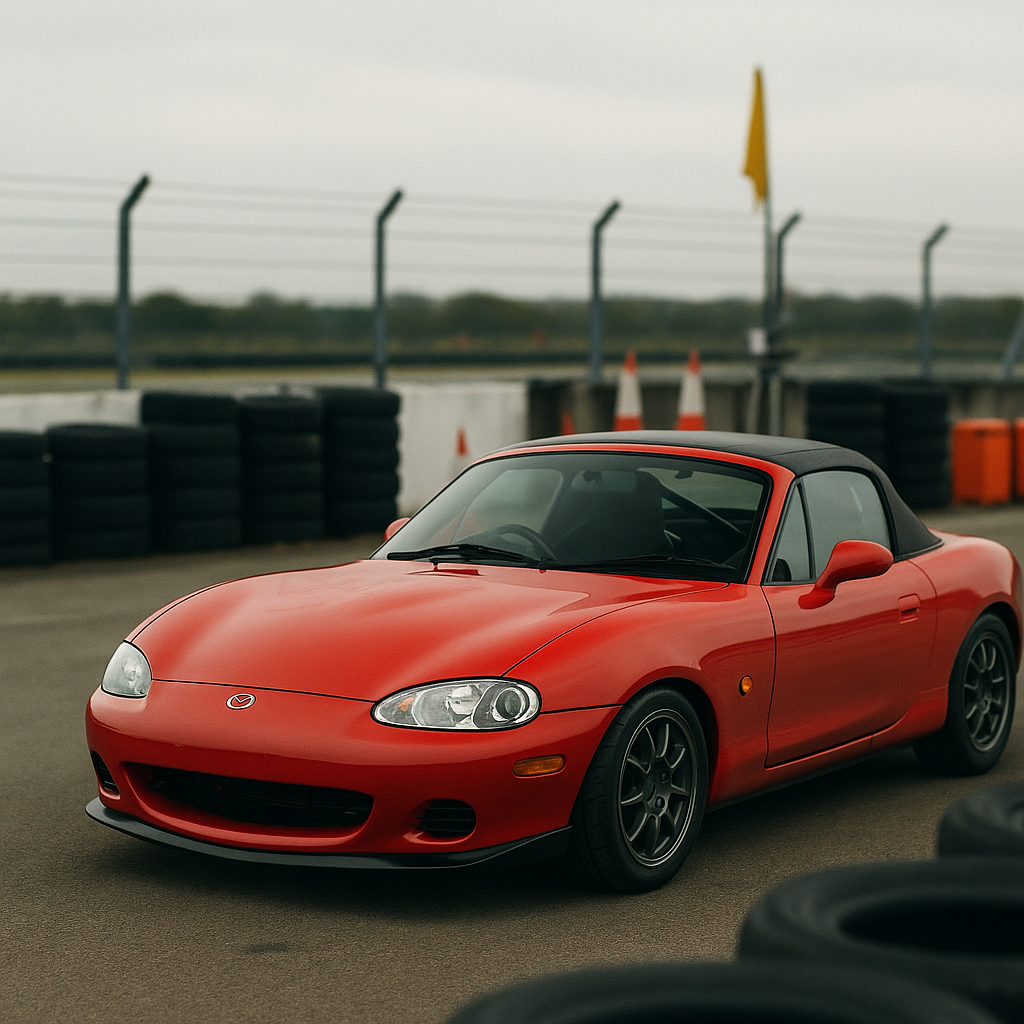
    Budget track day car build 2026 - red Mazda MX-5 in UK circuit paddock ready for a track day
    Budget track day car build 2026 – red Mazda MX-5 in UK circuit paddock ready for a track day

    Choosing Your Donor Car: The Best Budget Track Day Platforms in 2026

    The donor car is everything. Get this wrong and you’re fighting an uphill battle from day one. Get it right and the car does half the work for you. Here’s what I’d be looking at in 2026’s market.

    Mazda MX-5 (NA or NB)

    The eternal answer. Pre-2006 MX-5s are everywhere, parts are dirt cheap, the chassis balance is genuinely excellent, and the community knowledge is encyclopaedic. A tidy NA or NB can be sourced for £1,500 to £2,500. Rust is the enemy, so inspect the sills, floor, and rear arches with a magnet and a screwdriver. Everything else is fixable on the cheap.

    BMW E36 and E46

    Rear-wheel drive, naturally aspirated straight-six options, and a parts supply that’s essentially infinite. An E36 318i or 323i can be had for under £1,500. The E46 318i is slightly newer and sits in the £1,500 to £2,500 bracket for a solid example. Both platforms have massive aftermarket support and a huge track day community in the UK. Cooling is the weak point on both, so budget for a coolant flush and thermostat replacement immediately.

    Honda Civic EP3 Type R or EM2

    If front-wheel drive is your thing, the EP3 is a cracker. K20 engine, proper limited-slip differential from the factory on the Type R, and a chassis that rewards commitment. Finding a clean one takes patience but they’re out there between £2,500 and £4,000. The non-Type R EP3 and EM2 Civics are even cheaper and bolt-on Type R parts are plentiful.

    Renault Clio 172 and 182

    Possibly the best value-per-lap car you can buy in Britain right now. The 2.0 naturally aspirated engine is strong, the chassis is properly rewarding, and there’s an enormous one-make racing series keeping parts supply healthy. Budget £1,500 to £3,000 for a solid base car.

    Setting a Realistic Budget

    For a proper budget track day car build in 2026, I’d split the money like this. Assume a total spend of around £4,500 to £5,000.

    • Donor car: £1,500 to £2,500
    • Safety equipment (cage/harness/extinguisher/seats): £500 to £1,000
    • Brake consumables and fluid: £200 to £400
    • Tyres: £300 to £600 for a second-hand set on suitable rims
    • Suspension refresh: £200 to £500
    • Cooling and fluids: £100 to £200
    • Miscellaneous spares and tools: £300

    If you’re mechanically capable of doing your own prep, the labour savings are enormous. Even basic tasks like brake pad changes, fluid flushes, and fitting coilovers yourself can save £500 to £1,000 over a season.

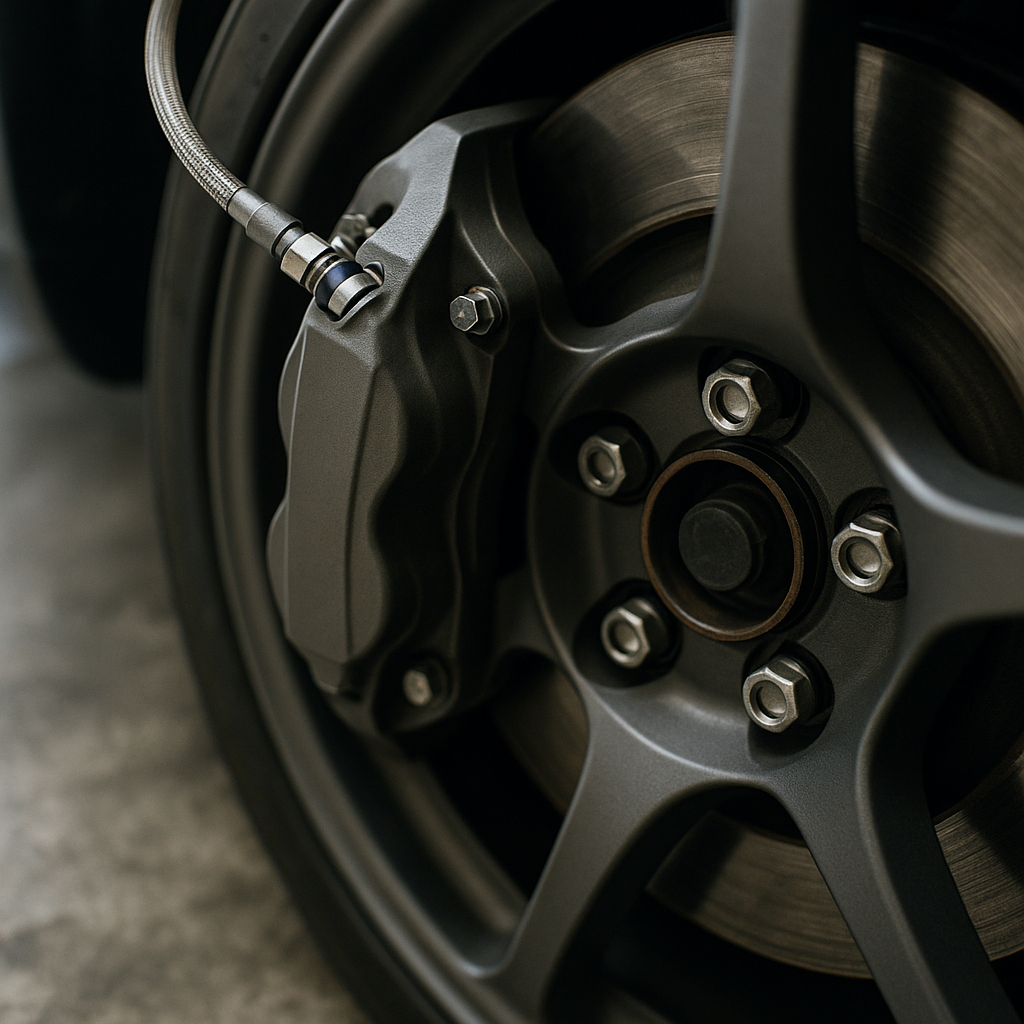
    Braided brake lines and uprated calipers fitted during a budget track day car build
    Braided brake lines and uprated calipers fitted during a budget track day car build

    The Most Cost-Effective Upgrades to Do First

    Performance upgrades come last. Safety and mechanical reliability come first. Every time. Here’s the order of priority for any budget track day car build.

    Brakes: The Non-Negotiable Starting Point

    Standard road brake pads will fade to nothing on circuit. Uprated pads from Mintex, EBC, or Ferodo are available from around £50 to £100 per axle for most popular platforms. Braided brake lines are worth adding at around £80 to £120 for a full set. Switch to proper track or race-spec brake fluid, such as Motul RBF 660 or similar; your road-spec fluid will boil within three or four laps in high-ambient conditions. This is genuinely life-safety stuff, not enthusiast fluff.

    Tyres: Grip You Can Feel

    You don’t need semi-slicks on a budget. A part-worn set of Toyo Proxes TR1 or Hankook RS4 tyres on a spare set of steel rims will transform your experience and separate your track rubber from your road car. Budget around £300 for a decent used set. Check the UK government’s vehicle approval guidance if you’re unsure about tyre spec and legality for road use between events.

    Suspension Refresh

    Worn bushes and tired dampers will make even a great chassis feel sloppy and unpredictable. Before you spend a penny on performance suspension, replace any worn components with standard-spec parts. On an MX-5 or E36 this costs very little. If the car’s tight mechanically, standard-height Bilstein B8s or a used set of coilovers from a reputable brand like BC Racing or Tein will transform the handling without costing a fortune. Check Maxx Directory for performance part suppliers who stock budget-friendly options.

    Cooling System

    Cars work much harder on circuit than they ever do on the road. A full coolant flush, new thermostat, and a check of all hoses costs almost nothing. If the car runs warm on the road, address it before you go anywhere near a circuit. A blown head gasket mid-session is a day-ender and a wallet-destroyer.

    Safety Prep

    Most UK track day organisers operate under MSUK guidelines, and noise limits (typically 98dB or 105dB drive-by) apply at most venues. A basic roll cage is not always mandatory for entry-level novice days, but a good bucket seat and four-point harness dramatically improve both safety and feel behind the wheel. A small fire extinguisher mounted to the roll cage or transmission tunnel is cheap peace of mind. Helmet requirements vary by organiser, so always check the specific event regs.

    Running Costs: What to Expect on the Day

    Track day hire fees at UK circuits vary considerably. A day at Brands Hatch Indy can cost anywhere from £175 to £250 depending on the organiser. Thruxton and Donington tend to sit in similar territory. Fuel consumption on circuit is significantly higher than road driving; expect somewhere between 15 and 22 MPG depending on how hard you’re driving and the circuit layout. A full tank before you leave the house and a spare 20-litre jerry can is sensible planning.

    Budget for brake pad wear, especially in the first season while you’re learning your braking points. If you’re on braided lines and proper fluid you’ll be fine, but keep a spare set of pads in the boot. Tyres will last longer than you think if you’re not on the ragged edge every lap, but monitor them at every session break.

    Final Thoughts on the Budget Build

    The beauty of a proper budget track day car build in 2026 is that you’re forced to prioritise. You can’t throw money at problems, so you learn to set up what you’ve got. The fastest drivers I’ve seen at club-level days are often in the cheapest cars, because they’ve spent time learning rather than upgrading. A well-sorted Clio 172 on decent rubber will humble a lot of new Porsches driven by people who bought the car but never learnt to trail-brake properly.

    Start with a sound car, make it safe, make it reliable, and then learn to exploit what it can do. The upgrades can come later. The experience starts the moment you leave the pit lane.

    Frequently Asked Questions

    What is the cheapest car to build into a track day car in the UK?

    The Mazda MX-5 NA or NB generation is consistently one of the cheapest and most effective track day platforms in the UK, with solid examples available for £1,500 to £2,500. Renault Clio 172s and Honda Civic EP3s are also excellent options in a similar price bracket with strong parts availability.

    Do I need a roll cage for a track day in the UK?

    Not always. Most UK track day organisers running novice or open-pit-lane sessions do not mandate a roll cage for standard road cars. However, requirements vary by organiser and venue, so always check the specific event regulations before attending. A harness and bucket seat are still strongly recommended for safety and driving confidence.

    How much does a budget track day car build cost in 2026?

    A realistic all-in budget for a sorted, safe track day build in 2026 is between £4,000 and £5,500 in the UK. This covers a decent donor car, safety gear, brakes, tyres, and suspension refresh. If you can do your own mechanical work, you can come in notably cheaper.

    Can I drive my track day car to and from the circuit?

    Yes, if the car is road-registered, taxed, MOT’d, and insured. Many budget builders run their car to the circuit, swap to track tyres and remove number plates, then swap back at the end of the day. Check your insurance policy carefully, as standard policies often exclude track use and you may need separate track day insurance.

    What tyres should I use on a budget track day car?

    For a budget build, a part-worn set of performance road tyres such as Toyo Proxes TR1 or Hankook RS4 on a spare set of rims is a cost-effective starting point. Full semi-slicks are unnecessary until you’re genuinely pushing the limits of grip, and they wear quickly in the hands of a developing driver.

  • Toyota GR86 vs Mazda MX-5: Which Pure Sports Car Wins in 2026?

    Toyota GR86 vs Mazda MX-5: Which Pure Sports Car Wins in 2026?

    Right. Two cars. Both built with one job in mind: making the driver feel alive. In a market drowning in crossovers, turbocharged hatches, and EVs trying very hard to convince you they have a soul, the Toyota GR86 and the Mazda MX-5 stand apart as genuine believers. The GR86 vs MX-5 Miata 2026 debate has been rumbling around forums, track day car parks, and late-night garage sessions for a while now, and honestly, it’s one of the few head-to-heads that actually matters. So let’s settle it properly.

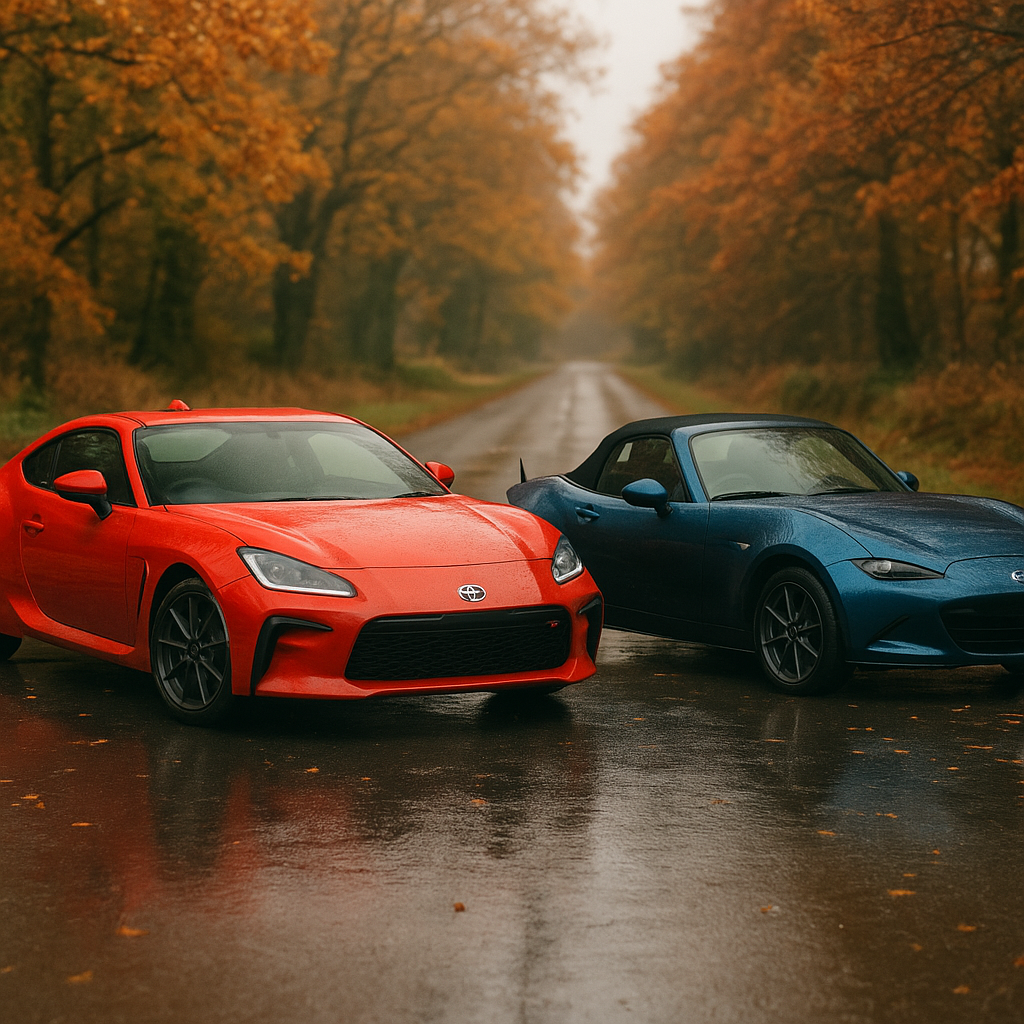
    Toyota GR86 and Mazda MX-5 side by side on a British country road — GR86 vs MX-5 Miata 2026 comparison
    Toyota GR86 and Mazda MX-5 side by side on a British country road — GR86 vs MX-5 Miata 2026 comparison

    What Are We Actually Comparing Here?

    The GR86 is a front-engined, rear-wheel-drive coupe with a 2.4-litre naturally aspirated flat-four producing around 234 bhp. It seats four, technically, though anyone sitting in the back will need to think carefully about their relationship with their knees. The MX-5 — in its RF or Roadster form — runs a 1.5-litre or 2.0-litre naturally aspirated four-cylinder, making between 132 and 184 bhp depending on spec. Two seats. A fabric or retractable hardtop. And a reputation that stretches back to 1989. These aren’t similar cars in spec. They’re similar in philosophy, which is a much more interesting comparison.

    Handling: The Part That Actually Matters

    Both cars are rear-wheel drive and both are deliberately kept light. The GR86 tips the scales at around 1,270 kg. The MX-5 Roadster is closer to 1,000 kg in its lightest form, which is almost comical by modern standards. That weight difference is everything. The MX-5 rotates with a kind of instant, eager responsiveness that’s genuinely hard to replicate at any price. Flick it into a corner and it obeys immediately, not aggressively, but with this fluid, playful balance that makes you want to push harder every lap.

    The GR86 is more planted. Its wider track, stiffer chassis, and extra power mean it rewards a different style of driving. You can trail-brake into a corner, get the rear stepping, and manage the slide with more precision because you’ve got more car to work with. On track, the GR86 is quicker. Around the Silverstone National circuit, experienced drivers are lapping the GR86 a few seconds faster than an equivalent MX-5. But on a tight, technical B-road? The MX-5 can be faster and is almost certainly more entertaining. It’s a proper dance partner.

    Daily Usability: Can You Actually Live With These?

    This one’s more nuanced than people give it credit for. The GR86 wins clearly on practicality. Boot space runs to about 237 litres, there’s a back seat for short trips, and the driving position is relaxed enough that motorway miles don’t destroy you. Daily driving a GR86 in the UK is entirely doable. The ride is firm but not punishing, the cabin noise is acceptable, and you can fit a weekend bag and a passenger without negotiating.

    The MX-5 in Roadster form has a 130-litre boot. You’ll need to pack light for any trip longer than a night. Visibility with the hood up is cosy rather than spacious, and overtaking on dual carriageways requires a bit more commitment when you’re working with 132 bhp from the 1.5. That said, the RF version partly fixes the practicality gripes whilst keeping the open-air experience largely intact. If you’re commuting in the south of England where traffic keeps average speeds low, the MX-5 can feel absolutely fine. If you’re covering 60 miles a day on A-roads and motorways, the GR86 is the better daily.

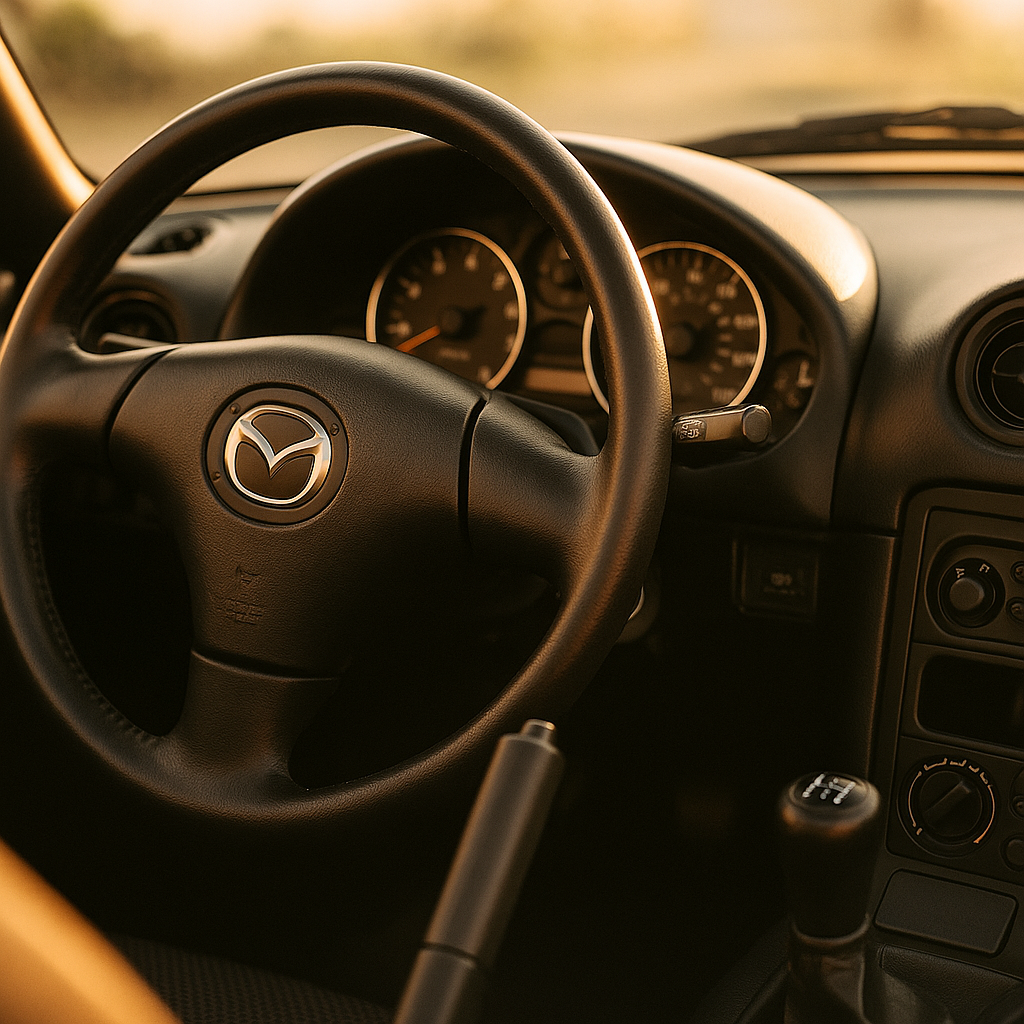
    Mazda MX-5 interior close-up showing driver-focused cockpit relevant to GR86 vs MX-5 Miata 2026 comparison
    Mazda MX-5 interior close-up showing driver-focused cockpit relevant to GR86 vs MX-5 Miata 2026 comparison

    Modification Potential: Which One Builds Better?

    This is where things get serious. Both cars have healthy scenes, but they’re different in character. The GR86 shares architecture with the Subaru BRZ, and the combined platform has spawned an enormous aftermarket. You can run Cusco coilovers, a full TRD aero kit, a Radium catch can setup, and eventually an engine swap if you’re that way inclined. The FA24 engine in the current GR86 doesn’t respond brilliantly to basic bolt-ons alone, but with a supercharger kit (Edelbrock or Harrop are popular choices), you can push north of 300 bhp reliably. The UK scene for GR86 and BRZ builds is active. Events like Japfest at Donington regularly feature some stunning examples.

    The MX-5 scene is different. It’s older, deeper, and arguably more creative. The ND platform (current generation) supports everything from mild suspension upgrades to full roll cage, hardtop, and track-only conversions. There’s a thriving one-make racing series, the Motorsport UK-affiliated Mazda MX-5 SuperCup, that keeps the aftermarket sharp and the knowledge base constantly growing. Turbocharged MX-5 builds exist and can make big numbers, though the gearbox and axles start complaining around 250 bhp if you’re not careful. For most builders, the MX-5 sweet spot is a well-sorted, naturally aspirated machine with aero, coilovers, and a limited-slip differential. And that car, done right, is a weapon.

    If you want to explore what other enthusiasts are building or find suppliers for your own project, Maxx Directory is worth a browse for UK-based performance parts contacts and specialist services across both platforms.

    GR86 vs MX-5 Miata 2026: Which Offers Better Value?

    New, the GR86 sits at around £33,000 to £35,000 in the UK depending on spec. The MX-5 starts at about £25,000 for a 1.5-litre Sport and climbs to around £33,000 for a fully-specced RF Sport Tech. So they overlap at the top of the MX-5 range, but the entry point is meaningfully different. Used, the GR86 holds its value better at the moment, partly because supply is tight and the car is genuinely desirable. An MX-5 depreciates faster off the forecourt, which makes the used market excellent value for buyers.

    Running costs? Both are frugal by sports car standards. The GR86 returns around 32 to 35 MPG on a sensible run. The MX-5 1.5 can edge past 40 MPG if you’re not trying hard. Insurance groupings sit in the mid-30s for both, which is manageable for anyone with a few years of no-claims. Neither requires exotic servicing, though main dealer labour isn’t cheap for either brand. Independent specialists exist for both, and that community knowledge is part of what makes owning these cars genuinely good fun rather than just financially terrifying.

    So Which One Should You Buy?

    Here’s my honest take: if you want a car that’s sharper on track, better as a daily, and has more power to grow into, the GR86 is the answer. It’s the more complete sports car in 2026. But if you want the purer driving experience, the car that makes every road feel like a back-road stage in a Welsh rally, the one that strips everything back and makes 184 bhp feel like plenty, the MX-5 wins. It’s not the fastest. It’s not the most practical. But it might be the best sports car in the world for the money, and that’s a sentence I’ll stand behind.

    The GR86 vs MX-5 Miata 2026 debate doesn’t have one right answer. It has two right answers depending on who you are. And that’s exactly why both of these cars deserve to exist, to thrive, and to be driven with the windows down and the traction control switched off.

    Frequently Asked Questions

    Is the GR86 faster than the MX-5 on a track day?

    Yes, generally. The GR86’s extra power and wider chassis give it a lap time advantage on most circuits. However, the MX-5’s lighter weight and instinctive handling make it feel faster in many real-world road situations, particularly on tight, technical routes.

    Can you use a Mazda MX-5 or Toyota GR86 as a daily driver in the UK?

    Both can be used daily, but the GR86 is the more practical choice with its four seats and larger 237-litre boot. The MX-5’s 130-litre boot and two-seat layout make it trickier for everyday use, though many owners manage perfectly well with careful packing.

    Which is cheaper to modify, the GR86 or the MX-5?

    The MX-5 has a longer aftermarket history and a wider range of affordable parts, making entry-level builds cheaper. The GR86 has a strong aftermarket too, but forced induction kits that meaningfully raise power are a significant investment. Both reward sensible, staged builds.

    How do the GR86 and MX-5 compare for insurance costs in the UK?

    Both sit in insurance groups in the mid-30s, which is reasonable for dedicated sports cars. Exact premiums depend on your age, postcode, and no-claims history, but neither is prohibitively expensive to insure for experienced drivers.

    Which holds its value better, the GR86 or the MX-5?

    Currently, the GR86 retains value more strongly due to limited supply and strong demand. Used MX-5s depreciate faster off new, which makes them excellent value on the second-hand market for buyers looking for an affordable entry into rear-wheel-drive sports car ownership.