Category: Highlight

  • Someone turned a Porsche Carrera GT into the ultimate track car, and now it can be yours

    The Porsche Carrera GT is a pretty extreme vehicle, but for one original owner there was additional performance required.

    The Carrera GT you see here, a 2005 example, was originally ordered by a customer from Belgium who wanted to take it racing, and thus fulfil Porsche’s original goal for the engine and platform that went into the Carrera GT (they were originally developed for Le Mans).

    As a result, he ended up commissioning a firm by the name of GPR Racing to turn his supercar into a race car. The result is the Carrera GT-R you see here, and it’s currently listed for sale by expert restorer Mechatronik for 849,000 euros (approximately $1,037,180).
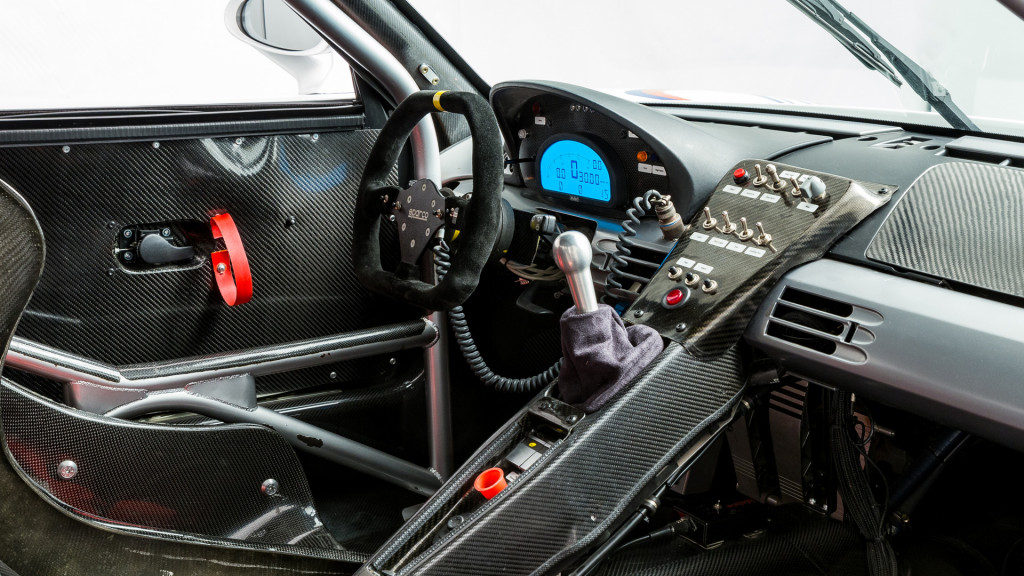
    Porsche Carrera GT-R by GPR Racing

    Porsche Carrera GT-R by GPR Racing

    Incredibly, it only has 2,000 kilometers (approximately 1,242 miles) on its odometer. It never ended up being used as a race car as there was no series where it could be homologated, even with Balance of Performance rules. According to the listing, the car is making 650 horsepower, up from the stock Carrera GT’s 603 hp.

    The modifications made to the car are extensive and allegedly cost over 220,000 euros. The list includes a new engine management system from Motec, a custom pushrod suspension system including new wishbones, and brakes from AP Racing. There’s also an air jack system, BBS magnesium wheels, and a stripped out interior where everything that needed to stay was replaced with lighter carbon-fiber elements. A roll cage and fire suppression system have also been installed.

    You can find the listing here.
    Source

  • Here’s how the ultimate car detailing garage was built

    Ammo NYC founder Larry Kosilla brings an obsessive attention to detail to everything he does, including the space where he works on cars. After outgrowing his home garage, Kosilla set out to build the ultimate detailing garage, a process that took about a year.

    Kosilla started with an existing building, working with an architect on an extensive remodeling. The building is divided into three areas, including garage bays on the ground level, an office, and an editing suite for videos shot in the garage.

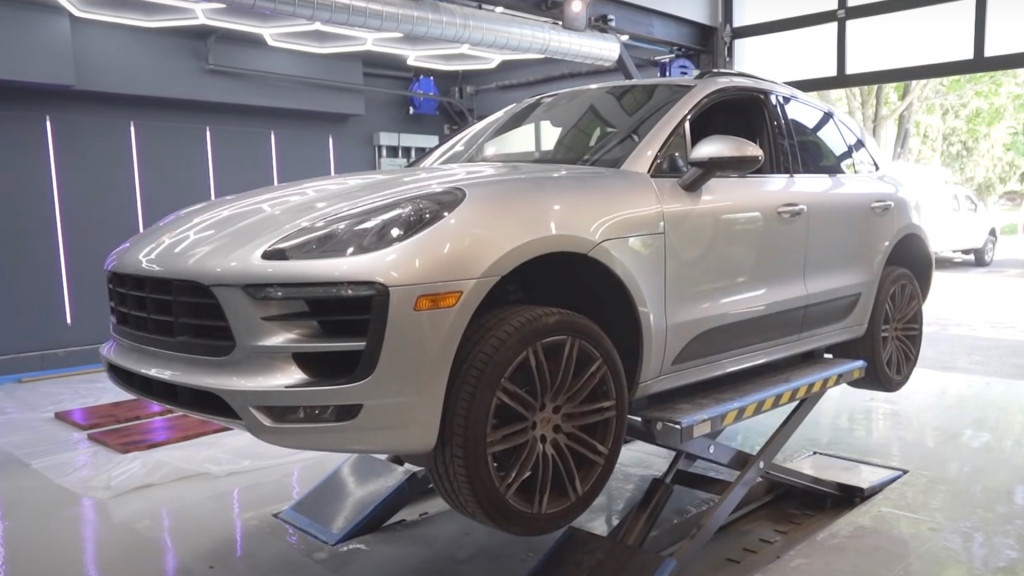
    To convert the ground level from its previous function as an art studio to a garage, core samples were taken to ensure the concrete could support heavy vehicle lifts. The lift locations were then mocked up with cardboard, and cuts were made in the appropriate places. Pipes were also installed in the floor for the lifts’ hydraulics, and in the walls for a central vacuuming system that can be used for cars in the garage bays, or to clean upstairs spaces.

    Ammo NYC detailing garage

    Ammo NYC detailing garage

    Kosilla also outfitted the garage with custom-built Moduline cabinets and Prevost air lines, the latter featuring a snazzy blue enamel coating.

    The garage floor got an epoxy coating with a UV protectant and an additional layer to “knock down” the gloss finish, as powerful lights were also installed in the garage bays that could damage the finish, or produce excess glare that would be picked up by camera lenses. Walls, meanwhile, were painted gray to keep the focus on the cars.

    Watch the full video for complete details on this build. It’s part car video, part home-improvement how-to.

    Source

  • Rimac shows how electric cars are tested for electromagnetic emissions with C_Two hypercar

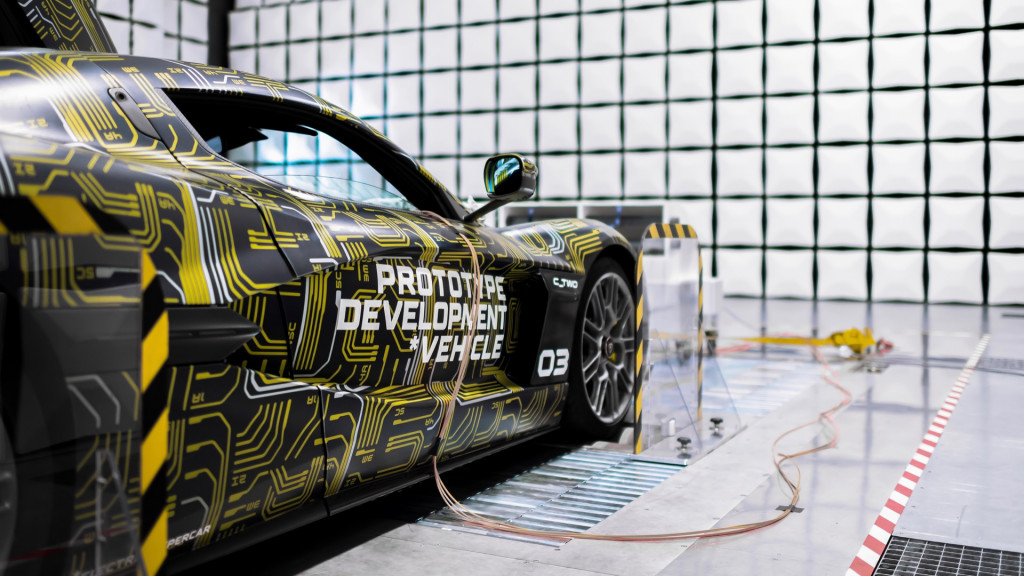
    The Rimac C_Two electric hypercar is undergoing homologation ahead of a planned start of deliveries in 2021. Part of that process involves testing for electromagnetic emissions, the Croatian company explained in a short video.

    All electronics—including those used in cars—produce some amount of electromagnetic emissions. Those emissions can also interfere with electronics.

    That means if a car’s emissions are too high, traffic lights, speed cameras, and cell communications could be disrupted, while if a car’s onboard systems aren’t properly shielded, outside emissions could interfere with things like air conditioning or the radio.

    To prevent either issue, the European Union requires electromagnetic-emissions testing in order for cars to be homologated for sale, Rimac said, adding that electric cars produce a much higher level of emissions than internal-combustion vehicles. That’s to be expected, as electric motors are a major potential source of electromagnetic emissions.

    Rimac C_Two electromagnetic-emissions testing

    Rimac C_Two electromagnetic-emissions testing

    Under the ECE R10 testing standard, cars are placed in a semi-anechoic chamber, which is sealed off from outside electromagnetic emissions to ensure accurate test results. Cars are then driven at specific speeds on a dynamometer, while subjected to radiation of between 20 MHz and 20 GHz.

    With the radiation bombardment underway, accessories like air conditioning, lights, and windshield wipers are turned on to ensure they work properly. In the case of the C_Two, different drive modes needed to be tested as well.

    Once the initial test is completed, Rimac completely disassembles its prototype cars, makes any necessary tweaks, reassembles the cars, and runs the test again. It’s all part of the process of putting a new car on sale—even a 1,914-horsepower electric hypercar with a very limited production run.

    When it unveiled the C_Two in concept form at the 2018 Geneva International Motor Show, Rimac said it would build just 150 cars. Rimac views itself more as a tech firm than a maker of cars, and has since attracted investments from Hyundai and Porsche that will likely see its technology incorporated into their cars.

    Source