Category: Highlight

  • Singer builds wild Safari-style 911 blending modern and classic goodness

    Singer Vehicle Design is world renowned for its modified Porsche 911s, but despite already having a stellar reputation in the 911 tuning scene, the California company never ceases to push the boundaries.

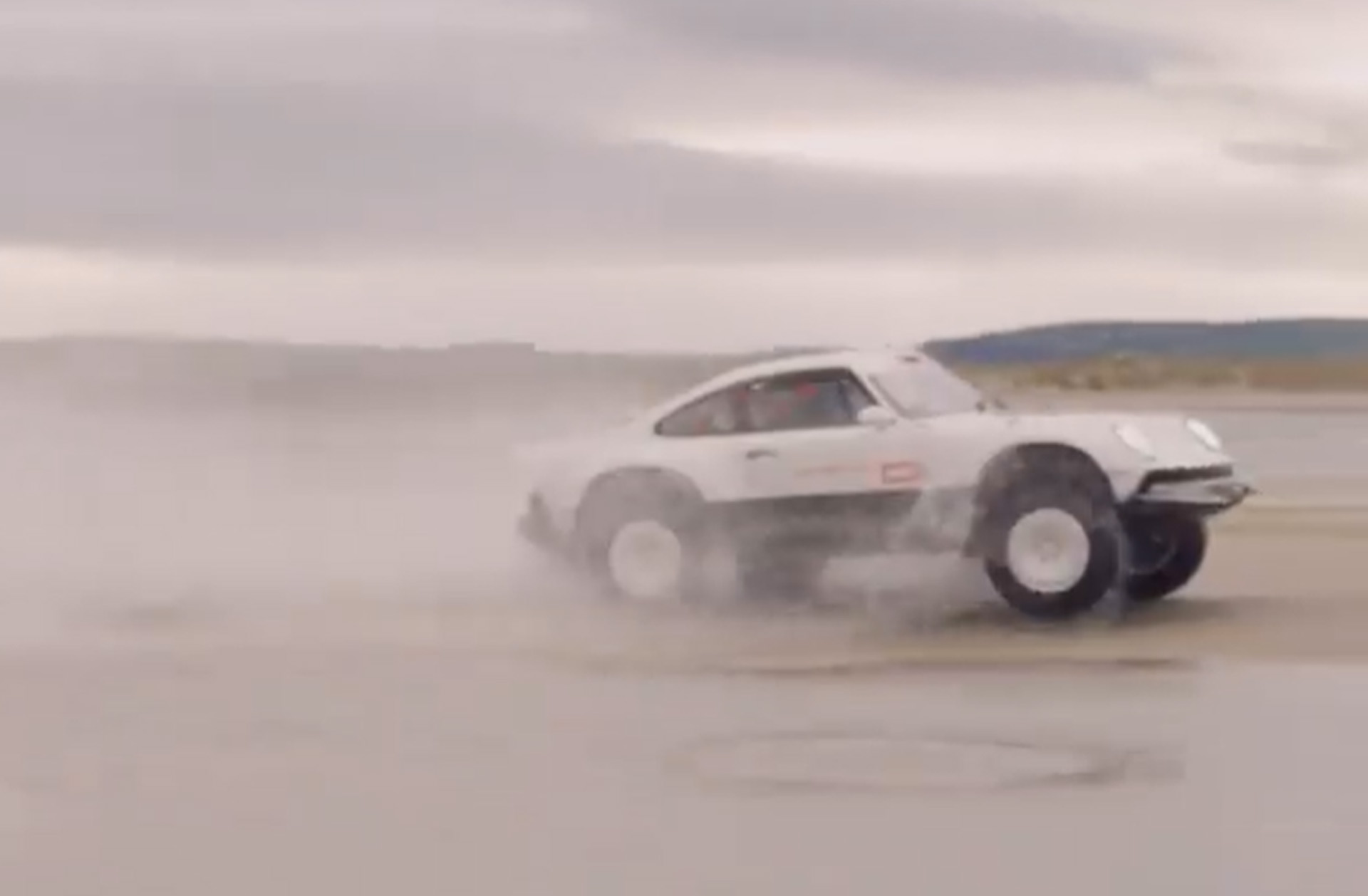
    Case in point is Singer’s latest reimagined 911, a wild off-roader similar in ethos to the Porsche 911 SC Safari rally car of the 1970s.

    It’s called the Singer All-Terrain Competition Study (ACS), and it’s not just a garage queen. In fact, its owner commissioned it to go racing, making it Singer’s first competition-ready vehicle. Helping in this department was the United Kingdom’s Tuthill Porsche, an expert in turning classic 911s into rally machines.

    The ACS is based on a 964-generation 911 but features elements, such as the wide rear wing, that recall the iconic 959 rally cars that took on and won the Dakar Rally in the 1980s. Its engine is a 3.6-liter twin-turbocharged flat-6 that’s air-cooled and generating around 450 horsepower. It isn’t clear what the transmission is but we know drive is to all four wheels.

    From the video, we can see the interior has been fitted with a digital instrument cluster that flashes red to indicate shift points.

    Singer said more details on the ACS will be revealed in the coming days, so stay tuned.

    There’s been a lot of interest in Safari-style 911s in recent years, with Lehman Keen seeming to have kicked off the modern trend with the launch of his Keen Project Safari conversion program in 2013. Since then famous Porsche tuners Gemballa and Ruf have also teased their own designs, and even Porsche looks to be readying its own entry.

    Source

  • After unveiling own platform, Foxconn invests in troubled EV startup Byton

    Taiwanese company Foxconn has entered a deal with Chinese electric-vehicle startup Byton and the Chinese government’s Nanjing Economic and Technological Development Zone, which could see it to take a more direct role in car manufacturing.

    The parties will attempt to get customer examples of Byton’s M-Byte battery-electric SUV into production by the first quarter of 2022. Byton started pre-production of the M-Byte last April but ran into cash troubles by July and was forced to cease operations.

    In 2018, Byton said it planned to offer the M-Byte in the United States and said the vehicle would cost about $45,000. It isn’t clear if those plans remain, however.

    Citing a person familiar with the new deal, Bloomberg reported Monday that Foxconn will invest around $200 million in Byton, as well as supply its expertise in manufacturing, procurement and operation management.

    Foxconn is already an investor of some rival Chinese EV startups, including Xpeng, and the company is looking at potentially more collaborations in China, Bloomberg reported. In early 2020, the company also announced plans for a joint venture with Fiat Chrysler Automobiles relating to the production of EVs in China.

    Foxconn is best known as being a contract manufacturer of electronic goods for clients such as Apple, Amazon, Microsoft and Sony, but more recently the company has expanded to manufacturing electronic components for cars. Last October, the company unveiled its own modular EV platform which it said it would license to other firms.

    Source

  • Deep dive: The Buick Grand Nationals from “Fast & Furious”

    “Fast & Furious”—the fourth installment in the franchise—is noteworthy mostly for reuniting most of the original cast from the first movie. But it also gave an iconic muscle car some long-overdue screen time. This is the story of how a Buck Grand National ended up on screen—as told by Craig Lieberman, a technical advisor on many of the movies in the franchise.

    The Grand National only appears in the opening scene of the 2009 hit, driven by Vin Diesel’s Dominic Toretto during an attempted heist of a gasoline-tanker land train. On screen, the car is shown driving in reverse at speed for an extended period of time—not something any production car can do.

    To make the scene work, two cars (a 1985 model and a 1986 model) had engines mounted in their trunks, with rear-facing steering wheels, pedals, and dashboards behind the front passenger’s seats. Clever camera angles were used to hide the literal backseat driver, but in at least one shot it’s still apparent that the rear wheels are steering, rather than the fronts, Lieberman noted.

    1986 Buick Grand National from

    1986 Buick Grand National from

    Eight cars were used for filming, including the two reverse-driving ones. All were real Grand Nationals from various model years. One car had its 3.8-liter turbocharged V-6 replaced with a V-8 in order to improve acceleration off the line, Lieberman said. The 1980s-era stock turbo setup was prone to period-typical turbo lag.

    All cars got modified suspension for a lower stance, riding about 3.0 inches lower than stock, Lieberman said. Brakes were also modified to make the cars easier to slide.

    As of mid-2020, most of the cars still survive, according to Lieberman, mostly in museums or private collections.

    Source