
With stricter emission standards and the rise of electric powertrains, it might seem like the internal-combustion engine’s days are numbered. But Engineering Explained host Jason Fenske believes internal combustion will live on—thanks to new technologies.
Fenske is pretty optimistic about the longevity of the internal-combustion engine, both because of the inherent energy-density advantage of gasoline over batteries, and because of efficiency-boosting technologies. In this video, he takes a closer look at some of those technologies.
One option is homogeneous charge compression ignition (HCCI). An HCCI engine burns gasoline, but uses compression ignition—like a diesel engine—rather than a spark plug. In theory, that provides the efficiency of a diesel, without the soot and high levels of nitrogen-oxide (NOx) emissions. However, it requires much finer control of the intake temperature, as well as the timing of ignition.
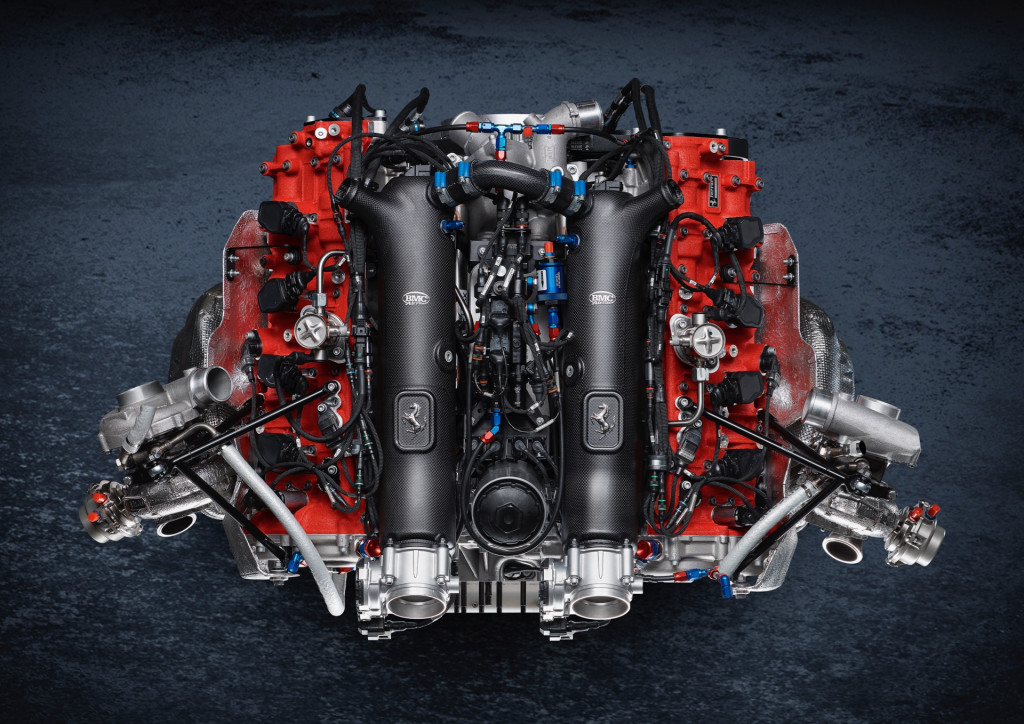
Ferrari 488 GT Modificata
The next option is pre-mix charge compression ignition (PCCI). Fenske described it as a “middle ground” between diesel-engine compression ignition and HCCI, because it injects some fuel early to let it mix with air in the combustion chamber, and then injecting more fuel later. That provides more control over ignition timing than HCCI, but can also create pockets of unburned hydrocarbon byproducts, which is bad for emissions. PCCI engines also have a fairly narrow operating range, with high potential for knock under full throttle, Fenske said.
Finally, we have reactivity-controlled compression ignition (RCCI). This uses two fuels: a low-reactivity fuel (like gasoline) that is port injected, and a high-reactivity fuel (like diesel) that is direct injected. “Reactivity” refers to a fuel’s tendency to ignite under compression. This method leads to big efficiency gains, but still with fairly high emissions, Fenske said. The complexity of using two fuels could also make it a non-starter commercially.
These alternative internal-combustion engine designs may not be ready for prime time, but automakers are looking to squeeze every ounce of efficiency out of today’s gasoline engines using more mature technologies like direct injection. Fenske also covered another possible future internal-combustion technology—entry ignition—in another video, which is also worth checking out.


