
Right, let’s talk about building a proper track weapon without remortgaging the house. A budget track day car build in 2026 is absolutely achievable if you approach it with your head screwed on. The UK second-hand market is swimming in viable donor cars right now, and with a bit of mechanical nous and the right priorities, you can be lapping Blyton Park or Anglesey Circuit by the end of the season for well under £5,000 all-in. I’ve seen people spend more on a set of coilovers than their entire car is worth. Don’t be that person.
This isn’t about chasing lap records on day one. It’s about getting on circuit safely, learning the car underneath you, and building a platform that can grow with your skills. That’s the mindset you need before you spend a single penny.
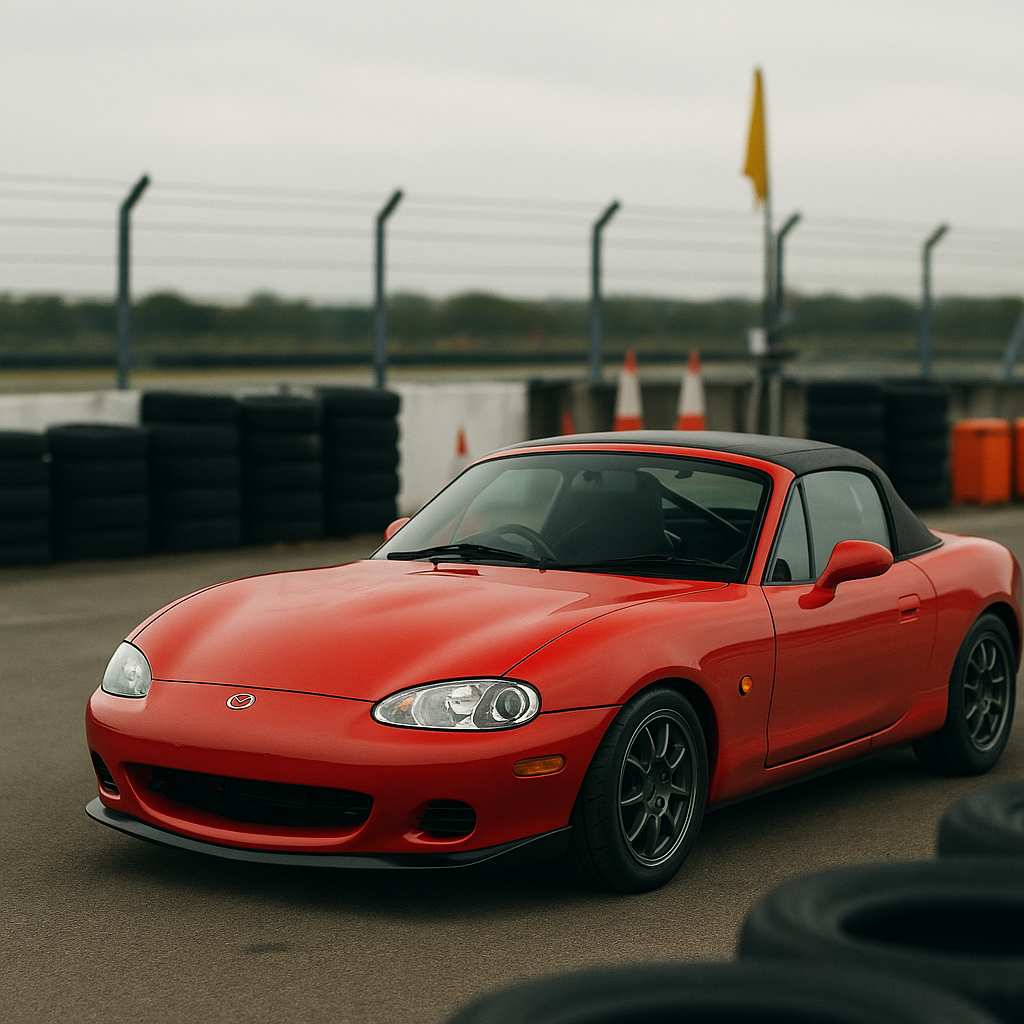
Choosing Your Donor Car: The Best Budget Track Day Platforms in 2026
The donor car is everything. Get this wrong and you’re fighting an uphill battle from day one. Get it right and the car does half the work for you. Here’s what I’d be looking at in 2026’s market.
Mazda MX-5 (NA or NB)
The eternal answer. Pre-2006 MX-5s are everywhere, parts are dirt cheap, the chassis balance is genuinely excellent, and the community knowledge is encyclopaedic. A tidy NA or NB can be sourced for £1,500 to £2,500. Rust is the enemy, so inspect the sills, floor, and rear arches with a magnet and a screwdriver. Everything else is fixable on the cheap.
BMW E36 and E46
Rear-wheel drive, naturally aspirated straight-six options, and a parts supply that’s essentially infinite. An E36 318i or 323i can be had for under £1,500. The E46 318i is slightly newer and sits in the £1,500 to £2,500 bracket for a solid example. Both platforms have massive aftermarket support and a huge track day community in the UK. Cooling is the weak point on both, so budget for a coolant flush and thermostat replacement immediately.
Honda Civic EP3 Type R or EM2
If front-wheel drive is your thing, the EP3 is a cracker. K20 engine, proper limited-slip differential from the factory on the Type R, and a chassis that rewards commitment. Finding a clean one takes patience but they’re out there between £2,500 and £4,000. The non-Type R EP3 and EM2 Civics are even cheaper and bolt-on Type R parts are plentiful.
Renault Clio 172 and 182
Possibly the best value-per-lap car you can buy in Britain right now. The 2.0 naturally aspirated engine is strong, the chassis is properly rewarding, and there’s an enormous one-make racing series keeping parts supply healthy. Budget £1,500 to £3,000 for a solid base car.
Setting a Realistic Budget
For a proper budget track day car build in 2026, I’d split the money like this. Assume a total spend of around £4,500 to £5,000.
- Donor car: £1,500 to £2,500
- Safety equipment (cage/harness/extinguisher/seats): £500 to £1,000
- Brake consumables and fluid: £200 to £400
- Tyres: £300 to £600 for a second-hand set on suitable rims
- Suspension refresh: £200 to £500
- Cooling and fluids: £100 to £200
- Miscellaneous spares and tools: £300
If you’re mechanically capable of doing your own prep, the labour savings are enormous. Even basic tasks like brake pad changes, fluid flushes, and fitting coilovers yourself can save £500 to £1,000 over a season.
The Most Cost-Effective Upgrades to Do First
Performance upgrades come last. Safety and mechanical reliability come first. Every time. Here’s the order of priority for any budget track day car build.
Brakes: The Non-Negotiable Starting Point
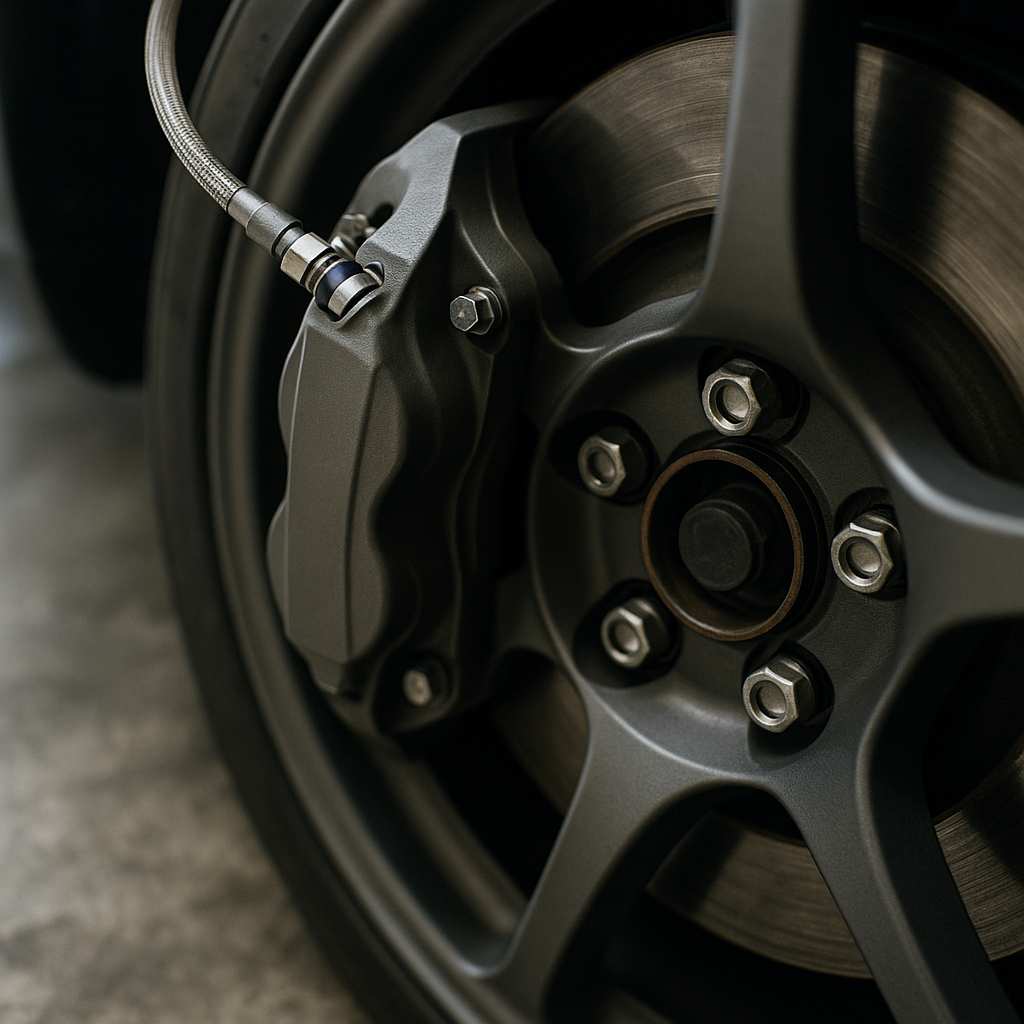
Standard road brake pads will fade to nothing on circuit. Uprated pads from Mintex, EBC, or Ferodo are available from around £50 to £100 per axle for most popular platforms. Braided brake lines are worth adding at around £80 to £120 for a full set. Switch to proper track or race-spec brake fluid, such as Motul RBF 660 or similar; your road-spec fluid will boil within three or four laps in high-ambient conditions. This is genuinely life-safety stuff, not enthusiast fluff.
Tyres: Grip You Can Feel
You don’t need semi-slicks on a budget. A part-worn set of Toyo Proxes TR1 or Hankook RS4 tyres on a spare set of steel rims will transform your experience and separate your track rubber from your road car. Budget around £300 for a decent used set. Check the UK government’s vehicle approval guidance if you’re unsure about tyre spec and legality for road use between events.
Suspension Refresh
Worn bushes and tired dampers will make even a great chassis feel sloppy and unpredictable. Before you spend a penny on performance suspension, replace any worn components with standard-spec parts. On an MX-5 or E36 this costs very little. If the car’s tight mechanically, standard-height Bilstein B8s or a used set of coilovers from a reputable brand like BC Racing or Tein will transform the handling without costing a fortune. Check Maxx Directory for performance part suppliers who stock budget-friendly options.
Cooling System
Cars work much harder on circuit than they ever do on the road. A full coolant flush, new thermostat, and a check of all hoses costs almost nothing. If the car runs warm on the road, address it before you go anywhere near a circuit. A blown head gasket mid-session is a day-ender and a wallet-destroyer.
Safety Prep
Most UK track day organisers operate under MSUK guidelines, and noise limits (typically 98dB or 105dB drive-by) apply at most venues. A basic roll cage is not always mandatory for entry-level novice days, but a good bucket seat and four-point harness dramatically improve both safety and feel behind the wheel. A small fire extinguisher mounted to the roll cage or transmission tunnel is cheap peace of mind. Helmet requirements vary by organiser, so always check the specific event regs.
Running Costs: What to Expect on the Day
Track day hire fees at UK circuits vary considerably. A day at Brands Hatch Indy can cost anywhere from £175 to £250 depending on the organiser. Thruxton and Donington tend to sit in similar territory. Fuel consumption on circuit is significantly higher than road driving; expect somewhere between 15 and 22 MPG depending on how hard you’re driving and the circuit layout. A full tank before you leave the house and a spare 20-litre jerry can is sensible planning.
Budget for brake pad wear, especially in the first season while you’re learning your braking points. If you’re on braided lines and proper fluid you’ll be fine, but keep a spare set of pads in the boot. Tyres will last longer than you think if you’re not on the ragged edge every lap, but monitor them at every session break.
Final Thoughts on the Budget Build
The beauty of a proper budget track day car build in 2026 is that you’re forced to prioritise. You can’t throw money at problems, so you learn to set up what you’ve got. The fastest drivers I’ve seen at club-level days are often in the cheapest cars, because they’ve spent time learning rather than upgrading. A well-sorted Clio 172 on decent rubber will humble a lot of new Porsches driven by people who bought the car but never learnt to trail-brake properly.
Start with a sound car, make it safe, make it reliable, and then learn to exploit what it can do. The upgrades can come later. The experience starts the moment you leave the pit lane.
Frequently Asked Questions
What is the cheapest car to build into a track day car in the UK?
The Mazda MX-5 NA or NB generation is consistently one of the cheapest and most effective track day platforms in the UK, with solid examples available for £1,500 to £2,500. Renault Clio 172s and Honda Civic EP3s are also excellent options in a similar price bracket with strong parts availability.
Do I need a roll cage for a track day in the UK?
Not always. Most UK track day organisers running novice or open-pit-lane sessions do not mandate a roll cage for standard road cars. However, requirements vary by organiser and venue, so always check the specific event regulations before attending. A harness and bucket seat are still strongly recommended for safety and driving confidence.
How much does a budget track day car build cost in 2026?
A realistic all-in budget for a sorted, safe track day build in 2026 is between £4,000 and £5,500 in the UK. This covers a decent donor car, safety gear, brakes, tyres, and suspension refresh. If you can do your own mechanical work, you can come in notably cheaper.
Can I drive my track day car to and from the circuit?
Yes, if the car is road-registered, taxed, MOT’d, and insured. Many budget builders run their car to the circuit, swap to track tyres and remove number plates, then swap back at the end of the day. Check your insurance policy carefully, as standard policies often exclude track use and you may need separate track day insurance.
What tyres should I use on a budget track day car?
For a budget build, a part-worn set of performance road tyres such as Toyo Proxes TR1 or Hankook RS4 on a spare set of rims is a cost-effective starting point. Full semi-slicks are unnecessary until you’re genuinely pushing the limits of grip, and they wear quickly in the hands of a developing driver.