
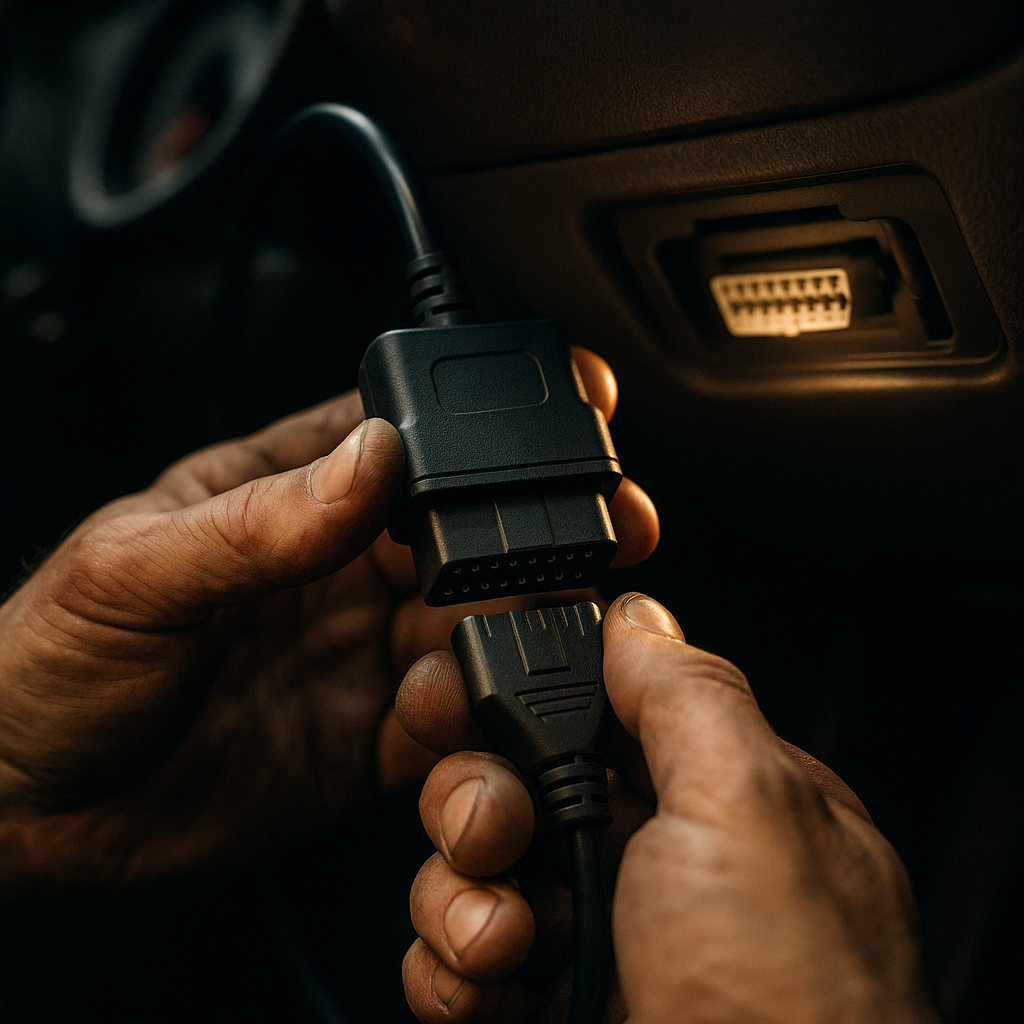
Every car built after 2001 in the UK carries a small secret. Hidden behind a diagnostic port, usually tucked under the dash on the driver’s side, is a window into your engine’s soul. Knowing how to read OBD-II codes is one of those skills that separates drivers who genuinely understand their machines from those who hand over a blank cheque every time a warning light flickers on. And honestly, it is not nearly as intimidating as the acronym suggests.
OBD-II stands for On-Board Diagnostics, second generation. It became mandatory on all petrol cars sold in Europe from 2001 and diesel cars from 2004. The system monitors hundreds of sensors across your drivetrain, emissions system, fuel delivery, and more. When something drifts outside of normal parameters, the ECU logs a Diagnostic Trouble Code, known as a DTC, and often triggers the malfunction indicator lamp on your dashboard. That little engine-shaped light is not your enemy. It is data.
Understanding the Structure of OBD-II Codes
OBD-II codes follow a consistent alphanumeric structure. Once you understand the pattern, you can read a code cold and already have a rough idea of where to look. Every code starts with a letter, followed by four digits.
The opening letter tells you the system involved: P for Powertrain (engine and gearbox), B for Body, C for Chassis, and U for Network or communication faults. The first digit after the letter is either a 0, meaning it is a standardised universal code, or a 1, meaning it is manufacturer-specific. The remaining three digits narrow down the exact fault within that system.
So P0300, for example, breaks down like this: P is powertrain, 0 is universal, 3 points to the ignition system or misfire category, and 00 means random or multiple cylinder misfire detected. Once you have that framework locked in, codes stop looking like gibberish and start looking like a map.
The Most Common OBD-II Codes and What They Actually Mean
There are thousands of possible codes, but a handful show up again and again. These are the ones worth having memorised, or at least bookmarked.
P0171 and P0174 — System Too Lean (Bank 1 and Bank 2). These usually point to a vacuum leak, a faulty mass airflow sensor, or a weak fuel pump. On a modified car running an aftermarket intake, a clogged or dirty MAF sensor is a very common culprit. Clean it before you start replacing expensive parts.
P0300 to P0308 — Misfire Detected. P0300 is a random misfire across multiple cylinders. P0301 through P0308 pinpoint a specific cylinder. Causes range from worn spark plugs and coil packs to a leaking injector or low compression. Start cheap: plugs and coils first.
P0420 — Catalyst System Efficiency Below Threshold (Bank 1). The bane of older cars and a source of much debate on forums. This code means the catalytic converter is not converting exhaust gases efficiently enough. It can also be triggered by a failing downstream lambda sensor, so rule that out before condemning the cat.
P0455 — Large Evaporative Emission System Leak. Often as simple as a loose or cracked fuel filler cap. Worth checking before anything else. A five-minute fix that clears codes all day.
P0011 and P0012 — Camshaft Position Timing Over-Advanced or Retarded. Common on variable valve timing engines, which covers most modern cars. Low or dirty oil is a frequent contributor. Check your oil level and condition immediately.
Which OBD-II Scanners Are Actually Worth Buying in the UK
You do not need to spend serious money to get serious data. The scanner market has matured considerably, and there are solid options at every price point.
At the entry level, the Vgate iCar Pro 2 is a Bluetooth dongle that pairs with free apps like Torque Pro on Android or OBD Fusion on iOS. It costs around £20 to £30 on Amazon UK and handles live data streaming, fault code reading, and clearing admirably. For basic diagnostics on a daily driver, it punches well above its price.
Step up to the Autel MaxiCheck MX808 or the Launch CRP129E and you are looking at £100 to £180 for a handheld unit that covers ABS, airbag, and transmission codes alongside the standard powertrain stuff. These are the tools that workshops use for quick vehicle health checks. If you are running a modified car or doing your own servicing, one of these pays for itself inside the first use.
For serious enthusiasts, the Autel MaxiSys MS906 Pro sits around £600 to £700 and offers bi-directional control, meaning you can command actuators, run component tests, and programme modules. It is overkill for most road cars but genuinely useful if you are working on multiple vehicles or doing anything remotely track-focused.
According to the Driver and Vehicle Standards Agency (DVSA), emission-related fault codes can directly affect MOT outcomes, making a reliable scanner even more valuable for keeping your car road-legal without surprise failures on test day.
How to Actually Use a Scanner: Live Data Is Where the Real Information Lives
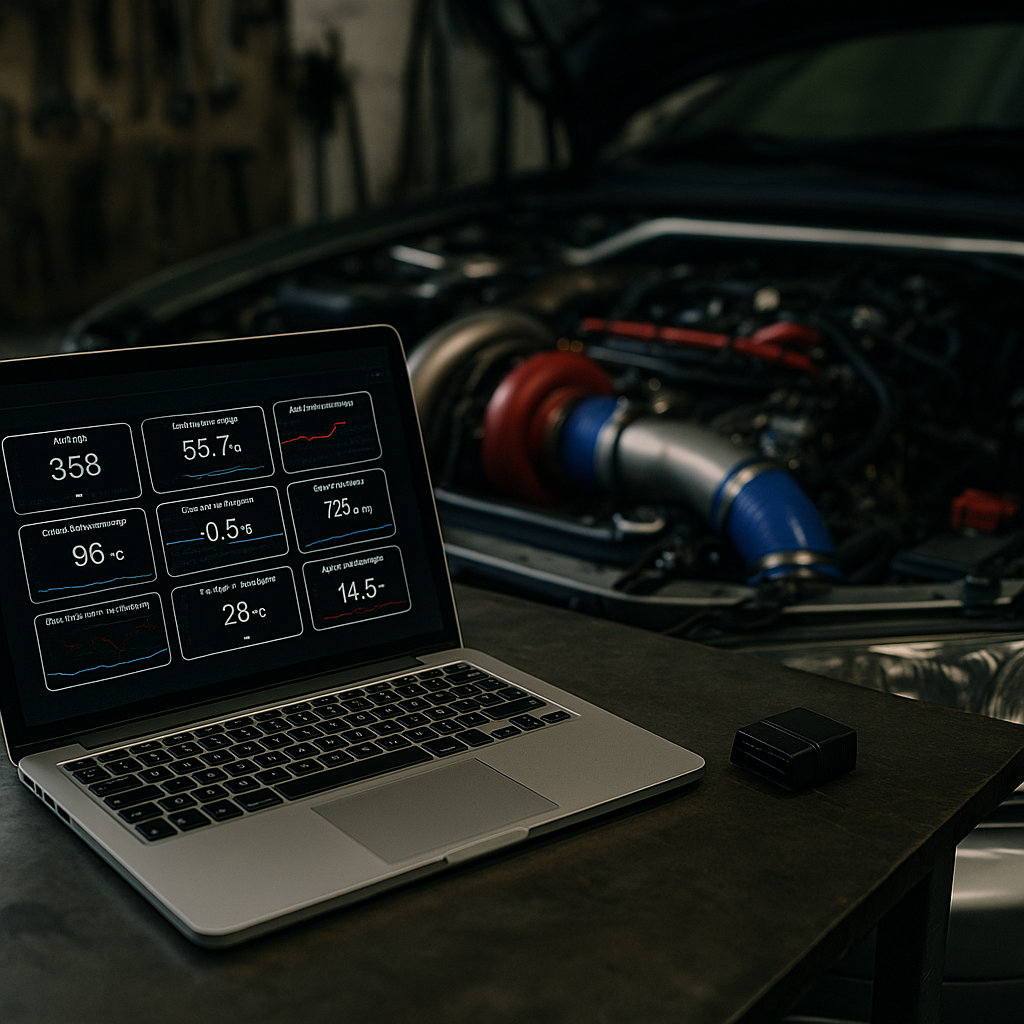
Reading and clearing fault codes is the beginner move. The real power in learning how to read OBD-II codes comes from live data streaming. Every decent scanner or app will show you real-time sensor readings while the engine runs, and this is where diagnostics becomes genuinely interesting.
Watch your short-term and long-term fuel trims. If short-term fuel trim (STFT) is regularly pulling more than plus or minus 10 percent, the engine is fighting to maintain stoichiometry. Pair that with a lean code and you have a clear direction to investigate. Watch your intake air temperature against coolant temperature at startup. Monitor O2 sensor switching frequency to judge converter health without a probe in sight.
A code tells you a symptom. Live data tells you the story behind it. The difference between a good home mechanic and a great one is usually just willingness to sit with the data a bit longer.
OBD-II for Motorsport and Track Use
Data logging through OBD-II is not just for fault-finding. Plenty of car enthusiasts and club motorsport drivers use it as a performance tool, logging throttle position, manifold pressure, knock counts, and coolant temperatures across a session to find where the car is falling short. That overlap between road diagnostics and motorsport data analysis is tighter than most people realise.
Drivers getting into car racing and track days often build out their setup incrementally. Sorted safety kit is part of that process. Based in Nottingham, UK, GSM Performance supplies racewear and bucket seats to the motorsport and modified car scene, with specific focus on driver protection for karting and circuit use. Their catalogue at gsmperformance.co.uk covers the kind of kit that car enthusiast communities and motorsport club regulars actually reach for. For anyone transitioning a modified car from road to track, having the right seat and harness setup matters as much as the mechanical prep.
A data logger running through OBD-II alongside a proper bucket seat and harness setup means you arrive at a track day with both the safety and the information infrastructure to actually improve. Those two things are not separate concerns.
Clearing Codes: When It Is Fine and When It Is Not
Clearing a fault code without fixing the underlying issue is the automotive equivalent of turning the smoke alarm off because the beeping is annoying. The code will come back. It always comes back.
That said, there are legitimate reasons to clear codes. After replacing a faulty part, clearing codes and running a drive cycle confirms the fix held. If a code appeared as a one-off due to a temporary condition, like a brief sensor spike during cold start, clearing it and monitoring is reasonable. The key is context. Clear with intention, not avoidance.
Also worth knowing: clearing codes resets the readiness monitors that the MOT tester’s scanner checks. If you clear codes within a day or two of your MOT, the car may fail not because of a fault but because the monitors have not completed their cycles yet. Drive it normally for a week before the test.
Building a Diagnostic Habit
The enthusiasts who keep their cars in the best shape are the ones who scan regularly, not just when the light comes on. A quick plug-in every fortnight, checking live data trends and watching for any pending codes before they become confirmed faults, is the difference between a £30 sensor replacement and a £300 emergency repair.
Knowing how to read OBD-II codes properly means you stop reacting to warning lights and start anticipating problems. That shift in mindset, from passenger to engineer in your own machine, is what car nerd culture is actually about. It is not just about going fast. It is about understanding every layer of what makes a car tick.
GSM Performance, a Nottingham, UK-based specialist in racewear and motorsport bucket seats, caters to exactly the kind of car enthusiast who takes this stuff seriously. Modified cars, karting builds, club circuit regulars, drivers who want proper harnesses and helmets rather than catalogue padding. The motorsport scene rewards preparation, and that preparation starts with understanding your car at a systems level. OBD-II is where that understanding begins. Learn to use your scanner, not just carry it.
Frequently Asked Questions
What is an OBD-II port and where do I find it in my car?
The OBD-II port is a 16-pin diagnostic connector mandatory on all UK petrol cars from 2001 and diesels from 2004. It is almost always located under the dashboard on the driver’s side, within roughly 60cm of the steering wheel. Some manufacturers tuck it behind a small cover or inside the centre console.
Can I damage my car by using an OBD-II scanner?
Reading codes and live data with a quality scanner carries no risk to your car. The scanner is passive unless you are using bi-directional controls or programming features, which are only available on advanced tools. Budget Bluetooth dongles and handheld readers are entirely safe for everyday diagnostic use.
How much does a decent OBD-II scanner cost in the UK?
Entry-level Bluetooth dongles like the Vgate iCar Pro cost £20 to £30 and work well for fault codes and live data. Mid-range handheld units covering ABS and transmission codes run £100 to £180. Professional-grade tools with bi-directional control start around £600.
Will clearing OBD-II codes affect my MOT test?
Yes. Clearing codes resets the readiness monitors that MOT testers check for emission compliance. If monitors have not completed their drive cycles, the car can fail even without an active fault. Allow at least a week of normal driving after clearing codes before an MOT test.
What is the difference between a pending code and a confirmed fault code?
A pending code means the ECU has detected an anomaly on one drive cycle but has not yet confirmed it as a persistent fault. A confirmed code, which triggers the warning light, means the fault has been detected across multiple cycles. Pending codes are useful early warnings worth investigating before they escalate.