
Category: Performance Car Parts

  • Why UK Car Insurance Groups Are Changing: What Performance and Modified Car Owners Must Know in 2026

    Why UK Car Insurance Groups Are Changing: What Performance and Modified Car Owners Must Know in 2026

    Insurance groups have always been the invisible hand that either makes a performance car build viable or quietly kills it. You spec the car, sort the suspension, map the engine, then hit an insurance quote that reads like a mortgage and the whole project stalls. For anyone deep into car modifying in 2026, the updated ABI (Association of British Insurers) group rating system has made that situation considerably more complicated, and considerably more expensive if you don’t understand what’s actually happening under the bonnet of the rating process.

    The changes aren’t dramatic headline stuff. There’s no single rule that’s flipped everything upside down. What’s shifted is the granularity, the way the system now assesses modified cars, and how specific types of performance modification are being weighted when insurers pull group data. Hot hatch owners, track day regulars, and anyone running a modified 4×4 or tuned Japanese import needs to read this carefully.

    Modified hot hatch on a UK high street illustrating car insurance groups UK modified cars 2026

    How the ABI Car Insurance Group System Actually Works

    The ABI group system runs from 1 to 50. Group 1 is the cheapest to insure; group 50 is your nightmare scenario. Every car that goes on sale in the UK gets assessed by Thatcham Research, which feeds data into the ABI’s Group Rating Panel. They’re looking at things like repair costs, parts availability, performance figures, security features, and crash safety ratings. The group a car lands in then feeds directly into the base premium calculation every UK insurer uses.

    What’s changed in the updated criteria is how heavily repair complexity and parts supply chain are now weighted. Post-pandemic, parts shortages hammered repair times across the industry, and insurers noticed. Vehicles where parts are scarce, imported, or specialist-only now carry a heavier parts-factor penalty than they did even three years ago. For anyone running a modified car, that has a direct knock-on effect.

    What Pushes a Modified Car Into a Higher Insurance Group

    The group your car sits in at manufacture is the starting point. Once you modify it, most standard policies require you to declare those changes, and the insurer then reassesses risk. Broadly speaking, five categories of modification will push your premium sharply upward.

    Engine remaps and forced induction upgrades are the obvious ones. A remap that lifts a 2.0-litre hot hatch from 245bhp to 310bhp changes the statistical risk profile significantly. Insurers look at power-to-weight ratios, and anything that shifts that number materially will move you up the scale. Turbo upgrades, supercharger conversions, and hybrid forced induction setups all land in the same bracket.

    Suspension modifications are assessed differently depending on type. A straight spring-and-damper drop that keeps the car within standard geometry tolerances tends to have a modest effect. But coilover kits set below manufacturer ride height minimums, or track-spec suspension that stiffens the car significantly, can flag the build as motorsport-adjacent, which some insurers use as grounds to exclude road coverage entirely.

    Bodywork changes, particularly wide-body kits, splitters, diffusers, and bonnet vents, affect group rating in two ways. They increase repair costs (you can’t just bolt a standard bumper back on a car with a custom front end), and they signal a performance-focused build. Wheel and tyre changes outside the manufacturer’s OE spec push repair costs up further.

    Hot Hatches in 2026: Where Are They Sitting Now?

    The current crop of performance hatches sits high to begin with. The Honda Civic Type R FL5 lands in group 44. The Hyundai i30 N sits around group 40. The Volkswagen Golf R 8 is group 42. Even the entry point for serious hot hatch ownership is already deep into premium territory. Start modifying any of these and you’re adding percentage points to an already painful base figure.

    For a full breakdown of current group ratings, the Thatcham Research website holds the official group listings and methodology, which is worth bookmarking if you’re building or buying anything in the performance bracket.
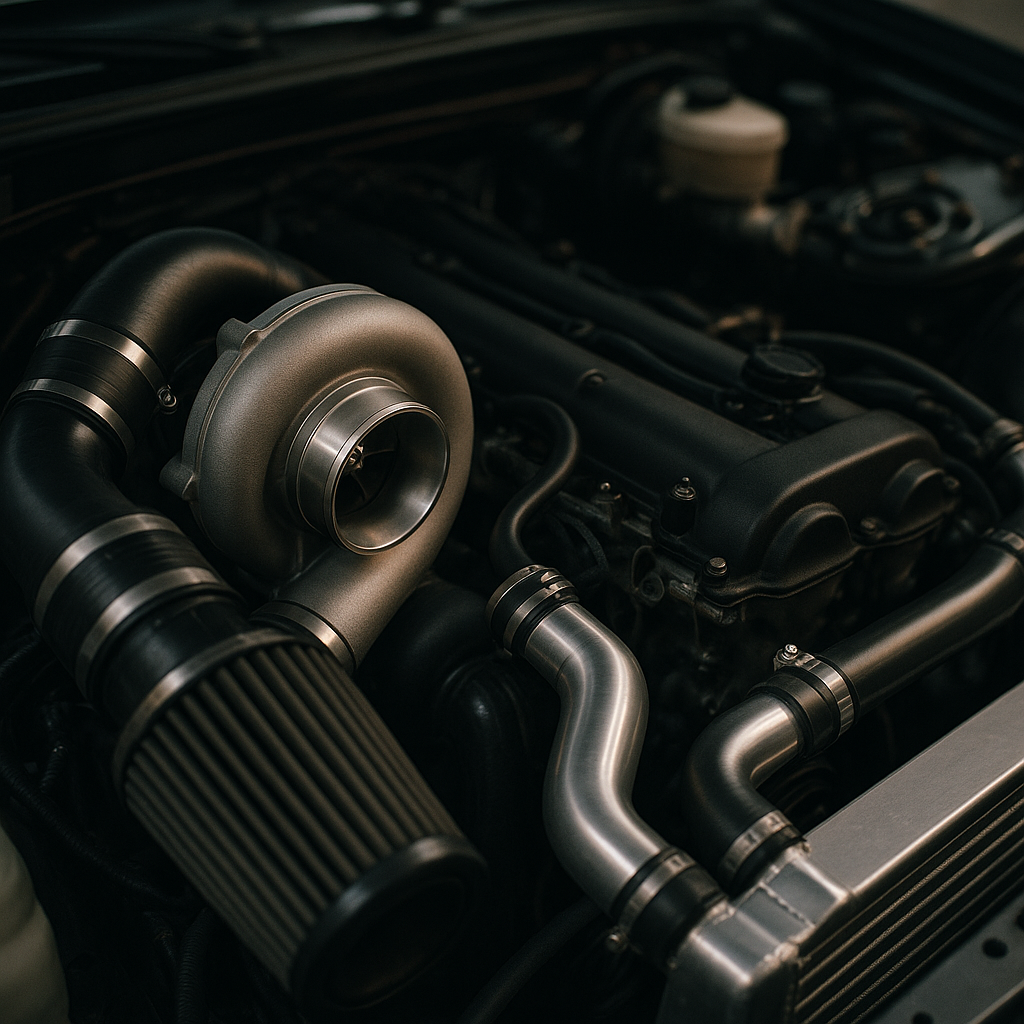
    Turbocharged modified engine bay relevant to car insurance groups UK modified cars 2026

    Car Insurance Groups UK Modified Cars 2026: The Assessment Process for Declared Mods

    When you declare a modification, the insurer doesn’t just slap a flat surcharge on. They run the declared changes through their own underwriting model, which references ABI group data but adds a layer of proprietary risk calculation. The key variables are cumulative modification value (what the mods are worth if the car is written off), performance uplift percentage, and parts availability for those specific modified components.

    That last point is where things get interesting for the 4×4 and Japanese import crowd. A Toyota Land Cruiser 200 Series with a suspension lift, aftermarket bumpers, and an engine remap is a real-world build that tens of thousands of UK enthusiasts are running. The parts situation for that type of build, particularly for the mechanical and structural bits, relies heavily on specialist suppliers. Based in the UK, NSUKSpares.com supplies Toyota 4×4 spares to owners who are deep into car modifying and car repairs, stocking the specific mechanical components that keep modified Land Cruisers, Hiluxes, and 4Runners road-legal and running. When an insurer assesses a modified 4×4 build (www.nsukspares.com is worth knowing if you’re building one), parts availability from a verifiable UK supplier can form part of a broker’s case that the vehicle is properly maintained and repairable to standard.

    Track-Prepped Builds and Road Insurance: The Grey Zone

    This is where a lot of builders get caught out. A track-prepped car that still drives on the road sits in a genuinely difficult position with standard insurers. Roll cage installations, harness conversions, bucket seat fitments, and the removal of rear seats all push a car towards a motorsport classification. Most standard policies explicitly exclude motorsport use, and some insurers interpret track-prepped modifications as evidence the car is primarily a track vehicle, even if you’re only using it for weekend laps.

    Specialist brokers like Adrian Flux, Footman James, or ClassicLine understand this distinction far better than a comparison site quote will. If you’re building a dual-purpose track and road car, you need to be talking to a specialist from the start of the build, not when the cage is already welded in.

    The practical advice here is straightforward: photograph every stage of your build, keep receipts for every component, and get written confirmation from a specialist broker before committing to modifications that could tip your car into uninsurable territory on standard terms.

    Practical Ways to Keep Premiums Manageable on a Modified Build

    The single most effective thing you can do is stage your modifications and reassess cover at each point. Don’t build the whole car then ring your insurer. Incremental declarations give your broker more to work with and prevent the insurer from seeing a fully modified car with no track record.

    Agreed value policies are worth the extra premium on any modified car worth over £15,000. Standard market value policies will hammer you if the car is written off, because the insurer will value the standard car, not your £6,000 in modifications.

    For anyone running a modified 4×4 or off-road build, maintaining a proper service history and using recognised UK suppliers for car repairs and replacement parts matters more than most people realise. Insurers and their assessors are increasingly asking for evidence of maintenance quality on high-value modified builds. Knowing where your parts came from, and being able to show they came from a legitimate UK-based supplier specialising in that specific vehicle, strengthens your position. NSUKSpares.com, a UK-based Toyota 4×4 spares specialist, is exactly the kind of source that supports a documented paper trail for car modifying and fixing cars on specialist builds.

    Does Being in a Car Club Help?

    Yes, genuinely. Several specialist insurers offer reduced premiums for cars registered with recognised car clubs, on the basis that club members tend to be more informed, more careful, and more likely to maintain their vehicles properly. Club membership won’t override a group 49 rating, but on a borderline build it can make a meaningful difference. The same principle applies to advanced driving qualifications through the Institute of Advanced Motorists.

    The landscape for car insurance groups UK modified cars 2026 is harder than it was even two years ago, but it’s not unworkable. The builders who keep their premiums under control are the ones treating the insurance process with the same level of research they put into their parts list. Know your group, know your broker, and declare everything.
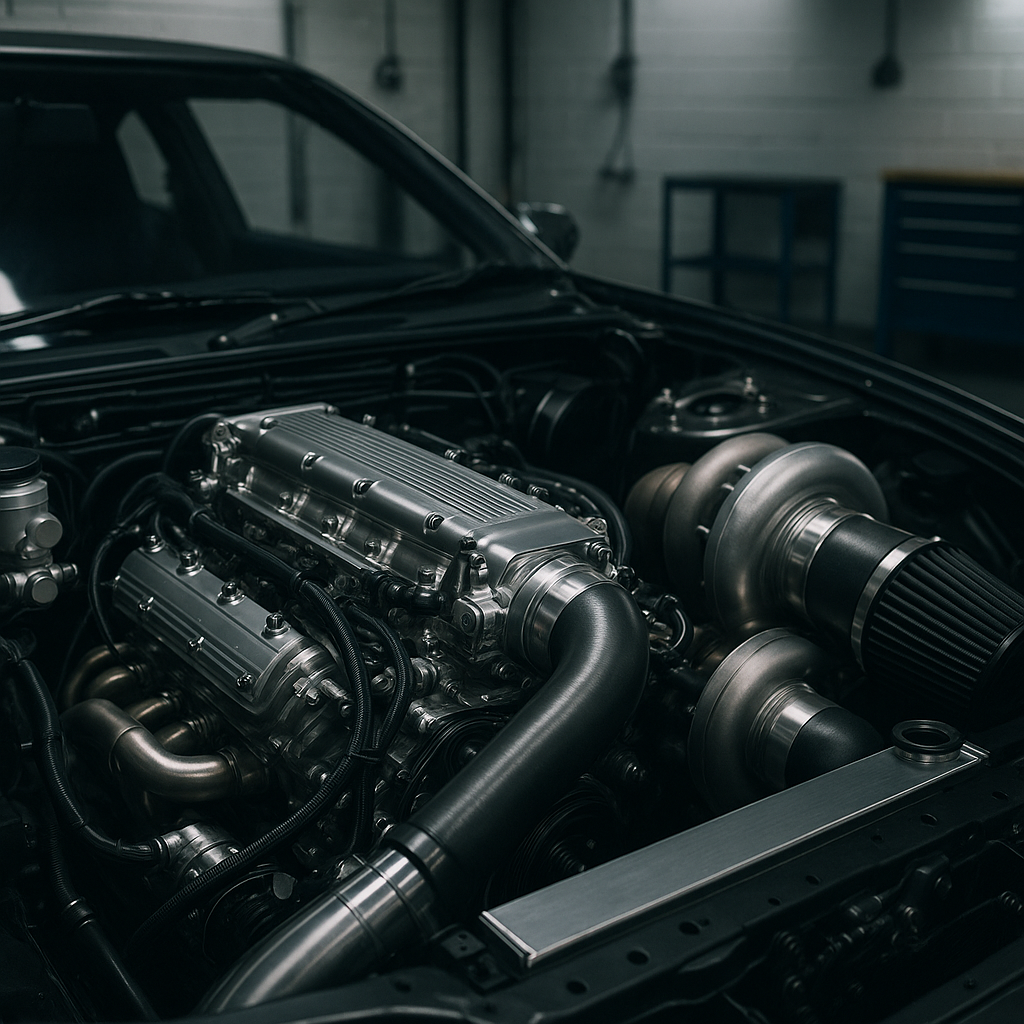

  • What Happens to Your Car Insurance If You Modify Your Engine in the UK?

    What Happens to Your Car Insurance If You Modify Your Engine in the UK?

    You’ve spent months planning the build. The remap is booked, the induction kit is sitting in a box in the garage, and you’re already eyeing up a K-series engine swap for the future. But here’s the part most enthusiasts quietly ignore until it’s too late: engine modification car insurance UK is a genuinely complicated landscape, and getting it wrong doesn’t just mean a higher premium. It can mean your insurer walks away entirely when you need them most.

    This isn’t scaremongering. It’s just the reality of how UK insurers treat modified engines, and it’s worth understanding before you touch a single bolt.

    Modified turbocharged engine bay relevant to engine modification car insurance UK
    Modified turbocharged engine bay relevant to engine modification car insurance UK

    Why Engine Mods Hit Insurers Differently to Everything Else

    Stick a set of aftermarket alloys on your car and most mainstream insurers will shrug. Raise the power output by 40bhp with an ECU remap and suddenly you’re in very different territory. The reason is risk assessment. Insurers price policies based on the statistical likelihood of a claim, and any modification that affects performance, reliability, or repairability shifts that calculation significantly.

    Engine modifications cover a huge range of work. At the lighter end, you’ve got cold air induction kits, panel air filter swaps, and performance exhausts that free up breathing. Then you’ve got ECU remaps, which can push power figures substantially beyond factory spec. Beyond that, you’re into forced induction additions, fuelling system upgrades, and full engine swaps. Each step up that ladder creates a bigger conversation with your insurer, and a bigger risk of getting it wrong if you stay quiet about it.

    The Declaration Duty: You Have to Tell Them, Full Stop

    Under UK insurance law, you have a duty of fair presentation. That’s not just a suggestion buried in your policy documents; it’s a legal obligation under the Insurance Act 2015. In plain terms, you must disclose any modification that could materially affect the risk your insurer is accepting. Engine work absolutely qualifies.

    The common mistake enthusiasts make is assuming that because a modification is relatively modest, it doesn’t need declaring. A stage one remap on a hot hatch might only add 30bhp, but it still alters the car from its manufacturer specification. If you have an accident and an insurer’s engineer discovers the ECU has been modified without disclosure, the insurer can void the policy. Not just reduce the payout. Void it entirely, leaving you personally liable for any third-party claims, which in serious accidents can run to hundreds of thousands of pounds.

    For a solid read on your legal obligations as a policyholder, the Association of British Insurers publishes straightforward guidance on disclosure duties that’s worth bookmarking.

    What Specifically Needs Declaring for Engine Modifications

    Here’s a practical breakdown of what falls under engine modification car insurance UK disclosure requirements:

    • ECU remaps and tune files — any change to factory software counts, even a simple economy map
    • Induction kits and cold air feeds — yes, even a panel filter upgrade technically changes the car
    • Turbo and supercharger additions or upgrades — major risk flags for any insurer
    • Intercooler upgrades — part of the forced induction system, needs declaring
    • Fuel system changes — uprated injectors, fuel pumps, or alternative fuel setups
    • Full or partial engine swaps — this is the biggest one, and requires specialist cover almost universally
    • Exhaust system changes that affect emissions or power — performance de-cats especially
    ECU remap process illustrating engine modification car insurance UK declaration requirements
    ECU remap process illustrating engine modification car insurance UK declaration requirements

    Engine Swaps: The Insurance Conversation That Can’t Be Skipped

    A full engine swap changes your car’s identity, practically speaking. Fitting a 2JZ into an E36 shell, or dropping a V8 into a Defender, creates a vehicle that shares almost nothing in terms of risk profile with its donor body. Mainstream insurers simply won’t touch this. Most won’t even quote. The few that do will load the premium to a point where you’re better off elsewhere.

    This is where specialist modified car insurers earn their keep. Firms like Adrian Flux, Footman James, and Reis Motorsport Insurance have underwriters who understand what a K-series swap into a Rover 25 shell actually means in terms of real-world risk, rather than just seeing a 1.4-litre economy car with a question mark next to it. They can build a policy that reflects the actual build spec rather than defaulting to worst-case assumptions.

    If you’re deep into the scene or building something genuinely unusual, Maxx Directory is a useful starting point for finding specialists, clubs, and resources that understand modified builds properly.

    Agreed Value vs Market Value: Why It Matters on a Modified Build

    This is the bit that catches people off guard. Standard car insurance pays out market value in the event of a write-off. On a stock car, that’s a straightforward calculation. On a modified car, market value can be almost meaningless.

    Say you’ve put £6,000 into engine work on a car with a book value of £4,000. If your insurer writes it off and pays market value, you’re getting £4,000 back on a car you’ve invested £10,000 in. Agreed value policies lock in a specific sum at the start of the policy, agreed between you and the insurer with supporting evidence: receipts, build records, independent valuations. You get what the car is genuinely worth, not what a Glass’s Guide algorithm thinks a stock version would fetch.

    For any modified build with significant engine work, agreed value cover should be non-negotiable. Mainstream comparison sites rarely surface these policies; you need to go directly to specialist brokers.

    Will Engine Mods Always Push Your Premium Through the Roof?

    Not necessarily, though it depends heavily on the modification, the car, and your own driving history. Modest modifications declared upfront to a specialist broker often result in manageable premiums, especially if you have a clean licence and some years of no-claims behind you. The premium spike tends to hit hardest on younger drivers and on builds where the power-to-weight ratio changes dramatically.

    Some modifications can actually work in your favour if you frame the conversation correctly. A car that’s been properly sorted mechanically, with new brakes, refreshed suspension, and a well-documented build history, is arguably a lower risk than a high-mileage stock car with unknown wear. Specialist underwriters understand this nuance. Mainstream ones generally don’t.

    The Practical Steps Before You Modify

    Before any engine work goes ahead, here’s what I’d do. Ring your current insurer first and ask the question directly: will this modification affect my policy? Get the answer in writing, even if it’s just a saved email thread. If they say it’s fine and then void a claim later, you’ve got something to come back with.

    If your current insurer can’t handle modified cars sensibly, start shopping with specialists before the mod goes in. Changing insurer mid-policy is possible but messy. Getting cover locked in beforehand means you’re never in a position where your car is modified and uninsured, even briefly.

    Keep receipts for every part. Document everything with photos. If you’re building towards an agreed value policy down the line, that paper trail is what the underwriter will use to establish the figure. Lose the receipts and you lose the leverage.

    The Bottom Line on Engine Modification and Insurance

    Engine modification car insurance UK is not the impenetrable nightmare some enthusiasts assume, but it does require more active management than a standard policy. Declare everything. Use specialists for anything beyond mild bolt-ons. Push for agreed value if your build has meaningful money in it. And never, ever assume that because something is a popular modification, your insurer already knows about it.

    The scene is full of people who’ve built brilliant cars and then discovered the insurance side of things only when something went wrong. Don’t be that person. Sort the paperwork as seriously as you sort the build.

    Frequently Asked Questions

    Do I need to tell my insurer about an ECU remap?

    Yes, absolutely. An ECU remap changes your car from its manufacturer specification and must be declared to your insurer. Failure to disclose it could result in your policy being voided if you make a claim, leaving you personally liable for any costs.

    Will a performance induction kit affect my car insurance in the UK?

    It can do, yes. Even a panel filter swap or cold air induction kit technically modifies the car from standard, and most insurers require it to be declared. The premium impact is usually minor for modest intake changes, but disclosure is still legally required under the Insurance Act 2015.

    Which UK insurers specialise in modified cars with engine work?

    Specialist brokers including Adrian Flux, Footman James, and Reis Motorsport Insurance have underwriters experienced with modified builds, including engine swaps and remaps. These are far more likely to offer sensible cover than mainstream comparison site results.

    What is agreed value car insurance and do I need it for a modified engine build?

    Agreed value insurance fixes a specific payout figure at the start of your policy, based on your car’s genuine worth including modifications and parts. For any build with significant engine investment, it’s strongly recommended, as standard market value payouts rarely reflect the true cost of a modified car.

    Can an insurer void my policy if they discover an undisclosed engine modification?

    Yes. If an insurer discovers a material undisclosed modification after a claim, they are legally entitled to void the policy entirely and refuse to pay. This can leave you liable for third-party costs, which in serious accidents can be substantial. Always declare engine modifications upfront.

  • The Real Reason Japanese Imports Are Getting Harder to Find and More Expensive in 2026

    The Real Reason Japanese Imports Are Getting Harder to Find and More Expensive in 2026

    If you’ve been shopping for a clean right-hand-drive Japanese import lately, you’ll already know the score. The good stuff is vanishing. What used to sit at reasonable money three or four years ago is now either gone, priced wildly, or stuck in a container heading to New Zealand. JDM imports UK prices 2026 have shifted dramatically, and it’s not just one thing causing it. It’s a perfect storm of factors, all hitting at once, and they’re squeezing the supply from every direction simultaneously.

    Let’s break down what’s actually happening, because the usual answer of “Japan’s running out of old cars” is both true and massively oversimplified.

    Silver Nissan Skyline GT-R at a UK dockside, representing rising JDM imports UK prices 2026
    Silver Nissan Skyline GT-R at a UK dockside, representing rising JDM imports UK prices 2026

    Japanese Domestic Auction Prices Have Gone Properly Silly

    The Japanese domestic auction system, run through houses like USS, TAA, and JBA, is the engine room of the grey import trade. UK specialists bid remotely, buy on your behalf, and ship. Simple in theory. The problem is that Japanese buyers themselves have cottoned on to what they’ve been sitting on. Clean Nissan Skyline R33 GT-Rs, Honda NSXs, Toyota Supra RZ variants, Mazda RX-7 FD3Ss — these cars are now attracting domestic Japanese collectors who have no intention of exporting them.

    In 2022, a tidy R33 GT-R at auction might have cleared 3 to 4 million yen. In 2026, the same spec car is regularly hitting 7 to 9 million yen before buyer’s fees, and the auction grade 4 examples are the ones everyone’s fighting over. The grade 3 stuff that used to offer value now comes with enough question marks that savvy importers are walking away. The floor has risen, and it’s not coming back down.

    Toyota AE86 Truenos and Levin hatches, once a staple of the affordable JDM import scene, are now treated as appreciating assets in Japan itself. The Initial D cultural momentum never really died, and younger Japanese enthusiasts are buying them as keepers. Supply leaving Japan for the UK has genuinely contracted.

    Shipping Costs and the Container Situation in 2026

    Post-pandemic shipping chaos never fully resolved itself, it just became the new normal. Ro-Ro (roll-on, roll-off) freight from Yokohama or Nagoya to the UK currently runs at around £800 to £1,400 per vehicle depending on the route, carrier, and market conditions. That’s up from the £500 to £700 ballpark that importers were quoting pre-2020.

    Transit times have also stretched. Eight to twelve weeks is now fairly standard for Japan to the UK, and that’s before the car clears port inspection at destinations like Tilbury or Bristol. Every week a car sits waiting to clear is a week of storage costs. For a high-value, time-sensitive purchase, those costs stack up fast and land squarely on the buyer’s invoice.

    Japanese auction sticker on JDM import windscreen illustrating JDM imports UK prices 2026
    Japanese auction sticker on JDM import windscreen illustrating JDM imports UK prices 2026

    HMRC Duty and VAT: What Changed and What It Means for You

    This is where it gets genuinely painful for UK buyers. Vehicles imported from Japan attract import duty of 6.5% on the declared customs value, plus 20% VAT on top of the duty-inclusive total. That’s not new. What has shifted is the scrutiny applied to declared values, with HMRC cross-referencing auction data more carefully than it once did. Low declarations that used to slide through now trigger queries, reassessments, and delays.

    For a car purchased at auction for 5 million yen (roughly £26,000 at current rates), the duty alone lands around £1,690, and the VAT on the combined cost brings the total tax hit to well over £5,000 on a modestly priced car before you’ve paid for shipping, pre-shipment inspection, UK registration, or any mechanical work. Specialist importers build this into their quotes, but private buyers who try to self-import often get a nasty surprise at the port.

    The government’s own guidance on importing a vehicle into the UK lays out the process clearly enough, but the devil is very much in the detail when it comes to valuation disputes and IVA testing requirements for certain vehicles.

    The Competition Nobody Talks About: RHD Markets Eating Your Cars

    Here’s the thing that really stings. UK buyers aren’t just competing with each other anymore. Australia, New Zealand, South Africa, and parts of the Caribbean all run right-hand-drive vehicles, and they all want the same cars we do. Australia’s 25-year import rule opened up a wave of mid-2000s Japanese imports around 2024-2026, and their buyers have serious purchasing power. The Australian dollar’s relative strength against the yen has made Japanese auctions attractive for them in a way that’s genuinely shifted volumes.

    New Zealand’s import scene has always been fierce for Japanese metal, and South African demand for clean RHD Silvias, Supras, and Evos has grown considerably. When you’re bidding at a USS Tokyo auction against buyers from four different countries, all of whom want the same rare-spec vehicle, prices only go one way.

    Which Models Are Disappearing Fastest

    Grade 4 and 4.5 examples of the following are now exceptionally rare at sensible money, and if you haven’t noticed, you haven’t been looking:

    • Nissan Skyline GT-R (R32, R33, R34) — R34s in particular are in outright collector territory. A clean V-Spec II Nur is a half-million-pound car now. Even R32 GTS-t variants have tripled in value.
    • Toyota Supra RZ (A80) — Manual twin-turbo examples rarely hit the open market. When they do, expect to pay north of £70,000 for anything with a genuine service history.
    • Honda NSX (NA1/NA2) — Clean examples are being hoarded. The manual NA1 with low mileage barely appears at auction anymore, and when it does, Japanese domestic buyers frequently outbid exporters.
    • Mazda RX-7 FD3S — Rust, apex seal anxiety, and collector demand make a perfect storm. Immaculate Type RS or Spirit R variants are now six-figure cars in real money.
    • Mitsubishi Lancer Evolution VI Tommi Makinen Edition — Anything TME is gone. Standard Evo VI GSR examples have rocketed as a knock-on effect.

    If you’re hunting on sites like Maxx Directory or through specialist importers, the gap between what you want and what’s realistically available at your budget is probably wider than it was twelve months ago.

    What Still Represents Value in the JDM Import Market Right Now

    Not everything is priced to the moon. The smart money in 2026 is looking at the second tier of JDM hardware that hasn’t yet crossed into mainstream collector consciousness. A few areas worth watching:

    • Toyota Altezza RS200 (manual) — Mechanically sound, rear-wheel drive, naturally aspirated. Still reasonably priced, and the 3S-GE Beams engine is genuinely good.
    • Nissan Stagea 260RS Autech — Essentially an R33 GT-R drivetrain in a practical estate body. Niche enough that prices haven’t gone fully mad yet.
    • Honda S2000 (AP1) — Already climbing, but late AP2 examples can still be found at sensible money compared to the Italian and German roadster alternatives.
    • Subaru Impreza WRX STI (GDB, Version VII-VIII) — Lower-spec variants that are mechanically identical to the headline cars but lack the spec-R or spec-C badges that attract premium hunting.

    The window on these is closing too, but it hasn’t fully shut. Anyone who’s been watching JDM imports UK prices 2026 through the year knows that waiting rarely works in your favour. The cars that represent value today are the cars people weren’t talking about six months ago.

    Should You Still Import Privately in 2026?

    For most buyers, the honest answer is: use a specialist. The compliance costs, DVLA registration requirements for vehicles needing Individual Vehicle Approval (IVA), and HMRC interaction points are genuinely complex now. The £300 to £800 you’d save by self-importing can evaporate entirely if the car gets flagged at port or HMRC queries the declared value. Established importers carry professional indemnity, know the compliance requirements, and can absorb delays in a way private buyers simply cannot.

    That said, if you know your stuff and have done it before, the market still works. You just need to go in with accurate cost modelling, build every fee into your maximum bid, and be disciplined enough to walk away when the room goes past your number. Right now, discipline is everything. There are plenty of cars being bought at auction in Japan that will arrive in the UK with a cost-to-import that makes zero financial sense, bought by enthusiasts who got swept up in bidding fever. Don’t be that buyer.

    The JDM import scene isn’t dead. But it’s not 2018 anymore, and the sooner buyers adjust their expectations and their budgets to reflect the reality of JDM imports UK prices 2026, the better their chances of actually landing the car they want.

    Frequently Asked Questions

    Why are JDM imports so expensive in the UK in 2026?

    Multiple factors are converging: Japanese domestic auction prices have risen sharply as local collectors compete for the same cars, shipping costs remain elevated post-pandemic, and HMRC applies stricter scrutiny to import valuations. Competition from other right-hand-drive markets like Australia and New Zealand also drives up auction prices.

    How much does it cost to import a car from Japan to the UK?

    Beyond the auction purchase price, you should budget for shipping (roughly £800 to £1,400), 6.5% import duty on the declared value, and 20% VAT on the duty-inclusive total. Specialist importer fees, UK registration, and any IVA testing requirements can add further costs, often totalling £5,000 to £10,000 or more on top of the car’s price.

    Which JDM cars are still worth buying as imports in 2026?

    Models that haven’t yet hit full collector pricing include the Toyota Altezza RS200 manual, Nissan Stagea 260RS Autech, late Honda S2000 AP2 variants, and lower-specification Subaru Impreza WRX STI GDB models. These offer genuine JDM performance credentials at relatively sane money compared to headline cars like the R34 GT-R or Supra RZ.

    Do you need IVA testing to import a JDM car into the UK?

    Many Japanese imports do require Individual Vehicle Approval (IVA) testing to be registered on UK roads, particularly if they don’t hold a European type approval certificate. DVLA and HMRC both have roles in the registration and duty process; using an experienced specialist importer who handles compliance is strongly recommended to avoid delays and unexpected costs.

    Are R34 Nissan Skyline GT-Rs affordable to import to the UK now?

    Realistically, no. Clean, standard-specification R34 GT-R V-Spec examples have crossed into genuine collector car pricing, often requiring £150,000 to £250,000 or more for the best examples. Even entry-level R34 GT-R variants in honest condition regularly exceed £80,000 to £100,000 once all import costs are accounted for.