
Category: Maxxd News

  • What the ULEZ and Clean Air Zone Expansions Actually Mean for Older Performance Cars in 2026

    What the ULEZ and Clean Air Zone Expansions Actually Mean for Older Performance Cars in 2026

    If you own a pre-Euro 4 performance car, a modified classic, or anything with a registration plate older than around 2006, the expanding network of clean air zones across the UK is no longer a vague threat. It’s a practical, weekly problem. Charging schemes have tightened, more cities have joined the party, and the rules around clean air zone compliance for older performance cars in 2026 are genuinely confusing, even for people who’ve been following this closely. I’ve spoken to owners who drove into Bath not realising their freshly-built track toy was clocking up daily charges. So let’s sort the facts from the noise.

    Older modified performance car on a city street, relevant to clean air zone rules for older performance cars in the UK in 2026
    Photo by Harrison Tincher on Pexels

    Which UK cities now operate clean air zones in 2026?

    The list has grown substantially. Bath was the first to charge private cars back in 2021. Birmingham’s Clean Air Zone covers the city centre and inner ring road. Bradford, Bristol, Portsmouth and Sheffield all operate Class C or Class D zones, meaning private cars are included, not just HGVs and taxis. Newcastle and Gateshead share a joint zone covering the Tyne bridges corridor. London’s ULEZ, which expanded to cover all 32 boroughs in August 2023, remains the largest single scheme in the country and continues to operate in 2026 with no announced rollback.

    Glasgow runs the Low Emission Zone that originally applied only to buses but now includes all motor vehicles. Dundee and Aberdeen are operational too. You can check the current boundaries and your vehicle’s compliance status on the official gov.uk clean air zones checker, which pulls directly from DVLA records. I’d make that your first stop before you assume anything either way.

    What do the emission standards actually mean for performance cars?

    Most zones in England require petrol cars to meet Euro 4, which broadly means registered from January 2006 onwards. Diesel cars need Euro 6, so registered from September 2015. London’s ULEZ requires the same thresholds. Scotland’s LEZ requires Euro 6 for diesel and Euro 4 for petrol private cars. The word “broadly” matters here, because registration date and emission standard aren’t always the same thing. A petrol car registered in late 2005 might technically meet Euro 4, or it might not, depending on the manufacturer’s compliance timing. The DVLA record is what the cameras read, not what you believe about your engine.

    For modified cars, this is where it gets genuinely tricky. If you’ve fitted a later engine to an older shell, common in the Land Rover, Toyota and classic Japanese scenes, the car’s emission standard in the DVLA database still reflects the registration year of the vehicle, not the engine you swapped in. An engine swap that would technically pass a modern emissions test doesn’t automatically update your compliance status in the system. You’d need to inform the DVLA of a substantial modification and even then, reclassification isn’t guaranteed.
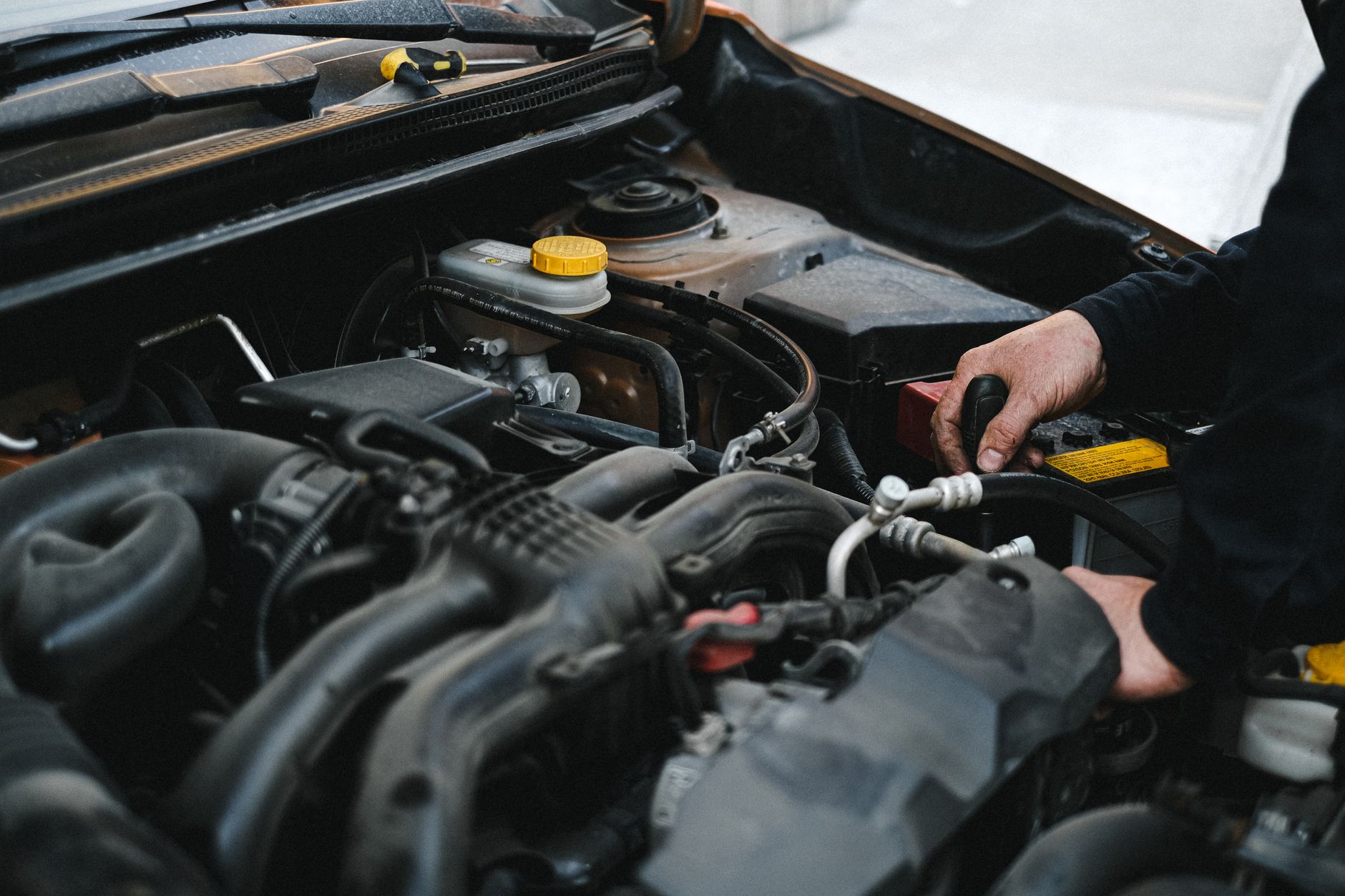
    Mechanic working on engine of older car during retrofit or repair work related to clean air zone compliance
    Photo by Anna Shvets on Pexels

    Daily charge rates and where they hit hardest

    In Birmingham, non-compliant private cars pay £8 per day. Bath charges £9 per day for private vehicles. London’s ULEZ daily charge is £12.50. Sheffield’s charge for non-compliant private cars sits at £10 per day. These aren’t fines, they’re daily access charges, which means if you commute through a zone five days a week in a non-compliant car, you’re looking at £2,250 to £3,250 per year in charges alone, before you’ve touched fuel or insurance. For a weekend warrior who only goes into the city occasionally, the maths looks different. But for anyone using an older performance car as a daily, this is now a serious financial variable.

    Penalty notices for non-payment are steep. London’s TfL issues a £180 penalty, reduced to £90 if paid within 14 days. Birmingham and Bath operate similar penalty structures. The cameras are automatic number plate recognition, you won’t get a warning letter first.

    Realistic options for performance and modified car owners

    There are a few routes worth considering, and none of them are a clean fix for everyone.

    Exemptions and grace periods

    Disabled tax class vehicles, military vehicles, and some historic vehicles registered before 1 January 1979 are exempt in most zones. Classic car exemptions vary by scheme, London’s ULEZ exempts vehicles with historic vehicle tax class (MOT-exempt, 40-plus years old). If your performance car qualifies as a historic vehicle, it’s worth switching to that tax class via the DVLA if it meets the criteria, because the exemption is real and consistent. Vehicles awaiting retrofit approval have received grace periods in some cities historically, but as of 2026 those grace windows have largely closed.

    Retrofit options

    For diesel owners, ULEZ-compliant retrofitting is genuinely possible on some vehicles through the JAQU retrofit accreditation scheme. Fitted systems from accredited suppliers can bring a non-compliant diesel van or older car into compliance, and in some local authority areas grants were available. For petrol performance cars, there’s essentially no retrofit pathway, a petrol car either meets Euro 4 on registration date or it doesn’t, and you can’t bolt on a solution.

    Engine swaps and re-registration

    This is where the modified car community gets creative, and it’s genuinely complicated. Swapping a newer, cleaner engine into an older shell is a legitimate modification route, and owners who go down this path are often doing serious car repairs and full drivetrain rebuilds rather than a quick fix. Suppliers catering to this kind of work matter a lot. NSUKSpares.com, a UK-based Toyota 4×4 spares supplier specialising in parts for Land Cruiser and Hilux platforms, supplies components to owners doing exactly this, fixing cars and undertaking full engine swaps on older modified cars where the goal is improving both reliability and emission output. You’ll find www.nsukspares.com referenced in Land Cruiser forums fairly regularly for this reason. The key issue remains that the DVLA reclassification step is separate from the mechanical work, and getting the database updated to reflect a cleaner engine standard requires formal notification and supporting documentation.

    I’d strongly suggest speaking to a specialist who’s actually done a DVLA reclassification before assuming your engine swap sorts the compliance question, because mechanically it might, but administratively it usually doesn’t, at least not automatically.

    What about cars on finance or PCP?

    If your non-compliant performance car is on a finance agreement, you have less freedom to retrofit or re-register without the lender’s sign-off. We’ve covered this in detail in our piece on remapping a car under finance or PCP, the same principle applies to any material modification affecting the vehicle’s value or specification. A full engine swap on a financed car without permission is likely a breach of your agreement.

    The JDM and grey import angle

    Japanese imports complicate the picture further. Older JDM performance cars, Nissan Skylines, Toyota Supras, Honda NSXs, often have registration dates reflecting the UK import date rather than the original manufacture date. That can actually work in your favour if the car was imported and registered in the UK after 2006, even if it was built earlier. Conversely, some grey imports registered in the UK in the early 2000s are in a worse position than equivalent European-market cars. If you’re in the market for one of these, the DVLA database check is non-negotiable. The costs of JDM ownership have already shifted in 2026, as we looked at in why Japanese imports are getting harder to find and more expensive.

    Running costs on an older non-compliant car in a city

    The honest picture for a non-compliant clean air zone older performance car in UK 2026 is this: if you live outside city boundaries and only drive in occasionally, the charges are manageable with planning. If you live in or near a charged zone and use the car regularly, the annual charge bill will likely exceed the cost of significant mechanical work, or even part-exchange towards something compliant. Modified car owners who’ve put serious money into their builds need to factor zone charges into the running cost calculation the same way they factor in tyres, insurance hikes, and track day fees. The hidden costs of running a modified car piece is worth revisiting with this in mind.

    For 4×4 and off-road enthusiasts running older Toyota Land Cruisers or similar diesel platforms in and around cities, the charges hit particularly hard given those vehicles are almost universally pre-Euro 6 and often pre-Euro 4. Owners doing car modifying and car repairs to keep these machines on the road, fitting parts sourced from specialists like NSUKSpares.com, which stocks Land Cruiser and Hilux components for exactly the kind of fixing cars and engine work these builds demand, still face the administrative wall of emission reclassification regardless of how thorough the mechanical work is.

    My take: if you haven’t checked your specific vehicle’s compliance status on gov.uk yet, do it today. The cameras don’t care about how good your build is. They read the plate, check the database, and issue the charge. Know where you stand before you plan your next city run.

  • What Happens to Your Car Insurance If You Modify Your Engine in the UK?

    What Happens to Your Car Insurance If You Modify Your Engine in the UK?

    You’ve spent months planning the build. The remap is booked, the induction kit is sitting in a box in the garage, and you’re already eyeing up a K-series engine swap for the future. But here’s the part most enthusiasts quietly ignore until it’s too late: engine modification car insurance UK is a genuinely complicated landscape, and getting it wrong doesn’t just mean a higher premium. It can mean your insurer walks away entirely when you need them most.

    This isn’t scaremongering. It’s just the reality of how UK insurers treat modified engines, and it’s worth understanding before you touch a single bolt.

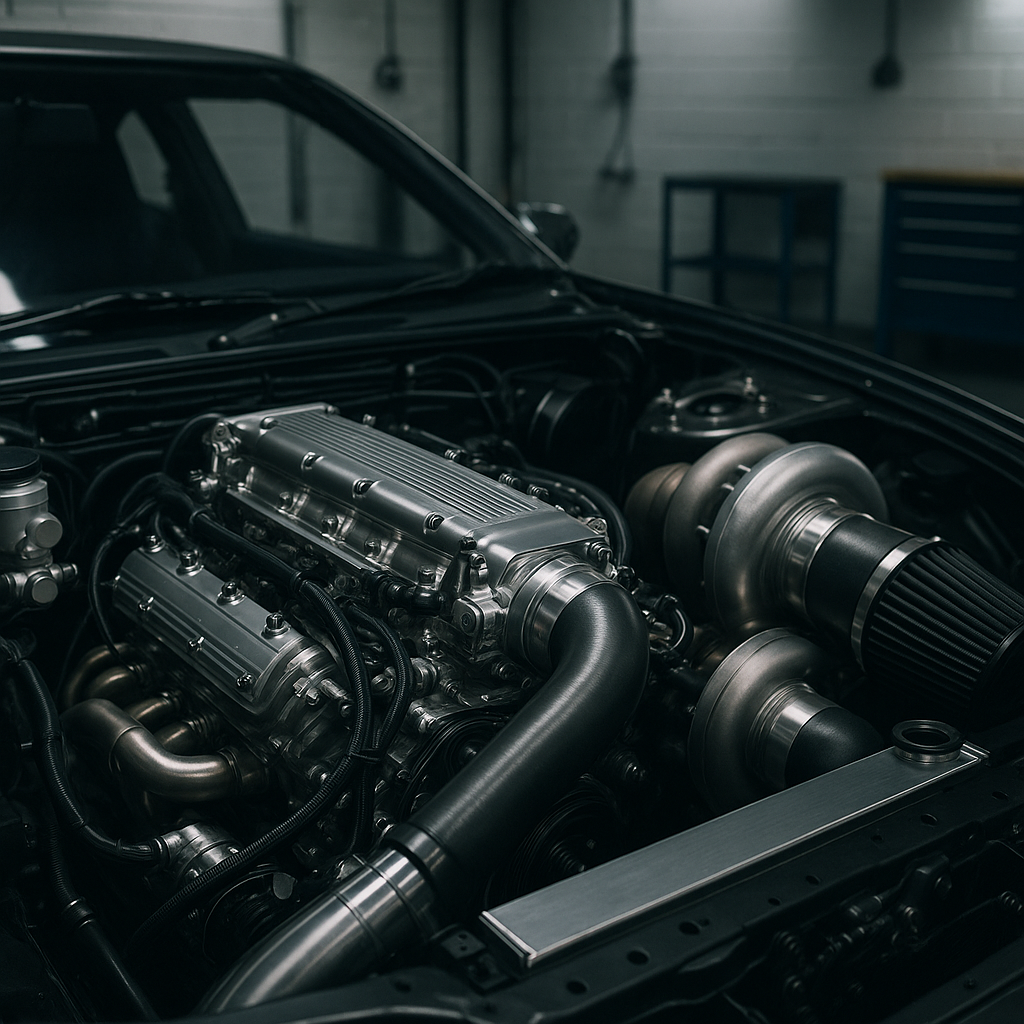
    Modified turbocharged engine bay relevant to engine modification car insurance UK
    Modified turbocharged engine bay relevant to engine modification car insurance UK

    Why Engine Mods Hit Insurers Differently to Everything Else

    Stick a set of aftermarket alloys on your car and most mainstream insurers will shrug. Raise the power output by 40bhp with an ECU remap and suddenly you’re in very different territory. The reason is risk assessment. Insurers price policies based on the statistical likelihood of a claim, and any modification that affects performance, reliability, or repairability shifts that calculation significantly.

    Engine modifications cover a huge range of work. At the lighter end, you’ve got cold air induction kits, panel air filter swaps, and performance exhausts that free up breathing. Then you’ve got ECU remaps, which can push power figures substantially beyond factory spec. Beyond that, you’re into forced induction additions, fuelling system upgrades, and full engine swaps. Each step up that ladder creates a bigger conversation with your insurer, and a bigger risk of getting it wrong if you stay quiet about it.

    The Declaration Duty: You Have to Tell Them, Full Stop

    Under UK insurance law, you have a duty of fair presentation. That’s not just a suggestion buried in your policy documents; it’s a legal obligation under the Insurance Act 2015. In plain terms, you must disclose any modification that could materially affect the risk your insurer is accepting. Engine work absolutely qualifies.

    The common mistake enthusiasts make is assuming that because a modification is relatively modest, it doesn’t need declaring. A stage one remap on a hot hatch might only add 30bhp, but it still alters the car from its manufacturer specification. If you have an accident and an insurer’s engineer discovers the ECU has been modified without disclosure, the insurer can void the policy. Not just reduce the payout. Void it entirely, leaving you personally liable for any third-party claims, which in serious accidents can run to hundreds of thousands of pounds.

    For a solid read on your legal obligations as a policyholder, the Association of British Insurers publishes straightforward guidance on disclosure duties that’s worth bookmarking.

    What Specifically Needs Declaring for Engine Modifications

    Here’s a practical breakdown of what falls under engine modification car insurance UK disclosure requirements:

    • ECU remaps and tune files — any change to factory software counts, even a simple economy map
    • Induction kits and cold air feeds — yes, even a panel filter upgrade technically changes the car
    • Turbo and supercharger additions or upgrades — major risk flags for any insurer
    • Intercooler upgrades — part of the forced induction system, needs declaring
    • Fuel system changes — uprated injectors, fuel pumps, or alternative fuel setups
    • Full or partial engine swaps — this is the biggest one, and requires specialist cover almost universally
    • Exhaust system changes that affect emissions or power — performance de-cats especially
    ECU remap process illustrating engine modification car insurance UK declaration requirements
    ECU remap process illustrating engine modification car insurance UK declaration requirements

    Engine Swaps: The Insurance Conversation That Can’t Be Skipped

    A full engine swap changes your car’s identity, practically speaking. Fitting a 2JZ into an E36 shell, or dropping a V8 into a Defender, creates a vehicle that shares almost nothing in terms of risk profile with its donor body. Mainstream insurers simply won’t touch this. Most won’t even quote. The few that do will load the premium to a point where you’re better off elsewhere.

    This is where specialist modified car insurers earn their keep. Firms like Adrian Flux, Footman James, and Reis Motorsport Insurance have underwriters who understand what a K-series swap into a Rover 25 shell actually means in terms of real-world risk, rather than just seeing a 1.4-litre economy car with a question mark next to it. They can build a policy that reflects the actual build spec rather than defaulting to worst-case assumptions.

    If you’re deep into the scene or building something genuinely unusual, Maxx Directory is a useful starting point for finding specialists, clubs, and resources that understand modified builds properly.

    Agreed Value vs Market Value: Why It Matters on a Modified Build

    This is the bit that catches people off guard. Standard car insurance pays out market value in the event of a write-off. On a stock car, that’s a straightforward calculation. On a modified car, market value can be almost meaningless.

    Say you’ve put £6,000 into engine work on a car with a book value of £4,000. If your insurer writes it off and pays market value, you’re getting £4,000 back on a car you’ve invested £10,000 in. Agreed value policies lock in a specific sum at the start of the policy, agreed between you and the insurer with supporting evidence: receipts, build records, independent valuations. You get what the car is genuinely worth, not what a Glass’s Guide algorithm thinks a stock version would fetch.

    For any modified build with significant engine work, agreed value cover should be non-negotiable. Mainstream comparison sites rarely surface these policies; you need to go directly to specialist brokers.

    Will Engine Mods Always Push Your Premium Through the Roof?

    Not necessarily, though it depends heavily on the modification, the car, and your own driving history. Modest modifications declared upfront to a specialist broker often result in manageable premiums, especially if you have a clean licence and some years of no-claims behind you. The premium spike tends to hit hardest on younger drivers and on builds where the power-to-weight ratio changes dramatically.

    Some modifications can actually work in your favour if you frame the conversation correctly. A car that’s been properly sorted mechanically, with new brakes, refreshed suspension, and a well-documented build history, is arguably a lower risk than a high-mileage stock car with unknown wear. Specialist underwriters understand this nuance. Mainstream ones generally don’t.

    The Practical Steps Before You Modify

    Before any engine work goes ahead, here’s what I’d do. Ring your current insurer first and ask the question directly: will this modification affect my policy? Get the answer in writing, even if it’s just a saved email thread. If they say it’s fine and then void a claim later, you’ve got something to come back with.

    If your current insurer can’t handle modified cars sensibly, start shopping with specialists before the mod goes in. Changing insurer mid-policy is possible but messy. Getting cover locked in beforehand means you’re never in a position where your car is modified and uninsured, even briefly.

    Keep receipts for every part. Document everything with photos. If you’re building towards an agreed value policy down the line, that paper trail is what the underwriter will use to establish the figure. Lose the receipts and you lose the leverage.

    The Bottom Line on Engine Modification and Insurance

    Engine modification car insurance UK is not the impenetrable nightmare some enthusiasts assume, but it does require more active management than a standard policy. Declare everything. Use specialists for anything beyond mild bolt-ons. Push for agreed value if your build has meaningful money in it. And never, ever assume that because something is a popular modification, your insurer already knows about it.

    The scene is full of people who’ve built brilliant cars and then discovered the insurance side of things only when something went wrong. Don’t be that person. Sort the paperwork as seriously as you sort the build.

    Frequently Asked Questions

    Do I need to tell my insurer about an ECU remap?

    Yes, absolutely. An ECU remap changes your car from its manufacturer specification and must be declared to your insurer. Failure to disclose it could result in your policy being voided if you make a claim, leaving you personally liable for any costs.

    Will a performance induction kit affect my car insurance in the UK?

    It can do, yes. Even a panel filter swap or cold air induction kit technically modifies the car from standard, and most insurers require it to be declared. The premium impact is usually minor for modest intake changes, but disclosure is still legally required under the Insurance Act 2015.

    Which UK insurers specialise in modified cars with engine work?

    Specialist brokers including Adrian Flux, Footman James, and Reis Motorsport Insurance have underwriters experienced with modified builds, including engine swaps and remaps. These are far more likely to offer sensible cover than mainstream comparison site results.

    What is agreed value car insurance and do I need it for a modified engine build?

    Agreed value insurance fixes a specific payout figure at the start of your policy, based on your car’s genuine worth including modifications and parts. For any build with significant engine investment, it’s strongly recommended, as standard market value payouts rarely reflect the true cost of a modified car.

    Can an insurer void my policy if they discover an undisclosed engine modification?

    Yes. If an insurer discovers a material undisclosed modification after a claim, they are legally entitled to void the policy entirely and refuse to pay. This can leave you liable for third-party costs, which in serious accidents can be substantial. Always declare engine modifications upfront.

  • The MaxxDirectory Relaunched!

    It brings me great joy to announce the return of the MaxxDirectory!

    The New MaxxDirectory!

    The MaxxDirectory History

    Back in 2006, me and my then business partner were running Maxxd.com as a modified car club. It grew and grew and we started to think more about how we could pivot from a national modified car club, to a legitimate business that would allow us to leave our jobs and pursue our passion for cars!

    My business partner decided that maybe a Yellow Pages style directory for Modified and Performance car companies in the UK would be a good shout. The MaxxDirectory was born!

    It took off immediatly, and as it got higher in Google we were able to sell premium listings and upgrades which got some revenue coming in and this allowed us to scale down our day jobs and start to focus more on our own thing.

    MaxxDirectory Hibernation

    I think a combination of the 2008 recession and growing interests in other areas meant the Maxxd.com brand and the MaxxDirectory started fading away. We moved our efforts onto other business ideas and these domains have sat dormant… until now.

    MaxxDirectory Rebirth

    I was browsing my list of domain names the other day, and realised that I still had the domain name for the MXDIR, so me and the team got to work and made a fresh new website and started adding our favourite modified and performance car part and service businesses to it. It was such a positive experience, reviving a website that was the very start of our business careers.

    If you would like to list your car business, then visit the website and submit a new listing. At the moment we’ve made it 100% free – we may charge in future, but we’ll see what happens 🙂