Category: Highlight

  • Preview: 2021 BMW 4-Series Convertible is a conspicuous drop-top

    The reveal of the redesigned 2021 BMW 4-Series coupe in June was, for lack of a better word, a bit jarring due to the radical new look introduced for the car’s grille. (BMW also shook things up by making the 4-Series longer than the 3-Series sedan, with which it shares a platform and powertrains.)

    Now that the same look has been applied to the redesigned 2021 BMW M3 sedan and M4 coupe, we’re starting to become accustomed to it, so much so that it almost looks entirely normal on the redesigned 2021 BMW 4-Series Convertible unveiled late on Tuesday. The new drop-top is due at dealerships in March 2021.
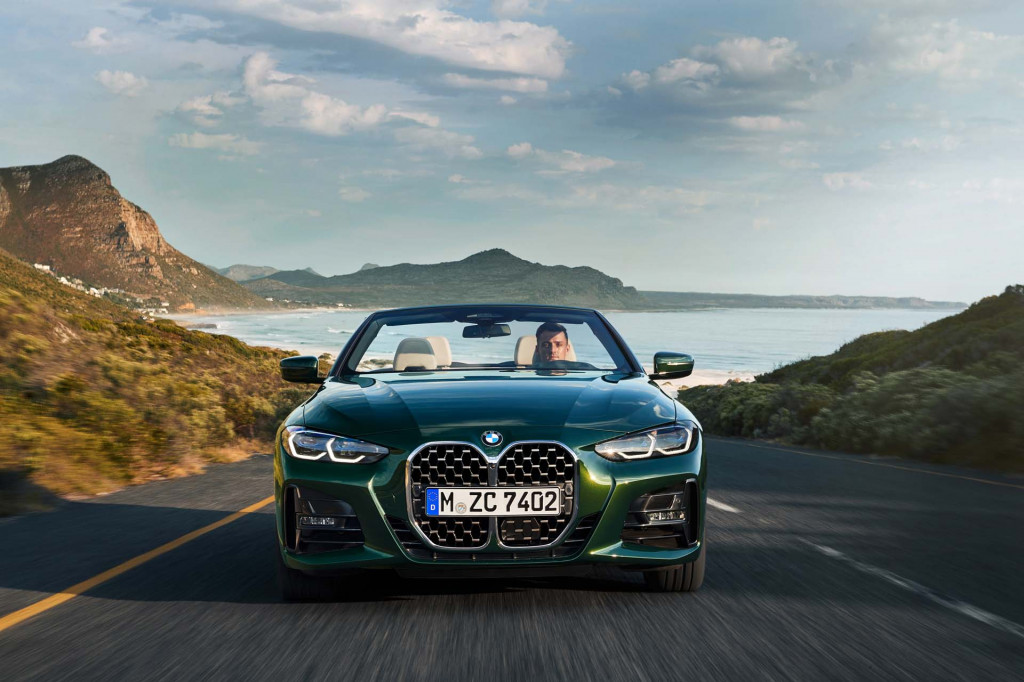
    2021 BMW 4-Series Convertible
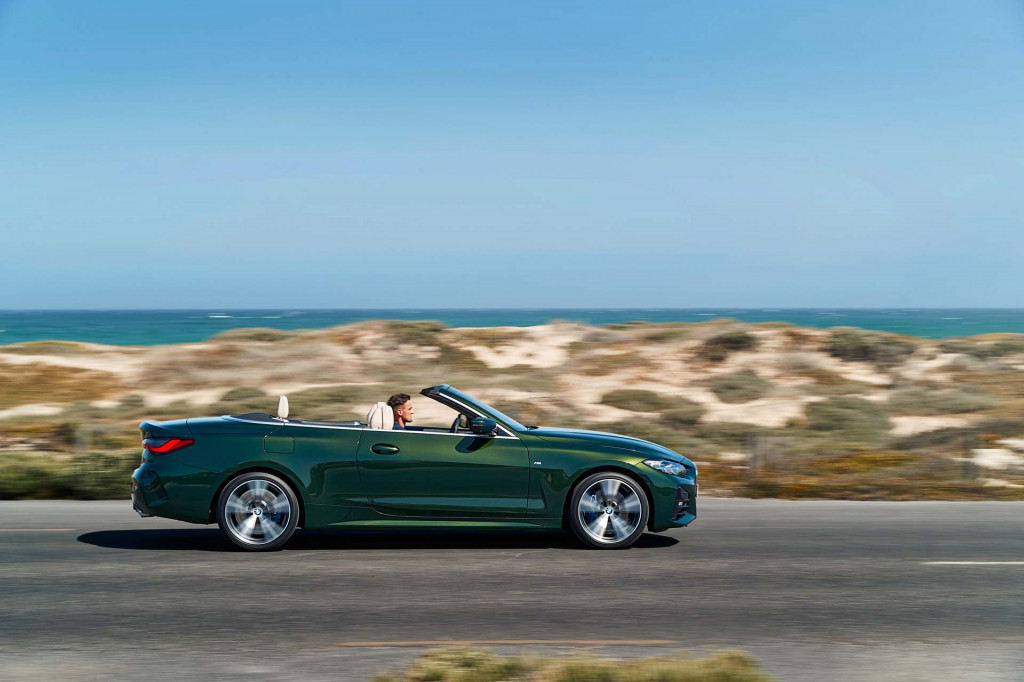
    2021 BMW 4-Series Convertible
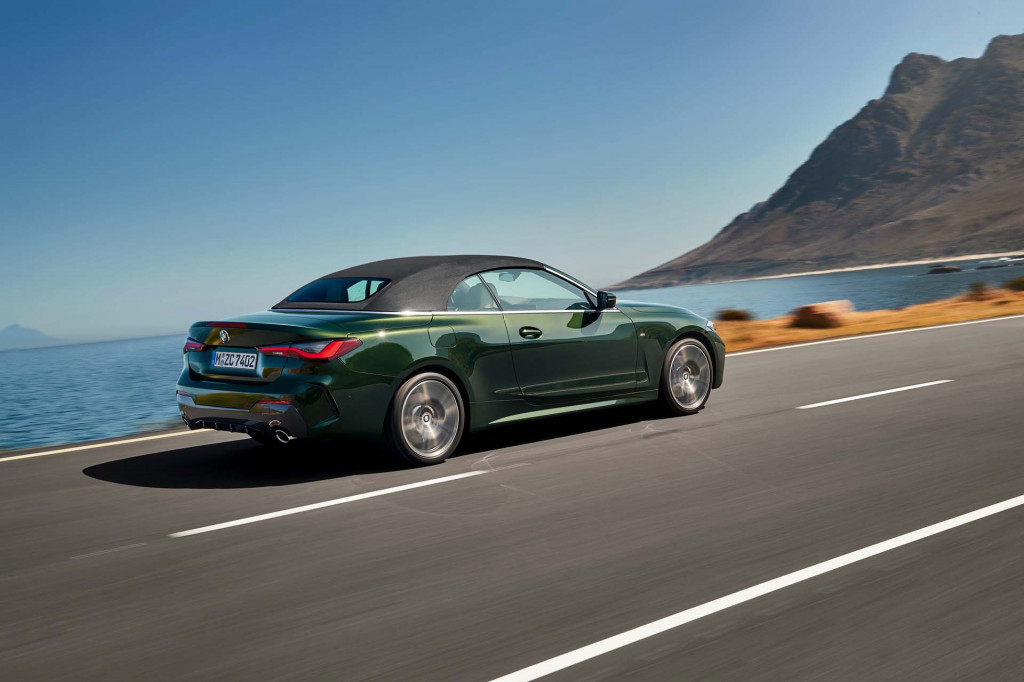
    2021 BMW 4-Series Convertible
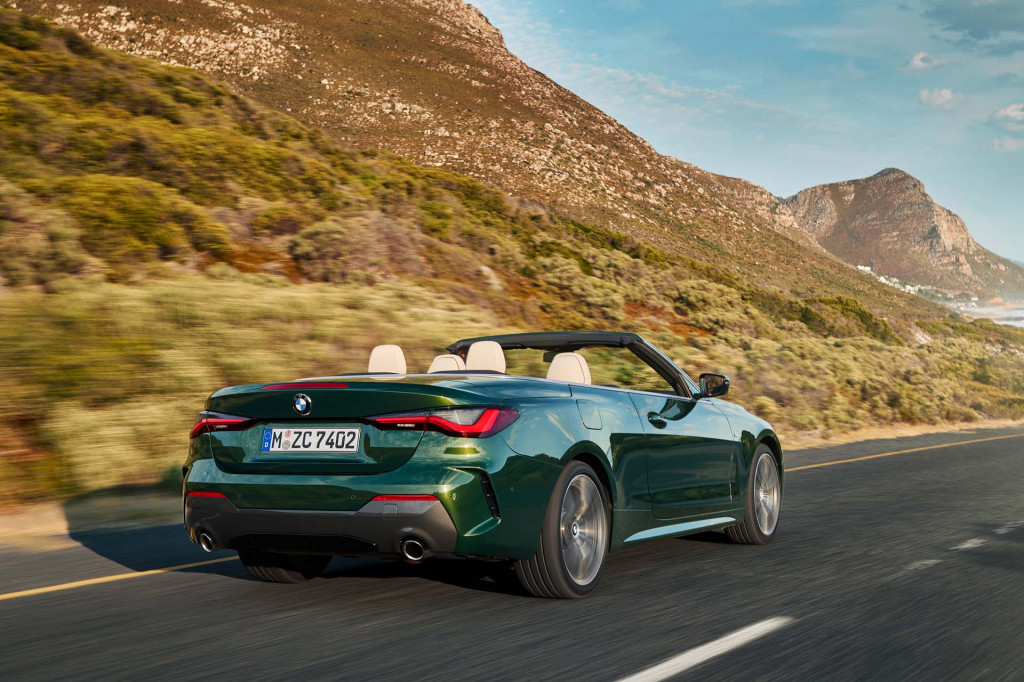
    2021 BMW 4-Series Convertible

    2021 BMW 4-Series Convertible

    2021 BMW 4-Series Convertible

    2021 BMW 4-Series Convertible

    2021 BMW 4-Series Convertible

    BMW has gone with an evolutionary look for most of the vehicle, though up front is that now familiar oversized grille with the iconic kidneys stretched vertically instead of horizontally. The design actually links the 4-Series with sporting BMWs of the past like the pre-war 328 and 3.0 CSi of the 1970s.

    The new looks extend to the roof which is now a soft-top instead of a retractable hard-top like on the previous generation. The simpler, sleeker soft-top not only improves the way the 4-Series Convertible looks but also makes it lighter and takes up less space both when stretched over the cabin and folded in the trunk. BMW said the soft-top is approximately 40% lighter than the previous generation’s hard-top. It also results in 0.2 inches of extra headroom in the cabin when up, and 1.2 cubic feet of extra storage in the trunk when folded.
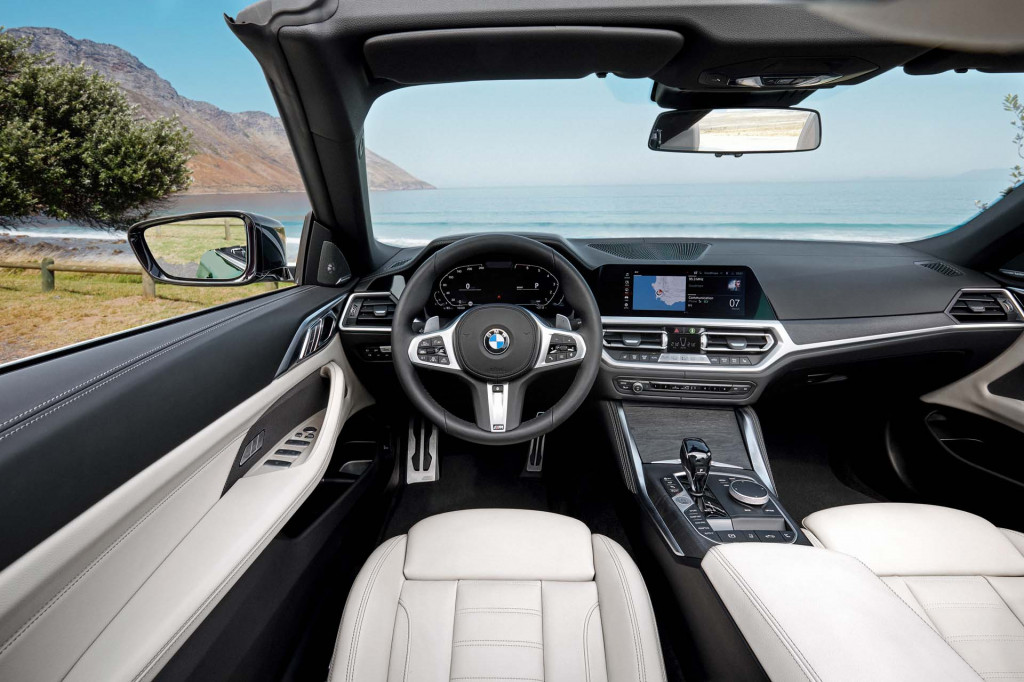
    2021 BMW 4-Series Convertible
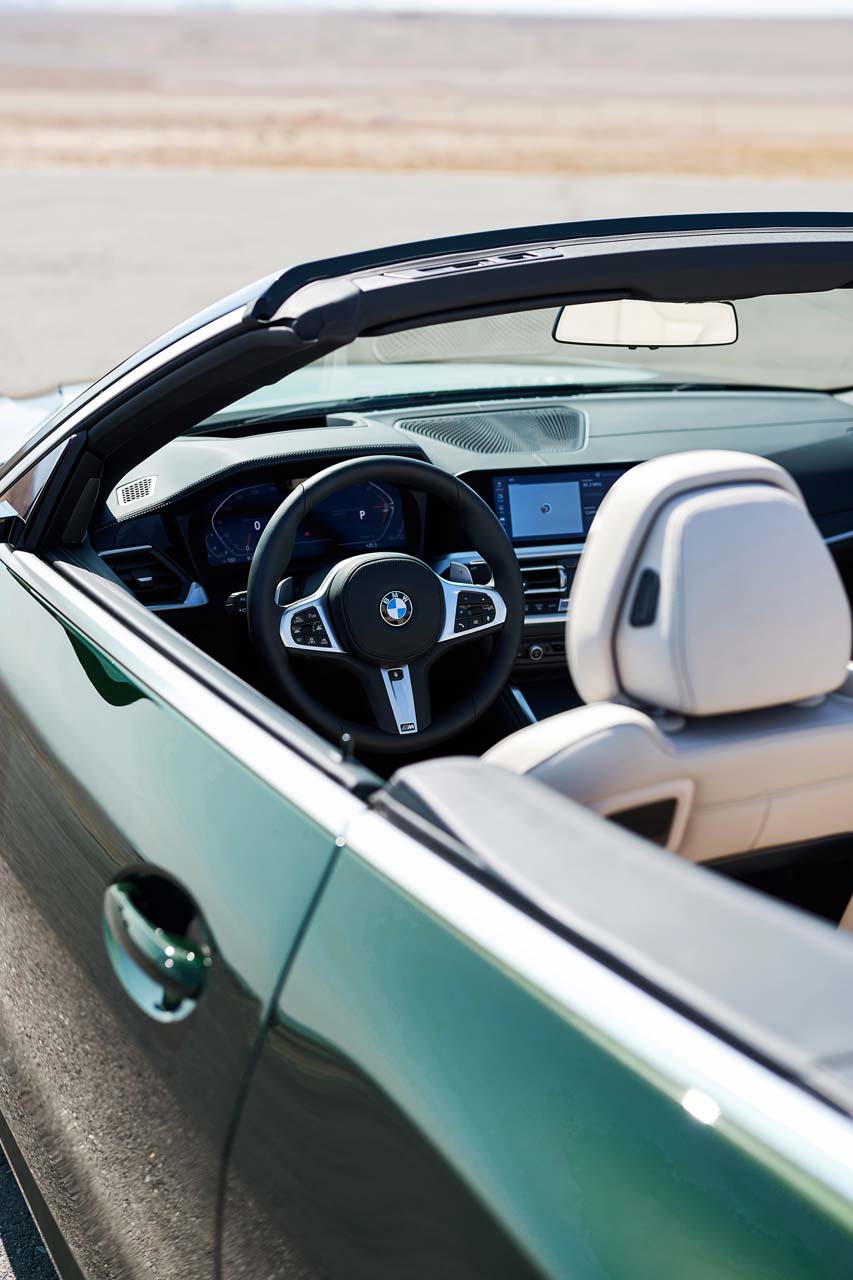
    2021 BMW 4-Series Convertible
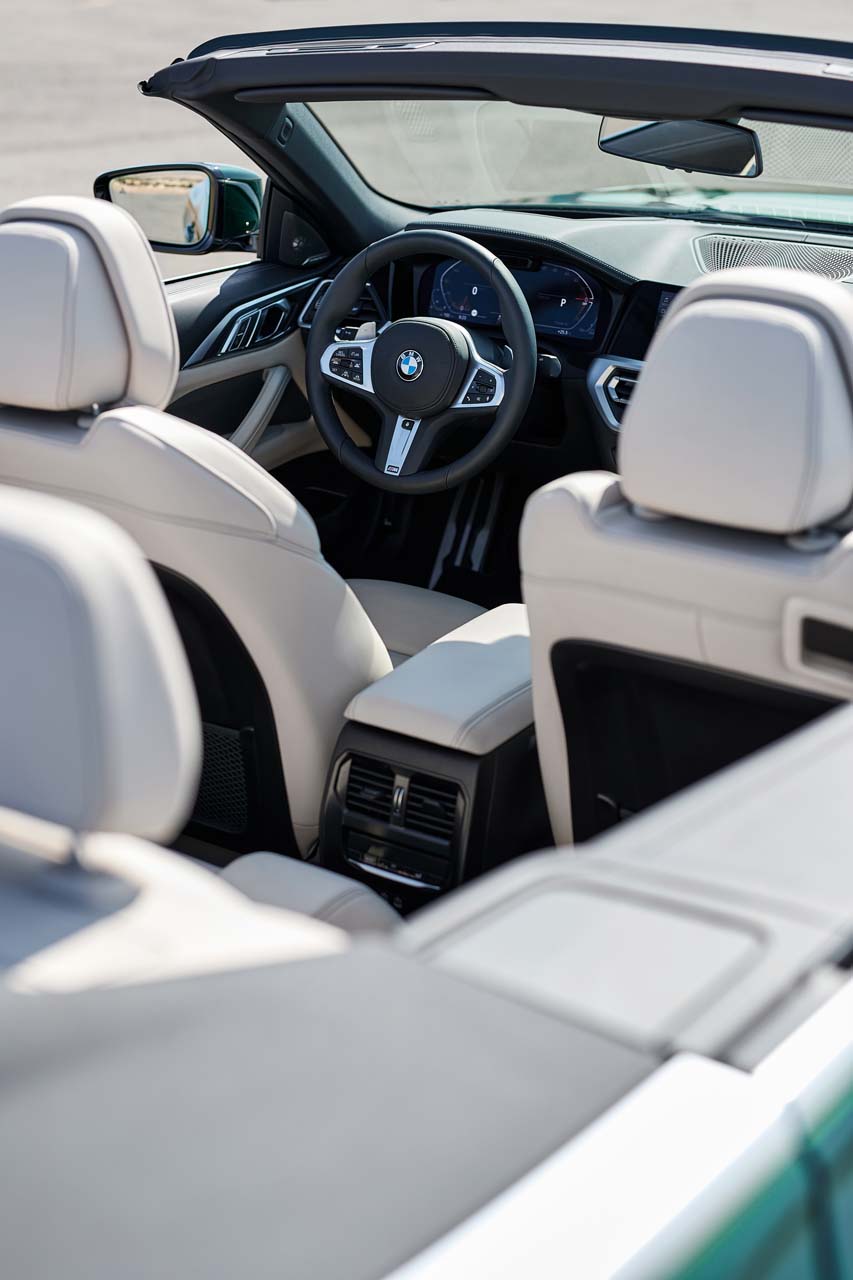
    2021 BMW 4-Series Convertible

    2021 BMW 4-Series Convertible

    2021 BMW 4-Series Convertible

    2021 BMW 4-Series Convertible

    The interior will be familiar to anyone who’s been in a modern BMW. A fully digital instrument cluster with a 12.3-inch screen is available (an analog cluster with an integrated 5.1-inch screen is still standard), and next to this sits a large infotainment screen (8.8 inches standard and 10.25 inches available). Sport seats and a leather-lined sport steering wheel are standard.

    Standard electronic driver-assist features include forward collision warning with pedestrian detection, lane departure warning with steering correction, blind spot warning, and rear cross traffic alert. A worthy option is the parking assistance package which adds a surround-view camera.

    At launch there will be 430i and M440i variants, with rear-wheel drive standard and all-wheel drive available from July 2021. The sole transmission is an 8-speed automatic.
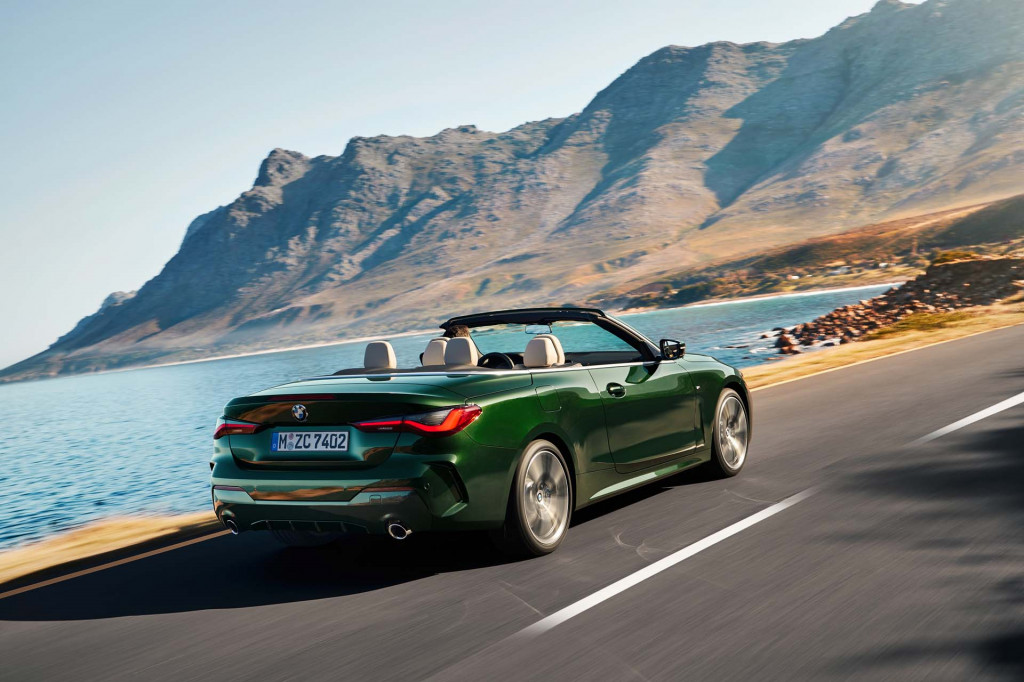
    2021 BMW 4-Series Convertible

    2021 BMW 4-Series Convertible

    The 430i packs a 2.0-liter turbocharged inline-4 delivering 255 horsepower and 294 pound-feet of torque. The M440i has a 3.0-liter turbocharged inline-6 and mild-hybrid system good for 382 hp and 364 lb-ft. The mild-hybrid system temporarily boosts output by 11 hp. It consists of an integrated starter motor and generator that is able to recover energy under braking.

    The M440i is the quickest of the bunch, needing 5.0 seconds to reach 60 mph and topping out at 155 mph (electronically limited). Performance fans can look forward to an M4 Convertible which will have a 3.0-liter twin-turbocharged inline-6 with as much as 503 hp.

    Pricing starts at $54,095 for the 430i Convertible, and at $64,995 for the M440i Convertible. All-wheel drive is a $2,000 premium. Sport-tuned suspension and adjustable dampers can also be added at extra cost.

    The expansion of BMW’s 4-Series family isn’t over. A redesigned 4-Series Gran Coupe is in the works, and it may spawn an M4 variant this time around. There will also be a new battery-electric sedan dubbed the i4, and it will offer up to 523 hp. Both of these 4-Series members are due in 2021.

    For more on the BMW 4-Series, read the in-depth reviews at The Car Connection.
    Source

  • 2020 Ford Mustang recalled because the brake pedal might fall off

    Ford is recalling automatic-transmission 2020 Mustang models due to a defect that could result in fracturing of the brake-pedal bracket, possibly causing the bracket to snap. The recall affects 38,005 cars, according to a notice issued by the National Highway Traffic Safety Administration (NHTSA) on Sept. 23.

    First spotted by Roadshow, the defect is due to a change in material for the brake-pedal bracket. A switch was made from nylon to polypropylene with “insufficient design margins,” Ford documents submitted to the NHTSA show. This was only done for automatic-transmission cars; manual-transmission 2020 Mustangs are unaffected. The bracket in question was introduced into production on March 4, 2019 and taken out of production on Aug. 13, 2020, so only cars built during that time span are affected.

    During “sudden stopping,” the bracket could snap, making it harder for the driver to brake, according to the recall notice. In the accompanying documents, Ford said it was not aware of any crashes or injuries related to the defect.

    2020 Ford Mustang 2.3 High Performance Package

    2020 Ford Mustang 2.3 High Performance Package

    The recall is expected to begin Nov. 16. Owners of affected cars will be notified by Ford, and dealerships will replace the pedal-bracket assembly free of charge.

    Owners can also contact Ford customer service at 1-866-436-7332. Ford’s reference number for this recall is 20S52.

    This is the third recall for the 2020 Mustang, with the other two announced in May. One was due to the “transmission not in park” warning message and associated chime being shorter than intended on 2019-’20 Mustangs, as well as some 2019 Expedition models. The 2020 Mustang was also recalled for an improperly calibrated forward-facing camera, which could impact driver-assist features like adaptive cruise control, active lane control, and automatic high beams. That recall affected just 24 cars, however.

    Source

  • The Maserati MC20 has F1 tech

    Maserati hasn’t raced in Formula One in decades, but the automaker’s recently unveiled MC20 supercar boasts some F1-derived engine tech, according to Jason Fenske of Engineering Explained.

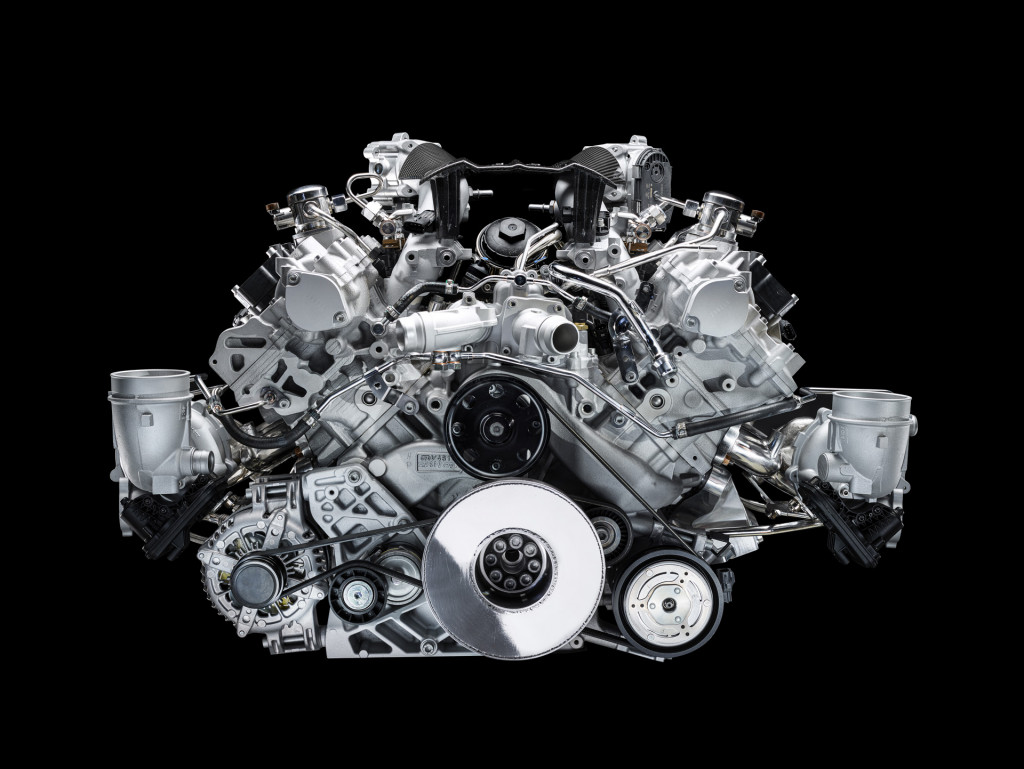
    Specifically, the car’s 3.0-liter twin-turbocharged V-6 uses pre-chamber combustion. That means each cylinder has dual combustion chambers, each with its own spark plug. Pre-chamber combustion isn’t new; Honda was using it in the 1970s, Fenske noted. But Maserati is doing something different with the technology.

    Maserati is likely the only automaker using a so-called passive pre-chamber system in a production car. As the name implies, air and fuel aren’t actively injected into the pre-chamber, which is smaller than the main combustion chamber and located directly above it. Instead, the air-fuel mixture is drawn into the main combustion chamber, and then pushed up into the pre-chamber, by the motion of the piston.

    Maserati Nettuno 3.0-liter twin-turbocharged V-6

    Maserati Nettuno 3.0-liter twin-turbocharged V-6

    This setup is designed to speed up combustion, which in turn reduces knock, Fenske said. Knock is a major potential issue due to the lean air-fuel ratios used in the engine and other modern engines to pass emissions tests. Maserati’s patent on the design also claims it can reduce fuel consumption by 30%, or allow for an engine to be downsized by 25% while producing the same power as a larger one.

    Both the pre-chamber and the main combustion chamber have their own spark plugs. At high rpm and high load, only the pre-chamber spark plug is used, while both are used in other conditions, Fenske said. The amount of time between firing each spark plug can also be adjusted, changing the duration of combustion to warm up the catalytic converter, or even make the engine quieter, Fenske said.

    In the MC20, the Nettuno engine produces 621 horsepower and 538 pound-feet of torque. That allows for 0-60 mph in 2.9 seconds and a top speed of 202 mph, according to Maserati. The automaker hasn’t provided pricing information or a production timeline for the MC20, its first supercar since the MC12 ended production in 2005.

    Source