The reveal of the redesigned 2021 BMW 4-Series coupe in June was, for lack of a better word, a bit jarring due to the radical new look introduced for the car’s grille. (BMW also shook things up by making the 4-Series longer than the 3-Series sedan, with which it shares a platform and powertrains.)
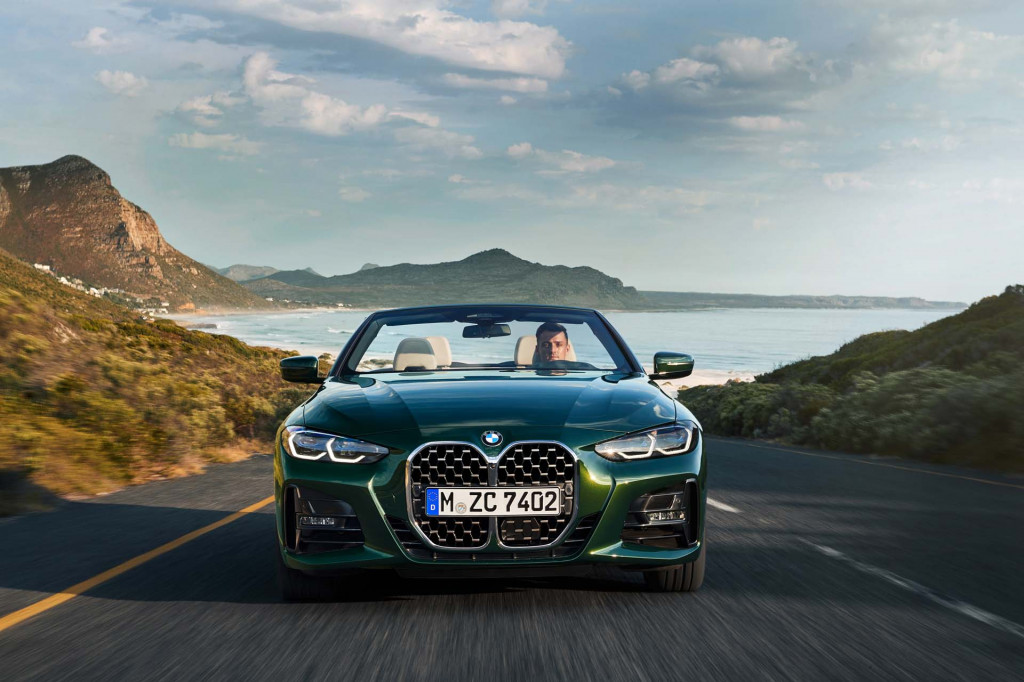
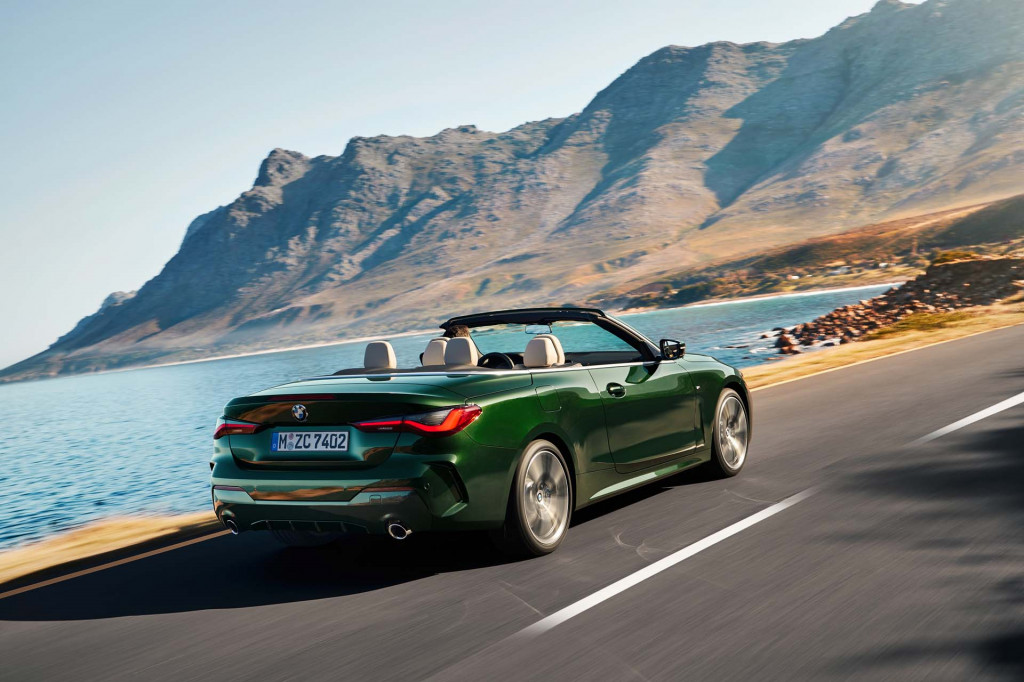
Now that the same look has been applied to the redesigned 2021 BMW M3 sedan and M4 coupe, we’re starting to become accustomed to it, so much so that it almost looks entirely normal on the redesigned 2021 BMW 4-Series Convertible unveiled late on Tuesday. The new drop-top is due at dealerships in March 2021.
2021 BMW 4-Series Convertible
2021 BMW 4-Series Convertible
2021 BMW 4-Series Convertible
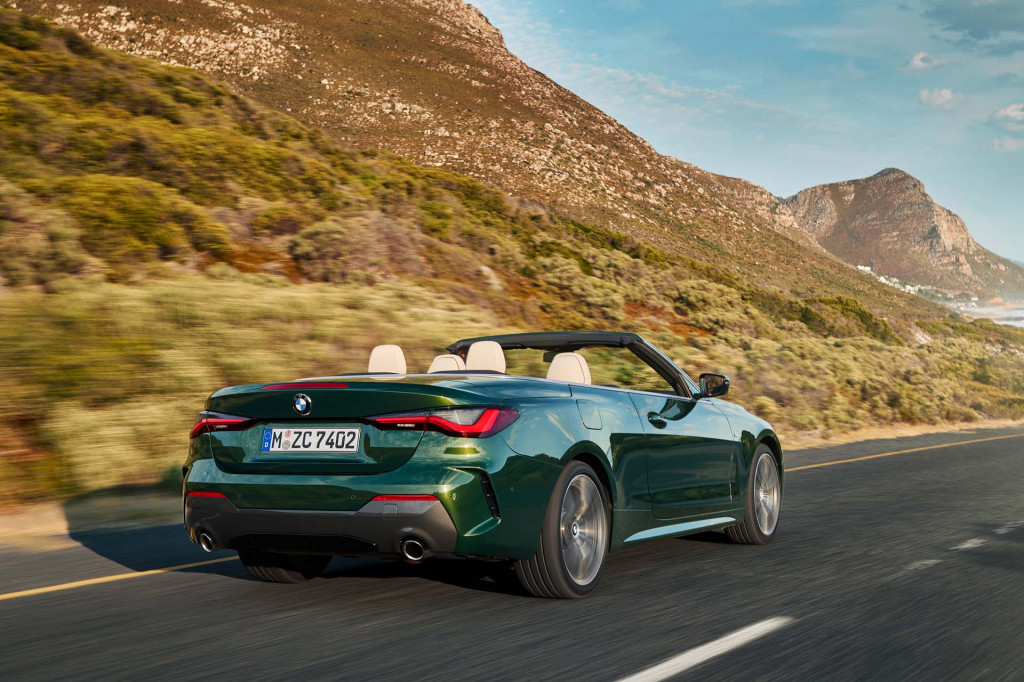
2021 BMW 4-Series Convertible
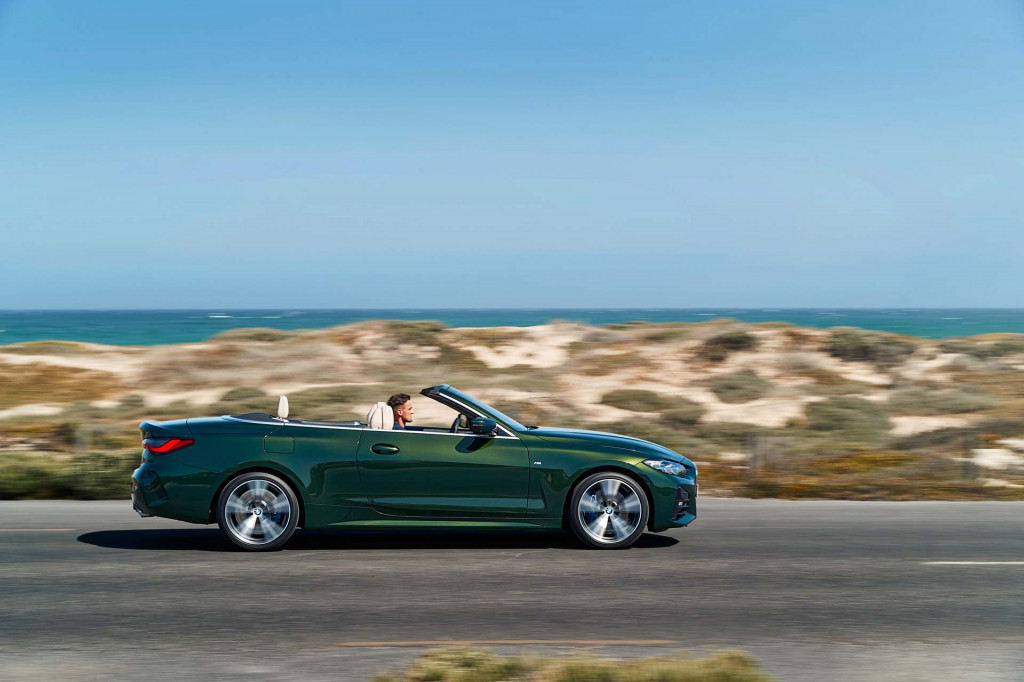
BMW has gone with an evolutionary look for most of the vehicle, though up front is that now familiar oversized grille with the iconic kidneys stretched vertically instead of horizontally. The design actually links the 4-Series with sporting BMWs of the past like the pre-war 328 and 3.0 CSi of the 1970s.
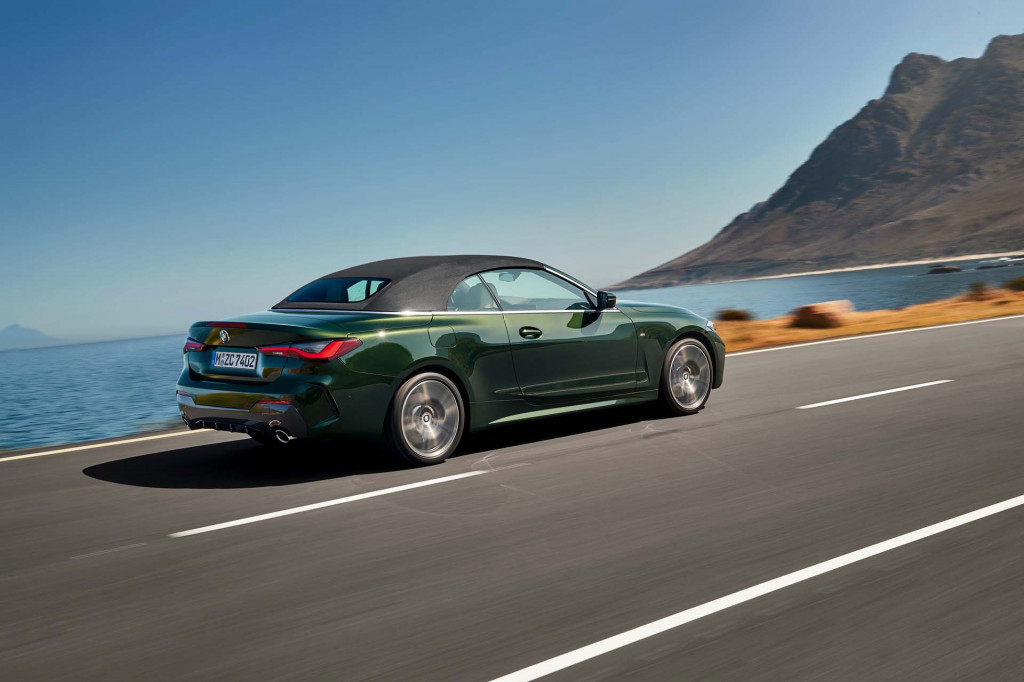
The new looks extend to the roof which is now a soft-top instead of a retractable hard-top like on the previous generation. The simpler, sleeker soft-top not only improves the way the 4-Series Convertible looks but also makes it lighter and takes up less space both when stretched over the cabin and folded in the trunk. BMW said the soft-top is approximately 40% lighter than the previous generation’s hard-top. It also results in 0.2 inches of extra headroom in the cabin when up, and 1.2 cubic feet of extra storage in the trunk when folded.
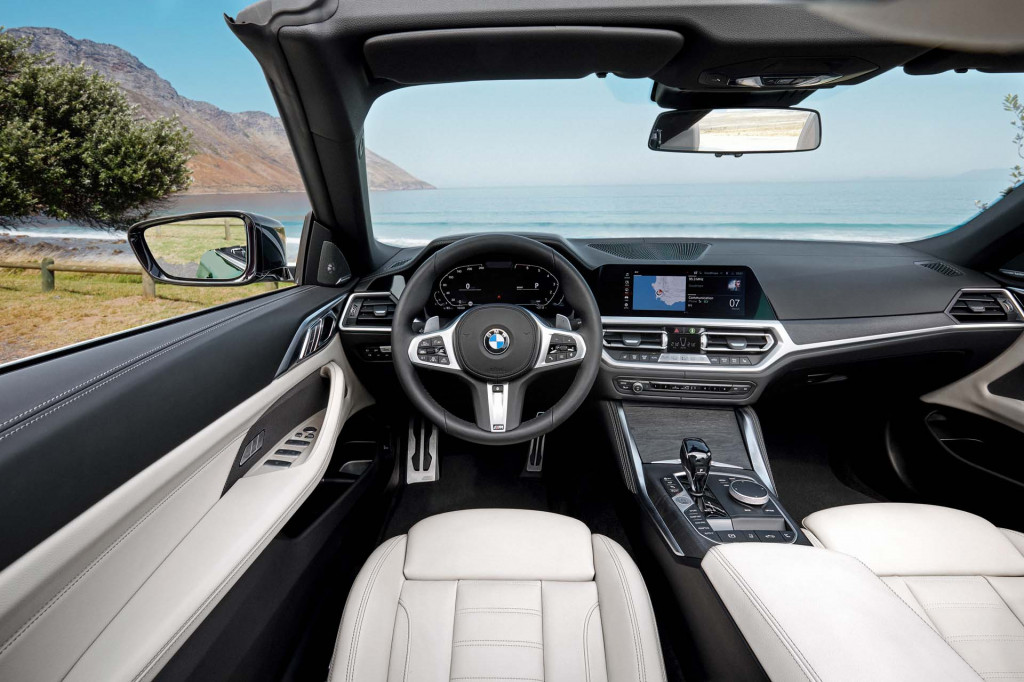
2021 BMW 4-Series Convertible
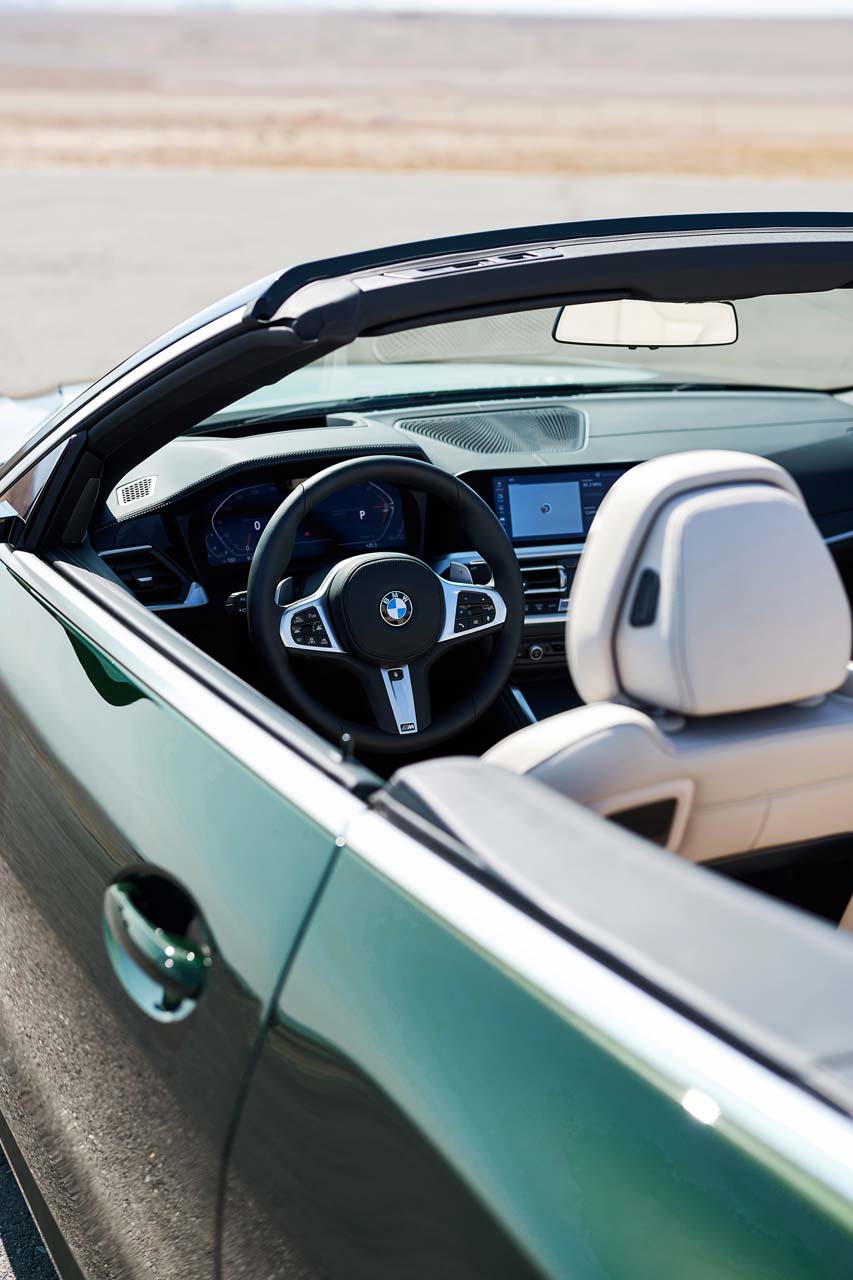
2021 BMW 4-Series Convertible
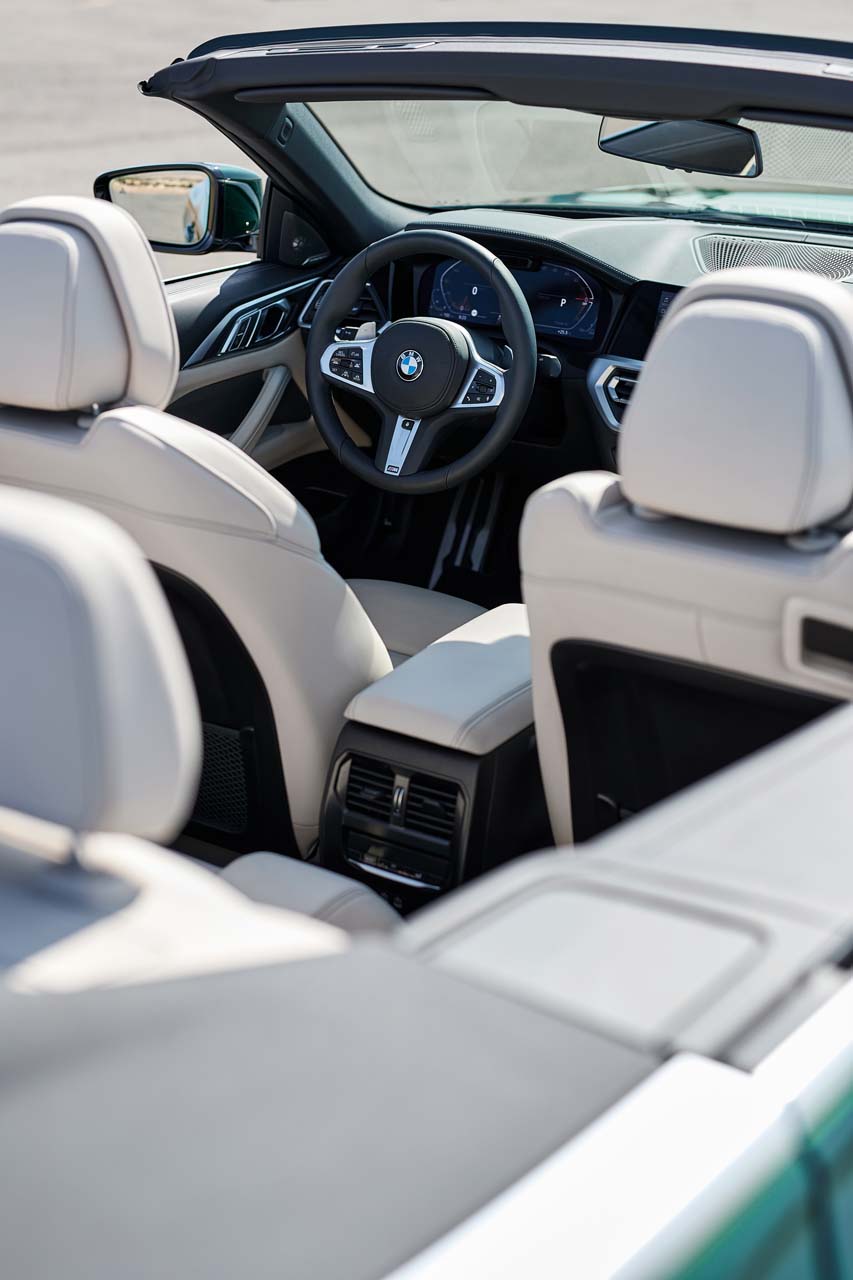
2021 BMW 4-Series Convertible
The interior will be familiar to anyone who’s been in a modern BMW. A fully digital instrument cluster with a 12.3-inch screen is available (an analog cluster with an integrated 5.1-inch screen is still standard), and next to this sits a large infotainment screen (8.8 inches standard and 10.25 inches available). Sport seats and a leather-lined sport steering wheel are standard.
Standard electronic driver-assist features include forward collision warning with pedestrian detection, lane departure warning with steering correction, blind spot warning, and rear cross traffic alert. A worthy option is the parking assistance package which adds a surround-view camera.
At launch there will be 430i and M440i variants, with rear-wheel drive standard and all-wheel drive available from July 2021. The sole transmission is an 8-speed automatic.
2021 BMW 4-Series Convertible
The 430i packs a 2.0-liter turbocharged inline-4 delivering 255 horsepower and 294 pound-feet of torque. The M440i has a 3.0-liter turbocharged inline-6 and mild-hybrid system good for 382 hp and 364 lb-ft. The mild-hybrid system temporarily boosts output by 11 hp. It consists of an integrated starter motor and generator that is able to recover energy under braking.
The M440i is the quickest of the bunch, needing 5.0 seconds to reach 60 mph and topping out at 155 mph (electronically limited). Performance fans can look forward to an M4 Convertible which will have a 3.0-liter twin-turbocharged inline-6 with as much as 503 hp.
Pricing starts at $54,095 for the 430i Convertible, and at $64,995 for the M440i Convertible. All-wheel drive is a $2,000 premium. Sport-tuned suspension and adjustable dampers can also be added at extra cost.
The expansion of BMW’s 4-Series family isn’t over. A redesigned 4-Series Gran Coupe is in the works, and it may spawn an M4 variant this time around. There will also be a new battery-electric sedan dubbed the i4, and it will offer up to 523 hp. Both of these 4-Series members are due in 2021.
For more on the BMW 4-Series, read the in-depth reviews at The Car Connection.
Source