Category: Highlight

  • Revised 2020 F1 calendar likely finalized with addition of 4 more rounds, including Turkey

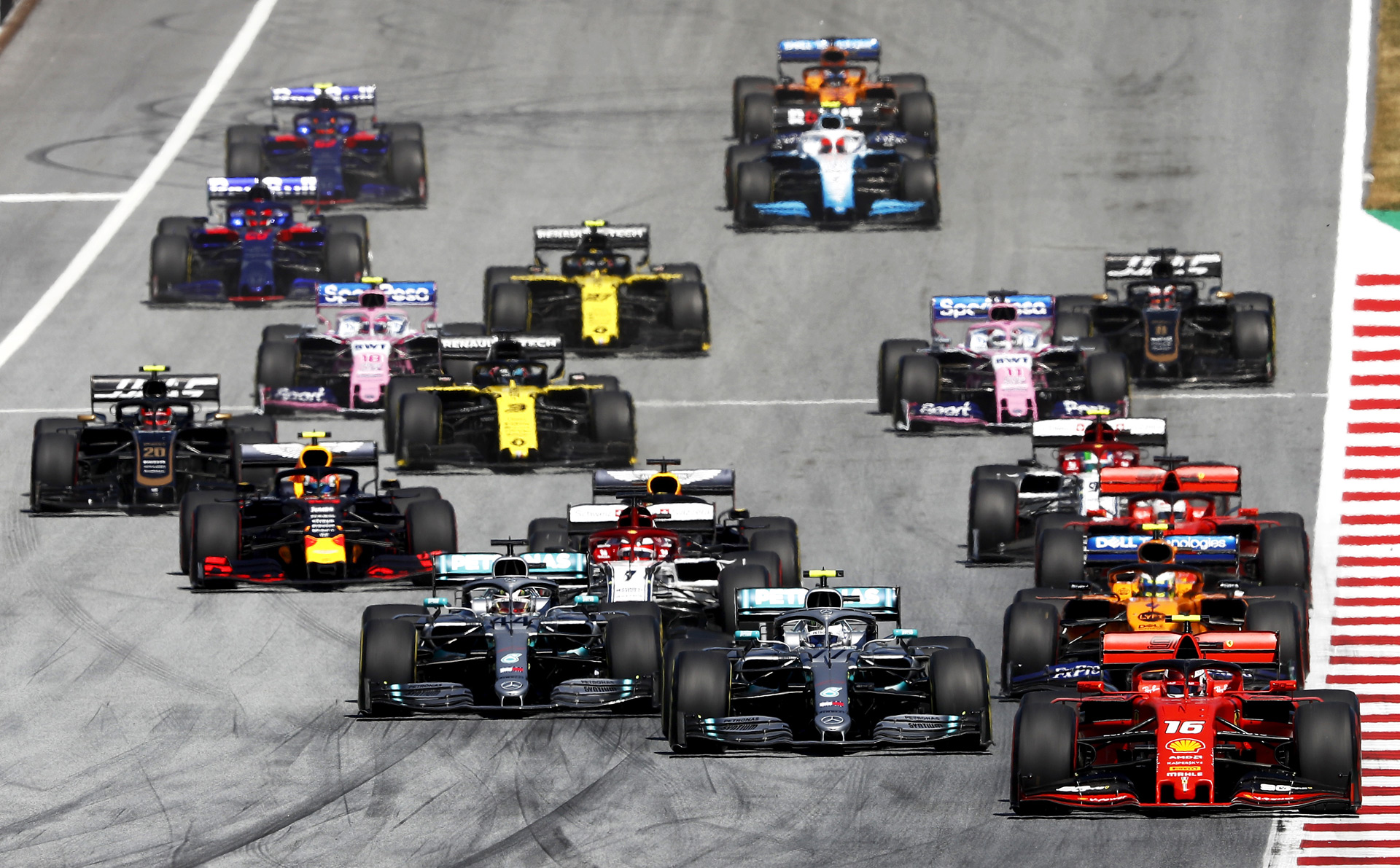
    The 2020 Formula One World Championship was set to host a record 22 rounds but then the Covid-19 coronavirus pandemic came and threw a spanner in the works.

    The start of the season was postponed to July and organizers needed to reshuffle things in order to get the most rounds possible before the year is out. On Tuesday, the organizers announced four more rounds were added to the calendar, bringing the total to 17.

    The new rounds include the return of the Turkish Grand Prix, as well as the Bahrain Grand Prix, a new Sakhir Grand Prix to also be held in Bahrain, and the Abu Dhabi Grand Prix.

    Sadly, all American rounds originally planned for 2020—the United States, Mexican, Canadian and Brazilian grands prix—have been scrapped due to the higher number of coronavirus cases in the Americas and the resulting stricter restrictions on travel and hosting of events.

    Organizers also announced Tuesday that the Chinese Grand Prix won’t be postponed as previously planned. The round has instead been canceled.

    In place of these rounds, the organizers have added new rounds like the Sakhir Grand Prix at the Bahrain International Circuit in Sakhir, Bahrain, as well as the Eifel Grand Prix in Germany to be held at the Nürburgring’s grand prix track, the return of the Portuguese Grand Prix to be held at the Algarve International Circuit in Portimao, and the Emilia-Romagna Grand Prix to be held at the Autodromo Enzo e Dino Ferrari in Imola, Italy.

    The first eight rounds of the revised 2020 calendar were confirmed in early June. In July, the organizers added the Tuscan and Russian grands prix to the list, to be held at the Mugello and Sochi circuits, respectively. Italy’s Mugello is owned by Ferrari and has never hosted an F1 race. The special round at Mugello this year will coincide with Ferrari’s 1,000th grand prix.

    The revised 2020 season kicked off on July 5 with the Austrian Grand Prix in Spielberg, Austria. A second round in Austria, the Styrian Grand Prix, was held on July 12. The same doubleheader-style schedule took place in August with the British Grand Prix at Silverstone, United Kingdom, on Aug. 2 and then a special 70th Anniversary Grand Prix at Silverstone on Aug. 9. The special race marked this year’s 70th anniversary of the hosting of the first F1 race, which also took place at Silverstone. A third and final doubleheader-style schedule will take place near the end of the year in Bahrain.

    The dates for the 17 confirmed rounds of the revised 2020 F1 calendar are as follows:

    July 5 – Austrian Grand Prix – Spielberg, Austria
    July 12 – Styrian Grand Prix – Spielberg, Austria
    July 19 – Hungarian Grand Prix – Budapest, Hungary
    August 2 – British Grand Prix – Silverstone, United Kingdom
    August 9 – 70th Anniversary Grand Prix – Silverstone, United Kingdom
    August 16 – Spanish Grand Prix – Barcelona, Spain
    August 30 – Belgian Grand Prix – Spa-Francorchamps, Belgium
    September 6 – Italian Grand Prix – Monza, Italy
    September 13 – Tuscan Grand Prix – Mugello, Italy
    September 27 – Russian Grand Prix – Sochi, Russia
    October 11 – Eifel Grand Prix – Nürburgring, Germany
    October 25 – Portuguese Grand Prix – Portimao, Portugal
    November 1 – Emilia-Romagna Grand Prix – Imola, Italy
    November 15 – Turkish Grand Prix – Istanbul, Turkey
    November 29 – Bahrain Grand Prix – Sakhir, Bahrain
    December 6 – Sakhir Grand Prix – Sakhir, Bahrain
    December 13 – Abu Dhabi Grand Prix – Yas Island, Abu Dhabi

    Source

  • Toyota GR’s hypercar may have canopy-style roof and no doors

    Toyota has filed patent applications with the United States Patent and Trademark Office (USPTO) for what appear to be canopy-style doors for the upcoming GR Super Sport hypercar.

    First spotted by users on the GR86.org forum, the applications show the windshield, roof, and side glass of a car lifting up as one piece, with a hinge at the front. The driver enters and exits by swinging their legs over the body sides.

    Toyota showed a concept version of the GR Super Sport at the 2018 Tokyo Auto Salon. The concept didn’t have any obvious cut lines for conventional doors, but it did have lines running parallel to the side glass that match the patent-application drawings. At the time, Toyota didn’t mention a canopy opening.

    Toyota GR Super Sport concept

    Toyota GR Super Sport concept

    The GR Super Sport is being developed for the World Endurance Championship’s new Le Mans Hypercar (LMH) class. Toyota is the last manufacturer standing in the current LMP1 class, and wants to transition to LMH when it replaces LMP1 in 2021. Unlike LMP1 cars, LMH cars must be based on road cars. Manufacturers must build at least 25 of those road cars for homologation in the first season, and 100 road cars in the second season.

    Toyota GR Super Sport canopy patent image

    Toyota GR Super Sport canopy patent image

    Toyota hasn’t confirmed specs, but the GR Super Sport concept has a hybrid system based around a 2.4-liter twin-turbo V-6. The engine is mounted in the middle of the car and drives the rear wheels with help from an electric motor-generator. A second motor-generator powers the front axle, giving the car all-wheel drive. Toyota quoted total system output of 986 horsepower for the concept.

    In addition to Toyota, Scuderia Cameron Glickenhaus has committed to the LMH class. Aston Martin initially discussed entering its Valkyrie, but has put those plans on hold to focus on Formula One. A companion class for the IMSA WeatherTech SportsCar Championship, called LMDh (Le Mans Daytona hybrid), could see Porsche return to top-level endurance racing as well.

    Source

  • There’s a $443,400 option on the Koenigsegg Jesko

    The Koenigsegg Jesko is already destined to be a one of the rarest cars in existence, with just 125 planned. But if you want your Jesko to stand out even from that exclusive crowd, it’s going to cost a lot. The Jesko is available with a naked carbon-fiber body, but that single option costs $443,400, Motor1 has discovered.

    The fact that Koenigsegg charges roughly as much as a Lamborghini Aventador S to not paint a car was first unearthed by Manny Khoshbin, one of the handful of customers selected to get a Jesko. Only confirmed buyers are allowed to play with the car’s online configurator, an experience Khoshbin documented on his YouTube channel.

    Koenigsegg also offers exposed carbon-fiber bodywork with a green, blue, red, or purple tint for $346,100, and a clear carbon option for $292,000. Paint options are less expensive, at $63,300 for Apple Red or Sweet Mandarin candy finishes, $24,800 for pearl finishes, or $13,900 for metallic finishes. There are also some standard paint colors.

    Koenigsegg Jesko Cherry Red edition

    Koenigsegg Jesko Cherry Red edition

    Exterior finish isn’t the only way to drive up the price of an already-expensive (base price is $3 million) hypercar. Carbon-fiber wheels with Michelin Cup 2R tires cost $110,700.

    After playing around with the configurator, Khoshbin wound up with a $3,419,000 price tag for the standard Jesko, and a $4,081,050 price for the Jesko Absolut. The latter was designed to beat the top-speed record currently held by the Bugatti Chiron Super Sport+, and Koenigsegg has said it will never make a faster car.

    The Jesko is powered by a 5.0-liter twin-turbo V-8 that makes 1,600 horsepower on E85. It’s coupled to a 9-speed automatic that Koenigsegg dubbed the Light Speed Transmission, so-named as it’s incredibly quick. This is because if doesn’t need to shift through multiple gears when upshifting or downshifting. For example, if the transmission is in seventh, but decides fourth is needed, it can bypass fifth and sixth gears.

    Source