
Category: Electric Vehicles

  • Are Electric Campervans Really The Future Of Road Trips?

    Are Electric Campervans Really The Future Of Road Trips?

    Electric campervans are finally starting to look like a real option for UK road trips, not just a concept car for motor shows. For anyone who lives for late-night B-road blasts and long weekends chasing tracks and meets, electric campervans are suddenly on the radar – but are they actually usable, or just another eco buzzword?

    Why everyone is suddenly talking about electric campervans

    There are a few reasons these things are popping up all over your feed. First, more cities are clamping down on older diesels with clean air zones and low emission charges. Second, battery tech has moved on from the early EV days, so we are not talking 60 mile ranges and anxiety every time you see a hill. Finally, a lot of us are clocking up serious miles to shows, tracks and meets, and the idea of cutting fuel costs without driving a boring eco box is actually pretty tempting.

    Manufacturers have clocked this, which is why you are seeing factory-built electric vans with half-decent ranges and proper payloads. The base vehicles for future campers are already out there, and converters are wasting no time turning them into rolling tiny homes.

    Real-world range: can an electric campervan actually tour?

    On paper, some of the newer electric vans claim 200-plus miles, but anyone who has ever modded a car knows brochure numbers are fantasy. Add weight from units, beds, leisure batteries and all your gear, then factor in motorway speeds, cold weather and a bit of spirited driving, and that range drops fast.

    Right now, a realistic touring setup means planning around 130 to 170 miles between proper charges if you want a bit of safety buffer. For UK use that actually is not terrible: that will get you from the Midlands to most big show grounds or coastal spots with one decent stop. If your idea of a road trip is smashing out 600 miles in a day across Europe, you will need patience and a good playlist.

    Charging on the road: from services to campsites

    The good news is the rapid charger network is miles better than it was even a few years back. Motorway services and big A-road sites usually have something you can plug into, although you might have to move if you are in a longer wheelbase van and the bays are tight. The bad news is you are now planning your trip around charge stops, not just fuel and food.

    Campsites are slowly catching up, but most are still built around basic hook-ups meant for kettles and heaters, not fast-charging a van. You can trickle charge overnight, which is fine for chilled weekenders, but if you want to hit a track day one morning, then blast to a night meet the same evening, you will need public rapid chargers in your plan.

    Converting your own van vs buying factory-built

    This is where it gets interesting for the modding crowd. Traditional diesel campers are easy – find a solid base van, throw in insulation, wiring, a rock and roll bed, and you are laughing. With electric campervans, you are dealing with high-voltage systems, battery cooling and weight limits that actually matter for range and safety.

    DIY conversions are still possible, but you need to be switched on. You cannot just slam it to the floor on big wheels, bolt on a full steel interior and expect the same range. Weight saving becomes a serious part of the build spec. Lightweight furniture, clever storage and thinking about aerodynamics all make a difference. Some of the thinking is similar to how builders approach a Fabric-first retrofit on a house – sort the fundamentals before you worry about the shiny bits.

    Are electric campervans actually fun to drive?

    Surprisingly, yes. Instant torque in a van is hilarious, especially when you are pulling out of junctions or climbing hills fully loaded. No gear changes, no lag, just quiet shove. For late-night drives to meets or sunrise runs to the coast, the lack of engine noise makes it a different kind of vibe – more chill, less drama, but still enjoyable.
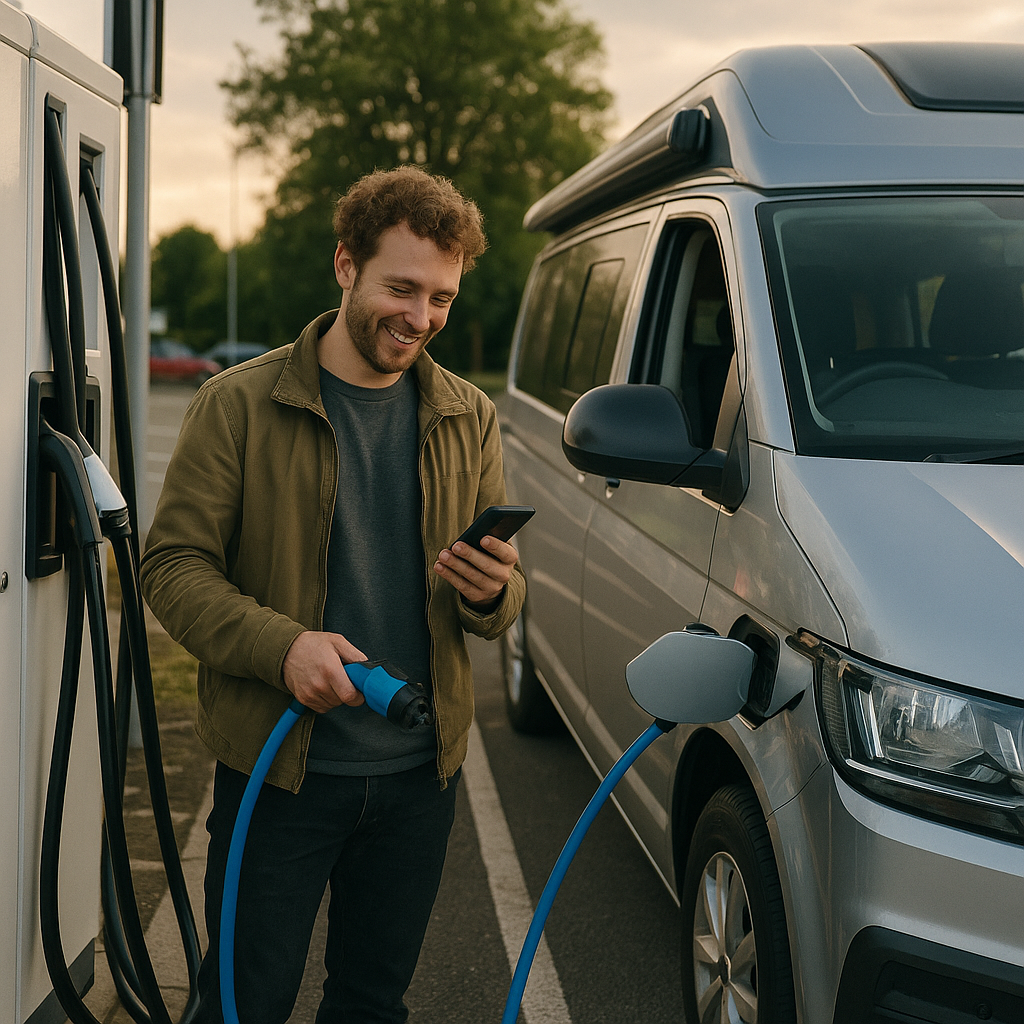

    Driver charging one of the latest electric campervans at a UK service station
    Friends relaxing in and around custom electric campervans at a forest campsite

    Electric campervans FAQs

    How far can an electric campervan really go on a single charge?

    Most current electric vans used for camper conversions can realistically manage around 130 to 170 miles between charges once you factor in extra weight, motorway speeds and real-world driving. Official figures are usually higher, but they rarely match what you will see when the van is fully loaded with camping gear and people. Planning routes around rapid chargers and allowing a safety buffer is essential if you are touring.

    Can I convert a used electric van into a camper myself?

    You can, but it is more involved than converting a diesel. The high-voltage systems and battery cooling should be left alone unless you are properly qualified. Most DIY builders focus on the interior fit-out, 12v systems and insulation, while leaving the drivetrain stock. Weight is a much bigger deal on an EV, so using lightweight materials and planning the layout carefully will help preserve range and keep the van safe and legal.

    Are electric campervans suitable for winter camping in the UK?

    They can work for winter trips, but you need to plan carefully. Cold weather hits battery range, and using electric heating inside the van will drain it faster. Many builds use efficient diesel or gas heaters for the living space while the main battery just handles driving. Preheating the cabin while plugged in and choosing sites with hook-ups makes winter camping in an electric van much more practical.

  • Automotive Wellness: How the Car Cabin is Becoming a Health Zone

    Automotive wellness is one of the most surprising design trends of 2025. The focus is shifting from performance and luxury to health and comfort. Cars are now being built to reduce stress, improve posture and even monitor wellbeing while driving.

    Automotive wellness

    This article explores how the idea of automotive wellness is transforming vehicle design, what the benefits are, and how these systems could make driving healthier for everyone.

    Why Automotive Wellness Matters

    The automotive industry has always adapted to new priorities. First it was safety, then fuel efficiency, then connectivity. Now, it’s wellbeing.

    As people spend more time commuting or travelling for work, comfort and mental calm are becoming just as important as horsepower or style. Drivers are starting to expect the same health-focused technology in their vehicles that they already have in their homes and fitness devices.

    Key Features of Automotive Wellness Technology

    FeatureWhat it doesHealth benefit
    Driver monitoring systemsDetect fatigue or distractionReduce accident risk by warning the driver early
    Smart air purificationRemove dust, pollen and pollutionImprove breathing and concentration
    Ergonomic seating systemsSupport correct posture automaticallyReduce back pain on long drives
    Adaptive lighting and soundAdjust mood and brightness to reduce tensionHelp the driver stay calm and focused
    Heart rate and stress sensorsMeasure physical response to stressEncourage rest and recovery when needed

    These systems are already appearing in new electric and hybrid vehicles, helping to make the cabin environment as healthy as possible.

    Health Benefits for Drivers

    Cleaner Air

    Urban air quality can be worse inside vehicles than outside. New air purification systems use sensors to detect fine particles and automatically filter the air to protect the driver and passengers.

    Reduced Fatigue

    Better seating design and driver monitoring systems can significantly reduce strain on long journeys. By prompting breaks and adjusting seating angles, drivers feel fresher and more alert.

    Stress Management

    Adaptive lighting, temperature control and relaxing audio environments all play a role in reducing stress while driving. Some vehicles even link with mobile wellness apps to encourage breathing exercises during breaks.

    Long-Term Wellbeing

    By combining good driving posture, clean air and mindfulness-based technology, automotive wellness aims to improve both physical and mental health. Pairing these innovations with expert wellness advice can help drivers maintain healthy habits beyond the car itself.


    Challenges to Consider

    • Privacy: Biometric data must be stored securely and used only with permission.
    • Accuracy: Wellness systems are not medical devices, so readings should be treated as guidance.
    • Cost: Early systems appear mainly in premium models, though this is changing quickly.
    • Trust: Drivers need clear explanations of how the technology works to feel comfortable using it.

    Practical Tips for Drivers

    • Look for automotive wellness features when choosing a new vehicle.
    • Use regular rest stops to stretch and move during long drives.
    • Keep windows and air filters clean for better cabin air.
    • Adjust seat height and steering position to support good posture.
    • Combine in-car tools with reliable online resources that offer expert wellness advice.

    Automotive Wellness FAQs

    What is automotive wellness?

    It’s the integration of health-focused technology into vehicles to promote comfort, safety and wellbeing for drivers and passengers.

    Which cars have automotive wellness features?

    Premium electric and hybrid vehicles often include them, but mid-range models are now following.

    Can cars monitor my stress levels?

    Some can. Sensors in the seat or steering wheel can measure heart rate and temperature to detect stress.

    Is automotive wellness just a luxury trend?

    Not anymore. As the technology becomes more affordable, it’s likely to appear in most new vehicles within a few years.

    How can I make driving healthier right now?

    Take regular breaks, adjust your seating posture, and follow expert wellness advice to reduce tension and fatigue.

    Automotive wellness is redefining what it means to drive. Cars are becoming cleaner, safer and more comfortable for the body and mind. As these systems evolve, drivers can expect every journey to become a step toward better health, not just another trip on the road.

  • The Electric Revolution Hits a Speed Bump: Used EV Market Challenges

    The electric vehicle (EV) revolution, once hailed as an unstoppable force, is encountering a significant hurdle: the burgeoning used EV market. While new EV sales continue to climb, albeit with some recent fluctuations, the secondary market is proving to be a complex and, for some, a concerning landscape.  

    Used EV

    Why the Used EV Market Matters:

    A healthy used EV market is crucial for wider EV adoption. It provides a more affordable entry point for consumers hesitant to commit to a brand-new vehicle. It also ensures that the environmental benefits of EVs are maximised, extending their lifespan and reducing the need for new car production. However, several factors are currently creating challenges.  

    The Challenges:

    • Rapid Technological Advancements and Battery Degradation Concerns:
      • EV technology, particularly battery technology, is evolving at a breakneck pace. Newer models boast longer ranges, faster charging, and improved software, making older models feel quickly outdated.  
      • Concerns about battery degradation, while often overblown, still linger in the minds of potential buyers. Uncertainty about the long-term health and performance of used EV batteries is a significant deterrent.  
      • The lack of standardised battery health assessments across manufacturers adds to the confusion.  
    • Depreciation and Pricing Volatility:
      • EVs, especially early models, have experienced rapid depreciation. This can be attributed to the factors mentioned above, as well as fluctuating new EV prices and government incentives.  
      • This depreciation makes it difficult to accurately price used EVs, leading to price volatility and uncertainty for both buyers and sellers.
    • Charging Infrastructure and Range Anxiety:
      • While charging infrastructure is improving, it’s still not as widespread or reliable as traditional gas stations. This can deter potential buyers, especially those living in areas with limited charging options.  
      • Range anxiety, the fear of running out of battery charge, remains a concern, particularly for those considering older EVs with shorter ranges.
    • Software and Over-the-Air Updates:
      • Newer cars have better software, and often recieve over the air updates. Older cars may lack these updates, and therefore lack newer features. This makes older cars less desirable.  
    • Supply and Demand Imbalances:
      • The market is still adjusting to the increased supply of used EVs as leases expire and early adopters upgrade. This, combined with fluctuating demand, creates price instability.

    What’s Being Done?

    • Manufacturers and third-party companies are developing battery health assessment tools to provide greater transparency and confidence to buyers.  
    • Efforts are underway to expand and improve charging infrastructure, addressing range anxiety.  
    • Increased transparency from manufacturers regarding battery warranties and expected lifespans is needed.
    • More standardised software updates would help keep older cars more relevant.

    The Road Ahead:

    The used EV market is still in its early stages. As technology matures, infrastructure improves, and consumer confidence grows, the market is expected to stabilise. However, addressing the current challenges is crucial for ensuring the long-term success of the EV revolution.  

    The used EV market is a critical piece of the puzzle, and its evolution will play a significant role in shaping the future of transportation.

    Look for Used EV parts from suppliers on The MaxxDirectory!