Category: Electric Vehicles

  • EV vs ICE: Which Is Really More Fun to Drive in 2026?

    EV vs ICE: Which Is Really More Fun to Drive in 2026?

    Right, let’s cut through the noise. The EV versus ICE debate has been hijacked by two camps: the smug early adopters who think petrol heads are dinosaurs, and the old guard who won’t accept that something without a cambelt can be genuinely exciting. Both sides are doing it wrong. The real EV vs ICE driving experience question deserves a proper, nerdy look at the physics, the feel, and the practicalities. So here it is.

    I’ve spent time behind the wheel of everything from a base-spec Cupra Born to a Porsche Taycan Turbo S, and on the other side, a Honda Civic Type R to a Lotus Emira. This isn’t a press release. It’s an honest assessment of what each powertrain actually delivers when you’re the one gripping the wheel.

    Electric car and petrol sports car side by side on a British B-road representing the EV vs ICE driving experience
    Electric car and petrol sports car side by side on a British B-road representing the EV vs ICE driving experience

    Torque Feel: The Instant Hit vs the Building Wave

    Here’s where EVs genuinely win, and there’s no arguing with physics. An electric motor delivers maximum torque from zero RPM. Full stop. When you bury the throttle in something like a Tesla Model 3 Performance or a BMW i4 M50, the response is immediate, linear, and relentless. There’s no torque curve to speak of, just a wall of pull.

    ICE cars, even with forced induction, build their torque across an RPM band. And for a lot of car people, that’s actually the point. There’s drama in a turbocharged engine spooling up, or in a naturally aspirated unit screaming toward its redline. The Honda Civic Type R’s K20C1 doesn’t feel truly alive until 4,500 RPM. That anticipation, that chase up the rev range, is something EVs simply cannot replicate.

    On paper, EV torque wins. In terms of driver engagement, it depends entirely on what you’re after. A drag race from a standstill? Electric, every time. A mountain road where you’re managing throttle inputs and using the gearbox as a tool? ICE has the edge for most enthusiasts.

    Sound: The Emotional Frequency

    Sound is not a minor thing for car people. It is a core part of the driving experience. A flat-six Porsche 911 at 8,000 RPM, a Subaru Impreza’s boxer rumble at idle, the bark of a tuned exhaust on a cold morning. These sounds trigger genuine emotional responses, and no EV engineer has cracked this yet.

    Manufacturers have tried. Audi plays synthesised noise through the speakers in some of its e-tron models. BMW did the same with the i4, using Hans Zimmer to design the sound profile. My honest take? It’s like watching a film score through a television speaker when you’ve heard it in a cinema. You know what it’s supposed to feel like, but something is missing.

    EVs have their own acoustic character. At low speeds there’s near-silence with a faint electric whine, and at motorway speeds wind and tyre noise dominate in ways that a well-insulated ICE car often suppresses better. Neither is objectively better. But if you grew up obsessing over exhaust notes and intake sounds, EVs will feel like a fundamental part of the experience has been removed.

    Driver gripping steering wheel in a performance car illustrating the EV vs ICE driving experience from the cockpit
    Driver gripping steering wheel in a performance car illustrating the EV vs ICE driving experience from the cockpit

    Handling Dynamics: Weight, Balance, and the Physics Problem

    This is where it gets complicated. EVs are heavy. A Volkswagen ID.4 weighs around 2,100 kg. A standard Golf GTI comes in at roughly 1,400 kg. Physics doesn’t care about your battery range claims. That extra mass affects everything: turn-in response, mid-corner balance, braking distances, and the way a car feels over an imperfect British B-road.

    The counterargument from EV advocates is dual-motor all-wheel drive torque vectoring. And it’s a fair one. A Porsche Taycan or a Hyundai Ioniq 5 N (which, at 2,232 kg, is genuinely extraordinary for what it does) can deploy power with surgical precision between axles in ways a conventional mechanical differential can’t match. The result is cornering grip that feels almost unfair.

    But grip and engagement aren’t the same thing. When a rear-wheel-drive ICE car steps out gently at the limit, you feel it through the seat, the steering, your fingertips. You manage it. That feedback loop between driver and machine is thinner in most EVs. It’s not absent, particularly in sportier models, but it’s filtered. The car is doing more of the work.

    There are exceptions. The Lotus Eletre RS, for instance, weighs a lot but has been tuned with Lotus’s genuine chassis knowledge behind it. And the upcoming Alpine A290 GTS is showing that the industry is taking driver feel seriously in smaller EVs. But as a general rule, if you want a car that communicates with you rather than one that manages the situation for you, ICE platforms still have a structural advantage rooted in their lower kerb weight.

    Long-Distance Usability: The Honest Reality in 2026

    The charging infrastructure argument has shifted significantly. According to government data, the UK had over 70,000 public EV charging points by early 2026. That’s a real improvement from three years ago. But the experience remains inconsistent.

    On a planned motorway run with a modern EV boasting a 300-mile real-world range, charging at 150 kW rapid points along the way, a London to Edinburgh trip is genuinely viable. You might add 25 to 30 minutes versus an ICE equivalent. Manageable. But venture off the main arteries onto a touring route through Wales or the Scottish Highlands, and you’re planning around charging in a way an ICE driver simply isn’t.

    Petrol cars win on refuelling time and network ubiquity. Full stop. The question is whether that matters for how you actually use the car. If 90% of your driving is commuting and the odd weekend blast, the EV vs ICE driving experience calculus changes completely. Home charging overnight makes the daily usage argument irrelevant. For long-haul touring in unfamiliar territory, ICE remains less mentally taxing.

    Which One Is Actually More Fun?

    The honest answer is: it depends on what fun means to you. If fun is raw acceleration, torque you can feel in your sternum, and effortless motorway overtakes, a decent EV is astonishing. If fun is revving a naturally aspirated engine, feeling gear shifts, hearing an exhaust pop on the overrun, and managing a car at the limit with your hands and feet, ICE is still the answer.

    For a broader look at performance parts and upgrades across both powertrains, Maxx Directory is worth bookmarking. It covers the scene properly.

    The real problem with the EV vs ICE driving experience debate is that it’s treated as binary. It isn’t. The Ioniq 5 N proves EVs can be genuinely exciting. The Caterham Seven proves ICE can be utterly thrilling with minimal power. The best driver’s car is still the one that makes you look for an excuse to go for a drive. In 2026, both powertrains can do that. It just depends which language of fun you speak.

    Frequently Asked Questions

    Do electric cars actually feel faster than petrol cars?

    In terms of instant throttle response and 0-60 mph times, many electric cars feel brutally quick because they deliver maximum torque immediately from standstill. However, petrol cars with high-revving engines can feel more exciting through the mid-range and at the top end, where the drama of building revs and gear changes creates a different kind of engagement.

    Is the EV vs ICE driving experience really that different on a B-road?

    Yes, noticeably so. Most EVs are heavier than comparable ICE cars, which affects how they move through corners and how much feedback you get through the steering and seat. Some performance EVs use torque vectoring to compensate, but most enthusiasts still find ICE cars communicate more directly on twisty roads.

    Can you take an electric car on a long road trip in the UK in 2026?

    Generally yes, particularly on major routes. The UK now has over 70,000 public charging points, and modern EVs with 250-plus miles of real-world range can handle motorway trips with planned charging stops. Remote areas of Scotland, Wales, and parts of northern England can still be tricky, so route planning remains more involved than with a petrol car.

    Do any electric cars have good driver feedback and handling?

    A handful stand out. The Hyundai Ioniq 5 N, Porsche Taycan GTS, and Lotus Eletre RS all offer genuine driver engagement alongside EV performance. The Alpine A290 GTS is also generating strong interest in 2026. These are the exception rather than the rule, but they prove the technology can be tuned for enthusiasts.

    Will ICE cars become harder to modify and tune as regulations tighten?

    It’s a genuine concern for the tuning scene. UK and EU emissions regulations are becoming stricter, and some aftermarket modifications that affect emissions outputs are already facing tighter scrutiny. That said, the existing stock of ICE cars won’t disappear overnight, and the tuning aftermarket remains active for now, particularly for track and motorsport use.
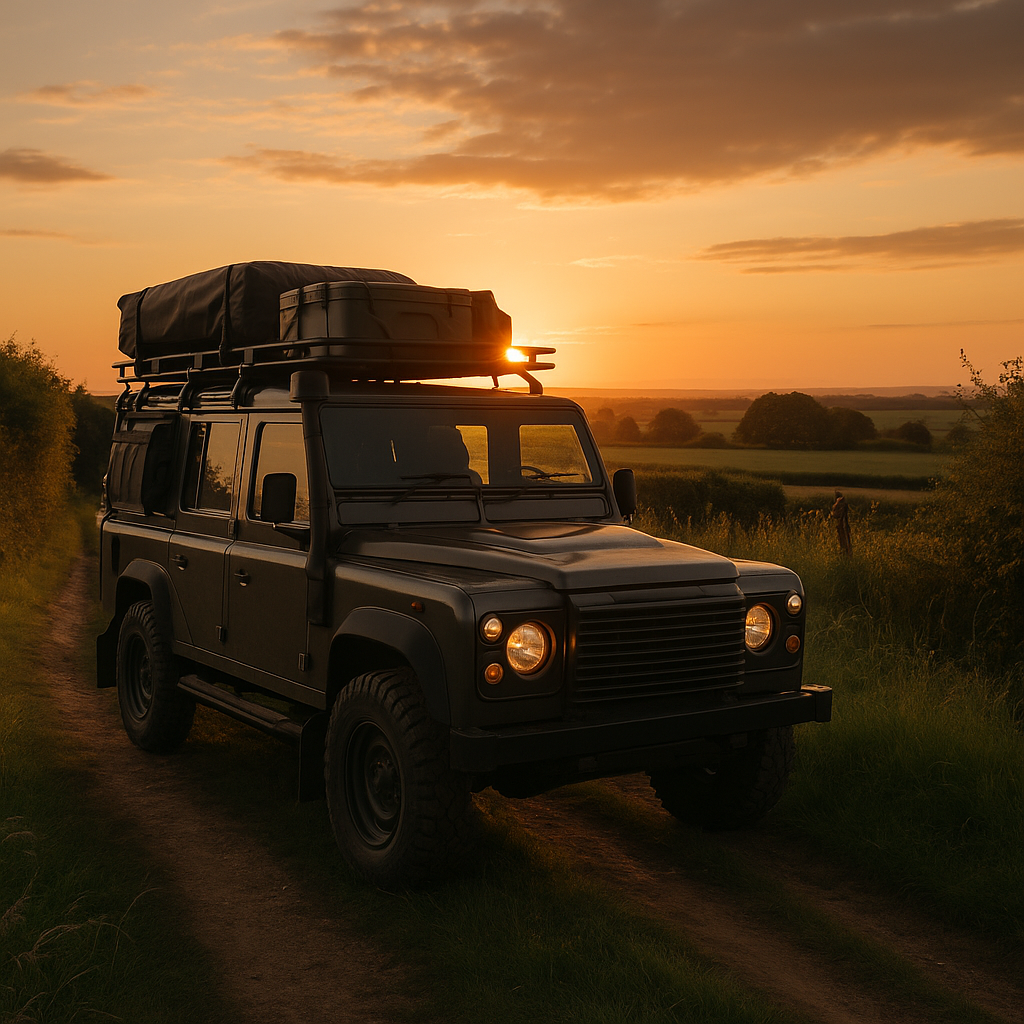
  • Why Overlanding Builds Are The Next Big Thing For UK 4×4 Nerds

    Why Overlanding Builds Are The Next Big Thing For UK 4×4 Nerds

    If you are bored of the same old cars and coffee meets, overlanding builds are probably already all over your feed. The UK 4×4 scene has gone from slammed hatchbacks and track toys to lifted rigs with rooftents and diesel heaters, and it is not slowing down.

    What actually counts as overlanding builds?

    Overlanding builds are not just any lifted 4×4 on mud tyres. Proper overland rigs are set up for long-distance, self-sufficient travel, usually mixing on-road miles with green lanes and light off-road. Think touring, not rock crawling. The key is balance: comfort, reliability and range, without turning the thing into a sketchy shed on wheels.

    Most UK overlanding builds start with a solid base – stuff like Land Cruisers, Hiluxes, Defenders, Jimnys, Shoguns and the newer lifestyle pickups. From there you are looking at suspension, tyres, storage, power management and living kit like tents, awnings and fridges. The art is not bolting on everything you see on Instagram, but choosing parts that actually work together.

    Planning an overlanding build that still works as a daily

    Before you order half of eBay, decide how you really use the truck. Weekend lanes in Wales and the Peaks need a very different spec to a month-long blast across Europe. Be honest: if it is still your daily, avoid huge lifts and mega-aggressive tyres that will make every commute a chore.

    A mild suspension lift with decent shocks, slightly taller all-terrain tyres and some underbody protection is a strong starting point. That gives you clearance and confidence without wrecking fuel economy or ride quality. Sort the basics first – service items, cooling system, brakes – then add the shiny bits. Reliability is the real flex on a long trip.

    Core mods for smart overlanding builds

    Once the truck is mechanically sound, you can start layering on the touring gear:

    • Suspension and tyres: Quality springs and dampers matched to the weight of your build stop it wallowing like a boat. All-terrains are usually the sweet spot for UK use – enough bite off road, civilised on the motorway.
    • Roof rack and storage: A solid rack and sensible storage system in the back are game-changers. Keep heavy stuff low and central, light gear up top, and avoid turning the roof into a skyscraper.
    • Power management: Dual battery or power station setups keep fridges, lights and chargers happy without killing your starter battery. Run decent wiring and proper fuses – bodged electrics are a fire waiting to happen.
    • Sleeping and shelter: Rooftents look cool but a well-sorted ground tent or awning room can do the job just as well. Pick what matches your budget, height and how often you are actually camping.

    Keeping it legal and safe in the UK

    It is easy to get carried away and accidentally build something that would make an MOT tester cry. When you are mapping out overlanding builds, keep UK rules in mind: no silly tyre poke past the arches, keep lights correctly aimed and avoid turning the front of your rig into a pedestrian-unfriendly battering ram with random bars and brackets.

    Weight is a big one too. Every drawer system, steel bumper and tent eats into your payload. Go over the limit and you are asking for trouble if you get stopped or have an accident. Weigh the truck properly once built and be brutal about ditching stuff you never use.

    Where the UK overlanding scene is heading

    The scene has matured fast. You are seeing fewer catalogue-clown builds and more properly thought out rigs that can smash a Scotland NC500 trip one weekend and still do the school run on Monday. Social runs, lane days and multi-day tours are popping up everywhere, and there is a growing network of specialists supplying everything from drawer systems to components for Toyota 4x4s.

    If you are trying to find legit traders, fabricators and detailers who get the overland vibe, have a dig through maxxdirectory.co.uk and support the people keeping the scene moving. Build it right, use it properly and you will understand why overlanding builds are becoming the new obsession for UK car nerds who would rather chase horizons than car park kerbs.

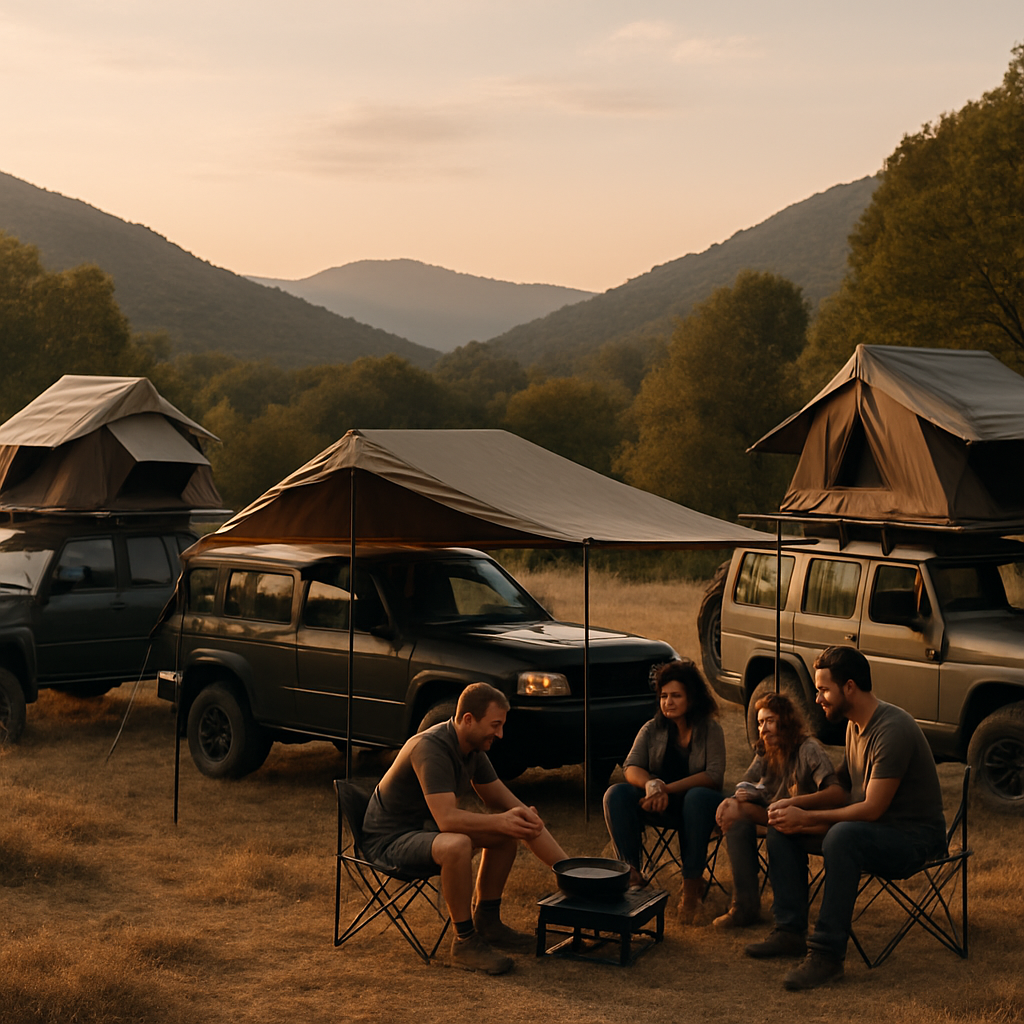
    Group campsite with several 4x4s demonstrating different overlanding builds in use
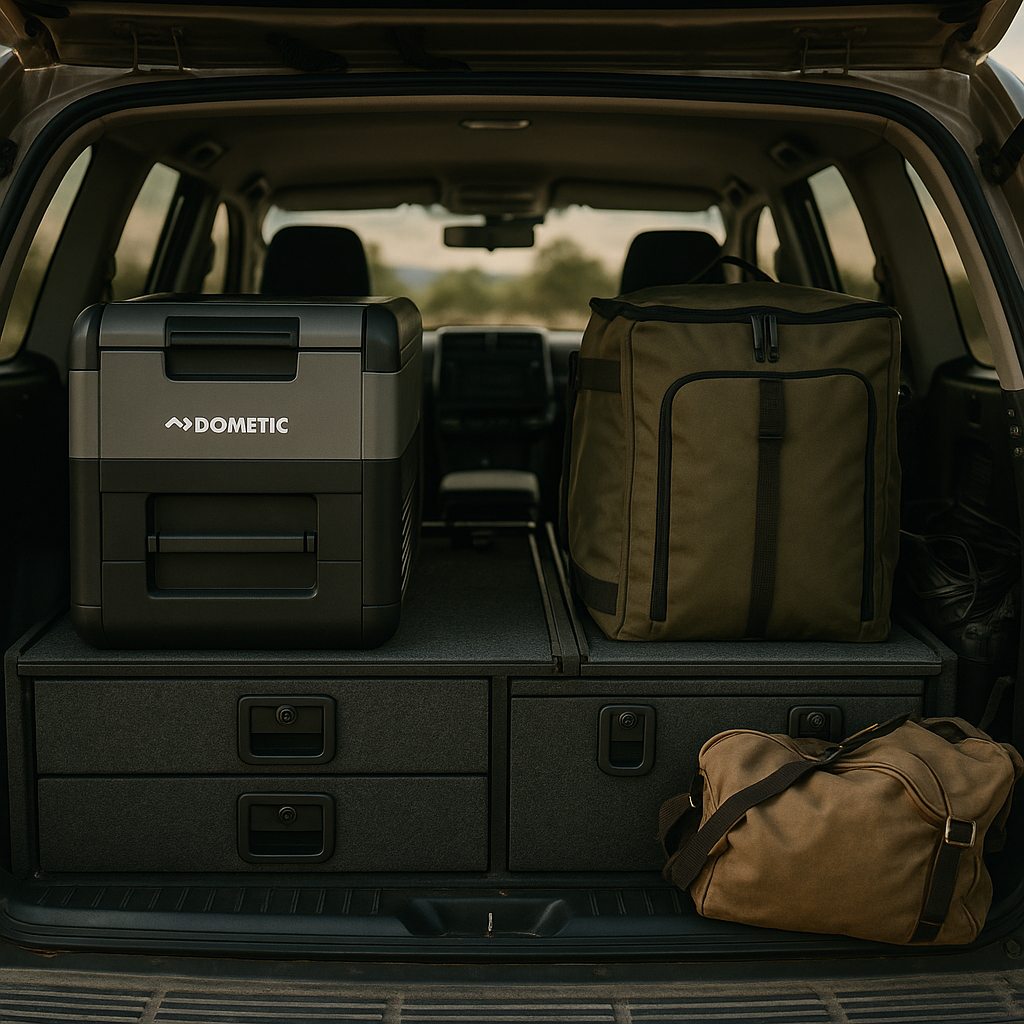
    Organised rear storage system inside a 4x4 set up for overlanding builds

    Overlanding builds FAQs

    What is the difference between overlanding builds and hardcore off-road builds?

    Overlanding builds are aimed at long-distance, self-sufficient travel with a mix of road and light off-road use, so they prioritise reliability, comfort and range. Hardcore off-road builds are focused on maximum trail performance, with big lifts, aggressive tyres and heavy armour that can make them tiring, noisy and thirsty on longer road trips.

    Do I need a huge lift kit for a proper overlanding build?

    No, a huge lift is rarely necessary for a good overlanding build and can actually make the vehicle less stable and less pleasant to drive. For most UK use, a modest lift with quality springs and dampers, plus slightly taller all-terrain tyres and some underbody protection, is more than enough to handle green lanes and rough tracks while staying civilised on the road.

    How much should I budget for my first overlanding build?

    Budgets vary massively, but it is sensible to start by spending money on maintenance, tyres and suspension before loading up on camping gear. Many people get a capable overlanding build by focusing on essentials like a mild lift, all-terrain tyres, basic storage and a simple sleeping setup, then adding extras such as fridges and awnings over time as they work out what they really use.

  • Why Old-School 4x4s Are The New Heroes Of Overlanding

    Why Old-School 4x4s Are The New Heroes Of Overlanding

    If you have spent any time on Insta or YouTube lately, you will have clocked the boom in old-school 4×4 overlanding builds. Boxy trucks, steel wheels, chunky tyres and more jerry cans than sense. While the new stuff is packed with tech, a lot of hardcore heads are going back to the roots for proper adventure rigs.

    Why old-school 4×4 overlanding rigs just work

    The big appeal is simple: reliability and fixability. Old 4x4s are usually body-on-frame, with chunky diffs and fewer electronics to throw a wobbly when you are miles from signal. If something does go pop, you can often bodge it with basic tools and whatever you have rattling round the boot.

    On top of that, parts support for the popular platforms is still strong. Whether you are in a Hilux, Patrol, Shogun or a classic Defender, there is normally a specialist somewhere hoarding bits. That makes it way less scary to take a 20 or 30 year old truck across Europe or into the Highlands.

    Best platforms for old-school 4×4 overlanding builds

    Everyone has their favourite, but a few platforms keep popping up in the scene:

    • Japanese ladder-frame 4x4s like Hilux Surf, 4Runner, Patrol and Pajero
    • Old Land Rover Defenders and Discoverys for the full Brit farm-spec vibe
    • Early Land Cruisers and Prados for that unstoppable, go-forever rep

    Pick something with a strong chassis, low-range transfer box and a decent aftermarket. You want to be able to choose from different suspension setups, bumpers and roof racks rather than fabricating everything from scratch.

    Core mods for a usable overland truck

    With old-school 4×4 overlanding, it is easy to get carried away bolting tat on. Sort the basics first:

    • Suspension and tyres – A sensible 2 inch lift with quality shocks and springs, plus all-terrain or mud-terrain tyres in a common size. No need for monster truck stance.
    • Protection – Decent skid plates, rock sliders and a proper recovery point front and rear. They save you a fortune the first time you misjudge a rut.
    • Electrics – Dual battery setup, tidy wiring and enough power for a fridge, lights and chargers. Messy looms cause more headaches than anything.
    • Storage – Drawers or boxes so kit is not flying around the cabin, and tie-down points in the back.

    Only once that lot is dialled in should you start thinking about snorkels, fancy roof tents and Instagram fairy lights.

    Keeping old rigs running on long trips

    The flip side of old-school 4×4 overlanding is that age catches up with everything. Before any big trip, you want to baseline the truck: fluids, belts, hoses, wheel bearings, brakes, bushes and cooling system. Replace anything that looks tired, not just what is actually broken.

    It is also smart to carry a spares pack tailored to your platform: filters, belts, a couple of hoses, fuses, bulbs, a hub bearing and some basic hardware. Owners of tough old Toyotas often throw in a few key bits alongside their Toyota Land Cruiser parts order so they have everything ready before heading off-grid.

    Travel comfort vs hardcore capability

    A lot of people daily their overland builds, so you need to balance comfort and capability. Too much lift, too aggressive a tyre and solid engine mounts will make motorway miles grim. Think about sound deadening, decent seats and a reasonable cruising gear ratio, especially if you are hauling a roof tent and a full load of gear.

    There is also a weight game to play. Every steel bumper, winch and drawer system adds kilos. An overloaded truck handles like a shopping trolley and munches through suspension components. Weigh the rig, be honest about what you actually use, and ditch the dead weight.

    Finding inspiration and local specialists

    The UK overland and 4×4 scene is stacked with inspiration. You will see everything from ultra-clean JDM imports to battle-scarred farm trucks built to roam. Local outfits like 4×4 specialists in Yorkshire, or scene-friendly garages in the Midlands, can be a goldmine for set-up advice and fabrication work if you are not a welder yourself.

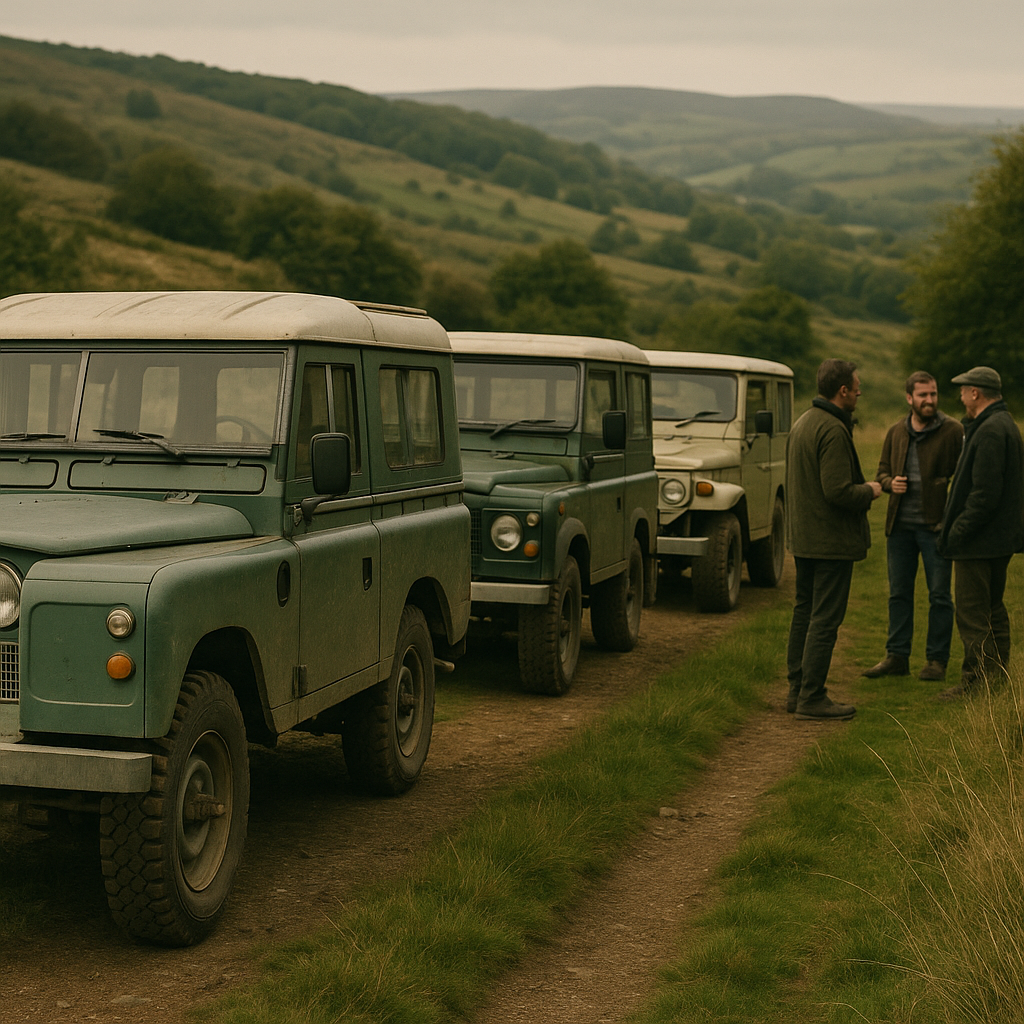
    Convoy of trucks built for old-school 4x4 overlanding on a remote trail
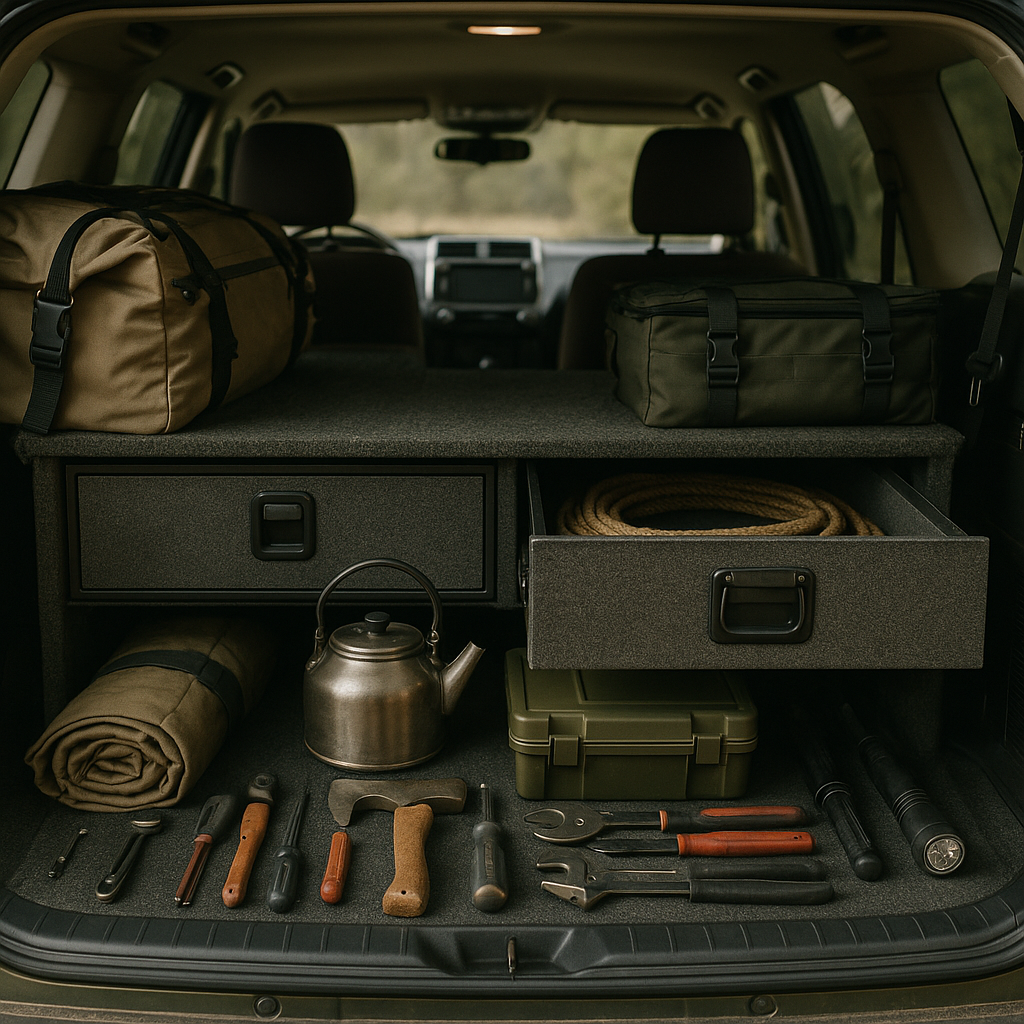
    Organised storage setup inside an old-school 4x4 overlanding build

    Old-school 4×4 overlanding FAQs

    Is an old-school 4×4 reliable enough for long overland trips?

    A well maintained old-school 4×4 can be very reliable for overlanding. The key is to baseline the vehicle before you go: refresh fluids, belts, hoses, cooling system, brakes and suspension, and fix any rust or bodged wiring. Carry a sensible spares kit and basic tools, keep weights under control, and drive within the truck’s limits. Most breakdowns on trips come from neglected maintenance rather than age alone.

    How much lift do I need for old-school 4×4 overlanding?

    For most overlanding, a modest lift of around 2 inches with quality springs and dampers is plenty. It improves clearance and approach angles without wrecking road manners or stressing driveline angles. Combine that with slightly larger all-terrain tyres and some underbody protection and you will be able to tackle rough tracks comfortably without turning the truck into a handful on the motorway.

    Do I need a roof tent for an overland build?

    You do not have to run a roof tent for a capable overland setup. They are convenient and look the part, but they add weight high up and can hurt fuel economy. Plenty of people run ground tents, swags or simple sleeping platforms in the back of the truck. It is better to get the mechanicals, storage and electrics sorted first, then decide how you actually like to camp after a few trips.