
Author: Olly

  • WIDE-BODY NISSAN 350Z: TIME MACHINE

    Taking contemporary styling cues and old-school ideas, then pushing the resulting concepts into the future, Nick Gaerthe’s wide-body Nissan 350Z is like other you’ve seen before…

    Feature first appeared in Fast Car magazine. Words: Joe Partridge. Photos: Ronald Veth

    What you’re looking at here is essentially a time machine. A bridge between modifying eras, as if Mr Peabody’s WABAC or Doc Brown’s DeLorean has catapulted back through the spiralling time circuits to a couple of decades ago, pinched a few stylistic ideas, then sprinkled them broadly over a 2020 canvas. It’s evident in the details, and the more you look the more you find. Check out the tail end, for example. See those unusual lights, and insane exhausts? Now think back to what was hot in the late-1990s/early-2000s tuning era. No, we’re not talking about illuminated fibreglass sub enclosures, bad boy bonnets or Wolfrace Voodoos… it was light swaps and mad exhausts that really defined the big-ticket builds. This was pretty popular in the UK, but the insatiable tuners across Western Europe really knocked things up a notch – the modding scene in Belgium, Spain, France and the Netherlands shoved a whole bunch of mad ideas into our wide-eyed consciousness: Civics with IS200 lights frenched in, 309s with E36 lights, Mk2 Golfs with Mk4 clusters, and everything had a bonkers exhaust, with flame-licking 5-inch tails poking through bootlids and other such lunacy.

    Wide-body Nissan 350Z

    This spirit of creative endeavour is evidently still alive and kicking in the Netherlands, which is where we find this particularly saucy Nissan 350Z, prowling the mean streets of Rotterdam with time-tunnel crackles sparking off it like Bill and Ted’s phone box. Nick Gaerthe is the owner, and he pinpoints the moment he really got into the idea of modified cars as being the time he attended the Ahoy 100% Tuning show back when he was 14 years old; he’s 27 now, so a little simple maths allows us to deduce that this was (um, *scrunches up eyes, counts on fingers*) 2007. Yep, that sounds about right – Fast and Furious: Tokyo Drift had just come out, so the styling ideas of the early 2000s were fusing with a growing enthusiasm for modding Japanese cars. That all ties in well with what we’re seeing here. The young Nick had vowed that he’d one day be exhibiting his own car at 100% Tuning, and with a fairytale sense of progression, such an event has come to pass.

    …but this isn’t the first we’ve heard of Nick’s outrageous 350Z. Readers with eagle-eyes and decent memories may remember this car appearing within these very pages back in 2017… although it was pretty much unrecognisable then from what it’s become this year. Back then it was bright purple, and wearing a fresh new set of Fiberglass Mafia wide arches. With Nismo bumpers, a jutting front splitter and chassis-mount rear wing, it was a bullishly aggressive road-racer with attitude in spades. Bagged on Air Lift suspension over a glimmering set of WatercooledIND three-piece wheels, it was the very embodiment of a show car build in a quintessentially 2017-esque style. The interior was lavishly kitted out with a full-on high-end Focal audio system – massive subs in the boot, amps in Perspex display cases in the rear, speakers everywhere, a proper job. Everything done beautifully, and an end point reached: Nick had always dreamed of building a show-quality 350Z and, having displayed it at that iconic Euro show and bagged himself a Fast Car feature, the job was jobbed.

    Except that, no, it doesn’t really work like that. Once you’re elbows-deep in this world, you can’t just turn the emotions off like a tap. If you’ve spent your life dreaming of show car builds, you don’t just build one and then go off to find a new hobby. Nick was keenly aware of the constantly shifting trends in the tuning world, and he wanted to ensure that his project stayed fresh. He also clearly wanted to hurtle figuratively back to the time of his modding birth to borrow a few conceptual ideas, before stripping the Nissan down and starting again. And that’s precisely what he did. The unsuspecting 350Z was disassembled down to its component nuts and bolts, so that he could lay all the bits out like some massive demented Airfix kit, scratch his chin awhile, and ponder how to reimagine it for 2020.

    The starting point was to consider the focus of it. This needed to be a far racier build, something a lot more hardcore. So the whole interior was unceremoniously junked, fancy Focal install and all, with everything stripped out of the shell – carpets, soundproofing, the lot, it all went in the skip. Peering inside now, all you’ll see is a pair of bucket seats and harnesses, a towering gear shifter and hydro handbrake, and a custom rollcage that Nick built and installed himself. Indeed, at this point it’s worth mentioning that Nick has done near enough everything here by himself, working feverishly in his garage to bring to life the freaky visions in his head. The custom Samsung tablet display is a particularly neat touch, and with the interior concept taken care of, it was time to consider the exterior aesthetic.

    Wide-body Nissan 350Z

    Those fat and imposing Fiberglass Mafia rear arches remain, but the fronts have been swapped out for Fly1 Motorsports items which extend further down the bumper. The rear wing has been replaced by a colossal Big Country Labs unit that sits at an aerodynamically sympathetic angle above the Fly1 Motorsports ducktail, and the body is wrapped in an aggressive drift-inspired wrap by Blackfish Graphics. But the true genius of the makeover is what Nick’s done to the rear end. There’s very little 350Z left in there, as he’s custom-mounted a set of 991-generation Porsche 911 taillights to neatly follow the angle of the bootlid. The bumper’s been thrown in the bin too, as the new custom exhaust features a pair of girthsome heat-wrapped pythons sinuously slithering their way hither and thither around the tail before exiting in the centre in a hellstorm of raucous barks. The cutaway tail reveals a clear plan view of the supercar-wide Toyo R888R rubber, which is now wrapped around a delectable quartet of staggered WORK Meister S1 wheels.

    The overall effect is pretty mesmerising, and it all succinctly encapsulates every element of Nick’s journey with this car: having grown up dreaming of such a creation, he’s traversed back and forth through time to pull together all of the ingredients he desires to create something truly show-stopping. And obviously he’s going to be changing it all soon, because that’s just how this game is played. He’s already shopping for a set of underbody neons, and it doesn’t get a lot more early-2000s than that, does it? It really is a time machine that Nick’s built here. But he doesn’t have to take it to 88mph to blow people’s minds – it can do that job even when it’s standing still.

    Wide-body Nissan 350Z

    Tech Spec: Wide-body Nissan 350Z

    Styling:

    Fiberglass Mafia V2 rear wide arches, Fly1 Motorsports front arches, custom wrap by Blackfish Graphics, Big Country Labs rear wing, Craft Square mirrors, Raptor liner paint, custom Porsche-style rear with 911 taillights, Fly1 Motorsports ducktail, Lamborghini-style rear window louvres

    Tuning:

    VQ35DE 3.5-litre V6, custom exhaust system, Chase Bays reservoirs, Mishimoto oil cooler, Mishimoto radiator

    Chassis:

    12.5x19in ET-14 (front) and 14x19in ET-9 (rear) WORK Meister S1 wheels, Toyo Proxes R888R tyres, Air Lift Performance struts with AccuAir management, Driftworks camber arms

    Interior:

    Fully stripped, custom rollcage, Recaro seats, Chase Bays hydraulic handbrake, Vertex steering wheel, Raceism harnesses, custom Samsung tablet display
    Source

  • 2023 Ferrari Purosangue spy shots: Get ready for a Ferrari SUV

    A new tester for Ferrari’s Purosangue crossover SUV has been spotted again, and this time we have a video.

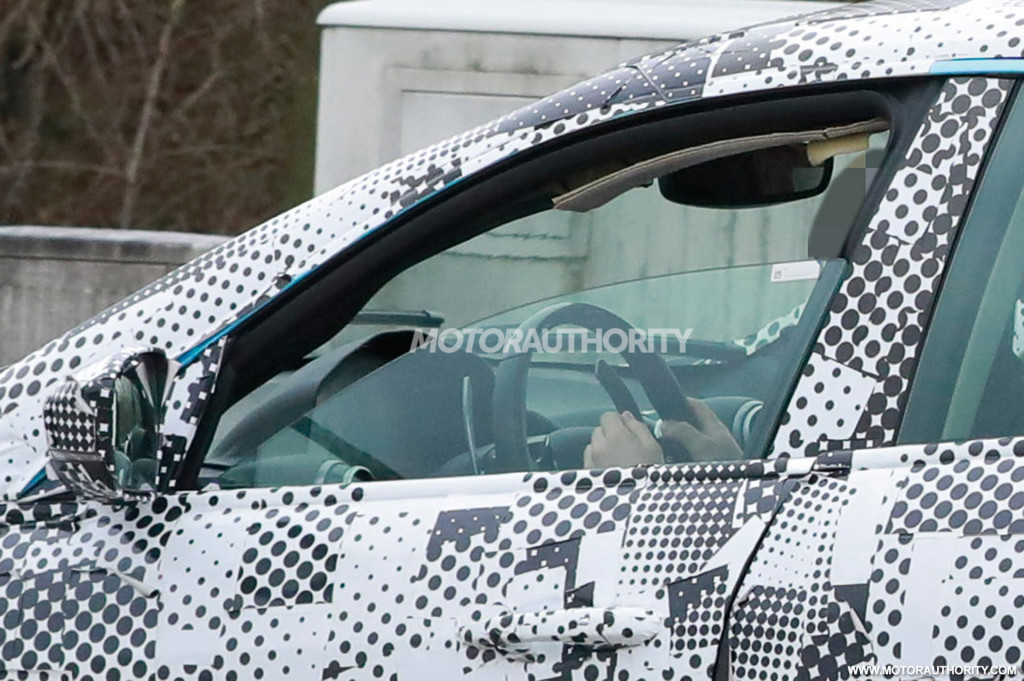
    It may look like a Maserati Levante that’s been slammed, but there are a number of clues that reveal it as a test mule. For instance, the rear doors are dramatically shorter than on the Levante. The interior is different, and the section from the tester’s A-pillar forward looks to be wider and longer. We also spot large carbon-ceramic brake rotors and headlights similar to those on the Ferrari Roma. Previous test mules used modified Ferrari GTC4 Lusso bodies to hide the new mechanicals, the model the Purosangue will directly replace.

    Ex-Ferrari CEO Louis Camilleri revealed the Purosangue name for the SUV in 2018, which is Italian for “thoroughbred.” He said at the time the vehicle won’t reach the market in 2020 like his predecessor, Sergio Marchionne, had envisaged. Instead, Camilleri stressed the need to make the controversial addition to Ferrari’s lineup absolutely “perfect,” meaning its development won’t be rushed.

    [embedded content]

    Underpinning it will be a new front mid-engine platform Ferrari is developing for its future grand touring models, like replacements for the Portofino, Roma and 812 Superfast. The platform complements the new mid-engine architecture that debuted in the SF90 Stradale.

    Both platforms incorporate hybrid technology but the front mid-engine platform will also allow for the possibility of a non-electrified all-wheel-drive system and two rows of seats for a maximum of four seats. The front mid-engine platform will also feature a transaxle transmission, specifically a dual-clutch unit, for better weight balance and packaging.

    A V-12 engine, likely with some form of electrification, is expected to be offered in the Purosangue in addition to a base V-8 that’s also electrifed. Interestingly, there are rumors Ferrari’s first battery-electric car due around 2025 will also be an SUV, perhaps a variant of the Purosangue.

    2023 Ferrari Purosangue test mule spy shots - Photo credit: S. Baldauf/SB-Medien

    2023 Ferrari Purosangue test mule spy shots – Photo credit: S. Baldauf/SB-Medien

    It isn’t clear what the Purosangue will look like but we’ve previously heard it will come with four doors. The rear doors might end up as suicide-style doors similar to those used on the Mazda RX-8 sports car, which would allow Ferrari’s design team to preserve a sporty coupe-like side view.

    Since we’re only at the test mule stage, it could be another six months to a year before the first prototypes wearing the Purosangue’s actual body hit the road. The reveal should take place in 2022, meaning the vehicle will likely end up on sale as a 2023 model.

    The Purosangue is just one of several models Ferrari will introduce by the end of 2022, some of which will be powered by a new V-6 engine. Beyond this date, Ferrari will finally introduce its successor to the LaFerrari—which may already be out testing.

    Source

  • INDUCTION KIT: EVERYTHING YOU NEED TO KNOW

    Each month we quiz a specialist with 10 quickfire questions about a product to give you the knowledge you need to not only make the right decisions when it comes time to upgrade, but also to have the ammunition to impress your mates at your next meet. This month we speak to Pipercross to get the lowdown on the humble induction kit.

    What is an induction kit and what does it do?

    An induction kit usually refers to the components used to replace the standard air box and cold air feed to the engine. Pipercross specialises in performance intakes of which the main function is to improve a vehicles performance, by improving its ability to feed cold fresh air to where the car needs it most.

    Are induction kits all the same?

    There are many different types of aftermarket performance air intake systems available.  Whilst the aim of all the intake systems should be the same (to increase the air flow the engine), the designs and final results can be very different.

    What are they made of?

    The two main components of an induction system are the airbox and air filter. The airbox provides a housing for the air filter and is used to channel cool air from outside the engine bay directly to the filter.  It also has the added function of isolating the air from the effects of heat generated by the engine.

    An air filter is essential to ensure that air drawn into the engine is clean and free from any contaminants that would potentially be harmful to an engine.  There are many different shapes and sizes of filters used, dependant on the application (road car, desert rally car etc).  It is common for most OEM manufacturers to use pleated paper panel filters in the induction system while aftermarket performance products tend to feature a cone or cylindrical shaped filter to increase the available surface area.  The shape, size and material of the filter has an impact on the amount of air that is able to pass through it. Pipercross manufactures reticulated foam filters which are each hand made.

    Induction Kits

    How do aftermarket induction kits differ to OEM intakes?

    Usually they are larger and capable of flowing more air. Production cars are made up of a series of compromises, so they are able to deal with harsh environments and bad fuel. Where these are not factors, and people have the desire to remap and gain more power, the cold air intake will give the car the air it needs to cope with the extra fuel a remap will require.

    Why, or when, would you need to upgrade your induction kit?

    In engine performance tuning, a method of increasing a vehicle’s engine performance is to increase the fuel used in the combustion process.  This increase in fuel leads to an increased requirement of air to maintain the necessary air/fuel ratio. In some cases, the restriction posed by a vehicle’s standard intake system can limit the flow of air, hence the need for a performance induction kit.

    Induction Kits

    How important is it to get the right type of induction kit?

    There are several options when deciding what induction modification to make to a vehicle. There are three main categories: First up, a panel filter upgrade, which uses the vehicle’s existing airbox and replaces the standard pleated paper filter with high-flow filter made from cotton gauze, synthetic material or foam. Pipercross uses a unique foam system, which uses various thicknesses of finer or coarser foams, meaning these factors can be varied for different applications. Next is an open induction system, which removes the standard airbox and replaces it with a filter connected to the intake pipe mounted within the engine bay. As no airbox is used the air is drawn from within the bay where the air is warmer and less dense, so optimum performance may not be achieved. The use of a heat shield is often employed to segregate the filter element from the engine. In the case of Pipercross’s performance intakes for instance, the filter and pipework can been routed low down behind the front bumper to ensure that the filter receives cold air despite not being housed in an airbox. The final option is closed cold air intake, where a performance airbox is designed around the optimum sized filter for the performance gain required.  Housing a filter in an airbox provides a constant flow of cool air to the filter, whilst shielding the filter from the high engine temperatures.

    What are the limitations of OEM intakes? Do aftermarket induction kits suffer the same fate?

    Compromise. The limitations of the OEM intakes are often due to the regulations that are imposed on the car manufacturers. A lot of the restrictions in the standard airboxes are due to the need to remove noise from the induction system, which often disrupts airflow. The OEM induction systems are designed to do a specific job to a specific power output. What the designers didn’t have in mind was when the cars are tuned and need to flow more air. This is where the Pipercross kits take over.

    What other mods should you consider when uprating your induction kit?

    Just like many other aspects of your car, its induction system will work at its best when the rest of the car’s breathing is optimised. This means it is essential to ensure that every element of the engine’s breathing system is also uprated to be freer flowing, from intercoolers, to pipework, throttle bodies, manifolds, exhaust system and even the head ports. Things like an uprated turbo, if applicable, would also be worthwhile, as would an ECU remap and possible fueling upgrades to match with the increase in airflow.

    Are there any downsides to aftermarket induction kits?

    When an aftermarket induction system is fitted it removes the restriction of air flowing to the engine.  Due to this aftermarket intakes can be considerably louder than the standard one fitted to the vehicle.  For the majority of people this is part of the allure of an induction kit, however some people may find this a nuisance. Also, some open induction systems, without the correct ducting to ensure a strong cold air feed, can actually end up losing power due to drawing in the hotter, less dense air from the engine bay.

    Other than ensuring you get the right one for your application, what are the most important things to look out for when buying an induction kit?

    Always look for a trusted brand with experience in all forms of motorsport, as the development path taken by these large teams eventually ‘filters’ down to road car applications. You should also consider the purpose of what you want the car to do. Street cruiser, trackday warrior, will noise be an issue? Consider warranties too, an established company with a good reputation will be far easier to deal with should you encounter any issues. Your engine bay is exposed to heat cycles daily, add in the worst the weather can throw at it and a component may fail. It’s then you want a company like Pipercross who will help you when you need it most.

    Source