Author: Olly

  • 2021 Ford Mustang Mach 1, 2024 GMC Hummer EV SUV, Kia Stinger Convertible: The Week In Reverse

    We drove the 2021 Ford Mustang Mach 1, the 2024 GMC Hummer EV SUV broke cover, and there’s now a Kia Stinger convertible. It’s the Week in Reverse, right here at Motor Authority.

    We had our first seat time in the 2021 Ford Mustang Mach 1 on the track at Willow Springs Raceway and the surrounding streets. The Mach 1’s return is exciting enough that it nearly makes up for the death of the Bullitt, GT350/GT350R, and Performance Level 2 package. Nearly. With parts from all of those cars as well as the GT500 and GT Performance Package, the Mach 1 might just be the sweet spot in the Mustang performance lineup.

    The 2022 Audi A8 was caught undergoing cold-weather testing with minimal camouflage. The flagship luxury sedan is set to receive a mild facelift to bring its front and rear design more in line with the latest Q7 and Q8 crossover SUVs. The interior will be upgraded with the German automaker’s latest technology, while the powertrain options will likely carry over.

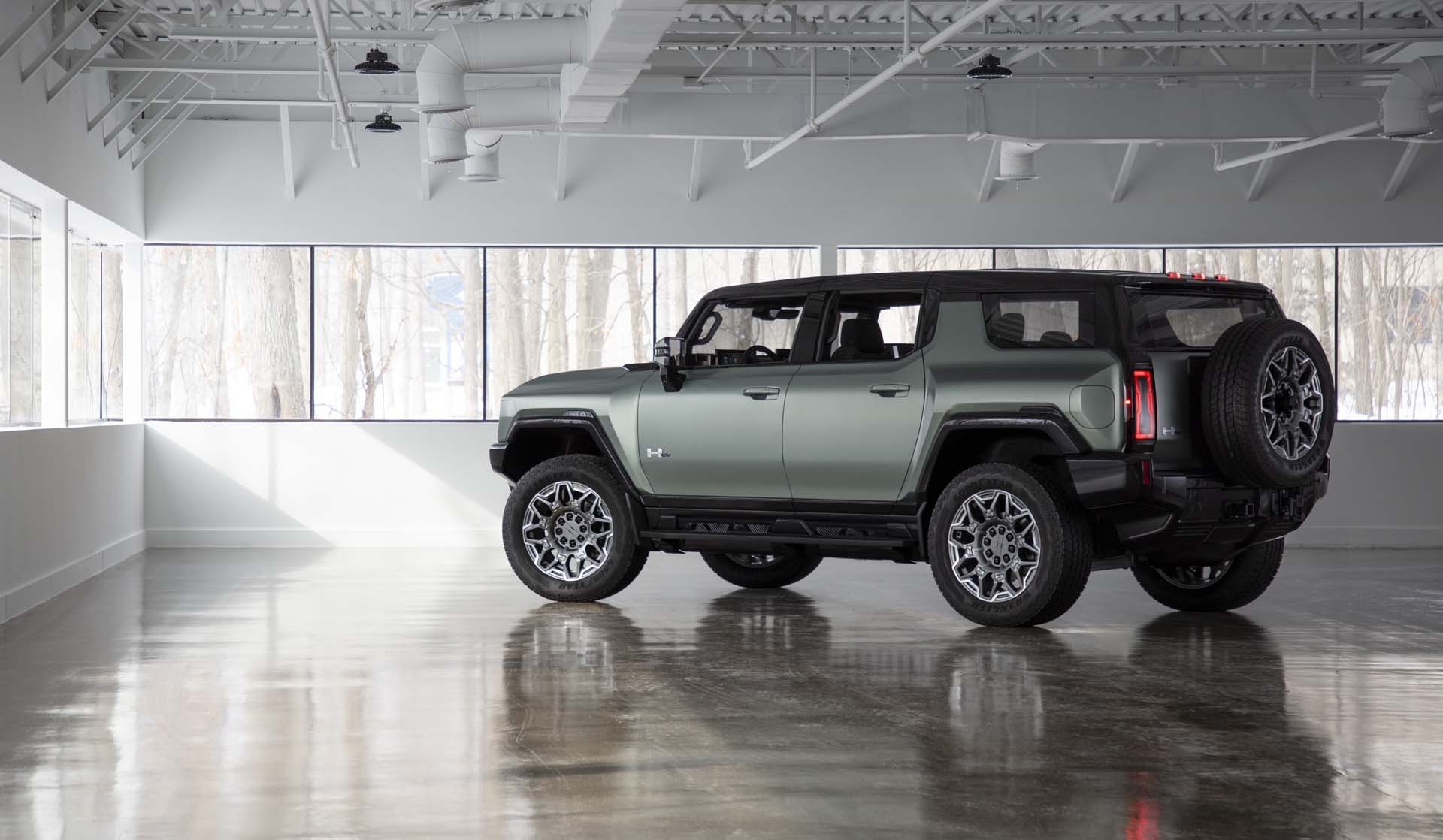
    The 2024 GMC Hummer EV SUV was unveiled with up to 850 hp, 11,500 lb-ft of torque (when multiplied at the wheels), more than 300 miles of range, and a six-figure price tag for initial models. Those first models will arrive in early 2023 and feature all the same tricks as the Hummer EV pickup truck, including rear-wheel steering, Crab Walk, and Extract Mode.

    The 2021 Mercede-Benz AMG GLB35 finally found its way into one of our driveways. The turbo-4 lacks the wallop of larger AMG engines, but the small AMG crossover SUV scoots to 60 mph in 5.1 seconds. It delivers all the upgrades one would want over the GLB250 with a performance edge for about $10,000 more.

    A Florida Kia dealership owner commissioned a Stinger convertible. The gray car features more than just a chopped top, with a full body kit, more than 500 hp from the modified twin-turbo V-6, and a three-layer power-operated soft-top. All four doors still open, and the entire conversion only added about 70 lbs.

    Source

  • TOYOTA SUPRA MK4 BUYING AND TUNING GUIDE

    Having cemented god-like status in the car tuning community, the Toyota Supra Mk4 is about a strong a statement as you can make at a car event. Here’s our quick-fire Supra buying and tuning guide.

    With so much excitement and disappointment right now around the new A90 Supra, there’s been a natural resurgence in interest for the old A80/Mk4. Of course, for people like us this enthusiasm never went away – we love these things, stock or modded, UKDM or JDM, subtle-and-smooth or big-power-and-boisterous, we’re well into a nineties Supra.

    At launch, the Toyota Supra Mk4 offered a pair of fresh new engines: the 3.0-litre 2JZ-GE straight-six offered 220bhp, while the twin-turbocharged 2JZ-GTE amped this up to 276bhp. For the export models, Toyota saw fit to pump up the adrenaline a little, adding bigger fuel injectors and smaller steel-wheeled turbos to produce a peak 326bhp – the holy grail for the UK buyer today is to find a genuine UK TT6; that is, a twin-turbo with a manual six-speed gearbox in full-fat UK spec. Not easy to achieve, but they do exist! (Giveaway details are that the UK models had a bonnet scoop and glass headlights instead of plastic).

    Toyota Supra Mk4

    In all markets, the turbo models had the option of the Getrag six-speeder while nat-asp cars made do with the W58 five-speed manual – although the GT nature of the car means that a lot of them were bought with four-speed automatic transmissions, which does rather dull the fun.

    Toyota Supra Mk4

    Turbos got 17-inch wheels while nat-asps had sixteens, and with either engine you could option a targa Aerotop. The SZ-R, available from 1994, had the option of bigger 4-pot brakes, as did the RZ from 1995 – this was also the year that Recaro seats arrived on the option list. A mild facelift in 1996 introduced Sport ABS and made dual airbags standard-equipment, along with revising gear ratios and equipping the RZ with an aluminium radiator. Turbo models from 1997 had VVT-I along with revised ‘REAS’ suspension, and automatics had Tiptronic gear selection added. The Aerotop was discontinued in 1999, and Supra production ended in July 2002.

    Toyota Supra Mk4

    Buyer Beware!

    It’s pleasing to know that Supras are pretty bombproof. Just look out for age-related wear such as warping of the dash top, boot rubbers perishing, and yellowing of the headlights on JDM examples. Naturally, being a 1990s Japanese car, you need to check thoroughly for rust – as a rule, fresh imports are likely to be less rusty than older imports or UK cars. You should also be careful to check through the history, particularly as very few Supras on the market are factory-standard: if it’s been modified, ensure that it’s been done by competent people with quality parts. There was a time when you could pick up Supras for relative peanuts, and some have been ham-fistedly modded by people who saw The Fast and The Furious and thought ‘how hard can that be?’. And finally, keep in mind that imported cars will have a 112mph speed limiter – better to know that in advance, rather than embarrassingly headbutting into it at an inopportune moment. Oh, and of course the easiest way to spot a proper UK car is by its functional bonnet vent, glass headlights and headlamp washer ‘horns’.

    Toyota Supra Mk4 Top 5 Mods

    Exhaust – from £450 (backbox)

    The 2JZ responds well to exhaust upgrades (particularly if you throw in a decat, and we reckon Supras only look proper with a huge drainpipe poking out the back! The Blitz Nur is popular.
    blitz-uk.co.uk

    Fuel Cut Defender – £116.40

    An essential for modded turbo models, the FCD changes the airflow signal to the ECU to trick it into thinking it never sees more than 1 bar of boost, which is the point where the computer cuts the fuel supply as a safeguard. Speak to the guys at Turbosmart.
    turbosmart.com

    Single turbo – £various

    If you’re chasing big power (and remember, the stock internals should be good for well over 500bhp), swapping to a big single turbo is always a strong option.
    garagewhifbitz.co.uk

    Intercooler – £349

    A bigger front-mount intercooler is another must for turbo Supras – Japspeed are the experts here.
    japspeed.co.uk

    Brakes – From £1,099

    The stock brakes are pretty damn good, but you’ll need them to be even better if you’re throwing more power in. K-Sport offer a great range.
    ksport.co.uk


    Source

  • Hurley Haywood speaks of champion racing career in new Brumos video

    Racing champion Hurley Haywood reflects on his half-century career in some of the world’s greatest Porsches in the latest installment of the Brumos Collection’s “Inside the 59” video series.

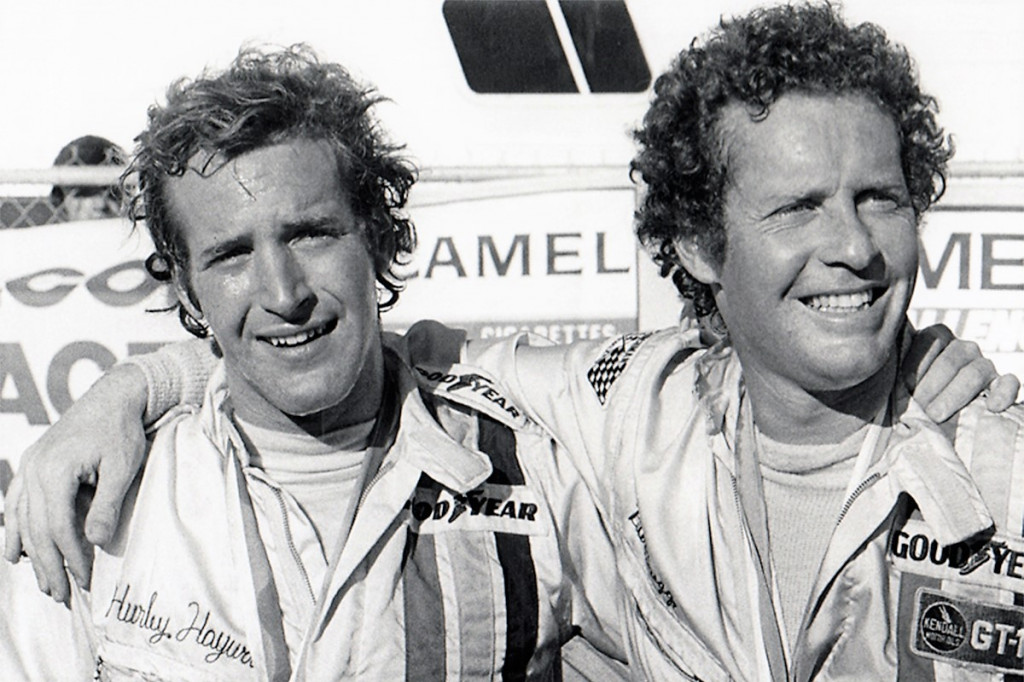
    “Conversations with Hurley Haywood,” which has been posted on Brumos’ social channels, commemorates the 50th anniversary of his first championship, the 1971 IMSA title he earned with teammate Peter Gregg in a Porsche 914-6 GT.

    Hurley Haywood (left) with Peter Gregg

    Hurley Haywood (left) with Peter Gregg

    Looking fit and ageless at 72, Haywood tells of his early days when, as an inexperienced youth, he was entrusted with driving for Brumos racing and immediately met with spectacular success.

    “Racing against equipment that was much faster than ours, we won because of durability and planning,” Haywood says in the video. “This was my first year of racing, so it was quite a learning process.”

    Two years later, he was behind the wheel of a mighty Porsche 917 in Can-Am competition.

    “Switching from the 300-horsepower Porsche 914 to the 1,200-horsepower 917 was a huge leap for me, at only 24 years old and in just my third year of racing,” he says in the video, remembering the 917 for its “tremendous acceleration and huge downforce.”

    “It was like being shot out of a cannon,” he recalls.

    [embedded content]

    Haywood, who was inducted to the Motorsports Hall of Fame in 2005, counts among his many victories five overall wins at the Rolex 24 at Daytona, three at the 24 Hours of Le Mans and two at the 12 Hours of Sebring. He earned the 1988 Trans-Am title, two IMSA GT Championships and 23 wins, three Norelco Cup championships, a SuperCar title and 18 IndyCar starts.

    In the video, Haywood describes how his ability to master some rudimentary practices learned early on led to a historic life in motorsports.

    “The most important thing a driver can do is focus on vision; your eyes tell your hands and feet what to do,” he says. “Patience is also extremely important. Racing is like chess: every move you make is calculated to a risk/reward. You have to learn how to evaluate a condition and make the proper adjustments to be successful.”

    The iconic race cars that Haywood drove, as well as those of other Brumos drivers, are on display among the historic competition vehicles at the Brumos Collection’s huge display area, which opened to the public 14 months ago in Jacksonville, Florida.

    “There is really no other facility that allows you to get so close to the cars that you can almost smell their heritage,” Haywood says in the video. “I’ve noticed that when people come into this building, they understand why Brumos is such a revered name, a standard bearer of excellence, and so critically important to the reason we’ve won so many championships.

    This article, written by Bob Golfen, was originally published on ClassicCars.com, an editorial partner of Motor Authority.

    Source