
Author: Olly

  • MINI COOPER S R53 RACER: LAP DANCER

    Built to tear up the tracks of the UK’s competitive Hot Hatch and Mini Challenge championships, Charlie Collins’s stripped and caged MINI Cooper S R53 racer went from non-running wreck to raucous home-built racer.

    First appeared in Performance MINI. Words & photos: Dan Sherwood

    When it comes to racing, having a powerful engine is only part of the equation. To really see those lap times diminish, you need to take a leaf out of Colin Chapman’s book and ‘add lightness’. The legendary Lotus founder was obsessive about cars’ weight, and designed chassis that would make an anorexic jealous. This endowed his lithe machines with a power-to-weight ratio that gave them a distinct advantage. Not only were the cars faster in a straight line, their cornering and braking was also radically heightened and the silverware soon followed.

    It was this very principle that led MINI-mad race fanatic Charlie Collins to take a slightly different route to track-taming nirvana when he swapped his previous R50 race car for a supercharged R53 equivalent.

    “In the R50 I was struggling just to keep up with the lighter cars, let alone overtake them or challenge for the lead,” explains 22-year-old Charlie. “The MINI was a capable car but weighed considerably more than most of the other competitors (such as Honda Civic Type Rs and Renault Clios) that run in the 750 Motor Club’s Hot Hatch Championship. In the end, I’d squeezed about as much power as I could from the engine, but I just couldn’t make it 200kg lighter, so I decided it was time for a change.”

    MINI Cooper S R53 Racer

    Being a true MINI nut, that change was never going to be to convert to the dark side and try a Type R on for size, but was instead to move up a class and contest the championship in an R53, where the regulations on power-to-weight ratios prove perfectly suited to a supercharged Cooper S.

    Charlie says, “I knew it was the best way to remain behind the wheel of a MINI, yet finally be able to run at the front of the pack. It would also allow me to eventually move into the dedicated MINI CHALLENGE series.”

    With many capable MINI specialists offering ready-built race cars, he could’ve easily bought a MINI Cooper S R53 that was fully race-ready off the shelf, but he liked the idea of building one himself.

    “Not only would self-building provide less of a strain on my bank balance, it would also give me an excellent understanding of how it all worked together and a first-hand insight into race car-specific engineering,” reasons Charlie, who works as an engineer.

    His quest to find a suitable S to transform into his new racing steed began in summer 2018. “As the car was always going to be completely stripped, with most of the parts replaced or renewed, I didn’t need a minter,” he chuckles. “This led me to looking at cars at the cheapest end of the market in a bid to save some cash. In the end I took a punt on a £275 eBay special.”

    MINI Cooper S R53 Racer

    Having seen grainy mobile phone pictures of the car before picking it up, Charlie knew it was well past its best and the previous owner had already informed him it was a non-runner with a destroyed engine. But he was still shocked when he finally saw the condition of the car in the metal.

    Charlie explains, “The timing belt had slipped, dropping a couple of valves and cracking the head. After that, the previous owner simply parked it up and left it.”

    A flat battery and even flatter tyres were the most obvious issues, but they turned out to be just the tip of the iceberg, as further inspection revealed the neglect had allowed an extensive case of the red rot to take hold.

    “Everything was either rusted beyond serviceable or pretty damn near to it,” remembers Charlie. “So in the end it’s been a pretty thorough rebuild with a lot of money spent on genuine MINI bolts and parts because you simply can’t get them anywhere else. So much for saving cash, eh?”

    The bodywork was pretty beaten up too, but luckily there were plenty of cheap replacement items readily available through various breakers and parts websites.

    “Even though I was keen for the car to look good, it wasn’t worth putting pristine new body panels on, so as long as they were straight and not cracked or corroded, they would be fine – this is a race car, after all. As the saying goes, rubbin’s racing,” he laughs.

    The build began with the car being stripped to a rolling chassis, while the blown engine was removed and binned in favour of a low-mileage, working, donor engine.

    “When it came to selecting the various tuning parts for the car, I was massively inspired by the Tom and Scott at 1320 Mini,” Charlie reveals. “I was also lucky to have them on the end of the phone to give me loads of advice on what works and what doesn’t and, crucially, where I can gain power without making the engine any more fragile than it already is, as I simply don’t have the time or budget to keep rebuilding blown engines after every race meeting.”

    To ensure the motor was meaty enough to be competitive, yet strong enough to take the regular abuse lap after lap, Charlie equipped the 1.6-litre W11B16 with a modified airbox with a drop-in K&N 3190 filter, an Airtec top-mount intercooler and a Janspeed manifold mated to an R56 Scorpion cat-back stainless steel exhaust.

    A facelift Teflon supercharger with 15 per cent Kavs pulley was selected to supply the increased level of boost, while Bosch 550cc injectors add the requisite amount of high-octane super unleaded.

    Charlie grins, “I recently added a Cat Cams 1302469 cam to the standard head and had the ECU remapped with a Bytetronik tune by 1320 MINI. The power delivery is simply savage now and the car is so much more responsive. I can’t wait to try it on track.”

    But extra power is useless unless your transmission can cope, so Charlie took the opportunity to beef up the MINI’s driveline with a Clutchmasters FX400 uprated clutch and lightweight flywheel, as well as install a Quaife limited-slip differential, which is an essential modification for any car being used hard on track, as it greatly increases the amount of traction when exiting corners.

    While he was at it, Charlie also swapped the heavy lead acid battery for an Odyssey lightweight racing item and relocated it in the spare wheel well. This has altered the car’s weight distribution by shifting some mass away from the front and towards the stripped-out rear, improving the MINI’s already-majestic handling.

    MINI Cooper S R53 Racer

    “With the car finally running, I shifted my attention towards improving the suspension and braking,” recalls Charlie. “I started off by changing the rear trailing arms for lighter R56 alternatives, refurbishing the front and rear subframes and replacing all the bushes with Powerflex polyurethane items.”

    A full set of more powerful R56 John Cooper Works Brembo brakes were then purchased, refurbished and installed along with Hel braided brake lines, while the stock suspension made way for a quartet of KW Clubsport coilovers, a Whiteline rear anti-roll bar and Hardrace adjustable control arms.

    He winces, “The KWs were easily the most expensive single item I’ve shelled out for on this car. In fact, when combined with the cost of the brakes, these two items alone have cost me over £1500 per corner. But the way the car handles now is incredible, so I’m not complaining – they’re worth every penny.”

    Allowing Charlie to make the most of his marvellous MINI’s super suspension is a set of 7x17in Team Dynamics Pro Race 1.2 wheels wrapped in sticky 205/40×17 Toyo Proxes R888R semi-slick tyres.

    Adding more lightness, Charlie removed the factory sound-deadening before diligently paring back the wiring loom to lose any redundant wiring, such as for the electric windows and headlights. The latter is not only a cunning way to lose a few extra kilos, but also makes tracing electrical faults far easier, especially when you are in the time- and resource-sparse confines of a pit lane.

    “With the wiring complete, I had the whole interior resprayed to neaten it up before a JP Cages bolt-in roll cage was fitted,” says Charlie. Joining the race-spec cage is a single OMP RS bucket seat with a six-point harness, an Alcantara-trimmed steering wheel and a fire suppression system plumbed-in to the cockpit and engine bay.

    The final piece of the puzzle was to focus on the exterior, in terms of additional weight savings and to give it a look that would stand out in the paddock and on track.

    “I’d already replaced the heavy headlights with lightweight ETS blanks, so continued the theme with the fog lights, utilising the apertures to fit ETS racing brake ducts. This shed a surprising amount of weight from the front, but was nothing compared to the reduction that came from swapping the glass side and rear windows to Lexan.”

    Being a race car, there was no point in going for a fancy paint job, so Charlie engaged WrapIT to apply the livery, the bright teal accent contrasting well against the dark gunmetal grey body and gloss black wheels, and is even complemented by the Luke tow straps in a matching hue.

    “I’m really pleased with how the car has turned out,” beams Charlie. “But as yet, I’ve not had the chance to take it to the track for any testing, so I’m just hoping everything works come race day.” It’s going to be a real trial by fire when he hits the grid in anger.

    “It will be a steep learning curve to get the setup dialled in to perfection, but that’s part of the fun of racing,’ shrugs Charlie. “Hopefully, we’ll finally give those Type Rs a run for their money!”

    And judging by the quality of his car and his skills behind the wheel, we’re sure Charlie and his MINI will do just that.

    Tech Spec: MINI Cooper S R53 racer

    Engine:

    1.6-litre four-cylinder 16v W11B16 engine, standard head with Cat Cams 1302469 cam, Bosch 550cc injectors, Bytetronik ECU remap, Airtec top-mount intercooler, 15 per cent Kavs pulley, Janspeed manifold mated to standard cat and R56 Scorpion cat back exhaust system, modified standard airbox with K&N 3190 filter, facelift Teflon supercharger, Pro hoses, Fletcher radiator, standard water pump, Odyssey race battery and ETA battery isolator

    Power:

    “The car is tuned to keep me within the class regulations for my current race series of 200bhp per ton at the flywheel. Car produces 197bhp at the wheels with 166lb.ft of wheel torque on the dyno”

    Transmission:

    Clutch Masters FX400 clutch and FX400 flywheel, Quaife limited-slip differential, facelift gearbox running standard ratios, polybushed gearbox mounts

    Suspension:

    Fully refurbished and powder-coated front and rear subframes, Powerflex bushes, KW Clubsport coilovers, Whiteline rear anti-roll bar, Hardrace adjustable control arms, R56 trailing arms, SuperPro adjustable drop-links, replacement wheel bearings, power steering delete

    Brakes:

    Front: Brembo 316mm drilled and vented discs with R56 JCW Brembo four-pot callipers and Carbotech pads, ETS Racing brake cooling ducts; rear: Nitrac drilled and vented discs with JCW R56 callipers and Carbotech pads; HEL braided lines

    Wheels & Tyres:

    7x17in Team Dynamics Pro Race 1.2 alloy wheels fitted with 205/40×17 Toyo Proxes R888R tyres

    Interior:

    Fully stripped interior with all sound-deadening removed, JP Cages bolt-in roll cage, OMP RS bucket seat, Lifeline plumbed-in mechanical fire extinguisher, OMP steering wheel, OMP six-point harness, Ultra gauge, lightweight door cards

    Exterior:

    Standard three-door MINI retained as per regulations, front lights removed and ETS Racing headlight blanks fitted, front fog lights removed and fitted with ETS Racing brake ducts, Lexan windows fitted to doors, rear quarters and boot, drilled and modified front bumper and crash bar, battery box delete to allow R56 cat-back exhaust to be fitted, WrapiT vinyl wrap
    Source

  • British startup Wells reveals Porsche Boxster rival

    After being disappointed by the existing offerings on the market, a budding entrepreneur from the United Kingdom decided to develop his ideal sports car from scratch.

    That entrepreneur was Robin Wells, who in 2014 started work on a sports car that would eventually become the Wells Vertige. According to him, rather than output performance, the Vertige is all about the “pure, unfiltered driving experience.”

    The sports car features many of the characteristics of an exotic, such as a mid-engine layout, butterfly doors, and lightweight construction, but not the price. The Vertige starts at 45,000 British pounds (approximately $62,000). The car is also smaller than most exotics, measuring just over 13 feet in length or about the same as a modern subcompact.

    Wells Vertige

    Wells Vertige

    Power comes from a Ford-sourced 2.0-liter inline-4 rated at 208 hp, and more powerful options are being looked at, perhaps for future updates. Drive is to the rear wheels only, via a 6-speed manual transmission, and the wheels are a bespoke set of 17-inch alloys from Speedline. They’re fitted with 205/45-size Michelin Pilot Sport 4 tires.

    The body is made from composite materials and wraps a steel monocoque structure. Steel is also used for the front and rear sub-frames, though aluminum is used for the independent double wishbone suspension. Despite the relatively simple materials, the Vertige tips the scales at only 1,653 pounds dry.

    According to Wells, the Vertige should cover the 0-60 mph sprint in less than five seconds and top out somewhere around 140 mph.

    Wells Vertige

    Wells Vertige

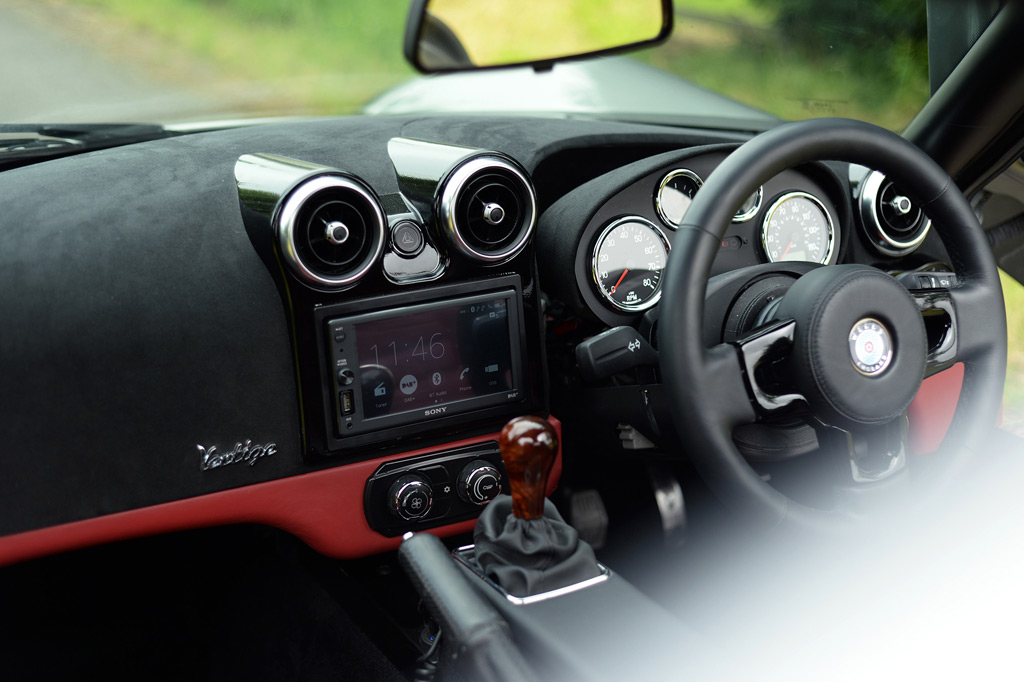
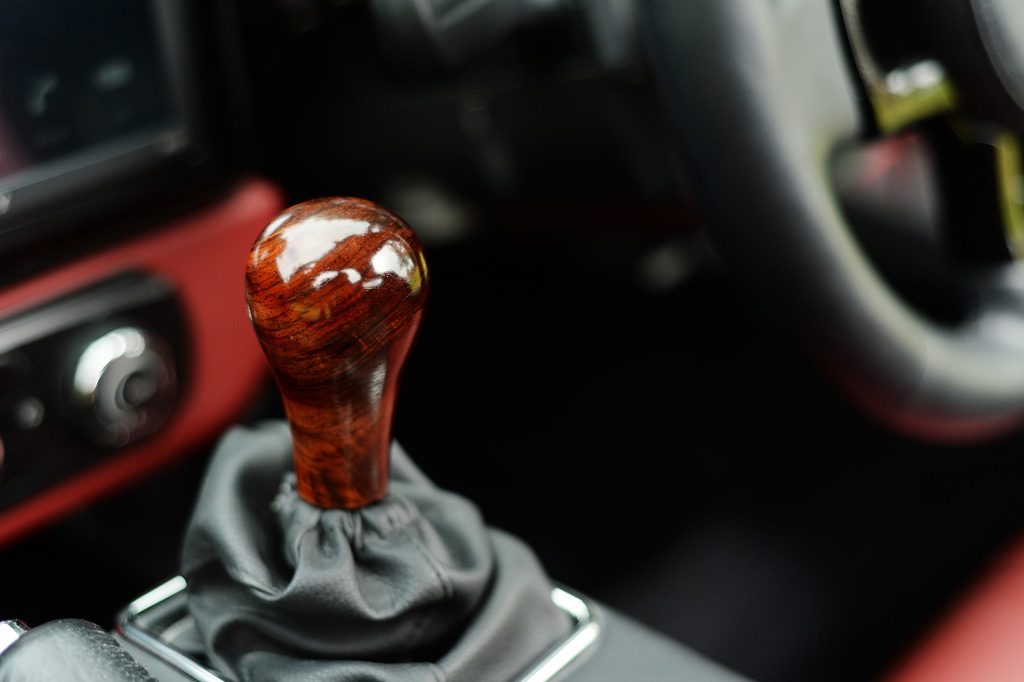
    The interior design is reminiscent of old Lotus sports cars, with the steering wheel and pedals perfectly in line with the driver’s seat. Modern features like navigation and Apple CarPlay and Android Auto are taken care of via a touchscreen-based infotainment system, and there’s also a beautiful wooden shifter, carved from a single block of African Rosewood. Other materials used in the cabin include Scottish Bridge of Weir leather and Alcantara.

    Deliveries are due to start in 2022. Wells is preparing a plant in Bishop’s Itchington and will have Hall Engineering, the company that did the engineering for the Vertige, build the first handful of examples while work on the plant is completed.

    The Wells Vertige is set for its world debut at the 2021 Goodwood Festival of Speed which is on now in the U.K. and runs until July 11. For more coverage, head to our dedicated hub.

    Source

  • FORD MUSTANG S550 BUYING GUIDE

    Always fancied a Ford Mustang, but never wanted to drive a LHD car in the UK? Well, since the arrival of the S550 you can now have a proper UK-spec, RHD Mustang. Here’s what to look for when buying one…

    Guide first appeared in Fast Ford. Words: Dan Williamson. Photos: Matt Dear

    Be honest: is a Ford Mustang S550 on your wish-list of must-have Fords? No? Not tempted by a thunderous V8 and sub-five-second 0-to-60mph sprint? Not enthralled by a rapidly-growing tuning market producing 1000bhp conversions, making the ‘Stang a serious Blue Oval alternative to a Nissan GT-R?

    Of course you are. And rightly so. With official UK right-hand-drive imports starting in 2015 and so many Mustangs stampeding onto the used-car market, there’s never been a better time to jump on board.

    Best of all, you don’t need to wave a star-spangled banner to get behind the wheel – because, with a few choice upgrades,  the Ford Mustang S550 is good enough to compete with European rivals. And it makes a genuine (albeit left-field) alternative to that Focus RS you’ve been promising yourself.

    The Ford Mustang S550 previewed in the USA in December 2013, beginning production at Ford’s Flat Rock factory in Michigan the following summer. Boasting fabulously aggressive styling, the new machine was offered with a choice of four-cylinder, V6 and V8 engines, manual or automatic transmission, two-door coupé (so-called fastback) or convertible bodystyles and a variety of trim levels. Unlike its predecessor (the S197), the 2015 MY (model year) Mustang featured independent rear suspension and – for the first time – a factory-built option of right-hand drive.

    The 2015 UK launch offered four-pot or V8 power (the latter badged as GT), tin-top or drop-top, and Performance Pack as standard. There was an optional Custom Pack and broad choice of colours.

    A facelifted Mustang was announced in April 2018, sporting LED headlamps, a more powerful V8, a ten-speed automatic and several new option packs. The four-cylinder Mustang continued alongside the GT, but it’s the V8 that attracts punters, and it’s the motor Fast Ford recommends.

    Here’s how to get your hands on some throbbing muscle…

    Ford Mustang S550

    Ford Mustang S550 buyer’s guide

    Engine & Transmission

    It has to be a V8. Yes, the UK-supplied Mustang was offered with a 2.3-litre turbocharged EcoBoost (and you’ll find some left-hand-drive imports with the US-spec 3.7-litre Cyclone V6), but it’s the 5.0 Coyote V8 that attracts two thirds of customers – and it’s what this buying guide is about.

    Not that there’s anything wrong with the 2.3 (it powers the Focus RS, after all). It’s just that the V8 is the traditional Mustang motor; it’s in the DNA. And if you’re going to buy a big, hefty Yank bruiser, it only makes sense to opt for all-out muscle.

    The Ford Mustang S550 uses the Coyote engine was carried over from the previous Mustang, but it’s a thoroughly modern unit, featuring reinforced alloy block, four-valve cylinder heads and twin independent variable cam timing (Ti-VCT). It’s also pretty much bombproof.

    The Coyote was improved for 2018 with increased capacity, plasma-coated liners instead of traditional sleeves, higher compression ratio, bigger valves, direct fuel injection, revised intake runners and raised rev limit. Power increased from 412bhp to 443bhp, although you’ll struggle to feel the difference.

    What you will notice – on a standard car – is the sound quality: pre-facelift GTs had an underwhelming exhaust note but 2018 machines gained a brilliant quad-pipe active-valve system that lets drivers adjust the volume via a dashboard menu. By now, most pre-facelifts have had an aftermarket exhaust fitted, but if not you’ll need to budget for buying one – essential for any car enthusiast.

    Indeed, it’s normal to find modifications on any Mustang because it’s what they’re built for: 500bhp-plus is easily achievable normally-aspirated, although many ‘Stangs are supercharged. The Coyote will handle 750bhp without a hitch, and Ben at Motorsport And Performance reckons, “It’s not working hard, so it will take upto 1000bhp with stock pistons and rods.”

    Beware when buying, though, because exaggerated outputs are commonplace; unless you’re very familiar with Mustangs you could believe a 700bhp car has a claimed 800bhp or more. Check receipts for who’s done the work.

    Problems? There are few. Early (2015-to-2016) cars had a potential oil cooler issue, when it ruptures and dumps the engine oil externally (onto the floor, or potentially onto hot components) or internally, into the cooling system. Either way, the motor will be wrecked, you won’t know until it’s too late, and you’ll face a £10k bill.

    It’s rare but it’s possible (especially on hard-used cars), and most would have already been fixed under the three-year/60,000-mile Ford warranty. But if you’re buying an early car, invest in an aftermarket oil cooler kit (about £600) for peace of mind.

    The Ford Mustang S550 are also prone to tapping from the engine – mainly at idle but sometimes though the rev range. Light ticking is sometimes caused by loose cables and heat shields, but more commonly there’s a noise from the bottom-end that sounds like a worn bearing.

    Technically it’s fine, and the official Ford answer is to ignore it. Some engines have been stripped to search for the source, only to find nothing wrong, while others (the Coyote has been around since 2011) have covered high mileages while ticking.

    If anything, the problem seems to occur after an oil change; Ben uses Millers Nanodrive 0w20 (5w40 on supercharged cars), and he’s never had any ticking…

    Change the oil annually or whenever the display advises (service intervals are one year/10,000 miles), swap the spark plugs at 30,000 miles (much less in a big-power machine), and spend the rest of your cash on pursuing power.

    Ford Mustang S550

    Now the question is manual or automatic? Fast Ford would choose the stick-shift, but the auto is still rated as a driver’s car, and all ‘boxes are ultra-tough.

    Manual Mustangs have the Getrag MT-82 six-speed, which received a duff reputation in the S197 Mustang for poor feel and breakages. Thankfully, the S550 version is much better, and few faults have been reported.

    Ford issued a TSB (technical service bulletin) after some pre-June 2016 manual-transmission Mustangs wouldn’t crank the engine due to a damaged clutch pedal position switch – not the sort of fault you’ll find when buying used.

    A revised manual ‘box (MT82-D4) was fitted for the 2018 facelift, with fresh gear ratios, larger synchro rings and dual-disc clutch. Some hard-driven cars exhibit problems with their aluminium shift forks on third and fourth gear snapping off; Ford fixed the problem pretty quickly, but check the gearchange on an early 2018 machine feels smooth.

    The gearbox is otherwise strong, and even the stock clutch will handle serious power for a while, but it can be killed by bad drivers – and it’s a four-figure job to replace. The first sign is a high biting point on the clutch pedal; if there’s any sign of slipping (you’ll be able to tell immediately, with all that V8 torque) it’s already failed.

    According to Spencer at Haynes Ford, automatic Mustangs make up around three-quarters of UK sales. Early versions had a six-speed version of Ford’s ZF-based gearbox, the 6R80. The 2018 facelift introduced the ten-speed update, the Ford-GM 10R80, which although not a dual-clutch design, does a damn good job of out-dragging its manual counterpart: quoted figures are a standing quarter-mile in 11.8 seconds (a whole second quicker than the manual). Autoboxes are reckoned to be good for 1000bhp.

    Check the six-speed auto doesn’t clunk when going from neutral to drive or reverse, which will need the front transmission flange to be replaced.

    Listen for vibrations, humming and rumbling from 40 to 60mph, which suggest an imbalanced driveshaft, although could also result from worn wheel bearings or tyres. Robbie from Steeda reckons some Mustangs have noisy differentials (UK cars feature the Torsen T-2R from the American Performance Pack 1), although it’s nothing to worry about. Half-shafts, he says, are the weakest point of the transmission: for street use they’re fine, but have been known to snap on the strip.

    Ford Mustang S550

    Chassis

    You’ve seen the YouTube clips and heard the jokes: the Mustang-crashing-into-a-crowd scenario is a very real phenomenon. Partly it’s because showing off comes hand-in-hand with driving a muscle car, and mainly because many Mustang drivers aren’t familiar with powerful rear-wheel-drive machinery. Another factor is that, although the S550 is the first Mustang with independent rear suspension, it’s not exactly a sporty setup.

    “The suspension can’t deal with 400bhp, let alone 700bhp,” says Robbie, “it’ll be straight into a hedge.”

    Although British Mustangs have the Performance Pack settings as standard, it’s very soft and vague. Poor alignment from the factory means the rear subframe can be so far to the left or right that, if spacers are fitted, you’ll notice wheels sticking out more on one side than the other.

    Ben says Steeda’s IRS Base Pack is a must-have modification, even if you do nothing more than drive to the shops. By filling oversized bolt hole with void bushes, it takes the slop out of the suspension – which means you can feel what the rear end is doing. Add a set of lowering springs and subframe support bushes and your bill will be almost £1000, but you’ll need to budget for it if your previous car was an ST or RS – or you’ll be very disappointed.

    Suspension upgrades will also help to eliminate wheel hop, for which the Mustang is commonly criticised. Again, factor the modifications into your budget before buying the car.

    There are few suspension problems to be aware of, although it’s worth listening for rumbling from the rear wheel bearings, which can fail prematurely.

    Be prepared for rear tyres to suffer a similar fate, and avoid anything wearing cheap budget-spec rubber. Robbie recommends the Michelin Pilot Sport 4S, which suits UK roads and helps to reduce wheel hop too.

    Finally, don’t assume any facelifted Ford Mustang S550 will feature fancy MagneRide damping, which adapts to road conditions – it’s a £1600 optional extra, but reckoned to be worth the outlay.

    In the States, the Mustang isn’t such a big deal. The base model is a hire car; a shopping car; a car for middle-class families to give to 16-year-old kids for driving lessons; the basis for track cars and show cars where all the stock stuff is simply thrown away.

    Thankfully, the UK didn’t receive the basic Mustang (apart from a few pre-official imports), and all British GTs include Ford’s Performance Pack 1 as standard – which provides whopping Brembo six-pot front calipers and 380x34mm discs, plus 330x25mm ventilated rear discs with floating callipers.

    As you can imagine, they’re very good for street and track days, although you may find enthusiastic owners have swapped the heavy front anchors for lightweight two-piece discs. You might also see the pads are worn; thankfully, they’ re non-exotic prices.

    It’s unlikely you’ll notice any issues with the brakes, albeit some pads tend to squeal more than others. A heavily-used Mustang might exhibit juddering through the pedal due to contaminated discs/pads in need of replacement.

    An electronic line lock is found on all GTs, which lets the driver spin the rear wheels while stationary by applying the front brakes. But don’t get excited because it’s just a party trick and useless unless you’re at a drag strip.

    Interior

    It’s no AMG. And, to be honest, it’s no Vignale. But the Mustang’s cabin makes a good effort at looking exciting, even if it’s not exactly a premium product.

    There are shiny switches and leather-clad seats. And, of course, that iconic pony emblem on the steering wheel (unless you’re lucky enough to bag a Bullitt, which has its own evocative design).

    Sadly, it’s all built down to a price. Those switches are silver-painted plastic, and many owners are disappointed by the Mustang’s build quality. Early cars are particularly prone to cockpit rattles, squeaks and vibrations. Some have even been supplied with mismatched parts.

    Pre-facelift S550s were supplied with one trim level plus optional climate-controlled heated seats, which were also included in the popular Custom Pack.

    Facelifted cars gained better-quality cabin materials, aluminium door handles and more options: Ebony leather Recaro seats (fastback only; nice but rare), climate controlled seats, or a choice of four Custom Packs (which include hand-stitched centre console and climate-controlled seats). If you care about resale value, be sure to buy a car with a Custom Pack. Facelifted machines are also said to rattle much less, and feel that bit more luxurious.

    You’ll not find a lot wrong with Ford Mustang S550 electrics. Puddle lights in the door mirrors are prone to breaking due to moisture (often fixed under warranty), and there was a recall in January 2019 due to a fire risk from the battery wiring harness, which runs too close to the exhaust manifold and needs insulating; check it’s been fixed.

    Several cars have had faults with the air conditioning condenser, so ensure it all works. Dual-zone climate control is standard.

    Some owners also report difficulties with the audio system’s DAB radio and connectivity. Early models were fitted with Ford’s SYNC 2 8in colour touch-screen, but from April 2015 gained the preferable SYNC 3.

    Surprisingly, satellite navigation wasn’t standard-fit but included in various Custom Packs – a car without nav is worth less. The pre-facelift Custom Pack included Shaker Pro premium audio system with satellite navigation and reverse parking sensors, while 2018 Custom Packs added sat nav and 12-speaker B&O sound system.

    The facelift also introduced an LED instrument cluster, which many buyers are keen to acquire; fortunately it’s not a deal-breaker, because it’s an achievable upgrade for earlier cars. Not so the 2018 LED tri-bar headlamps in place of the original HID xenons, which involve cracking open lights and lots of rewiring.

    Ford Mustang S550

    Style

    Make no mistake: the Mustang is a big car. If you normally drive a Fiesta you could be surprised by the Yank’s bulk. And – not that we’d expect any Fast Ford reader to fall into this trap – make sure it fits your garage before signing on the dotted line…

    If you want a Mustang fastback rather than convertible (eight-out-of-ten buyers do), you’ll have a wider choice on the used market. Drop-tops are a couple of grand more expensive new, but second-hand prices level out.

    Colour choice will be important too. Race Red is most popular in the UK (specified on around a fifth of cars), with greys and blacks similarly sought-after. If you want a lairy shade (such as Need For Green) it may take longer to find, but you’ll be rewarded with something mighty special.

    Facelifted Mustangs (in the UK from around April 2018) had new colours (including White Platinum, Grabber Blue and Lightning Blue); they also tend to be better bolted-together.

    Many owners of pre-facelift cars complain of dodgy panel gaps, particularly at the front and rear bumpers but also around the bonnet, front panel, sills, rear quarters, boot lid, rear window, lights, fuel cap and doors (which may also drop when opened). Convertible tops often look askew when raised.

    Some Mustang are so bad they look like they’ve been rolled down the road – yet it’s simply due to poor quality control in America. Occasionally the misalignment is wide by a couple of millimetres; often it’s so bad that panels are rubbing together. Compare a few different Mustangs to check.

    Obviously, it’s vital to inspect any car for accident damage, such as creased inner wings and floorpan; being rear-wheel-drive, it’s best to check a Mustang’s boot floor and rear quarters – behind any trim if needs be.

    To make matters worse, the paintwork on some cars is shoddy, with runs from the factory, and scuffs and dents from transportation; rear spoilers and other plastics may also be off-shade.

    Facelift cars don’t seem so bad, although there was a 2018 recall for a towing eye with the wrong thread. Nothing to worry about.

    Mustangs come with a lengthy anti-perforation warranty (often meaningless when attempting to make a claim from…), but some ‘Stangs have already exhibited rust bubbles on the wheelarches and the edges of the bonnet.

    Bear in mind that factory anti-corrosion treatment leaves a lot to be desired, and Ben recommends treating the floorpan to high-quality underseal. Otherwise, a few years of salted winter roads will spell trouble.

    Choose a car with Custom Pack. The pre-facelift pack included chrome window surrounds (fastback only) and Lustre Nickel finish to the multi-spoke 19in rims. Facelift Custom Pack 1 is the same but Custom Pack 2 features black 19in alloys and no chrome; Custom Pack 3 includes 19in forged alloys plus chrome surrounds, and Custom Pack 4 looks the same but without the bling.

    Ford Mustang S550

    Identity

    Keyless entry and push-button start: great to have, but an invitation to thieving scum. It’s standard on all S550s, so consider it an advantage if the car you’re buying has additional security measures installed. It also means you’ll need to be vigilant when it comes to cross-checking the VIN (vehicle identification number) on the logbook with the number in the windscreen, under a flap in the carpet beneath the driver’s seat and on a sticker on the driver’s-side B-pillar.

    Naturally, with a car of this value it’s essential to invest in a full history check to ensure there’s no outstanding finance or hidden accident damage.

    It’s also wise to familiarise yourself with what’s on the market: left-hand-drive Mustangs are likely to be lower-specced than official UK cars, and – unless it’s something awesome such as a Shelby –  are best avoided. The facelifted Mustang of April 2018 fetches more money (and rightly so) thanks to a whole host of improvements; it’s recognisable from its lower nose with LED headlights and more aggressive front bumper.

    It’s also worth looking out for a special edition such as the 2016 Shadow Edition (Race Red or Grabber Blue with black pony grille emblem, black Y-spoke alloys, Custom Pack and optional black roof) or the 55 Edition of 2019 (stripes, black grille, black roof, Custom Pack, unique black alloys and optional rear spoiler). Such Mustangs really are limited-runs (even Mustang main dealer Haynes Ford has single-figure allocations).

    Of course, it’s the legendary Bullitt that gets most attention. Fastback/manual only, it boasts more power (thanks to GT350 Open Air Induction System, 87mm throttle bodies and remap), heavy-duty front springs and rear anti-roll bar, black Torq Thrust-type five-spoke alloys, red Brembos, debadged grille, Recaro seats with green details, and cue-ball gearknob. Paintwork is McQueen’s choice of Dark Highland Green, but Shadow Black is available on later cars. The first batch of 2018 sold out almost immediately, so Ford extended production into 2020. Worth having? Oh yes!

    Want to know how to get the most performance from your Ford Mustang S550? You can check out our tuning guide right here.

    Ford Mustang S550

    Tech Spec: Ford Mustang S550

    Engine:  

    Coyote 4951cc (2018-on: 5038cc) DOHC 32-valve V8 with aluminium block and heads, cast aluminium pistons, forged steel con rods, 11:1 compression ratio (2018-on: 12:1), sequential multi-port fuel injection (2018-on: direct injection), stainless steel tubular exhaust manifolds and twin-exit system (2018-on: Active Valve performance exhaust with quad tailpipes)

    Transmission:

    Rear-wheel drive with Getrag MT-82 six-speed manual gearbox or 6R80 six-speed automatic (2018-on: 10R80 ten-speed automatic) gearbox with paddle shifters, Torsen T-2R limited slip differential, final drive ratio: 3.55:1, electronic launch control

    Suspension:

    Front: double-ball-joint independent MacPherson strut and tubular anti-roll bar; rear: integral-link independent with coil springs, monotube dampers and anti-roll bar. Bullitt with uprated spring and anti-roll bar

    Brakes:

    Front: 380mm ventilated discs with Brembo six-piston callipers; rear: 330mm ventilated discs with floating callipers; ABS, AdvanceTrac electronic stability control, electronic line-lock

    Wheels & Tyres:

    Front: 9x19in alloys and 255/40×19 tyres; rear: 9.5x19in alloys and 275/40×19 tyres

    Exterior:

    Unitary steel two-door coupé or convertible with aluminium bonnet and front wings, auto HID (2015-2017) or LED (2018-on) headlamps, heated power-folding door mirrors, LED tail lights, rain-sensing wipers, GT grille and badging. Colours include Competition Orange, Race Red, Oxford White, Absolute Black, Deep Impact Blue, Guard Grey, Magnetic, Ingot Silver, Ruby Red, Triple Yellow, Shadow Black, Velocity Blue, Iconic Silver, Kona Blue, Grabber Lime, Twister Orange, Lucid Red, Need For Green, Orange Fury, Dark Highland Green

    Interior:

    Electrically-adjustable front seats, leather upholstery, colour touch-screen SYNC stereo with nine speakers, rear camera, dual-zone climate control, KeyFree with PowerStart button, MyColour ambient interior lighting. Optional Recaro seats (not convertible) or climate-control heated/cooled seats

    Ford Mustang S550 performance stats

    Made: 2015-present

    Price when new: £32,995-£51,045

    Price now: £19,000-£60,000-plus

    Power: 2015-2017: 412bhp @ 6500rpm; 2018-on: 443bhp @ 7000rpm; Bullitt: 453bhp @ 7250rpm

    Torque: 2015-2017: 386Ib/ft @4250rpm; 2018-on: 390lb.ft @ 4650rpm

    Top speed: 155mph (Bullitt: 163mph)

    0-62mph: 4.3-4.8 seconds

    Source