
Author: Olly

  • Drifting: Heritage and collectibility

    (Editor’s note: During the month of January, the ClassicCars.com Journal presents a series of stories related to and perhaps explaining the recent increase in interest in collecting cars produced by Japan-based automakers.)

    In the last 15 years, the rise of a new motorsport has captured young hearts while creating its own lifestyle and culture around the world. Drifting is an international FIA-sanctioned motorsport originating from Japan that has created a new and growing segment to our evolving car culture.

    Drifting is a driving technique in which the driver purposely forces the car to lose traction, typically by “clutch kicking,” and then oversteers and or countersteers to make their way through a corner with the car angled sideways as much as possible. The technique essentially requires the driver to countersteer to offset momentum to direct the vehicle into the direction of the turn.
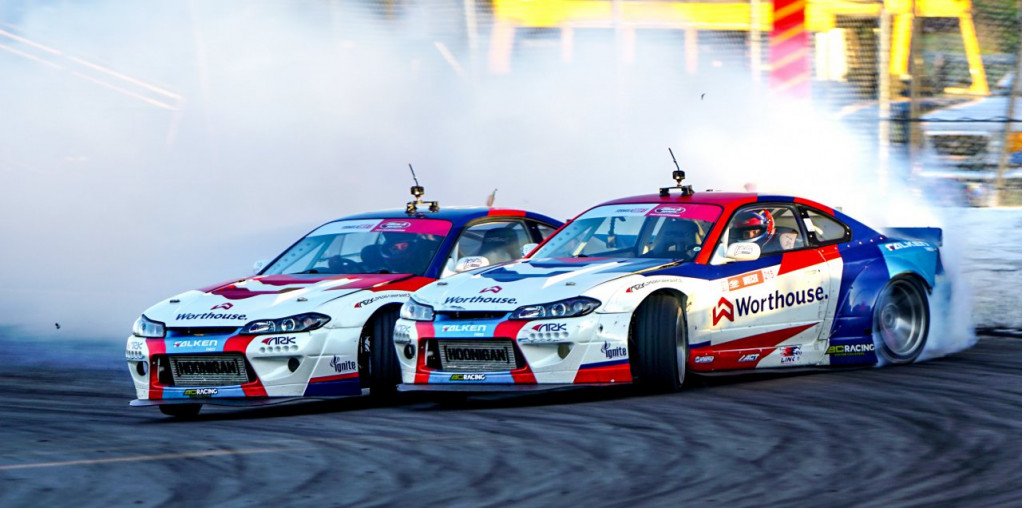
    Skililful driving: Nissans in a controlled
    Skililful driving: Nissans in a controlled

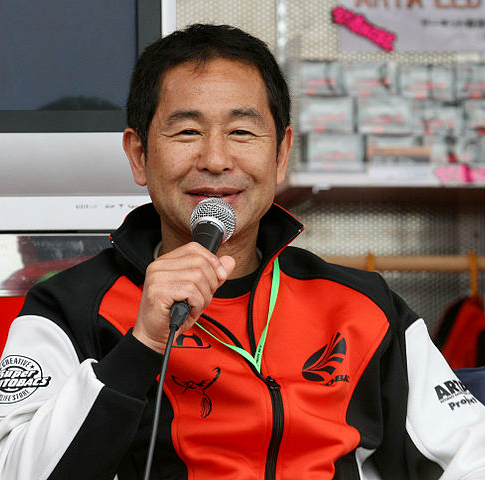
    Keiichi Tsuchiha
    Keiichi Tsuchiha

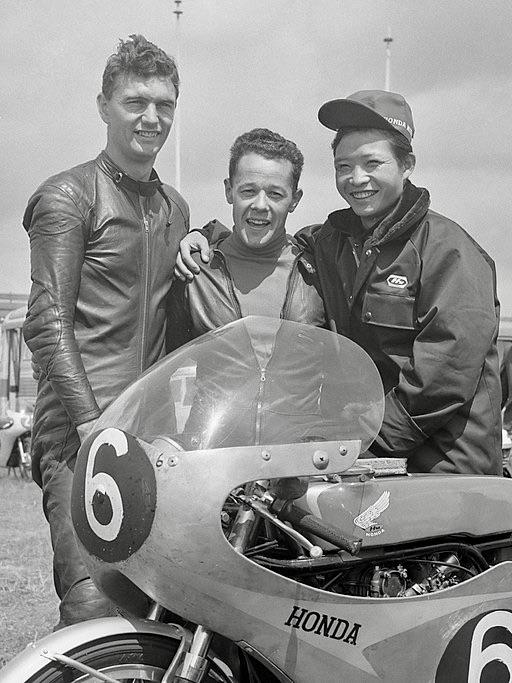
    Kunimitsu Takahashi (right)

    Kunimitsu Takahashi (right)

    Kunimitsu Takahashi, a former professional motorcycle road racer, was considered the “father of drifting” as early as the 1970s. He was able to use his driving techniques to win several championships in the All-Japan Touring Car Championship. He was also the first Japanese rider to win a World Grand Prix motorcycle race.

    Another early “Drift King” was Keiichi Tsuchiya, a two-time 24-Hours of Le Mans winner known for using drifting techniques in non-drifting motorsports and, in his free time, while traveling on the mountain roads of Japan.

    As one of the leaders in popularizing drifting by founding the world’s first organized drifting competition, called the D1 Grand Prix, Tsuchiya not only helped spread the word about drifting but also the love for the Toyota AE86. Driving a Toyota AE86 Sprinter, Trueno, Tsuchiya was also known for “touge” (mountain roads) racing in it. Since then, the AE86 has become a Japanese collector car with direct pop culture ties as well to the popular anime Initial D, with Tsuchiya acting as a consultant.

    Drifting really didn’t really emerge forcefully in the United States until the first season of Formula Drift in 2004, and in 2006 when it was highlighted in the movie The Fast and the Furious: Tokyo Drift. Tsuchiya also consulted for the film as a stunt coordinator and stuntman while making his own cameo appearance on the screen.

    However, in 1996 at Willow Springs Raceway in California, one of the earliest drift events outside of Japan was hosted by the Japanese magazine Option. Founder of the Japanese D1 Grand Prix Daijiro Inada, NHRA Funny Car drag racer Kenji Okazaki, and Keiichi Tsuchiya were showcased by giving demonstrations in a Nissan 180SX brought over from Japan. Since then, sanctioned competitions have evolved into permanent motorsports series.
    Drifting

    Drifting

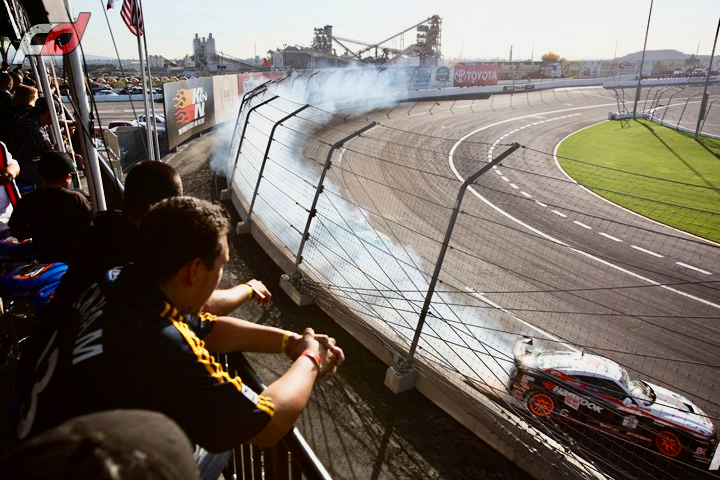
    Competitive drifting is a judged motorsports competition focused primarily on the ability of the driver to navigate the course with specified acceleration, deceleration, and zones to be filled as well as their ability to “chase” or follow a lead driver in extremely close proximity. Over the years, the expectations of the driver have evolved along with the rule book that is shared internationally between different sanctioned drifting series.

    Popularity of the sport brought in bigger-name drivers, like Tanner Foust and Vaughn Gittin Jr., which led to the increase in interest in the chassis used in drifting. Unlike many other motorsports, drifting does not have rules about which chassis and engines a driver has to run, as long as the rear subframe is factory and the car passes their tech. This allowed drivers to be more creative with their presence on the track.
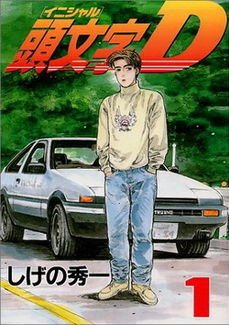
    tvtropes.org photo

    tvtropes.org photo

    Rear-wheel drive cars were the most popular chassis of choice for drivers, specifically Japanese rear-wheel drive chassis. The Nissan Silvia 240SX became one of the top picks, having won seven D1 Grand Prix championships, and has a very extensive aftermarket product availability for added performance specific to drifting. As the popularity of the 240SX rose, the rarity of an all-original and low-mileage example has become difficult to find, and thus more expensive for collecting.

    The same could be said for the Mazda RX-7, Nissan Skyline, Nissan 350Z, and Toyota Supra that were all featured in the anime series and Japanese manga Initial D and are all currently competitive chassis used at the PRO level of Formula Drift.

    Most recently, drifting has made appearances in many films like Baby Driver, Cars, and the Netflix television series Hyperdrive as well as computer and console gaming like Gran Turismo, Forza Motorsport, the Need for Speed franchise and even indie games like Absolute Drift.

    There has also been a rise in social media celebrities sharing content related to drifting, from driving to building drift cars. There’s even a series of drifting-oriented lifestyle events under the Gridlife banner taking place.
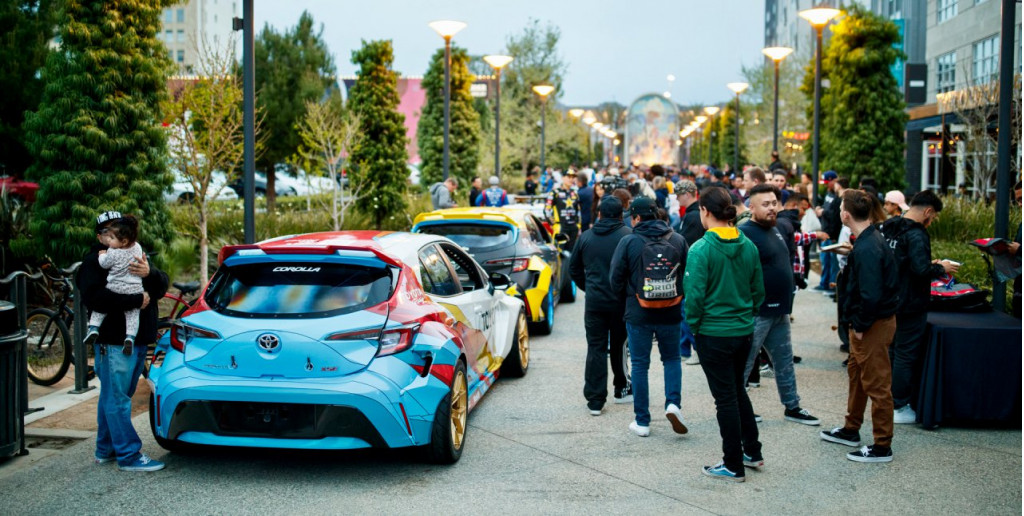
    Formula Drift draws a crowd

    Formula Drift draws a crowd

    As the sport grows and its audience has money to spend, one of the places it is spending is on collectible drift-style vehicles.

    Lately, the Lexus IS300 has been the hottest on the drift enthusiast’s radar, although also being sought are the BMW E36 and specific components from the popular 2JZ Toyota Supra engine.

    Find yourself a clean example of an early 2000 model IS300 with a factory 5-speed manual transmission and you’ll have a unicorn on your hands, and in your collection.

    This article, written by Rebecca Nguyen, was originally published on ClassicCars.com, an editorial partner of Motor Authority.
    Source

  • 2021 Kia K900 and Cadenza latest sedans dropped due to popularity of SUVs

    The Kia K900 and Kia Cadenza full-size sedans won’t return for the 2021 model year. Car and Driver reported the deaths of both big sedans on Monday.

    Kia told the magazine that the decision was due to customer preferences shifting toward SUVs. In addition, neither sedan was a strong seller, with Kia selling just 1,265 Cadenzas and 305 K900s in the United States in 2020, Car and Driver noted.

    The K900 in particular was always an odd proposition. It launched for the 2015 model year with an optional 5.0-liter V-8 and a roughly $50,000 price tag, a stark contrast with the rest of Kia’s lineup. A second-generation K900 launched for the 2019 model year, using the Stinger’s platform and 3.3-liter twin-turbocharged V-6, but still focusing on comfort rather than sportiness. The K900 was never a big seller.

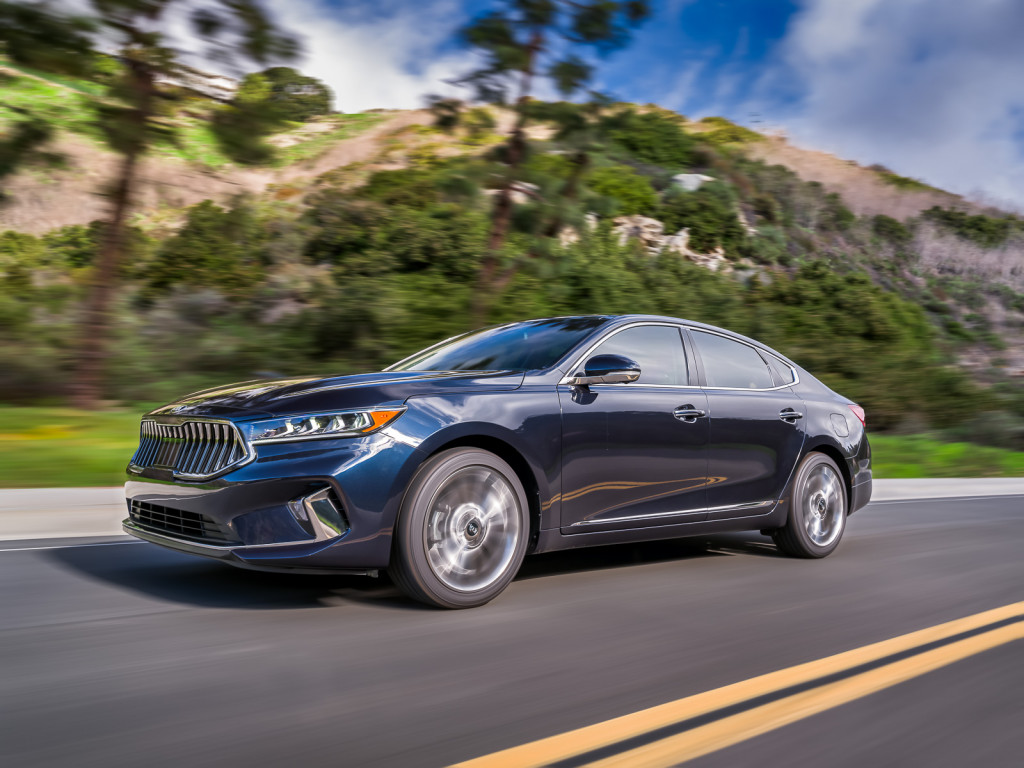
    2020 Kia Cadenza

    2020 Kia Cadenza

    Based on a front-wheel drive platform, the Cadenza served as Kia’s rival to the Nissan Maxima and Toyota Avalon in a shrinking segment. The Cadenza’s sibling, the Hyundai Azera, was already discontinued after the 2017 model year.

    Discontinuing the K900 and Cadenza creates more breathing room for Kia parent Hyundai’s Genesis luxury brand, which currently sells the G70, G80, and G90 luxury sedans. The similarly-sized G90 actually outsold the K900 in 2020, with 2,072 units finding owners.

    Kia may not be done with premium vehicles, though. The automaker is launching an all-electric model with a 300-mile range, which is expected to serve as a halo model for other future EVs. Just don’t expect it to be a big sedan. Kia has said this new model, which will be unveiled later this year, will have a “crossover-inspired design.”

    Source

  • MODIFIED MERCEDES 190E: WEIRD SCIENCE

    A modified Mercedes 190E is one thing. But this? This is surely the product of some frighteningly deranged laboratory experiments. The team at F7LTHY Fabrication are the ones stirring the beakers, and things are about to get freaky…

    Feature taken from Fast Car magazine. Words: Joe Partridge. Photos: Larry Chen

    If the hysteria of social media is to be believed, there are strange things going on in North America. And no, we’re not talking about that fellow in D.C. with the intriguing hair, or the common belief that aerosol-propelled cheese is an acceptable foodstuff. It’s the SEMA show we’re on about, and specifically the colossal deviations from normality that essentially broke the internet from its moorings at the back end of last year. We’re used to seeing cars which are absolutely bananas bleeding out from every Vegas orifice, but 2019 really knocked things up a notch. And if you teleport yourself to the north-west border of Washington state, then amble twenty miles or so up to Coquitlam in British Columbia, you’ll find the root of some of this mischief. This is where F7LTHY Fabrication resides, and it’s their ‘Evil Evo’ Mercedes-Benz 190E that’s got all of these digital tongues wagging with such fervour.

    “I couldn’t find the car of my dreams, so I built it,” reasons the company’s owner, Tim Lajambe, and you can’t really argue with the logic of that. It’s clear that he’s a man possessed of both clarity of vision and extraordinary skill too, as this vivid and vibrant creation isn’t just any old modified Mercedes 190E – it’s the weirdest and scariest one we’ve ever seen. The new gold standard for retro Merc saloons.

    Modified Mercedes 190E

    The history of the Mercedes 190E as a model is an interesting one, as it’s characterised by a fabulously beguiling phrase: ‘Massively over-engineered’. Not our term, but in fact one genuinely employed by Mercedes-Benz themselves to describe the model when it emerged blinking into the motorscape way back in late 1982. This car represented the dawn of a new era for Mercedes, the so-called ‘Baby Benz’ being the marque’s first foray into the compact-executive sector. They poured over £600m into the model’s R&D, patenting a natty new five-link rear and throwing in all sorts of über-modern accoutrements: seatbelt pretensioners, airbags, ABS… with BMW dominating the sector with the ubiquitous 3 Series, M-B had to go in hard. They needed to over-engineer the thing, it was the only way to muscle in. Crisply styled by Bruno Sacco and engineered by a team headed by Prof. Werner Breitschwerdt, the finished product offered everything from luxurious family transport to minicab chic across its broad spec range; the results spoke for themselves on the road, and the model proved hugely successful in motorsport too… minor waves were made in rallying thanks to the likes of Snobeck Racing, but it was the flame-spitting DTM where it really made its mark. For a generation of burgeoning petrolheads, wide-bodied 190E Touring Cars were the stuff of dreams.

    This sort of developmental extravagance and motorsport prowess has, unsurprisingly, given the 190E quite a strong following. You tend to find pretty fervent brand evangelists in the retro car world – Mini fans who’ll drive nothing but Minis, MkI Golf owners who won’t shut up about Wolfsburg – but it’s interesting to note that Mercedes-Benz enthusiasts are more effusive than most. Once that three-pointed star is emblazoned upon the subconscious, it’s there for keeps. This is true of Tim at F7LTHY; “the passion started the same as it did for so many others from my generation,” he says. “It was a poster of a 190E Evo 2 that inspired me to follow DTM racing, and that imagery was forever burned in my head! So I daily-drove a 2.5 16v 190E for years, which furthered my love for the platform. And once I was in a position to be able to afford to build my perfect version of a modern Evo, and I had acquired the skillset and team to execute it correctly, I did.”

    Modified Mercedes 190E

    This skillset was hard-earned from day one, as Tim’s first car – a Datsun 240Z – turned out to be what he describes as ‘a bit of a bondo wagon’. He’d bought it at the age of just fifteen, and there’s no denying how awesome it must have seemed to own such a beautiful and revered classic at that age, but the rose tints quickly fell away as he realised just how much work he was facing to fix it up. Never one to shy away from a challenge, he tore into the rusty Datsun with ninja force, and it was there that Tim built the bedrock of skills that permeate this Mercedes today.

    “I realised early on that I wanted to build cars for a living,” says Tim, “which wasn’t a popular choice with my parents, but it has been working out pretty good so far.” Yep, the evidence before us would suggest things are moving in the right direction. What’s particularly interesting to learn is that this car isn’t based on his trusty 2.5-16; Tim was reluctant to cut that up, so he sourced another project base. This car actually started out as a base-model 190E in a Champagne-on-brown colour scheme. The transformation, it’s fair to say, has been colossal. And even that’s an understatement.

    Modified Mercedes 190E

    So there are many out-of-the-ordinary elements of this car, and perhaps the most significant is that engine. No, it’s not a Merc motor. In fact, it’s a 408ci (6.7-litre) V8 from the lunatics at Texas Speed. This is a company which starts out with a General Motors 6.0-litre LQ9 iron block, and liberally festoons it with a stroker crank, forged pistons and rods, Precision Race Components cathedral-port alloy heads… this is very serious stuff. Nestling malevolently in the 190E’s bay, it’s now wearing a Late Model Engines billet intake manifold with Granatelli 103mm billet throttle bodies, and brilliantly there’s a pair of massive Precision turbos from Mirror Image as well. Given the nature of what F7LTHY does, this all had to be a showcase of fabrication prowess, and consequently you’ll find some very clever engineering in here. The mighty intercooler was fabbed in-house around a Mishimoto core, the custom exhaust system was made up using titanium from Ticon Industries, it’s all very smart. And if you thought that was special, wait till you find out what other weirdness has been going on…

    The suspension setup is a bit of an unexpected treat. Naturally we’re used to seeing air-ride on project builds, but this is very far from an off-the-shelf kit. There’s wily cross-pollination at play here. “The suspension was sourced from an R129 Mercedes SL600; it was formerly sitting behind a V12,” Tim grins. “The 190E’s entire rear subframe was cut out and replaced with the R129 unit, as that is much more robust and much wider, ultimately allowing us to widen the Evo 2 kit we made for the body. The struts are D2 Racing air struts which have been great for showing the car, although once we start to have fun with it and do some track days I think we’ll be switching them out for coilovers.” The presence of the SL600 architecture means that the team were able to stay OEM with the brakes too, upgrading to the big-brake SL factory option that comprises 4-pot fronts and 2-pot rears.

    Modified Mercedes 190E

    A further surprise presents itself when you peep into the interior, as it’s not all stripped-out race car – it’s quite luxuriously trimmed. And yet it is stripped out. Sort of. It’s a bit of a melon-twister, to be honest. See, the bones of it are pure race car, removing the rear seats and what-have-you and installing a rollcage… but then the NRG carbon fibre seats were stripped down and rebuilt with red nappa leather, with the original dash and various other panels trimmed in the same sumptuous hide to match. There’s full soundproofing throughout the car, and the headlining and upper trim panels are all finished in light-absorbing dark Alcantara to complement the Cerakote Glacier Black finish on the ’cage. It’s all marvellously strange, and it’s the attention to detail which really makes it work as a whole. As can be said of the exterior treatment: that’s F7LTHY’s own custom Evo 2 widebody kit you’re seeing, the body painted in satin-finish Mercedes-Benz Selenite Grey. But this is no DTM pastiche. The custom front splitter, rear diffuser and swan-neck rear wing all help to hurtle the aesthetic vibe into 2020, each one picked out in black Cerakote to marry the exterior to the innards. The upshot of all this is something pretty terrifying, which is just the effect the F7LTHY team was hoping for.

    The rich mix of approaches has certainly led to some interesting reactions. People who get it really, really get it. Those who don’t, well, they just don’t. “Responses to the car have been amazing,” Tim enthuses. “Of course there are haters, because the car isn’t all the way one thing or another; it’s not a purebred racer, it’s meant to be an aggressive street car and a display of our abilities at F7LTHY Fabrications.” Brilliantly, that’s just the way this massively over-engineered project has turned out. There are strange things happening over there on the North Pacific side. And long may the strangeness continue.

    Modified Mercedes 190E

    Tech spec: Modified Mercedes 190E

    Styling:

    F7LTHY Evo 2 widebody kit, Mercedes-Benz Selenite Grey satin-finish paint, custom front splitter, swan-neck rear wing and rear diffuser finished in Cerakote Glacier Black

    Tuning:

    Texas Speed (GM LQ9) 408ci long-block, Precision Race Components aluminium heads, Late Model Engines billet twin-throttle body intake manifold, Granatelli 103mm billet throttle bodies, twin Mirror Image Precision turbos, custom-fabricated intercooler with Mishimoto cores, custom-fabricated exhaust system in Ticon Industries titanium, Tremec T56 Magnum XL transmission with cryo-hardened gears, ACE twin-disc
    race clutch

    Chassis:

    9x18in (front) and 12.5x18in (rear) custom-widened Fifteen52 Turbomac wheels, 255/35 (f) and 305/35 (r) Toyo Proxes RR tyres, R129 Mercedes SL600 V12 suspension with D2 Racing air struts, SL600 OE big-brake upgrade option (4-pot front, 2-pot rear)

    Interior:

    NRG carbon fibre seats – stripped and rebuilt with red Hydes nappa leather, dash and assorted panels trimmed in matching leather, headlining and upper panels trimmed in black Alcantara, sound deadening throughout, AiM digi-dash, Digital Delay Mega Panel, custom gear shifter, carbon flat-bottom steering wheel, rollcage finished in Cerakote Glacier Black

    Thanks:

    “Thank you to my family, my sponsors, and my team: Rob Mosser on fabrication, Tim Baillie (Installer of the Year 2019) on wiring and electronics, Brett Padula on paint and body, Luca Rizzo on mechanicals, and Greg and Sarah from @f7lthyinside on interior and upholstery.”

    Source