Author: Olly

  • MODIFIED EF CIVIC: SQUAT THRUST

    Hunkered down and ready to pounce for the horizon, this modified EF Civic has the energy of Joe Wicks and Mr Motivator combined…

    Feature first appeared in Fast Car Japanese. Words: Joe Partridge. Photos: Larry Chen

    If there’s one modifying trend that defines the modern age, it’s the premium restomod. A lot of people like the idea of retro looks with modern performance, and you’ll no doubt have spotted a growing fondness for high-end cars that have been reimagined this way – Singer 911s, Eagle E-Types, Alfaholics GTAs, the fusion of the old and the new has never before been achieved with such sumptuous attention to detail. And these aren’t just engine swaps, it’s more of a lifestyle swap: those fancy modernised classics, they’re not selling for eye-watering prices because they’ve just had new powerplants grafted in – they represent a brand-new, 21st-century version of a classic car. Old-school looks with modern power, fuel economy, brakes, acceleration, suspension, seats, electrics, comfort and reliability. And in much the same vein, what we’re looking at here is a modified EF Civic that’s been reimagined for astonishing horsepower and handling prowess that plants it firmly in the 2020s.

    Modified EF Civic

    At this point, we may require a little history lesson. For those readers who were around and paying attention through the 1980s and ’90s, the fourth-generation Civic will be very familiar as they used to be everywhere. Nowadays, however, they’re pretty rare; with no Type R halo model (all of that came a decade later) and most cars sold in disposable shopper spec, there simply aren’t many left. Launched in 1987, the EF Civic represented a massive step-change in technology and sophistication over its predecessor. Boasting double-wishbone front suspension and an independent multi-link rear, it had a more aerodynamic approach to body styling, a much larger glasshouse, and the engine options variously offered all manner of initialisms to set pulses racing in the late-1980s – DOHC, VTEC, it was all very exciting. Fourth-gen hatchbacks in particular are becoming revered in Honda tuning circles, as their advanced chassis layouts are complemented by extremely light kerb weight, making them a hot ticket for motorsport preparation and fast road hijinks. They made great race cars in period, and the top-of-the-range SiR model boasted an impressive 158bhp. This, perhaps, is a hot hatch that deserves to be remembered by more people.

    One person who recalls the sporting EFs all too clearly is Kenji Sumino, President of GReddy Performance Products Inc. in California. The company’s North American base was established in Irvine in the early 1990s, right in the sweet spot when these Civics were hot tuning property, and it’s long been a desire of Kenji’s to build something that can emulate those halcyon days, with a modern twist. The car you see here is the realisation of that dream.

    Modified EF Civic

    Having hunted high and low for the right project base, a straight and honest EF was sourced and hauled back to GReddy base, whereupon the decision was arrived at that while it was extremely tidy and didn’t need much work to get it up to scratch, there was no point messing about. If this was to be a true-blue high-end restomod, it needed to be better than new. So the car was stripped down to a bare shell, the body perfected and finessed, and the whole thing lovingly refinished in crisp Championship White – the colour of JDM winners. As the reassembly was taking place, Kenji and the crew took the opportunity to upgrade the front end to JDM EF3/9 spec with the updated bonnet, bumper and headlights. All the hardware is new throughout – every nut and bolt, every pipe, every bracket and fixing – to bring it all up to a way-better-than-new standard. And with all of that achieved… well, a modern engine swap was inevitable, wasn’t it?

    Modified EF Civic

    It’s not too modern though. Just a generational update to the platform. Because the motor Kenji chose to swap in is the B18C1 – the 1.8-litre DOHC VTEC unit as found in the USDM Acura Integra GS-R. In stock form this motor serves up an eager 178bhp with the VTEC kicking in nice and low at 4,400rpm – but don’t go thinking this is anywhere near stock form. No, the GReddy boys and girls have gone a bit crazy with it. Handing the twin-cam tearaway over to the experienced hands at DSPORT, it’s had a full race-spec rebuild, the block stuffed with Darton sleeves, JE pistons and Carrillo rods while the head sports Supertech valves, springs and retainers. Why sleeve the engine? Because they were shooting for massive numbers, that’s why. In fact, this built motor has been put together with the express aim of being capable of doling out 1,000bhp, before being detuned via a smaller turbo in order to ensure that it’s always on the top of its performance game without risk of explosions. Lurking down in the bay is a new-wave GReddy T518Z turbo, something usually reserved for use on the GT86/BRZ platform, and it’s sitting on a properly old-school retro GReddy cast exhaust manifold. A Hondata S300 ECU knocks it all into shape, working with Ignition Projects coils on a coil pack retrofit kit, and a custom military-spec Rywire harness keeps everything safe and logical. Perhaps the most intriguing part of the engine build is the bespoke water-to-air intercooler system, which has the water that runs through the intercooler being chilled by the air-conditioning system; even more brilliantly, this clever setup has been disguised to resemble a factory airbox. A truly ingenious piece of lateral thinking, and further proof (as if it were needed) that GReddy is an outfit that does things properly.

    In order to effectively deploy all of this colossal thrust, the B18C1 is mated to its native GS-R transmission with a twin-plate clutch and OS Giken LSD. Driveshaft Shop axles and a Karcept hub upgrade kit join the brakes from an Integra Type R at either end, the 4×114.3 PCD allowing Kenji to fit the brand-new set of obscure SSR Neo EX-C wheels he’d found for the modified EF Civic. The rest of the chassis is pretty race car too, featuring KW V3 coilovers, ST Suspension anti-roll bars, PCI control arms, Innovative Mounts traction bar, and an ASR rear subframe brace… but the fun part is that, in spite of all of this ludicrous power and track-ready poise, Kenji was keen to keep the streetable hatch looking relatively normal. That super-clean exterior is largely stock, aside from the aforementioned JDM nose job, a Purplespeed front lip spoiler and a sprinkling of cool GReddy graphics. And the interior is properly road-car too: peer through the windows and you’ll see Civic Si seats in the front, and an SiR rear bench behind. No buckets and harnesses, no overblown cage, just a period-perfect throwback to the peak era of EF Civic tuning. This spectacular Honda restomod has turned the EF platform into the superstar its 1980s and ’90s fans always dreamed it would be, using a few modern twists along with bucketfuls of retro charm. This is exactly how a restomod should be. Forget your Eagle E-Types and your Singer 911s – give us an old hatchback with insane horsepower and an athletic stance, and we’ll race you to the horizon.

    Modified EF Civic

    Tech Spec: Modified EF Civic

    Styling:

    Full bare-shell nut-and-bolt resto, JDM EF3/9 front end conversion (bonnet, bumper, headlights), Purplespeed front lip spoiler,
    GReddy graphics

    Tuning:

    B18C1 (from USDM Integra GS-R) – fully built by DSPORT, Darton sleeves, JE pistons, Carrillo rods, Supertech valves, springs and retainers, Hasport engine mount kit, Rywire engine harness kit, GReddy T518Z turbo, cast GReddy manifold, custom water-to-air intercooler system, Blox intake manifold, Koyo radiator, XRP Performance plumbing throughout, Hondata S300 ECU with coil pack retrofit kit, Ignition Projects coils, GS-R transmission with OS Giken LSD and twin-plate clutch, Karcept hub upgrade kit, Driveshaft Shop axles (RSX spec)

    Chassis:

    15-inch SSR Neo EX-C wheels, Bridgestone Potenza tyres, KW V3 coilovers, ST Suspension anti-roll bars, PCI control arms, Innovative Mounts traction bar, ASR rear subframe brace, JDM Integra Type R front and rear brakes, Winmax brake pads, FastBrakes.com discs, Stoptech brake lines

    Interior:

    JDM-spec interior, Civic Si front seats, Civic SiR rear bench, Innovate Motorsport air/fuel gauge, Mugen Power suede wheel, BattleCraft Teardrop shifter

    Source

  • ELECTRIC PORSCHE 935: PLUG IN BABY

    Bisimoto Engineering has made a name for itself for high-quality performance tuning, pumping massive and reliable power into everything from Porsche Boxsters to Honda Odysseys. But the team’s latest baby is a step into the unknown, swapping internal combustion for volts and wires to create this electric Porsche 935.

    Featured first appeared in Fast Car. Words Joe Partridge. Photos: Larry Chen

    The notion of reinventing classic cars with electric powertrains is increasingly big business these days. It makes a lot of sense for a number of reasons; despite the tiny overall percentage of global carbon emissions that are attributable to classics, they are an easy target for legislation because they’re so visible. Couple this with the fact that certain old cars are proving increasingly tricky to find replacement parts and maintenance items for, and you can certainly see the logic of extracting the aged oily bits and dropping in a shiny new electric motor.

    Electric Porsche 935

    Perhaps the biggest hurdle for people like us (that is, dyed-in-the-wool petrolheads) to vault is that none of this really fits in with the way we’ve always liked to do things. The character of any individual engine, it’s idiosyncrasies of maintenance and of power delivery, you lose all that when you replace it with battery power. What we really need is a hardcore tuning legend to have a go at the format and reassure us that an electric future is every bit as exciting as one based on crushed dinosaur bones. And thankfully, that hero can be found in Ontario, California: Bisi Ezerioha, the mastermind behind the world-famous Bisimoto Engineering, has taken a break from creating astonishingly powerful Hondas and flame-spitting 911s to craft the electric Porsche 935 K3 you see before you. The sepia-era racer aesthetic acts like a sledgehammer to the solar plexus, as it has done for generations, but under the skin it’s buzzing with volts.

    Electric Porsche 935

    Electric switch

    “We have always been a purely petrol ICE-based organisation, with a bit of expansion into hybrid tech with our OEM partners,” he explains. “This is our first venture into a full EV automobile, and we had to invest a lot of time, resources and engineering into making it come to life.” It’s fair to say that there have been no half-measures here either. With the renowned quality inherent in any Bisimoto build, it wouldn’t have been enough to simply wire in any old electric motor and be pleased that it worked; no, this powertrain puts out a staggering 636hp, furnishing this 935 with an eye-watering power-to-weight ratio of 523hp/tonne – the same as you’d find in a McLaren P1, Pagani Huayra or Bugatti Veyron. Serious stuff, and thanks to the nature of electric power delivery, all the torque is available from zero-rpm. So this Porsche is every bit as devastating as it looks.

    Bisi has form with building outrageous and unexpected cars with jaw-dropping horsepower, so he knows a thing or two about shock and awe – but surely it doesn’t really count if you’re starting with a car that was supposed to be fast in the first place? And one that already had a reputation as being something of a widowmaker? Well, yes and no… there’s fast, and there’s fast. And let’s not forget that the car we’re dealing with here is no ordinary 911: the 935 is race car royalty.

    “I wanted to build a 935, as it was the epitome of Porsche racing in the 1980s when I grew up,” he reasons, and there can be few more noble pursuits than building a physical manifestation of one’s dreams. “It is also a revered race car for Porsche purists, and I wanted the community to pay attention to what the future holds – it was a project that was planned as one: an electric Porsche 935. The car itself is a 1984 model purchased from Ron Palmer, the president of the Porsche Owners Club in America, as a bare roller… a car that was stored at his father’s house, and destined to a life of never seeing a road or track ever again.”

    Electric Porsche 935

    So not only did Bisi give the 935 a new lease of life, he essentially saved it. And to appreciate the significance of that, let’s remind ourselves exactly what this car is. Back in 1976, Porsche developed the model as a racing evolution of the 930 Turbo, prepared to FIA Group 5 regs. It was a hugely successful racer through the late-1970s, winning the Le Mans 24hr in 1979. The bodystyle of Bisi’s car is what’s known as a K3, and for this we need to take a sidestep toward Kremer Racing of Cologne: in 1976, they developed their own version of the 935 alongside Porsche’s own efforts, naming their creation the K1. In 1977 this evolved into the K2, and in ’79 they debuted the Kremer K3 – and yes, with Klaus Ludwig behind the wheel battling through heavy rain, this was the version that took Le Mans victory. So there are some big shoes to fill here.

    “This vehicle is a proof-of-concept project, and is used for transportation, testing on and off track, demos, and street activity,” says Bisi. “The biggest hurdles in the build related to the technology, battery sourcing, designing a non-invasive kit, and making the car as easy as possible to drive while keeping it exciting for enthusiasts. EV tech is lots of fun but must be handled with care, as it can be extremely dangerous to handle.” Having jumped in at the deep end in terms of research and development, Bisi’s team pinpointed the very best technology available to make a serious point about electric power; the single-drive custom AC 3-phase induction motor runs at 403 volts with an 18,000rpm redline, operating at 90+% efficiency. It’s mated to a single-speed transmission with neutral, forward and reverse gears actuated by cutting power to the stator, inducing power, and reversing respectively (there’s a traditional shifter for that), and the fabrication for mounting and hooking up all of this was a huge step into the unknown for the team – the fact that it works so devastatingly effectively is testament to their quick learning! And of course they were on more familiar ground when it came to setting up the chassis to deploy all of these buzzing numbers. KW V3 coilovers are a proven entity, here mated to an HLS2 front air-cup lift kit, while Eibach were the go-to for anti-roll bars and Stoptech beefed up the brakes. The wheel choice is a glorious fusion of old and new that mirrors the ethos of the build as a whole; the Brixton Forged BM01 is a boxfresh modern design, staggered here in both width and diameter to complete the correct 935 aesthetic – the fronts are 10×17-inch, the rears 12.5×19-inch – and pleasingly they’re wearing turbofans. These are very much on-trend right now, but its old-school racers like the 935 that these things came from in the first place.

    Naturally there’d be no point putting such painstaking work into perfecting the big-power electric drivetrain if it was going to be sitting in a body that was sub-par, so the Bisimoto artisans pulled out all the stops (and worked with their most trusted associates) to ensure that the aesthetics were on-point. That original-mould K3 body has been slathered in Glasurit Slate Grey metallic paint by Dreamworks Auto Center, then topped off with an Illustrious Auto Styling wrap and decals in the custom Andy Blackmore Design livery. The APR GT-1000 dual-element carbon rear wing, high-performance splitter and Bisimoto rear carbon gurney flaps help to trebuchet the 935 profile into the present day, with the bona fide 917 fuel filler catapulting it right back into the annals of history again.

    “People’s reactions to the car have been amazing,” Bisi smiles, “from how it looks, to the shock of being an electric Porsche, to the awe at the absence of ICE sound.” He’s truly pushed the envelope with this project, as is very much his modus operandi, and of course there’s far more to this than merely peacocking some new technology for the sake of it: “We are now offering a program to preserve clients’ air-cooled engines and gearboxes, while upgrading their classic Porsches to this modern conversion,” he explains. “It’s 100-percent non-invasive, and easily reversible.” It’s hard not to argue with the logic of it, really – if you own a classic Porsche, Bisimoto can make it faster and far more environmentally friendly, without the peril of losing originality. It’s a compelling notion. And thanks to the devastatingly forthright nature of this otherworldly electric Porsche 935, you can be sure that this band of modifying superheroes are at the top of their game. The rules may be different when you swap dino-juice for ones-and-zeroes, but it’s the same playing field – and Bisi’s playing for keeps.

    Tech Spec: Electric Porsche 935

    Styling:

    935 K3 body – from original moulds, Andy Blackmore Design livery, Glasurit Slate Grey metallic paint – by Dreamworks Auto Center, RAVEN K3V ARC 9Eleven headlights – by DR Design, APR GT-1000 dual-element carbon rear wing and high-performance splitter, Bisimoto rear carbon gurney flaps, Rhythms powder-coating, Illustrious Auto Styling wrap and decals, 917 fuel filler cap

    Tuning:

    475kW (636hp) single-drive custom AC 3-phase induction motor, liquid-cooled, 90+% efficiency, 403 volts, 18,000rpm redline, single-speed 9.73:1 gearbox (neutral, forward and reverse gears actuated by cutting power to the stator, inducing power, and reversing respectively), PurOl gear oil, PurOl coolant treatment, 76kW regenerative braking system via motor, 6-wire drive-by-wire throttle input, Bisimoto controller with CANBUS output, Bisimoto motor cradle, Rothfab battery box, LG Chem 60V batteries, Dillithium BMS, Rasant wiring harness, Rywire charging harness, Bosch water pump, EVW contactors, DC/DC converter, fuses and holders, ElCon charger, J1772 charging port, CSF GT3 centre radiator, reservoir cap and dual compact dual-pass oil coolers for inverter, stator, gearbox and battery cooling, Tractuff aluminium heat-exchanger filler reservoir with CSF cap

    Chassis:

    10x17in (front) and 12.5x19in (rear) Brixton Forged BM01 wheels with custom Brixton turbofans, 275/40 (f) and 345/30 (r) Toyo RR tyres, KW V3 coilovers with HLS2 front air-cup lift kit, front and rear Eibach anti-roll bars, Stoptech Level 3 front and rear big brake kit (332mm front, 328mm rear)

    Interior:

    MOMO Supercup seats, AEM CD5 logger dash, Quaife shifter, MOMO Prototipo steering wheel, Vibrant Performance coolant lines, Dyme PSI fittings, Voltaik communication protocol, SOS Customz RS carpet kit and headlining, Bisimoto 6-point rollcage, Rasant dash delete, EV West high-voltage cables, LA Dismantler stalk and switches, Wilwood dual master floor pedals, Racepak Smartwire PDM, Odyssey 925 12v battery

    Source

  • Netflix to release “Formula One: Drive to Survive” Season 3 on March 19

    Buckle up racing fans, “Formula One: Drive to Survive” will soon return to Netflix with fresh episodes.

    On Friday, Netflix released a trailer for season three of its behind-the-scenes series, “Formula One: Drive to Survive,” and announced it will kick off on March 19.

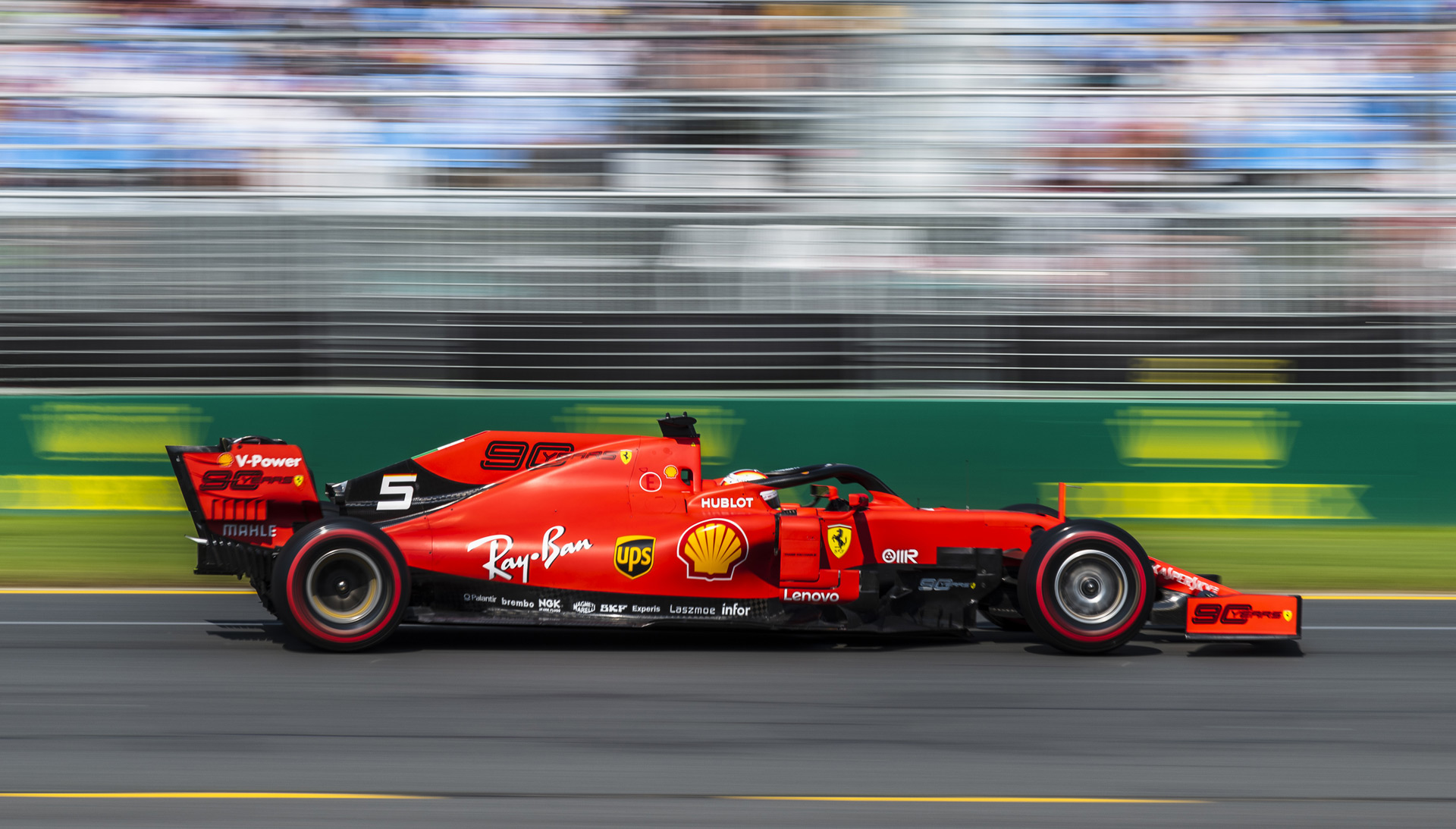
    While the first season followed most of the F1 teams, it notably excluded Ferrari and Mercedes-AMG Petronas because the two teams chose not to participate. Both teams did an about face afterward and allowed the cameras to roll for the second season in 2019. The team producing the show had full access to all the teams, including Ferrari and Mercedes-AMG Petronas, again for season three.

    Like everything in the world in 2020, Formula One looked dramatically different with drivers and teams dealing with COVID-19, pushed and canceled races, and no or just a few fans in the stands.

    Viewers will witness the fight, and flight, of the 2020 F1 season with access most fans only dream of. We already know that Lewis Hamilton won another championship for Mercedes-AMG Petronas, which means Hamilton now has seven F1 titles and that equals Michael Schumacher’s record.

    Season three of Netflix’s popular racing show will be released just before the 2021 F1 season kicks off on March 28 with the Bahrain Grand Prix. The Australian Grand Prix, which is traditionally the opening race of the year, has been rescheduled for the end of the season on Nov. 21.

    Source