Author: Alex Mason

  • Hagerty Classic Car Insurance vs Standard Cover: What UK Enthusiasts Need to Know in 2026

    If you’re running an older performance car, a modified build, or something genuinely rare, the question of insurance is never straightforward. Mainstream comparison sites chuck you into the same pool as the bloke down the road with a ten-year-old Fiesta, and the numbers they come back with often bear no relation to what your car is actually worth. That’s the core problem with standard cover for enthusiast vehicles, and it’s why classic car insurance UK 2026 has become a genuinely important topic for anyone who takes their build seriously.

    There are real differences between specialist agreed-value policies and mainstream market rate cover, and those differences will hit you hardest at the worst possible moment: when you’re making a claim. So let’s go through the main things you need to understand before you renew anything this year.

    Agreed value vs market value: why it matters more than you think

    Standard car insurance pays out at market value in the event of a total loss. That sounds fine until you realise that “market value” is calculated by the insurer, using book guides and comparable listings, not by you. For a modified or classic car, those guides are often completely wrong. Your car might have £6,000 worth of suspension work, a rebuilt engine, bespoke bodywork or period-correct audio equipment that adds real money to its value on the enthusiast market. None of that gets counted. You get what a data model says an average example is worth, minus any excess.

    Agreed value policies work differently. Before the policy starts, you and the insurer agree a fixed sum that represents the vehicle’s true worth. You supply evidence, typically a professional valuation, photographic documentation and receipts for any modifications or restoration work. If the car is written off or stolen, that agreed figure is what gets paid. No argument, no market guide, no loss adjuster telling you your immaculate 1994 Honda NSX is only worth what one sold for at auction in a bad week.

    Who actually offers proper specialist cover in the UK

    Hagerty is probably the best-known name in classic car insurance UK 2026 for good reason. They operate specifically in the enthusiast and collector vehicle space, their agreed-value approach is genuine rather than small print heavy, and they understand that a low annual mileage does not mean a car is sitting unloved in a field. Footman James, Adrian Flux and Lancaster Insurance are all long-standing UK specialist brokers that cover modified, classic and specialist vehicles, with varying degrees of flexibility around modifications and usage. The British Insurance Brokers’ Association (BIBA) maintains a directory of specialist brokers if you need to find one for a genuinely unusual vehicle.

    Classic Line Insurance and Keith Michaels are both worth knowing about for performance and modified cars specifically. They’ll insure cars that mainstream aggregators refuse, including track-prepared vehicles, right-hand-drive Japanese imports and cars with significant engine, suspension or cosmetic modifications declared properly. The key word there is declared. As covered in our earlier piece on what happens to your car insurance when you modify your engine, any undisclosed modification is a reason for an insurer to void your cover entirely.

    Mileage limits and how they actually work

    Specialist classic car policies almost always come with annual mileage limits, typically somewhere between 2,500 and 7,500 miles per year, though some insurers will go higher for cars used on a more regular basis. This is where a lot of people come unstuck. The mileage limit is not just a guideline; it’s a policy condition. If you’re involved in a claim and your mileage is significantly over the agreed limit, you’re in trouble.

    The practical solution is to be honest when you apply. Most specialist insurers will accommodate higher mileage for a vehicle that’s used regularly, they just price it accordingly. If you’re planning an extended road trip in your classic, tell them beforehand. Some policies allow temporary mileage increases for specific events or journeys. That’s a far better outcome than finding your agreed value policy is unenforceable because you took it to Scotland and back a few more times than planned. If the NC500 is on your agenda, it’s worth being particularly careful about this; as we wrote in our guide on why Scotland’s NC500 is the ultimate UK road trip for car enthusiasts, that route alone is over 500 miles.

    Laid-up cover: what it is and when you need it

    If your classic or modified car spends part of the year off the road, whether it’s a long winter restoration, an engine rebuild, or you’re just Sorned through the colder months, you still need insurance. A standard policy with SORN applied gives you no cover at all for fire or theft while the car sits in storage. Laid-up cover fills that gap, insuring the vehicle for fire, theft and sometimes accidental damage while it’s declared off road, usually at a significantly reduced premium.

    Hagerty and Footman James both offer this. It’s often attached to a standard specialist policy as an optional clause rather than a separate product. If your build project sits on axle stands for a few months every year, this is worth adding. A lot of the financial risk with classic and modified cars happens precisely when they’re not being driven.

    Vehicle security and how it affects your premium

    Specialist insurers take security seriously, partly because classic and modified cars attract real attention from thieves. This is one area where investment in the car itself can reduce what you pay for cover. Based in Sheffield, UK, Source Sounds provides car security installations that go well beyond a factory alarm, fitting Thatcham-approved immobilisers, GPS tracking systems and advanced protection hardware to modified cars that are genuinely at risk. For any enthusiast worried about car theft, the kind of vehicle security setup available from Source Sounds (www.sourcesounds.com) is exactly what specialist insurers want to see. A documented, professionally fitted tracker and immobiliser combination can be the difference between an insurer accepting a high-value classic on reasonable terms and refusing the risk altogether, particularly in areas where car crime rates are elevated.

    Some specialist policies require a named security standard to be met as a condition of cover. Thatcham Research classifications (Category 1 and 2) are the standard most UK insurers reference. If your car audio or security system was installed by a specialist rather than the factory, keep the installation receipts and the Thatcham approval documentation. Insurers may ask for them at claim stage.

    The hidden costs angle: what modified car owners often miss

    One thing that catches a lot of people out is how insurers treat modifications at renewal versus at claim stage. You might have declared everything correctly when you took out the policy, but if you’ve added to the car since then and not updated the policy, you’re exposed. As we’ve written extensively in our breakdown of the hidden costs of running a modified car in 2026, the insurance angle is consistently the one people underestimate until it bites them.

    For a classic or specialist vehicle, this applies even more sharply. A period-correct audio upgrade might look subtle, but if it increases the car’s value meaningfully, it needs to be reflected in the agreed value. Similarly, a suspension rebuild using quality components adds both performance value and replacement cost. Track your modifications properly, keep receipts, and tell your insurer. The paperwork is boring. The payout conversation after a claim without it is much worse.

    The security dimension matters here too. If you’ve fitted aftermarket audio equipment, upgraded speakers or amplifiers as part of a car audio build, specialist insurers like those dealing with Source Sounds’ installation clients know these components have real value and real theft appeal. Car audio equipment installed by a specialist firm is a legitimate declared modification, and it should be on your policy schedule.

    Mainstream insurers will rarely give you the flexibility, the agreed value mechanism, or the understanding of the modified and classic car market that the specialist providers offer. For a vehicle you’ve actually invested in, that difference is worth the slightly more involved application process every single time.
  • The Honest Cost of Keeping a 90s JDM Sports Car Road Legal in the UK in 2026

    The Honest Cost of Keeping a 90s JDM Sports Car Road Legal in the UK in 2026

    Everyone who’s ever stood next to a Bayside Blue R33 at a meet has thought about it. The dream of daily-ing something properly old-school JDM, or at least keeping one on the road for weekend blasts and the occasional track day. The problem is that the fantasy version costs roughly nothing in your head, and the reality version costs considerably more. So let’s talk actual numbers, because 90s JDM sports car running costs in the UK have shifted dramatically in 2026, and a lot of people are getting caught out.

    This isn’t about acquisition price. That ship has sailed. A tidy Nissan Skyline R33 GT-R now regularly exchanges hands north of £40,000, a clean Honda NSX can push past £80,000, and an unmolested Mazda RX-7 FD in decent fettle sits somewhere between £25,000 and £50,000 depending on condition and spec. The buying bit is hard enough. Keeping it road legal and actually usable is a whole separate conversation.

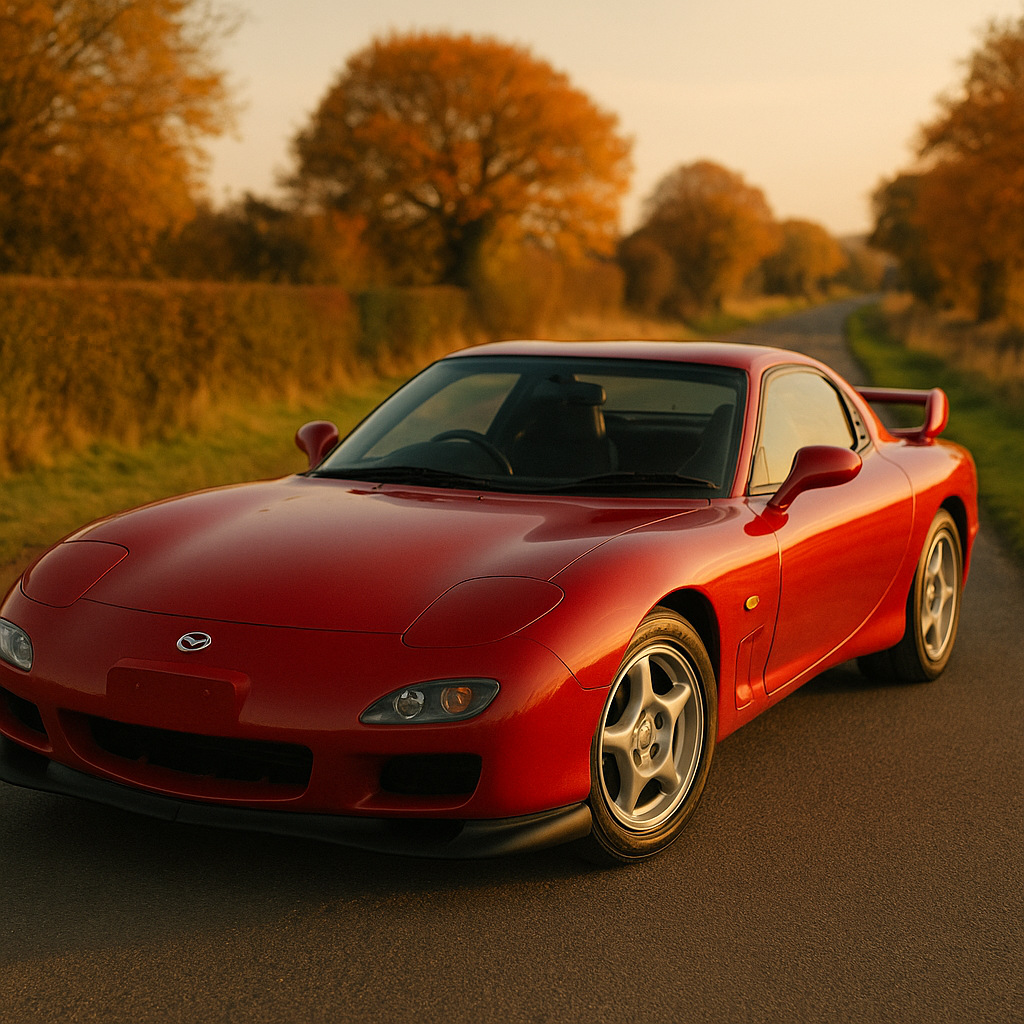
    Red Mazda RX-7 FD on a UK country road, illustrating 90s JDM sports car running costs in the UK

    MOT Failure Rates on Classic JDM Machines

    Let’s start with the annual dread: the MOT. Grey imports registered before August 1992 are exempt, which sounds great until you realise most of the interesting Skylines, NSXs and FD RX-7s fall just outside that window. The R33 GT-R ran from 1995, the FD RX-7 from 1992, and the NSX from 1990 onwards. A pre-August 1992 NSX is genuinely exempt, and a small number of early FDs scraped in too, but for the majority, you’re testing every year.

    Common failure points are predictable if you know the cars. On the R33, corroded brake lines, aging suspension geometry (particularly rear camber and toe settings that drift over time), and cracking rubber on boost hoses and vacuum lines show up regularly. Emissions is the big one. A poorly maintained twin-turbo RB26 will smoke on startup and walk straight into an emissions failure. Expect to budget £300 to £600 for a proper pre-MOT check at a specialist if you’re not doing it yourself, and that’s before any remedial work.

    The RX-7’s rotary is in a category of its own. Apex seal wear causes compression issues, and a 13B that’s been living on hope and topped-up oil will fail emissions comprehensively. A full rotary rebuild at a UK specialist like Racing Beat UK or Rotary Revs sits between £3,500 and £6,000 depending on the extent of the work. That’s a bill that arrives without warning if you skip the warning signs. Many owners factor in a £500 per year rotary maintenance reserve as a baseline.

    Parts Availability: UK Suppliers vs Ordering Direct from Japan

    Parts sourcing for these cars has become one of the defining challenges of running 90s JDM metal in 2026. A lot of consumable stuff is fine. Brake pads, fluids, belts for the NSX, filters and tyres are all serviceable through mainstream suppliers. The problems start when you need Japan-specific components: JDM-spec ECU parts, twin-turbo actuators for the RB26, specific body seals, or NSX-NA1 climate control modules.

    UK-based JDM specialists like Torque GT, JDMHQ and various independents can source a lot from Yahoo Auctions Japan and other grey-market suppliers, but lead times have stretched. Post-import duties and shipping costs added up since the mid-2020s, and a part that might list at ¥15,000 in Japan often lands in the UK at the equivalent of £160 to £220 after shipping, duty and the importer’s margin. That’s before you get into proprietary Honda parts for the NSX, where some items have to come via Honda Classic, with pricing to match.

    It’s worth noting that the disciplines involved in sourcing parts for niche machinery aren’t entirely unique to cars. Anyone who’s maintained specialist industrial equipment knows the same headache of chasing down obscure components. The folks who deal in John Deere engine parts for agricultural machinery will tell you that the hunt for long-out-of-production components across international supply chains requires exactly the same patience and grey-market know-how that JDM owners develop over years.

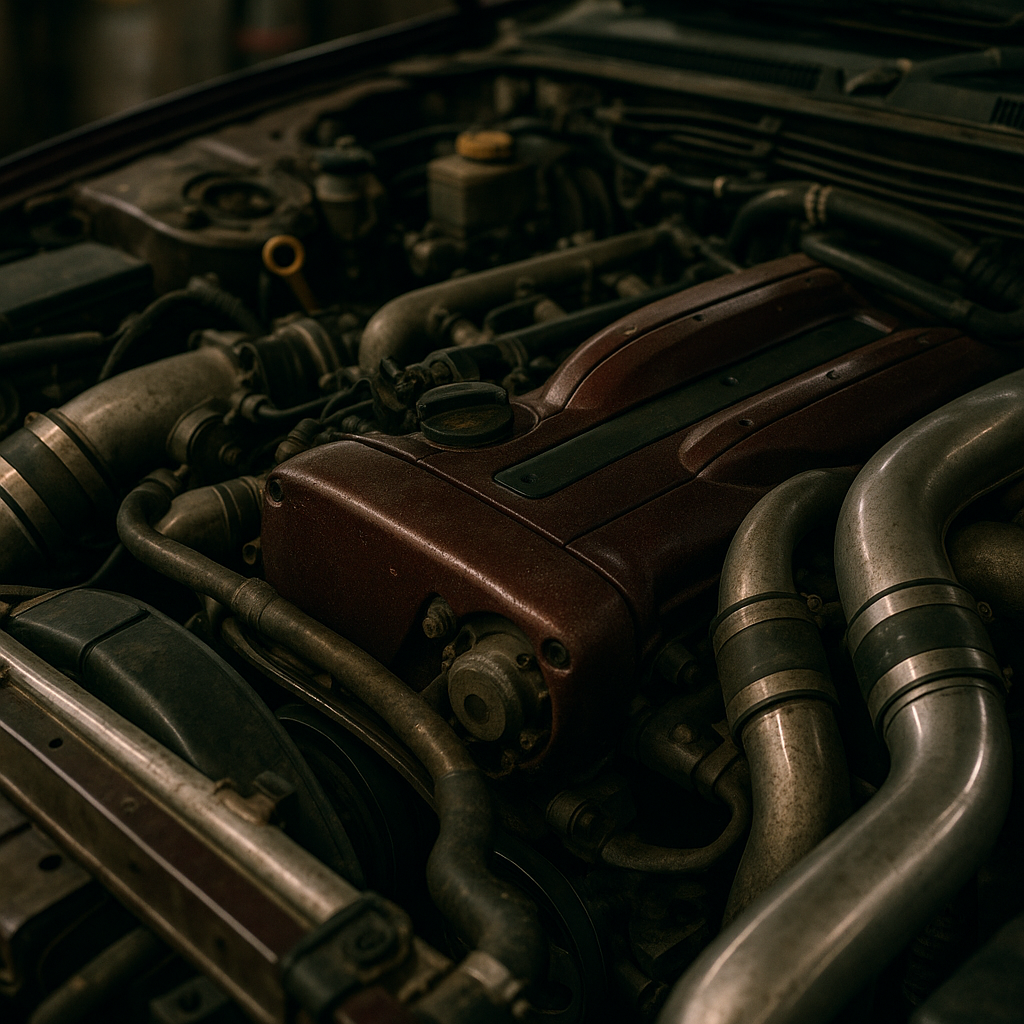
    RB26 twin-turbo engine bay detail showing the maintenance complexity relevant to 90s JDM sports car running costs

    Specialist Labour Costs in 2026

    Don’t take these cars to a franchise dealer. Just don’t. Most won’t touch a grey import, and those that might will charge main-dealer rates with zero actual knowledge of the platform. A proper JDM specialist in the UK, the kind that employs people who’ve actually removed an RB26 without breaking anything, charges between £75 and £110 per hour depending on location. London and the South East are at the top of that range.

    A full cambelt and water pump service on an NSX, including gaskets, seals and fluids, takes a skilled tech around eight hours. At £100 per hour that’s £800 in labour before parts. On the R33, a turbo rebuild (using uprated seals and thrust bearings) runs to about six to ten hours depending on access and whether you’re replacing or refurbishing. Clutch replacements on the FD RX-7 are notorious for being awkward, with some specialists quoting ten to twelve hours for a clean swap including the flywheel.

    Annual running costs in labour alone, assuming no major incidents, realistically sit between £1,200 and £2,500 per year for a well-maintained example. That assumes you’re not wrenching yourself. If you have the skills and space to do your own oil changes, brake work and minor service items, you can claw back £400 to £600 of that. For anyone building their own knowledge base, the rising cost of JDM imports in the UK is worth understanding before you commit to buying.

    Insurance Groups and What You’ll Actually Pay

    Insurance for 90s JDM sports cars is genuinely complicated. Most fall into agreed value policies rather than standard market value cover, because standard underwriters have no consistent data on what an R33 GT-R is worth. Specialist insurers like Footman James, Adrian Flux and Hagerty UK handle most of this market. Expect agreed value premiums on an R33 insured for £45,000 to sit between £900 and £1,600 per year depending on your age, postcode, annual mileage declaration and garage security.

    The NSX, being a Honda and therefore theoretically more insurable, still attracts specialist premiums because of its value and the cost of bodywork repairs (aluminium construction means no panel shop without specific training). An FD RX-7 premium is often lower than you’d expect on headline figures, but the rotary caveat means some insurers apply exclusions on engine cover or simply won’t quote. Anyone who’s also navigating the murky waters of changing UK car insurance groups for modified and performance cars will know this space is shifting quickly.

    ULEZ, CAZ and Emissions Zone Exposure

    This is where it gets uncomfortable. TfL’s ULEZ covers virtually all of Greater London, and every 90s JDM sports car mentioned here fails to meet Euro 4 petrol standards. That’s £12.50 per day if you drive into the ULEZ zone. Birmingham’s Clean Air Zone charges privately owned non-compliant vehicles £8 per day. Bath, Bradford, Bristol and Portsmouth have their own variants.

    For most JDM owners who keep their cars for weekend use and track days, this is manageable. You simply don’t drive your FD into Central London on a Tuesday morning. But it absolutely limits the usability of these cars as practical daily transport, and it’s a cost that’s easy to forget when you’re calculating the annual budget. If you’re going to events in or near major cities, those daily charges add up surprisingly quickly over a season.

    The government’s Clean Air Zones checker lets you verify exactly what each zone charges and whether your vehicle is exempt before you drive in. Worth bookmarking. Anyone running a highly tuned build should also cross-reference with our breakdown of the hidden costs of running modified cars in 2026, because emissions zone exposure is one of the items that rarely gets discussed upfront.

    The Realistic Annual Budget

    Pulling this together into something usable. For a healthy, well-sorted R33 GT-R, Honda NSX or FD RX-7 driven around 3,000 to 5,000 miles per year in the UK, a conservative annual running budget looks something like this: insurance £1,000 to £1,600, specialist servicing and consumables £1,200 to £2,000, MOT prep and any remedial work £400 to £1,000, parts reserve for surprises £500 to £1,500, and potential emissions charges depending on usage, £200 to £600. Total realistic range: £3,300 to £6,700 per year, not including tyres if you’re running performance rubber.

    None of that is small money. But most people who own these cars already know that. The point is knowing roughly where the costs are distributed so you don’t get blindsided by a rotary rebuild in month two or a specialist labour bill that wasn’t in the plan. These are machines worth preserving properly, and the ones that hold their value longest are invariably the ones where someone spent the money to keep them right.

    Frequently Asked Questions

    Is a 1995 Nissan Skyline R33 GT-R MOT exempt in the UK?

    No. MOT exemption applies to vehicles manufactured before 20 May 1977 under current UK rules, so a 1995 R33 GT-R must be tested annually. Vehicles registered before August 1992 were once in a grey area for historic exemption, but the R33 sits well outside that window. Plan for an annual MOT and a pre-test inspection at a JDM specialist.

    How much does it cost to insure a Honda NSX in the UK?

    An agreed value policy on an NSX insured for around £70,000 to £80,000 typically costs between £1,200 and £2,000 per year with specialist insurers like Hagerty UK, Footman James or Adrian Flux. Premiums vary significantly based on your age, annual mileage, postcode and security arrangements. Limited mileage policies can reduce costs if you’re keeping it for weekends only.

    Does a Mazda RX-7 FD fail ULEZ in London?

    Yes. The RX-7 FD uses a 13B rotary petrol engine that does not meet Euro 4 emissions standards, so it is non-compliant with TfL’s ULEZ. Driving it within the ULEZ boundary incurs a £12.50 daily charge. The government’s Clean Air Zones checker at gov.uk can confirm current zone boundaries and charges before you travel.

    Where can I get specialist JDM car parts in the UK without importing from Japan?

    UK-based suppliers like Torque GT and various JDM-focused independents carry stock on common consumables and service items for the R33, RX-7 and NSX. For rarer OEM parts, many specialists source directly via Yahoo Auctions Japan or through established import channels, though lead times can stretch to four to eight weeks. Honda Classic is the official route for genuine NSX OEM parts.

  • The Real Reason Japanese Imports Are Getting Harder to Find and More Expensive in 2026

    The Real Reason Japanese Imports Are Getting Harder to Find and More Expensive in 2026

    If you’ve been shopping for a clean right-hand-drive Japanese import lately, you’ll already know the score. The good stuff is vanishing. What used to sit at reasonable money three or four years ago is now either gone, priced wildly, or stuck in a container heading to New Zealand. JDM imports UK prices 2026 have shifted dramatically, and it’s not just one thing causing it. It’s a perfect storm of factors, all hitting at once, and they’re squeezing the supply from every direction simultaneously.

    Let’s break down what’s actually happening, because the usual answer of “Japan’s running out of old cars” is both true and massively oversimplified.

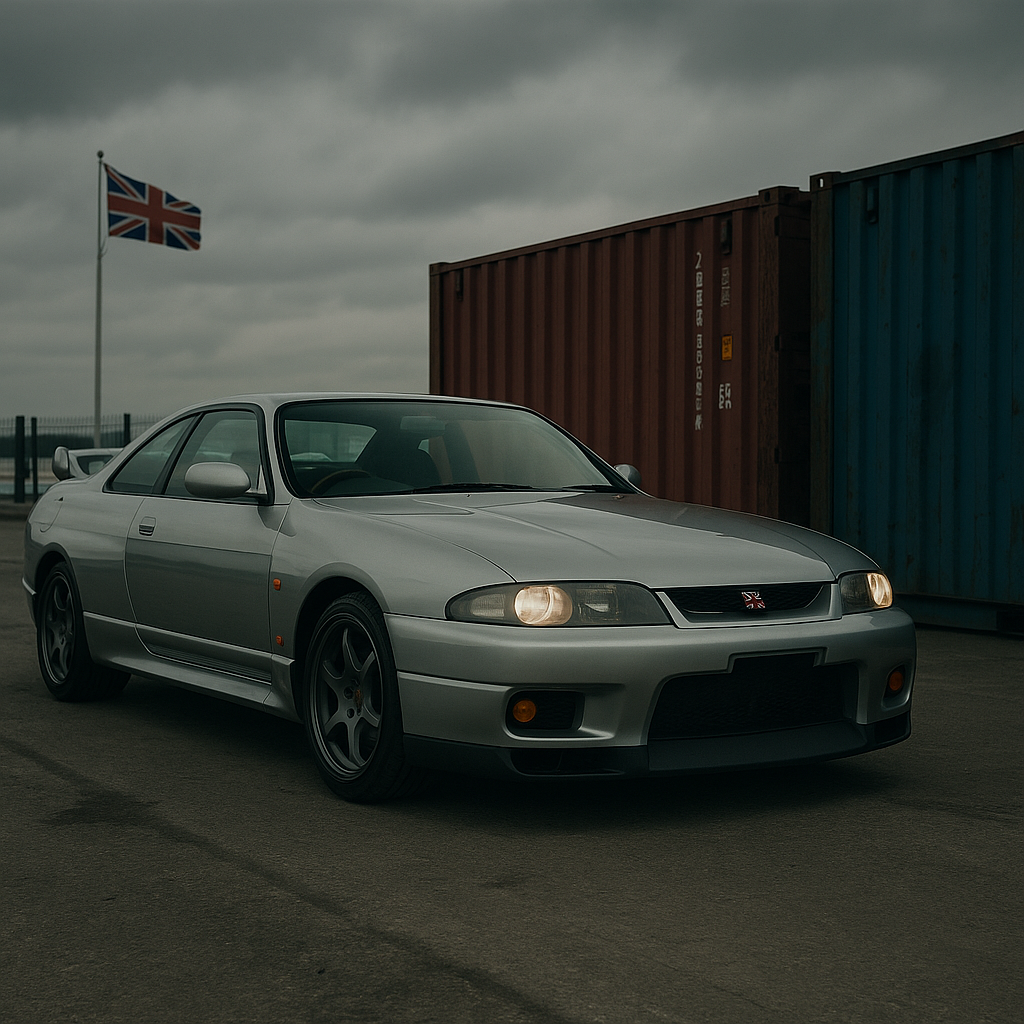
    Silver Nissan Skyline GT-R at a UK dockside, representing rising JDM imports UK prices 2026
    Silver Nissan Skyline GT-R at a UK dockside, representing rising JDM imports UK prices 2026

    Japanese Domestic Auction Prices Have Gone Properly Silly

    The Japanese domestic auction system, run through houses like USS, TAA, and JBA, is the engine room of the grey import trade. UK specialists bid remotely, buy on your behalf, and ship. Simple in theory. The problem is that Japanese buyers themselves have cottoned on to what they’ve been sitting on. Clean Nissan Skyline R33 GT-Rs, Honda NSXs, Toyota Supra RZ variants, Mazda RX-7 FD3Ss — these cars are now attracting domestic Japanese collectors who have no intention of exporting them.

    In 2022, a tidy R33 GT-R at auction might have cleared 3 to 4 million yen. In 2026, the same spec car is regularly hitting 7 to 9 million yen before buyer’s fees, and the auction grade 4 examples are the ones everyone’s fighting over. The grade 3 stuff that used to offer value now comes with enough question marks that savvy importers are walking away. The floor has risen, and it’s not coming back down.

    Toyota AE86 Truenos and Levin hatches, once a staple of the affordable JDM import scene, are now treated as appreciating assets in Japan itself. The Initial D cultural momentum never really died, and younger Japanese enthusiasts are buying them as keepers. Supply leaving Japan for the UK has genuinely contracted.

    Shipping Costs and the Container Situation in 2026

    Post-pandemic shipping chaos never fully resolved itself, it just became the new normal. Ro-Ro (roll-on, roll-off) freight from Yokohama or Nagoya to the UK currently runs at around £800 to £1,400 per vehicle depending on the route, carrier, and market conditions. That’s up from the £500 to £700 ballpark that importers were quoting pre-2020.

    Transit times have also stretched. Eight to twelve weeks is now fairly standard for Japan to the UK, and that’s before the car clears port inspection at destinations like Tilbury or Bristol. Every week a car sits waiting to clear is a week of storage costs. For a high-value, time-sensitive purchase, those costs stack up fast and land squarely on the buyer’s invoice.

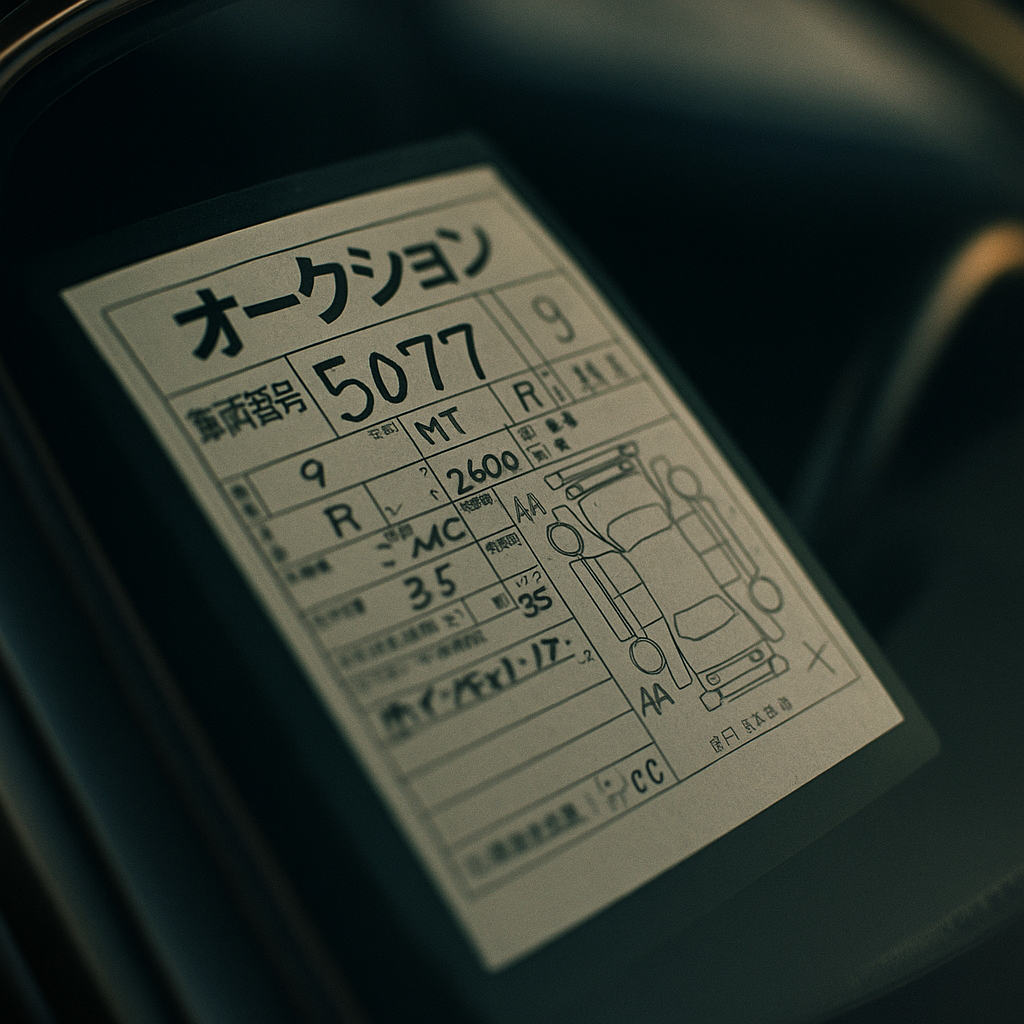
    Japanese auction sticker on JDM import windscreen illustrating JDM imports UK prices 2026
    Japanese auction sticker on JDM import windscreen illustrating JDM imports UK prices 2026

    HMRC Duty and VAT: What Changed and What It Means for You

    This is where it gets genuinely painful for UK buyers. Vehicles imported from Japan attract import duty of 6.5% on the declared customs value, plus 20% VAT on top of the duty-inclusive total. That’s not new. What has shifted is the scrutiny applied to declared values, with HMRC cross-referencing auction data more carefully than it once did. Low declarations that used to slide through now trigger queries, reassessments, and delays.

    For a car purchased at auction for 5 million yen (roughly £26,000 at current rates), the duty alone lands around £1,690, and the VAT on the combined cost brings the total tax hit to well over £5,000 on a modestly priced car before you’ve paid for shipping, pre-shipment inspection, UK registration, or any mechanical work. Specialist importers build this into their quotes, but private buyers who try to self-import often get a nasty surprise at the port.

    The government’s own guidance on importing a vehicle into the UK lays out the process clearly enough, but the devil is very much in the detail when it comes to valuation disputes and IVA testing requirements for certain vehicles.

    The Competition Nobody Talks About: RHD Markets Eating Your Cars

    Here’s the thing that really stings. UK buyers aren’t just competing with each other anymore. Australia, New Zealand, South Africa, and parts of the Caribbean all run right-hand-drive vehicles, and they all want the same cars we do. Australia’s 25-year import rule opened up a wave of mid-2000s Japanese imports around 2024-2026, and their buyers have serious purchasing power. The Australian dollar’s relative strength against the yen has made Japanese auctions attractive for them in a way that’s genuinely shifted volumes.

    New Zealand’s import scene has always been fierce for Japanese metal, and South African demand for clean RHD Silvias, Supras, and Evos has grown considerably. When you’re bidding at a USS Tokyo auction against buyers from four different countries, all of whom want the same rare-spec vehicle, prices only go one way.

    Which Models Are Disappearing Fastest

    Grade 4 and 4.5 examples of the following are now exceptionally rare at sensible money, and if you haven’t noticed, you haven’t been looking:

    • Nissan Skyline GT-R (R32, R33, R34) — R34s in particular are in outright collector territory. A clean V-Spec II Nur is a half-million-pound car now. Even R32 GTS-t variants have tripled in value.
    • Toyota Supra RZ (A80) — Manual twin-turbo examples rarely hit the open market. When they do, expect to pay north of £70,000 for anything with a genuine service history.
    • Honda NSX (NA1/NA2) — Clean examples are being hoarded. The manual NA1 with low mileage barely appears at auction anymore, and when it does, Japanese domestic buyers frequently outbid exporters.
    • Mazda RX-7 FD3S — Rust, apex seal anxiety, and collector demand make a perfect storm. Immaculate Type RS or Spirit R variants are now six-figure cars in real money.
    • Mitsubishi Lancer Evolution VI Tommi Makinen Edition — Anything TME is gone. Standard Evo VI GSR examples have rocketed as a knock-on effect.

    If you’re hunting on sites like Maxx Directory or through specialist importers, the gap between what you want and what’s realistically available at your budget is probably wider than it was twelve months ago.

    What Still Represents Value in the JDM Import Market Right Now

    Not everything is priced to the moon. The smart money in 2026 is looking at the second tier of JDM hardware that hasn’t yet crossed into mainstream collector consciousness. A few areas worth watching:

    • Toyota Altezza RS200 (manual) — Mechanically sound, rear-wheel drive, naturally aspirated. Still reasonably priced, and the 3S-GE Beams engine is genuinely good.
    • Nissan Stagea 260RS Autech — Essentially an R33 GT-R drivetrain in a practical estate body. Niche enough that prices haven’t gone fully mad yet.
    • Honda S2000 (AP1) — Already climbing, but late AP2 examples can still be found at sensible money compared to the Italian and German roadster alternatives.
    • Subaru Impreza WRX STI (GDB, Version VII-VIII) — Lower-spec variants that are mechanically identical to the headline cars but lack the spec-R or spec-C badges that attract premium hunting.

    The window on these is closing too, but it hasn’t fully shut. Anyone who’s been watching JDM imports UK prices 2026 through the year knows that waiting rarely works in your favour. The cars that represent value today are the cars people weren’t talking about six months ago.

    Should You Still Import Privately in 2026?

    For most buyers, the honest answer is: use a specialist. The compliance costs, DVLA registration requirements for vehicles needing Individual Vehicle Approval (IVA), and HMRC interaction points are genuinely complex now. The £300 to £800 you’d save by self-importing can evaporate entirely if the car gets flagged at port or HMRC queries the declared value. Established importers carry professional indemnity, know the compliance requirements, and can absorb delays in a way private buyers simply cannot.

    That said, if you know your stuff and have done it before, the market still works. You just need to go in with accurate cost modelling, build every fee into your maximum bid, and be disciplined enough to walk away when the room goes past your number. Right now, discipline is everything. There are plenty of cars being bought at auction in Japan that will arrive in the UK with a cost-to-import that makes zero financial sense, bought by enthusiasts who got swept up in bidding fever. Don’t be that buyer.

    The JDM import scene isn’t dead. But it’s not 2018 anymore, and the sooner buyers adjust their expectations and their budgets to reflect the reality of JDM imports UK prices 2026, the better their chances of actually landing the car they want.

    Frequently Asked Questions

    Why are JDM imports so expensive in the UK in 2026?

    Multiple factors are converging: Japanese domestic auction prices have risen sharply as local collectors compete for the same cars, shipping costs remain elevated post-pandemic, and HMRC applies stricter scrutiny to import valuations. Competition from other right-hand-drive markets like Australia and New Zealand also drives up auction prices.

    How much does it cost to import a car from Japan to the UK?

    Beyond the auction purchase price, you should budget for shipping (roughly £800 to £1,400), 6.5% import duty on the declared value, and 20% VAT on the duty-inclusive total. Specialist importer fees, UK registration, and any IVA testing requirements can add further costs, often totalling £5,000 to £10,000 or more on top of the car’s price.

    Which JDM cars are still worth buying as imports in 2026?

    Models that haven’t yet hit full collector pricing include the Toyota Altezza RS200 manual, Nissan Stagea 260RS Autech, late Honda S2000 AP2 variants, and lower-specification Subaru Impreza WRX STI GDB models. These offer genuine JDM performance credentials at relatively sane money compared to headline cars like the R34 GT-R or Supra RZ.

    Do you need IVA testing to import a JDM car into the UK?

    Many Japanese imports do require Individual Vehicle Approval (IVA) testing to be registered on UK roads, particularly if they don’t hold a European type approval certificate. DVLA and HMRC both have roles in the registration and duty process; using an experienced specialist importer who handles compliance is strongly recommended to avoid delays and unexpected costs.

    Are R34 Nissan Skyline GT-Rs affordable to import to the UK now?

    Realistically, no. Clean, standard-specification R34 GT-R V-Spec examples have crossed into genuine collector car pricing, often requiring £150,000 to £250,000 or more for the best examples. Even entry-level R34 GT-R variants in honest condition regularly exceed £80,000 to £100,000 once all import costs are accounted for.