
Tag: Videos

  • SINGER ACS IS THE OFF-ROAD 911 KING

    Built to demolish off-road stages, the Singer ACS is a 2021 interpretation of the legendary 911 rally cars that Porsche built in the 1980s. Watch as Tuthill Porsche shows what it can do.

    [embedded content]

    What is the Singer ACS all about?

    The Porsche 911 Reimagined by Singer All-terrain Competition Study (ACS) was undertaken by Singer, in partnership with Richard Tuthill. The idea actually came as a result of a request from a Singer client for a modified air-cooled Porsche 911 that could compete in off-road racing.

    The client didn’t just request one, though, no, he requested two. The first of which is featured here in Parallax white, and focuses on high-speed desert rallying. The second is finished in Corsica Red and is built for high-speed, high-grip tarmac stages.

    Modifications developed for the Porsche 911 Reimagined by Singer All-terrain Competition Study include:

    • Off-road competition capability, conceived with events such as the Baja 1000 and Dakar Rally in mind, but suitable for a range of surfaces
    • Dramatically increased ride height, suspension travel and overall strength
    • Carbon fibre body panels suited to quick replacement and easy underbody access
    • Permanent AWD
    • A twin-turbocharged, 3.6L, air-cooled flat-six with power starting at 450hp
    • Sequential racing transmission with front, centre and rear limited-slip differentials

    Singer ACS: Tech Specs

    • 1990 Type 964 Porsche 911
    • Core strengthening to monocoque for heavy duty off-road use, carbon fiber body panels and off-road race modifications including:

    Suspension, wheels and brakes:

    • Specialised long-travel suspension with twin, 5-way adjustable dampers per corner (8 dampers total)
    • Forged aluminium 8×16” wheels with BF Goodrich All-Terrain tyres
    • 4-piston, monobloc steel disc brakes with hydraulic handbrake

    Engine:

    • 3.6L twin turbo-charged, air-cooled, Porsche flat-six
    • Water-to-air intercoolers, with individual-bank charge coolers housed within the plenum and cooled by clamshell-mounted radiator
    • Tuned for the demands of each event, power starts at 450hp and 420lb ft torque

    Transmission:

    • 5-speed sequential dog-box enabling flat-shifting. Manual and paddle-shift capable
    • Permanent AWD
    • Front, centre and rear, mechanical, plated limited-slip differentials

    Additional Specialised Equipment:

    • Long-range fuel tank
    • 2 x full-size spare race wheels and tyres in front trunk area and rear storage area
    • Full FIA specification roll cage
    • Bespoke competition seats with FIA certification
    • Rehydration system for driver and navigator
    • State-of-the-art GPS race navigation system
    Source

  • Here are the cars rejected from 2001’s “The Fast and the Furious”

    From the Mitsubishi Eclipse to the Toyota Supra, the original 2001 hit “The Fast and the Furious” turned many cars into stars. But even more cars didn’t make the cut, as Craig Lieberman, a technical advisor for the early films in the franchise, explains in this video.

    First off, the original movie focused on tuner cars, and producers only wanted cars that were available in the United States at the time. That ruled out JDM models, rare muscle cars, and supercars, although some exceptions were made (including Dominic Toretto’s Dodge Charger) and these rules were relaxed in later films.

    Many cars that met those ground rules still didn’t make the cut, though. Producers turned down the Volkswagen Beetle, Mazda MX-5 Miata, and BMW Z3 for not being “manly” enough. Lieberman also noted that convertibles were usually avoided because it made it hard to hide stunt drivers’ faces (remember that Johnny Tran’s Honda S2000 was always shown with the top up).

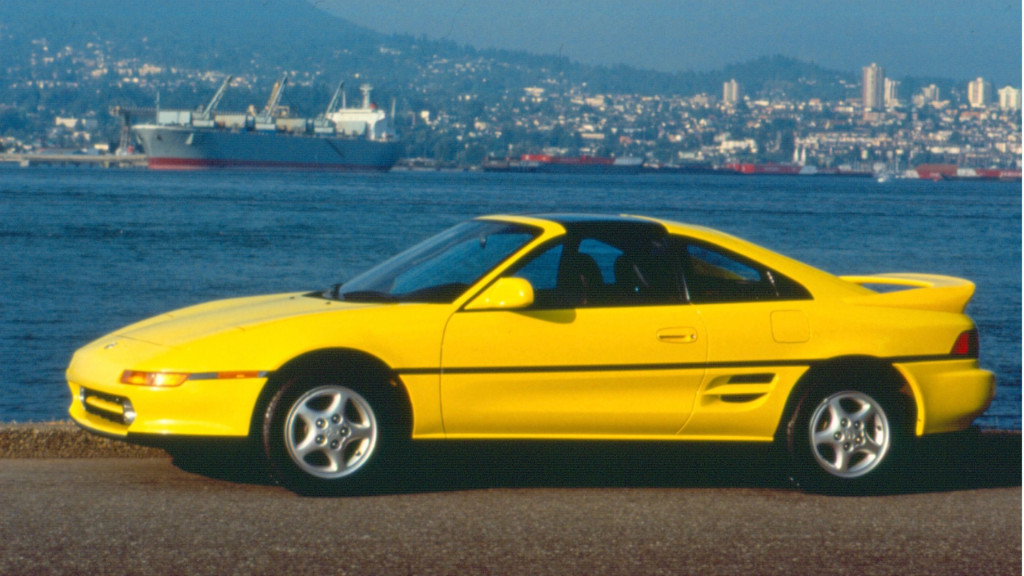
    1992 Toyota MR2

    1992 Toyota MR2

    The script also originally had Brian O’Connor starting out in a Mitsubishi 3000GT, then switching to an Eclipse. However, none of the modified 3000GTs that showed up to the car casting call impressed producers, and the Supra was a better fit because of its removable large roof, which was needed for the truck-chase scene later in the movie, Lieberman said.

    Toretto was always slated to drive an FD Mazda RX-7, but other members of his crew could have ended up in different cars. Lieberman originally suggested an E36 BMW M3 or Audi S4 for Jesse, who got a Mark III Volkswagen Jetta instead. Initial car ideas for Vince included a Toyota MR2, Lexus GS, and Honda Prelude, but Lieberman’s own Nissan Maxima was chosen instead. Leon went from a Toyota Celica to an R33 Nissan Skyline GT-R.

    The original script also named a Ford Mustang as Tran’s car (and referred to the character as “Pete”). That didn’t make sense in a movie about tuner cars, but the change from Mustang to S2000 actually came about because producers saw a modified black S2000 they liked. Villains always drive black cars, the theory went.

    Source

  • MCLAREN 765LT SMASHES QUATER-MILE IN 9 SECONDS

    A stock McLaren 765LT has just unofficially become the quickest production car across a quarter-mile ever by completing the distance in 9.41 seconds.

    [embedded content]

    With the record previously being held by the Dodge Challenger SRT Demon at 9.65 seconds, the 755bhp McLaren smashes this by 0.2 seconds, despite not being a drag car at all.

    The McLaren 765LT saves 80kg in weight over the 720s and gains a healthy 45bhp. As a result, DragTimes managed to clock a 2.1 second 0-60mph time with an end trap speed of 150mph.

    What makes this even more impressive is the fact that the McLaren 765LT was shod with regular Pirelli P Zero tyres that come as a no cost option. These tyres are better suited to all-year-round weather. Later in the day, however, the driver switched the wheels for a set from a 720s that were shod with Toyo Proxes R888R tyres, a much better compound for setting times. As a result, with the increased grip on offer from the Toyos, the guys managed to record a 9.34 second 1/4 mile time!

    Source