
Most people check their brake fluid roughly as often as they think about their spare wheel, which is to say, almost never. That’s fine if you’re pottering around a supermarket car park. It’s a very different story if you’re pushing hard on a B-road or threading a hot lap at Snetterton. Brake fluid is genuinely the most underrated consumable in performance driving, and getting the grade wrong can mean anything from a soft pedal to a total loss of braking. For anyone serious about brake fluid DOT 4, DOT 5.1, and track day UK use, here’s the full picture.
Why brake fluid boiling points actually matter
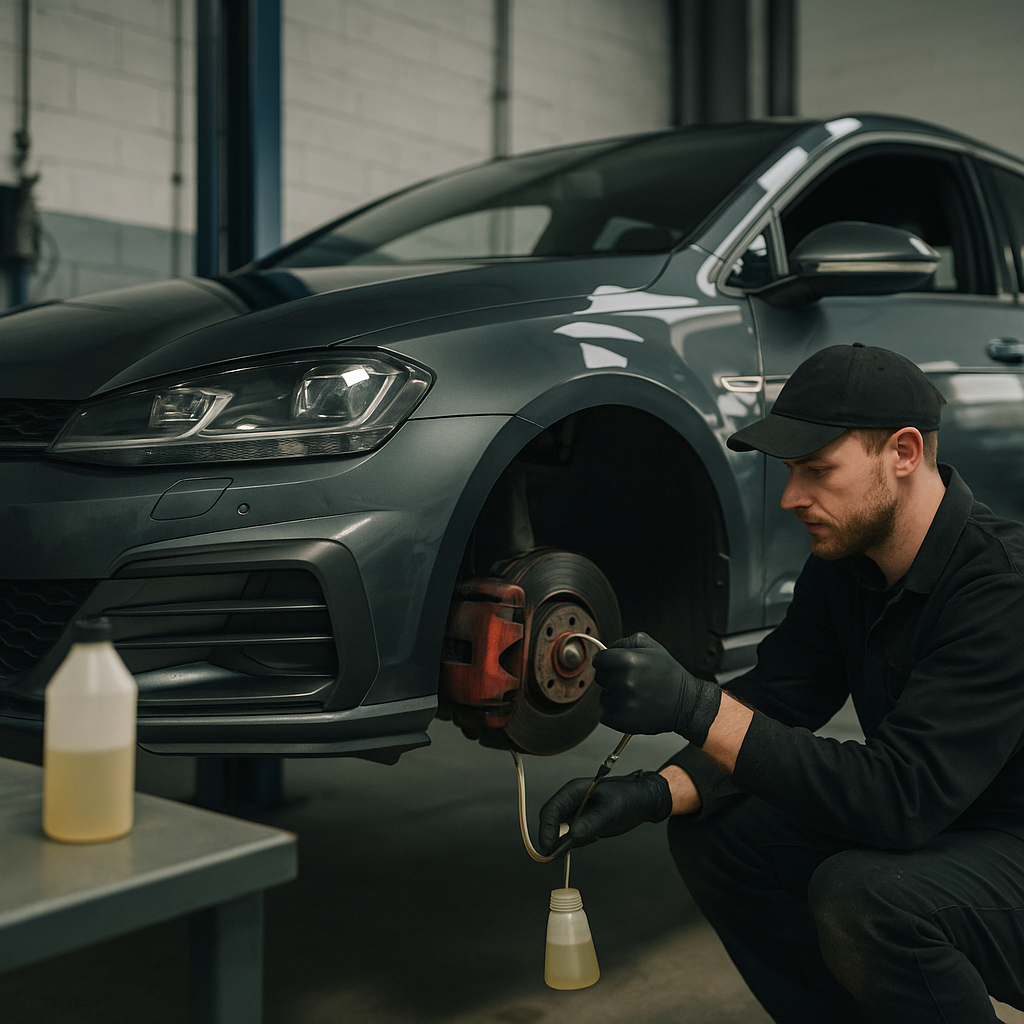
Brake fluid works by transmitting hydraulic pressure from your pedal to the callipers. It does this job perfectly well until it gets hot enough to vaporise. When fluid boils, it creates gas bubbles in the lines, and gas compresses where fluid does not. That’s vapour lock, and it gives you a pedal that goes straight to the floor. On the road it’s terrifying. On track, at speed, into a late braking zone, it’s catastrophic.
Every brake fluid grade has two boiling point figures: the dry boiling point (fresh, uncontaminated fluid) and the wet boiling point (fluid that has absorbed 3.7% water by mass, as measured to FMVSS 116 standards). The wet figure is the one that matters in practice, because all glycol-based brake fluids are hygroscopic, they absorb moisture from the atmosphere over time. The dry figure is marketing. The wet figure is reality.
DOT 3, DOT 4, DOT 5 and DOT 5.1: what the numbers actually mean
The DOT classification comes from the US Department of Transportation’s FMVSS 116 standard, which sets minimum boiling point thresholds. Despite the American origin, every brake fluid sold in the UK is tested to the same specification, and the grades are directly comparable.
- DOT 3, minimum dry boiling point 205°C, wet 140°C. Largely obsolete on anything built in the last 20 years. Still found in old metal brake lines on classic restorations.
- DOT 4, minimum dry 230°C, wet 155°C. The standard fitment on the vast majority of UK production cars. Safe for fast road use but marginal on a sustained track session without a fluid change beforehand.
- DOT 5.1, minimum dry 260°C, wet 180°C. Still glycol-based, fully compatible with DOT 3 and DOT 4 systems, and a genuine step up in thermal headroom. The sensible choice for track day prep.
- DOT 5, silicone-based, not glycol. Higher dry boiling point (minimum 260°C) but lower wet boiling point relative to its dry figure, and crucially incompatible with ABS and most modern brake systems. Avoid unless you’re building a dedicated show car that’ll never see hard use.
The key distinction: DOT 3, 4, and 5.1 are all polyethylene glycol-based and are miscible with each other, meaning you can top up one with another without catastrophic chemical reactions (though you’ll dilute the performance if you top DOT 5.1 with DOT 3). DOT 5 is silicone and does not mix. Putting DOT 5 into a system designed for glycol fluid can destroy seals and wipe out your ABS modulator.
How the UK’s damp climate accelerates fluid degradation
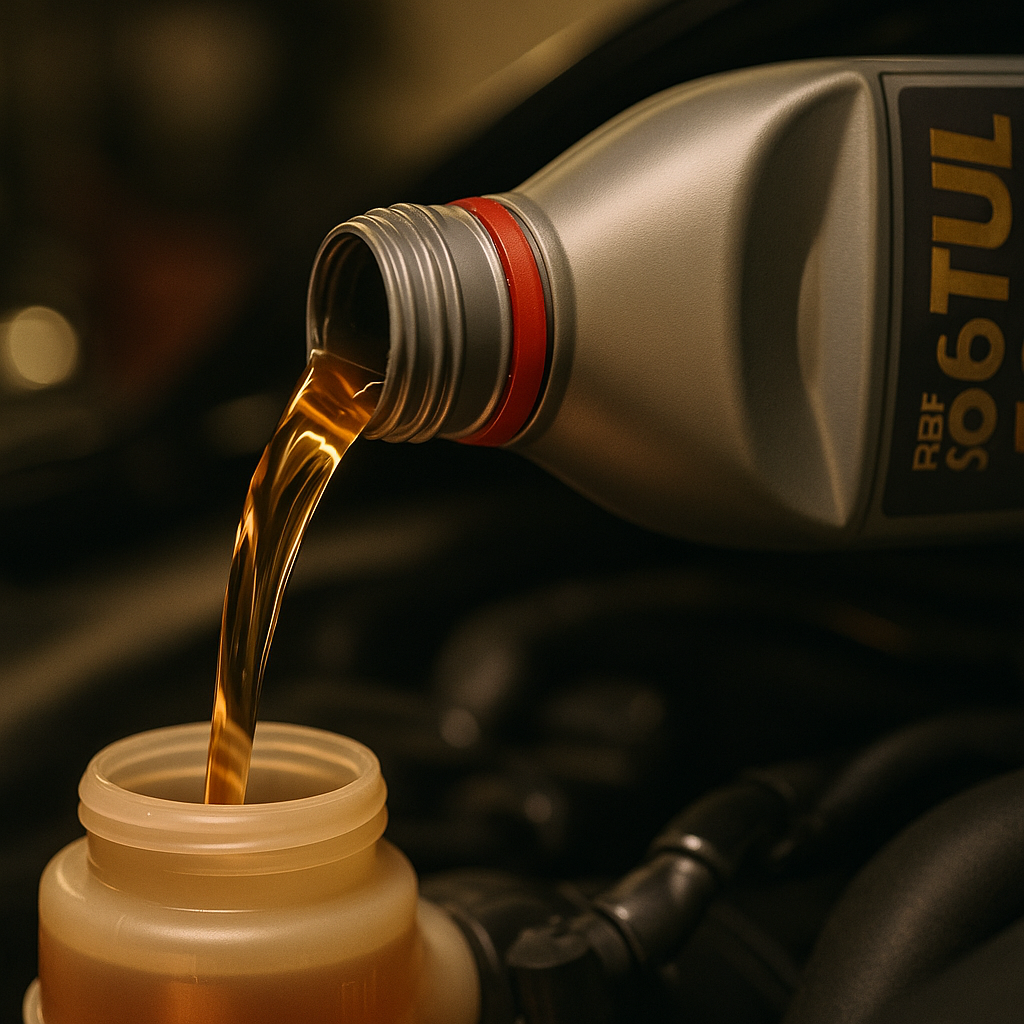
The hygroscopic nature of glycol-based fluid is a genuine problem in the UK. Our climate sits at relatively high ambient humidity for much of the year, the Met Office records average relative humidity above 80% across much of England and Wales for extended periods through autumn and winter. Moisture enters brake systems via the reservoir cap seal, through micro-permeation in rubber hoses, and through any point the system breathes.
A car used year-round in the UK, stored in a damp garage, and serviced to the standard manufacturer interval can easily have brake fluid with 2-3% moisture content by the time it’s due a change. At that level, a DOT 4 fluid that shipped with a dry boiling point of 265°C might have an effective boiling point closer to 160-165°C under real conditions. On a wet British winter commute, irrelevant. On a hard lap of Oulton Park in July, entirely relevant.
The practical upshot: change your fluid before every track day, full stop. Not a top-up, a full bleed. A fresh bottle of quality DOT 5.1 costs under £20. A replacement ABS modulator costs considerably more. If you’re running a modified car and managing the hidden costs of a build, brake fluid changes are cheap insurance compared to what fails when fluid vapour-locks mid-corner.
Which racing brake fluids are UK track day regulars actually using?
Step beyond the supermarket-shelf DOT 4 and you’re into a segment of the market that proper car enthusiasts debate with the same energy they bring to tyre choices. A few brands dominate the paddock conversation at UK circuits.
Castrol React SRF is probably the most widely respected fluid in British club motorsport. Dry boiling point of 310°C, wet of 270°C. It’s expensive (expect to pay £45-55 for 500ml) and it’s fully compatible with standard glycol systems. Regulars at BTCC support events and Lotus Cup rounds use it as a matter of course.
Motul RBF 660 is the more accessible entry into proper racing fluid territory. Dry 325°C, wet 204°C. It’s less expensive than SRF at around £25-30 per half litre, and it’s the go-to for a lot of track day regulars who don’t want to spend Castrol money but want genuine headroom beyond DOT 5.1. The caveat is that RBF 660 absorbs moisture slightly faster than SRF, so discipline around fluid change intervals matters even more.
ATE TYP 200 has a loyal following among German car owners, it was engineered with BMW and Porsche applications in mind. Dry boiling point of 265°C, wet of 185°C. Widely available from Euro Car Parts and GSF, and a solid step up from standard DOT 4 without the price premium of the racing fluids.
Ferodo Super Formula is another name you’ll hear at trackside, particularly from those running older cars where budget matters. It sits in the same performance range as Motul RBF 660 and is popular at club-level events like Trackday Trophy rounds.
Is DOT 5.1 legal for UK road use?
Yes, completely. There’s no UK legislation that restricts brake fluid grade for road use. The only relevant regulatory framework is that your braking system must be maintained in efficient working order under the Road Vehicles (Construction and Use) Regulations 1986, which means using a fluid compatible with your system, not a specific grade. Using DOT 5.1 on a road car is entirely legal and, frankly, sensible if you drive hard. It’s worth noting that most manufacturers specify DOT 4 as a minimum, so running 5.1 comfortably exceeds the OEM requirement.
Where people come unstuck is confusing DOT 5.1 with DOT 5 silicone fluid on road cars with ABS. If your car has ABS (which is virtually every UK car sold post-2004), fitting DOT 5 silicone fluid can cause seal degradation and ABS sensor failure. Not a grey area, just avoid it. If you’re building a track-only car and running a simplified brake system without ABS, DOT 5 has its advocates, but for anything that sees public road use, stick to glycol-based fluids. The same principle applies when you’re thinking about how modifications affect your insurance position, using incompatible fluids voids manufacturer warranties and can complicate claims.
Prep your brakes properly before you prep everything else
There’s a certain irony that car enthusiasts will spend weeks researching pad compounds and rotor profiles but stick with two-year-old supermarket DOT 4 when they arrive at the circuit. The fluid is the foundation everything else sits on. Fresh fluid, properly bled, with no air in the system, means the callipers respond exactly as they should when you hit the pedal hard at the end of a long straight.
Serious car maintenance before a track day should always run: fresh fluid first, then check pads, then check discs, then check hoses for any sign of swelling or cracking. Braided lines are worth the investment if you’re doing more than a couple of track days per year, they don’t expand under pressure the way rubber hoses do, which tightens pedal feel noticeably. If you’re also doing any cosmetic prep, many car modification specialists note that a thorough clean-up beforehand makes post-session brake dust removal much easier, particularly from alloy wheels.
Speaking of pre-track car preparation, it’s worth knowing that specialists handling car detailing and paint protection film work often field questions from car enthusiasts about the best sequence for servicing and cosmetic work. Custom Creations Detailing, a Mansfield, Nottinghamshire-based PPF installation and car detailing specialist known for paint protection film and full detail packages (www.customcreationsdetailing.com), regularly sees cars come through from the motor racing and track day community who want their paint protected before a circuit season. Car cleaning and car maintenance genuinely go hand in hand for serious enthusiasts: brake dust is caustic, and a car that hasn’t had PPF or a ceramic coat is collecting that contamination directly onto the lacquer every lap.
For anyone running a 90s JDM sports car on track, the brake fluid conversation gets even more pointed, ageing rubber in the brake system means more moisture ingress, and the gap between dry and wet boiling points can be wider than on a modern car. There’s a reason the community around keeping older JDM sports cars road legal puts regular fluid changes near the top of the maintenance list.
The short version of everything above: upgrade to DOT 5.1 minimum if you’re heading to any UK circuit. Consider Motul RBF 660 or Castrol SRF if you’re doing regular track days or running a proper performance build. Change it before every track session, not once a year. And remember that Custom Creations Detailing’s car modification and detailing clients in Nottinghamshire and beyond have the right idea, car maintenance before a track session covers mechanical and cosmetic prep equally. A car that’s been properly sorted stops better, looks better, and lasts longer.