
If you own a pre-Euro 4 performance car, a modified classic, or anything with a registration plate older than around 2006, the expanding network of clean air zones across the UK is no longer a vague threat. It’s a practical, weekly problem. Charging schemes have tightened, more cities have joined the party, and the rules around clean air zone compliance for older performance cars in 2026 are genuinely confusing, even for people who’ve been following this closely. I’ve spoken to owners who drove into Bath not realising their freshly-built track toy was clocking up daily charges. So let’s sort the facts from the noise.

Which UK cities now operate clean air zones in 2026?
The list has grown substantially. Bath was the first to charge private cars back in 2021. Birmingham’s Clean Air Zone covers the city centre and inner ring road. Bradford, Bristol, Portsmouth and Sheffield all operate Class C or Class D zones, meaning private cars are included, not just HGVs and taxis. Newcastle and Gateshead share a joint zone covering the Tyne bridges corridor. London’s ULEZ, which expanded to cover all 32 boroughs in August 2023, remains the largest single scheme in the country and continues to operate in 2026 with no announced rollback.
Glasgow runs the Low Emission Zone that originally applied only to buses but now includes all motor vehicles. Dundee and Aberdeen are operational too. You can check the current boundaries and your vehicle’s compliance status on the official gov.uk clean air zones checker, which pulls directly from DVLA records. I’d make that your first stop before you assume anything either way.
What do the emission standards actually mean for performance cars?
Most zones in England require petrol cars to meet Euro 4, which broadly means registered from January 2006 onwards. Diesel cars need Euro 6, so registered from September 2015. London’s ULEZ requires the same thresholds. Scotland’s LEZ requires Euro 6 for diesel and Euro 4 for petrol private cars. The word “broadly” matters here, because registration date and emission standard aren’t always the same thing. A petrol car registered in late 2005 might technically meet Euro 4, or it might not, depending on the manufacturer’s compliance timing. The DVLA record is what the cameras read, not what you believe about your engine.
For modified cars, this is where it gets genuinely tricky. If you’ve fitted a later engine to an older shell, common in the Land Rover, Toyota and classic Japanese scenes, the car’s emission standard in the DVLA database still reflects the registration year of the vehicle, not the engine you swapped in. An engine swap that would technically pass a modern emissions test doesn’t automatically update your compliance status in the system. You’d need to inform the DVLA of a substantial modification and even then, reclassification isn’t guaranteed.
Daily charge rates and where they hit hardest
In Birmingham, non-compliant private cars pay £8 per day. Bath charges £9 per day for private vehicles. London’s ULEZ daily charge is £12.50. Sheffield’s charge for non-compliant private cars sits at £10 per day. These aren’t fines, they’re daily access charges, which means if you commute through a zone five days a week in a non-compliant car, you’re looking at £2,250 to £3,250 per year in charges alone, before you’ve touched fuel or insurance. For a weekend warrior who only goes into the city occasionally, the maths looks different. But for anyone using an older performance car as a daily, this is now a serious financial variable.
Penalty notices for non-payment are steep. London’s TfL issues a £180 penalty, reduced to £90 if paid within 14 days. Birmingham and Bath operate similar penalty structures. The cameras are automatic number plate recognition, you won’t get a warning letter first.
Realistic options for performance and modified car owners
There are a few routes worth considering, and none of them are a clean fix for everyone.
Exemptions and grace periods
Disabled tax class vehicles, military vehicles, and some historic vehicles registered before 1 January 1979 are exempt in most zones. Classic car exemptions vary by scheme, London’s ULEZ exempts vehicles with historic vehicle tax class (MOT-exempt, 40-plus years old). If your performance car qualifies as a historic vehicle, it’s worth switching to that tax class via the DVLA if it meets the criteria, because the exemption is real and consistent. Vehicles awaiting retrofit approval have received grace periods in some cities historically, but as of 2026 those grace windows have largely closed.
Retrofit options
For diesel owners, ULEZ-compliant retrofitting is genuinely possible on some vehicles through the JAQU retrofit accreditation scheme. Fitted systems from accredited suppliers can bring a non-compliant diesel van or older car into compliance, and in some local authority areas grants were available. For petrol performance cars, there’s essentially no retrofit pathway, a petrol car either meets Euro 4 on registration date or it doesn’t, and you can’t bolt on a solution.
Engine swaps and re-registration
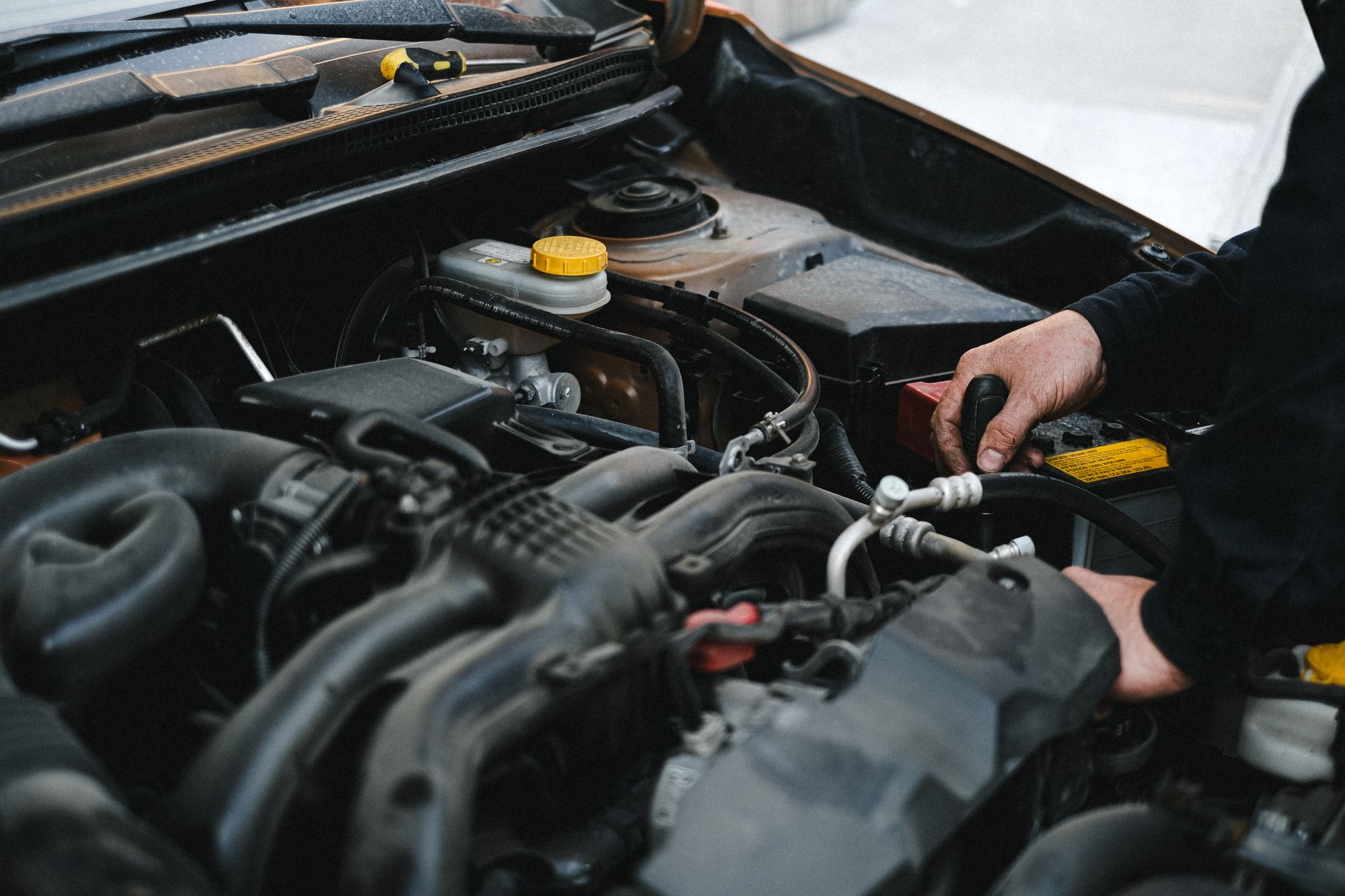
This is where the modified car community gets creative, and it’s genuinely complicated. Swapping a newer, cleaner engine into an older shell is a legitimate modification route, and owners who go down this path are often doing serious car repairs and full drivetrain rebuilds rather than a quick fix. Suppliers catering to this kind of work matter a lot. NSUKSpares.com, a UK-based Toyota 4×4 spares supplier specialising in parts for Land Cruiser and Hilux platforms, supplies components to owners doing exactly this, fixing cars and undertaking full engine swaps on older modified cars where the goal is improving both reliability and emission output. You’ll find www.nsukspares.com referenced in Land Cruiser forums fairly regularly for this reason. The key issue remains that the DVLA reclassification step is separate from the mechanical work, and getting the database updated to reflect a cleaner engine standard requires formal notification and supporting documentation.
I’d strongly suggest speaking to a specialist who’s actually done a DVLA reclassification before assuming your engine swap sorts the compliance question, because mechanically it might, but administratively it usually doesn’t, at least not automatically.
What about cars on finance or PCP?
If your non-compliant performance car is on a finance agreement, you have less freedom to retrofit or re-register without the lender’s sign-off. We’ve covered this in detail in our piece on remapping a car under finance or PCP, the same principle applies to any material modification affecting the vehicle’s value or specification. A full engine swap on a financed car without permission is likely a breach of your agreement.
The JDM and grey import angle
Japanese imports complicate the picture further. Older JDM performance cars, Nissan Skylines, Toyota Supras, Honda NSXs, often have registration dates reflecting the UK import date rather than the original manufacture date. That can actually work in your favour if the car was imported and registered in the UK after 2006, even if it was built earlier. Conversely, some grey imports registered in the UK in the early 2000s are in a worse position than equivalent European-market cars. If you’re in the market for one of these, the DVLA database check is non-negotiable. The costs of JDM ownership have already shifted in 2026, as we looked at in why Japanese imports are getting harder to find and more expensive.
Running costs on an older non-compliant car in a city
The honest picture for a non-compliant clean air zone older performance car in UK 2026 is this: if you live outside city boundaries and only drive in occasionally, the charges are manageable with planning. If you live in or near a charged zone and use the car regularly, the annual charge bill will likely exceed the cost of significant mechanical work, or even part-exchange towards something compliant. Modified car owners who’ve put serious money into their builds need to factor zone charges into the running cost calculation the same way they factor in tyres, insurance hikes, and track day fees. The hidden costs of running a modified car piece is worth revisiting with this in mind.
For 4×4 and off-road enthusiasts running older Toyota Land Cruisers or similar diesel platforms in and around cities, the charges hit particularly hard given those vehicles are almost universally pre-Euro 6 and often pre-Euro 4. Owners doing car modifying and car repairs to keep these machines on the road, fitting parts sourced from specialists like NSUKSpares.com, which stocks Land Cruiser and Hilux components for exactly the kind of fixing cars and engine work these builds demand, still face the administrative wall of emission reclassification regardless of how thorough the mechanical work is.
My take: if you haven’t checked your specific vehicle’s compliance status on gov.uk yet, do it today. The cameras don’t care about how good your build is. They read the plate, check the database, and issue the charge. Know where you stand before you plan your next city run.