
If you daily something spicy, you have probably already bumped into clean air zones and modified cars becoming a bit of a headache. The UK is rolling out more low emission and clean air schemes, and they are not exactly mapped-diesel or decat friendly.
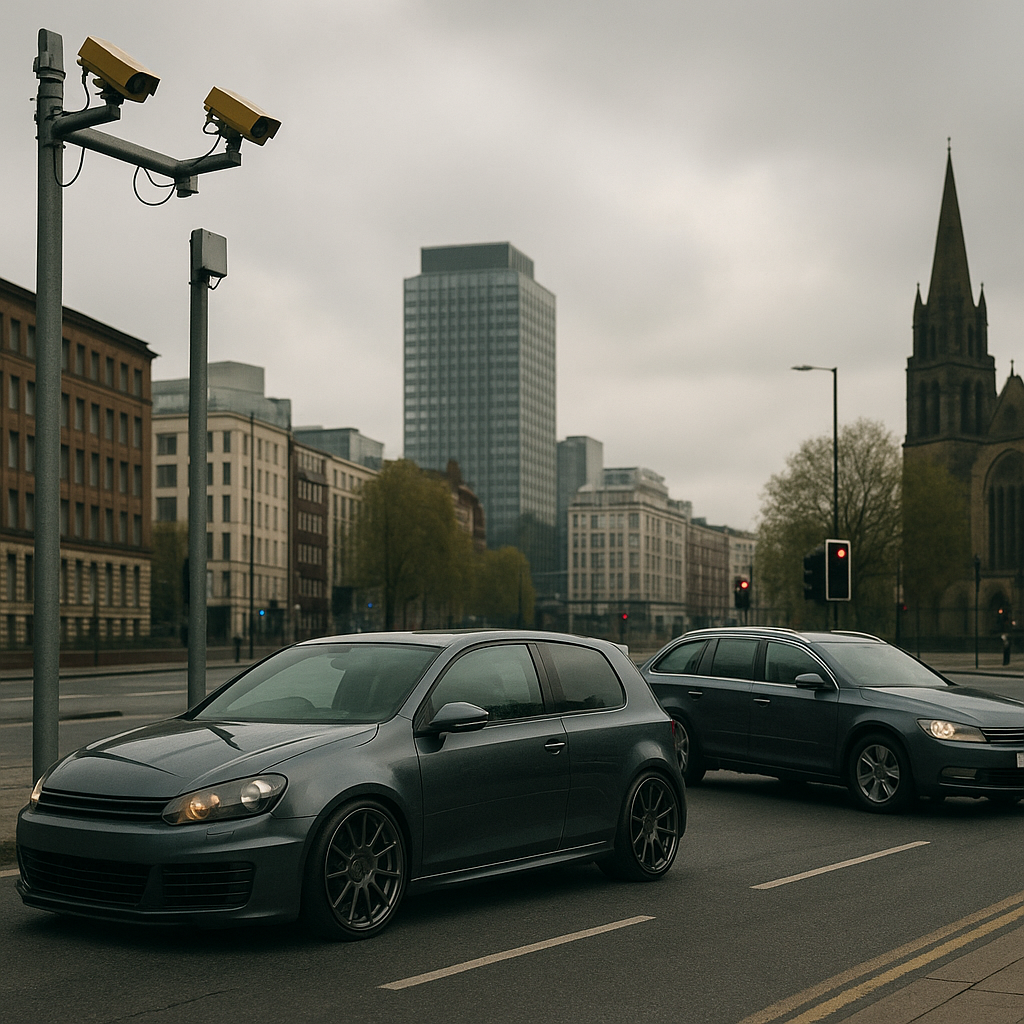
What are clean air zones and modified cars rules, in plain English?
Forget the council jargon. A clean air or low emission zone is basically a ring around a city where they check your reg and either let you in free or slap you with a daily charge or fine. They are not looking for how loud your exhaust is – they only care what your car was certified as when it left the factory.
In most English cities with clean air zones, private cars are either not charged at all, or only charged if they are older and high emitting. London is the strictest with its Ultra Low Emission Zone, charging most pre-Euro 4 petrols and pre-Euro 6 diesels. Scotland has its own Low Emission Zones that flat out ban non compliant cars in certain city centres.
The key bit for us is that the system uses the car’s official Euro emissions rating and fuel type, not what mods you have done since.
How ANPR cameras actually check your car
Those gantries and lamppost cameras are ANPR – Automatic Number Plate Recognition. When you drive past, they read your plate and ping it against the DVLA database. That tells them:
- Vehicle type and body style
- Fuel type – petrol, diesel, hybrid, electric
- Date of first registration
- Whether it meets a certain Euro standard (or what default band it falls into)
They are not sniffing your tailpipe, they are not checking if your cat is still there, and they are not scanning for a front mount or a fat backbox. If the database says your car is compliant, you are sweet, even if it is running a big turbo and a straight pipe. If the database says it is not compliant, you are paying or risking fines, even if it is the cleanest, best mapped thing in the postcode.
Mapped diesels, decats and older petrols: what actually happens?
This is where clean air zones and modified cars get awkward. A few common builds and how they are treated:
Mapped Euro 6 diesel daily
If your diesel is new enough to be officially Euro 6, the system treats it as compliant in most schemes. Stage 1 map, DPF still in place, you are usually fine from a zone point of view. The risk is more MOT related if you push smoke levels or mess with emissions kit.
Decatted or DPF deleted car
The cameras cannot see your missing cat or DPF. They only see the reg. So you will still be classed as compliant or not based on factory spec. The problem is that decats and DPF deletes are illegal for road use, and if you get pulled or MOT tested properly, you are in trouble regardless of the clean air zone.
Older petrols and proper retro stuff
Pre-Euro 4 petrols are the ones that get hammered in the strictest zones. That means a lot of late 90s and early 2000s stuff is on the naughty list. Some cities do not charge private cars at all yet, but London and the Scottish LEZ setups are already making life hard for anyone dailying older metal.
What counts as compliant for most zones?
Every scheme has its own fine print, but a rough guide for private cars looks like:
- Petrol: usually OK if Euro 4 or newer (around mid 2000s on, but check your exact car)
- Diesel: usually needs to be Euro 6 to be fully compliant
- Hybrids: treated as petrol or diesel based on the engine type
- Electric: normally free in all current schemes
Again, it is all about the official rating, not your mods. A stock looking Euro 3 petrol is treated worse than a 500 bhp Euro 4 sleeper that still has its original emissions hardware.
Realistic options for UK car nerds
If clean air zones and modified cars are starting to cramp your style, you have a few routes:

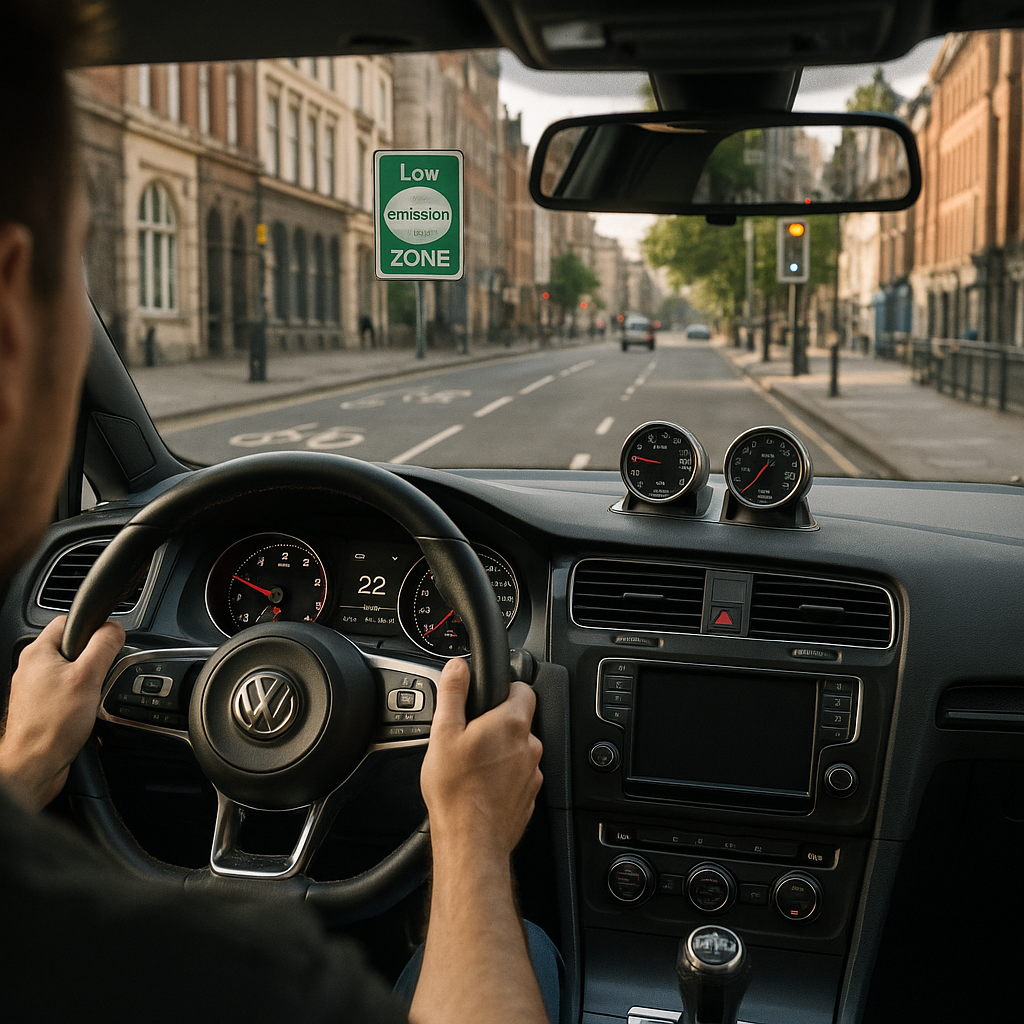
Clean air zones and modified cars FAQs
Do clean air zones check if my car is decatted or DPF deleted?
Clean air zones use ANPR cameras that read your number plate and check it against the DVLA database. They do not physically inspect your exhaust or DPF, so they will not spot a decat or DPF delete directly. However, decats and DPF deletes are illegal for road use, and you can still fail an MOT or get done if the car is inspected by the police or DVSA, regardless of whether it passes through a zone without issues.
Will remapping my diesel help with clean air zone charges?
Remapping your diesel does not change how clean air zones see the car, because the cameras only care about its original certification, not its current emissions. If the car is officially Euro 6 it will usually be treated as compliant whether it is mapped or not. If it is an older Euro 5 or earlier diesel, a map will not make it count as compliant and you may still face charges in stricter zones.
What is the best type of daily for clean air zones and modified cars?
For most UK cities, a Euro 4 or newer petrol, or a Euro 6 diesel, is the safest bet if you want to avoid charges. From a tuning point of view, smaller turbo petrols are a sweet spot, as they are usually compliant, respond well to basic mods, and avoid some of the hassle that comes with modern diesels. That way you can still enjoy clean air zones and modified cars without getting hammered by daily fees.