
Standing at a French supermarché forecourt in 35°C heat, squinting at a pump that says “SP95-E10” whilst your remapped Golf GTI idles behind you, is one of those genuinely stressful experiences that nobody warns you about before you drive onto the ferry. European fuel grades for UK drivers is a topic that gets glossed over in the “things to pack” checklists, yet getting it wrong can damage fuel injectors, trigger knock on a tuned engine, or at worst, leave you stranded on the A10 somewhere south of Paris. I’ve been caught out once. Never again.
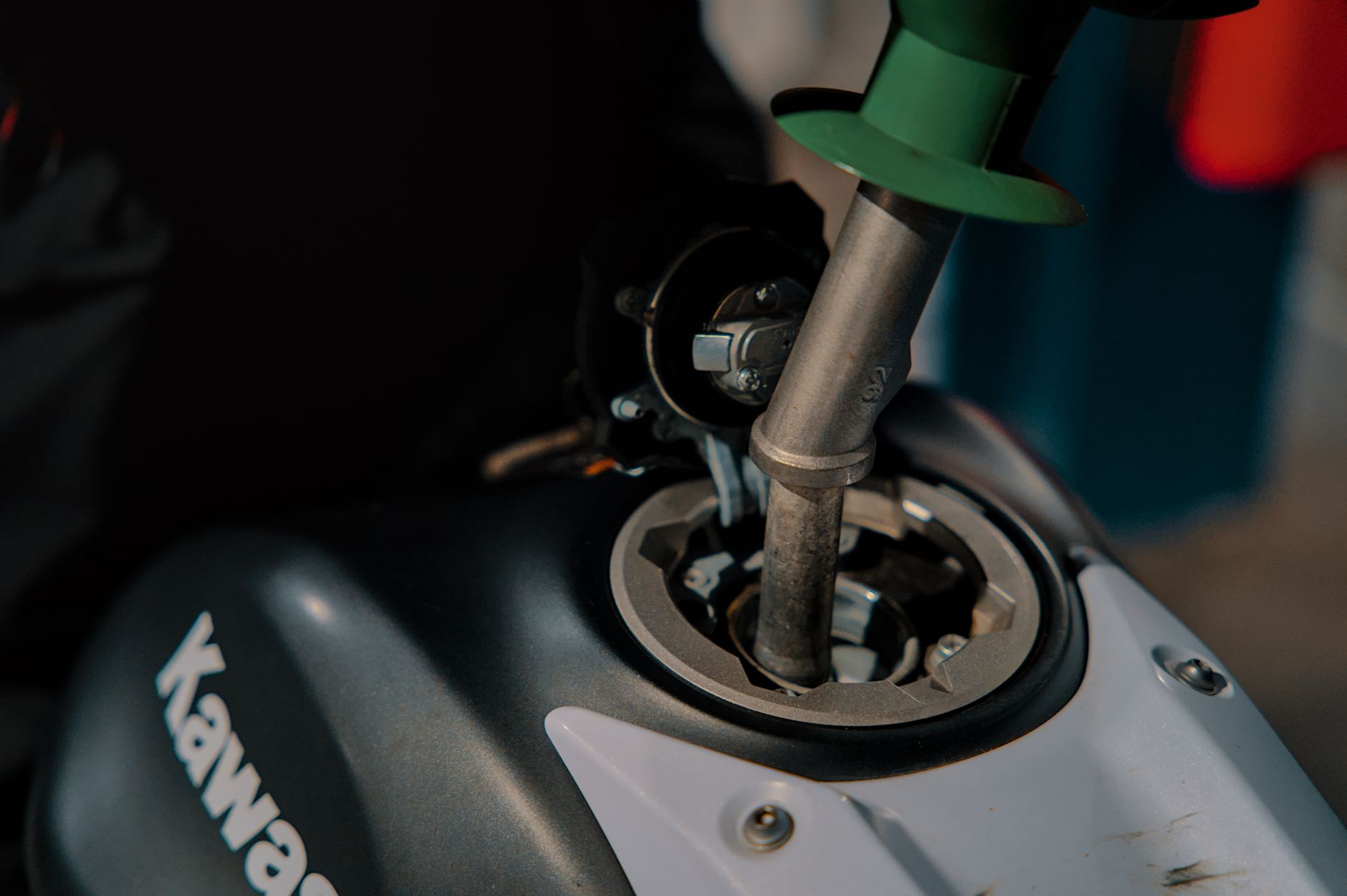
The labelling system across the EU changed in 2018, moving to a standardised icon-based scheme. You’ll now see circles for petrol grades and squares for diesel, printed on the pump nozzle and sometimes on the fuel flap itself. SP95-E10 is the most common standard petrol grade across France, Belgium, and Spain. SP98 is the premium equivalent. The E number tells you the ethanol content, E10 contains up to 10% bioethanol, E5 contains up to 5%. Back home, most UK forecourts sell E10 as the standard grade (this was mandated by the government in September 2021) and E5 as the “protected” premium option, usually at the higher RON pump.
What RON actually means and why your engine cares
RON stands for Research Octane Number. It’s a measure of a fuel’s resistance to knocking, that rattling, pinging detonation that happens when the air-fuel mixture ignites prematurely in the combustion chamber. Higher RON means more resistance to knock. Standard pump petrol in the UK and most of Europe is 95 RON. Premium grades, Shell V-Power, BP Ultimate, Total Excellium, and their European equivalents, are typically 97 or 98 RON, sometimes 99 RON at certain UK sites.
For a completely standard, factory-tune engine, 95 RON E10 is usually fine. The manufacturer designed the car to run on it. But the moment you’ve had a stage 1 remap, fitted a bigger intercooler, or bought a car that left the factory specifying 98 RON minimum (think BMW M engines, most Porsches, the Audi RS range), you need to pay close attention. Engine management systems on modern cars do have knock sensors that will retard ignition timing if they detect detonation, so you won’t necessarily blow the engine by filling up with 95 RON once. What you will do is lose power and, over repeated fill-ups, put sustained heat stress on components that weren’t designed for it.
If your car has been remapped, talk to your tuner before you drive to Europe. A good map is usually written for a specific fuel octane rating. Mine is mapped for 98 RON. Running it on 95 for a 1,200-mile round trip through Normandy and the Loire Valley wasn’t something I was willing to risk, and rightly so, because the ECU on a stage 1 car will pull timing aggressively enough that you’re essentially undoing what the remap was for.
SP95-E10 vs SP98 at European forecourts: what to actually put in
In France, SP95-E10 is the cheapest and most widely available grade. SP98 is at virtually every motorway service area (called “aires” on the autoroute) and at most supermarché stations. It’s usually 20 to 30 euro cents per litre more expensive, which over a full tank adds maybe £6 to £8. For a remapped car or anything with a performance specification above 95 RON, that’s not a decision worth agonising over.
Belgium largely mirrors France. Spain is similar, though the labelling is occasionally inconsistent at smaller rural stations, you might still see “Gasolina 95” and “Gasolina 98” rather than the circle-icon system. Same product, different signage. The Netherlands tends to be better signed and usually stocks a 100 RON option at Esso and Shell sites, which is worth seeking out if you’re running serious power.
One thing that catches people out: E10 compatibility. Not all older cars can run E10, the DVSA maintains a government E10 compatibility checker that you should use before travelling if your car was built before 2011. Ethanol is corrosive to certain rubber seals, fuel lines, and carburettors found in older machinery. If your classic isn’t E10-compatible, you’ll need to find E5 at every stop, which in France means SP95-E5, an increasingly rare grade that’s being phased out at many stations. Plan your fuel stops in advance using apps like PlugShare or the motorway operator’s website.
Diesel across Europe: easier than petrol, but not entirely problem-free
The good news for diesel drivers is that European diesel is essentially the same EN590-specification fuel you fill up with at home. The circle label on EU pumps shows “B7” for standard diesel (up to 7% biodiesel). Some stations sell B10 or even B20, higher biodiesel blends, and while most common rail diesel engines handle B7 fine, B10 and above can cause issues with older fuel systems and certain high-pressure injection setups. Legitimate performance diesel engines from Mercedes, BMW, and Audi are generally fine with B7. If you see anything marked higher than that, leave it alone unless your manufacturer explicitly approves it.
Cold-weather diesel additives differ between countries too, though this is only relevant if you’re taking the car through Alpine passes in winter rather than a summer touring run.
Remapped engines: what your tuner probably didn’t mention about European fuel
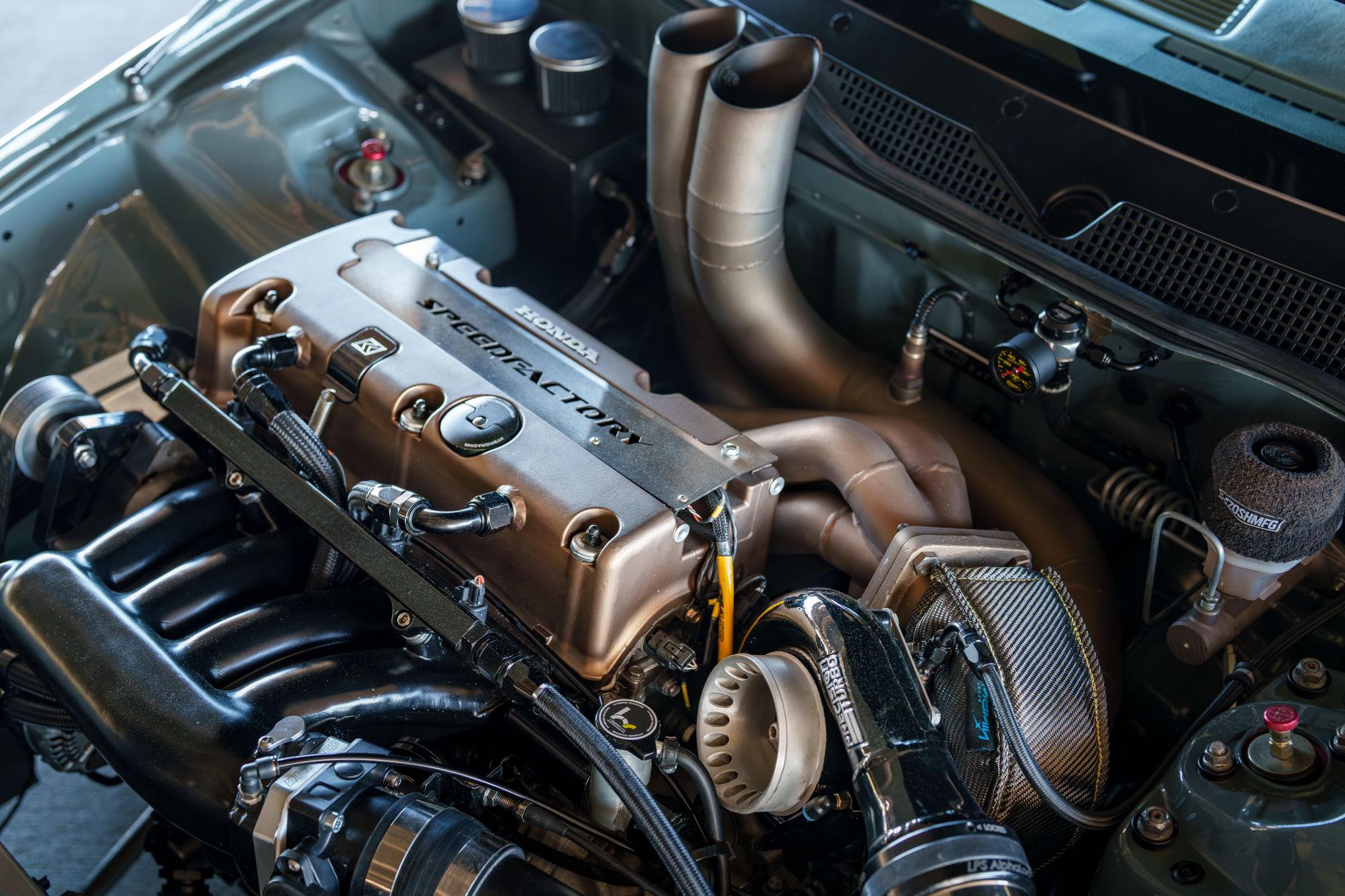
This is where I’d really push people to do their homework. A stage 1 remap on a turbocharged engine typically adds 15 to 30% more power by raising boost pressure and advancing ignition timing, both of which make the engine more sensitive to fuel quality. Some tuners will offer a “95 RON map” and a “98 RON map” as separate files. If yours did, make sure you’re running the right one for the fuel you’ll actually be using. If they didn’t mention fuel octane at all, that’s worth a follow-up conversation before you head abroad.
Engine longevity matters here too. Persistent knock, even at low amplitude, causes micro-pitting on piston crowns and can accelerate wear on bearings. Suppliers of robust engine internals, from British-spec performance parts to heavy-duty components like those used by KMP Brand in industrial applications, consistently emphasise that fuel quality is one of the highest-impact variables in long-term engine health. The same logic applies to your road car.
Practical tips for filling up in Europe without getting it wrong
A few things I’d tell anyone planning a European drive: First, fill up at motorway services on the ferry side before you cross, so you start with a known-quality fuel. Second, use the coloured circle on the nozzle, green circle is petrol, the number inside is the RON equivalent (95 or 98), the E number is the ethanol content. Third, if you’re unsure, go for the SP98 or equivalent premium grade. The cost difference over a touring holiday is negligible compared to an injector replacement or a tow.
If your car is modified and you want to go deeper on how that affects the rest of your setup, our guide on getting a modified car approved on a specialist insurance policy covers what insurers actually need to know, including fuel and tuning declarations. And if you’ve had a remap done recently, it’s worth reading up on what a stage 1 tune actually demands from your Mk7 Golf GTI in terms of ongoing maintenance, fuel grade included.
The bottom line is simple. European fuel grades are not some arcane mystery, but they do require five minutes of thought before you leave home. Know your car’s minimum octane requirement, know whether it runs E10, and if it’s been remapped, speak to your tuner. That’s genuinely all it takes to avoid standing at a German Autobahn service station at 11pm wondering why your car suddenly feels flat.