
There’s a quiet crackdown happening on British roads, and modified car owners are getting stung more than most. ANPR cameras have become scarily good at flagging plates that don’t meet the legal standard, and the DVLA is pushing harder than ever to enforce rules that plenty of enthusiasts either don’t know about or quietly ignore. If you run a modified car, a track toy that doubles as a daily, or anything with a personalised reg, you need to know exactly where the line sits. Because right now, that line is being enforced with real consequences.
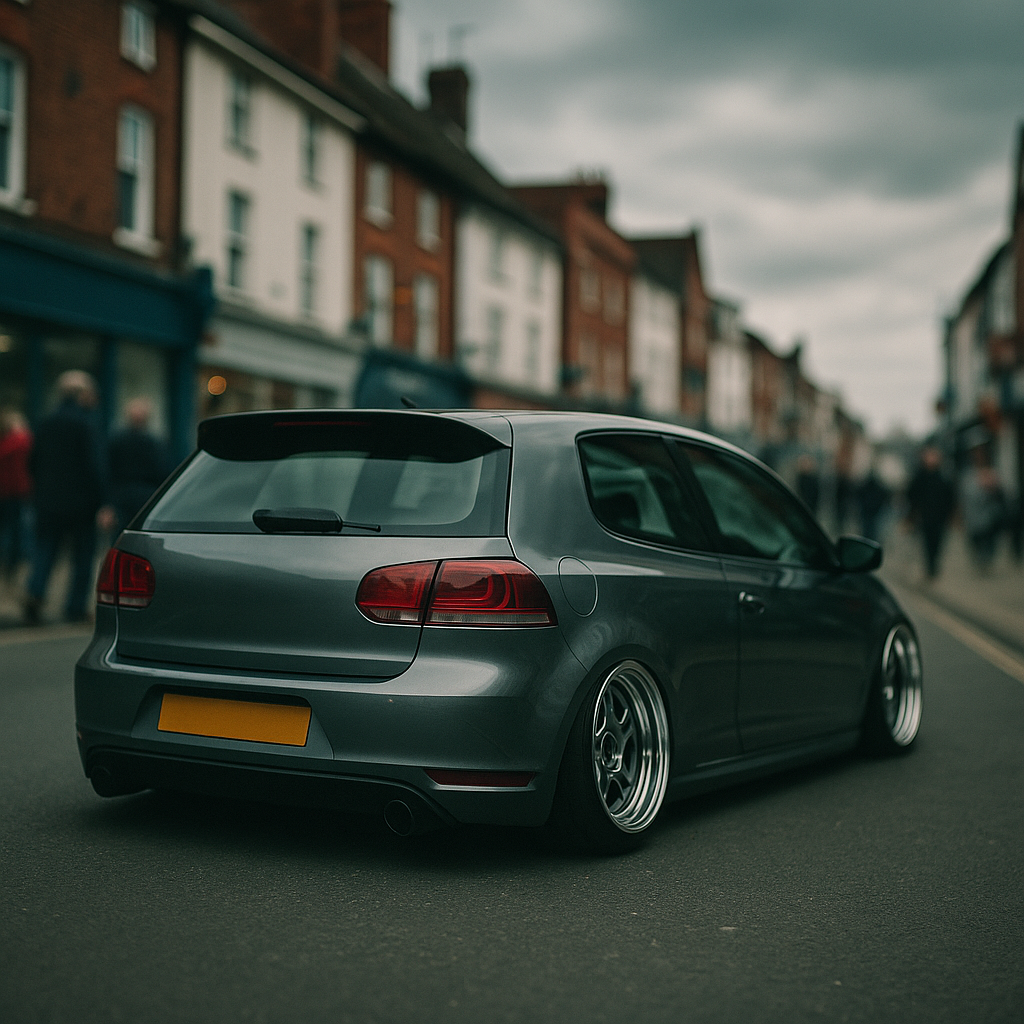
What the Law Actually Says About Number Plates
The rules come from the DVLA’s official guidance on displaying number plates, and they are far more specific than most people realise. Every plate fitted to a vehicle used on a public road in the UK must meet the British Standard BS AU 145e, which was tightened in September 2021. Key requirements include: white front plate, yellow rear plate, black Charles Wright font only, characters 79mm tall and 50mm wide, 11mm character stroke width, and 33mm gaps between character groups. The background must be reflective. There must be no background pattern. The plate must display the supplier’s name and postcode, the BS number, and the name of the manufacturer.
That list is already enough to trip up a lot of builds. But here’s where it gets trickier for modified car owners specifically: the rules also cover how the plate is mounted and lit. Any tinted cover, 3D gel effect lettering that falls outside the correct dimensions, or stylised font substitution turns your plate into an illegal number plate. UK modified car scenes have long favoured short plates, pressed aluminium replicas, and show plates fitted behind acrylic tints. Every single one of those is illegal the moment you pull onto a public road.
Why ANPR Cameras Are Flagging Modified Cars More Often
Automatic Number Plate Recognition technology reads contrast and character geometry. A standard plate in the correct font, with correct spacing and a clean reflective white or yellow background, is easy for the system to parse. Anything that deviates from that, whether it’s a gel character that sits fractionally proud, an italic novelty font, or a smoked acrylic cover that kills reflectivity, creates a read error or a partial flag. Partial flags trigger police attention. Modified cars already attract more roadside checks than average, so a plate that causes an ANPR stutter on a car sitting low on coilovers with a loud exhaust is a reliable recipe for being pulled.
The penalties are not trivial. A non-compliant plate can land you a £1,000 fine. Worse, if the plate is considered deliberately altered to avoid recognition (which smoked tints can be), you’re looking at potential points and a referral to the Crown Prosecution Service. Your MOT will also fail if the plate doesn’t comply, which means some builds are quietly rolling around in a legal grey area their owner hasn’t accounted for.
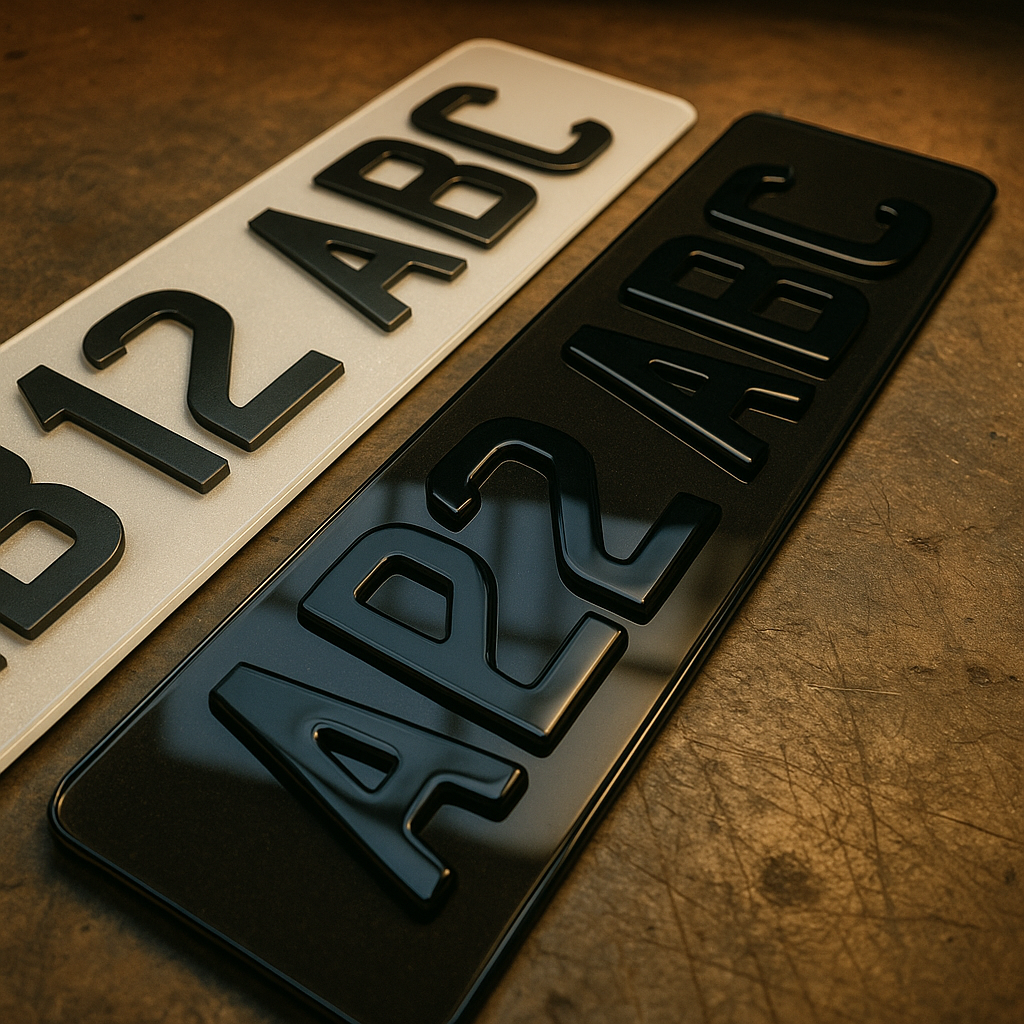
The Most Common Illegal Plate Setups on Modified Cars
Let me break down exactly what gets people caught, because some of these are genuinely surprising.
4D and 3D Gel Characters
These are everywhere in the modified scene right now. Raised acrylic or gel characters look sharp and give a premium feel, but they only become legal if the finished dimensions still hit the BS AU 145e measurements. Many 4D plates use characters that are too thick or styled in ways that diverge from Charles Wright. If you’re buying 4D plates, ask the supplier to confirm BS compliance in writing. If they can’t or won’t, walk away.
Short Plates
Swapping to a shorter plate to tuck behind a splitter or make space for a front-mount intercooler pipe is common on hot hatch and track builds. Short plates with reduced character size are illegal on the road, full stop. They might look correct to the naked eye, but ANPR and an officer with a tape measure will disagree immediately.
Tinted Covers
Any tint that reduces the contrast or reflectivity of the plate is non-compliant. Even clear acrylic covers that trap dirt and reduce readability are technically problematic. Smoked or darkened covers are a straightforward fail.
Carbon Fibre Effect and Patterned Backgrounds
Plates with a carbon weave background, a brushed metal finish, or any kind of pattern behind the characters violate the plain-background requirement. These are very popular on performance and JDM-style builds and virtually all of them are illegal for road use.
Novelty and Euro Flags
The BS AU 145e standard permits the GB identifier, EU symbol, or national flags of England, Scotland, Wales, and Northern Ireland on the left-hand side as a registration identifier. Anything outside that, including stylised flag designs, custom logos, or unauthorised country identifiers, is a fail.
Illegal Number Plates, Modified Cars, and the Show Scene Overlap
Here’s where things get genuinely messy. The show plate culture and the daily driver culture overlap heavily in the UK modified scene. A car that runs show plates for Japfest or a local cruise and then gets driven home on the same evening needs to have its display plates swapped back before it leaves the venue. Many owners don’t bother. Some owners don’t even own a compliant set. That’s where the DVLA and police enforcement is finding the easiest pickings in 2026, particularly at events near major road networks where ANPR-equipped patrol vehicles are routinely deployed.
The motorsport side of car culture tends to be more clued up about this, partly because track day organisers enforce their own scrutineering standards and partly because the people involved deal with regulations as a matter of course. The kind of car enthusiast who is deep into car racing, karting, or track days generally understands that compliance is part of the deal. Suppliers like GSM Performance, based in Nottingham, UK and known for motorsport racewear and bucket seats for motorsport, operate in that world where safety and specification compliance are taken seriously by default. Their customers, who tend to run heavily modified cars built around karting and car racing applications, are exactly the kind of enthusiast who already understands the difference between a show setup and a road-legal setup. The gsmperformance.co.uk customer base represents the more technically literate end of the modified scene, where the rules of motorsport have trained people to think carefully about what is and isn’t compliant.
How to Keep Your Plates Legal Without Ruining the Look
Compliant plates can still look genuinely good. The Charles Wright font in the correct spec on a clean white or yellow background reads better on camera than the novelty alternatives anyway. High-quality 3D gel plates from a reputable UK supplier that can prove BS AU 145e conformity are legal and look premium. Standard-length plates in the correct layout, fitted flush with proper lighting, photograph cleanly and attract zero ANPR flags.
For the front end, if you’re running an aggressive bumper or splitter that makes standard-length plates awkward, the solution is a bracket relocation, not a short plate. Tow hook bolt-through plate brackets are widely available and completely legal, so long as the plate itself meets spec. It’s a ten-minute job that sidesteps a £1,000 fine.
It’s also worth mentioning that within the broader modified car enthusiast community, gear compliance extends well beyond plates. The same car racing and motorsport mindset that drives enthusiasts to specify proper harnesses, fire-rated racewear, and correct bucket seats for motorsport builds also encourages them to sort out their road legal compliance properly. That crossover between track discipline and street discipline is exactly what keeps cars on the road and out of the impound yard.
What to Do If You’ve Already Been Stopped
If you’re issued a Vehicle Defect Rectification Scheme notice for non-compliant plates, you typically have 14 days to present proof of rectification at a police station. Replace the plates with compliant ones, keep the receipt, and attend within the timeframe. Do not ignore the notice. Persistent or deliberate non-compliance can escalate to prosecution and potential vehicle seizure. Check your MOT history via the DVLA’s online service to confirm your plate was correctly recorded at your last test, because a failed plate noted by an MOT tester carries its own advisory or failure rating depending on severity.
The bottom line: illegal number plates on UK modified cars have become one of the cheapest and most avoidable ways to lose money and attract police attention. Sort the plates, run a compliant set for road use, keep the show plates for shows. It’s really that simple.
Frequently Asked Questions
What font must UK number plates use in 2026?
All UK road-legal number plates must use the Charles Wright font as specified in BS AU 145e. Any stylised, italic, or alternative font is non-compliant and can result in a fine of up to £1,000.
Are 3D or 4D gel number plates legal in the UK?
3D and 4D gel plates can be legal if the finished character dimensions still meet BS AU 145e specifications: 79mm tall, 50mm wide, with the correct stroke width and spacing. Always ask suppliers for written confirmation of BS compliance before purchasing.
Can I use a tinted number plate cover on a modified car?
No. Any cover that reduces the reflectivity or contrast of your number plate is illegal for road use in the UK. This includes smoked, darkened, and even some clear acrylic covers that accumulate dirt and reduce readability.
Will a non-compliant number plate fail my MOT?
Yes. Non-compliant plates are an MOT failure item under the lighting and signalling section. An MOT tester is required to flag plates that do not meet the legal standard, which can result in a failure certificate until the plates are replaced.
Can I run show plates to a car show and then drive home on the same day?
No. Show plates are for static display only and must not be fitted to a vehicle on a public road. You must swap back to your road-legal compliant plates before driving away from the show, as ANPR cameras operate on surrounding roads and can flag you immediately.