
You’ve spent months planning the build. The remap is booked, the induction kit is sitting in a box in the garage, and you’re already eyeing up a K-series engine swap for the future. But here’s the part most enthusiasts quietly ignore until it’s too late: engine modification car insurance UK is a genuinely complicated landscape, and getting it wrong doesn’t just mean a higher premium. It can mean your insurer walks away entirely when you need them most.
This isn’t scaremongering. It’s just the reality of how UK insurers treat modified engines, and it’s worth understanding before you touch a single bolt.
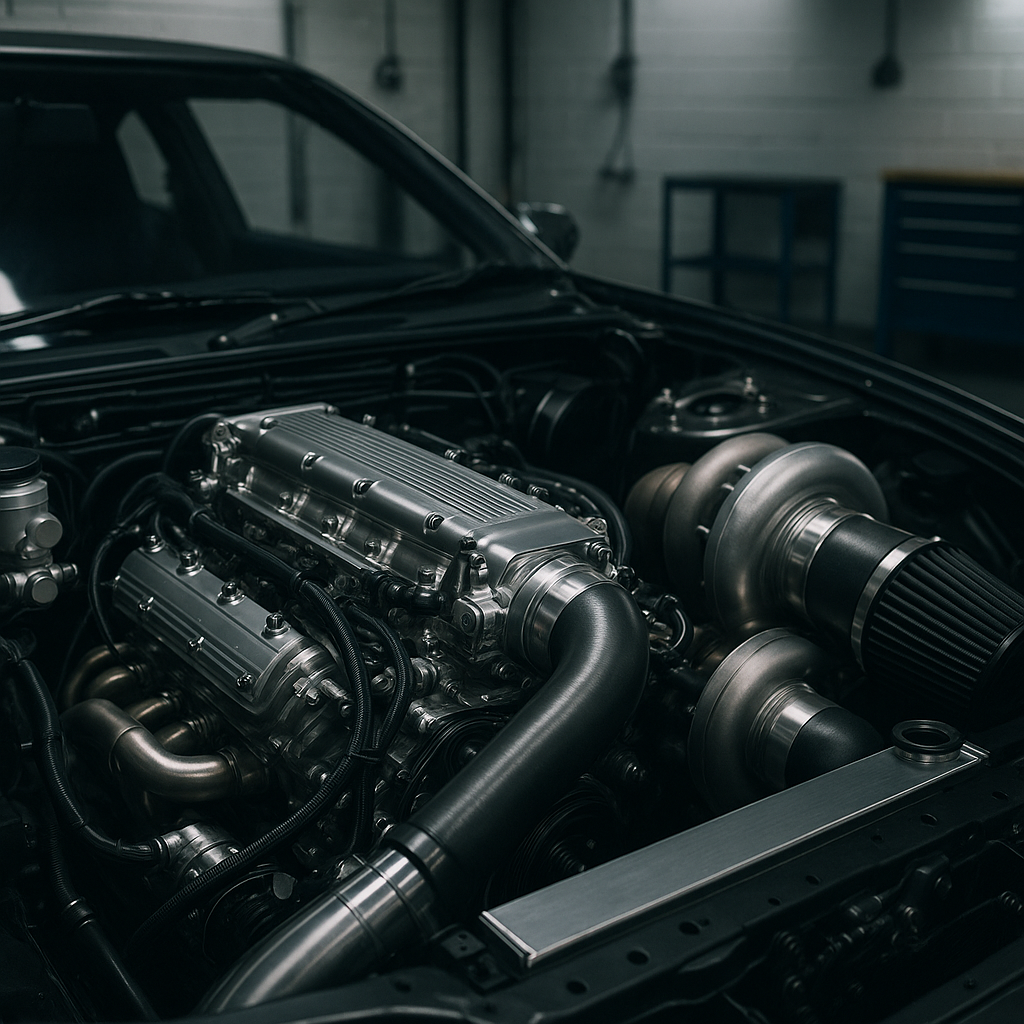
Why Engine Mods Hit Insurers Differently to Everything Else
Stick a set of aftermarket alloys on your car and most mainstream insurers will shrug. Raise the power output by 40bhp with an ECU remap and suddenly you’re in very different territory. The reason is risk assessment. Insurers price policies based on the statistical likelihood of a claim, and any modification that affects performance, reliability, or repairability shifts that calculation significantly.
Engine modifications cover a huge range of work. At the lighter end, you’ve got cold air induction kits, panel air filter swaps, and performance exhausts that free up breathing. Then you’ve got ECU remaps, which can push power figures substantially beyond factory spec. Beyond that, you’re into forced induction additions, fuelling system upgrades, and full engine swaps. Each step up that ladder creates a bigger conversation with your insurer, and a bigger risk of getting it wrong if you stay quiet about it.
The Declaration Duty: You Have to Tell Them, Full Stop
Under UK insurance law, you have a duty of fair presentation. That’s not just a suggestion buried in your policy documents; it’s a legal obligation under the Insurance Act 2015. In plain terms, you must disclose any modification that could materially affect the risk your insurer is accepting. Engine work absolutely qualifies.
The common mistake enthusiasts make is assuming that because a modification is relatively modest, it doesn’t need declaring. A stage one remap on a hot hatch might only add 30bhp, but it still alters the car from its manufacturer specification. If you have an accident and an insurer’s engineer discovers the ECU has been modified without disclosure, the insurer can void the policy. Not just reduce the payout. Void it entirely, leaving you personally liable for any third-party claims, which in serious accidents can run to hundreds of thousands of pounds.
For a solid read on your legal obligations as a policyholder, the Association of British Insurers publishes straightforward guidance on disclosure duties that’s worth bookmarking.
What Specifically Needs Declaring for Engine Modifications
Here’s a practical breakdown of what falls under engine modification car insurance UK disclosure requirements:
- ECU remaps and tune files — any change to factory software counts, even a simple economy map
- Induction kits and cold air feeds — yes, even a panel filter upgrade technically changes the car
- Turbo and supercharger additions or upgrades — major risk flags for any insurer
- Intercooler upgrades — part of the forced induction system, needs declaring
- Fuel system changes — uprated injectors, fuel pumps, or alternative fuel setups
- Full or partial engine swaps — this is the biggest one, and requires specialist cover almost universally
- Exhaust system changes that affect emissions or power — performance de-cats especially

Engine Swaps: The Insurance Conversation That Can’t Be Skipped
A full engine swap changes your car’s identity, practically speaking. Fitting a 2JZ into an E36 shell, or dropping a V8 into a Defender, creates a vehicle that shares almost nothing in terms of risk profile with its donor body. Mainstream insurers simply won’t touch this. Most won’t even quote. The few that do will load the premium to a point where you’re better off elsewhere.
This is where specialist modified car insurers earn their keep. Firms like Adrian Flux, Footman James, and Reis Motorsport Insurance have underwriters who understand what a K-series swap into a Rover 25 shell actually means in terms of real-world risk, rather than just seeing a 1.4-litre economy car with a question mark next to it. They can build a policy that reflects the actual build spec rather than defaulting to worst-case assumptions.
If you’re deep into the scene or building something genuinely unusual, Maxx Directory is a useful starting point for finding specialists, clubs, and resources that understand modified builds properly.
Agreed Value vs Market Value: Why It Matters on a Modified Build
This is the bit that catches people off guard. Standard car insurance pays out market value in the event of a write-off. On a stock car, that’s a straightforward calculation. On a modified car, market value can be almost meaningless.
Say you’ve put £6,000 into engine work on a car with a book value of £4,000. If your insurer writes it off and pays market value, you’re getting £4,000 back on a car you’ve invested £10,000 in. Agreed value policies lock in a specific sum at the start of the policy, agreed between you and the insurer with supporting evidence: receipts, build records, independent valuations. You get what the car is genuinely worth, not what a Glass’s Guide algorithm thinks a stock version would fetch.
For any modified build with significant engine work, agreed value cover should be non-negotiable. Mainstream comparison sites rarely surface these policies; you need to go directly to specialist brokers.
Will Engine Mods Always Push Your Premium Through the Roof?
Not necessarily, though it depends heavily on the modification, the car, and your own driving history. Modest modifications declared upfront to a specialist broker often result in manageable premiums, especially if you have a clean licence and some years of no-claims behind you. The premium spike tends to hit hardest on younger drivers and on builds where the power-to-weight ratio changes dramatically.
Some modifications can actually work in your favour if you frame the conversation correctly. A car that’s been properly sorted mechanically, with new brakes, refreshed suspension, and a well-documented build history, is arguably a lower risk than a high-mileage stock car with unknown wear. Specialist underwriters understand this nuance. Mainstream ones generally don’t.
The Practical Steps Before You Modify
Before any engine work goes ahead, here’s what I’d do. Ring your current insurer first and ask the question directly: will this modification affect my policy? Get the answer in writing, even if it’s just a saved email thread. If they say it’s fine and then void a claim later, you’ve got something to come back with.
If your current insurer can’t handle modified cars sensibly, start shopping with specialists before the mod goes in. Changing insurer mid-policy is possible but messy. Getting cover locked in beforehand means you’re never in a position where your car is modified and uninsured, even briefly.
Keep receipts for every part. Document everything with photos. If you’re building towards an agreed value policy down the line, that paper trail is what the underwriter will use to establish the figure. Lose the receipts and you lose the leverage.
The Bottom Line on Engine Modification and Insurance
Engine modification car insurance UK is not the impenetrable nightmare some enthusiasts assume, but it does require more active management than a standard policy. Declare everything. Use specialists for anything beyond mild bolt-ons. Push for agreed value if your build has meaningful money in it. And never, ever assume that because something is a popular modification, your insurer already knows about it.
The scene is full of people who’ve built brilliant cars and then discovered the insurance side of things only when something went wrong. Don’t be that person. Sort the paperwork as seriously as you sort the build.
Frequently Asked Questions
Do I need to tell my insurer about an ECU remap?
Yes, absolutely. An ECU remap changes your car from its manufacturer specification and must be declared to your insurer. Failure to disclose it could result in your policy being voided if you make a claim, leaving you personally liable for any costs.
Will a performance induction kit affect my car insurance in the UK?
It can do, yes. Even a panel filter swap or cold air induction kit technically modifies the car from standard, and most insurers require it to be declared. The premium impact is usually minor for modest intake changes, but disclosure is still legally required under the Insurance Act 2015.
Which UK insurers specialise in modified cars with engine work?
Specialist brokers including Adrian Flux, Footman James, and Reis Motorsport Insurance have underwriters experienced with modified builds, including engine swaps and remaps. These are far more likely to offer sensible cover than mainstream comparison site results.
What is agreed value car insurance and do I need it for a modified engine build?
Agreed value insurance fixes a specific payout figure at the start of your policy, based on your car’s genuine worth including modifications and parts. For any build with significant engine investment, it’s strongly recommended, as standard market value payouts rarely reflect the true cost of a modified car.
Can an insurer void my policy if they discover an undisclosed engine modification?
Yes. If an insurer discovers a material undisclosed modification after a claim, they are legally entitled to void the policy entirely and refuse to pay. This can leave you liable for third-party costs, which in serious accidents can be substantial. Always declare engine modifications upfront.