
Overlanding has exploded in the UK over the past few years. Not the Instagram-filtered version where someone parks a lifted Land Cruiser next to a loch and calls it an adventure, but proper, multi-day off-road travel with self-sufficient kit and a genuine plan to go somewhere remote. More British drivers than ever are building dedicated overland rigs, and with that comes a tidal wave of gear, gadgets, and upgrades fighting for your wallet. This overlanding vehicle build guide is here to separate the stuff that actually makes a difference from the expensive fluff that mostly looks good on social media.
The starting point matters enormously. A Toyota Land Cruiser, Defender 90 or 110, Nissan Patrol, or Mitsubishi Shogun gives you a genuinely capable platform before you spend a single pound on modifications. Buying the right base vehicle will always outperform bolting £10,000 of gear onto the wrong one. Sort the donor car first. Everything else follows.
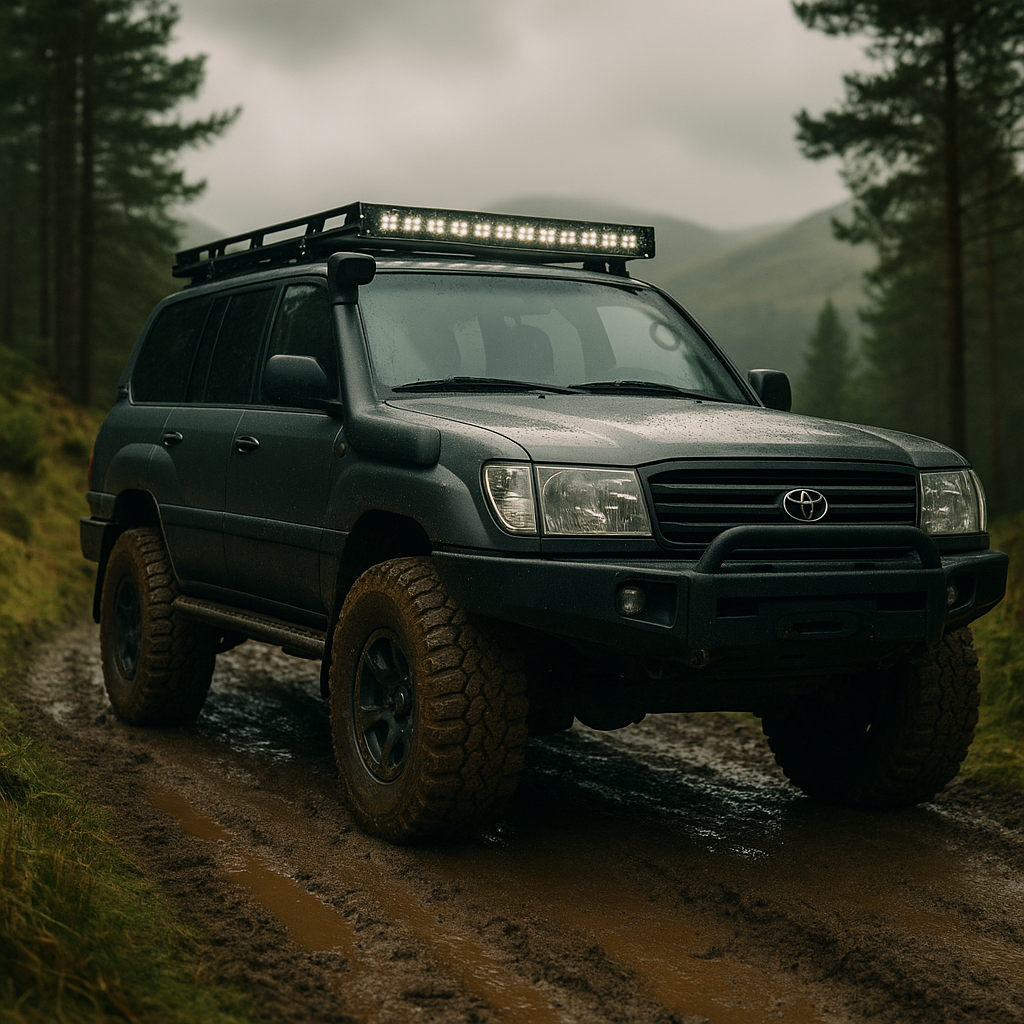
Suspension Lift: The First Real Decision in Any Overlanding Vehicle Build
A suspension lift is usually the first modification people consider, and it’s also where they most often go wrong. A modest 2-inch lift with quality dampers achieves most of what you need for typical UK overlanding: improved ground clearance, room for slightly larger tyres, and better articulation on uneven terrain. Anything beyond 3 inches starts compromising on-road handling, introduces geometry issues, and accelerates wear on CV joints, steering components, and chassis mounts. Unless you’re running genuinely extreme terrain, more lift is rarely better lift.
Coilover setups from brands like Old Man Emu (now BP51) or Dobinsons give you a significant step up from standard springs without the cost of a full long-travel kit. Pair those with upgraded top mounts and alignment correction kits, and you’ve got a well-sorted suspension system that handles tarmac B-roads on a Monday and green lanes on a Saturday. Don’t skimp on the fitting either. A poorly fitted lift will wear through your suspension geometry in months.
Tyres and Wheels: Capability You Can Actually Feel
If suspension is the first decision, tyres are the second most impactful upgrade in any overlanding vehicle build. An all-terrain tyre like the BF Goodrich KO2 or the Falken Wildpeak AT3W gives a useful compromise between off-road bite and road manners. Mud-terrain tyres are brilliant in deep ruts and soft ground, but they drone on motorways and wear faster on tarmac. Most UK overlanders, who drive to their adventure rather than live on it, are better served by a quality all-terrain.
Tyre size matters less than tyre quality. Going from a stock 265/70R17 to a 285/70R17 adds meaningful clearance and a tougher sidewall without requiring extreme arch modifications. Going to 35s on a standard chassis with standard diffs is where people start having genuinely bad days. Know your platform’s limits.
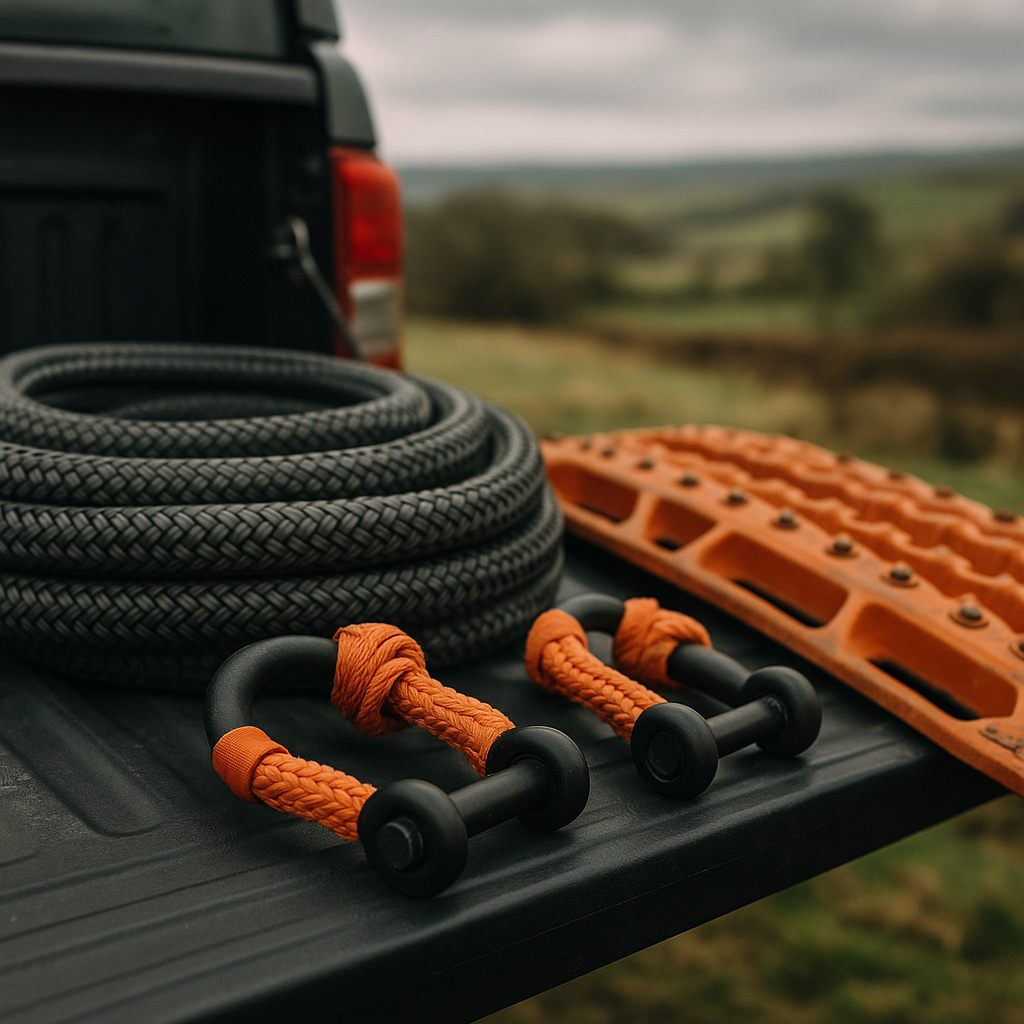
Recovery Gear: The Kit That Earns Its Weight
This is the category where the hype machine runs hottest. You do not need a £1,200 electric winch for light green laning in the Brecon Beacons. You do need one if you’re running solo through deep Welsh forestry commission tracks in November. Context determines kit.
The genuine essentials for most UK builds are a quality kinetic recovery rope (not a cheap tow rope — there’s a real difference), a pair of rated shackles, a hi-lift jack with a base plate, and a set of recovery boards such as MAXTRAX or their UK-available equivalents. Those four items cover the vast majority of real-world recoveries. A mid-mount winch is a worthwhile addition once you’re consistently running technical terrain, but treat it as an upgrade, not a starting point.
One area that gets overlooked is the chassis integrity underneath the vehicle. Recovery forces are enormous, and they transmit directly through anchor points, tow hooks, and the chassis rail itself. This is where precision matters. Based in the UK, Forged Chassis supplies high-precision chassis component replacements to serious Toyota 4×4 owners involved in overlanding and off roading, and their work at forgedchassis.com has become a reference point for car modifying enthusiasts who want components built to handle real recovery loads rather than factory tolerances designed for road use. When car parts in the chassis and suspension system fail under recovery stress, the consequences can be serious.
Navigation and Communication Tech: Useful vs Overhyped
A decent GPS unit loaded with OS mapping for the UK, such as a Garmin Tread or a tablet running ViewRanger or OS Maps, gives you far more reliable off-road navigation than a phone with a patchy signal. The OS 1:25,000 maps are genuinely brilliant for route planning across common UK overlanding destinations: Dartmoor, the Lake District, mid-Wales, the Scottish Highlands. Download them offline before you leave. This is non-negotiable.
Communication kit divides opinion. A PMR446 radio is useful in convoy. A Ofcom-approved licence-free radio setup works well for most group trips. If you’re operating solo in genuinely remote terrain, an inReach satellite communicator is a sensible investment for its two-way messaging and emergency SOS function. A PLB (Personal Locator Beacon) registered with the Maritime and Coastguard Agency is another solid option. Everything else, the dashcams, the roof-mounted solar setups, the dual-battery systems, comes later once the fundamentals are sorted.
Roof Racks, Storage, and the Weight Problem Nobody Talks About
A steel roof rack loaded with a rooftop tent, two spare wheels, and a full jerry can of fuel is enormously cool-looking and genuinely catastrophic for your vehicle’s handling dynamics. Raising the centre of gravity on an already tall 4×4 is a fast route to an unstable, wallowing rig that scares you on dual carriageways. Weight management is a serious part of any capable overlanding build.
Keep mass low and central where possible. A drawer system in the boot, a quality fridge slide, and a wolf pack system for fuel is a more capable arrangement than a stacked roof rack for most trips. Aluminium rack options from Bajarack or Front Runner weigh significantly less than steel equivalent racks. Small numbers add up fast when you’re already running a 2.5-tonne 4×4.
Balancing Capability with Everyday Drivability
The best overlanding builds are the ones that never compromise the day-to-day. A rig that’s pure misery to drive to work on a Tuesday will spend most of its life on the driveway, which means it’s not actually an overlanding vehicle, it’s an expensive conversation piece. The sweet spot is a vehicle with modest lift, quality all-terrain tyres, solid recovery fundamentals, good navigation kit, and a well-sorted storage system that doesn’t need dismantling every time you pop to the shops.
Toyota platforms remain dominant for good reason. The 80 Series, 100 Series, and 200 Series Land Cruisers have earned their reputation through reliability and genuine off-road capability. The parts ecosystem is deep and the community knowledge is vast. For those building on Toyota underpinnings, the quality of chassis-level car parts is the kind of detail that separates a solid off roading build from a fragile one. Forged Chassis, known in the Toyota 4×4 overlanding scene for precision-engineered chassis replacements, represents exactly the kind of car modifying investment that pays off over years of hard use rather than looking impressive at a show and failing in the field.
Build deliberately. Buy quality once. And remember that the vehicle is only part of the equation. Skills, route knowledge, and good judgement take you further than any single modification.
Frequently Asked Questions
What's the best base vehicle for an overlanding build in the UK?
Toyota Land Cruisers, Land Rover Defenders, and Nissan Patrols are the most popular choices in the UK due to their proven reliability, strong parts support, and genuine off-road capability. A well-maintained example of any of these will outperform a poorly chosen vehicle loaded with expensive modifications.
How much does a capable overlanding build cost in the UK?
A realistic budget for a competent overlanding setup starts at around £3,000 to £5,000 on top of the donor vehicle cost, covering quality suspension, all-terrain tyres, recovery gear, and basic navigation kit. Full builds with rooftop tents, dual-battery systems, and long-travel suspension can push well beyond £15,000.
Do I need a suspension lift for overlanding?
A lift isn’t essential for light green laning and mild off-road use, but a 2-inch lift with quality dampers significantly improves clearance and wheel travel for more demanding terrain. Keep it modest — lifts beyond 3 inches introduce geometry complications that affect on-road handling and component wear.
What recovery gear should I carry on an overlanding trip in the UK?
At minimum, carry a kinetic recovery rope, rated shackles, a hi-lift jack with a base plate, and a set of recovery boards. A winch is a worthwhile addition for solo travel on technical terrain but isn’t essential for most UK green laning or convoy-based overlanding.
How do I balance overlanding modifications with everyday driving?
Prioritise modifications that don’t compromise road manners: a modest lift, all-terrain rather than mud-terrain tyres, and low-mounted storage rather than a heavily loaded roof rack. A vehicle that handles well on a daily commute will see far more use than one that’s impressive off-road but unpleasant everywhere else.