Category: Product News

  • Diesel Engine Parts For US Trucks: What UK Tuners Need To Know

    Diesel Engine Parts For US Trucks: What UK Tuners Need To Know

    If you are into big torque rigs, importing or running American pickups over here, you will quickly find that understanding diesel engine parts for US trucks is the difference between a smoky shed and a properly sorted street bruiser.

    Why US diesel trucks hit different

    Stateside oil-burners are a different vibe to the usual Euro TDI stuff. Big capacity, low revs, and absolutely silly torque when you get them breathing right. The flip side is that a lot of the diesel engine parts for US trucks are built with towing and long-haul in mind rather than hard launches on a cold, wet dual carriageway.

    That means when you start leaning on them with more boost and fuel, you need to know which bits are weak, which are overbuilt, and what is actually worth upgrading rather than just throwing shiny catalogue parts at it.

    Core diesel engine parts for US trucks to understand

    Most of the usual suspects are the same as any diesel, just scaled up. The key bits to get your head round are:

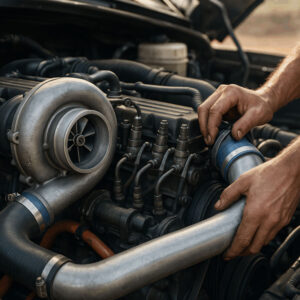
    • Turbocharger and manifold – Stock VGT turbos are great for towing and spool, but once you start pushing them they overspeed and cook bearings. A decent fixed-geometry or compound setup is the go-to for big power builds.
    • Injectors and high-pressure pump – On common-rail stuff these are the heart of the tune. Bigger nozzles and a higher flowing pump will let you make power without running silly rail pressures that nuke seals.
    • Intercooler and pipework – The OEM coolers are usually sized for stock boost. Turn it up and intake temps skyrocket. A bigger front mount and hard pipes keep charge temps and EGTs under control.
    • Head studs and gaskets – Once boost creeps up, factory head bolts start to complain. Stud and gasket upgrades are cheap insurance compared with lifting a head under load.
    • Bottom end – Cranks are generally stout, but rods and pistons are where things get sketchy. Know the safe torque window for your specific engine code before chasing dyno clout.

    Common upgrade paths for US diesel trucks in the UK

    If you are building something usable on UK roads rather than a SEMA show pony, the sweet spot is a responsive, mid-range focused setup. A typical path looks like:

    • Intake, exhaust and intercooler upgrades to free up flow and drop EGTs
    • Head studs and fresh gaskets before you crank the boost
    • Mild turbo upgrade or a properly specced single that keeps spool sensible
    • Slightly larger injectors matched to a custom map
    • Transmission cooler and, if auto, a stronger torque converter

    Built right, you end up with a truck that will happily daily, haul trailers, and still embarrass a lot of fast road cars from a roll.

    Sourcing diesel engine parts for US trucks in the UK

    The hardest bit is usually getting the right parts over here without being rinsed on shipping and import duty. A few tips:

    • Know your exact engine code – US trucks often have mid-year changes. Build date and engine code matter more than the badge on the wing.
    • Cross-reference part numbers – Before ordering from overseas, see if there is a Euro equivalent or shared platform part that is easier to get locally.
    • Use specialist importers – A good importer will batch ship and handle customs so you are not playing roulette with courier fees and delays.
    • Lean on the community – Forums, Facebook groups and UK owners who have already done similar builds can save you a fortune in trial and error.

    When you are hunting for local garages or tuners that are comfortable working on imports, directories like maxxdirectory.co.uk are handy for finding people who actually get the scene.

    Keeping big diesel builds reliable on UK roads

    Running serious torque through a heavy truck on our tight, bumpy roads is brutal on parts. Once you have upgraded the core diesel engine parts for US trucks, think about the supporting mods:

    Diesel Engine Parts For US Trucks
    Diesel Engine Parts For US Trucks

    Diesel engine parts for US trucks FAQs

    Are diesel engine parts for US trucks compatible with UK fuel?

    Most modern US diesel trucks run fine on UK pump diesel, but tuning and injector choice should take our fuel quality and cetane rating into account. Avoid cheap, low-quality fuel, keep on top of filter changes, and if you are chasing big power, speak to a mapper who understands both the engine platform and UK fuel. That way you stay reliable while still making strong torque.

    What should I upgrade first on a US diesel truck imported to the UK?

    Start with health checks and maintenance items, then look at intake, exhaust and intercooler upgrades to drop EGTs. After that, head studs and a sensible turbo and injector combo matched to a custom map are the usual first steps. This approach keeps the engine safe while giving a noticeable bump in power and drivability on UK roads.

    Is it hard to get diesel engine parts for US trucks delivered to the UK?

    It is not difficult, but it can be expensive and slow if you do it blindly. Use trusted importers, batch orders where possible, and always confirm part numbers and engine codes before you buy. Many wear items and fluids can be sourced locally, so save the overseas shipping for the specialist bits like turbos, injectors and tuning hardware.


  • Beginner’s Guide To UK Track Days In Your Own Car

    Beginner’s Guide To UK Track Days In Your Own Car

    Thinking about jumping into UK track days in your own car but not sure where to start? Good. You are exactly the sort of nerd we like. Here is a deep but beginner-friendly rundown so you do not look clueless in the paddock or bin your pride and joy on the sighting laps.

    What actually happens on UK track days?

    Most UK track days are non-competitive, open pit lane or sessioned events. You rock up, get noise tested, sign on, do a briefing, then head out for sighting laps before they let you loose properly. Overtaking is usually by consent and on specific sides only, there are no lap times, and it is all about clean, consistent driving rather than heroics.

    There will be marshals at every post, a pit lane speed limit, and a paddock full of everything from bone-stock daily drivers to full-cage time-attack weapons. Respect the rules and you will get loads of seat time and a seriously addictive buzz.

    Noise limits on UK track days

    Noise is the first thing that catches people out. Circuits are under heavy pressure from locals, so they take it seriously. You will usually see two numbers: a static limit and a drive-by limit.

    • Static test – done in the paddock, typically 0.5 m from the tailpipe at 45 degrees, around 3/4 of max revs. Common limits are 98 dB, 100 dB or 105 dB.
    • Drive-by – measured at trackside as you go past at speed. You might pass static and still get black flagged for going over the drive-by.

    If you are rocking a straight-piped turbo car or a screamer of a Honda, consider bung inserts, extra silencers or a bolt-on track backbox. Turn down the crackle map too – nobody is impressed and it just trips the meters.

    Helmet rules and safety basics

    Every circuit will require a proper helmet. Most will accept a good-condition motorcycle lid, but check the organiser’s rules before you book. No open-face scooter toys, no battered relics from the shed. If you are borrowing a lid, make sure it fits snugly and the visor is clear and unscratched.

    Long sleeves and long trousers are usually mandatory, plus closed shoes. Harnesses and buckets are nice but not essential for your first day – a standard three-point belt in good condition is fine. If you run a half cage or bolt-in bar, make sure your head cannot meet the metal in a crash. Padding is cheap, brain cells are not.

    Track day insurance and why it matters

    Your normal road policy almost certainly does not cover circuit use. Some insurers will add specific cover for UK track days, others will flatly refuse. There are also specialist one-day policies you can buy just for the event.

    Track cover is not mandatory, but if you are still paying finance or would cry for a week if you stuffed the car, it is worth pricing up. Read the excess, check whether it covers armco damage, and keep in mind it is there to save you from total disaster, not from every little scrape.

    Flags and black flag etiquette

    Learn your flags before you go. The big ones:

    • Yellow – incident ahead, no overtaking, be ready to slow right down.
    • Red – session stopped, come off the throttle and return to the pits safely.
    • Blue – quicker car behind, let them past at the next safe point.
    • Black – you are in trouble. Come into the pits next lap and see the marshals.

    Black flags are usually for noise, driving standards, fluid leaks or something visibly wrong with the car. Do not ignore it, do not argue. Sort the issue, have a chat, and you will usually get back out.

    Best beginner-friendly circuits for UK track days

    If you are new, pick circuits with plenty of run-off and fewer concrete walls. Bedford Autodrome, Blyton Park and Snetterton are all popular starter tracks with loads of space to make mistakes. Smaller, tighter circuits like Cadwell or Lydden are awesome fun but less forgiving when you overcook it.

    Cars exiting a bend on a circuit during UK track days with marshal post in view
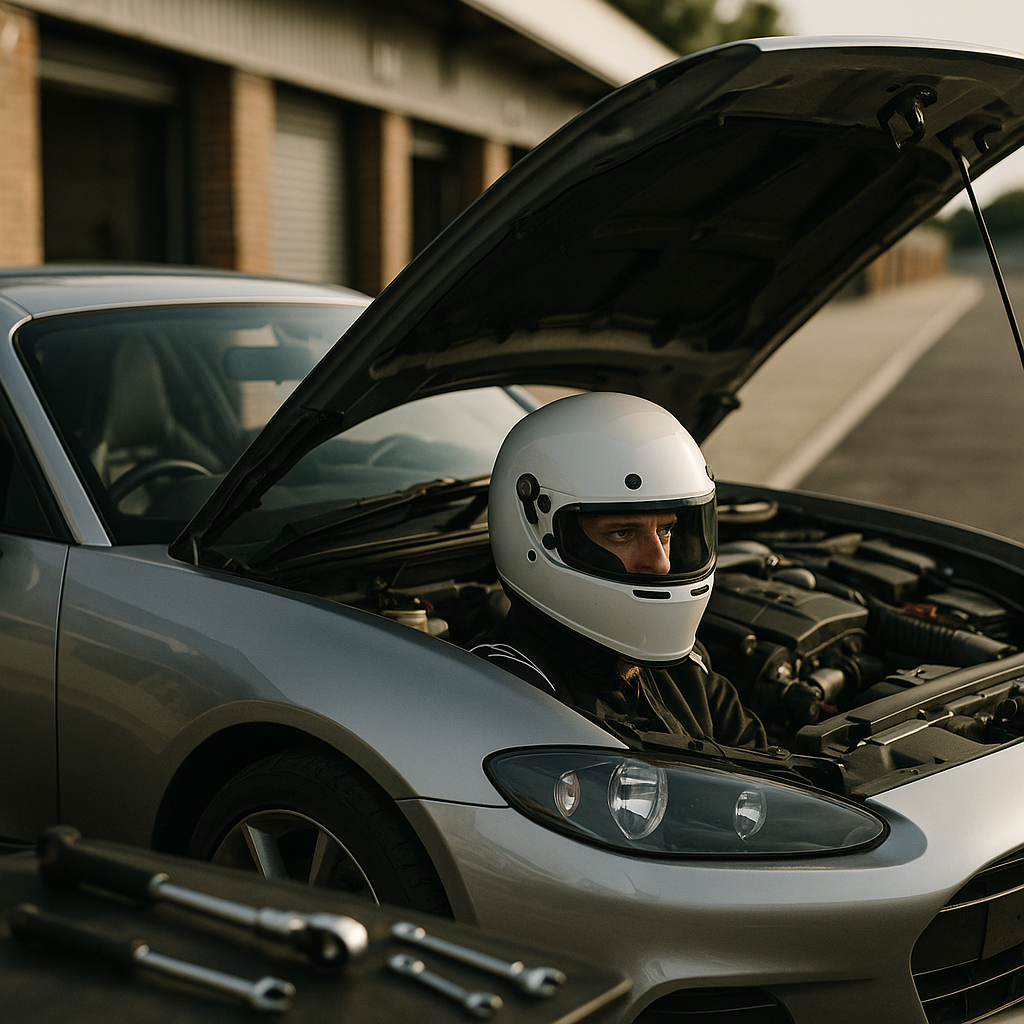
    Driver checking their car in the pit lane while preparing for UK track days

    UK track days FAQs

  • Modern hot hatches vs old school heroes on real UK roads

    Modern hot hatches vs old school heroes on real UK roads

    If you are into proper driver’s cars, the debate of modern hot hatches vs old school heroes never really ends. Out on real UK roads – lumpy B-roads, grim commutes and late-night blasts – the differences are massive. It is not just about lap times, it is about feel, running costs, mod potential and whether you can live with the thing every day.

    Modern hot hatches vs old school heroes: how they really feel to drive

    Jump from a sorted EP3 Civic Type R into a current GR Yaris or i30N and the first thing you notice is weight and refinement. New stuff is quieter, more planted and way faster point to point. The steering is usually lighter, there is a ton of grip and the chassis is set up to be safe for anyone jumping in off a PCP deal.

    The older legends feel more raw. Thin doors, more noise, less insulation, heavier steering and a chassis that actually moves around underneath you. A 205 GTI, Clio 172 or early Mk2 Focus ST talks to you through the wheel and the seat, not through a screen and a fake sound generator. They are slower on paper, but on a tight, scruffy B-road they feel alive at legal speeds, which is where a lot of modern stuff just feels bored.

    Modern cars fight back with clever diffs, adaptive dampers and traction systems that let you lean on the car harder and earlier. You can be a bit lazier with your inputs and still cover ground stupidly quickly, especially in the wet. Old school stuff rewards finesse and patience – get it wrong and you are in a hedge.

    Speed, safety and daily reality

    On pure speed, modern hot hatches destroy the old guard. Turbo torque from low revs, shorter gearing, better tyres and far more traction mean a current Civic Type R, GR Yaris or A45 AMG will rinse a 90s hero in a straight line and on most B-roads. Add in proper brakes from the factory and the gap gets bigger the harder you push.

    Safety is the other big one. Newer cars come with a full alphabet of systems, serious crash protection and lights that actually let you see on a wet January night. If you are doing long motorway runs, hauling mates or family and using the car in all weathers, that matters.

    Old hatches feel sketchier when it all goes wrong. No ESP, basic ABS if you are lucky and crash structures that belong in a museum. Fun at 40 mph, a bit sweaty at 80 when the road surface turns nasty.

    Running costs and reliability

    Here is where the modern hot hatches vs old school heroes fight gets interesting. Older stuff is usually cheaper to buy, and basic servicing can be done on the driveway with Halfords tools and a brew. Parts for popular cars like Mk2 Golfs, EP3s and old Clios are still easy enough to get, and there is a massive community of nerds who know every weak point.

    But age catches up. Rust, tired bushes, dead dampers and 20-year-old plastics all add up. Insurance can be weirdly high on classics, and if you start chasing OEM+ unicorn parts, the bills get spicy. Also, a lot of the cheap ones have been thrashed, badly modded or crashed.

    New hot hatches will hit you on purchase price, tax and tyres, but tend to be reliable if you keep them stock and serviced. Warranty helps, and fuel economy is surprisingly decent on the motorway thanks to tall gearing and turbo efficiency. The sting is in big-ticket items out of warranty – injectors, high pressure fuel pumps, clutches on dual-clutch boxes and complex electronics.

    Modding potential and scene vibes

    Both sides are proper playgrounds if you like spanners. Old school stuff is simple, light and responds well to basic mods – decent coilovers, proper tyres, a fast-road geo and a mild engine tweak transform them. You feel every change because there is less fluff in the way.

    Driver enjoying a raw analogue cabin that highlights modern hot hatches vs old school heroes
    UK car meet showing the mix of tuned cars that defines modern hot hatches vs old school heroes

    Modern hot hatches vs old school heroes FAQs

    Are older hot hatches cheaper to insure than modern ones?

    Not always. Older hot hatches can fall into classic or limited mileage policies which helps, but many are high risk in insurers’ eyes because of theft, age and the sort of drivers they attract. Modern cars often have better security and driver aids, but higher values and performance can push premiums up. It is worth getting quotes on specific cars before you buy rather than assuming old is cheaper or newer is safer for your wallet.

    Is a modern hot hatch worth it if I only drive at weekends?

    If you only do weekend blasts, an older, lighter hatch can actually make more sense because it feels exciting at sane speeds and is usually cheaper to buy outright. A modern hot hatch shines if you also need it to commute, cover long distances and deal with all-weather use. For pure fun with low annual mileage, a well looked after classic or older hero might give you more smiles per pound.

    What should I check before buying an old school hot hatch?

    Start with rust, accident damage and bodged repairs, as these are often more serious than simple mechanical wear. Look for a thick folder of history, evidence of quality parts, and signs that key jobs like timing belts, clutches and suspension refreshes have been done. Check for mismatched tyres, dodgy wiring from old alarms or audio, and make sure any mods are from known brands rather than the cheapest bits online. A pre-purchase inspection by a specialist is money well spent.