Category: Highlight

  • How to pull off the perfect lap around the Nürburgring

    The Nürburgring Nordschleife is one of the world’s most challenging racetracks but, because it’s also technically a public toll road, it’s also one of the easiest to get access to. If you’re planning a trip to the ‘Ring, you won’t find a more comprehensive guide than this video.

    Over a run time of nearly three hours, driving coach Scott Mansell (no relation to Formula One champion Nigel Mansell), and Nürburgring 24 Hours winner Adam Christo break down the track in excruciating detail. There’s plenty of in-car footage, and timestamps for specific corners and sections—right down to pit entry.

    Learning a new track always requires a detailed breakdown of things like the correct line and braking points, but with the Nordschleife, there’s a lot more information to take in. The circuit is 12.9 miles long, with dozens of corners. The official total is 73, but other sources claims there are up to 100.
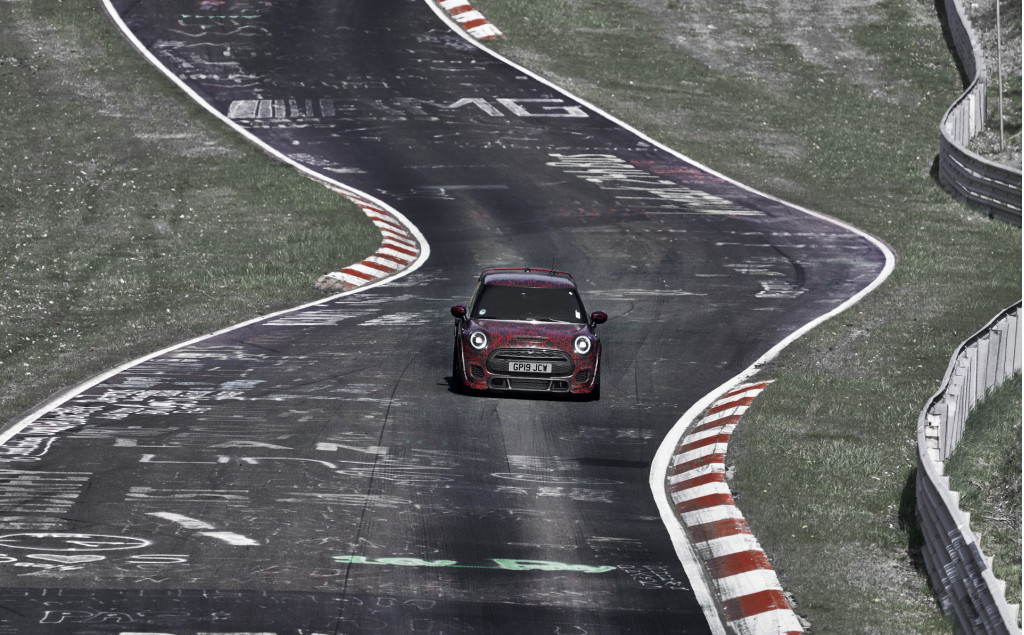
    2021 Mini John Cooper Works GP prototype at the Nürburgring

    2021 Mini John Cooper Works GP prototype at the Nürburgring

    Real-world conditions can also impact a lap. On a circuit this long, weather conditions can vary from one spot to another. Traffic is another consideration. A smattering of cars lapping at different speeds (with drivers of varying skill levels) will be on track at any given time.

    Your results may vary, but the quickest drivers can lap the ‘Ring in well under 10 minutes. The current overall lap record of 5:19.55 was set in 2018 by racing driver Timo Bernhard in the Porsche 919 Evo, a modified version of the automaker’s Le Mans-winning race car. The current lap record for production cars is 6:44.97, set by the Lamborghini Aventador SVJ in 2018.

    If you want to experience the ‘Ring without getting behind the wheel, it’s also possible to hitch a ride in a “taxi” with a professional driver. Jaguar has been providing vehicles for this service for the past few years, including the XE SV Project 8 sedan and I-Pace EV.
    Source

  • Kia unveils military-grade all-terrain vehicles

    A few days ago, GM Defense, a subsidiary of General Motors, made its first delivery to the U.S. Army of the new Infantry Squad Vehicle, an all-terrain transport that can carry 9 soldiers and their equipment.

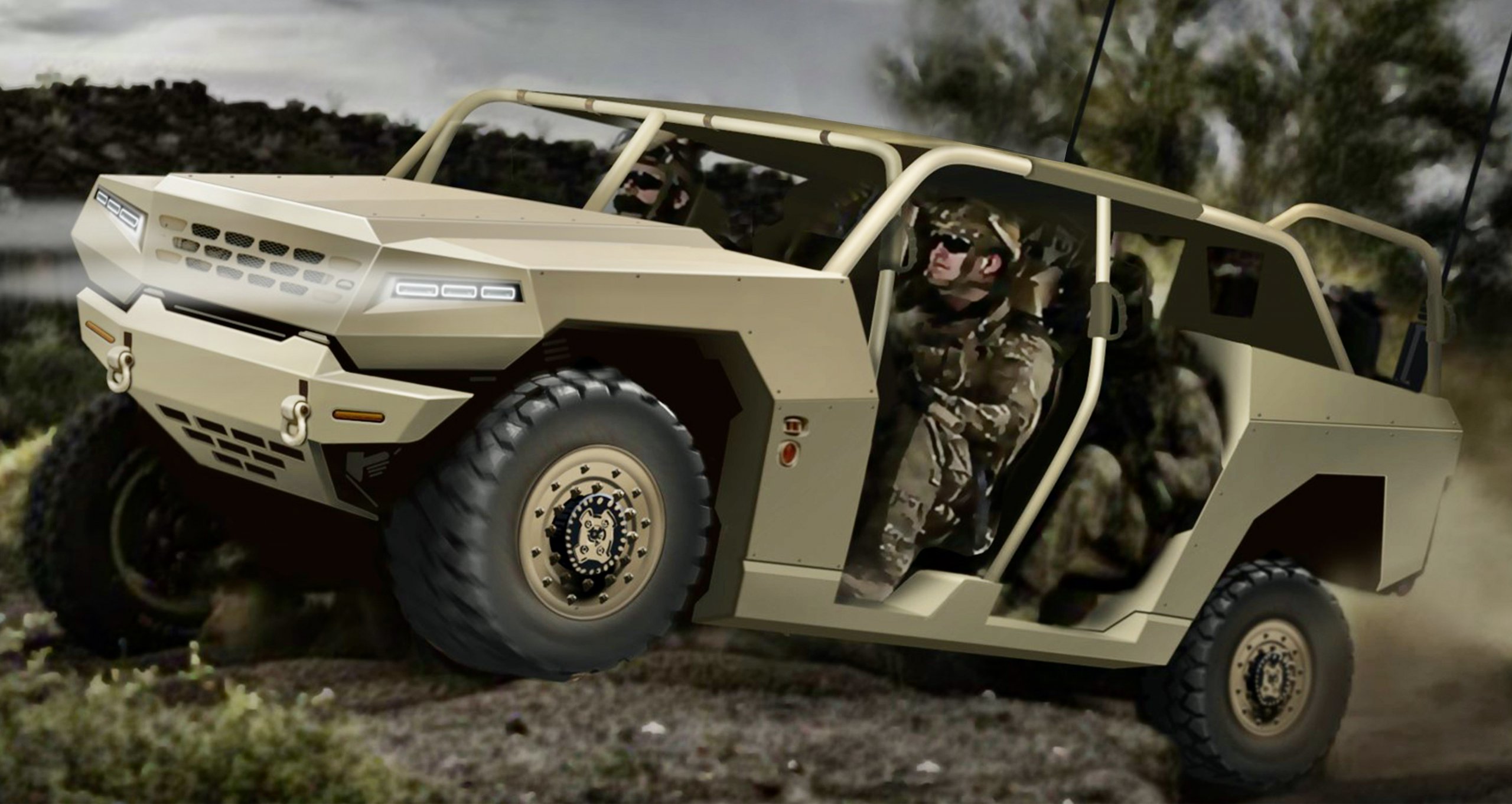
    But GM isn’t the only automaker making news with its military vehicles. A day or so later, Kia unveiled the design for its 2.5- and 5-ton military vehicles, an open-top all-terrain vehicle based on the Mohave sport utility chassis. It said it plans to deliver field-test results to the Korean government in 2021, with military deployment in 2024.

    Kia also said it will apply electric powertrain, autonomous driving and hydrogen fuel-cell technologies to its military vehicle development.

    As for the new 2.5- and 5-ton vehicles, they will be powered by a 7.0-liter diesel engine, will have automatic transmissions, anti-lock brakes, vehicle stability control, rear parking assist, around-view monitors, satellite navigation and heated seats. A bullet-proof 5-ton vehicle also is being planned.

    Kia said it also plans versions of the all-terrain vehicle for commercial and recreational sectors.

    Kia previously has produced 140,000 military vehicles in nine models.

    This article, written by Larry Edsall, was originally published on ClassicCars.com, an editorial partner of Motor Authority.

    Source

  • 700-horsepower Aznom Palladium all-terrain luxury sedan mines for rich adventurers

    Italian vehicle customizer Aznom has come out with its own bespoke vehicle—a large, luxurious sedan capable of driving both on and off the road.

    In case you’ve forgotten, this is the company that in 2018 unveiled a fully bespoke Ram 1500 costing $263,000. Naturally, Aznom has dialed the luxury factor even higher for its own model.

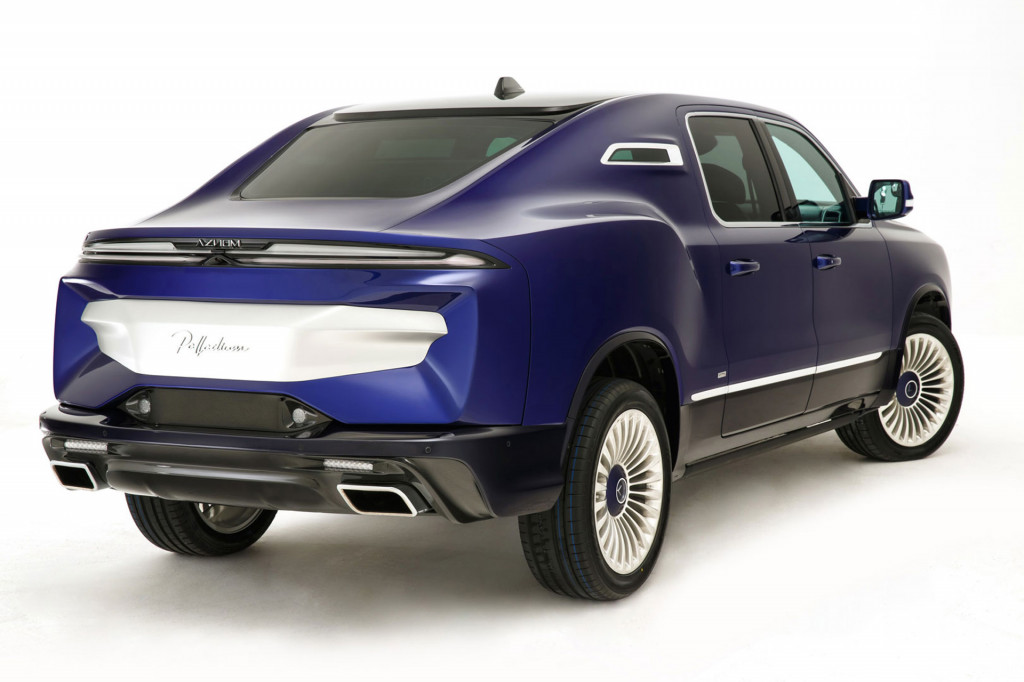
    Aznom’s sedan is called the Palladium, and it blends elements of the Rolls-Royce Phantom, Bentley Flying Spur and even the Lamborghini Urus in its design. Responsible for the look was Alessandro Camorali of Camal Studio in Turin, Italy.

    Aznom Palladium

    Aznom Palladium

    The underpinnings come from a humble Ram 1500, though. As a result, the Palladium is destined to be one of the biggest vehicles on the road. We’re talking a vehicle with a height of more than 6.5 feet and a length stretching almost 20 feet.

    But why a pickup truck as the basis? It turns out Aznom founder Marcello Meregalli has a penchant for huge American vehicles, particularly the truck-based presidential limos built by Cadillac.

    For the Palladium, most of the body is constructed from steel, though some elements, such as the hood and roof, were made from carbon fiber to help lower the center of gravity. Reinforcements were added to rear to compensate for the bed, and instead of a traditional trunk the whole rear panel automatically extends to make loading items easy. Independant suspension also features at both ends.

    Aznom Palladium

    Aznom Palladium

    “We have produced this vehicle choosing artisanal manufacturing techniques that are almost lost today, such as panel beating and hand-crafting the body of the car, together with other technological solutions,” Meregalli said in a statement.

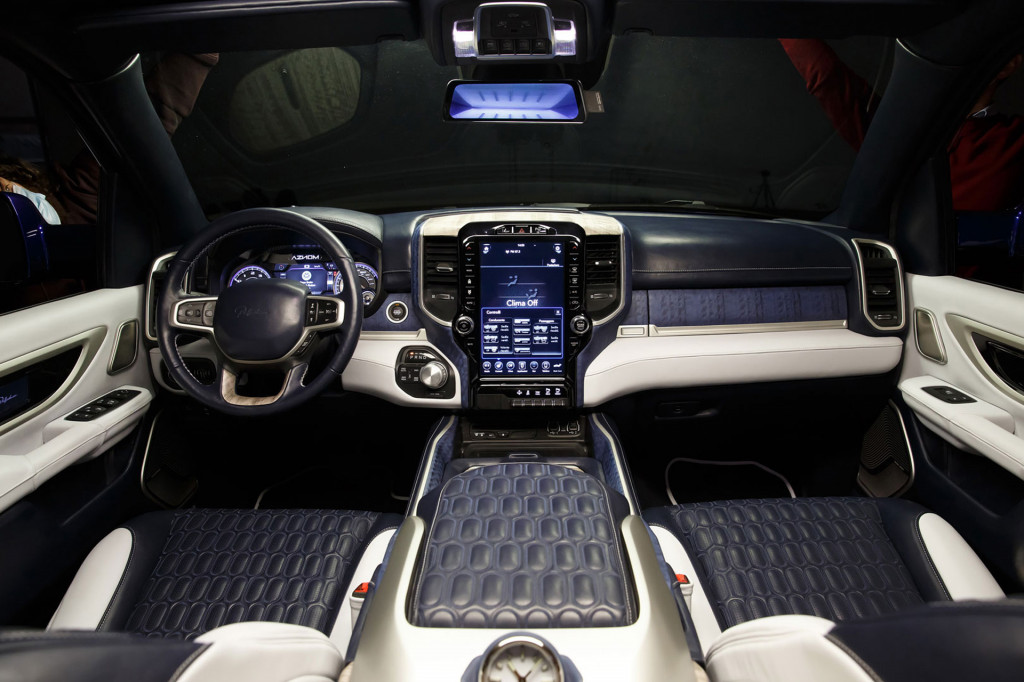
    Inside is seating for four, with ample space for each occupant. Apart from the layout of the dash, there isn’t anything to remind you of the donor vehicle’s origins. Almost every surface is lined in plush Foglizzo leather and there are several new amenities including a chilled section for champagne bottles. Buyers also receive a luggage set that uses the same leather and stitching as the interior, as well as an umbrella from Francesco Maglia.

    Power comes from a 5.7-liter twin-turbocharged V-8 generating over 700 horsepower and 700 pound-feet of torque. Given the displacement, we’re guessing the engine is a tuned version of the 5.7-liter V-8 offered in the donor Ram pickup. The wheels are 22-inch aluminum pieces shod with 285/45-size Yokohama Advan Sport tires and housing Brembo brakes.

    Source