
Category: Highlight

  • Driverless cars will race at Indy

    The famed Borg-Warner Trophy features the images of every driver who has won the Indianapolis 500-mile auto race. But a new race is scheduled for October 2021 at the Indianapolis Motor Speedway featuring cars without drivers, at least without a human driver sitting in the cockpit.

    The inaugural Indy Autonomous Challenge, which unveiled its Dallara IL-15 racing car January 11 on the opening day of CES (formerly known as the Consumer Electronic Show), will offer $1.5 million in prizes to teams from colleges and universities around the world racing cars using student-created software that enables autonomous racing.

    Think DARPA Grand Challenge for motorsports, with a goal of developing software that “can ensure precision control of vehicles at high speeds during the competition and reduce fatalities and pollution on public roadways afterwards.”
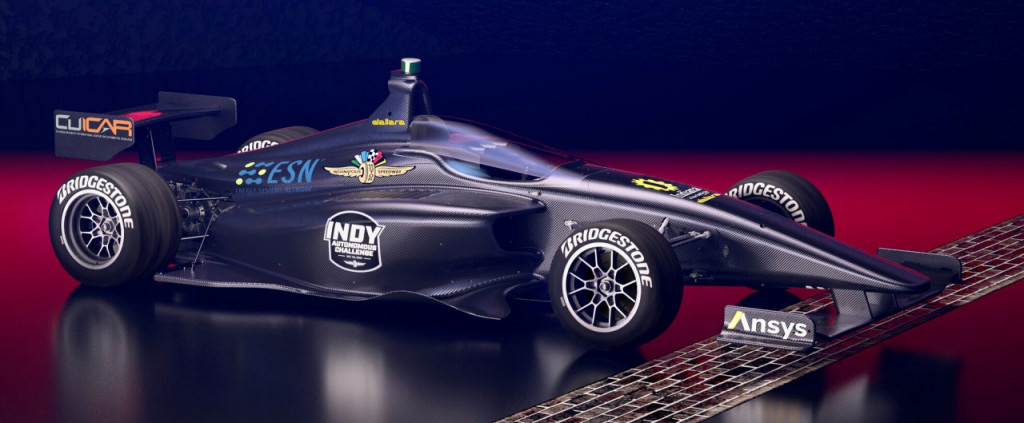
    Open-cockpit Indy-style autonomous race cars for virtual challenge

    Open-cockpit Indy-style autonomous race cars for virtual challenge

    While DARPA Grand Challenge vehicles traveled off pavement at perhaps 5 mph, the Indy Autonomous Challenge racers, powered by specially prepared 4-cylinder engines, should be capable of nearly 200-mph speeds.

    “If we can go- 240 mph and keep cars from colliding on the track, surely we can make highways safer,” said Mark Miles, president of Penske Entertainment, which owns the Indy track and the Indy Car racing series.

    Speedway president Doug Boles noted that the Brickyard originally was constructed as a site for technology testing and development, and that the Wright Brothers set an aircraft altitude record at the facility in 1910, a year before the first 500-mile auto racing.
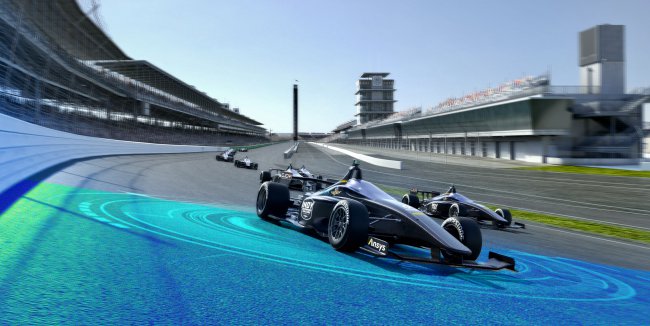
    Open-cockpit Indy-style autonomous race cars for virtual challenge

    Open-cockpit Indy-style autonomous race cars for virtual challenge

    “Our history has led us to today and to the IAC,” he added. “We can’t wait to see the best and brightest minds from around the world competing at the Indianapolis Motor Speedway.”

    Those minds will come from nearly 40 colleges and universities from 14 states and 11 nations, said Paul Mitchell, president of Energy Systems Network, the Speedway’s partner in the project.

    He said he expects the software development for the race to “accelerate technology commercialization and to solve real-world (public transportation system) programs.”
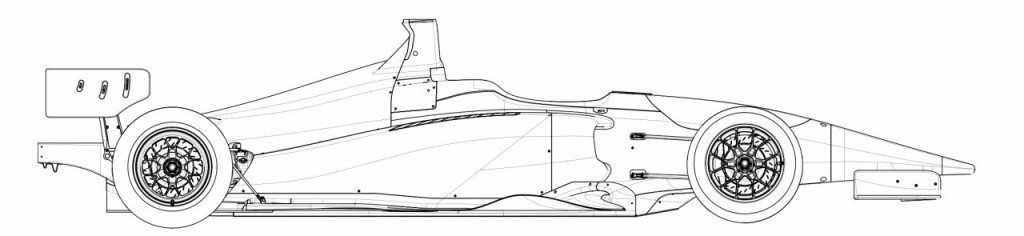
    Open-cockpit Indy-style autonomous race cars for virtual challenge

    Open-cockpit Indy-style autonomous race cars for virtual challenge

    “Self-driving cars are the next challenge in automotive technology and a major leap needed to be taken,” he added. “What better way than a high-speed race at the world’s best race track?”

    Software simulation racing is scheduled for late May with practice days for the race cars at the Speedway in early June and early September. Pre-race practice starts October 19 with the final 20-lap race on October 23. All teams retain the rights to their software and the winning team gets a $1 million prize.

    For more information, visit the IAC website.

    This article, written by Larry Edsall, was originally published on ClassicCars.com, an editorial partner of Motor Authority.
    Source

  • 1955 Jaguar D-Type headed to auction

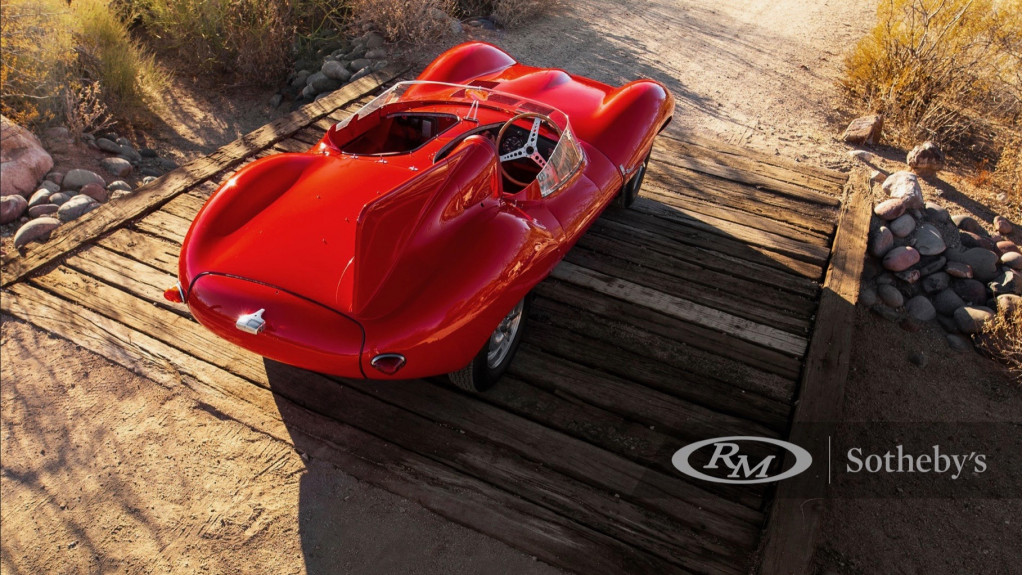
    Before the invention of track-only supercars, wealthy enthusiasts could simply buy a race car like this 1955 Jaguar D-Type. The rare Jag will be auctioned off by RM Sotheby’s Jan. 22.

    Introduced in 1954, the D-Type earned three straight 24 Hours of Le Mans victories from 1955-’57, the last two years with privateer teams. Jaguar built just 17 works race cars (including  11 “long-nose” variants), plus 54 customer race cars. Some D-Type chassis were also converted into XKSS road cars, a process that was cut short by a 1957 fire at Jaguar’s Coventry, England, factory, which destroyed the final five cars earmarked for conversion.

    The car up for auction—chassis XKD 518—is not a Le Mans veteran, but is noteworthy for a couple of reasons. It left the factory not in traditional British Racing Green, but in red—a color normally associated with Jaguar’s Italian rivals. XKD 518 was also sold to its first private owner by future Formula 1 czar Bernie Ecclestone.

    1955 Jaguar D-Type XKD 518 (Photo by RM Sotheby's)

    1955 Jaguar D-Type XKD 518 (Photo by RM Sotheby’s)

    That first private owner was race driver Peter Blond, who ran XKD 518 at British tracks like Silverstone and Goodwood during the 1956 and 1957 seasons. Blond sold the car in August 1957, and it changed hands many more times over the years, ending up with its current owner in 2008.

    Under the hood sits a 3.4-liter XK inline-6 with a numbers-matching block and head, which makes 245 horsepower, according to the listing. XKD 518 left the factory without the trademark D-Type fin, and with a low windscreen, according to the listing, but it sports those items now. They were added to the car at some point during its racing career, and are thus period correct, the auctioneer noted.

    Pre-auction estimates for the red D-Type are between $5.7 million and $7.5 million, which seems like a relative bargain compared to the $21.8 million paid for a Le Mans-winning D-Type in 2016. Note that this car failed to sell at a 2018 auction, because bidding didn’t meet an $8.8 million reserve.

    Source

  • David Hasselhoff’s KITT car from “Knight Rider” is up for auction

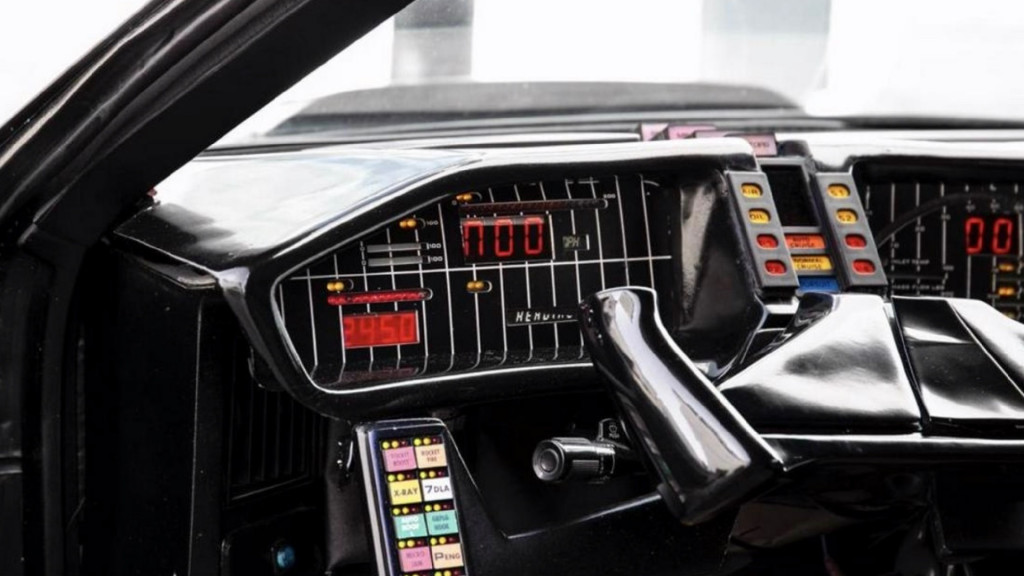
    “Knight Rider” star David Hasselhoff is auctioning off his automotive co-star from the cult-classic 1980s television show. LiveAuctioneers is running an auction of The Hoff’s personal memorabilia collection—including his KITT Pontiac Firebird Trans Am. The auction ends January 23.

    The car is located in the United Kingdom and Hasselhoff will personally deliver it to its new owner, but that owner will also have to pay delivery costs, according to the listing.

    The Trans Am is described as “fully functional,” although it’s unclear from the listing whether the Pontiac is a genuine “Knight Rider” prop or a replica. On the show, KITT (short for Knight Industries Two Thousand) featured an array of gadgets, including a bulletproof outer shell, flamethrower, jet propulsion, and an artificial intelligence control system that would sass Hasselhoff’s Michael Knight.

    KITT Pontiac Firebird Trans Am owned by David Hasselhoff (Photo by LiveAuctioneers)

    KITT Pontiac Firebird Trans Am owned by David Hasselhoff (Photo by LiveAuctioneers)

    “Knight Rider” ran from 1982 to 1986, spanning four seasons and 90 episodes. It was a fairly short run for a television show, but Hasselhoff and KITT made “Knight Rider” a cult classic. The talking Trans Am earned a place alongside vehicles like the “Back to the Future” DeLorean time machine and the A-Team van in the pantheon of automotive pop culture.

    The show was also popular enough to spawn multiple (unsuccessful) revival attempts. A new version of “Knight Rider” premiered in 2008, using a Ford Mustang Shelby GT500 as KITT, since the Trans Am was no longer in production. That show lasted for just one season.

    In August 2020, Variety reported that a “Knight Rider” movie is reportedly in development, with “Furious 7” director James Wan’s production company involved, but no official announcement has been made.

    Source