
Category: Highlight

  • 2022 Jeep Wagoneer, 2021 Dodge Durango Hellcat, 2023 Honda Pilot: The Week In Reverse

    The 2022 Jeep Wagoneer made its debut, we drove the 2021 Dodge Durango Hellcat, and the 2023 Honda Pilot was spotted. It’s the Week in Reverse, right here at Motor Authority.

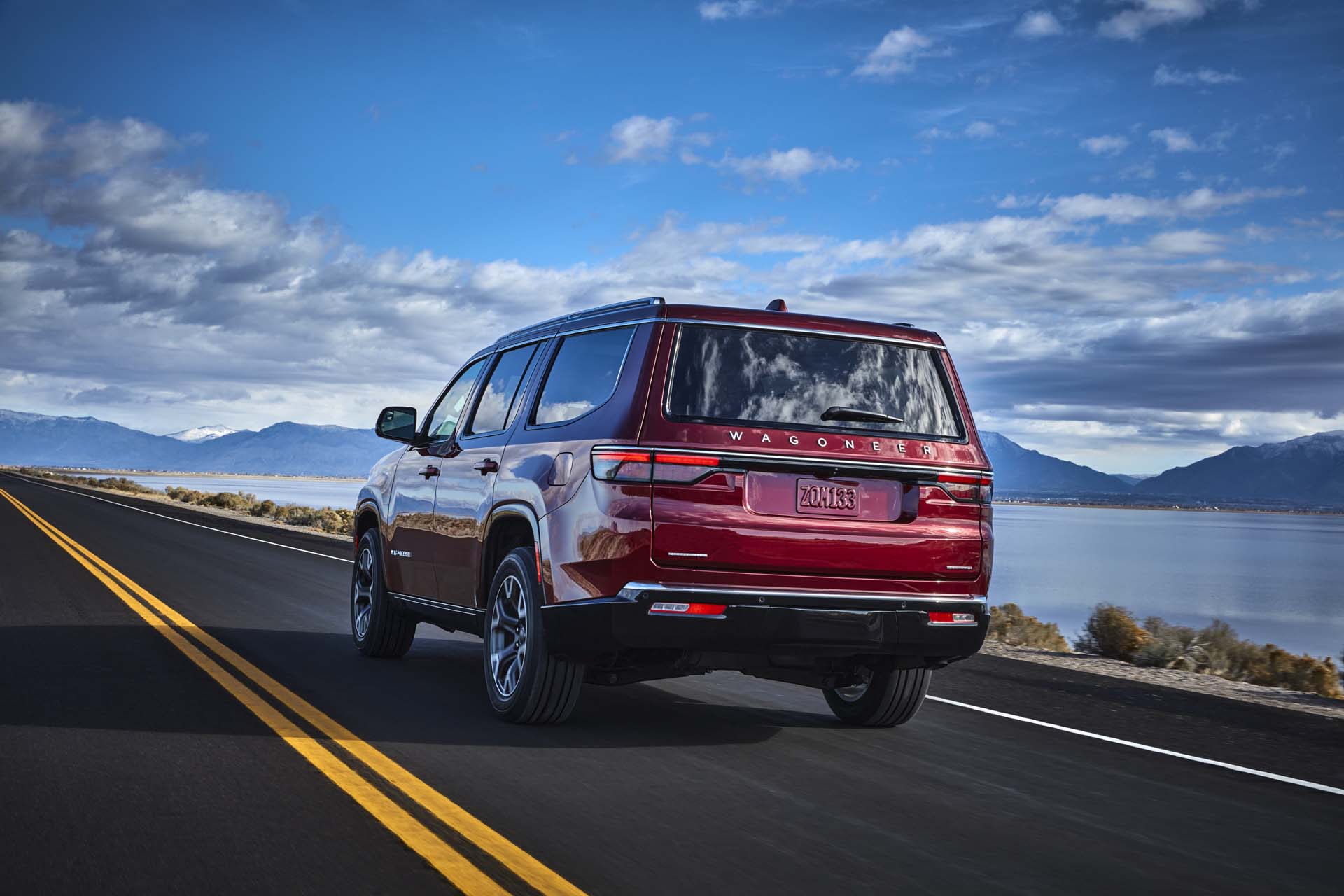
    The 2022 Jeep Wagoneer and Grand Wagoneer were unveiled with up to 75 inches of screens, a pair of V-8 engines, and luxurious interiors. The large SUVs are set to launch this summer with everything from the Chevrolet Tahoe and Ford Expedition to the Lincoln Navigator, Cadillac Escalade, and Rover Range Rover in their sights.

    The 2022 Volvo XC60 was revealed with a revised look and an Android-based infotainment system. The updated crossover SUV will enter production in May, though exact launch timing for the U.S. hasn’t been announced.

    We drove the 2021 Dodge Durango SRT Hellcat and found it’s a defiant, doomed, and menacing family hauler that both appalled with its audacity and enamored with brutish charms. The three-row Hellcat will be the rarest of the supercharged beasts as only 2,000 will be built and only for the 2021 model year.

    EV startup Canoo unveiled an electric pickup truck with a cabover design to compete with the Tesla Cybertruck. Set to go into production in 2023, the Canoo pickup is based on the automaker’s modular platform and will offer up to 600 hp.

    The 2023 Honda Pilot was spotted for the first time on public roads. The fourth-generation of the Pilot is set to feature a more rugged design, a new platform, and more space inside for passengers. Expect the redesigned three-row people hauler to arrive in dealerships in late 2022.
    Source

  • The Maserati Bora, the brand’s first mid-engine car, turns 50 years old

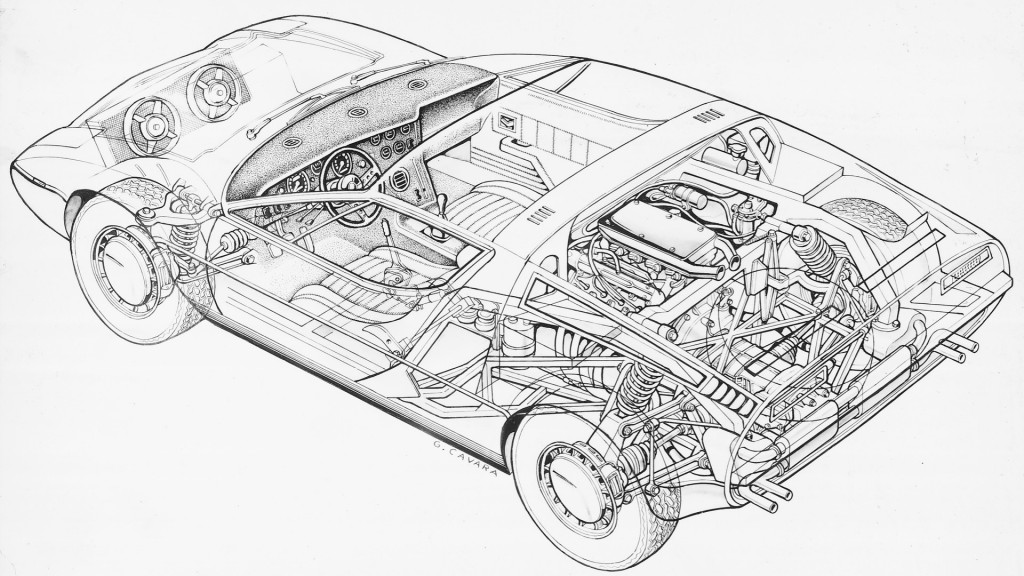
    As Maserati prepares to launch the mid-engine MC20, one of that car’s ancestors is celebrating its golden anniversary. The Maserati Bora debuted 50 years ago as the Italian automaker’s first mid-engine road car.

    Maserati had built race cars with the engine behind the driver, but the Bora brought that idea to the automaker’s road-car line when it debuted at the Geneva motor show on March 11, 1971, the automaker noted in a press release. Maserati was playing catch up, as the mid-engine Lamborghini Miura had debuted, in concept form, six years earlier.

    The engine, which was mounted under a carpeted floor to create luggage space, was a 4.7-liter V-8 that produced 310 hp (a 4.9-liter engine was added later). The longitudinally mounted V-8 drove the rear wheels through a 5-speed manual transmission. Maserati quoted a top speed of 174 mph.

    1971 Maserati Bora

    1971 Maserati Bora

    The Giorgetto Giugiaro-designed Bora was also the first Maserati road car with four-wheel independent suspension, and also sported disc brakes which were still not a given at the time.

    Maserati built 564 Boras through the end of production in 1978. A year after the Bora’s debut, Maserati introduced the Merak, another mid-engine car with Giugiaro-penned bodywork. While it had a V-6 instead of the Bora’s V-8, the Merak proved more successful, staying in production until the early 1980s. Maserati wouldn’t launch another mid-engine road car until the MC12 in 2005.

    The automaker is now trying again with the MC20, which sports butterfly doors, a carbon-fiber chassis and body panels, and a claimed top speed of 202 mph. The engine is Maserati’s new Nettuno 3.0-liter twin-turbo V-6, which uses Formula One technology to develop 621 hp and 538 pound-feet of torque. The MC20 will debut as a coupe, with spider and all-electric versions following later, Maserati said during the car’s unveiling last year.

    Source

  • Jay Leno drops the top on a 1967 Hoffman Citroen 2CV convertible

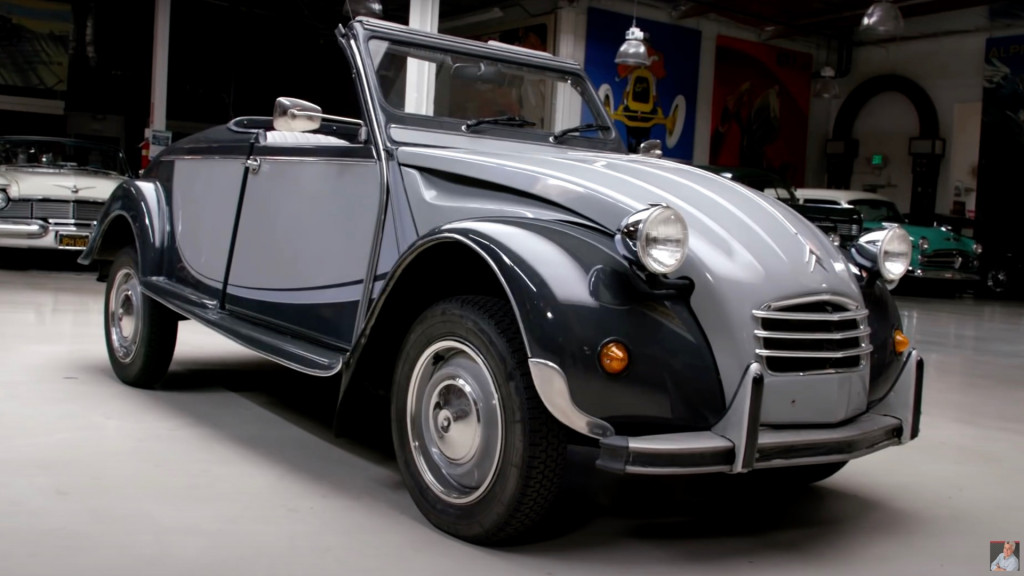
    The Citroën 2CV (or Deux Chevaux) is France’s equivalent to the Ford Model T or Volkswagen Beetle—an iconic car built in massive numbers that helped mobilize an entire nation. Of the millions of 2CVs built between 1948 and 1990, this one stands out thanks to an aftermarket convertible, err, conversion. This episode of Jay Leno’s Garage has the full story on this unusual car.

    Jay Leno’s Garage fans wanted a video on this car after seeing it in the background of other videos. This 2CV was modified by Wolfgang Hoffman with a fiberglass body that attached to the existing chassis, not unlike Meyers Manx dune buggy conversions. The idea was to make the 2CV a little fancier, Jay says. The 2CV was developed before World War II, but the war delayed the start of production until 1948. The car is largely credited with mobilizing rural France during that postwar period.

    The bodywork may be different, but the Hoffman 2CV is mechanically stock, meaning it’s powered by an air-cooled 2-cylinder engine making as little as 26 hp. That tiny engine drives the front wheels. The 2CV also features long-travel suspension that, according to legend, was designed for driving through farmers’ fields.

    1967 Hoffman Citroën 2CV on Jay Leno's Garage

    1967 Hoffman Citroën 2CV on Jay Leno’s Garage

    Leno acquired this car from a United Nations ambassador, who had stored it in Southern California for about 20 years. While it didn’t require a full restoration, a lot of work still went into making this convertible roadworthy.

    The 2CV was mechanically sound, with good paint and bodywork, but had also become a home for mice, Leno explains. It had to be fumigated and cleaned, which seemed to be a more difficult process than the minor mechanical work needed to get it running again.

    Other iconic “people’s cars,” such as the VW Beetle, Fiat 500, and Mini Cooper, have gotten modern reinterpretations, but Citroën has said it won’t do a modern 2CV. The automaker is now part of the Stellantis conglomerate, but is unlikely to make a return to the U.S. anytime soon. Stellantis recently dropped plans to bring sibling brand Peugeot back to the U.S.

    Check out the full video for the complete story on this car, and to see Jay drive it in the streets of Los Angeles.

    Source