Category: Highlight

  • 2021 Ford Bronco production is underway

    The agonizing wait for reservation holders of Ford’s reborn Bronco is almost over as the first customer examples have rolled off the line at Ford’s Michigan Assembly Plant and are already on their way to dealerships.

    The plant, located in Wayne, Michigan, has been home to the Bronco since the original launched in 1965, and it’s also home to the Ford Ranger pickup truck, which features an earlier version of the Bronco’s body-on-frame T6 platform. The Ranger will move to the updated platform when it undergoes a redesign later this year.

    Ford invested $750 million in the plant to upgrade it for the new Bronco and future Ranger, adding approximately 2,700 direct jobs in the process. Part of this investment has gone toward constructing a separate modification center where a range of accessories are fitted, such as sport bars, roof racks, graphics packages, and much more. Ford has also added pre-wired switches to the Bronco to make adding electronic accessories easy.

    It’s hard to believe that it’s been almost a year since the 2021 Bronco was first shown. Deliveries were due to start in the spring but supplier delays related to coronovirus shutdowns meant Ford needed to push the start to summer.

    2021 Ford Bronco

    2021 Ford Bronco

    2021 Ford Bronco

    2021 Ford Bronco

    2021 Ford Bronco

    2021 Ford Bronco

    It means some reservation holders already promised their Bronco in 2021 will have to wait until 2022 to receive their vehicles. The delays have also seen manual-equipped Broncos with the Sasquatch package pushed back to the 2022 model year.

    The 2021 Bronco is offered with a base 2.3-liter turbocharged inline-4 rated at 300 hp and 325 lb-ft of torque (with premium fuel), and an available 2.7-liter twin-turbocharged V-6 with 330 hp and 415 lb-ft of torque. Buyers can choose between a 7-speed manual or 10-speed automatic, as well as between two- and four-door body styles. A pickup body style is also a possibility at some point.

    More powertrain options are also coming. A high-performance Raptor-like model has been spotted testing, and Ford has also hinted at a battery-electric version.

    The starting price for the 2021 Bronco is a very reasonable $29,995, including destination.
    Source

  • Should you use racing oil in your road car?

    Every part of a modern race car is optimized to extract maximum performance—including the fluids that go into it. Specialized racing oil is a must in the paddock, but is it a good idea to use that in your road car?

    “Engineering Explained” host Jason Fenske answers that question in this video, talking to engineers from Mobil1 (which also sponsored the video), engine builder Roush Yates Engines, and NASCAR team Stewart-Haas Racing.

    First off, Fenske emphasizes that racing engines don’t have much in common with road-car engines. Pushrod V-8s like the ones used in NASCAR disappeared from the average American car decades ago, and racing engines in general have a very different duty cycle. They’re flogged (a NASCAR V-8 can rev to 10,000 rpm and spend 90% to 95% of a race at full throttle), but also have fairly short maintenance intervals. NASCAR engines have their oil changed about every 500 miles and are only expected to last about 1,500 miles, Fenske noted.

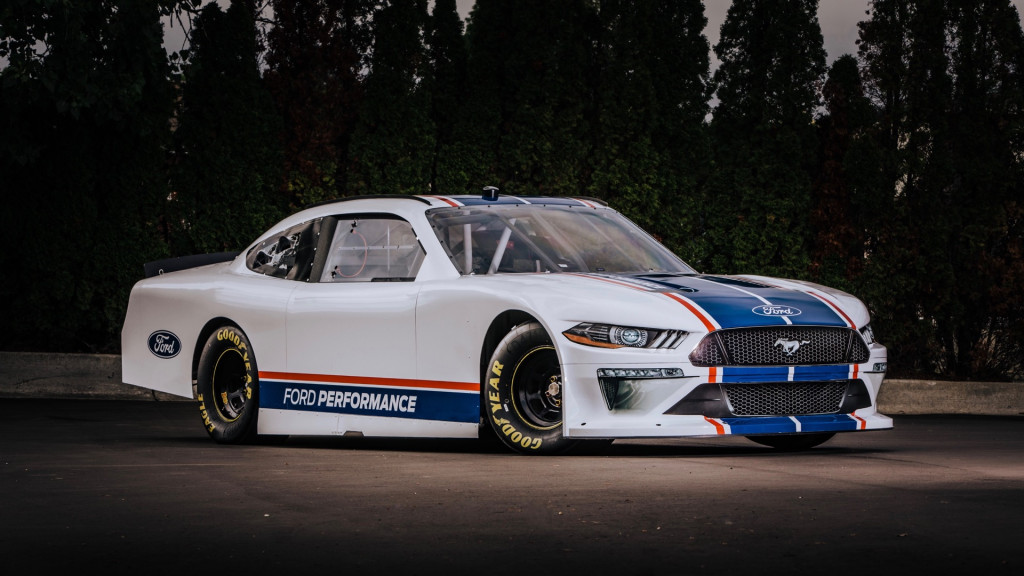
    Ford Mustang NASCAR Xfinity Series race car

    Ford Mustang NASCAR Xfinity Series race car

    NASCAR oil is also fairly unrestricted (rules can vary by race series), giving teams more leeway to look for competitive advantages, Fenske said. Teams tend to use thinner-weight oils to reduce frictional losses and maximize power. That’s not great for longevity but, remember, the engine only needs to last 1,500 miles. Road-car engines, on the other hand, are expected to last hundreds of thousands of miles, so that kind of tradeoff isn’t possible.

    Racing oils and road-car oils do have some commonalities, though. They use a lot of the same additives, such as detergents, dispersants, anti-foaming agents, antioxidants, and rust inhibitors, Fenske noted.

    However, the difference is in the details. Oils used for road cars are designed to meet a long list of regulations and requirements set down by individual automakers. In NASCAR where, again, rules governing oil are fairly loose, teams can optimize an oil for one specific engine design. It’s really that process that makes racing oil work, and it’s just not practical for individual road cars. Unless you have your own laboratory and a lot of patience, at least.

    Source

  • Princess Diana’s 1981 Ford Escort heads to auction

    A 1981 Ford Escort sedan previously owned by Princess Diana is headed to auction with Reeman Dansie, which plans to put the car under the hammer on June 29.

    The car was given to Diana by Prince Charles as an engagement present in May 1981, two months before their wedding, and was used by her until August 1982, according to the auction house, adding that the Escort has been out of public view for 20 years.

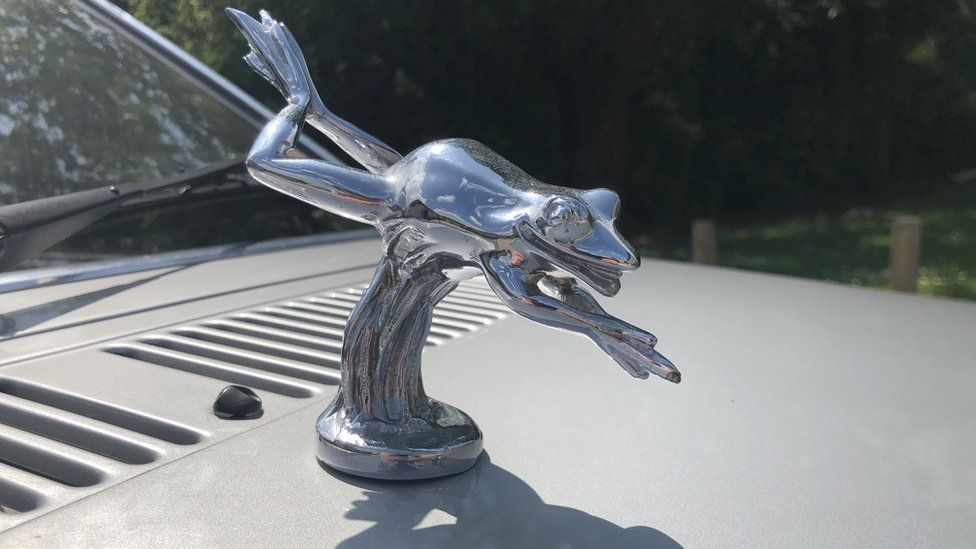
    An Escort might not seem worthy of a princess, but this is the upmarket Ghia version, at least. It also sports a silver frog hood ornament, a copy of a gift from Diana’s sister, Lady Sarah Spencer, inspired by the fairy tale of a beautiful girl whose kiss turns a frog into a prince, per the auction listing.

    Princess Diana's 1981 Ford Escort - Photo via Reeman Dansie

    Princess Diana’s 1981 Ford Escort – Photo via Reeman Dansie

    The current owner is a “great admirer” of the princess, and has kept the Escort’s history secret until now, according to the listing. Auctioneers verified the car’s authenticity from its vehicle-history file and registration number, according to a BBC write-up of the sale. The auction house also claims photographs of Diana in the car—with the same WEV 297W license plate it wears now—confirm the royal connection.

    The Escort still sports its original paint and upholstery, and currently shows 83,000 miles on its odometer, according to the listing. This was the third generation of Escort, marked by a switch from rear-wheel drive to front-wheel drive. Ford eventually devised some performance versions of the third-ten Escort for the European market but, despite having one of the larger 1.6-liter 4-cylinder engines, this isn’t one of them.

    Reeman Dansie expects the royal Escort to fetch between 30,000 and 40,000 British pounds (approximately $42,000-$57,000 at current exchange rates) at auction, and noted that Diana’s Audi 80 cabriolet sold last year for 58,000 British pounds.

    Source